
TL;DR
NASA’s October 11, 2026 Astronomy Picture of the Day shows a detector string being lowered into a deep hole in Antarctic ice as part of IceCube, a neutrino observatory at the South Pole. Nearly 100 strings carry light sensors that detect faint blue flashes made when high-energy neutrinos collide with ice; the pictured scene is an engineering photograph, not a view of the night sky. [1]
At the South Pole, astronomers built a telescope by melting holes in the ice and letting them freeze shut again. NASA’s October 11, 2026 APOD shows one of the detector strings descending into that frozen landscape, a striking reminder that a telescope does not always need a glass lens or a clear view of the stars. [1] Prime made for students and young adults

The observatory is called IceCube, and it watches for neutrinos: elusive particles that can cross enormous distances with little chance of interacting with matter. In this article, you’ll see what the photograph captures, how the buried sensors reveal cosmic events, and why the image makes an unusually compelling subject for a camera—even though you cannot photograph the neutrinos themselves. [1]
The timing adds another layer. On October 6, 2026, the Nobel Prize in Physics was awarded to Francis Halzen for decisive contributions to IceCube and the discovery of high-energy neutrinos from astrophysical sources. NASA’s APOD connects that recognition to the patient work visible in the image: lowering a detector into the cold, dark ice. [2]
NASA’s October 11, 2026 APOD shows IceCube construction in 2010, not a direct image of neutrinos. [1]
IceCube’s nearly 100 detector strings carry light sensors embedded in Antarctic ice. [1]
A neutrino interaction can produce charged particles that make faint blue Cherenkov light in the ice. [1]
The 2026 Nobel Prize in Physics recognized Francis Halzen’s decisive contributions to IceCube and the discovery of astrophysical high-energy neutrinos. [2]
For a photograph inspired by the scene, use a wide view to show scale and keep a person or familiar object in frame.

What NASA’s IceCube photo actually shows
The NASA APOD image shows a detector string being lowered into a deep, water-filled hole in Antarctic ice during IceCube’s construction. The string carries basketball-sized light sensors; after installation, the surrounding water freezes and leaves the instruments embedded in clear ice. It is a photograph of observatory engineering, not a picture of a neutrino or a star field. [1]
That distinction matters when you look at the scene. The human activity and the equipment give you a sense of scale, while the ice hides the final instrument below the surface. It is a little like watching a ship’s mast disappear into fog: you see the careful work, but the thing it serves extends beyond your view.
NASA’s caption describes nearly 100 vertical holes near the South Pole, each holding a string of detectors. The APOD identifies the photograph as taken in 2010, during the final stages of installing IceCube’s strings. The image credit is NASA. [1]
For instance, if you were captioning a print for a science classroom, call it “a detector string being lowered during IceCube construction.” That tells viewers what they can actually see. “A neutrino being photographed” would be wrong: neutrinos leave no visible track for an ordinary camera.
Popular right now

Ninja Foodi 7-Qt MegaZone FlexBasket Air Fryer, 6-in-1, Black, DZ071

Samsung 43-Inch M70H Series 4K Mini LED Smart TV (2026)

Dyson Ball Animal 3 Upright Corded Vacuum
As an affiliate, we earn on qualifying purchases.
How IceCube turns Antarctic ice into a telescope
IceCube uses clear Antarctic ice as a detection medium: when a high-energy neutrino collides with an ice molecule, the resulting charged particles can produce faint blue light that nearby sensors detect. The sensors record that flash, and researchers use its pattern and timing to study the particle that triggered it. [1]
A neutrino is not a tiny beam of visible light. It is a subatomic particle that usually passes through matter without a trace, which is why IceCube needs a huge volume of material to catch rare interactions. Imagine listening for one soft click in a snowfield: a larger listening area gives you a better chance of hearing it.
Here, the “telescope” analogy has a twist. A conventional optical telescope collects light that traveled directly from an object, while IceCube detects light produced secondhand in ice. The blue glow is associated with Cherenkov radiation, made as charged particles move through ice faster than light can travel through that same material. The particles do not exceed the speed of light in a vacuum.
For instance, a neutrino from a powerful distant source may pass through Earth and interact near the detector. Sensors along a string register a timed sequence of light, rather like a row of porch lights flickering as a runner passes. Those measurements let researchers reconstruct the event and investigate where the neutrino came from. [1]
Why the 2010 installation photo still tells a big story
The installation photo makes IceCube’s scale visible: nearly 100 strings of light detectors were lowered into holes near the South Pole, creating what NASA describes as the largest neutrino detector ever built. The image turns an abstract instrument into a concrete scene of people, cables, machinery, and ice. [1]
A detector this large reflects a basic problem in neutrino astronomy: interactions are rare, so researchers need a vast target. An ordinary camera can collect photons from a small patch of sky; IceCube uses a cubic-kilometer-scale volume of Antarctic ice to give passing neutrinos more chances to leave a detectable trace. That does not make every passing neutrino visible. It makes the search possible.
The photograph also catches a fleeting moment in a long construction effort. A string is lowered while the hole remains open, then the water refreezes around the instruments. Picture the scene as a piece of equipment being lowered into a well whose walls slowly close around it. Once that happens, the sensors must work in place, far from routine hands-on access.
There is a useful contrast here: the installation is a human-scale operation, but the science reaches across cosmic distances. If you show the image to a friend, point first to the detector string and then explain that its buried sensors are designed to register light from neutrino interactions in the surrounding ice. The visible cable is the beginning of a much larger instrument. [1]
What the Nobel recognition says about IceCube’s science
IceCube’s Nobel recognition reflects a major scientific result: the observatory helped establish that high-energy neutrinos can be detected from astrophysical sources. On October 6, 2026, the Nobel Prize in Physics went to Francis Halzen for decisive contributions to the observatory and the discovery of high-energy neutrinos of astrophysical origin. [2]
That recognition does not mean IceCube has solved every mystery about cosmic accelerators. Neutrinos can travel from energetic environments with less interference than light, but tracing a particular event to its source takes careful measurement and, at times, observations from other instruments. A single signal is a clue, not a complete story.
The key advance is the new view these particles provide. Light can be absorbed, scattered, or redirected on its way out of a dense cosmic environment; neutrinos interact so weakly that some can escape and reach Earth. In plain terms, neutrinos can carry news from places that ordinary light does not show us as clearly.
For a real-world example, imagine astronomers studying a powerful galaxy whose central region is crowded with gas and radiation. A neutrino detected by IceCube could offer evidence about particle processes there, even when a photograph alone cannot reveal the whole mechanism. The Nobel announcement recognizes the work that made this kind of neutrino astronomy possible, while the APOD image shows one practical step in building the detector. [1][2]
How to photograph the scene’s scale and texture
To photograph a scene like IceCube’s installation, use a wide or standard focal length to keep the people, cable, and surrounding ice together in the frame. Strong scale cues matter more than a long lens here: the viewer needs to see both the equipment and the immense, stark setting. This is an engineering photograph, so the visual goal is to show how the instrument meets its environment.
- Choose a wide-field view when the surroundings help explain the scale. A 24–35 mm full-frame equivalent can include the work area and the descending string without making the camera feel too distant.
- Keep a human reference in the frame if one is present. A worker or a familiar piece of equipment helps viewers judge the size of the hole and cable.
- Watch the highlights on snow and ice. Bright surfaces can fool a camera’s meter into making the scene look gray, so check the exposure and preserve texture in the pale areas.
- Use a longer focal length only when you want to isolate details such as a sensor, glove, or cable connection. A close view can feel dramatic, but it may hide the scale of the installation.
For instance, imagine taking a documentary photo at a snowy construction site. A tight crop on a cable might look like any industrial job; widening the frame to include the crew and the white horizon tells the viewer why this installation is unusual. The practical tip is simple: let one familiar object anchor the scene, then leave enough space around it for the environment to speak.
Why you can’t photograph neutrinos with a backyard telescope
You cannot see or photograph the neutrinos IceCube detects with a backyard telescope, because neutrinos do not shine like stars and the blue flashes happen inside the observatory’s ice. A regular camera records light that reaches its sensor; IceCube’s instruments register faint light produced after a rare particle interaction beneath the surface. [1]
That does not make the APOD less useful to stargazers. It offers a different kind of astronomy image: a view of the equipment that expands what humans can learn about the universe. The snowy scene may look quiet, almost blank, but it documents a detector built to observe signals far outside the reach of ordinary visible-light photography.
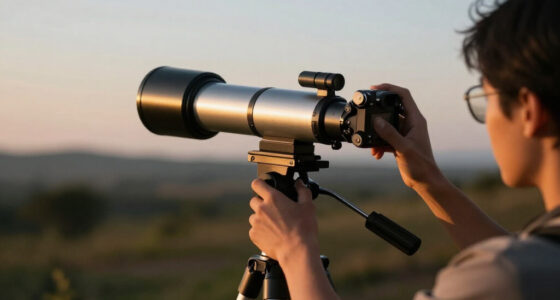
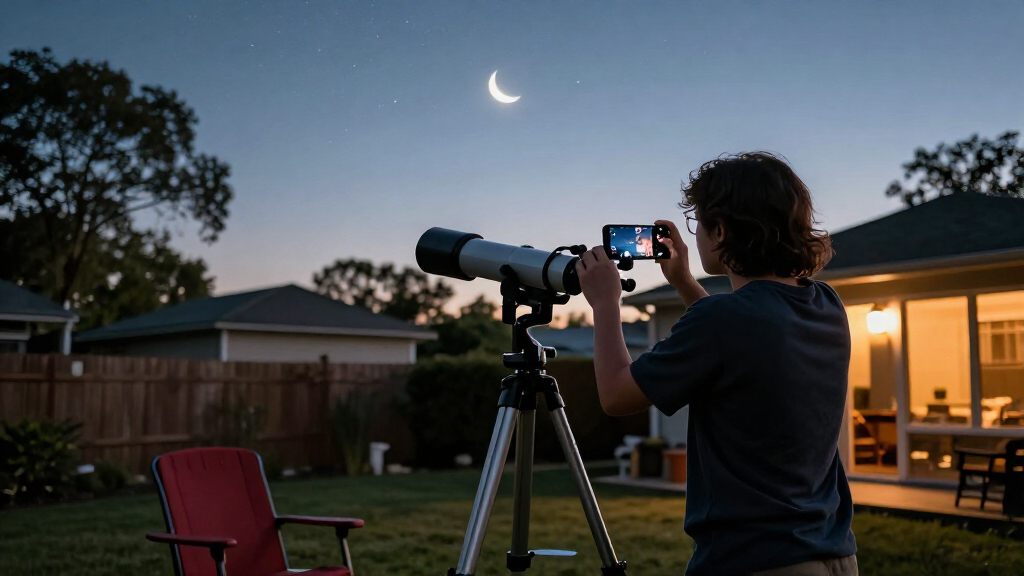
If you want to photograph something inspired by the scene, try a wide view of a dark, remote landscape or an observatory under a clear sky. A wide-angle lens can include the horizon and stars, while a longer focal length can frame a telescope or a bright celestial target. Neither approach captures neutrinos; both can help you tell a story about how people observe the cosmos.
One practical comparison helps: your camera gathers visible photons from the sky, while IceCube’s sensors watch for blue light created inside ice by particle interactions. So if a friend asks whether a home telescope could show the same thing, the honest answer is no—but it can show the stars whose distant processes neutrino observatories are built to study. [1]
Frequently Asked Questions
What is shown in NASA’s October 11, 2026 APOD?
It shows a detector string being lowered into a hole in Antarctic ice during IceCube’s construction. The photograph dates to 2010 and documents installation work, rather than showing a neutrino or a view through a telescope. [1]
Can a camera photograph a neutrino?
No. A camera cannot photograph a neutrino directly because the particle does not emit visible light like a star. IceCube detects faint blue light produced in the ice when a neutrino interaction creates charged particles. [1]
How does IceCube detect neutrinos?
IceCube places light sensors along strings embedded in clear Antarctic ice. When a high-energy neutrino interacts with an ice molecule, secondary charged particles can create blue Cherenkov light, which nearby sensors record. [1]
Can I see IceCube or its neutrinos from home?
You cannot see IceCube’s buried sensors or its neutrino events with a backyard telescope. You can view stars and other visible objects from a dark-sky location, or explore NASA’s APOD image to see the observatory’s construction. [1]
Why was IceCube in the news in October 2026?
On October 6, 2026, Francis Halzen received the Nobel Prize in Physics for decisive contributions to the IceCube Neutrino Observatory and the discovery of high-energy neutrinos of astrophysical origin. The recognition highlights how IceCube opened a way to study the universe using neutrinos. [2]
Conclusion
Remember the central idea: IceCube does not photograph neutrinos directly. Its buried sensors catch tiny flashes of blue light produced when rare neutrino interactions send charged particles through clear Antarctic ice. The APOD image shows the careful installation work that made this unusual observatory possible. [1]
If you photograph a scene inspired by IceCube, give the viewer a sense of scale—a cable, a person, a broad sweep of ice or night sky. The instrument may vanish beneath the surface, but its story reaches out across the universe.