TL;DR

Prime made for students and young adults
- Fast, free delivery for dorm and study essentials
- Prime Video and Amazon Music included
- Member-only deals
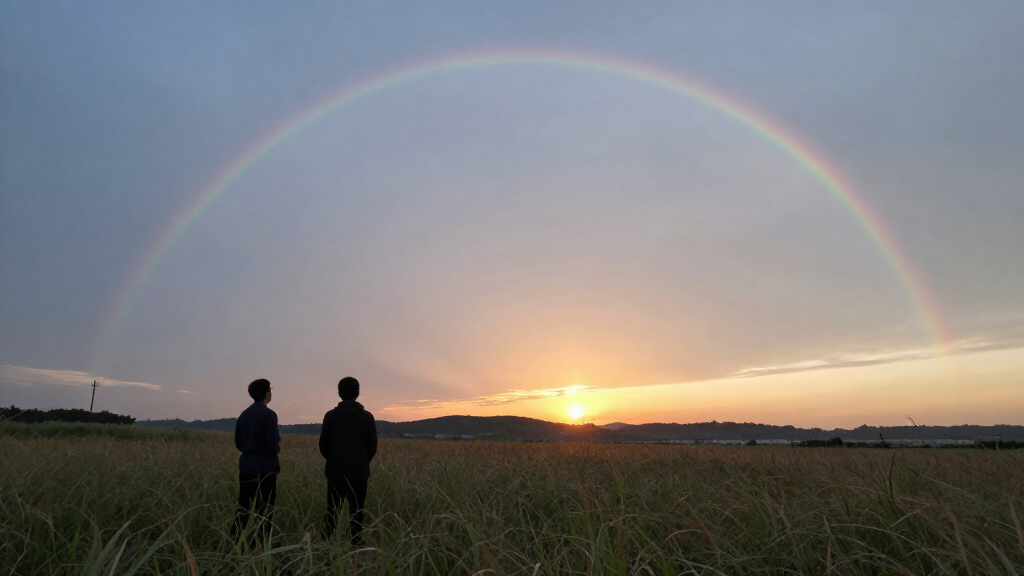
NASA’s Astronomy Picture of the Day for Oct. 20, 2026, features a phone photograph of a partial rainbow-like fan taken at sunset in Presenzano, Italy. NASA explains that the apparent forward location of the Sun is an illusion created by anticrepuscular rays; the rainbow itself still requires the Sun to be behind the observer.
NASA’s Astronomy Picture of the Day on Oct. 20, 2026, features a partial rainbow-like fan photographed at sunset in Presenzano, Italy, and explains why it appears to form toward the Sun. The photograph, credited to Aurelia Degli Esposti, shows an optical illusion: the Sun is actually behind the photographer, while anticrepuscular rays appear to converge across the sky in front.
NASA’s explanation says the picture shows an incomplete rainbow in a sunlit fan. A partial rainbow is not, by itself, especially unusual, the entry says. The striking feature is the apparent location of the Sun: it seems to be just below hills in front of the viewer, even though that is not the direction from which the sunlight producing the rainbow comes.
Rainbows form when sunlight interacts with falling raindrops and is reflected back toward an observer. That means the Sun must be behind the viewer to see a rainbow. In this scene, gaps in clouds near the setting Sun let rays cross the sky. From the photographer’s viewpoint, those rays appeared to converge in the opposite direction, creating what NASA calls anticrepuscular rays.
The image was taken with a phone at sunset the week before its Oct. 20 publication. NASA’s APOD entry says the photographer noticed the effect while hanging up laundry. The daily feature pairs a selected image with an explanation written by a professional astronomer; the Oct. 20 entry lists Robert Nemiroff, Jerry Bonnell, Cecilia Chirenti and Keighley Rockcliffe among its authors and editors.
Why the Sun Seems to Be Ahead
The image draws attention to the difference between where sunlight appears to converge and where its source actually is. Anticrepuscular rays are perspective effects: sunlight travels through gaps in clouds, and the nearly parallel beams can look as if they meet at a point on the opposite side of the sky. The apparent meeting point does not show the Sun’s true position.
That distinction matters for interpreting the rainbow in the photograph. A rainbow’s geometry depends on sunlight reaching raindrops and returning toward the observer, so the apparent forward-facing fan does not mean the rainbow has reversed direction. NASA’s explanation connects the familiar rainbow rule with a less commonly noticed sunset effect, helping viewers understand why the scene can look inconsistent with how rainbows ordinarily appear.
The image also shows how an everyday observation can document an atmospheric effect without specialized equipment. In this instance, a phone photograph recorded a brief-looking arrangement of cloud gaps, sunlight and rain. The APOD feature provides an explanation, rather than reporting a new scientific finding or a change in NASA policy.
As an affiliate, we earn on qualifying purchases.
How the Sunset Rays Form
Crepuscular rays are shafts of sunlight that appear to spread through breaks in clouds, often when the Sun is low. Although the beams travel in nearly parallel paths, perspective can make them seem to fan outward from the Sun. Anticrepuscular rays are the corresponding appearance on the opposite side of the sky, where the rays seem to converge.
NASA’s Oct. 20 description applies that geometry to the Presenzano image. It says cloud gaps near the setting Sun allowed light to cross the sky and appear to converge in front of the photographer. The result coincided with a partial rainbow in a sunlit area. The entry does not describe the image as a complete rainbow or suggest that the Sun was actually in front of the person taking the picture.
APOD is a daily NASA feature called the Astronomy Picture of the Day. Its entries present an image or photograph alongside a short explanation. This edition’s credit names Degli Esposti as photographer, with authors and editors listed separately; NASA identifies the service as connected to its Astrophysics Science Division at Goddard Space Flight Center, NASA Science Activation and Michigan Technological University.
As an affiliate, we earn on qualifying purchases.
What the Image Does Not Establish
The APOD entry identifies the location as Presenzano, Italy, gives a sunset setting and says the photograph was taken the previous week, but it does not provide an exact capture date or time. It also does not specify the weather conditions in detail, the camera settings, or how long the fan remained visible.
NASA’s caption offers an explanation of the appearance, but the supplied entry does not report measurements or a separate analysis of the image. It does not identify the particular rain shower or cloud structure involved, nor does it provide information about the photographer’s precise viewing direction. The explanation also does not claim that the phenomenon is rare; it says the unusual feature in this case is the apparent location of the Sun.
rainbow and atmospheric effect guidebook
As an affiliate, we earn on qualifying purchases.
As an affiliate, we earn on qualifying purchases.
The Next APOD Entry
The Oct. 20 entry is a daily image feature, not an announcement of a continuing observation campaign or a scheduled scientific follow-up. NASA’s page lists the next picture as “open space”, without additional details in the supplied material. No further analysis of the Presenzano photograph or related measurements are specified.
Readers can use the APOD caption to distinguish the apparent convergence of anticrepuscular rays from the actual direction of the Sun. The published information does not say whether additional images of the same sunset exist or whether the photographer plans to share more documentation.
weatherproof phone case for outdoor photography
As an affiliate, we earn on qualifying purchases.
As an affiliate, we earn on qualifying purchases.
Key Questions
What is an anticrepuscular ray?
It is a beam of sunlight that appears to converge on the part of the sky opposite the Sun. NASA says the rays in this photograph crossed the sky through gaps in clouds near the setting Sun.
Was the Sun really in front of the photographer?
No. The apparent position is an optical effect. NASA explains that the Sun was behind the photographer, as required for the rainbow’s backward reflection from falling rain.
Where and when was the photograph taken?
NASA credits Aurelia Degli Esposti and identifies Presenzano, Italy, at sunset. The entry says it was taken the week before Oct. 20, 2026, but gives no exact capture date.
Was the rainbow complete?
No. NASA describes it as an incomplete rainbow visible within a sunlit fan. The caption says the partial appearance is not, by itself, especially unusual.
Source: primary
Halloween Picks
halloween
As an affiliate, we earn on qualifying purchases.