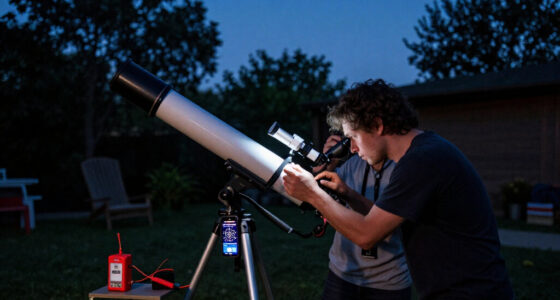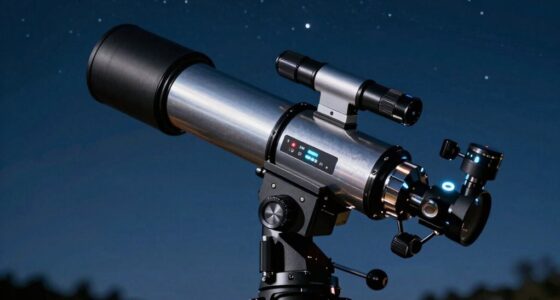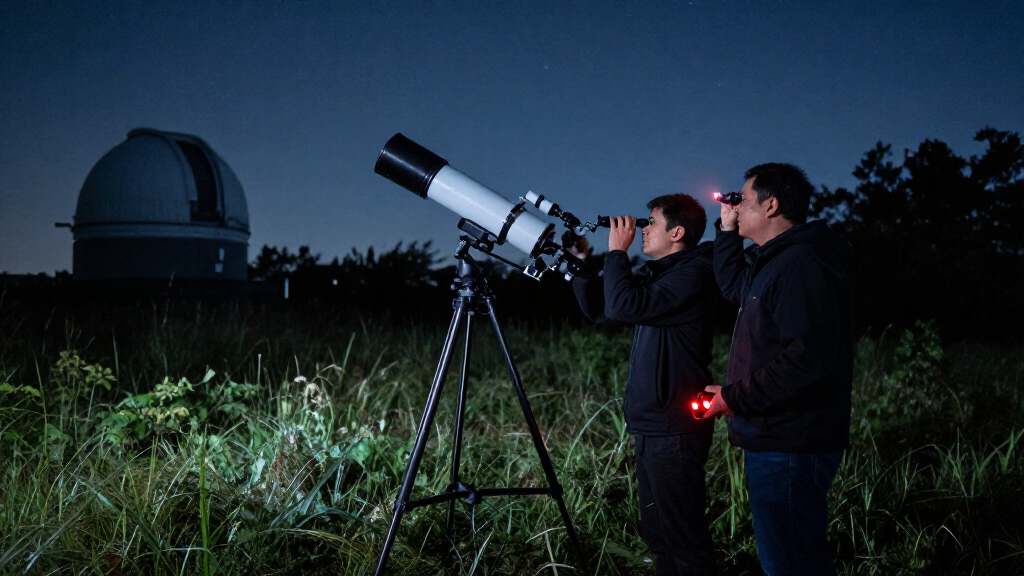
Computerized GoTo telescope mounts range from lightweight app-controlled trackers to heavy equatorial platforms built for imaging. My best overall pick is the Sky-Watcher EQ6-R, whose robust equatorial design and belt-driven motion make it a strong fit for serious astrophotography and larger telescope setups. For a lighter imaging rig, the HEQ5-R is a more manageable alternative, while the Star Adventurer GTi prioritizes portability. The main tradeoffs are payload capacity, setup complexity, portability, and whether you want a mount alone or a complete telescope system. Read on for the full breakdown and guidance on matching a mount to your observing plans.

Prime made for students and young adults
- Fast, free delivery for dorm and study essentials
- Prime Video and Amazon Music included
- Member-only deals
Key Takeaways
- The EQ6-R leads for substantial imaging setups: its equatorial format and belt-driven design suit buyers who prioritize tracking performance and payload headroom over easy transport.
- The HEQ5-R is the middle ground: it offers an imaging-oriented equatorial platform without the same bulk as a heavier-class mount, but buyers still need to match the scope and accessories to its capacity.
- Portability comes in different forms: the Star Adventurer GTi is a compact equatorial option, while the AZ-GTi favors quick, app-controlled visual observing and wide-field camera use.
- Several entries are complete telescope systems, not standalone mounts: the NexStar SE, SLT, and 130SLT packages bundle optics and GoTo control, so they are not direct substitutes for the AVX, EQ6-R, or other mount-only picks.
- Mount style changes the experience: equatorial mounts suit long-exposure tracking but require alignment and balancing; alt-az mounts are often simpler for visual observing, though their tracking behavior differs for long exposures.


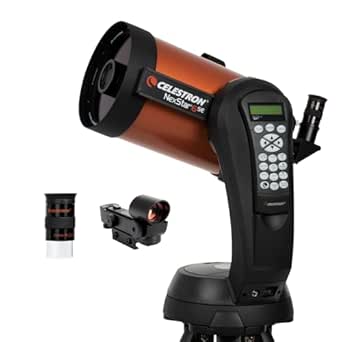
| computerized GoTo telescope mount | Mount type | Payload capacity | Object database |
|---|---|---|---|
| Celestron Advanced VX Computer | German equatorial | 30 lb | More than 40,000 objects |
| SkyWatcher HEQ5-R Equatorial M | Equatorial | 33 lb | More than 42,900 objects |
| Celestron NexStar 8SE Computer | Computerized altitude-azimuth, single fork arm | — | More than 40,000 objects |
| Sky-Watcher EQ6-R | German equatorial | 44 lb | More than 42,000 objects |
| Explore Scientific iEXOS-100-2 | Equatorial | — | — |
| Celestron NexStar 130SLT Newto | Alt-azimuth | — | — |
| Sky-Watcher AZ-EQ6 SynScan GoT | Hybrid alt-azimuth/equatorial | 20kg (44lb), excluding counterweight | More than 42,900 objects |
| Sky-Watcher EQ-AL55i Pro Equat | Equatorial GoTo | 22lb | More than 42,900 objects |
| Sky-Watcher Star Adventurer GT | Equatorial GoTo tracking mount | 11lb | — |
| Sky-Watcher Sky-Watcher AZ-GTI | Computerized alt-azimuth GoTo | 11lb | — |
| Celestron NexStar 5SE Computer | — | — | Over 40,000 celestial objects |
| Celestron NexStar 127SLT Compu | — | — | — |
| Celestron NexStar 6SE Computer | — | — | — |
More Details on Our Top Picks
Celestron Advanced VX Computerized German Equatorial Mount, 30 lb Payload
The Celestron Advanced VX is a solid fit for observers who want a German equatorial GoTo mount with useful alignment help but do not need the heavier capacity of the EQ6-R. Its 30 lb payload, NexStar+ controller, and database of more than 40,000 objects make it suitable for a broad range of telescope setups, while All-Star Polar Alignment can help when Polaris is obstructed. Periodic error correction adds tracking adjustment for longer observing sessions. Compared with the Sky-Watcher HEQ5-R, the Advanced VX has a lighter listed kit weight and a slightly lower payload, but it lacks the HEQ5-R’s built-in WiFi and belt-drive system. The tradeoff is a substantial 47 lb kit and reliance on an external DC power supply, so it is less appealing for frequent carry-in observing.
Pros:- 30 lb payload accommodates a range of telescope and accessory combinations.
- NexStar+ controller provides a database of more than 40,000 objects and multiple alignment procedures.
- All-Star Polar Alignment can assist when Polaris is not visible.
- Programmable periodic error correction and sidereal, solar, and lunar tracking support varied observing.
Cons:- The complete kit weighs 47 lb, making repeated transport less convenient.
- Requires a DC power supply, which adds an external setup item.
- Its payload is lower than the HEQ5-R and EQ6-R options in this group.
Best for: Visual observers who want a capable equatorial GoTo mount for mid-sized telescopes and value hand-control alignment options over built-in wireless control.
Not ideal for: Imagers seeking the higher payload and belt-driven design of the EQ6-R, or observers who need a lightweight, battery-ready setup.
- Mount type:German equatorial
- Payload capacity:30 lb
- Tripod legs:2-inch stainless steel
- Latitude adjustment range:7°–77°
- Total kit weight:47 lb
- Hand control:NexStar+
- Object database:More than 40,000 objects
- Tracking rates:Sidereal, solar, and lunar
- Power source:DC power supply
Our verdict“Choose the Advanced VX for flexible visual observing and guided alignment; choose the HEQ5-R or EQ6-R if greater payload or belt-driven tracking matters more.”
SkyWatcher HEQ5-R Equatorial Mount – Upgraded Mid‑Tier EQ Mount for Astrophotography, White
The SkyWatcher HEQ5-R puts wireless operation and belt-driven tracking at the center of its GoTo appeal. Its built-in WiFi lets users control the mount through the SynScan Pro app, while the dual belt drives are intended to keep slewing quiet and tracking smooth. A 33 lb payload with two included counterweights gives it more stated capacity than the Advanced VX, making it a stronger match for observers adding a camera and imaging accessories. Its 42,900-plus-object database is also slightly larger than the Advanced VX’s. The main compromise is portability: at 66 lb fully assembled, it is a substantial setup, and a USB cable for PC connection is not included. Buyers wanting still more capacity can look to the EQ6-R, though that mount is heavier and less convenient to move.
Pros:- Built-in WiFi supports wireless control through the SynScan Pro app.
- Dual belt drives and all-metal gears are designed for quiet, precise tracking.
- 33 lb payload and two included 11 lb counterweights suit a range of telescope setups.
- Object database includes more than 42,900 targets.
Cons:- Fully assembled weight of about 66 lb makes transport and setup demanding.
- USB cable for PC connection is not included.
- Its payload remains below the 44 lb EQ6-R capacity.
Best for: Astrophotographers who want app-based GoTo control, belt-driven tracking, and capacity for a camera-equipped telescope without stepping up to the EQ6-R.
Not ideal for: Observers who regularly transport their mount assembled, or buyers who want PC connectivity without sourcing a separate USB cable.
- Mount type:Equatorial
- Payload capacity:33 lb
- Built-in WiFi:Yes
- Drive system:Dual belt drives
- Object database:More than 42,900 objects
- Included counterweights:Two 11 lb counterweights
- Fully assembled weight:66 lb
- Maximum slewing speed:Up to 3.4°/sec (800x)
Our verdict“Pick the HEQ5-R if app control and belt-driven tracking matter more than easy transport or the EQ6-R’s added payload.”
Celestron NexStar 8SE Computerized Telescope – Schmidt-Cassegrain
The NexStar 8SE is a telescope-and-mount package rather than a standalone equatorial mount, which makes it the most direct route here to computerized observing with an included optical tube. Its 8-inch Schmidt-Cassegrain optics and SkyAlign system pair substantial aperture with a setup process that does not require the user to identify alignment stars. The NexStar+ hand control offers more than 40,000 targets, matching the Advanced VX’s database while controlling the included single-arm altazimuth mount. That design is simpler for visual use than the German equatorial mounts from Sky-Watcher, but it is not the right substitute for an equatorial imaging platform: field rotation limits long-exposure astrophotography. The package is also dependent on separately supplied power options. Choose it for accessible visual observing, not for a mount intended to grow into serious long-exposure imaging.
Pros:- Includes an 8-inch Schmidt-Cassegrain optical tube rather than requiring a separate telescope.
- SkyAlign accepts three bright celestial objects without requiring their names.
- NexStar+ hand control includes more than 40,000 targets.
- Compact telescope format pairs substantial aperture with a portable visual-observing setup.
Cons:- Single-arm altazimuth mount is not suited to long-exposure imaging in the way the equatorial HEQ5-R is.
- Power options are not included, so buyers need to provide an adapter, batteries, or external supply.
- This is a complete telescope package, not a standalone mount for another optical tube.
Best for: Newer observers who want an 8-inch telescope, computerized target finding, and straightforward alignment in one visual-observing package.
Not ideal for: Astrophotographers building a long-exposure imaging rig, or buyers who need a standalone mount for an existing telescope.
- Mount type:Computerized altitude-azimuth, single fork arm
- Optical design:Schmidt-Cassegrain
- Aperture:8 inches
- Focal length:2,032 mm
- Hand control:NexStar+
- Object database:More than 40,000 objects
- Alignment feature:SkyAlign
- Power options:8 AA batteries, 12V AC adapter, or compatible external power source; not included
Our verdict“Choose the NexStar 8SE for guided visual observing with an included 8-inch telescope, but choose an equatorial mount such as the HEQ5-R for imaging.”
Sky-Watcher EQ6-R – Fully Computerized GoTo German Equatorial Telescope Mount – Belt-driven, Motorized, Computerized Hand Controller with 42,900+ Celestial Object Database
With a stated 44 lb payload, the Sky-Watcher EQ6-R has the most capacity among these standalone equatorial mounts, making it the clear choice for larger optical tubes and imaging trains. Its belt-driven stepper motors are designed for quiet slewing, and the SynScan controller provides more than 42,000 objects plus periodic-error-correction training. An illuminated polar finder and hand-controller alignment options support setup when a clear view of Polaris is unavailable. Compared with the HEQ5-R, the EQ6-R carries more weight and offers more stated capacity, but its 44 lb mount weight and two-box kit make transport and storage a bigger commitment. It also needs a 12V supply rated at least 4A, and computer control requires a user-supplied USB-B cable. This is a capacity-first mount, not a pick for frequent lightweight travel.
Pros:- 44 lb payload capacity supports heavier telescope and imaging-accessory combinations.
- Belt-driven stepper motors provide quiet slewing and precise movement.
- SynScan controller has a database of more than 42,000 objects and periodic-error-correction training.
- Illuminated polar finder and alternate polar-alignment procedure support varied observing locations.
Cons:- Mount weighs 44 lb, before accounting for the tripod and other kit components.
- Requires a 12V power supply rated at least 4A.
- USB-B cable for direct PC connection is user-supplied.
Best for: Astrophotographers and visual observers using heavier telescope assemblies who want substantial payload headroom and equatorial GoTo tracking.
Not ideal for: Travel-focused observers or buyers who prioritize a lighter rig; the HEQ5-R or Advanced VX is easier to manage than this 44 lb mount.
- Mount type:German equatorial
- Payload capacity:44 lb
- Drive system:Belt-driven stepper motors
- Object database:More than 42,000 objects
- Polar alignment:Illuminated polar finder and hand-controller alignment option
- Power requirement:12V, 4A minimum
- Mount weight:44 lb
- Mounting saddle:D- and V-style
Our verdict“Choose the EQ6-R when payload headroom for a heavy telescope or imaging rig outweighs the burden of transporting a large mount.”
Explore Scientific iEXOS-100-2 PMC-Eight GoTo Equatorial Mount and Tripod
The Explore Scientific iEXOS-100-2 takes a different approach from the heavier hand-controller mounts in this group: its PMC-Eight system pairs eight independent CPUs with WiFi and Bluetooth app control. The ExploreStars app handles alignment and target selection from a compatible tablet, while clutched dual-axis worm gears and belt-driven stepper motors support smooth movement. A polar-alignment sight hole and freely moving axes are useful for positioning and balancing a telescope. Compared with the Sky-Watcher EQ6-R, this is the more compact, app-oriented option, but the supplied information does not state a payload capacity, so I would not choose it for a heavy imaging train without checking that limit against the intended setup. Tablet dependence is another tradeoff: unlike a hand-control-first mount such as the Advanced VX, it is less convenient if a compatible device is unavailable.
Pros:- PMC-Eight system uses eight independent CPUs for mount control.
- WiFi and Bluetooth enable wireless operation through the ExploreStars app.
- Dual-axis worm gears and belt-driven stepper motors support smooth, quiet movement.
- Polar-alignment sight hole and clutched axes aid setup and balancing.
Cons:- The supplied product data does not state a payload capacity, complicating equipment matching.
- Operation depends on a compatible tablet and the ExploreStars app.
- No focuser is included.
Best for: Observers assembling a lighter equatorial setup who prefer tablet-based alignment and wireless control over a traditional hand controller.
Not ideal for: Owners of heavy telescope-and-camera combinations who need a clearly stated high payload rating, or observers who do not want app-dependent control.
- Mount type:Equatorial
- Control system:PMC-Eight with eight independent CPUs
- Wireless connectivity:WiFi and Bluetooth
- Control app:ExploreStars
- Drive system:Dual-axis worm gears with belt-driven stepper motors
- Polar alignment:Polar-alignment sight hole
- Compatible device:Tablet
- Focuser:Not included
Our verdict“Pick the iEXOS-100-2 for wireless, tablet-led control in a lighter setup, but verify payload suitability before pairing it with imaging equipment.”
Celestron NexStar 130SLT Newtonian Reflector Telescope – Computerized GoTo
The NexStar 130SLT combines a computerized GoTo mount and a 130mm Newtonian telescope, making it a practical entry point for families who want a complete observing setup rather than a mount alone. Its hand control searches a database of more than 4,000 objects, while SkyAlign uses three bright objects to establish alignment. The larger aperture gives it more light-gathering ability than the 114SLT described in the product information, helping with brighter deep-sky targets as well as the Moon and planets.
Compared with the standalone Sky-Watcher AZ-GTi, this is less adaptable to different tubes and cameras but arrives as a matched telescope-and-mount package. Its tradeoffs are the alt-azimuth mount, which is not the choice here for long-exposure deep-sky imaging, and the need for eight AA batteries or a separate 12V power source. I’d choose it for visual observing, not as a flexible imaging platform.
Pros:- 130mm aperture offers more light gathering than the 114SLT mentioned in the product description.
- NexStar+ hand control provides GoTo access to more than 4,000 celestial objects.
- SkyAlign simplifies setup by aligning from three bright objects.
- Compact telescope-and-mount package includes a StarPointer red-dot finder and two eyepieces.
Cons:- Alt-azimuth tracking is not suited to long-exposure deep-sky astrophotography.
- Eight AA batteries are required for mobile use and are not included.
- A complete telescope package is less flexible than a standalone mount such as the AZ-GTi.
Best for: Families and first-time observers who want a portable, ready-to-use computerized telescope for visual viewing of the Moon, planets, and brighter deep-sky objects.
Not ideal for: Astrophotographers planning long exposures or owners who want to switch among heavier telescope tubes; its alt-azimuth mount and packaged optical tube are less suited to those goals.
- Optical design:Newtonian reflector
- Aperture:130mm
- Focal length:650mm
- Mount type:Alt-azimuth
- GoTo database:More than 4,000 objects
- Alignment:SkyAlign
- Included eyepieces:20mm and 9mm
- Power:12V DC or 8 AA batteries; batteries not included
Our verdict“Choose the NexStar 130SLT for portable visual astronomy in a complete GoTo package, but pick a standalone equatorial mount for long-exposure imaging.”
Sky-Watcher AZ-EQ6 SynScan GoTo Hybrid Equatorial Mount
The Sky-Watcher AZ-EQ6 earns the premium hybrid role by offering a choice between alt-azimuth observing and equatorial operation for imaging. That flexibility can suit an owner who wants one substantial mount for different observing styles, while its 20kg payload capacity accommodates heavier equipment than the 22-pound EQ-AL55i Pro. SynScan provides automated GoTo access to more than 42,900 objects, and dual encoders let you move the mount manually without giving up electronic positioning.
The range comes with real costs in handling and setup. At a listed mount weight of 15kg—and a shipping weight of 91.2 pounds—this is far less convenient to move than the 8.6-pound AZ-GTi. The added capacity also calls for suitable counterweighting, and the hybrid controls are a bigger learning task than a compact visual mount. I’d favor it when versatility and payload matter more than quick transport.
Pros:- Switches between alt-azimuth and equatorial configurations.
- 20kg payload capacity supports heavier telescope and imaging setups.
- SynScan GoTo database lists more than 42,900 celestial objects.
- Dual encoders support manual movement while retaining electronic positioning.
Cons:- The 15kg mount weight and 91.2-pound listed shipping weight make transport challenging.
- Using the full payload capacity requires suitable counterweighting.
- Dual-mode setup and controls can be demanding for newcomers.
Best for: Experienced observers and astrophotographers with heavier equipment who want one mount that can operate in both alt-azimuth and equatorial modes.
Not ideal for: Beginners or frequent travelers who need a simple, light setup; its weight, counterweight requirements, and dual-mode configuration add substantial handling and setup demands.
- Mount type:Hybrid alt-azimuth/equatorial
- Payload capacity:20kg (44lb), excluding counterweight
- Mount weight:15kg (33lb)
- Listed shipping weight:91.2lb
- Control system:SynScan GoTo
- Object database:More than 42,900 objects
- Positioning technology:Freedom Find dual encoders
- Compatible device:Camera
Our verdict“Choose the AZ-EQ6 if you need high payload capacity and two mount modes, but skip it if easy transport or beginner-friendly setup is the priority.”
Sky-Watcher EQ-AL55i Pro Equatorial GoTo Mount
The EQ-AL55i Pro is a mid-capacity equatorial GoTo mount for buyers who want wireless control and imaging connections without stepping up to the heavier AZ-EQ6. Its 22-pound payload rating suits a moderate telescope setup, and Wi-Fi, Bluetooth, and ASCOM compatibility give users several ways to integrate control. The wide 0–90° latitude range supports use across varied observing locations, while the guidescope and SNAP ports are useful additions for autoguiding and camera control.
Compared with the Star Adventurer GTi, this mount offers nearly twice the stated payload capacity, but it is not the more portable choice: the listed weight is 25.3 pounds, and its dimensions are substantial. The listing also says the hand controller is sold separately while including it in the components list, so buyers should verify what is supplied. The optical tube and pier extension are also separate purchases. I’d pick it for a connected, moderate imaging rig, not a compact travel kit.
Pros:- 22-pound payload capacity exceeds the Star Adventurer GTi’s 11-pound limit.
- Wi-Fi, Bluetooth, and ASCOM compatibility offer multiple control routes.
- Guidescope and SNAP ports support autoguiding and camera connections.
- 0–90° latitude range accommodates a broad range of observing locations.
Cons:- At 25.3 pounds, it is less convenient to carry than the AZ-GTi or Star Adventurer GTi.
- The optical tube and pier extension are listed as sold separately.
- The supplied hand-controller information is inconsistent across the listing.
Best for: Imagers and observers building a moderate-weight equatorial setup who want wireless or ASCOM control plus dedicated guiding and camera ports.
Not ideal for: Travel-first users or anyone expecting a complete telescope package; the mount is relatively bulky, and the optical tube and pier extension are listed as separate items.
- Mount type:Equatorial GoTo
- Payload capacity:22lb
- Item weight:25.3lb
- Latitude range:0–90°
- Control system:SynScan GoTo
- Object database:More than 42,900 objects
- Connectivity:Wi-Fi and Bluetooth
- Compatibility and ports:ASCOM; guidescope and SNAP ports
- Warranty:Two years
Our verdict“Choose the EQ-AL55i Pro for a connected, moderate-capacity equatorial setup, but check the included controller and accessories before planning your build.”
Sky-Watcher Star Adventurer GTi GoTo Mount Kit with Tripod and Pier Extension
The Star Adventurer GTi brings equatorial GoTo tracking to a compact kit that already includes a tripod, pier extension, counterweight bar, and 5-pound counterweight. Its illuminated polar scope helps with polar alignment, while built-in Wi-Fi and SynScan Pro app compatibility make smartphone control part of the setup. For a small imaging rig, those inclusions make it more field-ready than the EQ-AL55i Pro, which is a more capable but heavier mount with some components sold separately.
The main limit is its 11-pound payload capacity, half the EQ-AL55i Pro’s stated rating, so heavier optical tubes and imaging accessories are out of scope. The listed 26-pound item weight also complicates the portability implied by its compact mount design; the full kit is not as light as the AZ-GTi. I’d choose it for a modest equatorial camera or telescope setup, especially when alignment tools and included support gear matter.
Pros:- Equatorial GoTo tracking in a kit that includes a tripod, pier extension, and counterweight hardware.
- Built-in illuminated polar scope helps with polar alignment.
- Wi-Fi and SynScan Pro app compatibility enable smartphone control.
- Lunar, solar, and sidereal tracking rates cover common observing targets.
Cons:- 11-pound payload capacity limits telescope and camera combinations.
- Listed item weight of 26 pounds makes the complete kit less effortless to carry than the AZ-GTi.
- A small equatorial platform is less adaptable to heavier setups than the EQ-AL55i Pro.
Best for: Portable astrophotographers with a lightweight telescope or camera setup who want an equatorial GoTo kit with tripod, pier extension, and counterweight included.
Not ideal for: Owners of heavier imaging rigs or buyers seeking the lightest grab-and-go option; its 11-pound payload limit and 26-pound listed item weight constrain those uses.
- Mount type:Equatorial GoTo tracking mount
- Payload capacity:11lb
- Item weight:26lb
- Control:Built-in Wi-Fi; SynScan Pro app compatible
- Polar scope:Built-in illuminated polar scope
- Tracking rates:Lunar, solar, sidereal
- Included components:Tripod, pier extension, counterweight bar, 5lb counterweight
- Maximum height:44.5in
- Warranty:Two-year limited warranty
Our verdict“Choose the Star Adventurer GTi for a lightweight equatorial imaging load and an included field kit, but move up to the EQ-AL55i Pro for more payload capacity.”
Sky-Watcher Sky-Watcher AZ-GTI – Portable Computerized GoTo Alt-Az Mount for On-The-Go Astronomy – WiFi Enabled App Controlled – Time-Lapse and Panorama Photography Capable (S21110)
At 8.6 pounds, the AZ-GTi is the most travel-focused mount in this group and a strong match for small telescope tubes or a DSLR. It creates its own Wi-Fi network for SynScan Pro smartphone control, and Freedom Find dual encoders let you move the scope manually without losing electronic alignment. The included tripod and pier extension make this a ready-to-carry package; compared with the Star Adventurer GTi, it is lighter and uses an alt-azimuth layout rather than an equatorial one.
That convenience limits its reach. The 11-pound payload capacity rules out heavier rigs, and alt-azimuth tracking is a weaker fit for long-exposure deep-sky imaging than the equatorial Star Adventurer GTi. Its app-based controls may also be less appealing to someone who wants a dedicated handset. I’d choose it for casual visual observing, travel, and camera panoramas or time-lapse—not for a growing, heavy imaging setup.
Pros:- At 8.6 pounds, it is much lighter than the Star Adventurer GTi kit’s listed 26-pound weight.
- Wi-Fi and SynScan Pro app support smartphone-based GoTo control.
- Freedom Find dual encoders allow manual slewing without losing alignment.
- Includes an adjustable tripod and pier extension, with a SNAP port for camera triggering.
Cons:- 11-pound payload capacity limits it to smaller telescope and camera setups.
- Alt-azimuth tracking is less suitable than an equatorial mount for long-exposure deep-sky imaging.
- App-based control may not suit buyers who prefer a dedicated hand controller.
Best for: Traveling visual observers and DSLR users with a small telescope or camera who want lightweight GoTo control, app operation, and a supplied tripod.
Not ideal for: Astrophotographers pursuing long exposures or owners of heavier telescope rigs; the alt-azimuth design and 11-pound capacity are limiting compared with equatorial, higher-capacity mounts.
- Mount type:Computerized alt-azimuth GoTo
- Mount weight:8.6lb
- Payload capacity:11lb
- Control:Built-in Wi-Fi; SynScan Pro app
- Positioning technology:Freedom Find dual encoders
- Power options:AA battery compartment or 12V input
- Included components:Tripod and pier extension
- Maximum tripod height:53in with pier extension
- Photography features:Time-lapse, panorama, and SNAP camera port
Our verdict“Choose the AZ-GTi for lightweight visual observing and camera panoramas, but select an equatorial mount for long-exposure imaging.”
Celestron NexStar 5SE Computerized Schmidt-Cassegrain Telescope
The NexStar 5SE suits observers who want computerized object finding without carrying a larger telescope. Its 5-inch Schmidt-Cassegrain optics and compact form make it easier to transport than the 6SE, while SkyAlign can use three bright stars or planets to get the mount tracking. The database of more than 40,000 objects gives beginners plenty to locate without learning the sky first. Unlike the NexStar 127SLT, this model includes a built-in wedge for polar alignment, which opens a path to long-exposure imaging. That feature has limits: polar alignment takes extra setup, and the alt-az GoTo configuration is not a shortcut to imaging. Wireless control and automated alignment also call for optional accessories, so the 5SE is most compelling for visual observers who value portability and future flexibility.
Pros:- Compact 5-inch Schmidt-Cassegrain design is easier to transport than the NexStar 6SE.
- GoTo system locates and tracks targets from a database of more than 40,000 celestial objects.
- SkyAlign can use three bright stars or planets for alignment.
- Built-in wedge supports polar alignment for long-exposure astrophotography.
Cons:- Long-exposure imaging requires the added step of polar alignment.
- Wireless control and automated alignment may require optional compatible accessories.
- Smaller aperture gathers less light than the NexStar 6SE.
Best for: Portable visual observers who want computerized tracking now and the option to try polar-aligned long-exposure imaging later.
Not ideal for: Buyers who want a mount dedicated to long-exposure astrophotography or wireless control out of the box; polar alignment and compatible accessories add setup and cost.
- Optical design:Schmidt-Cassegrain
- Aperture:5 inches
- Mount:Computerized GoTo
- Object database:Over 40,000 celestial objects
- Alignment technology:SkyAlign
- Astrophotography feature:Built-in wedge for polar alignment
- Included hand control:NexStar+
- Warranty:2 years
Our verdict“Choose the 5SE if portability matters more than the added light-gathering capacity of the 6SE and you want a built-in route to polar alignment.”
Celestron NexStar 127SLT Computerized GoTo Maksutov-Cassegrain Telescope
The NexStar 127SLT is the compact, long-focal-length choice in this group: its 127 mm Maksutov-Cassegrain optics and 1500 mm focal length suit lunar and planetary observing, while the computerized mount helps find and track targets from a large object database. Compared with the NexStar 5SE, it arrives with two eyepieces, a red-dot finder, and an adjustable steel tripod, making it a ready-to-start package rather than a setup centered on add-on flexibility. SkyAlign and the pre-assembled tripod also reduce initial setup work. The tradeoff is a single-fork altitude-azimuth mount and battery-powered operation, which is less tailored to polar-aligned imaging than the 5SE’s built-in wedge. Manual focus means the observer must make adjustments, and batteries need to be available for computerized tracking.
Pros:- 127 mm Maksutov-Cassegrain optics and 1500 mm focal length are suited to lunar and planetary viewing.
- GoTo system locates and tracks objects from a database of more than 40,000 celestial objects.
- SkyAlign and a pre-assembled adjustable steel tripod support straightforward setup.
- Includes a StarPointer red-dot finder and 20 mm and 9 mm eyepieces.
Cons:- Manual focus requires the observer to adjust focus at the telescope.
- Computerized operation depends on battery power.
- The altitude-azimuth single-fork mount is less suited to polar-aligned long-exposure imaging than the NexStar 5SE with its built-in wedge.
Best for: New visual observers seeking a portable, bundled GoTo telescope for the Moon and planets, with basic accessories included.
Not ideal for: Astrophotographers seeking a polar-aligned setup or observers who want mains power and automated focusing; this model uses an alt-az mount, batteries, and manual focus.
- Optical design:Maksutov-Cassegrain
- Aperture:127 mm
- Focal length:1500 mm
- Mount:Computerized altitude-azimuth single fork arm
- Eyepieces:20 mm and 9 mm
- Focus type:Manual
- Finderscope:StarPointer red-dot finderscope
- Power source:Battery powered
- Warranty:2 years
Our verdict“Pick the 127SLT for a portable, accessory-included GoTo setup focused on visual lunar and planetary observing, not polar-aligned imaging.”
Celestron NexStar 6SE Computerized Schmidt-Cassegrain Telescope
Among these three complete GoTo telescopes, the NexStar 6SE gives the clearest step up for observers who can carry a larger optical tube: its 6-inch aperture gathers more light than the 5SE’s 5-inch optics, while the computerized mount locates and tracks targets across a database of more than 40,000 objects. That added aperture makes it the stronger fit for observers who want to explore beyond bright lunar and planetary targets. SkyAlign keeps setup accessible, and the included 25 mm eyepiece and StarPointer finder cover the basics. The NexStar 5SE is easier to prioritize for portability and includes a built-in wedge; the 6SE description does not list one. The 6SE also requires a separate power source, and its manual focus and single-fork alt-az mount make it less suited to buyers seeking an imaging-first mount.
Pros:- Six-inch aperture gathers more light than the NexStar 5SE’s 5-inch optics.
- Computerized GoTo mount locates and tracks targets from a database of more than 40,000 objects.
- SkyAlign can align the telescope using three bright stars or planets.
- StarBright XLT coating, 25 mm eyepiece, and StarPointer red-dot finder are specified.
Cons:- Power source is not included; operation requires batteries, a 12 V AC adapter, or a compatible Celestron PowerTank.
- Manual focus requires user adjustment.
- The listed single-fork altitude-azimuth mount lacks the NexStar 5SE’s built-in wedge for polar alignment.
Best for: Visual observers who want a portable computerized telescope with more aperture than the 5SE for lunar, planetary, and deep-sky viewing.
Not ideal for: Buyers prioritizing the smallest travel setup or a built-in path to polar alignment; the 5SE is more compact and includes a wedge, while the 6SE’s power source is not included.
- Optical design:Schmidt-Cassegrain
- Aperture:6 inches
- Focal length:1500 mm
- Mount:Computerized altitude-azimuth single fork arm
- Eyepiece:25 mm
- Finderscope:StarPointer red dot
- Field of view:1.7 degrees
- Coating:StarBright XLT
- Power source:8 AA batteries, 12 V AC adapter, or compatible Celestron PowerTank; not included
Our verdict“Choose the 6SE over the 5SE if greater aperture for visual observing matters more than the smaller model’s portability and built-in polar-alignment wedge.”
How We Picked
I compared these 13 options by asking what a buyer receives and what kind of observing or imaging each setup supports. The central criteria were mount type, useful payload headroom, tracking approach, setup demands, portability, control method, and whether the listing describes a mount alone or a complete telescope package. Those distinctions matter more than a feature count: a compact alt-az mount can be a better first visual setup than a large equatorial mount, while a serious imaging rig needs a steadier platform and room for its camera and accessories.
The ranking favors flexibility and a clear role within the category, not one universal winner. The EQ6-R ranks highest for buyers seeking a capable equatorial imaging base; lighter equatorial mounts follow for people who need less bulk or have smaller payloads. Portable and app-led mounts suit travel and casual observing, while bundled NexStar systems are judged as accessible telescope packages rather than as standalone upgrade platforms. I also account for tradeoffs: heavier capacity brings transport and setup costs, and bundled optics can be convenient but limit how directly the system compares with a mount-only purchase.
| computerized GoTo telescope mount | Object database |
|---|---|
| Celestron Advanced VX Computer | More than 40,000 objects |
| SkyWatcher HEQ5-R Equatorial M | More than 42,900 objects |
| Celestron NexStar 8SE Computer | More than 40,000 objects |
| Sky-Watcher EQ6-R | More than 42,000 objects |
| Explore Scientific iEXOS-100-2 | — |
| Celestron NexStar 130SLT Newto | — |
| Sky-Watcher AZ-EQ6 SynScan GoT | More than 42,900 objects |
| Sky-Watcher EQ-AL55i Pro Equat | More than 42,900 objects |
| Sky-Watcher Star Adventurer GT | — |
| Sky-Watcher Sky-Watcher AZ-GTI | — |
| Celestron NexStar 5SE Computer | Over 40,000 celestial objects |
| Celestron NexStar 127SLT Compu | — |
| Celestron NexStar 6SE Computer | — |
Factors to Consider When Choosing Computerized GoTo Telescope Mounts
Before choosing a computerized GoTo mount, decide what job it needs to do and what equipment it must carry. A mount that feels convenient for a short visual session may not be the right base for long-exposure imaging, and a telescope bundle may not offer the upgrade path of a separate mount.
Choose Between Equatorial and Alt-Az Tracking
An equatorial mount is designed to follow the apparent motion of the sky around one aligned axis, which makes it the usual starting point for long-exposure deep-sky imaging. That benefit comes with polar alignment, counterweights on many models, and more involved setup. Alt-az mounts move horizontally and vertically, so they are often easier to use for visual sessions and quick setup. For long exposures, field rotation can limit what an alt-az design can capture without additional equipment or processing. Avoid buying an equatorial mount only because it sounds more advanced if most of your observing will be brief visual sessions.
Size the Mount for the Whole Imaging Train
Payload planning should include the telescope, finder, camera, guide equipment, cables, and any accessories that remain attached while tracking. A scope that sits just below a mount’s stated limit may leave little room for vibration control or future additions. Long tubes and heavy cameras can also place more leverage on a mount than a compact setup of similar weight. For astrophotography, buyers commonly choose a mount with more capacity than their current bare telescope requires. That adds cost and carrying weight, so weigh upgrade plans against how often you will transport the rig.
Decide Whether a Telescope Bundle Fits Your Plans
A bundled NexStar system includes optics and GoTo control in one purchase, which can simplify a first setup and reduce the need to match separate components. Its tradeoff is that the mount is tied to the supplied telescope package, so it may be less convenient if you want to change optical tubes later. A mount-only model lets you choose a telescope and accessories independently, but you must check compatibility and budget for the complete system. Do not compare a bundle and a mount-only listing as though they include the same equipment. Check what is included, what must be purchased separately, and whether your preferred telescope can attach to the mount.
Match Portability to Your Actual Observing Site
A mount’s portability depends on more than its listed weight: tripod, counterweights, power source, telescope, and cases all affect the load you carry. A compact mount can make sense for travel or a balcony, but a light setup may be less steady with a longer telescope or in wind. A heavier mount may be a better fit for a permanent or semi-permanent observing site, where capacity and stability matter more than quick packing. Consider how far you walk from your vehicle and whether you can leave equipment assembled. Choosing for the observing location you use most often is more useful than choosing for an occasional ideal trip.
Check the Control System and Power Requirements
GoTo accuracy depends on setup as well as the electronics: the mount needs correct location and time data, a suitable alignment, and a stable power source. Hand-controller and app-based systems suit different preferences, so check whether you want a phone to be central to operation or prefer dedicated controls. Wi-Fi and app features can streamline target selection, but they do not remove the need for alignment or reliable power. A cable, battery, or power-supply plan can prevent a session from ending early. Before buying, confirm what control and power accessories are included and whether they fit your observing routine.
Pay for Capacity and Features You Will Actually Use
Extra capacity, more flexible mount modes, and advanced control options can be worthwhile if they match a planned telescope or imaging workflow. They bring costs in bulk, setup time, and sometimes a steeper learning curve. For visual observing with a modest telescope, a simpler GoTo package may be easier to use than a large equatorial platform. For imaging, spending more on a mount can make more sense than moving up to a larger optical tube while keeping a marginal mount. Write down your current payload and likely next upgrade before deciding whether additional capacity is useful or merely unused overhead.
Frequently Asked Questions
Can I use a computerized GoTo telescope mount for astrophotography?
Yes, but suitability depends on mount type, payload, tracking behavior, and the kind of images you want to capture. Equatorial mounts are generally the more practical choice for long-exposure deep-sky imaging because they track the sky without the same field-rotation problem as an alt-az mount. A GoTo database helps locate targets, but it does not by itself guarantee accurate tracking or sharp images. Include the camera and guiding equipment in your payload calculation, and plan on learning alignment and balancing. For visual observing or short exposures, a simpler alt-az setup may be a more comfortable fit.
Should I buy a mount-only model or a complete NexStar telescope package?
A complete package is appealing if you want a coordinated telescope and GoTo system without selecting every component separately. A mount-only purchase makes more sense if you already own a compatible optical tube or expect to choose different telescopes over time. Compare the total system you will need, not just the mount listing: power, tripod, eyepieces, cameras, and adapters may be separate. Bundled systems can make the first purchase simpler, while separate components offer more freedom to build around a specific use. Your existing equipment and upgrade plans should decide between them.
Is a higher payload rating always better for astrophotography?
More capacity can provide useful headroom for a telescope, camera, guide scope, and accessories, but a rating alone does not predict image quality. Tube length, balance, wind, tripod stability, and tracking behavior also affect how well a setup performs. A larger mount usually takes more effort to transport and set up, which can discourage regular use if you observe away from home. Match the mount to the full imaging train and leave practical room for additions rather than choosing by the largest number. If portability matters, a smaller well-matched rig may serve you better than unused capacity.
Can a phone-controlled GoTo mount work without an internet connection?
Many app-controlled mounts use a local wireless connection, so target control may not require an active internet connection once the app and relevant data are available. Exact behavior varies by mount and software, so check the manufacturer’s operating requirements before relying on a phone in the field. Download sky maps or other needed content in advance, and confirm how the mount is powered and connected. A phone battery can become a weak point during a long session, so carry a backup power source or consider a system with a dedicated controller. App convenience does not replace alignment or a clear view of the sky.
Which mount style is less frustrating for a first-time GoTo user?
For many beginners focused on visual observing, an alt-az telescope package has a gentler setup because it avoids polar alignment and counterweight balancing. Equatorial mounts can be the better first choice if long-exposure imaging is already a clear goal, but they ask you to learn more steps before tracking well. In either style, alignment quality, correct time and location, stable power, and a level tripod affect how reliably GoTo points. A bundled scope can also reduce component-matching decisions at the start. Choose based on what you will observe most, not on which mount style appears more advanced.
Conclusion
For a capable equatorial foundation and room for a substantial imaging setup, I recommend the Sky-Watcher EQ6-R as best overall. The HEQ5-R is my best value-style middle ground for buyers who want an imaging-oriented mount without stepping straight to the bulk of a heavier platform, while the EQ6-R also serves as the premium pick for capacity-focused setups. Beginners who want optics and GoTo control together should compare the NexStar 5SE, 6SE, 8SE, 130SLT, and 127SLT by telescope type and portability rather than treating them as standalone mounts. For compact travel, choose between the Star Adventurer GTi for a small equatorial rig and the AZ-GTi for app-led alt-az observing. The best fit depends on whether your priority is imaging, a ready-to-use telescope package, or a setup you can carry and deploy often.