
Understanding RA and DEC helps you locate celestial bodies accurately, but safety is key. Always guarantee you’re in a secure, well-lit environment and use proper equipment to prevent accidents or misidentification. Handle your star maps and telescopes carefully, double-check measurements, and avoid rushing. Using tools like red flashlights and informing someone of your plans keeps you safe during night sky exploration. Keep exploring, and you’ll discover even more about these important celestial coordinates.
Key Takeaways
- Familiarize yourself with RA and DEC formats to ensure accurate celestial positioning.
- Always use proper lighting, like a red flashlight, to protect night vision during star map reading.
- Ensure equipment is correctly calibrated and stable before observing to avoid misidentification.
- Conduct observations in safe, well-lit, and familiar environments to prevent accidents outdoors.
- Inform someone of your plans and location for safety during nighttime star-gazing activities.

HinsGEAR 2 Pack Red Flashlight LED Single Mode Light 1 Mode LED Torch Scalable Red Light Flashlight for Astronomy Aviation Night Observation (Powered by Single AA Battery, Not Included)
- Red LED for Night Observation: Observe animals without disturbance
- Single Mode Design: Simple, practical, one-mode operation
- Versatile Outdoor Use: Suitable for camping, hiking, astronomy, and emergencies
As an affiliate, we earn on qualifying purchases.
As an affiliate, we earn on qualifying purchases.
What Are RA and DEC?
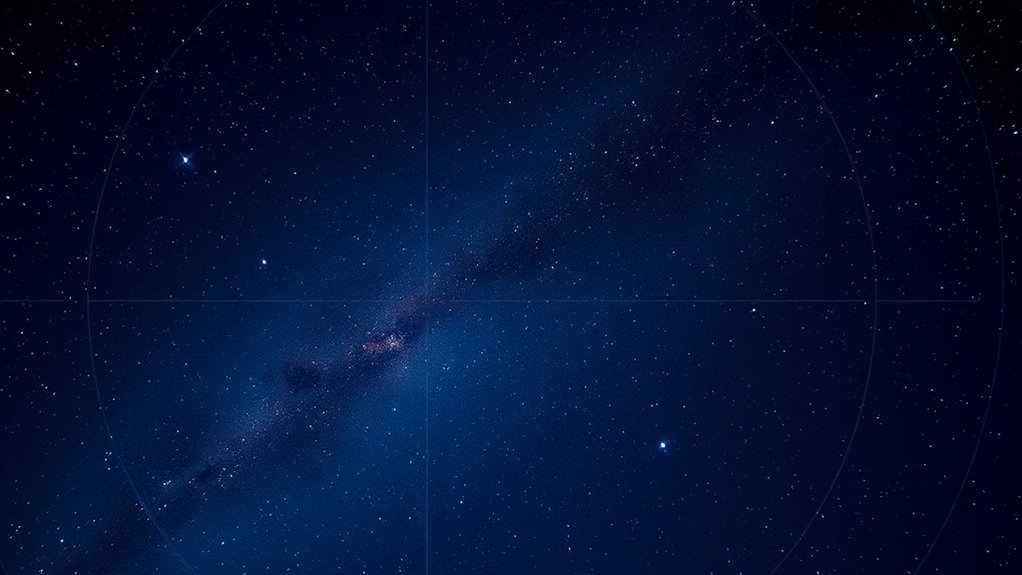
Have you ever wondered how astronomers pinpoint the exact location of objects in the night sky? They use celestial navigation and coordinate systems to do this precisely. Two key components are RA (Right Ascension) and DEC (Declination). RA acts like celestial longitude, measuring an object’s position eastward along the celestial equator, while DEC is similar to latitude, indicating how far above or below the celestial plane the object is. These coordinates help you locate stars, planets, and other celestial bodies accurately. Understanding RA and DEC is essential for precise astronomical measurements, as it ensures consistent positioning across different observations. By understanding RA and DEC, you can navigate the night sky with confidence, knowing exactly where to look. This system provides a universal language for astronomers and stargazers alike, making it easier to find objects no matter where you are on Earth.

DIIOOMIEEU Rotating Star Chart Map Suitable for Astronomy Enthusiasts Schools Science Clubs Portable Stargazing & Planet Discovery
- Star Guide for Constellations: Learn constellations and bright stars
- User-Friendly Design: Aligns with date and time easily
- Versatile for Telescopes: Suitable for telescopes and binoculars
As an affiliate, we earn on qualifying purchases.
As an affiliate, we earn on qualifying purchases.
Why Safety Matters When Using Star Maps
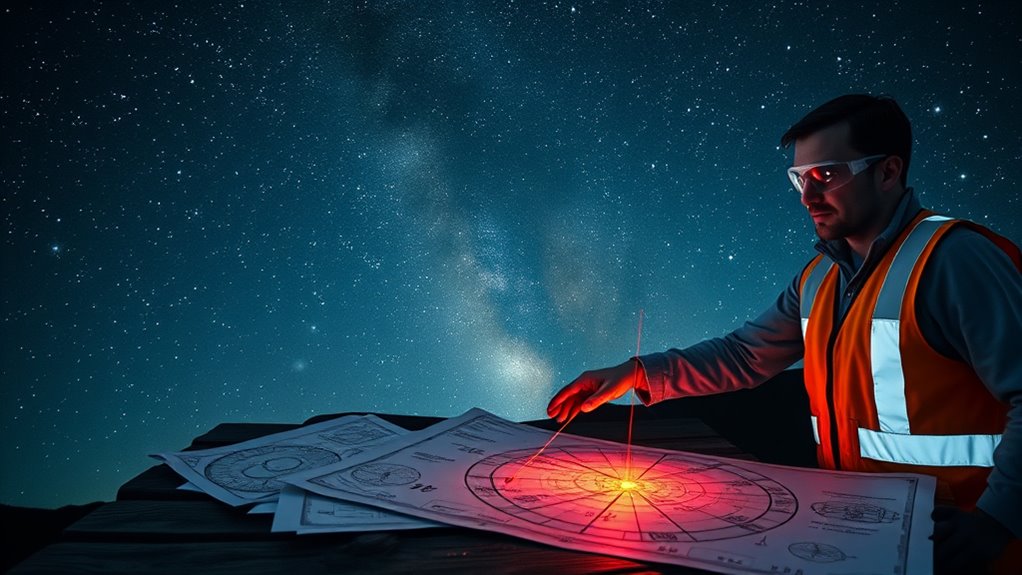
Using star maps can be incredibly rewarding, but safety should always come first. When you’re relying on a star chart for celestial navigation, it’s essential to prioritize your safety to prevent accidents or disorientation. Always guarantee your environment is secure and well-lit when referencing your star map, especially outdoors at night. Avoid distractions that could lead to tripping or losing your bearings. Remember, celestial navigation requires focus and awareness; rushing or ignoring safety precautions can be dangerous. Keep a flashlight handy, wear suitable clothing, and let someone know your plans if you’re venturing into unfamiliar areas. Additionally, understanding patience and attentiveness can significantly improve your safety and accuracy when navigating with star maps. By respecting safety protocols, you safeguard yourself while exploring the night sky, making your experience enjoyable and risk-free.

MEEZAA Telescope for Adults High Powered, 90mm Aperture 800mm Refractor
- Type: Professional astronomical refractor telescope
- Aperture: 90mm large aperture for bright images
- Focal Length: 800mm focal length for detailed views
As an affiliate, we earn on qualifying purchases.
As an affiliate, we earn on qualifying purchases.
How to Read RA and DEC Coordinates Safely

To read RA (Right Ascension) and DEC (Declination) coordinates safely, you should first familiarize yourself with their formats and significance. These coordinates are essential for celestial navigation and accurate telescope setup. RA is measured in hours, minutes, and seconds, representing a star’s position along the celestial equator, while DEC is measured in degrees, minutes, and seconds, indicating how far a star is north or south of the celestial equator. When reading these, double-check the values to avoid misidentification. Use star charts or digital tools to cross-reference coordinates confidently. Always handle your telescope carefully, ensuring it’s properly aligned with the coordinate system. This approach minimizes errors, helps you locate objects precisely, and keeps your stargazing safe and enjoyable. Continuous monitoring of your equipment can further help detect and correct any misalignments during observations.
astronomy safety gear for outdoor star watching
As an affiliate, we earn on qualifying purchases.
As an affiliate, we earn on qualifying purchases.
Common Mistakes to Avoid With Celestial Coordinates
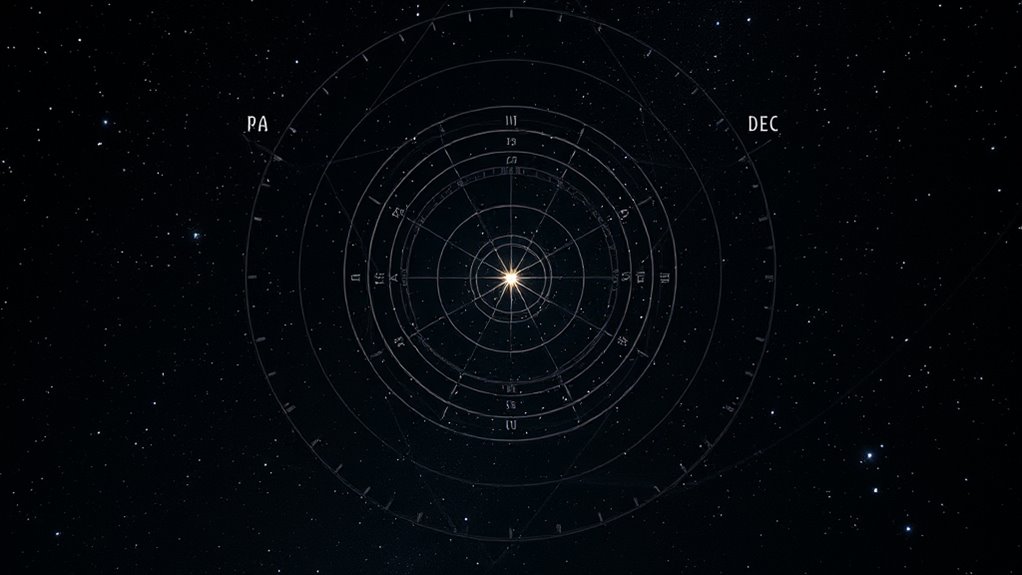
One common mistake is misreading the coordinates due to confusing formats or units. This can compromise your coordinate accuracy and lead to locating objects incorrectly. Always double-check the format—whether it’s hours, minutes, seconds for RA or degrees, arcminutes, arcseconds for DEC—and make sure you understand the units involved. Additionally, poor equipment calibration can cause errors in readings, making your data unreliable. Regularly calibrate your telescope and coordinate tools to maintain precision. Avoid rushing through measurements or relying on unverified sources, as small mistakes can compound over time. By paying attention to detail and maintaining proper calibration, you reduce the risk of mistakes that could hinder your night sky explorations. Accurate coordinates are key to safe and successful stargazing. Understanding coordinate units is essential for precise celestial navigation.
Tips for Beginners to Explore the Night Sky Securely
Exploring the night sky can be an exciting adventure, but prioritizing safety guarantees you enjoy it without unnecessary risks. Start by familiarizing yourself with star chart navigation before heading out. Always inform someone of your plans and choose a safe, open location away from light pollution. When setting up your telescope, do a quick check to ensure stability and proper alignment. Use red flashlight to preserve night vision. Dress warmly and bring essentials like water and a flashlight. Here’s a quick guide:
| Tip | Why it matters | Example |
|---|---|---|
| Use star chart navigation | Helps identify celestial objects | Identifying Polaris for alignment |
| Check telescope setup | Ensures safe, clear viewing | Securing tripod before use |
| Avoid bright lights nearby | Preserves night vision | Using red flashlight |
| Inform someone of your plans | Ensures safety in emergencies | Sharing location and time with a friend |
| Be aware of light pollution | Minimizes interference with observations | Choosing dark-sky locations |
Frequently Asked Questions
How Do RA and DEC Compare to Terrestrial Latitude and Longitude?
You can think of RA and DEC as celestial equivalents to terrestrial latitude and longitude. When you’re using star map navigation, RA acts like longitude, measuring east-west positions, while DEC resembles latitude, indicating north-south locations. These celestial coordinate systems help you pinpoint stars and objects in the sky, just as latitude and longitude guide you on Earth. They’re essential for accurate navigation and locating celestial objects.
Can RA and DEC Be Used for Space Navigation?
Sure, RA and DEC can be used for space navigation, but don’t expect to just point your spaceship and go. You’ll rely on star tracking and coordinate systems to find your way through the cosmos. These celestial coordinates act like a cosmic GPS, guiding you amidst the stars. Ironically, even in space, we trust distant stars more than our own sense of direction—proving the universe’s sense of humor.
What Equipment Is Needed to Accurately Measure RA and DEC?
To accurately measure RA and DEC, you need precise equipment like a telescope with a motorized mount, a high-quality eyepiece, and a star chart or digital sky map. You’ll also require a spectrometer or a CCD camera for detailed observations. These tools help you align with the celestial grid in the equatorial system, ensuring accurate readings. Proper calibration and stable mounting are essential for reliable measurements.
Are RA and DEC Affected by Earth’s Atmospheric Conditions?
Sure, atmospheric distortion and weather impact can totally mess with your RA and DEC measurements. When the atmosphere is turbulent or rainy, it acts like a funhouse mirror, bending and blurring signals. This atmospheric distortion makes precise readings tricky, meaning you’ll need to account for these effects or risk ending up with celestial coordinates that are more guesswork than fact. So, yes, Earth’s weather definitely influences your star-gazing accuracy.
How Often Do Celestial Coordinates Change Over Time?
Celestial coordinates change gradually over time due to celestial movement. You’ll notice that RA and DEC are not perfectly stable; they drift slightly because of Earth’s axial precession, nutation, and other factors. Typically, these shifts happen slowly, so astronomers update coordinate systems periodically—usually every few years—to maintain accuracy. Staying aware of these changes guarantees your observations remain precise and your star maps stay current.
Conclusion
Now that you understand RA and DEC, you’re like a navigator charting a course through a celestial ocean. With safety as your compass, you can explore the night sky confidently, avoiding rocky pitfalls and guiding your starship smoothly among the stars. Embrace your curiosity, but always stay grounded in caution. As you venture into the cosmos, let your newfound knowledge be the shining star that keeps you secure on your astral journey.