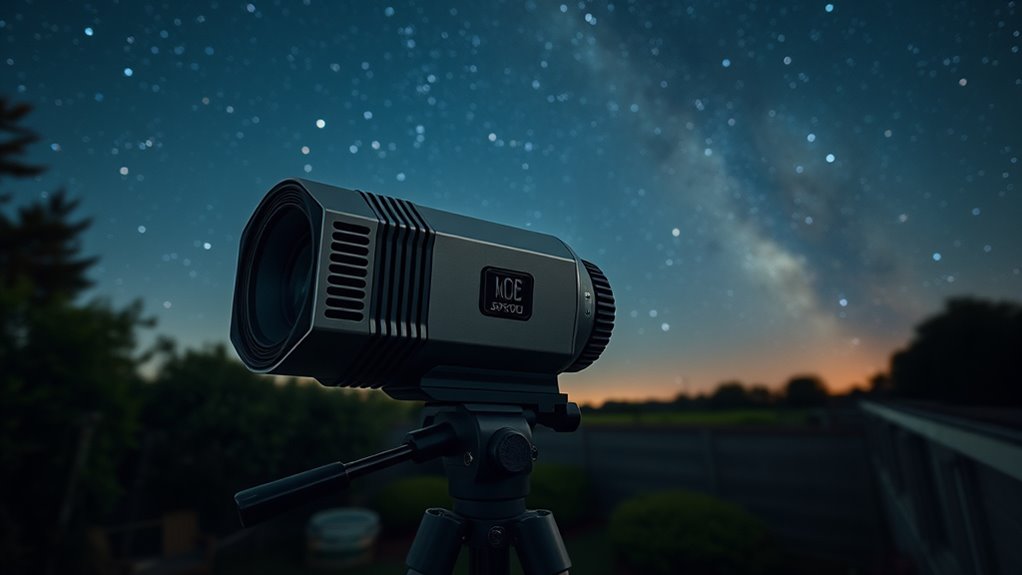
Choosing the right CMOS astro camera for backyard astronomy involves balancing image quality, usability, and budget. The best overall pick, SVBONY SC571CC, offers excellent cooled performance for detailed imaging, but it comes at a higher price point. The ZWO ASI183MC Pro stands out for its high resolution and versatility, making it ideal for advanced users. Meanwhile, more affordable options like the SVBONY SV905C Guide Camera serve well for guiding and beginner setups. These choices reflect a common tradeoff: higher-end models deliver superior image detail but require more investment, while budget-friendly options prioritize ease of use. Keep reading to find the perfect match for your backyard astronomy needs.

Prime made for students and young adults
- Fast, free delivery for dorm and study essentials
- Prime Video and Amazon Music included
- Member-only deals
Key Takeaways
- High-resolution sensors like IMX571 and 20MP CMOS chips provide more detailed images but come with increased cost and complexity.
- Cooling capabilities, especially TEC cooling, significantly improve image quality by reducing noise in long exposures.
- Versatility matters—cameras that can handle both planetary imaging and deep-sky work offer better value for versatile backyard setups.
- Guide cameras are essential for astrophotography precision, but their image quality is less critical than main imaging cameras.
- Budget options can perform surprisingly well for beginners or casual backyard astronomers, but they may lack advanced features like cooling or high resolution.
| SVBONY SC571CC Cooled Color Astronomy Camera, IMX571 CMOS APS-C Sensor |  | Best Overall for Serious Deep-Sky Imaging | Sensor: IMX571 CMOS APS-C | Resolution: 26MP | Sensor Size: 23.4×15.7mm | VIEW ON AMAZON | See Our Full Breakdown |
| ZWO ASI183MC Pro 20.18 MP CMOS Color Astronomy Camera |  | Best for High-Resolution Versatility | Resolution: 20.1 MP | Pixel Size: 2.4 microns | Cooling: TEC, 40-45°C below ambient | VIEW ON AMAZON | See Our Full Breakdown |
| ZWO ASI676MC 12.6 MP CMOS Color Astronomy Camera |  | Best for Wide-Angle and Low-Light Imaging | Resolution: 12.6 MP | Sensor Type: CMOS | Format: Square | VIEW ON AMAZON | See Our Full Breakdown |
| 4K Wireless Telescope Camera, 1.25’’ & 2’’ Universal Eyepiece Camera |  | Best for Versatile Observation and Casual Imaging | Resolution: 8MP | Video recording: 4K | Display: 2.8-inch IPS | VIEW ON AMAZON | See Our Full Breakdown |
| SVBONY SV405CC Telescope Camera, TEC Cooled 11.7 MP CMOS Color Astronomy Camera with UV IR Cut Filter |  | Best for Deep Space and High-Contrast Imaging | Sensor: IMX294 CMOS | Resolution: 11.7 MP | Sensor Format: 4/3 | VIEW ON AMAZON | See Our Full Breakdown |
| ASI120MC-S Color Planetary Camera with USB 3.0 Interface |  | Best for High-Speed Planetary Imaging | Interface: USB 3.0 | Type: Color planetary camera | Resolution: High-resolution | VIEW ON AMAZON | See Our Full Breakdown |
| SVBONY SV905C Guide Camera Telescope Eyepiece, 1.23MP CMOS Sensor, 1.25 Inch |  | Best for Precise Autoguiding and Compatibility | Sensor: 1/3-inch CMOS | Resolution: 1280×960 | Pixel Size: 3.75 microns | VIEW ON AMAZON | See Our Full Breakdown |
| cmos astro camera for backyard | Resolution |
|---|---|
| SVBONY SC571CC Cooled Color As | 26MP |
| ZWO ASI183MC Pro 20.18 MP CMOS | 20.1 MP |
| ZWO ASI676MC 12.6 MP CMOS Colo | 12.6 MP |
| 4K Wireless Telescope Camera | 8MP |
| SVBONY SV405CC Telescope Camer | 11.7 MP |
| ASI120MC-S Color Planetary Cam | High-resolution |
| SVBONY SV905C Guide Camera Tel | 1280×960 |
More Details on Our Top Picks
SVBONY SC571CC Cooled Color Astronomy Camera, IMX571 CMOS APS-C Sensor
The SVBONY SC571CC stands out for its high-resolution 26MP APS-C sensor, which allows capturing extremely detailed deep-sky images—ideal for astrophotographers aiming for professional-grade results. Compared to the ZWO ASI183MC Pro, which offers slightly lower resolution but is more compact and easier to handle, the SC571CC’s larger sensor delivers better detail at the expense of increased weight and setup complexity. Its dual-stage TEC cooling system and front-window heater greatly reduce noise and prevent dew, making it suitable for prolonged exposures. However, its heavier build and need for a compatible telescope and software mean it’s less beginner-friendly and involves a higher initial investment. Overall, this camera is best for dedicated backyard astrophotographers who prioritize image quality and have the technical setup to support it.
Pros:- Exceptional 26MP resolution captures intricate deep-sky details
- Effective dual-stage TEC cooling minimizes noise in long exposures
- Integrated dew heater prevents moisture buildup, ensuring clear images
- Reliable USB 3.0 connection for stable data transfer
Cons:- Heavy and bulky, requiring sturdy mounts and precise alignment
- Higher cost and more complex setup may be intimidating for newcomers
Best for: Advanced amateur astronomers seeking high-resolution deep-sky images and willing to manage complex setup procedures
Not ideal for: Beginners or casual sky watchers who prefer plug-and-play simplicity and lightweight equipment
- Sensor:IMX571 CMOS APS-C
- Resolution:26MP
- Sensor Size:23.4×15.7mm
- Pixel Size:3.76 µm
- Cooling:Dual-stage TEC, -35°C below ambient
- Connectivity:USB 3.0
Our verdict“This camera is perfect for experienced backyard astrophotographers who prioritize high-resolution imaging but are prepared for a more involved setup.”
ZWO ASI183MC Pro 20.18 MP CMOS Color Astronomy Camera
The ZWO ASI183MC Pro offers a high 20.1MP resolution with a compact design, making it excellent for both deep-sky and planetary imaging. Its smaller 2.4-micron pixels provide finer detail than larger-pixel cameras, and TEC cooling reduces thermal noise during extended shots. Compared with the SVBONY SV405CC, which focuses more on deep space, the ASI183MC Pro’s versatility makes it suitable for lunar, solar, and planetary work as well. The need for a separate 12V power supply and software setup can be hurdles for beginners but is manageable for experienced users. Its fast USB 3.0 transfer and lightweight build make it a good field-ready option. This camera makes the most sense for backyard astrophotographers balancing high resolution with multi-object capability.
Pros:- High 20.1MP resolution captures fine details across various celestial objects
- Effective TEC cooling minimizes noise for clear images
- Compact, lightweight design for ease of use in the field
- Fast USB 3.0 transfer speeds facilitate quick data handling
Cons:- Requires additional 12V power supply (not included)
- Setup and driver installation may be complex for novices
Best for: Intermediate amateurs who want a versatile, high-res camera capable of deep-sky and planetary imaging
Not ideal for: Total beginners seeking a straightforward, all-in-one camera with minimal setup
- Resolution:20.1 MP
- Pixel Size:2.4 microns
- Cooling:TEC, 40-45°C below ambient
- Frame Rate:Up to 19 fps
- Connectivity:USB 3.0
- Compatibility:Mac, Windows
Our verdict“This camera is ideal for backyard astrophotographers who want high resolution and multi-purpose imaging without excessive bulk.”
ZWO ASI676MC 12.6 MP CMOS Color Astronomy Camera
The ZWO ASI676MC excels in low-light sensitivity and wide-angle imaging, thanks to its 12.6MP square sensor and near-infrared capabilities. Its low readout noise and absence of amp glow make it particularly suitable for capturing faint objects and large sky areas. Compared to the SVBONY SC571CC, which specializes in high-resolution deep-sky imaging, the 676MC’s square format and enhanced IR sensitivity make it more versatile for wide-field shots and surveillance-style sky monitoring. Its technical complexity may challenge beginners, but seasoned astrophotographers will value its sensitivity and image quality. The inclusion of a UV/IR filter ensures natural color rendition. This camera makes the most sense for backyard sky watchers interested in both deep-sky and broader sky surveillance.
Pros:- High sensitivity with very low readout noise enhances faint object detection
- Square format simplifies mosaic stitching for large sky areas
- No amp glow, maintaining image quality at high gain
- Enhanced near-infrared sensitivity improves night sky detail
Cons:- Technical features require understanding of astrophotography settings
- More complex setup compared to simpler cameras
Best for: Experienced backyard sky enthusiasts focusing on wide-angle imaging and low-light environments
Not ideal for: Complete beginners or those seeking high-resolution planetary imaging
- Resolution:12.6 MP
- Sensor Type:CMOS
- Format:Square
- Dark Current Noise:Low
- Readout Noise:0.56e
- Sensitivity:Near-IR, enhanced
Our verdict“This camera suits experienced backyard astronomers who want wide-angle, low-light, and infrared-enhanced sky imaging.”
4K Wireless Telescope Camera, 1.25’’ & 2’’ Universal Eyepiece Camera
The 4K Wireless Telescope Camera offers a portable, easy-to-use option for observing the moon, planets, and wildlife, with the added benefit of wireless connectivity. Its 8MP CMOS sensor and 4K video support make it ideal for capturing detailed images and videos without the complexity of dedicated astro cameras. Compared with the SVBONY SV405CC, which is more suited for deep-space astrophotography, this camera emphasizes versatility, ease of use, and real-time viewing, making it suitable for casual backyard observers. The limited WiFi range and reliance on a smartphone app can be limitations for remote observation. It’s less suited for long-exposure astrophotography but offers quick, high-quality captures for astronomy and nature lovers who want instant results.
Pros:- High-resolution 4K video and 8MP images for detailed observation
- Wireless connectivity enables remote viewing and sharing
- Universal compatibility with various eyepieces and devices
- Long-lasting battery and microSD support for extended sessions
Cons:- WiFi range limited to 32ft, reducing remote usability
- Requires a smartphone or compatible device for full functionality
Best for: Casual backyard astronomers and wildlife observers seeking quick, wireless imaging and video
Not ideal for: Astrophotographers aiming for deep-sky imaging or long-exposure astrophotography
- Resolution:8MP
- Video recording:4K
- Display:2.8-inch IPS
- WiFi range:32ft
- Battery:2000mAh
- Compatibility:Eyepieces 23mm-60mm
Our verdict“This camera is best for casual backyard observers who want quick, wireless captures without deep astrophotography demands.”
SVBONY SV405CC Telescope Camera, TEC Cooled 11.7 MP CMOS Color Astronomy Camera with UV IR Cut Filter
The SVBONY SV405CC is tailored for dedicated deep-sky astrophotography, featuring an 11.7MP IMX294 sensor that captures nebulae, galaxies, and star clusters with high detail. Its TEC cooling system and UV/IR cut filter ensure vibrant, high-contrast images, comparable to the high-resolution cameras like the SVBONY SC571CC, but with a more accessible setup. While its primary focus is deep space objects, its relatively straightforward interface and high frame rate (120 fps) support live stacking and real-time viewing. The need for technical setup and the absence of a bundled software package might be a barrier for some. This camera makes the most sense for backyard astrophotographers committed to deep space imaging and willing to handle a more complex installation.
Pros:- High 11.7MP resolution captures detailed nebulae and galaxies
- TEC cooling significantly reduces thermal noise for long exposures
- UV/IR cut filter improves image contrast and color fidelity
- High frame rate supports live stacking and real-time viewing
Cons:- Setup complexity may challenge beginners
- Primarily designed for deep space imaging, less versatile for other astrophotography
Best for: Advanced amateur astronomers focused on deep space object imaging with a technical setup capacity
Not ideal for: Casual sky watchers or those looking for multispectral or planetary imaging solutions
- Sensor:IMX294 CMOS
- Resolution:11.7 MP
- Sensor Format:4/3
- Frame Rate:120 fps
- Interface:USB 3.0
- Filter:UV/IR Cut
Our verdict“This camera is suited for dedicated backyard astrophotographers targeting high-contrast deep space images who can manage its technical demands.”
ASI120MC-S Color Planetary Camera with USB 3.0 Interface
The ASI120MC-S stands out for its rapid USB 3.0 data transfer, making it ideal for capturing detailed planetary images where speed matters. Compared to the SVBONY SV905C, which offers excellent guiding capabilities, this camera excels in high-resolution planetary video, but it lacks detailed information on accessories or broader imaging features. Its high frame rate and reliable performance make it a strong choice for planetary enthusiasts focused on high-speed, high-detail imaging. However, the limited info about compatibility and accessories means some setup flexibility might be missing for users needing a more comprehensive astro camera system.
Pros:- High-speed USB 3.0 interface for rapid data transfer
- Excellent for planetary imaging due to high resolution and frame rate
- Reliable performance with minimal lag during high-speed captures
Cons:- Limited information on compatibility with other accessories or software
- No bundled accessories, which may require additional purchases for full setup
Best for: Astrophotographers aiming for fast, high-resolution planetary videos with minimal fuss over additional features
Not ideal for: Beginners seeking an all-in-one imaging solution, since it lacks included accessories and broader functionality
- Interface:USB 3.0
- Type:Color planetary camera
- Resolution:High-resolution
- Performance:Ideal for planetary imaging
- Compatibility:Limited info
- Accessories:Not included
Our verdict“This camera is best suited for planetary astrophotographers prioritizing speed and resolution over versatility.”
SVBONY SV905C Guide Camera Telescope Eyepiece, 1.23MP CMOS Sensor, 1.25 Inch
The SVBONY SV905C offers a compact, lightweight design combined with high sensitivity, making it a solid choice for guiding and planetary imaging. Unlike the ZWO ASI183MC Pro, which provides ultra-high resolution for deep-sky astrophotography, this guide camera prioritizes guiding accuracy and software compatibility. Its low read noise and high QE help ensure reliable star tracking, essential for backyard astrophotography. The need to download driver software and its limited resolution makes it less suited for detailed planetary shots or deep-sky imaging, but its ease of integration with guiding software makes it invaluable for maintaining precise telescope tracking.
Pros:- High sensitivity with 80% peak QE and low read noise
- Compatible with popular guiding software like PHD2 and NINA
- Compact, lightweight design simplifies integration with small telescopes
Cons:- Not compatible with ASI AIR, limiting some modern automation options
- Limited resolution may restrict detailed planetary imaging
- Requires driver software download, adding extra setup steps
Best for: Amateur astronomers who want a reliable autoguiding camera that integrates well with guiding software and improves tracking accuracy
Not ideal for: Those seeking a high-resolution camera for detailed planetary or deep-sky astrophotography, as its resolution is limited
- Sensor:1/3-inch CMOS
- Resolution:1280×960
- Pixel Size:3.75 microns
- Interface:USB 2.0
- Guide Star Interface:ST4
- Diameter:1.25 inches
Our verdict“This guide camera offers excellent guiding support for backyard setups but isn’t designed for capturing high-res planetary images.”

How We Picked
The selection process for these CMOS astro cameras focused on key factors that influence backyard astrophotography success. Performance in low-light conditions, sensor quality, and cooling capabilities were prioritized to ensure clear, detailed images. Ease of setup and usability were also considered, especially for hobbyists who may not have professional experience. Value for money was a major criterion, balancing features against cost to identify options suitable for different budgets. Lastly, versatility—cameras that can handle multiple types of astrophotography—helped diversify the lineup, ensuring there’s a strong choice for every level of enthusiast.Factors to Consider When Choosing Cmos Astro Camera For Backyard
When selecting a CMOS astro camera for backyard use, understanding the key factors that influence performance and usability is essential. Beyond just megapixels or sensor type, considerations like cooling, compatibility, and software support can make or break your experience. Knowing what tradeoffs to expect helps you avoid common pitfalls, such as overpaying for features you won’t use or choosing a camera that doesn’t suit your specific setup. This guide highlights the most important aspects to keep in mind, ensuring you make an informed decision tailored to your backyard astronomy ambitions.Sensor Size and Resolution
Sensor size impacts the amount of light captured, which directly affects image quality in low-light conditions typical of astrophotography. Larger sensors, like APS-C, can collect more light and detail, making them ideal for deep-sky imaging. Resolution, measured in megapixels, influences the level of detail you can capture; higher MP sensors provide sharper images but may also demand more processing power and storage. Balancing sensor size and resolution according to your target objects and system capabilities ensures optimal results without unnecessary expense or complexity.
Cooling Capabilities
Effective cooling, particularly TEC cooling, reduces thermal noise during long exposures, which is crucial for capturing faint celestial objects. Cameras with better cooling tend to produce cleaner images with less post-processing needed. However, cooling systems add to the cost and complexity of the camera, and some setups require more maintenance. For backyard astrophotography, investing in cooling makes sense if you plan to pursue long exposures or deep-sky imaging, but beginners or casual users might opt for more straightforward models with passive cooling or no cooling at all.
Compatibility and Software Support
Ensuring your camera is compatible with your existing telescope and computer setup is fundamental. Most astronomy cameras support common interfaces like USB 3.0 or USB-C, but confirming software compatibility with your preferred image capture and processing programs saves headaches later. Some brands offer dedicated software with features like live stacking or automated focusing, which can greatly enhance your experience. Avoiding proprietary or unsupported systems prevents frustration and allows smoother operation, especially for those new to astrophotography.
Versatility and Multi-Use Capabilities
Cameras that can handle both planetary and deep-sky imaging offer excellent value, especially for backyard setups where space and budget are limited. Look for models with adjustable settings and multiple exposure modes. However, multi-purpose cameras may compromise slightly on specialized features like ultra-high resolution or advanced cooling, so consider your primary targets before choosing. For beginners, a versatile camera simplifies the setup process and reduces the need for multiple devices, but advanced users may prefer dedicated equipment for maximum performance.
Budget and Future Proofing
While budget-friendly options are attractive, they often lack advanced features like cooling or high resolution, which can limit long-term use or image quality. Investing slightly more in a well-rounded camera can extend its usefulness as your skills and equipment grow. Consider your goals—casual observing, deep-sky imaging, or planetary photography—and choose a model that offers a good balance between affordability and features. Remember, upgrading later can be costly, so prioritize a model that can adapt to your evolving needs.
Frequently Asked Questions
Is cooling necessary for backyard astrophotography?
Cooling significantly improves image quality by reducing thermal noise during long exposures, which is especially beneficial for deep-sky objects. If you plan to capture faint galaxies or nebulae, a cooled camera can make a noticeable difference in the clarity and detail of your images. However, for casual or planetary imaging, cooling may be less critical, and simpler, uncooled models can suffice. Consider your target objects and budget when deciding whether investing in cooling is worthwhile for your backyard setup.
Can I use a CMOS astro camera without specialized software?
While most CMOS astro cameras come with dedicated software for capturing images, many are compatible with popular third-party programs like SharpCap, FireCapture, or N.I.N.A. These tools often provide advanced features such as live stacking and automation that enhance your imaging process. Using supported software ensures you can maximize the camera’s capabilities and troubleshoot issues more easily. For beginners, user-friendly interfaces and reliable support are essential, so check compatibility before purchasing.
What is the best resolution for backyard astrophotography?
The optimal resolution depends on your targets and system setup. Higher resolutions, such as 20MP sensors, capture more detail and are ideal for deep-sky imaging of faint objects, but they also demand more processing power and storage. Lower resolutions can be simpler to handle and faster to process, which benefits planetary or lunar imaging. For most backyard astrophotographers aiming to do a bit of everything, a mid-range resolution offers a good balance—providing enough detail without overwhelming your computer or storage capacity.
How important is sensor size compared to resolution?
Sensor size has a direct impact on the amount of light captured, which affects image brightness, detail, and noise levels. Larger sensors like APS-C or full-frame generally outperform smaller sensors in low-light conditions, making them preferable for deep-sky astrophotography. Resolution, on the other hand, determines the pixel density and detail level. A larger sensor with moderate resolution can produce better images than a high-res small sensor, especially when capturing faint objects. Balancing both aspects based on your targets and system capabilities results in more satisfying images.
Should I prioritize budget or features for my backyard astro camera?
Deciding between budget and features depends on your current goals and experience level. Budget models can provide decent results for casual observing and learning the basics of astrophotography, making them excellent starting points. However, investing a bit more in features like cooling, higher resolution, and better software support can dramatically improve image quality and ease of use for more serious projects. If you plan to expand your setup or pursue long-exposure imaging, allocating funds toward a more capable camera makes sense in the long run.
Conclusion
For casual backyard astronomers or those new to astrophotography, the SVBONY SV905C Guide Camera offers a straightforward entry point with decent imaging capabilities. Enthusiasts seeking the best overall experience will find the SVBONY SC571CC with its cooled, high-resolution sensor to be the top choice. Those willing to invest in a premium setup should consider the ZWO ASI183MC Pro for its versatility and exceptional image quality. Beginners aiming for simplicity and affordability should look toward budget-friendly models, but serious hobbyists and future-proofers will benefit from allocating more toward models with cooling and higher resolution. Ultimately, your choice depends on your target objects, budget, and willingness to learn complex setups.Halloween Picks
halloween
As an affiliate, we earn on qualifying purchases.