
To choose the right filter size for your camera sensor, you need to check your lens’s filter thread diameter, usually marked on the lens front or in its specifications. Make sure the filter size matches the lens diameter for a secure fit, preventing vignetting or light leaks. Using adapters can help, but seamless size matches deliver the best results. For more tips on selecting and installing filters, keep exploring these essential steps.
Key Takeaways
- Check your lens’s filter thread size, usually marked on the front or in the specifications.
- Measure or verify your camera sensor’s compatibility to ensure proper filter fit.
- Match filter diameter exactly to the lens’s filter thread to prevent vignetting or light leaks.
- Use adapters or step-up/step-down rings carefully if exact sizes aren’t available, but prefer matching sizes.
- Invest in high-quality filters that fit correctly to maintain image clarity and protect your lens long-term.

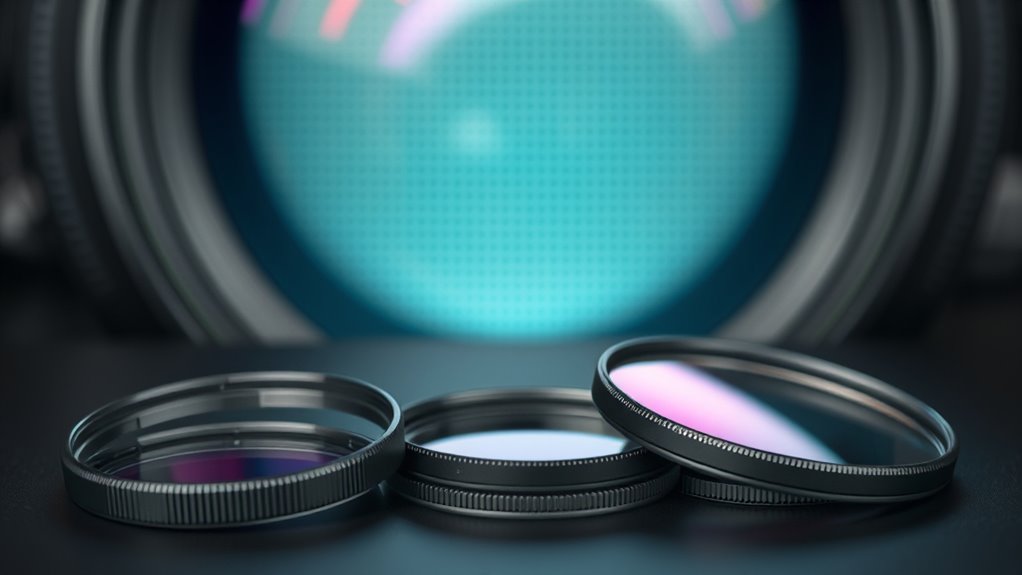
When selecting a filter size for your camera sensor, understanding the importance of compatibility is essential. The size of your filter must match your camera’s lens diameter to ensure proper fit and ideal performance. If the filter is too small, it won’t cover the lens completely, leading to vignetting or light leaks. Conversely, a filter that’s too large can be difficult to mount securely, risking damage or uneven placement. Before purchasing, check your lens’s filter thread size, usually marked on the front or in the specifications. This simple step ensures you choose a filter that fits seamlessly, avoiding frustration and unnecessary returns. Ensuring the correct filter size is also crucial for maximizing image quality and minimizing optical issues during shooting. Sensor compatibility plays a critical role in choosing the right filter size. Different camera sensors and lenses have varying filter thread requirements, so knowing your equipment’s specifications helps you avoid mismatched sizes. If you’re using an adapter or step-up/step-down rings, these can sometimes adjust for slight differences, but it’s best to select the correct size from the start. Proper compatibility not only guarantees a snug fit but also maintains the optical quality of your images by preventing unwanted vignetting or distortion caused by ill-fitting filters. When it comes to filter installation techniques, precision matters. Always handle filters by their edges to avoid smudging the glass surface. Clean your filters thoroughly with a microfiber cloth before mounting to prevent dust or fingerprints from affecting your shots. When attaching the filter, screw it in gently and evenly to avoid cross-threading or damage to the threads. If using a filter holder system, ensure it is aligned correctly and securely fastened to prevent any movement during shooting. Proper installation techniques minimize the risk of vignetting, flare, or other optical issues, maintaining image clarity and color fidelity. Keep in mind that larger filters generally cost more, but investing in high-quality filters that match your lens size pays off in the long run. A well-fitting filter enhances your image quality without introducing unwanted artifacts. Additionally, consider the types of filters you need—such as UV, ND, or polarizers—and confirm their sizes match your lens threads. Using the right size and installation techniques ensures your filters serve their purpose effectively, protecting your lens and improving your creative control. Ultimately, understanding sensor compatibility, selecting the appropriate filter size, and mastering proper installation techniques help you get the most out of your photography gear, resulting in sharper, clearer images with minimal hassle.

Amazon Basics UV Protection Camera Lens Filter, Scratch Resistant, Photography Filter, Lens Protection, 58mm
- UV Protection for Daily Use: Filters ultraviolet light and reduces bluish cast
- Lens Protection: Guard against dust, dirt, and scratches
As an affiliate, we earn on qualifying purchases.
As an affiliate, we earn on qualifying purchases.
Frequently Asked Questions
How Does Filter Size Affect Image Sharpness?
A larger filter size improves image sharpness because it provides better sensor coverage, reducing vignetting and ensuring more even light distribution. When your filter is too small, it can cause filter vignetting, which softens the image edges and decreases overall sharpness. Conversely, a properly matched filter size aligns with your sensor, maximizing clarity and detail while minimizing light loss, giving you sharper, more consistent images.
Can I Use a Larger Filter on a Smaller Sensor?
Did you know that over 60% of photographers prefer using larger filters? You can technically use a larger filter on a smaller sensor, but it may cause vignetting or uneven exposure. Always check sensor compatibility to guarantee the filter fits properly. Be cautious of filter stacking, which can reduce image quality and increase flare. To avoid these issues, match your filter size to your sensor’s diameter or use appropriate adapters.
What Are the Cost Implications of Different Filter Sizes?
Using larger filters generally costs more due to higher manufacturing and material expenses, impacting your budget considerations. Smaller filters are usually cheaper and easier to replace or upgrade. When doing a cost comparison, think about long-term use and compatibility. If you want better image quality and future flexibility, investing in a slightly larger filter may save you money in the long run, but balance that against your current budget limits.
How Does Filter Size Influence Exposure Time?
Like a maestro adjusting the tempo, your filter size controls how much light hits your sensor. A larger filter dims the light, requiring longer exposure times to achieve proper sensor performance. Conversely, smaller filters let in more light, reducing exposure duration. This balance influences image clarity and brightness. So, choosing the right filter size is vital, as it directly impacts your camera’s exposure time and overall sensor performance, shaping your shot’s outcome.
Are There Compatibility Issues With Third-Party Filters?
Yes, there can be compatibility issues with third-party filters. You need to check filter mount compatibility, guaranteeing the filter diameter matches your camera or lens. Also, third-party filter quality varies; some may have poor coatings or fit poorly, affecting image quality. Always verify the filter’s specifications and read reviews to avoid compatibility problems and ensure you get the best performance from your setup.

K&F CONCEPT 58mm UV/CPL/ND Lens Filter Kit
- Complete Photography Filter Kit: Includes UV, CPL, ND filters, pouch, and cloth
- High-Quality Optical Glass: Crafted with 18-layer nanometer coatings for clarity
- Easy Filter Installation: CNC frame design for quick, secure fitting
As an affiliate, we earn on qualifying purchases.
As an affiliate, we earn on qualifying purchases.
Conclusion
Picking the perfect filter size might seem perplexing, but with a little planning, you’ll produce pictures that pop. Remember, matching your filter to your sensor is vital for clarity and creativity. Don’t hesitate to experiment and explore every option, embracing the exciting journey of photography. When you choose the right size, you open your camera’s full potential, transforming simple shots into stunning scenes. So, stay savvy, stay specific, and see your skills soar!

K&F CONCEPT 18 Pieces Filter Ring Adapter Set
- Includes Step Up Adapter Rings: Various size options for upgrading filters
- Includes Step Down Adapter Rings: Various size options for reducing filter sizes
- Secure and Tight Fit: No wobbling or cross-threading issues
As an affiliate, we earn on qualifying purchases.
As an affiliate, we earn on qualifying purchases.
As an affiliate, we earn on qualifying purchases.