To guarantee safe and successful observations, you’ll want to focus on key weather and seeing calculations. Monitor atmospheric stability to gauge clarity, evaluate cloud cover and visibility forecasts, and track wind speeds to protect your equipment. Keep an eye on temperature variations and dew point to prevent damage, and assess turbulence or refractive index changes for ideal image quality. Mastering these calculations helps you plan better—continue for essential tips to refine your approach.
Key Takeaways
- Monitor atmospheric pressure, humidity, and wind speed to assess stability and turbulence affecting both safety and observation quality.
- Calculate dew point and temperature drops to prevent equipment damage from condensation during observation sessions.
- Use cloud cover percentages and satellite data to evaluate sky clarity and visibility forecasts before planning observations.
- Assess refractive index variability and turbulence levels through models and measurements to predict optical seeing conditions.
- Incorporate long-term weather models, solar activity, and planetary influences for comprehensive forecasting and safe observation scheduling.

BaldrTherm WiFi Weather Station with 5-Day Forecast, Smart Backlight, Indoor Outdoor Thermometer Hygrometer with Remote App Alerts, 180m Range, 2.2” Large Display for Home, Garden
- 5-Day Weather Forecast: Displays 5-day weather and updates via WiFi
- Smart Backlight & Large Display: Adjustable backlight with easy-to-read screen
- Indoor & Outdoor Data: Shows temperature, humidity, high/low records
As an affiliate, we earn on qualifying purchases.
As an affiliate, we earn on qualifying purchases.
Understanding Atmospheric Stability and Its Impact on Observation Quality
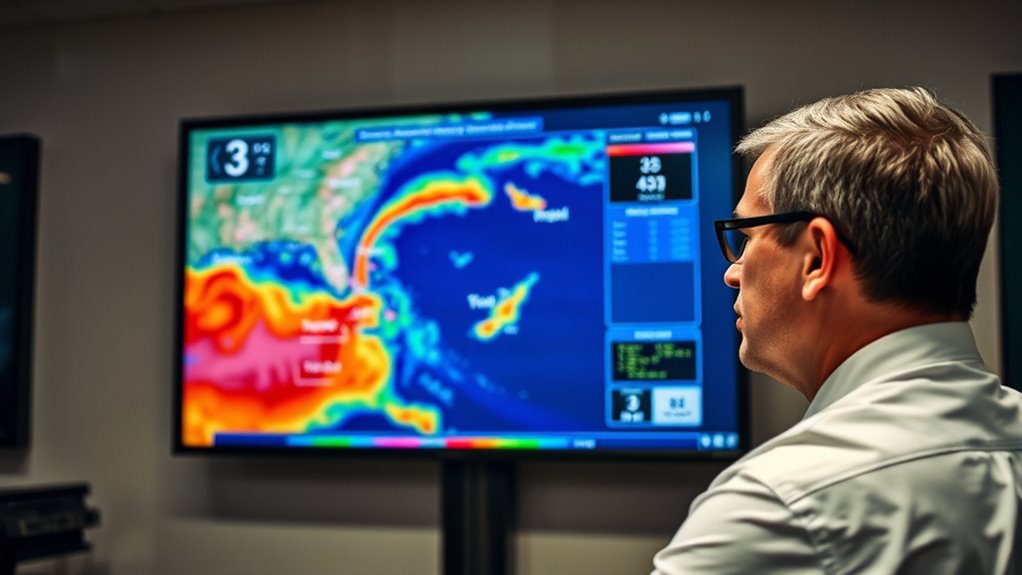
Understanding atmospheric stability is essential because it directly affects the quality of weather observations. When the atmosphere is stable, temperature inversions trap moisture and pollutants near the ground, leading to increased humidity effects that can obscure visibility. Conversely, unstable conditions promote vertical air movement, dispersing humidity and reducing the likelihood of fog or haze. Atmospheric pressure also plays a key role; high pressure generally indicates stable conditions, resulting in clear skies and reliable observations. Low pressure tends to signal instability, increasing cloud formation and reducing visibility. Recognizing these factors helps you anticipate how humidity effects and atmospheric pressure influence weather patterns, ensuring more accurate and safer observations. Additionally, understanding Frictional unemployment can help identify opportunities for growth during seasonal or economic shifts, making your weather-related planning more adaptable. By understanding stability, you better prepare for the atmospheric conditions that impact your viewing experience.
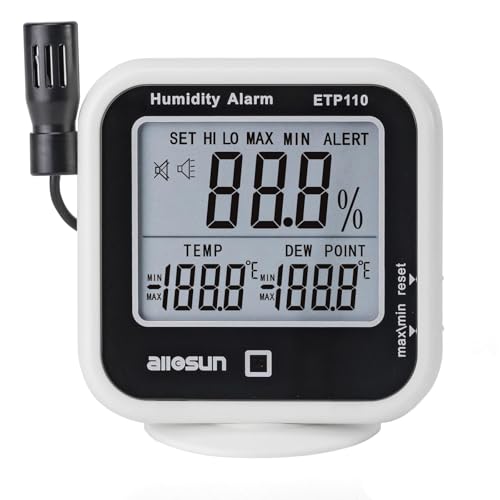
ALLOSUN Digital Thermometer Hygrometer Indoor Humidity Greenhouse Temperature Monitor Alarm Long Probe Gauge Dew-Point Meter with LCD Display
- Display Functions: Temperature, humidity, dew point display
- User-Friendly Operation: Easy to operate for various settings
- Versatile Usage: Suitable for field, lab, workshop, warehouse, home
As an affiliate, we earn on qualifying purchases.
As an affiliate, we earn on qualifying purchases.
Calculating Cloud Cover and Visibility for Optimal Viewing Conditions
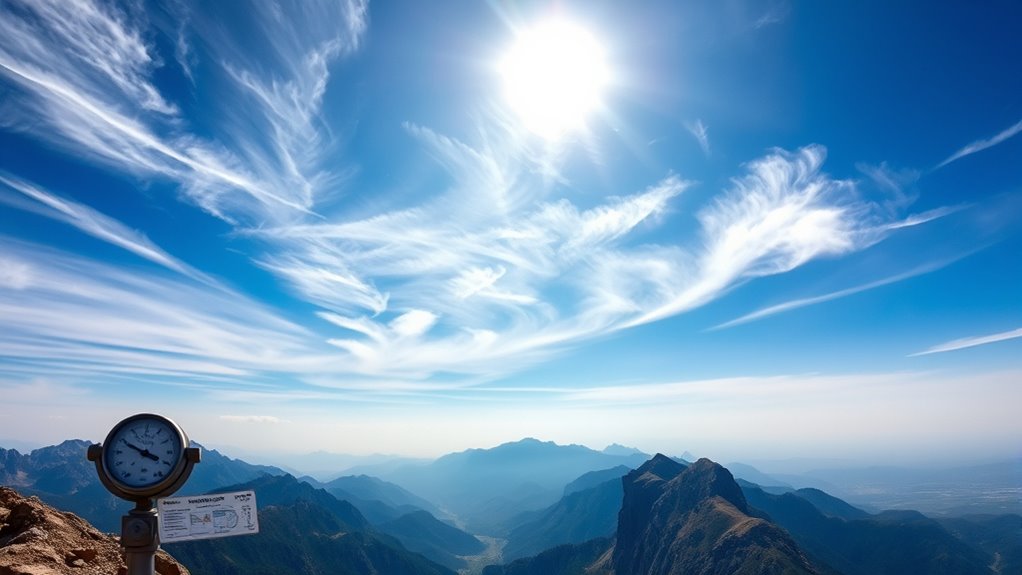
To guarantee the best viewing conditions, you need to accurately estimate cloud cover and visibility. Measuring cloud percentage and distance helps you determine if the sky is clear enough for safe observation. Analyzing atmospheric clarity guides you in predicting how well you’ll see through the conditions. Incorporating knowledge of data privacy challenges can also help in understanding how atmospheric data might be collected and protected.
Estimating Cloud Percentage
Estimating cloud percentage is essential for predicting visibility and ensuring safe viewing conditions. By evaluating cloud cover, you can determine how much of the sky is obscured, directly impacting your ability to see celestial objects clearly. A high cloud percentage indicates limited visibility, while low cloud cover suggests ideal conditions. To accurately estimate cloud percentage, consider current weather reports, satellite images, and sky observations. Atmospheric stability plays a vital role; stable conditions typically result in less cloud formation, improving your chances of clear skies. Keep in mind that even partial cloud cover can reduce visibility, so precise estimations help you plan your sessions better. Regularly monitoring these factors allows you to make informed decisions, maximizing your chances for successful and safe astronomical viewing. Incorporating remote work principles such as flexible scheduling can also help you optimize viewing times when conditions are best.
Measuring Visibility Distance
Accurately measuring visibility distance is key to determining how cloud cover affects your viewing conditions. When you assess visibility, consider how solar radiation influences atmospheric clarity; increased solar radiation can reduce visibility by creating haze. Humidity levels also play a vital role, as high humidity amplifies the scattering of light, diminishing visibility further. To measure visibility accurately, use tools like a visibility meter or perform visual assessments over known distances, noting how far you can see clearly. Tracking changes in solar radiation and humidity helps you predict potential decreases in visibility, guiding you to ideal viewing times. Understanding the impact of atmospheric factors and measurement techniques ensures you can make informed decisions for safe and effective observing sessions, maximizing your chances of clear skies and sharp images.
Analyzing Atmospheric Clarity
Understanding atmospheric clarity involves calculating both cloud cover and visibility to determine the best viewing conditions. You assess cloud formation and humidity levels, which directly impact visibility. High humidity can cause haze, reducing clarity, while extensive cloud cover blocks your view of celestial objects. To analyze this, consider the following factors:
| Cloud Cover | Visibility Range | Humidity Levels |
|---|---|---|
| Clear skies | 50+ miles | Low |
| Partly cloudy | 20-50 miles | Moderate |
| Overcast | Less than 10 miles | High |
| Mostly clear | 30-50 miles | Low to moderate |
| Cloudy | Less than 10 miles | High |
Additionally, atmospheric conditions such as temperature and wind patterns can influence visibility, making thorough analysis essential for optimal viewing.

As an affiliate, we earn on qualifying purchases.
Assessing Wind Speeds and Directions to Protect Equipment and Ensure Safety
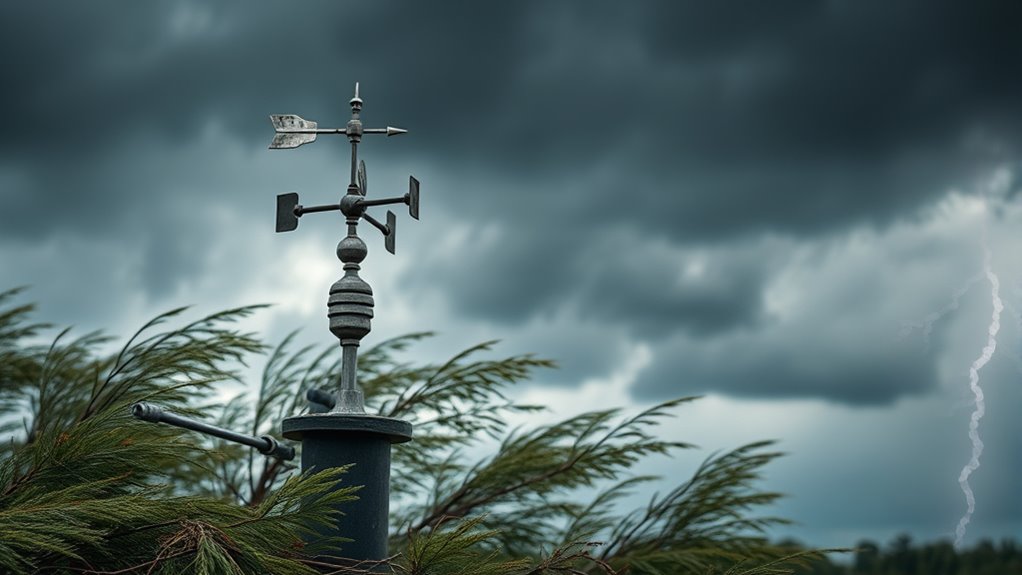
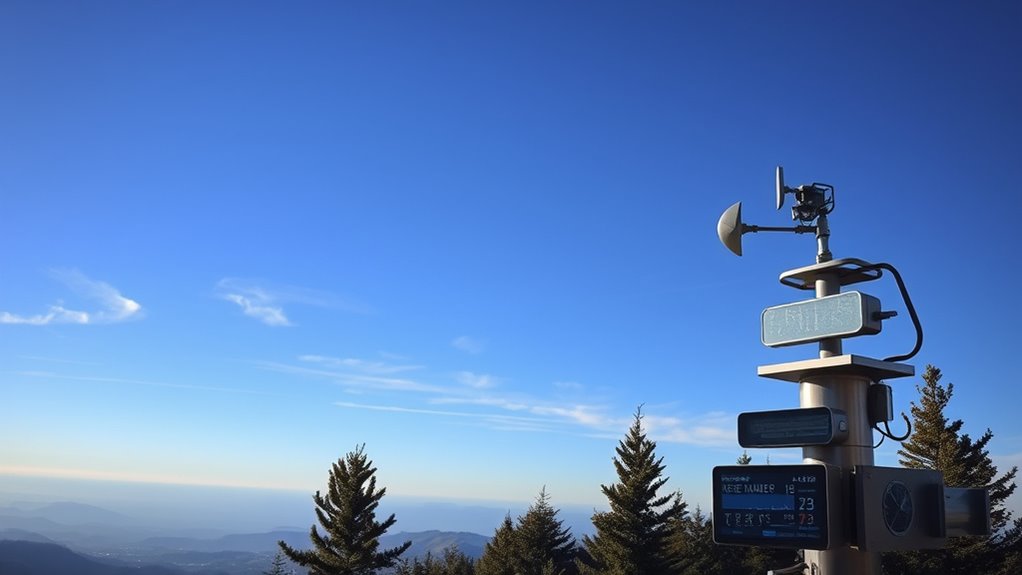
To safeguard equipment and make certain of safety during adverse weather, you need to carefully assess wind speeds and directions. Wind behavior is influenced by air masses and pressure systems, which dictate how winds move and their strength. High-pressure systems generally bring calmer conditions, while low-pressure systems often produce stronger, gustier winds. By understanding these patterns, you can determine when winds may threaten equipment stability or personnel safety. Pay attention to wind direction shifts, as they can signal changing pressure systems and upcoming weather events. Monitoring wind speeds with an anemometer helps you identify when winds reach dangerous levels. Accurate assessment enables you to implement protective measures, secure loose equipment, and avoid accidents caused by unexpected gusts or sustained high winds. Additionally, understanding ceiling fan efficiency can help in designing ventilation strategies that improve safety and comfort indoors.

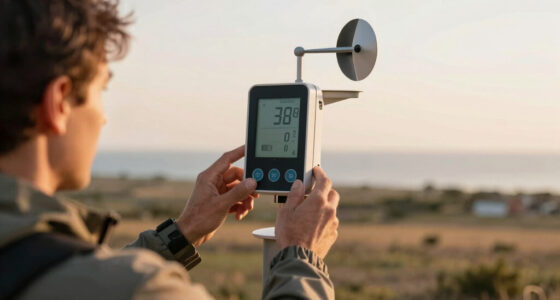
BTMETER BT-100 Handheld Anemometer, Digital Wind Speed CFM Meter Gauge Air Flow Velocity Tester for HVAC Shooting Drone, Wind Chill, 14℉-113℉ Wind Temperature
- Multifunctional Anemometer: Measures wind speed, temperature, and chill
- Multiple Units & Temperature: Displays in m/s, km/h, ft/min, knots, mph; Celsius/Fahrenheit
- High Accuracy & Range: Wind speed 0.67-67.1 mph, ±2%; Temp -10 to 60°C, ±2°C
As an affiliate, we earn on qualifying purchases.
As an affiliate, we earn on qualifying purchases.
Forecasting Temperature Variations and Dew Point to Prevent Equipment Damage
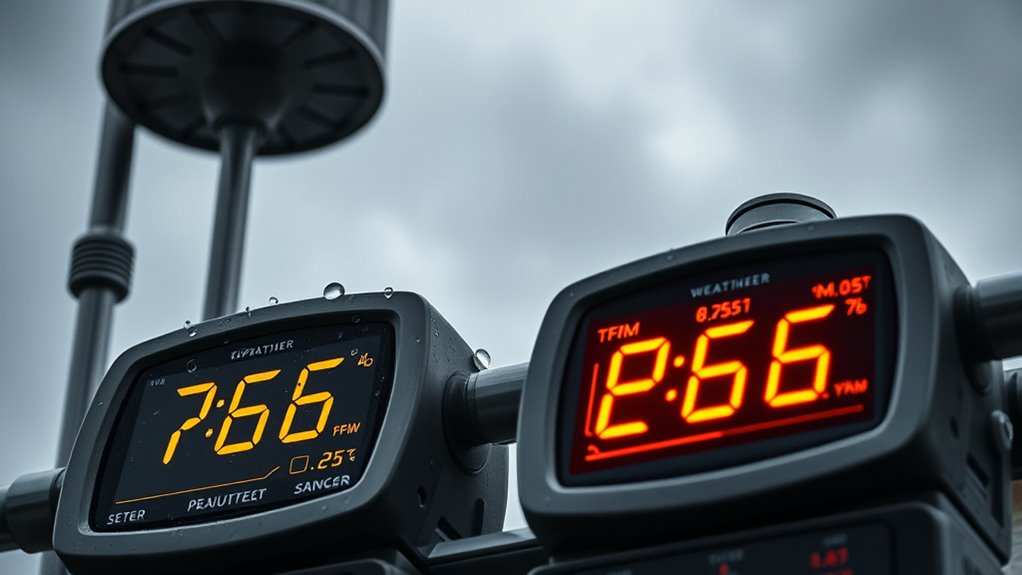
Monitoring temperature variations and dew point levels is essential for preventing equipment damage during changing weather conditions. Sudden drops can cause condensation, risking corrosion or short circuits. To stay ahead, track humidity levels and air pressure regularly; rising humidity and falling air pressure often signal dew formation. Use this table to interpret key indicators:
| Condition | Effect | Action |
|---|---|---|
| High humidity, low air pressure | Increased risk of dew formation | Protect equipment with covers |
| Rapid temperature drops | Condensation on surfaces | Allow for proper ventilation |
| Stable, warm conditions | Minimal dew risk | Maintain equipment as usual |
| Fluctuating conditions | Unpredictable dew formation | Monitor closely and adjust |
Additionally, understanding clutter buildup can help prevent overlooked issues that might exacerbate equipment problems during adverse weather.
Estimating Seeing Conditions Through Turbulence and Refractive Index Calculations
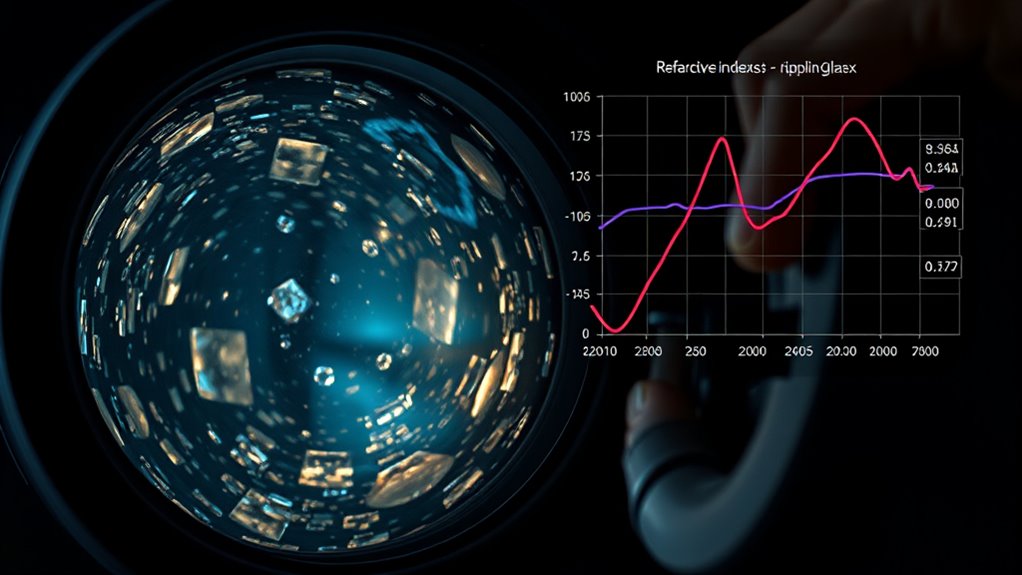
Understanding turbulence and how it affects the refractive index is key to estimating seeing conditions. Factors like atmospheric stability and wind speed influence turbulence levels, impacting image clarity. Practical methods use measurements of these variables to predict and improve observational quality effectively. Additionally, advancements in airless paint sprayer technology demonstrate how precise control and measurement can enhance performance and outcome consistency.
Turbulence Impact Factors
Turbulence considerably influences seeing conditions by causing fluctuations in the refractive index of the Earth’s atmosphere. These fluctuations depend on factors like air quality, temperature gradients, wind speed, and lightning risks. Poor air quality can increase turbulence by introducing particles that disrupt airflow, while lightning activity indicates unstable atmospheric layers, often correlating with worse seeing conditions. Understanding these turbulence impact factors helps you predict optical clarity more accurately. Here’s a quick overview:
| Factor | Effect on Turbulence | Observation Tips |
|---|---|---|
| Air Quality | Higher particles increase turbulence | Check pollution levels |
| Wind Speed | Strong winds intensify turbulence | Monitor local wind forecasts |
| Temperature Gradients | Steeper gradients worsen turbulence | Observe temperature changes |
| Lightning Risks | Signal unstable atmosphere | Watch weather alerts |
| Humidity Levels | High humidity can affect seeing | Use humidity sensors |
Refractive Index Variability
Have you ever wondered how astronomers estimate the clarity of their observations? It all comes down to understanding the refractive index of the atmosphere. Variability effects in the refractive index cause light to bend unpredictably as it passes through turbulent air layers. These fluctuations lead to distortions and blurring, directly impacting seeing conditions. By analyzing how the refractive index changes over time and space, astronomers can gauge the level of atmospheric turbulence. When variability effects are high, the refractive index fluctuates more, resulting in poorer image quality. Accurate measurements of these fluctuations allow for better prediction of seeing conditions, helping you decide the best times for observations. Understanding refractive index variability is essential for optimizing astronomical viewing and ensuring accurate, high-quality data. Additionally, the **atmospheric turbulence** plays a crucial role in these fluctuations, influencing the overall stability of the viewing conditions.
Practical Estimation Methods
To estimate seeing conditions effectively, astronomers use practical methods that analyze atmospheric turbulence through refractive index measurements. These methods involve calculating the variations caused by turbulence, which are influenced by factors like solar activity and lunar phases. Increased solar activity can intensify atmospheric instability, worsening seeing conditions, while certain lunar phases, especially full moons, can affect local temperature gradients. By monitoring turbulence levels and refractive index fluctuations, you can predict seeing quality more accurately. Techniques include using Differential Image Motion Monitors (DIMMs) and analyzing turbulence profiles with spectral data. Combining these measurements with knowledge about solar activity cycles and lunar phases helps you refine your forecasts, ensuring safer and more successful observations. Additionally, understanding atmospheric stability can further improve the accuracy of your predictions. These practical methods are essential for reliable, real-time seeing estimations.
Using Numerical Models and Data to Predict Weather Changes Over Time

Numerical models and data play a crucial role in predicting weather changes over time by simulating atmospheric processes with high accuracy. These models analyze vast datasets, including current temperature, humidity, wind patterns, and historical trends. Solar cycles influence long-term weather patterns, affecting solar radiation and atmospheric energy levels. Planetary alignment also subtly impacts atmospheric dynamics, contributing to shifts in weather systems. By integrating these factors, numerical models can forecast trends like cloud cover, precipitation, and wind speeds days or even weeks ahead. This precision allows you to plan observing sessions more effectively and avoid surprises. Relying on such sophisticated data helps ensure your safety and optimizes your chances of clear, stable conditions during critical weather-dependent activities.
Integrating Forecast Data Into Your Observation Planning for Maximum Success
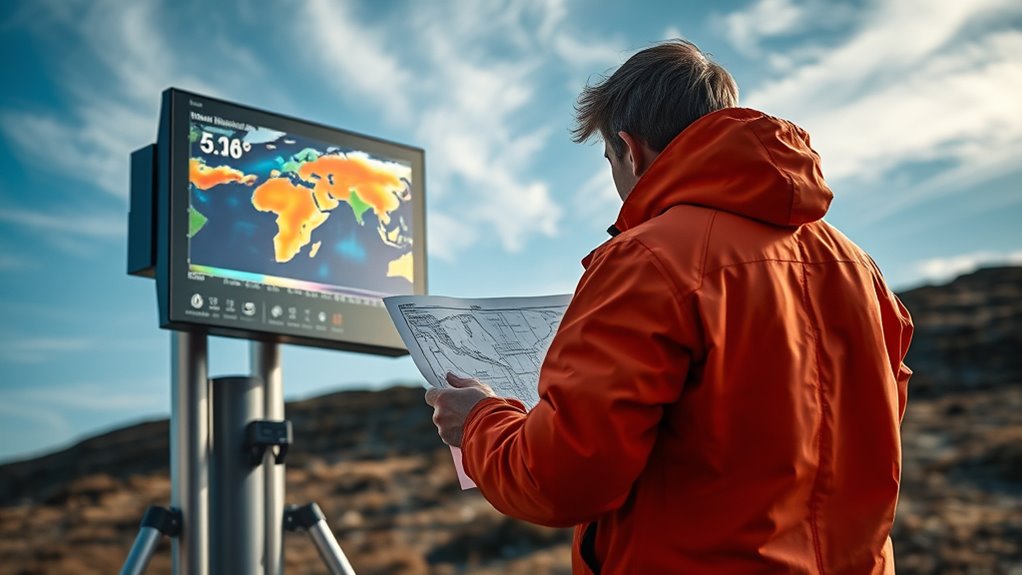
By incorporating accurate weather forecast data into your observation plans, you can substantially enhance your chances of success and safety. Use forecast details to select most favorable nights, considering moon phases to minimize moonlight interference. Be aware of light pollution levels that could obscure faint objects, adjusting your location or timing accordingly. Check cloud cover predictions to avoid wasted nights, and monitor wind conditions that might affect equipment stability. Additionally, plan around atmospheric transparency and seeing conditions to optimize image clarity.
- Align your schedule with new moon phases for darker skies
- Choose sites with low light pollution for better visibility
- Confirm clear weather windows before heading out
- Adjust for wind and atmospheric stability
- Time observations to coincide with ideal moon phases for your targets
Frequently Asked Questions
How Accurate Are Weather Forecasts for Astronomical Observation Planning?
Weather forecasts for astronomical observation planning are quite accurate within a short timeframe, especially with advanced satellite imagery and cloud cover modeling. You can confidently rely on these tools to assess sky conditions, but keep in mind that long-term predictions may still have uncertainties. Regularly checking updated forecasts helps you plan better, ensuring minimal disruption due to unexpected weather changes affecting your observations.
Can Real-Time Weather Data Improve Observation Safety During an Event?
You bet real-time weather data can boost observation safety during an event. By keeping an eye on sky clarity and humidity levels, you can adapt quickly to changing conditions. This real-time info helps you avoid surprises like sudden clouds or fog, ensuring clearer views and safer observing. When you stay updated, you’re not flying blind—you’re making informed decisions that keep your night under the stars smooth and enjoyable.
How Do Local Microclimates Affect Overall Weather and Seeing Predictions?
Local microclimates considerably influence your weather and seeing predictions by altering conditions like urban heat and local wind patterns. Urban heat can cause temperature variations that affect atmospheric stability, while local wind shifts can impact cloud movement and clarity. By understanding these microclimate effects, you can better anticipate changes, plan your observations, and guarantee safety, especially in areas where these factors cause notable deviations from broader regional forecasts.
What Are the Best Tools for Monitoring Atmospheric Turbulence Manually?
Monitoring atmospheric turbulence manually is like tuning a fine instrument; you need precise tools. Use turbulence sensors to detect fluctuations and assess air stability effectively. For manual monitoring, a scintillometer helps measure variations in light caused by turbulence, while an anemometer tracks wind speed and direction changes. Combining these tools gives you real-time data, enabling better predictions and safer observing conditions, all without relying solely on automated systems.
How Frequently Should Weather Data Be Updated for Optimal Planning?
You should update weather data at least every hour to guarantee optimal planning, especially when tracking changing weather patterns that impact visibility and safety. Frequent updates improve forecast reliability, helping you anticipate turbulence or adverse conditions. Relying on real-time data allows you to adjust plans swiftly, reducing risks and ensuring you stay informed about atmospheric variations. Consistent updates are essential for maintaining safety and making informed decisions.
Conclusion
By mastering these weather and seeing forecasts, you’ll navigate the sky’s ever-changing temperament like a seasoned sailor charting unpredictable waters. Each calculation acts as a compass, guiding you safely through clouds and turbulence toward clear, steady observation. With this knowledge, you can anticipate storms before they arrive and seize perfect viewing moments. Embrace these tools, and let your passion for astronomy flourish under the vast, ever-shifting canvas of the heavens.