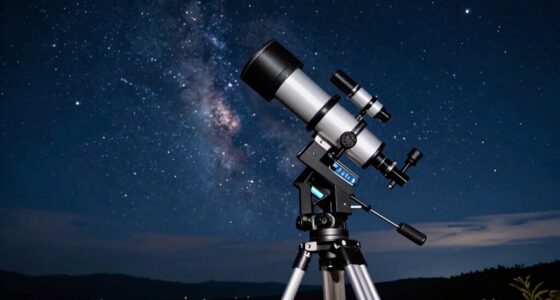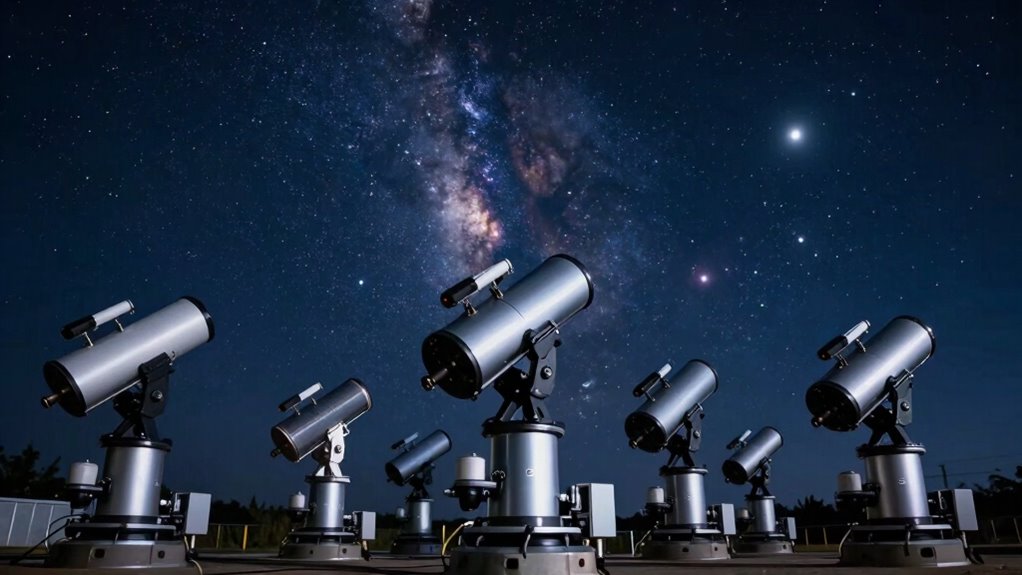

When choosing edgeHD telescopes for astrophotography, the goal is to balance optical quality, mount stability, and affordability. The Celestron CGX-L 14″ EdgeHD stands out as the best overall for its massive aperture and professional-grade features, ideal for advanced astrophotographers. The Celestron Advanced VX 8” EdgeHD offers impressive optical performance at a more accessible price point, making it a strong contender for serious enthusiasts. Meanwhile, the Celestron NexStar 8SE provides a compact, user-friendly option for those just starting out. As with any high-performance setup, tradeoffs often involve size, cost, and complexity—read on for a full breakdown of these options to find your perfect match.

Prime made for students and young adults
- Fast, free delivery for dorm and study essentials
- Prime Video and Amazon Music included
- Member-only deals
Key Takeaways
- The top picks offer a wide range of aperture sizes, from 8 inches to 14 inches, impacting light-gathering and image detail.
- Mount stability and tracking accuracy are critical for astrophotography and differentiate professional-grade models from entry-level options.
- Accessories and included kits can add value but also influence overall cost and setup complexity.
- Larger apertures generally mean higher costs and increased setup challenges, making size a key tradeoff for most buyers.
- Ease of use and software compatibility vary widely; beginner-friendly models tend to prioritize simplicity over advanced features.
| Celestron CGX-L 14″ EdgeHD Observatory-Class Astrophotography Equatorial Mount |  | Best Overall for Serious Astrophotographers | Optics: 14-inch EdgeHD | Coatings: StarBright XLT | Mount Type: Computerized Equatorial Mount | VIEW ON AMAZON | See Our Full Breakdown |
| Celestron Advanced VX 8” EdgeHD Computerized GEM Telescope |  | Best for Versatile Imaging and Observation | Optical Diameter: 8 inches | Optical Design: EdgeHD | Focal Ratios: f/10, f/7, f/2 (FastStar/Hyperstar) | VIEW ON AMAZON | See Our Full Breakdown |
| Celestron NexStar 8SE Computerized Telescope – Schmidt-Cassegrain |  | Best for Beginners and Portability | Aperture: 8 inches | Optics: Schmidt-Cassegrain | Mount: Automated GoTo | VIEW ON AMAZON | See Our Full Breakdown |
| Celestron Advanced VX 9.25″ EdgeHD Computerized German Equatorial Telescope |  | Best for Intermediate Astrophotographers and Deep-Sky Imaging | Aperture: 9.25 inches | Optical Design: EdgeHD aplanatic Schmidt | Mount Type: German Equatorial | VIEW ON AMAZON | See Our Full Breakdown |
| Celestron Advanced VX 8″ EdgeHD Telescope with Deluxe Accessory Kit |  | Best for All-in-One Imaging and Observation Packages | Aperture: 8 inches | Optical Design: EdgeHD | Magnification: Up to 480x | VIEW ON AMAZON | See Our Full Breakdown |
| Celestron NexStar Evolution Series 9.25′ Telescope |  | Best for Versatile All-Round Use | Optical System: Refractor | Mount Type: Altazimuth with motorized GoTo | Aperture: 9.25 inches | VIEW ON AMAZON | See Our Full Breakdown |
| Celestron CGX 11″ EdgeHD Computerized German Equatorial Telescope |  | Best for Serious Astrophotographers | Optical System: EdgeHD Schmidt-Cassegrain | Mount Type: CGX equatorial | Aperture: 11 inches | VIEW ON AMAZON | See Our Full Breakdown |
| edgehd telescopes for astrophotography | Aperture | Mount Type |
|---|---|---|
| Celestron CGX-L 14" EdgeHD Obs | — | Computerized Equatorial Mount |
| Celestron Advanced VX 8” EdgeH | — | — |
| Celestron NexStar 8SE Computer | 8 inches | — |
| Celestron Advanced VX 9.25" Ed | 9.25 inches | German Equatorial |
| Celestron Advanced VX 8" EdgeH | 8 inches | — |
| Celestron NexStar Evolution Se | 9.25 inches | Altazimuth with motorized GoTo |
| Celestron CGX 11" EdgeHD Compu | 11 inches | CGX equatorial |
More Details on Our Top Picks
Celestron CGX-L 14″ EdgeHD Observatory-Class Astrophotography Equatorial Mount
The Celestron CGX-L 14″ EdgeHD stands out as the premier choice for astrophotographers who need both high capacity and precision. Its large 14-inch optics and advanced tracking capabilities make it ideal for capturing detailed, high-quality images of deep-sky objects. Compared with the Celestron Advanced VX 8” EdgeHD, it offers significantly more aperture and stability, but this comes with added weight and complexity. The sturdy stainless steel tripod and larger worm wheel provide unmatched support for heavy imaging gear, though setup can be daunting for newcomers. This mount excels in environments where maximum imaging performance and stability outweigh portability and simplicity. Best suited for dedicated amateurs and small observatories willing to invest in top-tier equipment. Pros include its high-capacity mount supporting large optical tubes, premium StarBright XLT coatings for excellent light transmission, and remote operation features. Cons involve its heaviness, large footprint, and higher price point. Verdict: This mount is perfect for professionals or serious amateurs prioritizing ultimate stability and load capacity.
Pros:- Supports large optical tubes and heavy imaging accessories
- Premium StarBright XLT coatings maximize light transmission
- Sturdy stainless steel tripod enhances stability and adjustability
- Advanced features enable remote operation and precise tracking
Cons:- Heavy and difficult to transport, requiring dedicated setup space
- Complex assembly may challenge beginners
- Higher cost limits accessibility for casual users
Best for: Astrophotographers with substantial gear and space for setup who demand top performance
Not ideal for: Beginners or those with limited space who prefer portable, easier-to-setup systems
- Optics:14-inch EdgeHD
- Coatings:StarBright XLT
- Mount Type:Computerized Equatorial Mount
- Tripod Material:Stainless Steel
- Tripod Height:38 to 55 inches
- Finderscope:9×50 with Quick Release Bracket
- Focal Length:154 inches
- Additional Features:Larger worm wheel, remote operation
Our verdict“This mount is best for experienced astrophotographers seeking maximum stability and capacity, accepting a less portable design.”
Celestron Advanced VX 8” EdgeHD Computerized GEM Telescope
The Celestron Advanced VX 8” EdgeHD strikes a balance between optical quality and user flexibility. Its 8-inch EdgeHD optics deliver flat, sharp images ideal for astrophotography and visual observing alike. When compared to the NexStar 8SE, it offers more sophisticated mount features and compatibility with accessories like FastStar/Hyperstar for faster imaging sessions, making it a better choice for users seeking versatility. The mount’s advanced PPEC and all-star polar alignment promote accurate tracking, though setup can be complex for beginners. While not as large as the 14-inch model, its manageable size and professional features make it suitable for serious amateurs looking for a step up. Best suited for dedicated hobbyists expanding their astrophotography toolkit without the bulk of larger mounts. Pros include versatile focal ratios, high-quality flat field optics, and a computerized mount with advanced alignment tools. Cons involve its weight, the learning curve for setup, and a higher price compared to entry-level scopes. Verdict: This telescope is ideal for intermediate users who want a capable, flexible, and reliable imaging platform.
Pros:- Flat field correction with high-quality EdgeHD optics
- Multiple focal ratios including fast options for imaging speed
- Advanced mount with GoTo, PPEC, and robust tracking
- Compatibility with Hyperstar for ultra-fast imaging
Cons:- Relatively heavy, requiring sturdy mount and setup space
- Complex initial alignment can be challenging for newcomers
- Price may be prohibitive for casual users
Best for: Amateur astrophotographers seeking a versatile, high-performance imaging system
Not ideal for: Complete novices or those prioritizing portability over advanced features
- Optical Diameter:8 inches
- Optical Design:EdgeHD
- Focal Ratios:f/10, f/7, f/2 (FastStar/Hyperstar)
- Weight Capacity:Under 30 lbs
- Software:CPWI
- Dovetail Compatibility:CG-5 and CGE style
Our verdict“A flexible, high-quality choice for committed amateurs wanting advanced imaging capabilities in a manageable size.”
Celestron NexStar 8SE Computerized Telescope – Schmidt-Cassegrain
The Celestron NexStar 8SE shines as an accessible option for those new to astrophotography and portable setups. Its 8-inch Schmidt-Cassegrain optics provide bright, detailed views, and the fully automated GoTo system with SkyAlign makes object locating straightforward. Compared to larger, more complex systems like the Advanced VX 9.25″ EdgeHD, the 8SE is lighter and easier to set up, making it suitable for quick outings. However, its smaller aperture limits deep-sky imaging potential and long-exposure astrophotography. Its compact design is a major plus for travel but can restrict the attachment of larger accessories. This telescope is best for beginners or casual hobbyists who want a reliable, easy-to-use system for visual and basic astrophotography. Best suited for newcomers seeking a simple, portable, yet capable telescope. Pros include its powerful 8-inch aperture, ease of use with SkyAlign, and portability. Cons involve limited upgrade options and some initial alignment needed. Verdict: A solid choice for beginners who want a balance of simplicity, portability, and performance.
Pros:- Powerful 8-inch aperture for bright images
- Fully automated GoTo with SkyAlign setup
- Compact and portable design for travel
- Wide object database for easy star-hopping
Cons:- Limited to certain accessories without upgrades
- Requires initial alignment, which may be confusing for some
- Less suitable for long exposure astrophotography
Best for: Beginners or casual astronomers prioritizing portability and ease of use
Not ideal for: Advanced astrophotographers or those seeking deep-sky imaging with high precision
- Aperture:8 inches
- Optics:Schmidt-Cassegrain
- Mount:Automated GoTo
- Object Database:40,000+ celestial objects
- Warranty:2 years
Our verdict“Ideal for beginners and casual users looking for a portable, user-friendly telescope with good optical performance.”
Celestron Advanced VX 9.25″ EdgeHD Computerized German Equatorial Telescope
The Celestron Advanced VX 9.25″ EdgeHD offers a significant step up in aperture and optical quality for more serious astrophotographers. Its 9.25-inch EdgeHD optics deliver ultra-sharp, flat images, especially suited for deep-sky imaging, outperforming smaller scopes like the 8-inch models in resolution and detail. The robust GOTO mount with precision tracking and an extensive object database makes it a versatile platform for both imaging and observation. Compared to the 8-inch models, its larger aperture captures more light, but it also adds weight and complexity, making transport and setup more demanding. This scope is better suited for those with a dedicated observing space or a willingness to manage its weight for higher-quality results. Best for intermediate users ready to elevate their astrophotography and deep-sky imaging. Pros include its large aperture, sharp flat-field optics, and advanced mount features. Cons involve its weight, more demanding setup, and higher investment. Verdict: Designed for dedicated amateurs seeking high-resolution deep-sky imaging with stability and precision.
Pros:- High-quality EdgeHD optics with flat field correction
- Large 9.25-inch aperture captures more light
- Precise computerized GOTO mount with extensive object database
- Stable, adjustable steel tripod minimizes vibrations
Cons:- Heavy and less portable, requiring a dedicated setup space
- More complex setup process for newcomers
- Higher price point for advanced features
Best for: Intermediate to advanced astrophotographers focusing on deep-sky imaging
Not ideal for: Beginners or portable users who prioritize ease of setup and transport
- Aperture:9.25 inches
- Optical Design:EdgeHD aplanatic Schmidt
- Mount Type:German Equatorial
- Tracking:Precision computerized GOTO
- Object Database:Over 40,000 objects
- Tripod:Adjustable steel
Our verdict“A powerful, high-resolution scope best suited for dedicated astrophotographers aiming for detailed deep-sky images.”
Celestron Advanced VX 8″ EdgeHD Telescope with Deluxe Accessory Kit
The Celestron Advanced VX 8″ EdgeHD combined with its deluxe accessory kit offers a comprehensive package for astrophotographers seeking quality and convenience. Its 8-inch flat-field optics produce sharp, detailed images, while the stable, computerized German Equatorial mount ensures accurate tracking essential for long-exposure imaging. Compared to standalone scopes like the NexStar 8SE, this model adds a suite of accessories—finder, eyepiece, diagonal, and more—making it an attractive choice for those who want an all-in-one solution. Its weight and complexity make it less suitable for casual or portable setups but ideal for dedicated backyard observatories. This kit makes a compelling case for beginners with some experience or intermediate users aiming for a ready-to-go imaging platform. Best for hobbyists seeking a complete, versatile astrophotography setup with minimal fuss. Pros include high-quality optics, a stable mount, and a thoughtful accessory package. Cons involve its weight, learning curve, and higher price. Verdict: Perfect for those wanting a well-equipped, high-performance astrophotography system that’s ready to use.
Pros:- High-quality EdgeHD optics for sharp, flat images
- Powerful 8-inch aperture suitable for deep-sky imaging
- Includes a range of accessories for immediate use
- Stable, precise mount supports long exposures
Cons:- Heavy and bulky, less portable for on-the-go use
- Requires some learning curve for setup and calibration
- Higher initial investment with accessory kit
Best for: Amateurs looking for a complete, easy-to-start astrophotography setup with accessories included
Not ideal for: Travelers or beginners with limited space or experience in setup and calibration
- Aperture:8 inches
- Optical Design:EdgeHD
- Magnification:Up to 480x
- Mount:Advanced VX computerized German equatorial
- Included Accessories:Finder, eyepiece, diagonal, tripod, hand control, accessory kit
- Warranty:2 years
Our verdict“An excellent choice for dedicated astrophotographers wanting a comprehensive, ready-to-use imaging package in a reliable, high-capacity system.”
Celestron NexStar Evolution Series 9.25′ Telescope
The NexStar Evolution 9.25′ stands out for combining ease of use with solid optical performance, making it a flexible choice for those who want both visual astronomy and astrophotography. Compared to the Celestron CGX 11″ EdgeHD, it offers a more portable setup and smartphone control, which benefits amateurs seeking quick setup and remote operation. However, it’s notably more expensive and bulkier than smaller, more straightforward models, which could be a barrier for casual users or those with limited storage space. Its motorized GoTo system simplifies locating objects, but mastering the advanced features can involve a learning curve. This pick makes the most sense for intermediate to advanced hobbyists who value versatility and convenience over raw aperture or maximum astrophotography performance.
Pros:- High-quality optics deliver clear, detailed images for visual and photographic work
- Motorized GoTo system simplifies object locating and tracking
- Smartphone control enhances user experience and remote operation
- Versatile use for both beginners and experienced observers
Cons:- Relatively high price point may deter casual or budget-conscious users
- Bulkier size requires a sturdy mount and space setup
- Complex features have a steep learning curve for newcomers
Best for: Amateur astronomers who want a reliable, easy-to-use scope for both visual observing and astrophotography, with integrated smartphone control.
Not ideal for: Beginners who prefer simple, lightweight setups or those on a tight budget, as the system’s complexity and cost may be overwhelming.
- Optical System:Refractor
- Mount Type:Altazimuth with motorized GoTo
- Aperture:9.25 inches
- Focal Length:2350mm
- Weight:approximately 30 lbs
- Control System:Smartphone via Wi-Fi
- Setup:Moderate, with some learning curve
Our verdict“This telescope is ideal for those seeking a flexible, feature-rich instrument that balances astrophotography and visual astronomy, provided they are comfortable with a moderate learning curve.”
Celestron CGX 11″ EdgeHD Computerized German Equatorial Telescope
The CGX 11″ EdgeHD combines a large aperture with premium optical quality, making it an exceptional choice for astrophotographers aiming for high-resolution images. Its EdgeHD Schmidt-Cassegrain optics produce flat, sharp images that outperform smaller or less specialized scopes like the Advanced VX 8’’ EdgeHD, especially in capturing deep-sky objects with detail. The mount’s high load capacity (55 lbs) ensures stability during long exposures, and the extensive celestial database simplifies target selection. That said, setting up this scope involves a complex alignment process and significant weight, which can be daunting for beginners or those lacking space for transport. This model is best suited for experienced amateurs or semi-professionals committed to astrophotography and willing to manage a heavier, more involved system.
Pros:- Exceptional optical quality with flat-field imaging for astrophotography
- Sturdy, high-capacity mount with precise tracking for long exposures
- Extensive database and user-friendly controls streamline target management
- Large aperture enables deep-sky imaging with high detail
Cons:- Heavy and bulky, making transport and setup challenging
- Complex alignment process requires familiarity with astrophotography procedures
- Higher cost compared to smaller or simpler models
Best for: Experienced astrophotographers seeking maximum optical performance and precision tracking for deep-sky imaging.
Not ideal for: Beginners or users requiring a lightweight, portable setup, as the weight and complexity could be overwhelming.
- Optical System:EdgeHD Schmidt-Cassegrain
- Mount Type:CGX equatorial
- Aperture:11 inches
- Focal Length:2800mm
- Load Capacity:55 lbs
- Tripod:2″ steel
- Tracking Modes:Sidereal, Solar, Lunar
- Celestial Database:Over 40,000 objects
Our verdict“This telescope offers outstanding optical and tracking performance for dedicated astrophotographers willing to handle its size and setup complexity.”

How We Picked
The products in this roundup were evaluated based on optical performance, mount stability, build quality, ease of setup, and value for money. Priority was given to models that combine high image quality with reliable tracking and minimal maintenance, as these are crucial for successful astrophotography. We also considered user feedback, feature sets, and the versatility of accessories included. The ranking reflects a balance between professional capabilities and practical usability, ensuring each option serves a specific type of astrophotographer—from novices to advanced amateurs and professionals.| edgehd telescopes for astrophotography | Mount Type |
|---|---|
| Celestron CGX-L 14" EdgeHD Obs | Computerized Equatorial Mount |
| Celestron Advanced VX 8” EdgeH | — |
| Celestron NexStar 8SE Computer | — |
| Celestron Advanced VX 9.25" Ed | German Equatorial |
| Celestron Advanced VX 8" EdgeH | — |
| Celestron NexStar Evolution Se | Altazimuth with motorized GoTo |
| Celestron CGX 11" EdgeHD Compu | CGX equatorial |
Factors to Consider When Choosing Edgehd Telescopes For Astrophotography
Choosing an edgeHD telescope for astrophotography involves considering several factors that influence image quality, ease of use, and long-term satisfaction. While larger apertures capture more detail, they often come with increased weight and setup complexity. The mount’s stability and tracking accuracy are vital for long exposures, preventing star trails. Compatibility with accessories like cameras and filters can extend your system’s capabilities, but also impact overall cost. Recognizing your experience level and specific astrophotography goals will help narrow your options effectively.Aperture Size and Light-Gathering Power
The aperture determines how much light your telescope can collect, directly affecting image brightness and detail. Larger apertures, like 14 inches, excel at deep-sky imaging but require more space and robust mounts. Smaller apertures, such as 8 inches, are more manageable but may limit the detail in faint objects. Match your aperture choice to your typical targets and available setup space to avoid over- or under-investing.
Mount Stability and Tracking Accuracy
A stable mount with precise tracking is essential for astrophotography, especially for long exposures. Equatorial mounts like the German equatorial or computerized variants help counter Earth’s rotation but demand proper alignment and calibration. Cheaper mounts may struggle with vibration or drift, compromising image sharpness. Investing in a solid mount often makes a larger difference than optics alone in achieving clear, detailed astrophotos.
Optical Quality and EdgeHD Design
EdgeHD optics are designed to produce sharp, coma-free images across the entire field of view, reducing the need for post-processing corrections. This feature is particularly valuable for wide-field astrophotography. However, high-quality optics come at a premium, and cheaper models may exhibit distortions that limit image detail. Opt for well-reviewed optical systems that reliably deliver crisp images across the entire frame.
Size, Weight, and Portability
Larger telescopes provide better light collection but are heavier and more cumbersome to transport and set up. Consider your available space and whether you need a portable system or a permanent observatory setup. If mobility is a priority, models like the 8-inch EdgeHD strike a better balance between performance and manageable size. Keep in mind that heavier setups often require upgraded mounts for stability.
Compatibility and Accessories
Assess whether the telescope supports your preferred camera, filter, and guiding systems. Some models come with comprehensive accessory kits, adding value but also complexity. Compatibility with software for automation and control can streamline your workflow but may require additional investment. Clarify your future upgrade plans to choose a system that scales with your evolving needs.
Frequently Asked Questions
Is an EdgeHD telescope necessary for high-quality astrophotography?
While EdgeHD telescopes excel at providing sharp, coma-free images across the field, they are not strictly necessary for good astrophotography. Many amateur setups with high-quality Schmidt-Cassegrain or refractor optics can produce excellent images, especially at shorter exposures. However, for wide-field imaging and detailed deep-sky shots, EdgeHD’s design minimizes distortions, making it a worthy investment for those committed to high-quality results.
How important is the mount when choosing an edgeHD telescope?
The mount is arguably the most critical component for successful astrophotography. Even the best optics can underperform if the mount is unstable or lacks precise tracking. A sturdy, well-calibrated equatorial mount reduces vibrations and star trailing during long exposures. Investing in a high-quality mount often yields better image results than upgrading optics alone, especially for deep-sky imaging.
Can I use a smaller aperture telescope for astrophotography and still get good results?
Yes, smaller aperture telescopes like an 8-inch EdgeHD can produce impressive astrophotos, particularly if you target brighter objects like planets or the Moon. They are more manageable, easier to set up, and less costly, making them excellent for beginners or those with limited space. However, for deep-sky imaging of faint objects, larger apertures generally provide better results, albeit with increased complexity.
What additional accessories should I consider for astrophotography with an edgeHD telescope?
Key accessories include a quality camera suitable for astrophotography, a guiding system for long exposures, and filters to enhance specific wavelengths. A focal reducer or field flattener can improve image quality and ease focusing. Also, a reliable power supply and remote control options simplify long imaging sessions. Planning for these extras ensures you get the most out of your edgeHD system.
Is it better to buy a complete package or assemble my own system?
Buying a complete package can save time and ensure compatibility, especially for beginners who may find selecting individual components daunting. However, assembling your own setup allows customization and potentially higher-quality components tailored to your specific needs. More experienced astrophotographers often prefer building their system for greater flexibility and future upgrades. Consider your skill level and long-term goals when choosing between these approaches.
Conclusion
For those seeking the best overall performance and capable of handling larger, more complex setups, the Celestron CGX-L 14″ EdgeHD stands out as the top choice. If value and balanced performance matter most, the Celestron Advanced VX 8” EdgeHD offers a compelling mix of quality and affordability. Beginners or casual users will find the Celestron NexStar 8SE most manageable, providing excellent results without overwhelming complexity. Advanced astrophotographers aiming for professional-grade images should consider the Celestron CGX 11″ EdgeHD, despite its higher cost and setup demands. Ultimately, your choice will hinge on your experience level, target objects, and willingness to manage setup intricacies.
As an affiliate, we earn on qualifying purchases.Fall Picks
fall essentials