TL;DR
Listen free for 30 days with Audible
Thousands of audiobooks and originals — cancel anytime.
As an affiliate, we earn on qualifying purchases.
This article explains how to accurately time and position yourself to see and photograph the upcoming Blue Moon’s full moonrise. Using precise calculations and planning tools can help you catch this rare event at its best moment.
Scientists and astronomy enthusiasts can now precisely plan to observe the upcoming Blue Moon’s full moonrise on May 31, 2026, by following expert timing and location advice, ensuring they don’t miss this rare event.
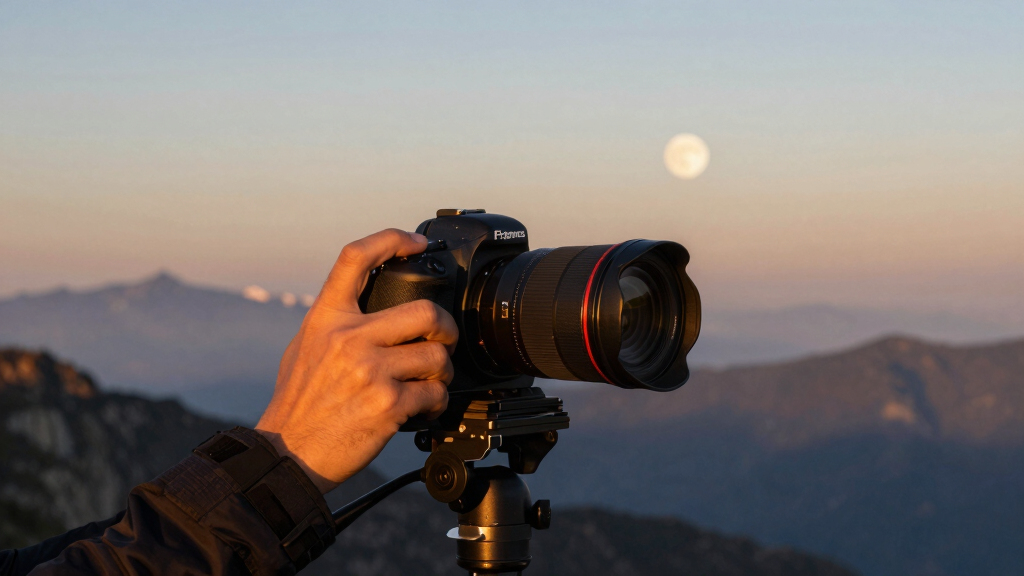
The full Blue Moon will reach full illumination at 4:45 a.m. EDT on May 31, 2026. However, the best viewing and photographic opportunity occurs when the moon rises during dusk, roughly 20 minutes after sunset. For example, in New York, sunset is at 8:20 p.m., and moonrise is at 9:13 p.m., making that window ideal. Experts recommend using planning apps like PhotoPills or The Photographer’s Ephemeris to determine the exact moonrise point from any location, considering local topography and time. The moon’s appearance on the horizon varies based on the time of year and geographic location, making precise planning essential. Photographers should arrive early at elevated, unobstructed spots near water or open landscapes to maximize visibility and lighting conditions.
Why It Matters
This guidance is important because the full moonrise is a fleeting event, lasting only a few minutes, and missing it means waiting another month for the next opportunity. Proper planning enhances the chance to capture stunning images and experience the event at its most dramatic, especially for the rare Blue Moon, which occurs roughly every 2.7 years.
As an affiliate, we earn on qualifying purchases.
Background
The Blue Moon, the second full moon in a calendar month, is a rare occurrence, happening approximately once every 2.7 years. The upcoming event on May 31, 2026, is particularly notable because it coincides with a full moon that reaches peak illumination at 4:45 a.m. EDT. Historically, moonrise timing varies with seasons and geographic location, making precise calculation and planning crucial for observers and photographers. Many rely on digital tools to predict the exact point on the horizon where the moon will appear, aiding in optimal viewing and shooting conditions.
“Using specialized planning apps allows observers to pinpoint the exact moment and location for the best moonrise view, which is essential given how brief and variable the event is.”
— Dr. Emily Carter, astronomer
“Patience and preparation are key; arriving early at an elevated, unobstructed spot can make all the difference in capturing the perfect moonrise.”
— Photographer Jamie Carter
As an affiliate, we earn on qualifying purchases.
What Remains Unclear
It is still unclear how local weather conditions, such as cloud cover or haze, will impact the visibility of the moonrise on the night of May 31, 2026. While timing can be calculated precisely, atmospheric factors remain unpredictable and may obscure the event.
planning tools for astrophotography
As an affiliate, we earn on qualifying purchases.
As an affiliate, we earn on qualifying purchases.
What’s Next
Observers and photographers should use planning tools now to identify optimal viewing locations and prepare their equipment. As the date approaches, checking local weather forecasts will be crucial to ensure clear skies. The event will be most visible during dusk, roughly 20 minutes after sunset, so early arrival is recommended. Additional guidance on exact location and timing will be available as the date nears, including updated weather advisories.
unobstructed viewing spot for moonrise
As an affiliate, we earn on qualifying purchases.
As an affiliate, we earn on qualifying purchases.
Key Questions
What is a Blue Moon?
A Blue Moon is the second full moon in a calendar month, which occurs approximately once every 2.7 years. It is a natural lunar cycle event, not related to the moon’s color.
How can I best prepare to see the full moonrise?
Choose an elevated, unobstructed location with a clear eastern horizon, use planning apps to determine the exact moonrise time and point, and arrive early to set up your equipment and secure a good spot.
Will the moon appear blue during the Blue Moon?
No, the Blue Moon does not turn the moon blue. The term refers to the rarity of the second full moon in a month, not its color.
What equipment do I need to photograph the moonrise?
A camera with manual controls, a telephoto lens, a sturdy tripod, and possibly a remote shutter release or timer are recommended to capture sharp, well-exposed images of the moonrise.
What if the weather is cloudy or hazy?
Atmospheric conditions are unpredictable; if the sky is overcast, the moon may be obscured. Monitoring local weather forecasts and choosing a location with a clear view of the horizon can improve your chances.
Source: Google Trends
NFL season / tailgating Picks
team gear
As an affiliate, we earn on qualifying purchases.