![Terence Tao Explains 6 Essential Mathematical Concepts [Video]](https://astrophotographyhq.com/wp-content/uploads/2026/09/terence-tao-explains-6-essential-mathematical-concepts-video-featured-200x110.jpg)
TL;DR

Prime made for students and young adults
- Fast, free delivery for dorm and study essentials
- Prime Video and Amazon Music included
- Member-only deals
A plane crossing the Moon during a lunar eclipse creates a striking optical illusion. The event is purely perspective-based, and capturing it requires quick timing and understanding of both astronomy and photography techniques.
Imagine seeing the Moon turn a deep, haunting red—its surface glowing with rich oranges and reds—while a tiny airplane temporarily ‘eclipses’ part of its disk. It sounds like something out of a science-fiction movie, but it’s real. Today, we’re unraveling the story behind this breathtaking shot, blending the predictable dance of celestial bodies with a fleeting human activity.
You’ll learn how this optical illusion works, why it’s special, and how to catch such moments yourself. Whether you’re a sky-watcher, a photographer, or simply curious about the universe, this story shows how the cosmos and everyday life can collide in spectacular fashion.
Perspective makes tiny airplanes appear to cross the Moon—this is an optical illusion, not a physical encounter.
Planning, quick reflexes, and the right gear are essential to photograph fleeting transits during celestial events.
The red hue of a lunar eclipse results from Earth’s atmosphere filtering sunlight, casting a fiery glow.
Combining astronomy with photography can turn a simple flight or eclipse into a stunning visual story.
Weather and timing are unpredictable, but careful preparation greatly improves your chances of capturing rare moments.
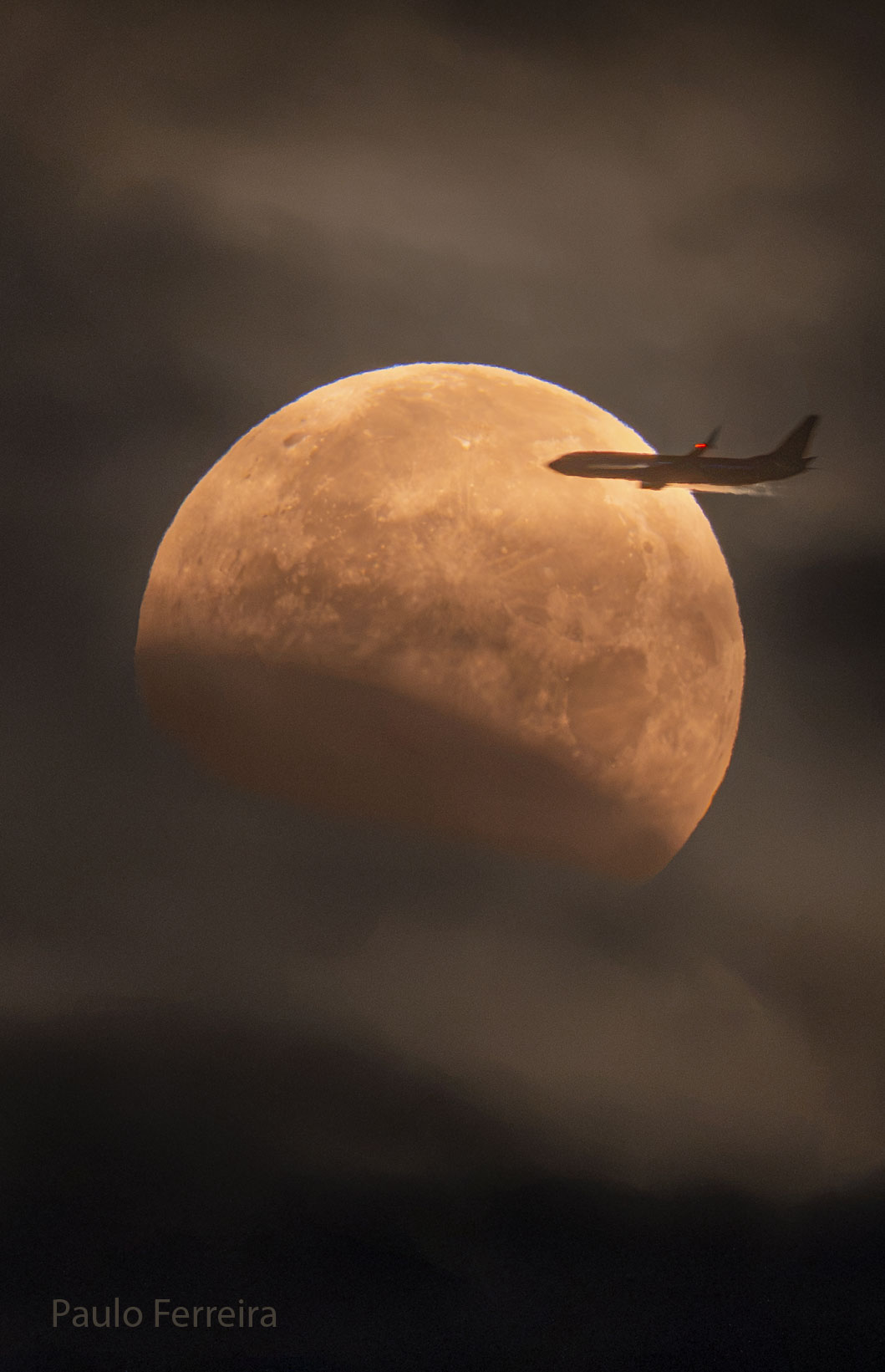
What makes this lunar eclipse and airplane crossing so visually striking?
The image captures a lunar eclipse—when Earth’s shadow turns the Moon a fiery red—alongside a tiny aircraft passing directly in front of it. The trick? Both objects align along your line of sight, but they’re separated by millions of kilometers and a few kilometers, respectively.
That tiny plane, just about 10 kilometers above Earth’s surface, appears superimposed over the Moon, which is 384,400 kilometers away. The result is a surreal scene: a celestial event and a human-made object seemingly merging into one.
This alignment isn’t just a coincidence; it’s a perfect example of perspective at work. The plane itself isn’t near the Moon at all. Instead, the camera’s focal length and timing create the illusion: a fleeting moment where two very different scales meet visually.
Understanding this illusion matters because it reminds us of how our perception can be deceived based on the vantage point and optical effects. This awareness is crucial not just for appreciating such moments, but also for scientific observations, where misinterpretations can lead to errors. Recognizing the difference between what we see and what actually exists helps us develop better observational skills and avoid false conclusions about the universe’s scale and distance.
As an affiliate, we earn on qualifying purchases.
How to capture a plane crossing the Moon during an eclipse — step-by-step
- Plan ahead using astronomy software to predict lunar eclipses and aircraft routes in your area. This preparation allows you to understand the timing and potential paths, but also highlights trade-offs: more precise planning improves your chances, yet unpredictable factors like weather or route changes can still thwart your efforts. Balancing detailed planning with flexibility is key to success.
- Choose a location with a clear, unobstructed view of the sky. High vantage points or remote areas work best, but also consider accessibility and safety. Remember, the better your vantage point, the more likely you are to capture the scene without interference, but remote locations might pose logistical challenges.
- Use a camera with a fast shutter speed, ideally with a telephoto lens of at least 300mm. This helps freeze motion and magnify details, but also introduces trade-offs: higher magnification can reduce depth of field and make focusing more critical. Weigh these factors based on your equipment and experience.
- Set your camera to manual mode, focusing sharply on the Moon’s surface. Achieving perfect focus is essential because even slight errors can ruin the shot. Using live view and focus peaking can help improve accuracy.
- Monitor the weather forecast closely. Clear skies are essential for sharp images, but weather can change unexpectedly, emphasizing the importance of flexibility and backup plans.
- Be ready to shoot in burst mode during the predicted window—milliseconds matter. This approach increases your chances of capturing the fleeting moment when the aircraft crosses the lunar disk, but it also requires discipline and anticipation.
- Time your shot so the aircraft is in front of the Moon during the eclipse’s peak or just as it crosses the lunar disk. Precise timing can mean the difference between a compelling shot and a missed opportunity, highlighting the importance of practice and understanding the event’s dynamics.
- Review your images immediately. Adjust focus or timing as needed for the next shot. This iterative process helps refine your technique and increases the likelihood of success in future attempts.
Remember, the aircraft’s transit lasts only a fraction of a second. Precision and quick reflexes are your best allies, but understanding the underlying principles of timing and equipment limitations will greatly improve your chances of capturing this elusive moment.
telephoto lens for moon photography
As an affiliate, we earn on qualifying purchases.
As an affiliate, we earn on qualifying purchases.
Why the Moon turns red during an eclipse — and what you see in these photos
The red hue during a lunar eclipse comes from Earth’s atmosphere. When sunlight passes through the atmosphere, it scatters blue and green light but bends red and orange wavelengths into Earth’s shadow. This process, called Rayleigh scattering, filters the sunlight, allowing only the red wavelengths to reach the Moon, bathing it in a fiery glow. This phenomenon is significant because it reveals the composition and behavior of Earth’s atmosphere, acting as a natural lens that filters the sunlight in a way that can tell us about atmospheric particles and pollution levels.
Imagine a sunset cast onto the lunar surface—warm, deep reds and oranges. That’s what makes the eclipsed Moon so mesmerizing. The longer the eclipse, the deeper and richer the red becomes. This color change isn’t just aesthetic; it indicates the Earth’s atmospheric conditions and can vary based on factors like dust, pollution, and weather patterns at the time.
In the photograph, this red cast enhances the visual impact, making the passing aircraft seem even more surreal against the vibrant lunar backdrop. Recognizing the atmospheric optics involved deepens our appreciation of the scene, revealing that such colors are not arbitrary but meaningful indicators of our planet’s atmospheric state.
As an affiliate, we earn on qualifying purchases.
The science behind the illusion: perspective, scale, and optical tricks
It’s all about perspective. The Moon appears large because of the camera’s focal length, which magnifies its size in the frame. The airplane, flying just kilometers away, appears nearly as large in the image as the Moon, even though it’s tiny compared to the celestial body. This optical effect demonstrates how our perception can be manipulated by camera settings and position, leading us to perceive objects as larger or closer than they truly are. Such illusions are essential to understand because they highlight the importance of context in visual interpretation, reminding us that what we see isn’t always an accurate representation of reality.
Think of it like a toy airplane held close to your face versus a giant billboard in the distance. The closer object looks bigger, even if it’s physically tiny. This analogy underscores how distance and focal length influence our perception, often creating illusions that can be mistaken for actual physical interactions.
Another factor is the timing—aircraft crossing the Moon’s disk can happen in less than a second. Photographers need to be quick, precise, and lucky to capture that perfect moment. This fleeting intersection emphasizes the importance of understanding both the technical aspects of photography and the physical principles behind optical illusions, as mastering both allows for more intentional and striking images.
This optical illusion reminds us how powerful perspective is, turning everyday objects into cosmic-scale illusions and revealing the limitations of our visual perception. It also offers insights into how we interpret complex scenes—an important consideration in scientific imaging and artistic expression alike.
remote shutter release for cameras
As an affiliate, we earn on qualifying purchases.
As an affiliate, we earn on qualifying purchases.
Recent lunar eclipses and why 2026 was a special year for skywatchers
2026 proved to be a stellar year for lunar eclipse enthusiasts. Just days before this photo was taken, a partial lunar eclipse graced the sky on August 28. Earlier in March, a total lunar eclipse offered spectacular views across many parts of the world. These events are significant because they exemplify the rhythmic dance of celestial mechanics—how predictable alignments can produce awe-inspiring phenomena that draw our attention to the universe’s grand design. The frequency and visibility of eclipses depend on the precise orbital mechanics of the Earth-Moon-Sun system, and their occurrence can influence cultural, scientific, and observational activities.
These events follow the pattern of eclipse seasons—periods when the Sun, Earth, and Moon align just right. This year’s string of eclipses kept skywatchers busy, and the timing of the photograph highlights how these celestial events often intersect with human activity, creating unique opportunities for observation and photography. Recognizing these patterns fosters a deeper appreciation of planetary motion, the predictability of natural phenomena, and how human curiosity can be synchronized with celestial cycles to capture extraordinary moments.
Combining eclipse predictions with flight schedules, photographers can plan to catch these fleeting moments—like a plane crossing a glowing, red Moon—and understand that such intersections are a testament to the harmony of celestial mechanics and human ingenuity.
Can a photo like this be planned or is it pure luck?
Both, really. Skilled photographers use tools like flight trackers, weather apps, and astronomical software to predict when aircraft might cross the Moon during an eclipse. This preparation allows for a higher likelihood of success, but it’s important to recognize the inherent trade-offs: perfect timing is often elusive due to unpredictable elements such as weather changes, flight route adjustments, and timing precision. While meticulous planning can significantly increase your chances, it cannot guarantee a shot. This interplay between planning and chance underscores the unpredictable beauty of nature and human activity—each shot becomes a blend of scientific foresight and serendipity. Understanding these trade-offs helps photographers set realistic expectations and appreciate the fleeting nature of such moments, which are often more rewarding precisely because they are rare and unpredictable.
What you should remember when trying to photograph the night sky
Patience and preparation are your best friends. Study upcoming lunar eclipses and aircraft routes. Use apps and software to plan your shoot.
Invest in a good camera with a fast shutter and a telephoto lens. Practice focusing sharply on the lunar surface. Scout your location for the clearest view.
And don’t forget the weather! Clear, dark skies are a must for capturing the Moon’s subtle color and the fleeting transit of an airplane. Remember, even with perfect preparation, unpredictable factors like weather or unexpected aircraft routes can still thwart your efforts. Flexibility and patience are key, as the most beautiful images often come from seizing opportunities at the last moment. Developing a good understanding of your equipment and the environment will help you adapt quickly, turning near-misses into successful captures. Ultimately, the thrill lies in the pursuit—each attempt deepens your understanding and appreciation of the night sky’s fleeting moments.
With these tips, you’ll increase your chances of creating a shot that turns cosmic coincidence into a work of art.
Conclusion
This scene reminds us how the universe’s grand scale can meet our everyday world in fleeting, beautiful moments. Whether you’re behind a camera or simply gazing up, understanding these illusions deepens your appreciation for the night sky’s magic.
Next time you see a lunar eclipse, remember: what you’re witnessing is a natural, predictable event, but the chance to photograph a passing aircraft crossing that scene is a unique stroke of luck—and preparation.
Fall Picks
fall essentials
As an affiliate, we earn on qualifying purchases.