
TL;DR

Prime made for students and young adults
- Fast, free delivery for dorm and study essentials
- Prime Video and Amazon Music included
- Member-only deals
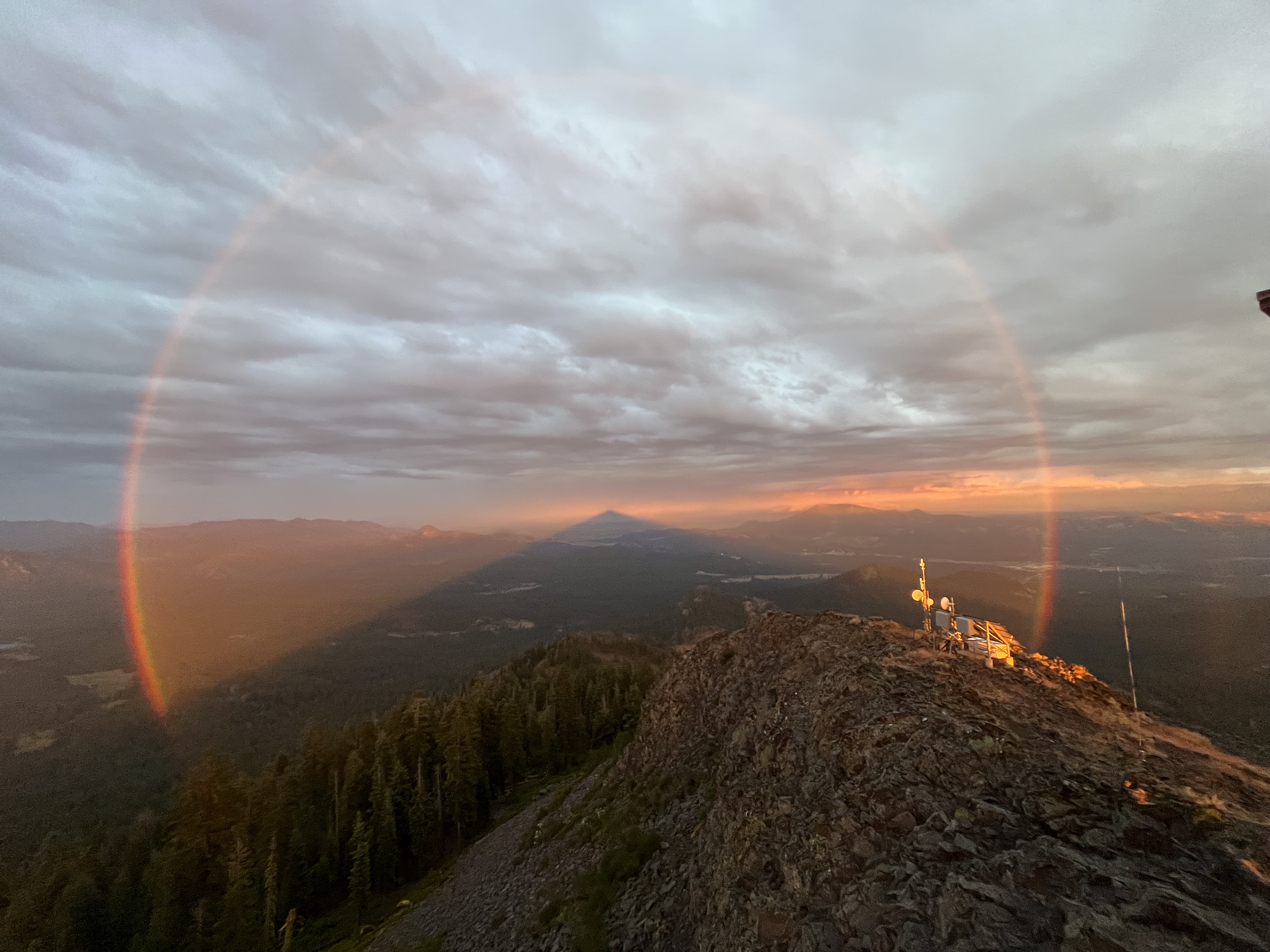
A sunset scene with a rainbow and mountain shadow highlights how atmospheric optics and perspective combine. Rainbows are centered on the antisolar point, and mountain shadows stretch toward the horizon, creating a picture-perfect moment of nature’s interplay.
Imagine standing on a mountain ridge at sunset, the sky painted in warm golden hues. Suddenly, a vibrant rainbow arcs across the sky, and a mountain’s shadow stretches like a dark triangle behind you. It’s the kind of scene that stops you in your tracks.
What’s happening here? Why do the shadow and rainbow seem so perfectly aligned? And how can understanding the physics make you appreciate this fleeting moment even more? Today, we’ll unravel the science behind this stunning sunset spectacle—turning a beautiful sight into a story of light, water, and perspective.
A mountain’s shadow at sunset naturally forms a triangle pointing at the rainbow due to the Sun’s low angle and perspective.
Rainbows are centered on the antisolar point; at sunset, their colors become richer because of atmospheric scattering.
Alexander’s dark band appears between double rainbows because of the physics of how light is deviated inside water droplets.
Earth’s shadow during sunset creates a dark band opposite the Sun, topped by the pink Belt of Venus, framing the scene.
Capturing this kind of scene requires timing, the right location, and a wide-angle lens to include both the shadow and rainbow.
Why does the mountain shadow look like a perfect triangle pointing at the rainbow?
The mountain’s shadow appears as a tapering triangle, pointing directly at the rainbow, because of how the Sun’s low angle at sunset projects the shadow. As the Sun dips below the horizon, its rays cast long, stretched shadows. The peak’s shadow aligns with the antisolar point—the spot directly opposite the Sun.
Imagine standing on a mountain ridge just as the Sun is setting behind distant peaks. The shadow elongates, forming a triangular shape that naturally points toward the rainbow—since the rainbow’s center is always at the antisolar point. This alignment isn’t random; it’s baked into the geometry of light and perspective you experience at that moment.
wide angle camera lens for landscape photography
As an affiliate, we earn on qualifying purchases.
As an affiliate, we earn on qualifying purchases.
How does the rainbow form and why are its colors so vivid at sunset?
A rainbow is a giant, colorful arc created when sunlight refracts and reflects inside tiny water droplets in the air. For the rainbow to appear, the Sun must be behind you, low in the sky—usually below 42° altitude. At sunset, the Sun’s rays pass through more atmosphere, scattering shorter blue wavelengths and allowing the reds, oranges, and yellows to dominate.
The rainbow’s arc is always centered on the antisolar point, which at sunset lies right opposite the horizon. That’s why, during that golden hour, rainbows seem to glow with richer, more saturated colors—nature’s fiery brushstrokes across the sky.
As an affiliate, we earn on qualifying purchases.
What’s the dark band between the rainbow and its secondary arc?
This dark region is called Alexander’s dark band. It’s caused by the way light is deviated away from certain angles—basically, the water droplets don’t send light to your eye at those points. When you see a double rainbow, the area between the two arcs appears noticeably darker, because fewer light rays reach your eye from that zone.
Think of it as a shadow of light, not a shadow of clouds. It’s a natural consequence of how rainbows form through the physics of light refraction and reflection inside water droplets.
As an affiliate, we earn on qualifying purchases.
How does Earth’s shadow create that twilight blue band on the horizon?
At sunset, Earth’s own shadow creeps up the atmosphere opposite the setting Sun, creating a dark, blue-grey band called the Earth’s shadow or the shadow of the Earth. Above it, the pinkish glow known as the Belt of Venus appears, caused by backscattered sunlight.
In this scene, the Earth’s shadow stretches across the horizon, framing the rainbow and adding depth to the sunset sky. It looks like a dark curtain behind the glowing horizon, blending science with the beauty of twilight.
tripod for sunset and landscape photography
As an affiliate, we earn on qualifying purchases.
As an affiliate, we earn on qualifying purchases.
Practical tips for capturing your own sunset rainbow and shadow scene
- Choose the right location: Find a vantage point with a clear view of the western horizon and some distant mountains or hills.
- Timing is key: Shoot during the golden hour, roughly 30-60 minutes before sunset, when the light is warm and shadows are long.
- Use a wide-angle lens: Capture the full arc of the rainbow and the mountain shadow in a single frame.
- Stay alert for weather: Light rain or drizzle combined with sunshine creates the perfect conditions for a rainbow.
- Be patient: The scene can change rapidly as the Sun dips lower, so keep your camera ready.
Frequently Asked Questions
Why does the mountain’s shadow point directly at the rainbow?
Because both the shadow and rainbow are aligned relative to the Sun’s position. The shadow points away from the Sun, and the rainbow is centered on the antisolar point. At sunset, this alignment creates the striking triangle pointing toward the rainbow.Can I see a rainbow at midday?
Not usually. Rainbows require the Sun to be low in the sky, typically below 42°, and water droplets in the air. During midday, the Sun is too high, and the conditions for a rainbow are rarely met.What causes the dark band between the two rainbows?
That’s Alexander’s dark band, caused by the way light is deviated inside water droplets. It’s a natural optical effect where fewer light rays reach your eye in that zone, making it look darker.Is it possible to see a rainbow at night?
Yes, moonbows occur when bright moonlight refracts through water droplets. They’re much fainter but share the same physics as daytime rainbows.Conclusion
That fleeting moment at sunset, with its dance of shadow and rainbow, is a reminder of how beautifully physics and perspective combine. When you understand what’s happening behind the scenes, every sunset becomes a story of light bending, water droplets dancing, and Earth’s shadow stretching across the sky.
Next time you see a rainbow or a mountain shadow at dusk, pause and look closer. Nature’s magic isn’t just in the colors—it’s in the physics that makes those colors and shapes possible. Your next great sunset shot is waiting—just watch for the perfect light and angle.
Halloween Picks
halloween
As an affiliate, we earn on qualifying purchases.