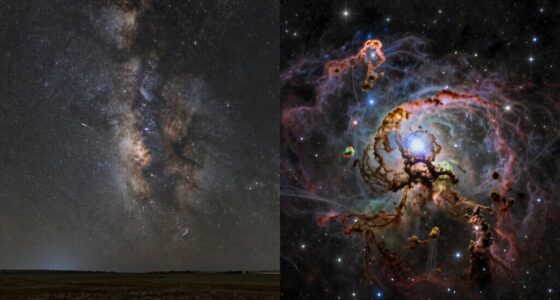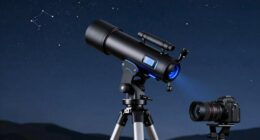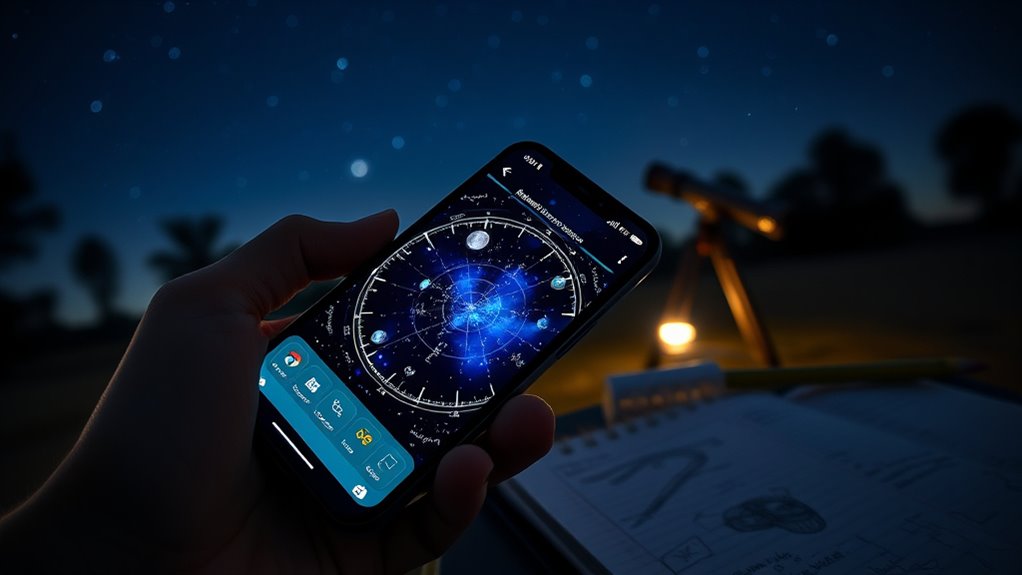

Using smartphone apps for astrophotography planning can greatly improve your sessions. These tools help you easily locate celestial objects, track moon phases, and identify the best times and locations for capturing stunning images. They also provide real-time sky maps that sync with your device’s GPS and compass, making navigation simple and accurate. If you’re interested in maximizing your astrophotography success, exploring these app features can make a big difference—you’ll find plenty more to optimize your efforts.
Key Takeaways
- Simplify session planning by providing easy-to-use interfaces and optimal times for astrophotography.
- Use celestial navigation tools to accurately locate stars, planets, and deep-sky objects in real-time.
- Track moon phases and positions to avoid moonlight interference and plan for ideal imaging nights.
- Access real-time sky maps synchronized with your location for effortless object identification.
- Enhance navigation with device pointing features, reducing search time and increasing shot success rates.
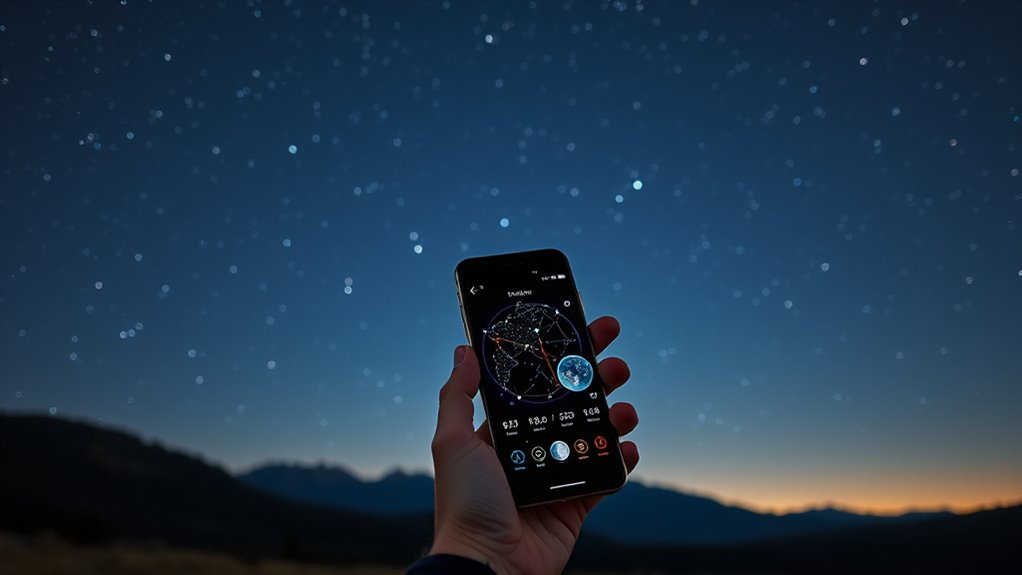
Planning successful astrophotography sessions has become easier than ever thanks to smartphone apps designed specifically for stargazing and celestial tracking. With a few taps, you can pinpoint the best times and locations to capture stunning images of the night sky. These apps often include features like celestial navigation, which guides you to the precise positions of stars, planets, and deep-sky objects, ensuring you’re always in the right spot at the right time. Whether you’re a beginner or an experienced astrophotographer, leveraging celestial navigation tools helps maximize your shot potential by reducing guesswork and saving valuable time during your sessions.
One of the key features you’ll find in many of these apps is moon phase tracking. Knowing the current moon phase is essential because it directly impacts your astrophotography. A full moon can wash out faint stars and celestial objects, making it harder to capture detailed images of the night sky. Conversely, new moon nights provide the darkest conditions, ideal for deep-sky imaging. With moon phase tracking integrated into these apps, you can plan your sessions around the lunar cycle. Most apps display the moon’s phase and its position in the sky, so you can choose nights with minimal moonlight interference. This way, you optimize your chances of capturing clearer, more detailed photographs of stars, nebulae, and galaxies.
These apps also often include interactive sky maps that update in real-time based on your location, giving you an accurate view of what’s visible at any given moment. You can identify celestial objects effortlessly, even if you’re unfamiliar with star patterns. Some apps also sync with your device’s GPS and compass, making celestial navigation more precise — you simply point your phone towards the sky, and the app shows you what’s there. This hands-on approach allows you to quickly locate objects you want to photograph, saving you from long, frustrating searches.
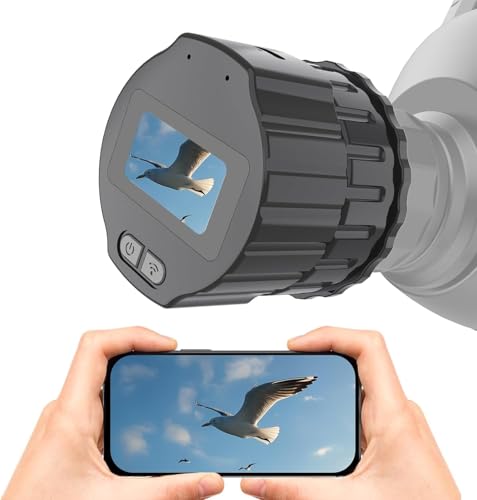
64GB Digital Eyepiece Telescope Camera: 2K HD Video Recording & WiFi Telescope Microscope Accessory, 25-50mm Eyepiece Adapter, Screen Support, App Control, Perfect for Astrophotography, Birds Watching
【 Easy Installation & Universal Fit】:Installs effortlessly on any telescope/microscope with 25–50mm eyepieces. Simply rotate to secure –…
As an affiliate, we earn on qualifying purchases.
As an affiliate, we earn on qualifying purchases.
Frequently Asked Questions
Can These Apps Predict Upcoming Celestial Events Accurately?
Yes, these apps can predict upcoming celestial events accurately, but their prediction reliability varies. You should check the app’s data sources and update frequency, as more reliable apps use real-time astronomical data and precise algorithms. While they generally provide good celestial event accuracy, it’s wise to cross-reference with official astronomical sources for critical observations. This guarantees you won’t miss key events due to prediction inaccuracies.
Are the Apps Compatible With All Smartphone Models?
Think of these apps as celestial maps guiding your journey; they may not be universal keys, but many are designed to fit a wide range of devices. You’ll want to verify device compatibility before downloading. Keep in mind, frequent app updates often improve compatibility and features, so staying current ensures smooth navigation through the stars. If your device isn’t supported, look for alternatives or updates to stay aligned with the cosmos.
Do the Apps Require an Internet Connection to Function Properly?
Most smartphone apps for astrophotography planning don’t require an internet connection to work, thanks to offline features that store star maps and data locally. However, you might need internet access for app updates or accessing real-time data. Once you’ve downloaded the necessary information, you can plan your shoots offline, making it convenient for remote locations without reliable internet. Just keep your app updated for the best experience.
How Do Apps Handle Cloud Cover or Weather Changes?
You’ll find that most apps act like weather forecasters with a twist—they incorporate cloud cover prediction and weather alert integration. These features alert you when clouds roll in or conditions change, helping you dodge the stormy skies. Think of it as having a personal meteorologist in your pocket, guiding your stargazing plans. They update in real-time, so you’re always ready to seize clear skies and capture those perfect astrophotos.
Can These Apps Help With Long Exposure Astrophotography Techniques?
Yes, these apps can assist with long exposure astrophotography techniques by providing star tracking and timing alerts. They offer long exposure tips, like ideal shutter speeds and stability advice. However, be aware of app feature limitations, such as lack of advanced camera controls or real-time weather adjustments. Use the app as a helpful guide, but guarantee your equipment and environment are also prepared for successful long exposures.

Davis Quick Reference Celestial Navigation Card
Great Product
As an affiliate, we earn on qualifying purchases.
As an affiliate, we earn on qualifying purchases.
Conclusion
Harnessing smartphone apps for astrophotography planning puts the universe’s secrets within your reach. Like Galileo peering through his telescope, you’re equipped to explore the stars with precision and confidence. Remember, every great discovery begins with a simple step—planning. So, embrace these tools, sharpen your vision, and let the night sky reveal its mysteries. After all, as the cosmos whispers, your journey is just beginning.

Moon Phase Widgets – FREE
See current phase of the moon on your home screen
As an affiliate, we earn on qualifying purchases.
As an affiliate, we earn on qualifying purchases.

Completely Off-Grid 3-in-1 GPS Dog Fence with Real-Time Tracking: No Subscription, App-Free, Self-contained, Dual-GPS, Training Collar, Customizable Boundary with Four Progressive Alerts, Blue
Completely Off-Grid – Enabled by an industry-first dual-GPS system, it operates reliably and consistently off-grid. Ideal for remote…
As an affiliate, we earn on qualifying purchases.
As an affiliate, we earn on qualifying purchases.