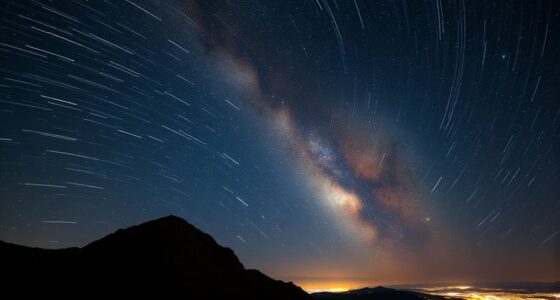
The Bortle scale helps you understand how light pollution affects your night sky. It ranges from Class 1, with truly dark skies showing countless stars and the Milky Way, to Class 9, where artificial lighting makes stars barely visible. Knowing your local Bortle class can guide you to better stargazing spots and show how artificial light impacts celestial views. Keep exploring to discover how this scale can improve your sky-watching experiences.
Key Takeaways
- The Bortle Scale ranges from Class 1 (darkest skies) to Class 9 (heavily light-polluted areas).
- It assesses sky darkness based on light pollution, star visibility, and celestial object visibility.
- Lower classes offer clearer views of stars, the Milky Way, and deep-sky objects; higher classes show fewer visible features.
- The scale guides astronomers and observers in selecting optimal locations for stargazing and astrophotography.
- Understanding Bortle classes helps raise awareness of light pollution’s impact and promotes efforts to preserve dark skies.
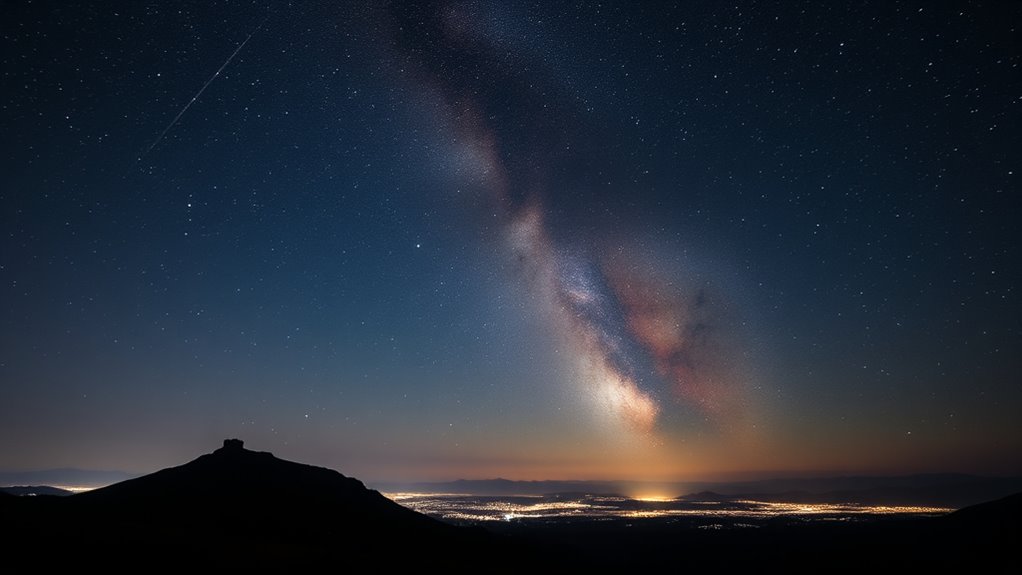
If you’re interested in stargazing, understanding the Bortle Scale is essential for evaluating how dark your night sky is. This scale helps you gauge the amount of light pollution present in your location, which directly impacts your ability to see celestial objects clearly. When you look up at the night sky from urban night skies, you’ll notice a significant difference in visibility compared to rural areas. That’s because light pollution measurement varies widely depending on where you are, and the Bortle Scale simplifies this variation into a straightforward classification system. By knowing your Bortle class, you can better plan your stargazing sessions and set realistic expectations about what you’ll see. Recognizing light pollution levels can also motivate efforts to reduce artificial lighting and protect dark skies. The Bortle Scale ranges from Class 1, representing truly dark skies, to Class 9, indicating heavily light-polluted urban environments. In areas with low light pollution, such as remote rural locations, you’ll experience minimal skyglow, allowing for detailed observations of faint galaxies, nebulae, and star clusters. These conditions are ideal for astronomers seeking the most breathtaking views of the universe. Conversely, in urban night skies, excessive artificial lighting washes out many celestial objects, making it difficult to see anything beyond the brightest stars. This is where understanding your light pollution measurement becomes vital; it helps you identify how much of the night sky is obscured by the glow of city lights. As you move from lower to higher Bortle classes, you’ll notice a decline in the number of visible stars and the clarity of celestial features. In the brightest classes, the sky is nearly as bright as dusk, with only a handful of stars visible. In contrast, the darkest classes offer a sky filled with thousands of stars, the Milky Way sprawling across the sky like a luminous river. Knowing your Bortle class can guide you in choosing the best locations for observing or astrophotography, especially if you’re in an area overwhelmed by artificial light. You might find that escaping the city or visiting a designated dark-sky park dramatically improves your experience.

Telescope for Adults & Kids, 70mm Aperture Refractor (15X-150X) Portable Travel Telescope with Phone Adapter & Wireless Remote, Astronomy Beginners Gifts, Black
【Great Telescope for Kids& Beginners!】 The telescope meets all the needs of astronomy beginners, the adults & kids’…
As an affiliate, we earn on qualifying purchases.
As an affiliate, we earn on qualifying purchases.
Frequently Asked Questions
How Does Weather Affect Bortle Scale Readings?
Weather considerably impacts Bortle scale readings by introducing atmospheric interference and cloud cover. When the sky is clear, you get an accurate measure of light pollution, but cloud cover can obscure stars and artificially lower the Bortle class. Humidity, haze, and atmospheric disturbances also weaken your view, making the sky seem darker and affecting the readings. Always check weather conditions before evaluating light pollution for the most accurate Bortle scale results.
Can the Bortle Scale Be Used Internationally?
Yes, you can use the Bortle Scale internationally. It provides a consistent framework for evaluating sky brightness, offering international consistency and facilitating global application. When you compare locations worldwide, the scale helps you understand light pollution levels regardless of where you are. While local factors can influence readings, the Bortle Scale remains a reliable tool for astronomers and stargazers across different countries, promoting a shared understanding of dark-sky conditions.
What’s the Best Way to Measure Bortle Class at Night?
Measuring Bortle class at night is like tuning a radio to the perfect station. Use measurement tools like a Sky Quality Meter or a smartphone app designed for sky brightness. These tools give you precise readings of sky brightness, helping you ascertain your Bortle class accurately. Find a dark, open spot, hold the device steady, and record the readings. Consistent measurements ensure you capture a true picture of your night sky conditions.
How Often Should I Reassess My Local Bortle Class?
You should reassess your local Bortle class every few months, especially since light pollution patterns can change with seasonal variations and new development. Monitoring regularly helps you stay aware of shifts in sky quality and plan stargazing accordingly. Keep an eye on nearby light sources, and consider conducting measurements during different seasons and weather conditions to get the most accurate understanding of your area’s current light pollution level.
Are There Digital Tools to Estimate Bortle Scale Easily?
Yes, you can easily estimate your Bortle scale using digital tools like mobile apps. Many apps provide sky quality measurements by analyzing light pollution levels directly from your phone’s camera or GPS data. These tools give you quick, reliable insights into your local light pollution, helping you decide the best times and places for stargazing. Just download a trusted sky quality or light pollution app, and you’re set to monitor your sky conditions effortlessly.

K&F CONCEPT 77mm Clear Natural Night Filter 28 Multi-Layer Coatings Light Pollution Reduction Filter for Night City Sky Star Shots, No Color Cast (Nano-X Series)
Reduces light pollution, creating Crystal clear night skies.
As an affiliate, we earn on qualifying purchases.
As an affiliate, we earn on qualifying purchases.
Conclusion
By understanding the Bortle Scale, you can better assess how light pollution affects your night sky experience. Did you know that over 80% of the world’s population lives under light-polluted skies? Knowing your Bortle class helps you find darker sites for stargazing, enhancing your appreciation of the universe. So, next time you look up, consider how light pollution shapes what you see—and what you might be missing.

Celestron – Cometron 7×50 Astronomy Binoculars – Entry-Level for Stargazing and Comet Watching – Large 50mm Objective Lenses – Wide 6.6° Field of View – Multi-Coated Optics
EASY-TO-USE ASTRONOMY BINOCULARS FOR BEGINNERS: Cometron 7×50 binoculars are an easy, affordable way to learn the night sky…
As an affiliate, we earn on qualifying purchases.
As an affiliate, we earn on qualifying purchases.
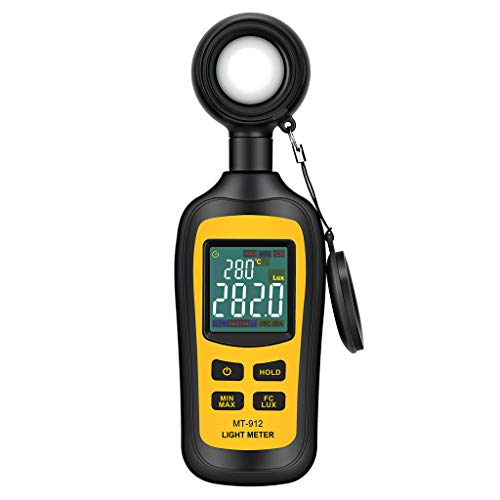
Light Meter Digital Illuminance Meter Handheld Ambient Temperature Measurer, Range up to 200,000 Lux, Luxmeter with 4 Digit Color LCD Screen
Measures luminosity from 0 to 200,000 Lux and ambient temperature
As an affiliate, we earn on qualifying purchases.
As an affiliate, we earn on qualifying purchases.