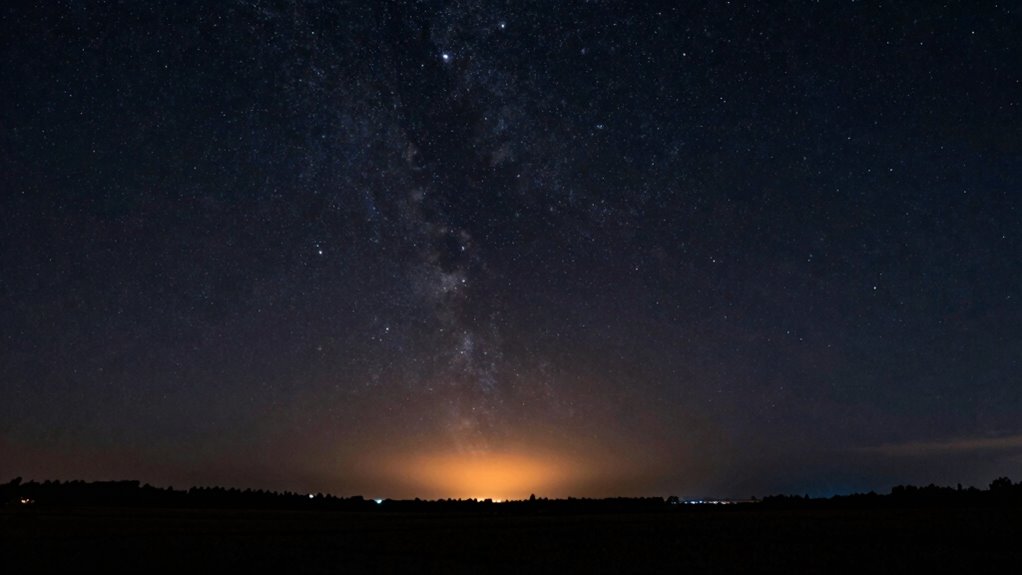
Your Bortle class drastically changes how you see light pollution‘s impact. It labels sky brightness from pristine dark skies (Class 1) to heavily lit urban areas (Class 9), influencing your stargazing experience, ecological health, and efforts to protect dark skies. Knowing your Bortle class helps you understand local conditions and advocate for better lighting practices. Stick around to explore how this scale can transform your view of the night sky and environmental issues.
Key Takeaways
- The Bortle scale categorizes sky brightness, revealing how light pollution impacts visibility and varies widely across locations.
- Higher Bortle classes (urban areas) significantly diminish celestial detail, altering stargazing experiences.
- Light pollution affects ecosystems and wildlife, with Bortle class highlighting ecological disruption levels.
- Assessing Bortle class helps identify areas needing light pollution mitigation and supports dark sky conservation efforts.
- The scale’s limitations mean actual sky conditions may differ from classifications, influencing the accuracy of “light pollution” assessments.

Stargazing Cards – Messier Catalog | Night Sky Exploration Kit for Telescopes & Binoculars | Flashcards with Star Charts, Astrophotography & Facts | Perfect Astronomy & Space Gift for Kids & Adults
⭐ PORTABLE & PRACTICAL STARGAZING TOOL. Skip the bulky astronomy books and sky atlases – Stargazing Cards are…
As an affiliate, we earn on qualifying purchases.
As an affiliate, we earn on qualifying purchases.
What Is Light Pollution and Why Does It Matter?
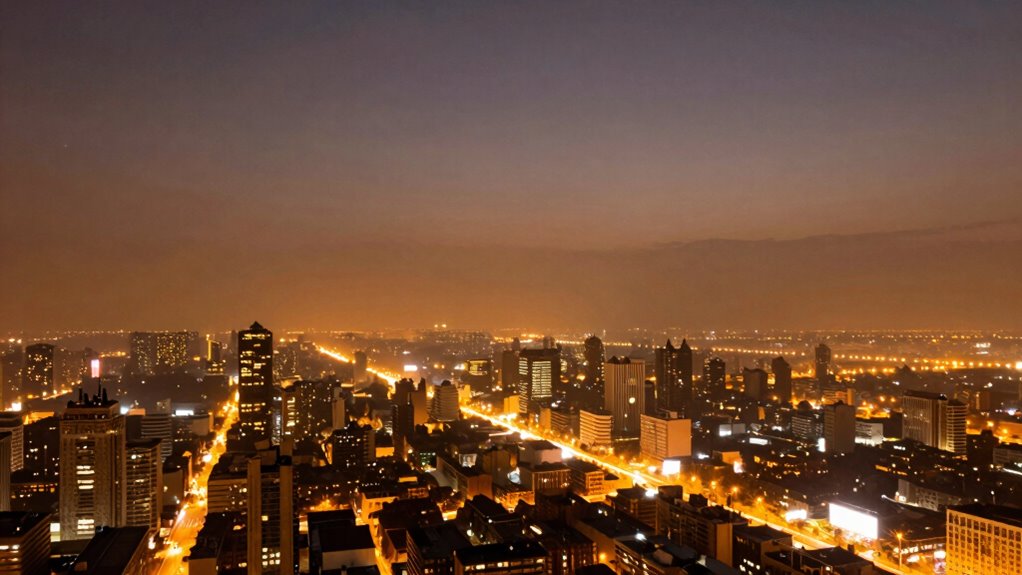
Light pollution occurs when excessive or misdirected artificial light brightens the night sky, making it difficult to see stars and celestial objects. Urban glow from streetlights, billboards, and buildings creates a haze that washes out the night sky’s natural darkness. This glow results from atmospheric scattering, where light interacts with particles in the air, spreading the light in all directions. As a result, the sky appears brighter, reducing your ability to observe faint stars and planets. Light pollution isn’t just an aesthetic issue; it affects ecosystems, human health, and our connection to the cosmos. The more urban glow you experience, the more atmospheric scattering intensifies, further diminishing the visibility of celestial wonders. Understanding this helps you appreciate why protecting dark skies matters. Additionally, proper lighting practices can mitigate the effects of light pollution and help preserve our night skies. Furthermore, color accuracy in projector technology can play a role in enhancing our view of celestial phenomena when using home cinema setups. Moreover, exploring new content formats can deepen our understanding of this pressing issue and inspire collective action to combat light pollution. The impact of light pollution is increasingly recognized in discussions about environmental health and its broader implications for society. To address this, battery inverter generators can provide eco-friendly power solutions that minimize light pollution from traditional energy sources.
SVBONY Telescope Filter 1.25" UHC Filter Astrophotography to Improve The Image Contrast Reduces Light Pollution (1.25 inch)
UHC filters or light pollution reduction filters are designed to selectively reduce the transmission of certain wavelengths of…
As an affiliate, we earn on qualifying purchases.
As an affiliate, we earn on qualifying purchases.
Understanding the Bortle Scale: How It Classifies Night Sky Brightness
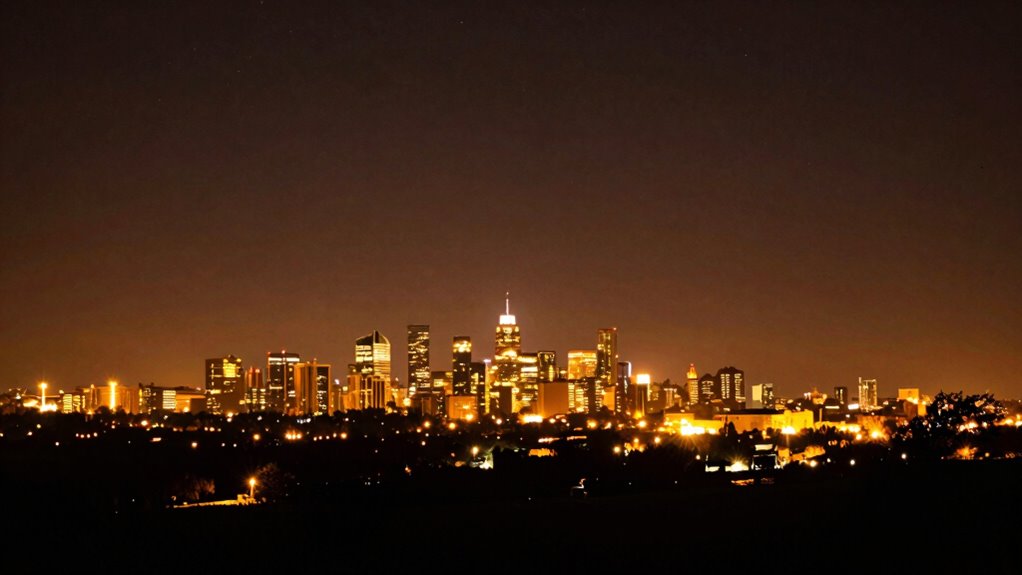
The Bortle Scale provides a practical way to measure and classify the brightness of night skies, helping you understand just how much light pollution affects visibility. It ranges from dark, rural skies to brightly lit urban environments. You’ll notice that:
- Lower Bortle classes (1-3) feature minimal sky glow, allowing stars to shine brightly.
- Mid-range classes (4-6) show moderate urban glow, dimming faint stars.
- Higher classes (7-8) reveal significant sky glow from city lights, obscuring many celestial objects.
- Class 9 skies are heavily affected by urban glow, where only the brightest stars are visible, and natural darkness is nearly impossible.
This scale helps you grasp how light pollution influences night sky brightness and the impact of urban glow on your stargazing experience.

The Night Sky 30°-40° (Large; North Latitude)
Used Book in Good Condition
As an affiliate, we earn on qualifying purchases.
As an affiliate, we earn on qualifying purchases.
What Do Bortle Classes Mean for Your Night Sky Quality?
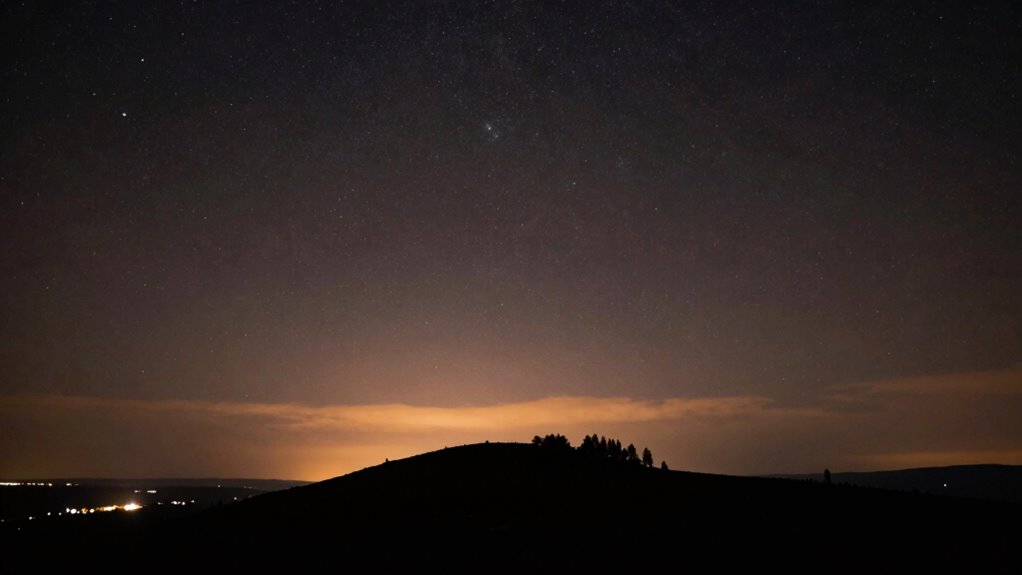
Depending on the Bortle class, your night sky quality can vary dramatically, affecting how many stars and celestial objects you can see. In lower classes, minimal sky glow and light trespass allow for clearer views of the Milky Way and faint nebulae. Higher classes, however, are overwhelmed by artificial light, reducing visibility and obscuring celestial features. Use this table to understand what each Bortle class means for your sky:
| Bortle Class | Sky Glow Level | Visibility | Typical Conditions |
|---|---|---|---|
| 1 (Excellent) | Nearly none | All celestial objects | Dark, pristine sky |
| 3 (Rural) | Slight | Many stars, some faint objects | Few lights nearby |
| 6 (Bright suburban) | Moderate | Fewer stars, limited deep-sky views | Significant light trespass |
| 9 (Inner city) | Heavy | Very few stars visible | Overwhelmed by sky glow |
This impacts your stargazing experience directly. Additionally, understanding the effects of light pollution can help you make informed choices about outdoor lighting in your backyard and enhance your celestial viewing opportunities.
Kenson Kids We Can Do It! Customizable Dry Erase Incentive Chart (14 1/2"x 30") with Cling Reward Smiley Face Stars – Home, School, Preschool Classroom by Makers of The I Can Do It! Reward Chart
CUSTOMIZABLE: The versatile chart can be used for home, classroom, and Sunday school.
As an affiliate, we earn on qualifying purchases.
As an affiliate, we earn on qualifying purchases.
Why Your Bortle Class Affects Stargazing and Dark Sky Conservation
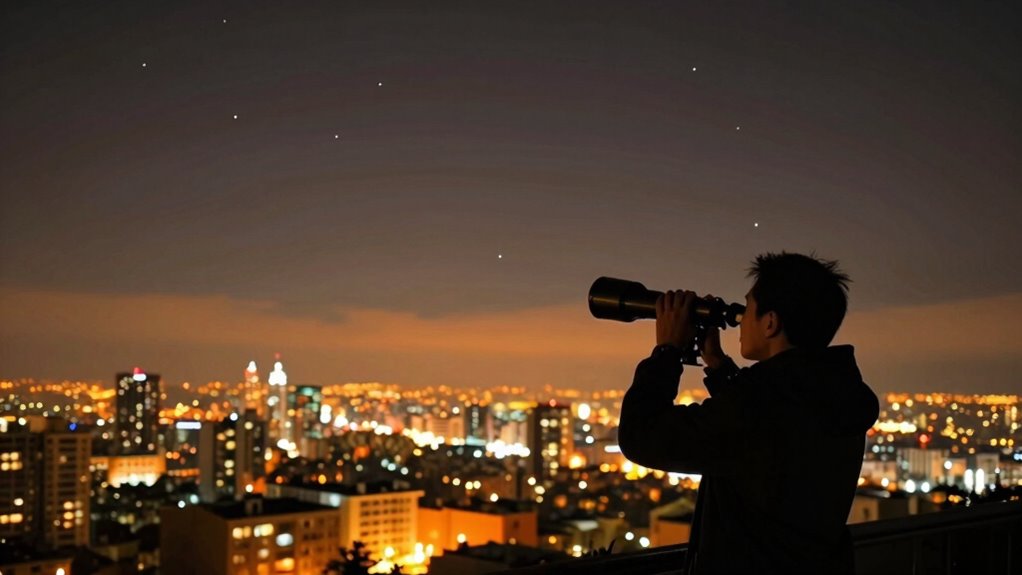
Your Bortle class directly influences how well you can observe celestial objects and plays a crucial role in dark sky conservation efforts. A higher Bortle number means more light pollution, often caused by urban lighting, which diminishes night sky visibility. This impacts not only your stargazing but also the ecological impact on local wildlife.
To understand why your Bortle class matters:
- It determines how much celestial detail you can see, affecting amateur astronomy.
- It highlights the need to reduce urban lighting to preserve natural darkness.
- It encourages conservation efforts by showing the extent of light pollution.
- It emphasizes the importance of protecting dark skies for ecological balance and health.
Your Bortle class shapes both your stargazing experience and the broader mission of dark sky conservation.
How to Use the Bortle Scale to Assess Your Local Night Sky
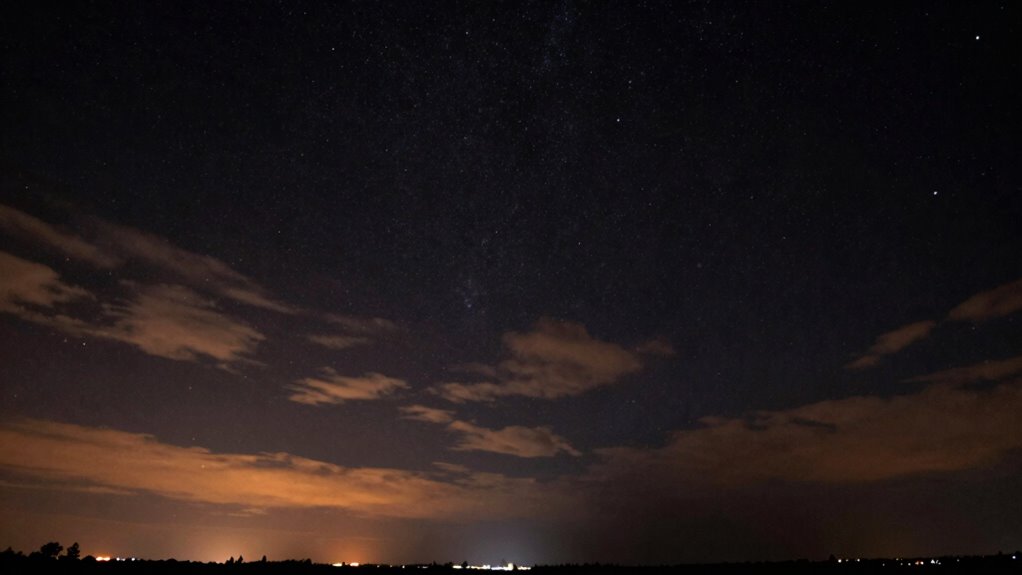
To assess your local night sky, start by identifying your area’s Bortle class, which indicates how dark your sky is. Next, observe the visibility of key celestial features, like the Milky Way or bright stars, to interpret the darkness level. This simple approach helps you understand your sky’s quality and guides efforts to reduce light pollution.
Identifying Local Bortle Class
Evaluating your local night sky using the Bortle Scale is straightforward once you know what to look for. Start by observing the level of urban glow, which indicates light pollution. Use satellite imagery if available to compare your area’s brightness to known Bortle classes. Next, note how many stars are visible to the naked eye. Check for the Milky Way’s clarity and its core’s visibility. Also, consider if faint celestial objects like nebulae or star clusters are distinguishable. Finally, assess your sky’s overall darkness: darker skies suggest a lower Bortle class. By focusing on these key indicators, you can accurately identify your local Bortle class and understand how light pollution impacts your night sky.
Interpreting Sky Darkness Levels
Interpreting sky darkness levels using the Bortle Scale involves observing the overall brightness of the night sky and comparing it to established descriptions for each class. You’ll notice how urban lighting influences sky brightness, making the sky appear more luminous and obscuring fainter stars. In areas with high sky brightness, like city centers, the sky often resembles Bortle Class 8 or 9, where nearly everything is washed out. Conversely, darker skies with minimal light pollution display more stars and celestial details, corresponding to lower classes. To assess your local sky, look at the visibility of bright and faint stars, the Milky Way, and the overall glow. This comparison helps you understand your environment’s light pollution level, guiding your stargazing plans.
Limitations of the Bortle Scale: What It Can’t Tell You
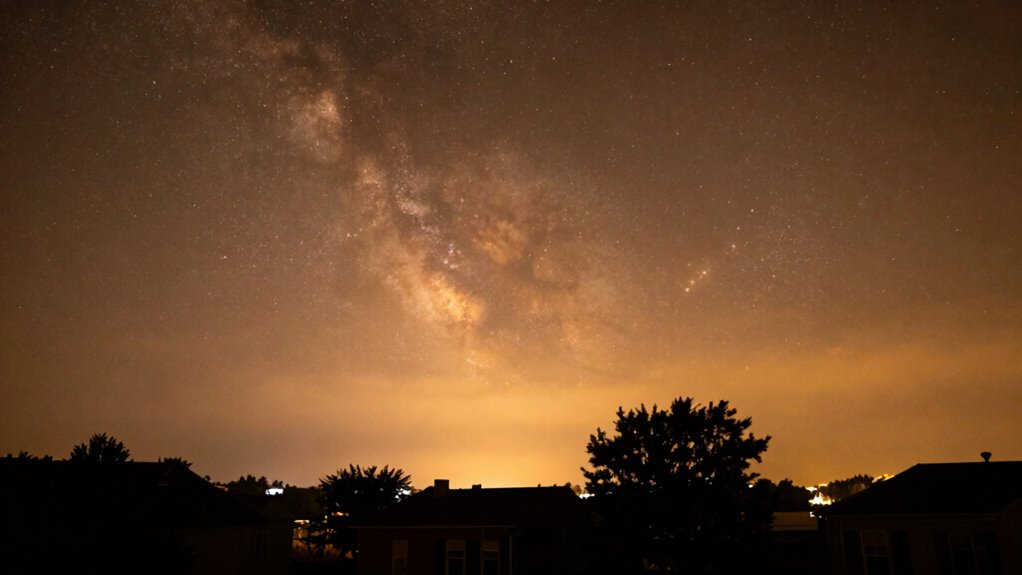
While the Bortle Scale provides a quick way to gauge sky darkness, it has notable limitations that can lead to misleading assessments. For example, it doesn’t account for urban glow, which varies greatly even within the same class. Additionally, atmospheric interference—like humidity, clouds, or pollution—can distort your perception of darkness.
The Bortle Scale can be misleading, ignoring urban glow and atmospheric factors that affect actual sky darkness.
Here are some key limitations:
- It offers only a general estimate, ignoring local light sources.
- It doesn’t consider atmospheric conditions that affect visibility.
- It overlooks variability within the same Bortle class due to urban glow.
- It can’t differentiate between different types of light pollution that impact visibility differently.
These factors mean your actual viewing experience can differ considerably from the Bortle classification.
How to Reduce Light Pollution Based on Your Bortle Class
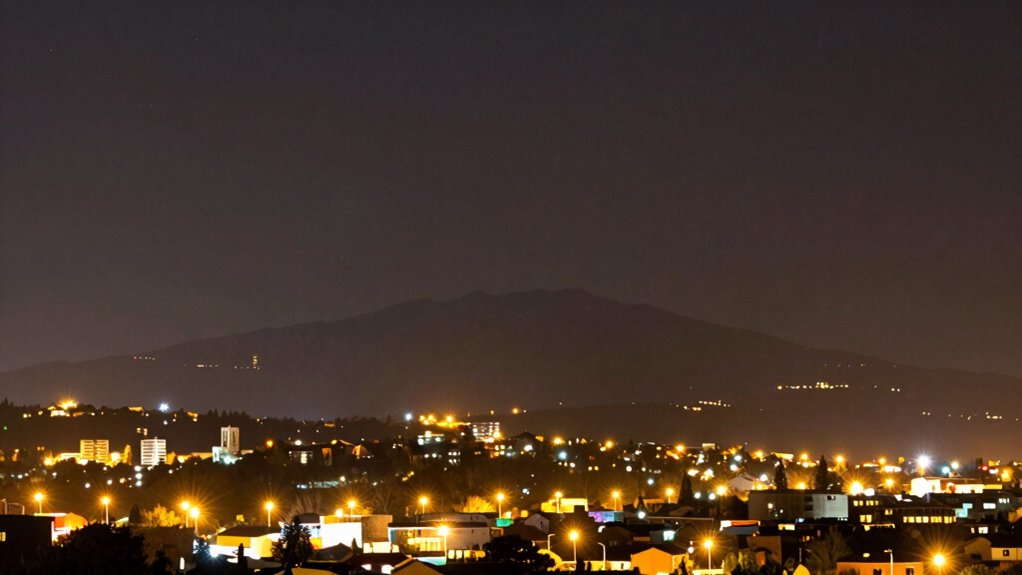
Understanding the limitations of the Bortle Scale helps you tailor your efforts to reduce light pollution effectively. In areas with low Bortle classes, such as rural zones, focus on shielding outdoor lights and using motion sensors to minimize unnecessary urban lighting. For higher Bortle classes, where light pollution sources like streetlights and billboards are prominent, advocate for using downward-directed lighting and lower-intensity fixtures. Reducing urban lighting brightness and switching to warmer, less disruptive bulbs also helps. If you have control over outdoor lighting, implement timers or dimmers. The key is to identify the main sources of light pollution in your area and adjust or limit them accordingly, making a tangible difference in preserving dark skies.
Comparing Bortle Classifications Around the World: Real-Life Examples
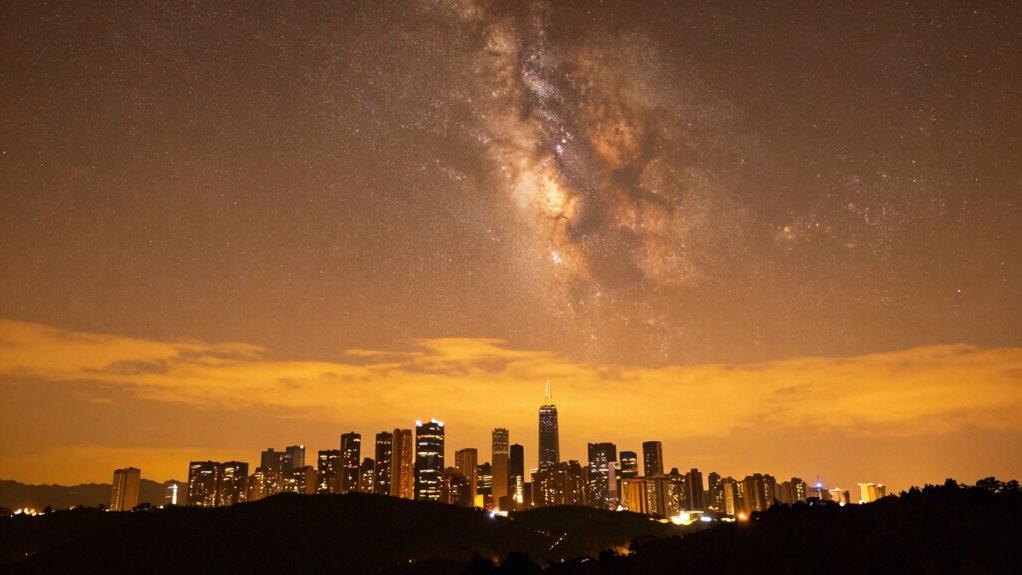
Around the world, Bortle classifications vary widely, reflecting different levels of light pollution in diverse environments. In urban areas, rapid development often pushes Bortle Class 9, making stargazing nearly impossible and affecting local ecosystems. Conversely, remote locations like national parks often fall into Class 1 or 2, offering pristine views. For example:
- Major cities like New York or Tokyo usually sit in Class 8 or 9, where artificial light disrupts ecological balance.
- Rural communities in Australia or Scandinavia often achieve Class 2 or 3, with minimal light pollution.
- Dark sky reserves in Chile or Namibia reach Class 1, showcasing how limited urban development benefits astronomical and ecological health.
- Coastal towns in Southern Europe may vary between Class 4 and 6, depending on local lighting policies and urban growth.
How Knowing Your Bortle Class Can Help Advocate for Dark Sky Initiatives
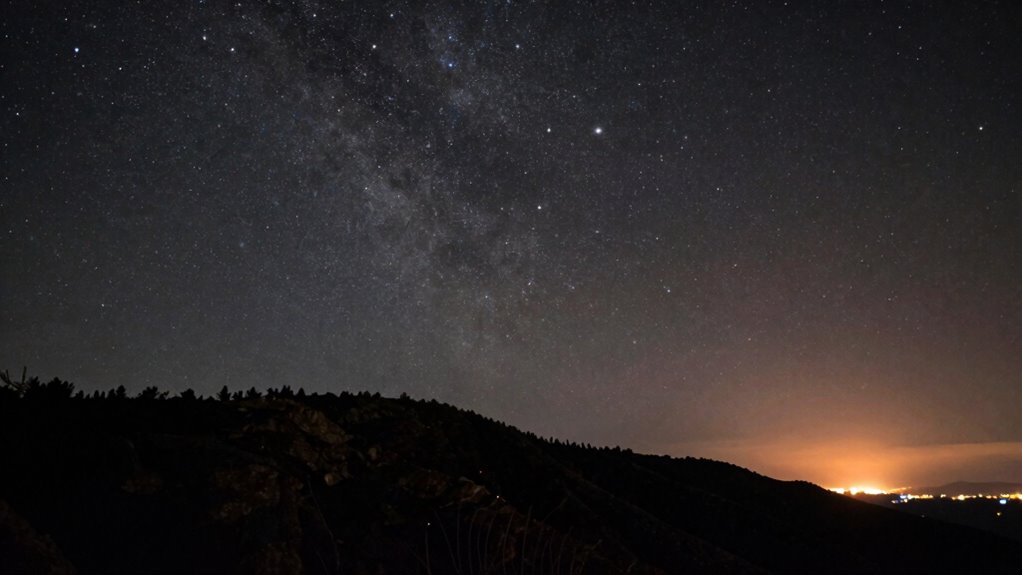
Knowing your Bortle class puts you in a stronger position to advocate for dark sky initiatives because it provides concrete evidence of light pollution’s impact in your area. With this knowledge, you can highlight issues like excessive urban lighting and its effects on wildlife impacts. Sharing specific Bortle data helps convince local authorities and communities to implement better lighting practices. Use the following table to illustrate differences and emphasize the need for change:
| Bortle Class | Urban Lighting Level | Wildlife Impacts |
|---|---|---|
| Class 1 | Minimal, dark skies | Sensitive ecosystems |
| Class 3 | Moderate, some glow | Disrupted habitats |
| Class 5 | Bright, city glow | Wildlife stress |
| Class 7 | Very bright, urban | Significant impacts |
| Class 9 | Overlit, polluted | Severe ecological harm |
Frequently Asked Questions
Can Bortle Classes Change Over Time in the Same Location?
Yes, Bortle classes can change over time in the same location due to sky glow and urban expansion. As nearby cities grow, increased artificial lighting can raise the Bortle class, making the night sky brighter and reducing your stargazing quality. Conversely, efforts to reduce light pollution, like implementing better lighting controls, can lower the Bortle class, restoring darker skies. Keep an eye on local developments that may impact your dark-sky environment.
How Does Weather Impact Bortle Scale Readings?
Weather variability and atmospheric conditions greatly influence Bortle scale readings. Clear, dry nights with minimal atmospheric disturbance make the sky appear darker, lowering your Bortle class. Conversely, clouds, humidity, or haze scatter light and brighten the sky, raising your Bortle rating. You should always consider current weather conditions when evaluating light pollution, as they can temporarily distort your perception of the sky’s darkness and affect your Bortle class measurement.
Are There Digital Tools to Determine My Bortle Class?
Yes, you can find digital tools to determine your Bortle class. Apps and online maps analyze sky glow caused by urban lighting, helping you identify your light pollution level. These tools often use your location data to provide accurate readings, so you can see how city lighting impacts your night sky visibility. They’re great for planning stargazing sessions and understanding how light pollution affects your viewing conditions.
What Are the Health Effects of Light Pollution?
Light pollution affects your health by causing circadian disruption, which can disturb your sleep patterns and reduce melatonin production. This increases your risk of health issues like depression, obesity, and weakened immunity. Exposure to excessive artificial light, especially at night, interferes with your body’s natural rhythms. To protect yourself, limit screen time before bed and use blackout curtains. Reducing light pollution around you can also help improve your overall health.
How Do Bortle Classes Influence Wildlife Behavior?
Bortle classes substantially influence wildlife behavior by affecting wildlife adaptation and nocturnal activity. In darker skies, lower Bortle classes, animals adapt better to natural light cycles, maintaining their nocturnal routines. Conversely, higher Bortle classes disrupt these patterns, causing wildlife to alter their activity periods, often becoming less nocturnal or changing habitats. You’ll notice that in areas with more light pollution, wildlife struggles to follow natural rhythms, impacting their survival.
Conclusion
Knowing your Bortle class is like having a flashlight in a dark forest—it guides you through the shadows of light pollution, revealing the true beauty of the night sky. By understanding your local sky’s brightness, you can better appreciate its wonders and take action to protect it. Remember, every effort counts; together, we can turn back the clock on light pollution and keep the stars shining brightly for generations to come.