
Optical coatings play a crucial role in controlling light transmission through lenses, mirrors, and filters. They help reduce unwanted reflections, manage polarization effects, and improve image clarity. Durability is also key, as coatings protect surfaces from scratches, moisture, and environmental damage. By carefully selecting materials and applying precise multilayer coatings, you can guarantee consistent optical performance over time. Keep exploring to discover how these coatings can optimize your optical devices even further.
Key Takeaways
- Optical coatings optimize light transmission, reflection, and polarization control in lenses, filters, and mirrors for improved performance.
- Coatings reduce unwanted polarization effects, ensuring consistent light behavior and high image quality in optical systems.
- Durable, environmentally resistant coatings protect optical elements from scratches, moisture, and temperature fluctuations.
- Material selection and multilayer designs tailor coatings for specific wavelengths and polarization requirements.
- Precise engineering of coatings enhances light transmission efficiency while maintaining long-term durability.
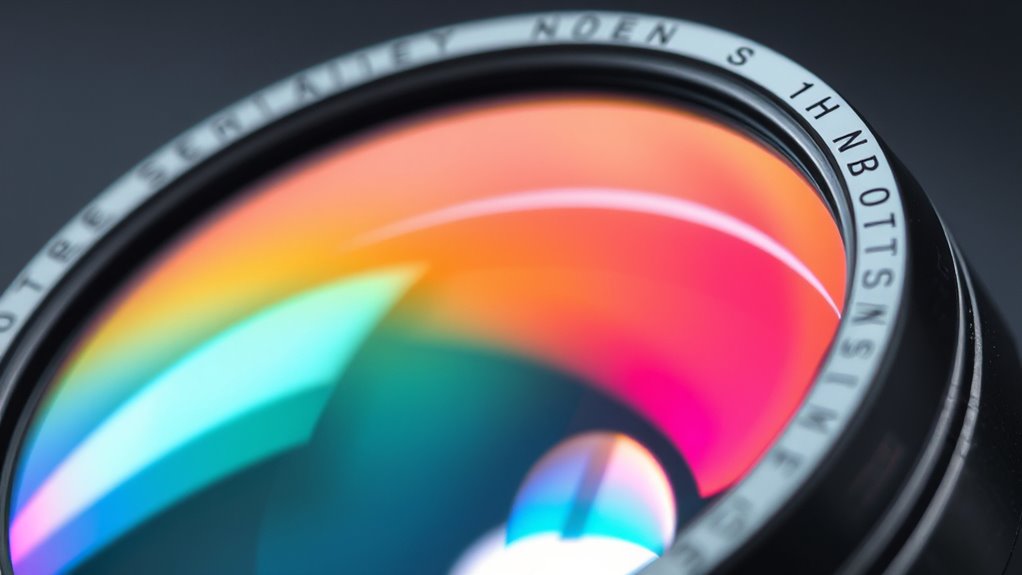
Have you ever wondered how light is directed, bent, or focused in various devices? It’s fascinating to realize that optical elements like lenses, filters, and mirrors rely heavily on specialized coatings to control light precisely. These coatings aren’t just decorative; they play a critical role in managing polarization effects and guaranteeing coating durability. When light passes through or reflects off an optical surface, its behavior can change depending on its polarization state. For example, certain coatings are designed to minimize unwanted polarization effects, such as polarization-dependent reflection or transmission, which can degrade image quality or measurement accuracy. By carefully engineering these coatings, manufacturers can guarantee that light maintains its desired polarization, leading to clearer images and more reliable data in scientific instruments.
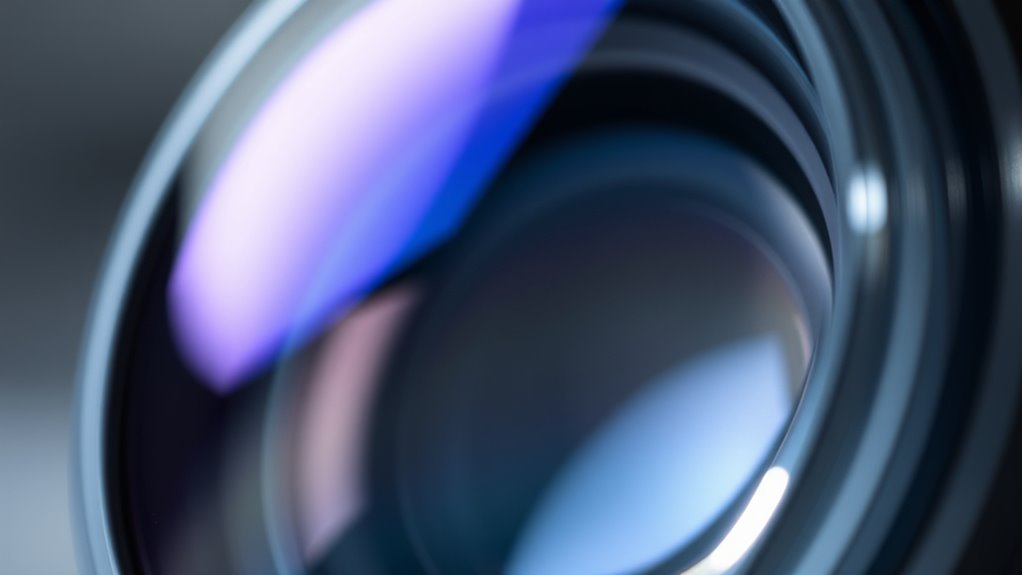
Coating durability is equally essential because optical devices often operate in demanding environments—exposed to dust, moisture, and temperature fluctuations. A durable coating protects the underlying substrate from scratches, corrosion, and degradation over time. This robustness is critical for maintaining the device’s performance, especially in high-precision applications like lasers, telescopes, or medical instruments. The choice of materials and coating techniques influences how well these layers withstand environmental stressors. For instance, high-quality dielectric coatings resist peeling or clouding, preserving the optical element’s functionality for years. When you handle optical equipment, you might not see the thin layers that make this possible, but their integrity directly impacts the clarity and accuracy of the transmitted or reflected light. Additionally, advancements in coating technology now enable the development of multilayer coatings that optimize both optical performance and environmental resistance.
Understanding the interplay between polarization effects and coating durability helps you appreciate the complexity behind seemingly simple devices. Engineers must carefully select coating materials and deposition methods to optimize both the optical performance and longevity of the components. For example, multi-layer coatings can be tailored to reflect specific wavelengths while minimizing polarization-dependent losses, ensuring consistent performance regardless of the light’s polarization state. Additionally, advances in coating technology now allow for the creation of anti-reflective layers that are not only highly effective but also resistant to environmental wear. This balance between optical efficiency and durability means your optical devices will perform reliably over time, providing sharper images, more accurate measurements, and consistent results.
In essence, the science of optical coatings involves fine-tuning how light interacts with surfaces, considering polarization effects, and building layers that last. By doing so, manufacturers deliver optical elements that are not only precise in their light manipulation but also resilient against the test of time and environment. Whether in microscopes, cameras, or scientific instruments, these coatings guarantee you get the best possible performance, combining sophisticated engineering with durability you can trust.
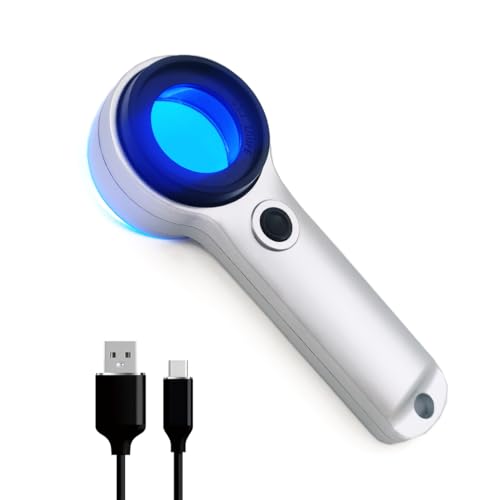
Handheld 60X Magnifier Loupe with UV & LED Lights 30mm Optical Coating Lens USB Rechargeable Jewelry Loupe Magnifying Glass for Jewellery, Rocks, Coins, Stamps, Antique, Watch Repairs
DUAL UV & WHITE LED LIGHTS – Koparneed magnifying glass has one button which manages to control all…
As an affiliate, we earn on qualifying purchases.
As an affiliate, we earn on qualifying purchases.
Frequently Asked Questions
How Do Temperature Changes Affect Light Transmission in Optical Coatings?
Temperature changes impact light transmission in optical coatings by causing thermal expansion, which alters the coating’s physical structure. This affects the refractive index, leading to shifts in how light interacts with the surface. As temperature rises, these effects can decrease transmission efficiency or change the coating’s optical properties, so you might notice reduced performance or the need for temperature-stable coatings to maintain *ideal* light transmission despite thermal fluctuations.
Can Coatings Be Customized for Specific Wavelengths or Applications?
Imagine you’re in a sci-fi lab, designing a custom coating for a specific wavelength. Yes, coatings can be tailored for wavelength specificity and particular applications. You work with specialists to develop a custom coating that maximizes light transmission or blocks unwanted wavelengths. This customization ensures your optical elements perform at their best, whether for lasers, cameras, or scientific instruments. With precise control, you get coatings perfectly suited to your unique needs.
What Are the Environmental Durability Standards for Optical Coatings?
You need to guarantee your optical coatings meet environmental durability standards by checking their performance through durability testing. These tests assess resistance to factors like humidity, temperature fluctuations, and abrasion, ensuring coatings withstand harsh conditions. Look for coatings that adhere to industry environmental standards, such as MIL-STD or ISO certifications, which guarantee their reliability and longevity in real-world environments. This way, your optical elements stay protected and functional over time.
How Do Multilayer Coatings Improve Light Transmission Efficiency?
Multilayer coatings improve light transmission efficiency through multilayer interference, where each layer’s thickness and refractive index are carefully designed to enhance transmission. This technique reduces reflection losses at interfaces, allowing more light to pass through the optical element. By optimizing these layers, you achieve better transmission enhancement, resulting in clearer images or more efficient signal transmission, making your optical devices more effective and reliable in various applications.
Are There Eco-Friendly Alternatives to Traditional Optical Coatings?
You’ll be amazed at how eco-friendly alternatives are transforming optical coatings! Instead of traditional materials, you can opt for bio-based materials and recycled coatings that drastically reduce environmental impact. These greener options not only match performance but also make your optical devices more sustainable—helping you protect our planet while still enjoying crystal-clear transmission. Embrace these innovations and make a positive difference with every optical element you choose!

20 Pack Car Rearview Mirror Film,Anti Fog Anti Scratch Interior Rearview Mirror Anti Glare Film Waterproof HD Nano Clear Protective Sticker Film for Safe Driving,Car Mirrors,Side Windows (Oval)
【Powerful Functions】: The car rearview mirror protective membrane is an innovative product with waterproof, rainproof, anti-fog, anti-glare and…
As an affiliate, we earn on qualifying purchases.
As an affiliate, we earn on qualifying purchases.
Conclusion
By understanding light transmission and coatings, you can optimize optical elements for better performance. For example, imagine designing a camera lens that minimizes glare and maximizes clarity—using specialized anti-reflective coatings, you achieve sharper images even in bright conditions. Applying these principles, you enhance your optical systems’ efficiency and durability, ensuring clearer visuals and improved functionality. Mastering these concepts empowers you to create more effective, high-quality optical devices for various applications.
Linear Polarization A4 Sheet Polarizer Educational Physics Polarized Filter Optical
High Contrast Linear Polarizing Film
As an affiliate, we earn on qualifying purchases.
As an affiliate, we earn on qualifying purchases.
![SYNCWIRE Optical Cable for Soundbar 3.3ft [24K Gold-Plated, Ultra-Durable] Digital Optical Audio Cable for Home Theater TV](https://m.media-amazon.com/images/I/41voY2cl3IL._SL500_.jpg)
SYNCWIRE Optical Cable for Soundbar 3.3ft [24K Gold-Plated, Ultra-Durable] Digital Optical Audio Cable for Home Theater TV
[➤ PERFECT COMPATIBILITY] – Syncwire optical cable is compatible with standard and high definition devices with Toslink connector….
As an affiliate, we earn on qualifying purchases.
As an affiliate, we earn on qualifying purchases.