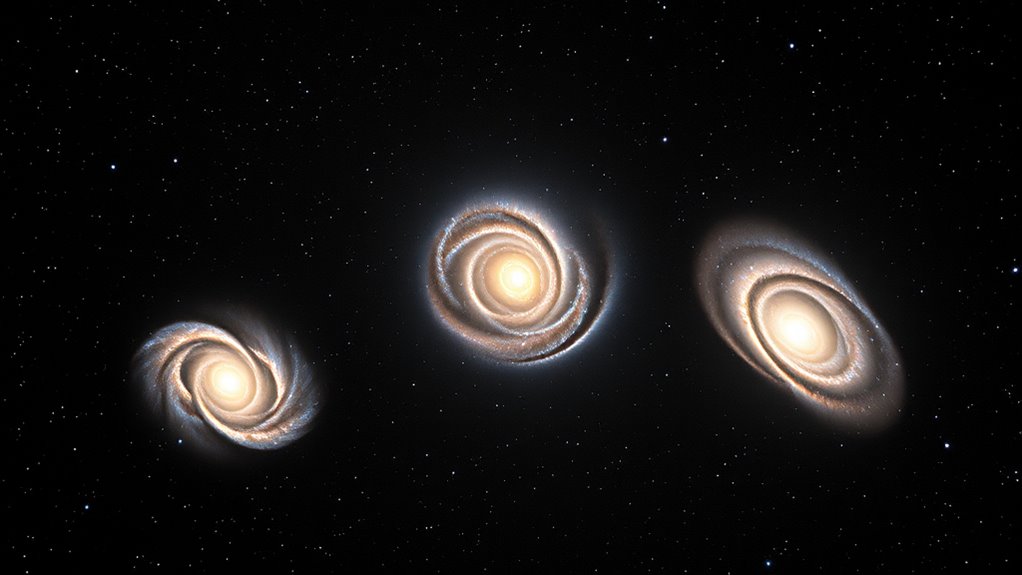

In spring, the Leo Triplet offers a stunning target for stargazing, featuring three galaxies—M65, M66, and NGC 3628—that are close together in the constellation Leo. Use a good telescope and dark skies to spot their faint shapes and telltale signs of interaction, like tidal tails and distortion. Observing these galaxies reveals how gravitational forces shape cosmic structures. Keep exploring to discover more about these fascinating galaxies and their dynamic interactions.
Key Takeaways
- The Leo Triplet includes galaxies M65, M66, and NGC 3628, visible in spring evenings within the constellation Leo.
- Observing these galaxies reveals signs of gravitational interaction, such as tidal tails and distorted shapes.
- Using moderate to large telescopes and dark skies enhances visibility of their faint structures.
- Star charts or astronomy apps help locate the Leo Triplet in the constellation Leo during spring.
- Studying the triplet offers insights into galaxy interactions and their role in cosmic evolution.
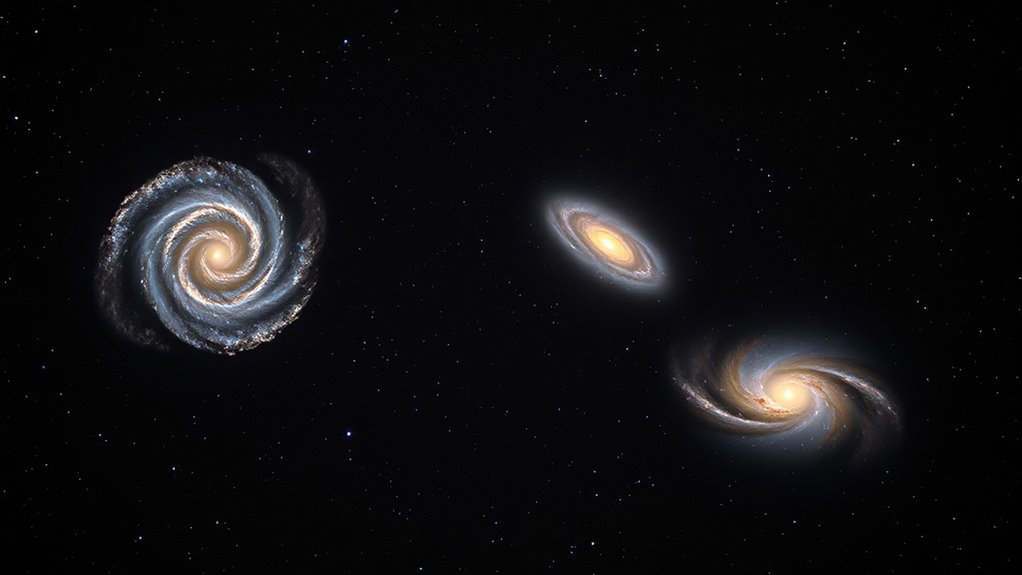
As spring arrives, the Leo Triplet of Galaxies offers an exciting target for stargazers enthusiastic to explore the universe. These three galaxies—M65, M66, and NGC 3628—are close enough to each other that they showcase fascinating galaxy interactions. Observing their dance across the cosmos provides a compelling glimpse into the dynamic nature of our universe. When you point your telescope toward Leo, you’ll witness these galaxies as faint smudges of light, yet their proximity and interactions tell a compelling story of gravitational forces at play. Galaxy interactions become evident through features like tidal tails, distorted shapes, and star formation regions, which can be observed with patience and the right celestial observation techniques. Using a moderate to large aperture telescope enhances your view, allowing you to discern subtle details that reveal the ongoing gravitational tug-of-war between these galaxies. A steady mount and good tracking are essential, especially when capturing images or spending extended periods observing. One effective celestial observation technique involves using averted vision. By slightly shifting your focus away from the galaxies, your eye’s peripheral vision becomes more sensitive to faint details, revealing structures that direct viewing might miss. Additionally, employing long-exposure astrophotography can bring out features like dust lanes and star-forming regions, making galaxy interactions more vivid in your images. To maximize your viewing experience, consider observing under dark skies free from light pollution, which can obscure the faint light of these galaxies. Recognizing the galaxy interactions and how they influence each other’s development can deepen your understanding of cosmic evolution. When studying the Leo Triplet, it’s helpful to familiarize yourself with their positions in the sky. Use star charts or astronomy apps to locate Leo’s distinctive pattern, then identify the galaxies nestled within its boundaries. As you observe, think about how these galaxies are gravitationally bound and slowly influencing each other’s shapes and star formation activity. Recognizing these signs of galaxy interactions deepens your appreciation of their complex relationship and the cosmic forces that shape them.

Dianfan Telescope,90mm Aperture 800mm Telescopes for Adults Astronomy,Portable Professional Refractor Telescope for Beginners,with Stainless Tripod & Phone Adapter,Carry Bag
Superior Optics: Dianfan astronomy telescope features a focal length of 800 mm and a fully coated 90 mm…
As an affiliate, we earn on qualifying purchases.
As an affiliate, we earn on qualifying purchases.
Frequently Asked Questions
What Is the Best Time of Year to Observe the Leo Triplet?
You should aim to observe the Leo Triplet during the best viewing seasons in spring and early summer. These are the ideal observation times when the galaxies are highest in the night sky, providing clearer views with less atmospheric interference. On clear, moonless nights, you’ll enjoy the best visibility. So, plan your stargazing sessions around these periods for the most stunning views of the Leo Triplet.
Can Amateur Astronomers Easily View the Leo Triplet From Home?
You can definitely view the Leo Triplet from home, but you’ll need a telescope with at least a 4-inch aperture to see the galaxies clearly. Use star chart navigation to locate them in the constellation Leo. A steady atmosphere helps, so choose a dark sky location away from light pollution. With patience and proper equipment, you’ll enjoy a stunning view of these distant galaxies right from your backyard.
How Far Away Are the Galaxies in the Leo Triplet?
The galaxies in the Leo Triplet are roughly 35 million light-years away, making their distances fascinating cosmic measurements. You can visualize these galaxy distances with a good telescope, though seeing details might be challenging. As an amateur astronomer, understanding their distance helps you appreciate the vastness of space. Remember, observing these galaxies involves patience and proper equipment, but it’s rewarding to glimpse these distant cosmic giants from your own backyard.
What Equipment Is Recommended for Observing the Leo Triplet?
You’ll want a telescope with at least a 4-inch aperture to see the Leo Triplet clearly. Look for specs like a stable mount and good optics for detailed observation. Using wide-field eyepieces, you can capture the entire triplet in one view. Techniques like dark-adapted eyes and steady tracking enhance your experience. This setup helps you appreciate the galaxies’ beauty and structure even from light-polluted areas.
Are There Any Myths or Cultural Stories Associated With These Galaxies?
You won’t find specific myths tied directly to the Leo Triplet galaxies, but they are part of the broader constellation Leo, a mythical lion in many cultures. In ancient mythology, Leo symbolizes strength and courage, often representing royal power or divine protection. These stories reflect cultural symbolism, inspiring awe and reverence for celestial phenomena. So, while the galaxies themselves have no direct myths, they are linked to rich, mythical constellations that echo human fascination with the stars.

Star Chart
Augmented Reality night sky star gazing (on supported devices).
As an affiliate, we earn on qualifying purchases.
As an affiliate, we earn on qualifying purchases.
Conclusion
So, next time you gaze up at the night sky, remember the Leo Triplet isn’t just some distant cluster of galaxies—it’s a cosmic fireworks show on steroids! These galaxies are like celestial celebrities, putting on a dazzling spectacle that’ll make your jaw drop and your telescope feel like a front-row seat to the universe’s biggest party. Trust me, once you’ve seen them, you’ll never look at the night sky the same way again—it’s a mind-blowing, universe-sized adventure!

Getting Started: Using an Equatorial Telescope Mount: Everything you need to know for astrophotography or visual use
As an affiliate, we earn on qualifying purchases.
As an affiliate, we earn on qualifying purchases.

Sky-Watcher Star Adventurer 2i Pro Pack – Motorized DSLR Night Sky Tracker Equatorial Mount for Portable Nightscapes, Time-Lapse and Panoramas – Wi-Fi App Camera Control – Long Exposure (S20512)
Portable nightscape tracking platform: Motorized portable tracking platform perfect for capturing incredible detail of the Milky Way, eclipses…
As an affiliate, we earn on qualifying purchases.
As an affiliate, we earn on qualifying purchases.