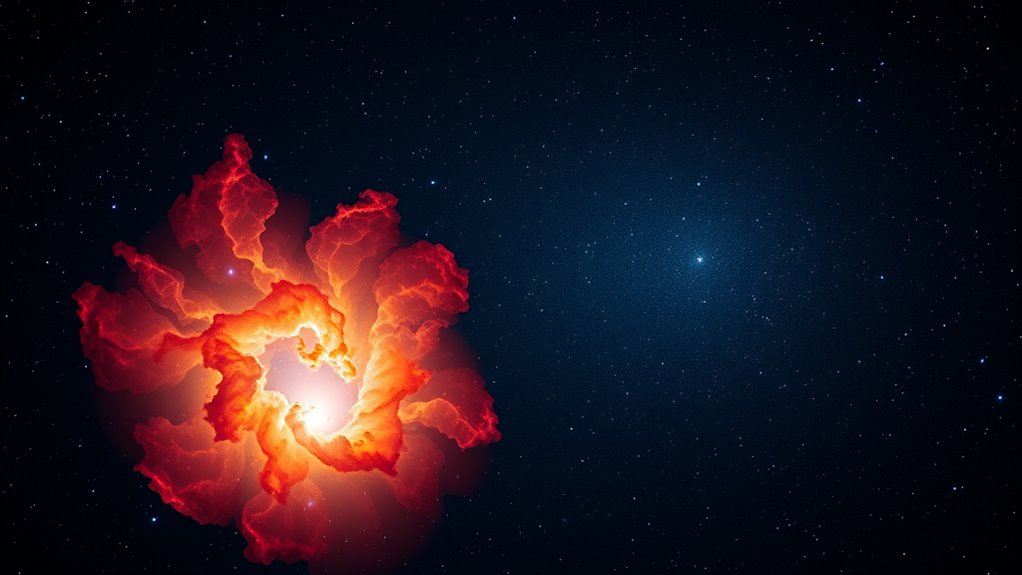
Capturing the Rosette Nebula and Pleiades in late winter allows you to see their stunning structures and vibrant colors more clearly. By using telescopes or high-quality images, you can observe the nebulae’s intricate filaments, dust lanes, and glowing regions caused by young stars. These celestial objects reveal the beauty of star formation and cosmic nurseries. Keep exploring, and you’ll uncover even more fascinating details about these mesmerizing nebulae and their wondrous environments.
Key Takeaways
- Late winter offers optimal conditions for viewing and imaging the Rosette Nebula and Pleiades due to clearer skies and minimal light pollution.
- Advanced telescopes and imaging techniques reveal detailed structures, vibrant colors, and star-forming activity within these nebulae.
- Capturing these nebulae highlights their complex features, such as filaments, dust lanes, and glowing regions illuminated by young stars.
- Imaging the Pleiades as a reflection nebula demonstrates how starlight interacts with surrounding dust, enhancing visual understanding.
- High-quality images of late-winter nebulae connect viewers to cosmic processes, showcasing the universe’s dynamic star formation regions.
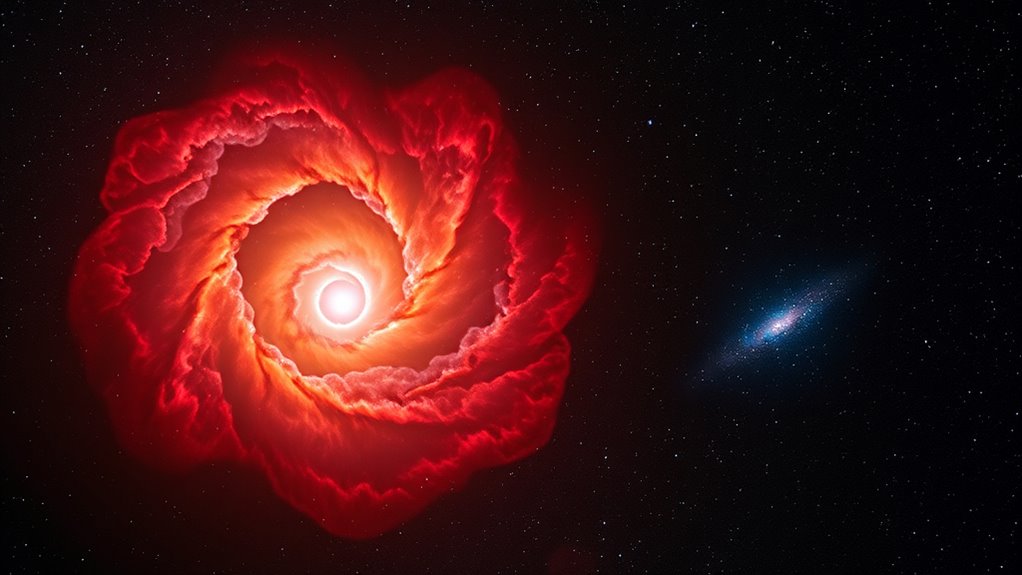
Have you ever wondered what makes nebulae like the Rosette and Pleiades so mesmerizing? These celestial objects captivate us because they’re not just beautiful—they’re dynamic regions where the universe’s most fundamental processes unfold. When you observe nebulae, you’re witnessing star formation in action, where vast clouds of gas and dust serve as the birthplace for new stars. Thanks to advances in astronomical imaging, we can now capture these regions in stunning detail, revealing intricate structures and vibrant colors that were once hidden from view. This imaging allows you to explore the complex interplay of light and matter, making the process of star birth tangible even from thousands of miles away.
Nebulae reveal star birth through stunning images of cosmic gas, dust, and vibrant colors.
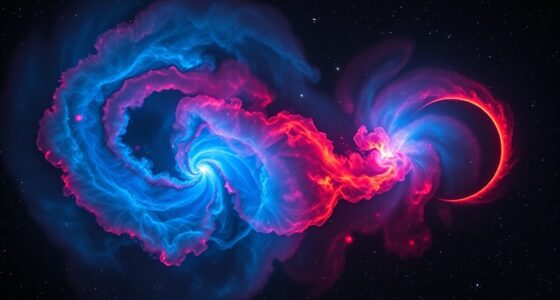
In the case of the Rosette Nebula, its sprawling, flower-like appearance is a testament to the power of astronomical imaging. Enhanced photographs show bright, glowing regions where young stars illuminate the surrounding gas, creating a spectacle of light. These images help you understand how massive stellar nurseries operate, with radiation and stellar winds shaping the nebula’s architecture. The high-resolution imaging also uncovers filaments and dark lanes of dust, illustrating the ongoing process of star formation. As new stars ignite within the nebula, their energy influences the surrounding material, further fueling the cycle of stellar birth and evolution. The presence of dust and gas is essential for star formation, highlighting the importance of these nebulae as cosmic nurseries.
The Pleiades, while often celebrated for its tight cluster of bright stars, is also a nebula in a different sense. It’s a reflection nebula, where starlight bounces off nearby dust particles, giving the cluster its shimmering appearance. Thanks to detailed astronomical imaging, you can see how this dust interacts with starlight, creating an ethereal glow that enhances the cluster’s beauty. These images allow you to appreciate how the interplay of light and dust contributes to the visual spectacle, offering a glimpse into the environment where stars are not only born but also influence their surroundings. The clarity of modern imaging techniques helps you understand the delicate balance between stellar radiation and the dust that surrounds it.
As late winter approaches, observing these nebulae becomes even more rewarding, especially with telescopes capable of capturing their faint details. Through astronomical imaging, you get to see the nebulae’s complex structures, vibrant colors, and the ongoing process of star formation. These images serve as a bridge, connecting you to the universe’s most fundamental phenomena. Whether you’re an amateur astronomer or simply a stargazing enthusiast, understanding the science behind these stunning objects enhances your appreciation, making each viewing session a journey into the cosmic nursery where stars are born.
Top picks for "rosette nebula pleiad"
Open Amazon search results for this keyword.
As an affiliate, we earn on qualifying purchases.
Frequently Asked Questions
What Are the Best Months for Observing These Nebulae?
The best months for observing these nebulae are during late winter and early spring, from February to April. During this period, seasonal visibility is at its peak, and you’ll experience ideal observing conditions with longer nights and clearer skies. This timing allows you to catch the nebulae when they’re highest in the sky, making it easier to see their intricate details through your telescope or binoculars.
Can Amateur Astronomers Photograph These Nebulae Successfully?
Of course, you can photograph these nebulae successfully—if you master post-processing techniques and wait for ideal sky conditions. Sure, capturing stunning images takes patience, but amateurs like you can do it with a good camera, steady tripod, and clear skies. Don’t forget, the secret’s in the details—adjustments in post-processing and shooting during moonless nights will turn your photos from meh to mesmerizing.
What Equipment Is Recommended for Capturing Detailed Images?
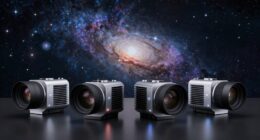
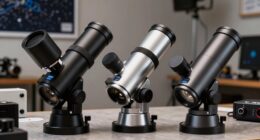
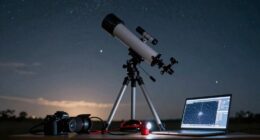
To capture detailed images, you should use a sturdy camera mount to guarantee stability during long exposures, preventing blurring. Pair it with a quality telescope, and consider accessories like autoguiders for precise tracking. A DSLR or dedicated astrophotography camera works well, and additional filters can enhance image quality. Combining these tools allows you to achieve sharp, detailed nebula images even in challenging late-winter skies.
How Do Light Pollution Levels Affect Viewing and Photography?
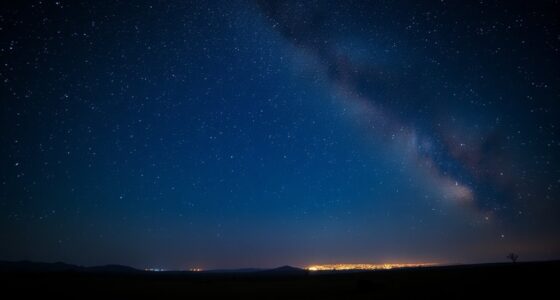
Light pollution markedly impacts your viewing and photography by increasing urban glow and sky brightness, which washes out faint celestial objects. When sky brightness is high, detail in nebulae and star clusters becomes harder to capture, and your images may lack contrast. To counteract this, you should seek darker skies away from city lights, use light pollution filters, and plan your sessions during new moon phases for the best results.
Are There Any Upcoming Celestial Events That Enhance Viewing Opportunities?
You’ll want to check out upcoming meteor showers and planetary alignments, as they offer excellent viewing opportunities. Even if light pollution is a concern, these events tend to be bright enough to see with minimal equipment. The Perseids in August and the Orionid meteor shower in October are especially spectacular, while planetary alignments like Venus and Jupiter’s close approach create stunning sky views you won’t want to miss.
Conclusion
So, next time you point your telescope at the Rosette or Pleiades, remember you’re basically peering into the universe’s glittering, cosmic jewelry box. These nebulae are like celestial fairy tales, just waiting for your camera to capture their shimmering stories. Sure, chasing late-winter nebulae might feel like trying to catch snowflakes in a hurricane, but hey, if you can’t see the stars clearly, at least you’ll have some pretty pictures to pretend you’re gazing into eternity.