TL;DR

Prime made for students and young adults
- Fast, free delivery for dorm and study essentials
- Prime Video and Amazon Music included
- Member-only deals
NGC 4372 is a loose globular cluster 17,000 light-years away, while the Dark Doodad is a dense dark nebula hiding potential star nurseries. Advances in infrared telescopes help us peer through these dusty regions, revealing the galaxy’s hidden processes.
Imagine gazing up at a starry sky and witnessing a mysterious, shadowy shape drifting amid the glow of distant stars. That’s the Dark Doodad—a dusty, dark nebula that blocks out light and hints at hidden worlds behind its silhouette. Meanwhile, nearby, the ancient glow of NGC 4372, a globular cluster, offers a glimpse into the galaxy’s history.
In tonight’s sky story, we’ll uncover what makes these objects so intriguing, how scientists study them despite their obscurity, and what you can see from your backyard with a telescope or binoculars. Prepare to dive into a universe where darkness conceals as much as it reveals, revealing secrets of star birth and cosmic history.
Dark nebulae like the Dark Doodad are dense clouds of dust and gas that block visible light, making them appear as silhouettes in the sky.
Infrared astronomy has revolutionized our ability to study star-forming regions hidden within dark nebulae, revealing young stars and protostars.
NGC 4372, a loose globular cluster in Centaurus, offers insights into the galaxy’s ancient stellar populations due to its low density and old stars.
Photographers can capture stunning images of these objects using wide-angle, fast lenses, especially under dark, clear skies.
Amateur astronomers can spot NGC 4372 with modest equipment, while dark nebulae require patience and dark skies for best observation.
What is the Dark Doodad and why does it look like a shadowy doodle?
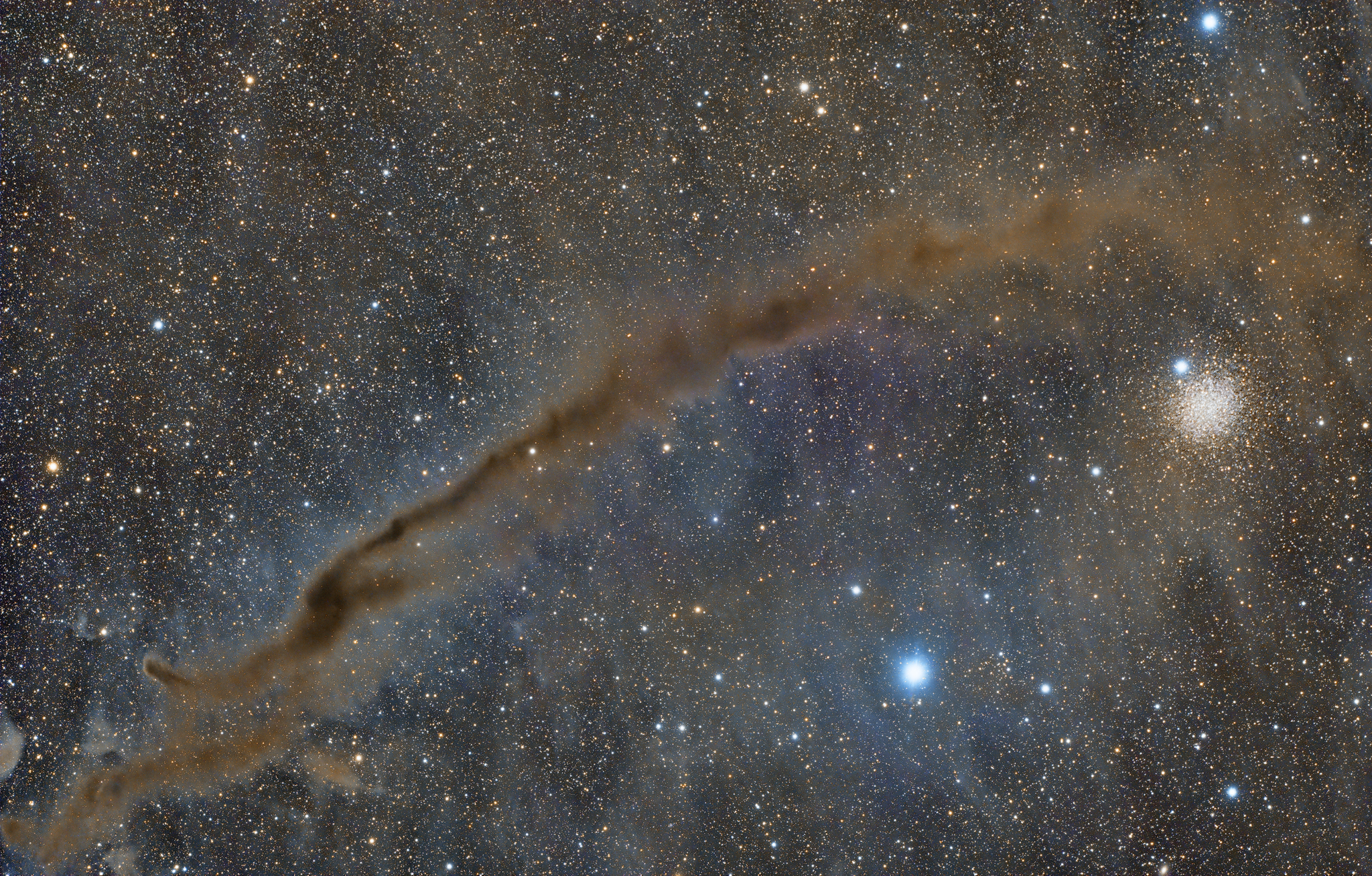
The Dark Doodad is a classic example of a dark nebula—an enormous cloud of gas and dust so thick it blocks the light from stars and bright nebulae behind it. It stretches over about 3 degrees in the sky, roughly six times the width of the full Moon, making it a striking feature for wide-field telescopes or binoculars.
Imagine holding a dense, textured piece of charcoal against a backdrop of shimmering stars. That’s what the Dark Doodad resembles—an irregular, ink-blotted shape drifting through the southern skies, nestled near the Coalsack Nebula and the Southern Cross constellation. Its name, playful and descriptive, was coined in 1986 by an astro-imager observing Comet Halley from Australia.
Unlike glowing nebulae that shine through emission or reflection of light, dark nebulae like the Doodad absorb and scatter light, creating silhouettes against the brighter starfields. They are the galaxy’s cosmic fog—hiding potential star nurseries deep within. This opacity makes them crucial for understanding the lifecycle of interstellar matter, as they are the raw material from which new stars can emerge. Their presence signifies regions where the balance between gravity and turbulence determines whether a cloud will birth stars or remain inert, highlighting the complex interplay that governs galactic evolution.
telescope for viewing dark nebulae
As an affiliate, we earn on qualifying purchases.
As an affiliate, we earn on qualifying purchases.
How does the Dark Doodad hide star-forming regions and what’s inside?
The Dark Doodad isn’t just a visual feature; it’s a dense molecular cloud rich in gas and dust—perfect for star formation. These clouds are cold, often just a few degrees above absolute zero, allowing gravity to slowly pull material together. This cold, dense environment is essential because it prevents the cloud from dispersing, providing the stable conditions needed for collapse.
Imagine a cosmic pressure cooker—over time, pockets within the cloud can collapse under their own gravity, igniting nuclear fusion and birthing new stars. The internal regions of such clouds are often turbulent, with shockwaves from nearby supernovae or stellar winds compressing parts of the cloud further, triggering star formation. Infrared observations, like those from the James Webb Space Telescope, have begun to reveal these hidden regions, showing young stars still shrouded in dust and gas that block visible light. These insights are vital because they allow astronomers to study the earliest stages of star formation, which are otherwise concealed from optical telescopes.
The size of the Doodad—over 30 light-years long—means it contains enough material to produce dozens, if not hundreds, of new stars and planetary systems. This makes it a cosmic seedbed, where the initial conditions—density, temperature, turbulence—determine the efficiency and scale of star formation. Understanding these internal processes helps astronomers piece together how galaxies evolve over cosmic time, revealing the balance between star birth and the dispersal of interstellar material, which ultimately shapes the structure of our galaxy.
As an affiliate, we earn on qualifying purchases.
Why is NGC 4372 called the ‘Southern Cloud,’ and what makes it special?
NGC 4372 is a loose, faint globular cluster in the constellation Centaurus, about 17,000 light-years away. It earned the nickname ‘Southern Cloud’ because of its hazy, cloud-like appearance in the southern sky, visible with binoculars from the Southern Hemisphere.
Unlike densely packed globular clusters that appear as bright, concentrated spheres, NGC 4372’s loose structure allows astronomers to study how such clusters evolve over billions of years. Its relatively sparse arrangement of stars makes it easier to resolve individual stars with amateur equipment, providing a valuable window into stellar aging processes. Moreover, because it contains mostly old, metal-poor stars—remnants from the early universe—it serves as a living fossil, offering clues about the conditions of the early Milky Way. Its position in the southern sky also makes it a unique target, helping astronomers build a more complete picture of the galaxy’s halo and its formation history.
Understanding why NGC 4372 is less dense than other globular clusters reveals the dynamics of stellar interactions over cosmic timescales. Its loosely bound nature suggests it has undergone fewer close encounters with other clusters or giant molecular clouds, preserving its structure. Studying such clusters helps researchers understand the processes that lead to cluster dissolution or survival, which impacts the distribution of stars in the galactic halo and informs models of galaxy assembly.
infrared telescope for amateur astronomy
As an affiliate, we earn on qualifying purchases.
As an affiliate, we earn on qualifying purchases.
What makes the scene in the APOD image so striking for astrophotographers?
The NASA APOD image from July 31, 2026, captures a stunning contrast: the silhouette of the Dark Doodad set against the glowing stars of NGC 4372 and the surrounding starfields. The scene’s vivid textures and dark shapes make it a favorite for wide-field astrophotography.
Photographers love shooting this scene with fast, wide-angle lenses—like a 24mm or 50mm f/1.4—to maximize the field of view and gather enough light. The key is clear, dark skies without moonlight, and patience to expose for several minutes to bring out faint details. This scene exemplifies the interplay between darkness and light, illustrating how the universe’s most subtle features can be captured with skill and proper equipment. The contrast emphasizes the importance of composition and timing—choosing the right conditions allows photographers to reveal intricate structures within dark nebulae, transforming them from mere silhouettes into detailed cosmic tapestries that tell stories of star formation and galactic architecture.
astrophotography lens wide angle fast
As an affiliate, we earn on qualifying purchases.
As an affiliate, we earn on qualifying purchases.
How are modern telescopes helping us see through the cosmic dust?
Infrared telescopes like the James Webb Space Telescope can peer through the thick dust of dark nebulae, revealing hidden star nurseries. Infrared light penetrates dust better than visible light, exposing regions otherwise cloaked in darkness. This capability is transformative because it allows astronomers to observe the earliest stages of star formation, which are invisible in optical wavelengths. By capturing the heat emitted by young stars and protostars still embedded within their natal clouds, infrared observations fill critical gaps in our understanding of how stars and planetary systems develop.
For example, JWST’s observations of dark nebulae show clusters of newborn stars still embedded in their natal clouds—something impossible to see with traditional telescopes. These insights are vital because they help astronomers understand the initial conditions and processes that lead to star formation, revealing the complex interplay of gravity, turbulence, magnetic fields, and radiation. Essentially, infrared astronomy acts as a cosmic X-ray, uncovering the secrets buried deep within dust clouds, much like a doctor examines a hidden injury beneath the skin, providing a detailed view of processes that shape the evolution of galaxies.
What can amateur astronomers do to spot these objects?
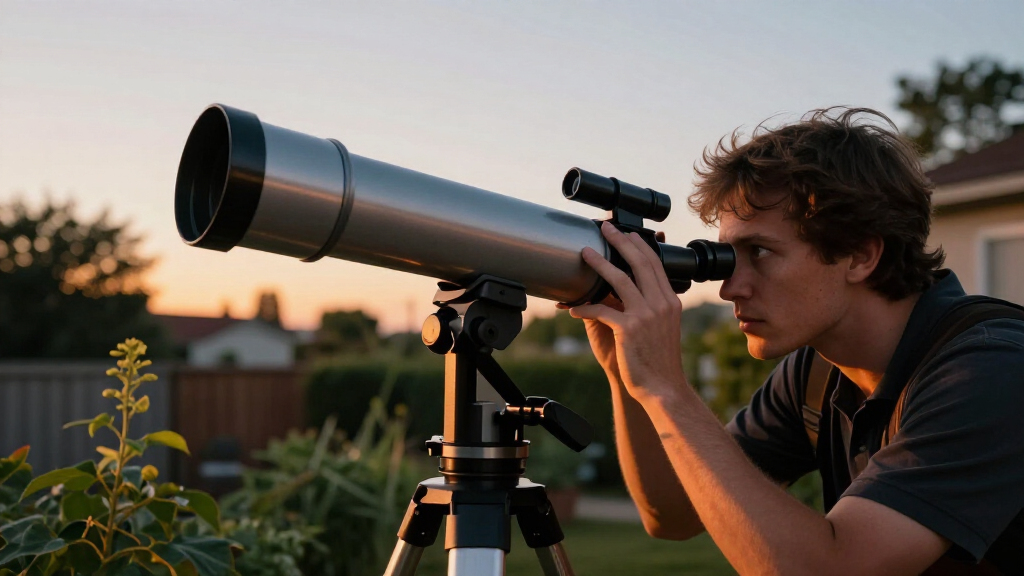
While dark nebulae like the Doodad are challenging to see with small telescopes, wide-field views with binoculars or small telescopes under dark skies can reveal their shapes as silhouettes against starry backgrounds. The key is using a low-power, wide-angle eyepiece to maximize the field of view, which helps in identifying the dark patches amidst brighter star fields. NGC 4372, being a loose globular cluster, is accessible to amateur telescopes with a good mount and a low-power wide-angle eyepiece. Its relative faintness requires patience and good sky conditions, such as minimal light pollution and a clear, moonless night.
To locate NGC 4372, aim your telescope at the constellation Centaurus when it is high in the sky, using star charts or digital apps for guidance. Look for a faint, fuzzy patch—like a ghostly cloud—among brighter stars. Dark nebulae such as the Doodad require even more patience; long exposures with astrophotography equipment can help bring out their subtle shapes, turning your backyard into a window into the universe’s hidden corners. Remember, observing faint objects is as much about persistence and dark skies as it is about equipment.
Frequently Asked Questions
Can I see the Dark Doodad with a small telescope or binoculars?
Yes, with a wide-field view and dark skies, you can glimpse the shape of the Dark Doodad as a dark patch against starry backgrounds. A steady hand or tripod-mounted binoculars improve contrast and detail.What makes NGC 4372 different from other globular clusters?
NGC 4372 is less dense and more spread out than many globular clusters, making individual stars easier to resolve. Its location in the southern sky also makes it a unique target for observers in the southern hemisphere.Why is infrared astronomy important for studying dark nebulae?
Infrared light penetrates dust clouds more effectively than visible light, revealing hidden star-forming regions and young stars embedded within dark nebulae that would otherwise remain invisible.How do astronomers determine what’s inside a dark nebula?
They use infrared telescopes, radio observations, and spectroscopy to analyze the composition and detect embedded stars or protostars, providing a clearer picture of the nebula’s internal structure.What’s the best time of year to observe NGC 4372 and the Dark Doodad?
In the southern hemisphere, Centaurus is best visible from late autumn to early spring (April to September). Clear, moonless nights without city light pollution offer the best viewing conditions.Conclusion
Dark nebulae like the Dark Doodad remind us that the universe’s most intriguing secrets often hide in the shadows. With modern tools and a little patience, even backyard stargazers can glimpse these silent cosmic nurseries and ancient clusters. Each dark patch and faint glow tells a story of star birth, galaxy evolution, and the universe’s timeless dance of light and darkness.
Next time you look up, remember—you’re peering into a universe that’s constantly alive and changing, often behind a veil of dust. Keep your eyes open, your telescope ready, and wonder about what’s hiding just out of sight.
Fall Picks
fall essentials
As an affiliate, we earn on qualifying purchases.