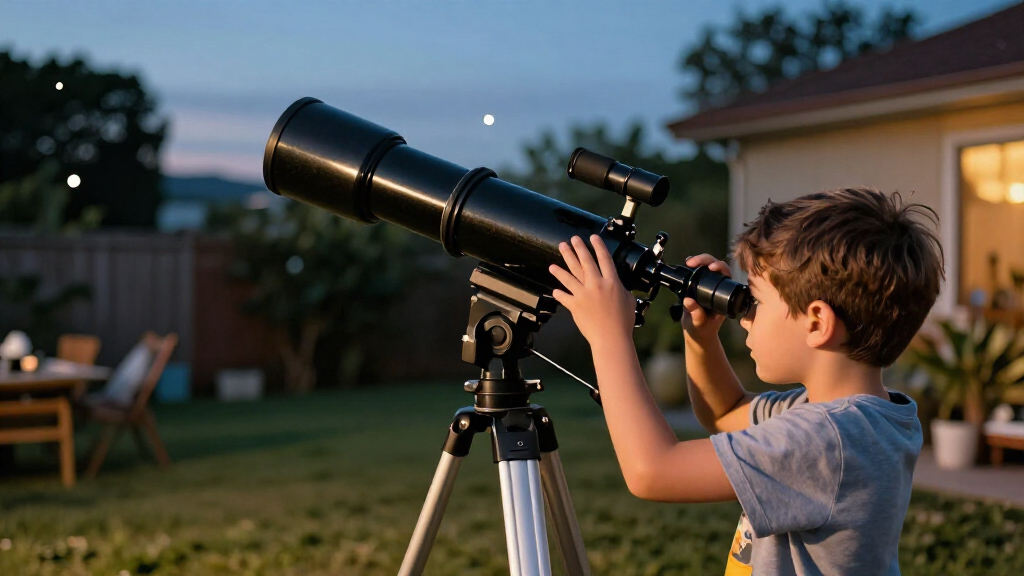

For most new stargazers, I’d start with the Sky-Watcher Heritage 150 Tabletop Dobsonian: its generous aperture and simple manual mount favor learning the sky without the added setup of an equatorial mount. The Celestron StarSense Explorer LT 114AZ stands out if smartphone guidance would help you find objects, while the smaller Sky-Watcher Heritage 130 is a practical tabletop alternative. The main tradeoff is between collecting more light with a larger telescope and choosing a lighter, simpler setup that is easier to store and use. Equatorial mounts can track the sky, but they also take more learning than a basic Dobsonian mount. Read on for the full comparison and advice on choosing a reflector telescope that fits your space, patience, and observing goals.

Prime made for students and young adults
- Fast, free delivery for dorm and study essentials
- Prime Video and Amazon Music included
- Member-only deals
Key Takeaways
- The Heritage 150 leads for visual observing: its tabletop Dobsonian design pairs a larger aperture with a straightforward manual mount, but requires a sturdy table or platform.
- Finding targets can matter more than extra mount features: StarSense Explorer LT 114AZ adds smartphone-guided locating, which can help newcomers who are unsure where to point.
- Tabletop Dobsonians keep the setup simple: the Heritage 130 and Heritage 150 avoid the alignment tasks associated with equatorial mounts, though neither is a complete tripod-based setup.
- Equatorial models trade ease for tracking: the AstroMaster 130EQ, PowerSeeker 127EQ, Dianfan 150EQ, and MEEZAA 150EQ ask beginners to learn polar alignment and mount operation.
- Included extras do not replace a stable mount or clear instructions: compare the full setup and support needs, not only aperture or accessory counts, especially for the National Geographic NT114CF and FirstScope Signature.
| Sky-Watcher Heritage 150 Tabletop Dobsonian Telescope |  | Best Overall | Aperture: 150 mm | Focal length: 750 mm | Focal ratio: f/5 | VIEW LATEST PRICE | See Our Full Breakdown |
| Celestron ExploraScope 114AZ Manual Reflector Telescope |  | Best Lightweight Starter Kit | Telescope type: Newtonian reflector | Aperture: 114 mm | Focal length: 1000 mm | VIEW LATEST PRICE | See Our Full Breakdown |
| Celestron AstroMaster 130EQ 130mm Newtonian Reflector Telescope |  | Best for Learning Equatorial Tracking | Optical design: Newtonian reflector | Aperture: 130 mm (5.1 inches) | Focal length: 650 mm | VIEW LATEST PRICE | See Our Full Breakdown |
| Sky-Watcher Heritage 130 Tabletop Dobsonian Telescope |  | Best Ready-to-Use Tabletop Pick | Aperture: 130 mm | Focal length: 650 mm | Mount: Altazimuth tabletop Dobsonian | VIEW LATEST PRICE | See Our Full Breakdown |
| Celestron StarSense Explorer LT 114AZ Smartphone-Guided Newtonian Telescope |  | Best for Finding Objects | Optical design: 114 mm Newtonian reflector | Focal length: 1000 mm | Mount: Manual altazimuth with altitude slow-motion adjustment | VIEW LATEST PRICE | See Our Full Breakdown |
| Celestron PowerSeeker 127EQ Reflector Telescope |  | Best for Equatorial-Mount Practice | Telescope type: Newtonian reflector | Aperture: 127 mm | Focal length: 1000 mm | VIEW LATEST PRICE | See Our Full Breakdown |
| Dianfan 150EQ 150mm Reflector Telescope with Equatorial Mount |  | Best Accessory Bundle | Aperture: 150 mm | Focal length: 650 mm | Magnification: 26×–130× | VIEW LATEST PRICE | See Our Full Breakdown |
| MEEZAA 150EQ Newtonian Reflector Telescope with Equatorial Mount |  | Best for Moon-Focused Accessory Use | Telescope type: Newtonian reflector | Aperture: 150 mm | Focal length: 650 mm | VIEW LATEST PRICE | See Our Full Breakdown |
| National Geographic NT114CF 114 mm Carbon Fiber Reflector Telescope with Tripod |  | Best for Simple, Portable Pointing | Aperture: 114 mm | Focal length: 500 mm | Focal ratio: f/4.4 | VIEW LATEST PRICE | See Our Full Breakdown |
| Celestron FirstScope Signature Series Moon Tabletop Dobsonian Telescope | 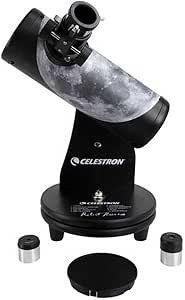 | Best Compact Tabletop Starter | Aperture: 76 mm | Focal length: 300 mm | Mount: Manual tabletop Dobsonian | VIEW LATEST PRICE | See Our Full Breakdown |
| reflector telescopes for beginner | Focal length | Mount | Aperture | Eyepieces |
|---|---|---|---|---|
| Sky-Watcher Heritage 150 Table | 750 mm | Manual altazimuth | 150 mm | — |
| Celestron ExploraScope 114AZ M | 1000 mm | Alt-azimuth | 114 mm | 20 mm and 4 mm |
| Celestron AstroMaster 130EQ 13 | 650 mm | German equatorial mount with slow-motion controls | 130 mm (5.1 inches) | 20 mm and 10 mm |
| Sky-Watcher Heritage 130 Table | 650 mm | Altazimuth tabletop Dobsonian | 130 mm | 10 mm and 25 mm Plossl |
| Celestron StarSense Explorer L | 1000 mm | Manual altazimuth with altitude slow-motion adjustment | — | 10 mm and 25 mm |
| Celestron PowerSeeker 127EQ Re | 1000 mm | Manual German equatorial | 127 mm | 20 mm and 4 mm |
| Dianfan 150EQ 150mm Reflector | 650 mm | Equatorial mount | 150 mm | — |
| MEEZAA 150EQ Newtonian Reflect | 650 mm | German equatorial | 150 mm | 25 mm and 10 mm |
| National Geographic NT114CF 11 | 500 mm | Alt-azimuth | 114 mm | Plössl, 26 mm and 9.7 mm |
| Celestron FirstScope Signature | 300 mm | Manual tabletop Dobsonian | 76 mm | 4 mm and 20 mm |
More Details on Our Top Picks
Sky-Watcher Heritage 150 Tabletop Dobsonian Telescope
The Heritage 150 earns my top spot for beginners who want a substantial aperture without a full-length telescope tube. Its 150 mm parabolic mirror gathers more light than the 130 mm Heritage 130, which can help show fainter objects and more detail when viewing under suitable skies. The collapsible tube also makes storage and transport easier than the full-height tripod setup of the Celestron AstroMaster 130EQ.
The tradeoff is the tabletop format: you need a firm, level surface, and its manual Dobsonian mount does not track objects automatically. At 23 pounds, it is portable in shape but not especially light to carry. I’d choose it for home observers with a sturdy table or platform; beginners who need a tripod or lighter carry should compare the Celestron ExploraScope 114AZ instead.
Pros:- 150 mm parabolic mirror gathers more light than the 130 mm tabletop alternatives
- Collapsible tube takes up less storage space than a fixed-length tube
- Rubber feet help reduce vibration on a suitable supporting surface
- Teflon bearings support smooth manual movement
Cons:- Tabletop mount requires a stable, level surface that may not be available outdoors
- Manual aiming and tracking take practice, particularly at higher magnification
- At 23 pounds, it is heavier than the tripod-mounted ExploraScope 114AZ
Best for: Beginners who want a larger 150 mm reflector for home viewing and have a stable table or platform for the mount.
Not ideal for: Observers who need a lightweight telescope to carry long distances or want a tripod and easier tracking while viewing.
- Aperture:150 mm
- Focal length:750 mm
- Focal ratio:f/5
- Primary mirror:Borosilicate parabolic mirror with Radiant Aluminum Quartz coating
- Mount:Manual altazimuth
- Focuser:1.25-inch helical
- Tube design:Collapsible
- Weight:23 pounds
Our verdict“Choose the Heritage 150 if you want the strongest light-gathering capacity among these beginner-friendly tabletop options and can provide a steady platform.”
Celestron ExploraScope 114AZ Manual Reflector Telescope
The ExploraScope 114AZ is the most straightforward choice here for a beginner who wants a tripod-mounted reflector with useful accessories included. At 6.7 pounds, it is far easier to carry than the 23-pound Sky-Watcher Heritage 150, and its tool-free setup reduces the amount of assembly before an observing session. The two eyepieces, red-dot finder, and 3x Barlow provide several ways to start exploring without separately sourcing basic accessories.
Its 114 mm aperture gathers less light than the Heritage 130 or 150, so it is the more modest option for faint targets. The listed maximum magnification of 750x should not be treated as a practical expectation; useful magnification depends on conditions and the optics. Unlike the app-guided StarSense Explorer LT 114AZ, this model leaves object-finding to you. I’d pick it for portability and simplicity, not guided navigation.
Pros:- Light 6.7-pound design is easier to transport than the tabletop Heritage 150
- Tool-free setup helps new observers get started with less assembly
- Includes two eyepieces, a Barlow lens, finderscope, tripod, and software
- Smooth manual alt-azimuth controls allow straightforward movement
Cons:- 114 mm aperture gathers less light than the Heritage 130 and Heritage 150
- Manual operation requires you to locate and track targets yourself
- The stated 750x maximum magnification may give beginners unrealistic expectations
Best for: First-time observers who want a lightweight tripod telescope, quick setup, and a ready-to-use accessory kit.
Not ideal for: Beginners who want help locating objects, stronger light gathering for faint targets, or a realistic high-magnification viewing setup.
- Telescope type:Newtonian reflector
- Aperture:114 mm
- Focal length:1000 mm
- Mount:Alt-azimuth
- Eyepieces:20 mm and 4 mm
- Barlow lens:3x
- Finderscope:StarPointer red dot
- Weight:6.7 pounds
Our verdict“Choose the ExploraScope 114AZ if low carry weight and a complete starter kit matter more than larger aperture or app-guided object finding.”
Celestron AstroMaster 130EQ 130mm Newtonian Reflector Telescope
The AstroMaster 130EQ suits beginners who want to learn how a German equatorial mount works rather than simply point the tube up, down, and side to side. Its slow-motion controls allow finer manual adjustments than the basic tabletop Dobsonian mounts on the Heritage 130 and Heritage 150. With a 130 mm aperture, it also sits between the 114 mm tripod reflectors and the larger Heritage 150 in light-gathering capacity.
That flexibility brings a learning curve: equatorial mounts need correct alignment before their tracking motion makes sense, so setup is less intuitive than the ExploraScope 114AZ’s alt-azimuth arrangement. The 17-pound assembled weight and full-height tripod also make it less compact than either tabletop Heritage. I’d choose this model for a beginner interested in learning sky tracking; someone who wants quick, simple setup may find the Heritage 130 easier to live with.
Pros:- 130 mm aperture offers more light gathering than the 114 mm reflector options
- Slow-motion controls allow precise manual adjustments
- Includes two eyepieces, a red-dot finderscope, and astronomy software
- Adjustable full-height tripod supports seated or standing observation
Cons:- Equatorial mount alignment is less intuitive than the alt-azimuth mounts on the other beginner picks
- Assembled weight of 17 pounds makes it less convenient to transport than the ExploraScope 114AZ
- Manual focusing and pointing still require hands-on adjustments
Best for: Beginners willing to learn polar alignment and equatorial controls who want a tripod-mounted 130 mm reflector.
Not ideal for: Casual observers seeking the simplest setup, a compact tabletop telescope, or a particularly light kit to carry.
- Optical design:Newtonian reflector
- Aperture:130 mm (5.1 inches)
- Focal length:650 mm
- Mount:German equatorial mount with slow-motion controls
- Eyepieces:20 mm and 10 mm
- Finderscope:StarPointer red dot
- Field of view:0.67 degrees
- Assembled weight:17 pounds
Our verdict“Pick the AstroMaster 130EQ if learning equatorial tracking is part of the goal and you accept a more involved setup than a tabletop Dobsonian.”
Sky-Watcher Heritage 130 Tabletop Dobsonian Telescope
The Heritage 130 makes a strong case for beginners who want a tabletop reflector without much assembly. It arrives fully assembled with 10 mm and 25 mm Plossl eyepieces and a red-dot finder, so the first session can focus on learning to aim and focus rather than putting the instrument together. Its 130 mm aperture is a meaningful step up from the 114 mm ExploraScope 114AZ for light gathering, while the collapsible tube is easier to store than the AstroMaster 130EQ’s full-height tripod arrangement.
The compromise is the mount: like the larger Heritage 150, it needs a stable surface and requires manual tracking. Its smaller aperture also gives up some light gathering to the Heritage 150. I’d favor this one over the 150 when lower weight and ready-to-use convenience matter more than the largest mirror; choose the Celestron StarSense Explorer LT 114AZ if app guidance matters more than aperture.
Pros:- Arrives fully assembled for a simpler start than the AstroMaster 130EQ
- 130 mm aperture gathers more light than the 114 mm beginner reflectors
- Collapsible tube is convenient for storage and transport
- Includes two Plossl eyepieces and a red-dot finderscope
Cons:- Tabletop Dobsonian mount needs a stable supporting surface
- Manual focus and tracking require the observer to make adjustments
- 130 mm aperture gathers less light than the Heritage 150
Best for: Beginners who want an assembled, collapsible tabletop reflector with a 130 mm mirror and basic accessories included.
Not ideal for: Observers without a stable platform or those who want app-guided object finding, automatic tracking, or the larger aperture of the Heritage 150.
- Aperture:130 mm
- Focal length:650 mm
- Mount:Altazimuth tabletop Dobsonian
- Eyepieces:10 mm and 25 mm Plossl
- Finderscope:Reflex red-dot
- Mirror reflectivity:94%
- Coating:Aluminum and quartz
- Assembly:Fully assembled
Our verdict“Choose the Heritage 130 if you want a simple, ready-to-use tabletop reflector and do not need the Heritage 150’s larger aperture.”
Celestron StarSense Explorer LT 114AZ Smartphone-Guided Newtonian Telescope
The StarSense Explorer LT 114AZ stands apart from the other 114 mm reflector here by using a compatible smartphone app to guide beginners toward celestial targets. That makes it a more approachable object-finding choice than the manual Celestron ExploraScope 114AZ, which asks you to locate objects on your own. Its 24-inch optical tube, full-height tripod, and two eyepieces form a practical starter setup, while the 114 mm mirror is suited to the Moon, planets, and selected brighter deep-sky objects.
The guidance does not make the telescope automatic: you still move and track it by hand, including with the altitude slow-motion adjustment. You also need a compatible phone, and its 114 mm aperture gathers less light than either Heritage Dobsonian. I’d choose it for app-assisted learning; beginners with no compatible smartphone or a preference for a larger mirror should look at the Heritage 130 instead.
Pros:- StarSense app guidance helps beginners locate targets more readily than the manual ExploraScope 114AZ
- 114 mm reflector supports views of the Moon, planets, and selected brighter deep-sky objects
- Includes a full-height tripod, smartphone dock, red-dot finder, and two eyepieces
- Altitude slow-motion adjustment supports finer manual movement
Cons:- StarSense guidance depends on a compatible smartphone
- The mount remains manual, so the user must move and track the telescope
- 114 mm aperture gathers less light than the Heritage 130 and Heritage 150
Best for: New observers with a compatible smartphone who want app-assisted help locating objects while learning to operate a manual telescope.
Not ideal for: Buyers without a compatible smartphone, those seeking automatic tracking, or observers prioritizing more light gathering over guided navigation.
- Optical design:114 mm Newtonian reflector
- Focal length:1000 mm
- Mount:Manual altazimuth with altitude slow-motion adjustment
- Eyepieces:10 mm and 25 mm
- Field of view:2.04 degrees
- Optical tube length:24 inches
- Weight:10.4 pounds
- Smartphone compatibility:Android 12 and later; iOS 18 and later, including iPhone XR and newer
Our verdict“Choose the StarSense Explorer LT 114AZ if app-guided object finding will help you learn the sky and you have a compatible phone.”
Celestron PowerSeeker 127EQ Reflector Telescope
The 127 mm aperture gives this Celestron more light-gathering capacity than the 114 mm National Geographic NT114CF, making it the stronger fit for beginners who want to explore the Moon and planets with a full-height tripod. Its manual German equatorial mount adds slow-motion controls, which can help keep an object centered once you learn how to align and operate the mount. The included 20 mm and 4 mm eyepieces and 3× Barlow offer several magnification options, but the Barlow does not make every combination useful for every target. Compared with the simpler alt-azimuth NT114CF, this model asks more of a first-time user: locating objects and tracking them take practice. At 13 lb, it is also less convenient to carry than a compact tabletop scope.
Pros:- 127 mm aperture gathers more light than the 114 mm National Geographic NT114CF
- Equatorial mount includes slow-motion controls for manual tracking
- Includes 20 mm and 4 mm eyepieces plus a 3× Barlow lens
- Full-height adjustable tripod, accessory tray, and astronomy software are included
Cons:- Equatorial alignment and manual tracking add a learning curve
- At 13 lb, it is less portable than compact tabletop models
- The included 4 mm eyepiece and Barlow combination may offer more magnification than conditions support
Best for: Beginners who want a full-height tripod, equatorial slow-motion controls, and a larger aperture for lunar and planetary observing.
Not ideal for: First-time observers who want simple point-and-look controls or a lightweight telescope they can carry easily.
- Telescope type:Newtonian reflector
- Aperture:127 mm
- Focal length:1000 mm
- Mount:Manual German equatorial
- Eyepieces:20 mm and 4 mm
- Barlow lens:3×
- Weight:13 lb
- Warranty:2 years (US)
Our verdict“Choose the PowerSeeker 127EQ if you want a larger-aperture telescope and are ready to learn equatorial setup and manual tracking.”
Dianfan 150EQ 150mm Reflector Telescope with Equatorial Mount
The Dianfan pairs a 150 mm aperture with a relatively short 650 mm focal length, giving beginners a wide range of targets to explore while keeping the optical tube shorter than the Celestron PowerSeeker 127EQ’s 1000 mm tube. Its pre-assembled equatorial mount and slow-motion controls may reduce some setup friction, though operating an equatorial mount still takes practice. Two eyepieces and a 2× Barlow cover the stated 26×–130× range; the red-dot finder helps with aiming, and the smartphone adapter and carry bag add useful extras for people who want to document or transport the setup. Compared with the MEEZAA 150EQ, this model specifies its magnification range and tripod height. The tradeoff is hands-on focus and tracking, while daytime terrestrial views are inverted.
Pros:- 150 mm aperture offers more light-gathering capacity than the 127 mm Celestron PowerSeeker 127EQ
- Pre-assembled equatorial mount includes slow-motion controls
- Includes two eyepieces, a 2× Barlow, red-dot finder, and smartphone adapter
- Carry bag and stainless steel tripod support transport and setup
Cons:- Manual focus and equatorial tracking require ongoing hands-on adjustment
- Daytime terrestrial views are inverted
- Equatorial controls may feel less intuitive than the National Geographic NT114CF’s alt-azimuth mount
Best for: Beginners seeking a 150 mm reflector with a carry bag, smartphone adapter, red-dot finder, and a stated magnification range.
Not ideal for: Observers who want straightforward up-down and left-right controls, automatic tracking, or correctly oriented daytime views.
- Aperture:150 mm
- Focal length:650 mm
- Magnification:26×–130×
- Mount:Equatorial mount
- Focus:Manual
- Finderscope:Straight-through red dot
- Tripod:Stainless steel
- Included accessories:Two eyepieces, 2× Barlow lens, smartphone adapter, and carry bag
Our verdict“Pick the Dianfan 150EQ if you want a large-aperture package with transport and phone accessories and are willing to learn an equatorial mount.”
MEEZAA 150EQ Newtonian Reflector Telescope with Equatorial Mount
The MEEZAA 150EQ shares the 150 mm aperture and 650 mm focal length of the Dianfan 150EQ, so the main distinction is its listed accessory mix rather than a different basic size class. Its Moon filter is a useful inclusion for lunar observing, while the 25 mm and 10 mm eyepieces, 2× Barlow, red-dot finder, and smartphone adapter make for a broad starter package. The German equatorial mount has slow-motion controls, but beginners still need to learn alignment and manual tracking; the National Geographic NT114CF’s alt-azimuth mount is more direct for casual pointing. Compared with the Dianfan, MEEZAA lists the Moon filter and eyepiece focal lengths but gives less setup and viewing detail. That limited product information makes it harder to judge what setup demands to expect.
Pros:- 150 mm aperture provides more light-gathering capacity than the 114 mm National Geographic NT114CF
- Includes a Moon filter alongside 25 mm and 10 mm eyepieces and a 2× Barlow
- German equatorial mount has slow-motion controls for manual tracking
- Carry bag, red-dot finder, and smartphone adapter are included
Cons:- Manual focus and equatorial tracking require practice
- The product information offers limited detail about setup and viewing performance
- Its equatorial mount is less immediately intuitive than an alt-azimuth mount
Best for: Beginners focused on lunar observing who want a 150 mm reflector, included Moon filter, and smartphone adapter.
Not ideal for: New observers who prioritize simple mount operation or want detailed setup and performance guidance before choosing.
- Telescope type:Newtonian reflector
- Aperture:150 mm
- Focal length:650 mm
- Magnification:26×–130×
- Eyepieces:25 mm and 10 mm
- Barlow lens:2×
- Mount:German equatorial
- Included accessories:Tripod, accessory tray, red-dot finderscope, Moon filter, smartphone adapter, and carry bag
Our verdict“Choose the MEEZAA 150EQ if a Moon filter and 150 mm aperture matter more to you than simple mount controls or detailed setup guidance.”
National Geographic NT114CF 114 mm Carbon Fiber Reflector Telescope with Tripod
The National Geographic NT114CF stands apart from the 150 mm Dianfan and MEEZAA models by trading aperture for a more approachable alt-azimuth mount and a lighter, portable design. Moving the telescope up, down, left, or right is easier to grasp than learning an equatorial mount, which helps when a beginner is still learning to find targets. Its 114 mm aperture and 500 mm focal length suit wide-field views of the Moon, star clusters, and brighter nebulae, while the Plössl eyepieces, 2× Barlow, red-dot finder, and smartphone adapter give the starter kit useful range. The tradeoff is less light-gathering capacity than the 150 mm reflectors, and aiming and tracking remain manual. Its astrophotography use is entry-level, not a substitute for a dedicated imaging setup.
Pros:- Alt-azimuth mount uses intuitive up, down, left, and right movements
- 114 mm aperture and 500 mm focal length suit wide-field viewing
- Includes two Plössl eyepieces, a 2× Barlow, and a red-dot finder
- Smartphone adapter and lightweight design support portable observing
Cons:- Smaller aperture gathers less light than the Dianfan and MEEZAA 150 mm reflectors
- Manual pointing and tracking still require practice
- Astrophotography use is entry-level rather than a dedicated imaging setup
Best for: Beginners who want a portable reflector with intuitive manual controls for wide-field stargazing and occasional phone snapshots.
Not ideal for: Observers who prioritize the greater light-gathering capacity of a 150 mm reflector or expect advanced astrophotography capability.
- Aperture:114 mm
- Focal length:500 mm
- Focal ratio:f/4.4
- Mount:Alt-azimuth
- Eyepieces:Plössl, 26 mm and 9.7 mm
- Barlow lens:2×
- Finderscope:Reflex red-dot
- Optical tube length:50 cm
Our verdict“Choose the NT114CF if you value portable wide-field observing and simpler controls over the extra aperture of a 150 mm model.”
Celestron FirstScope Signature Series Moon Tabletop Dobsonian Telescope
The FirstScope is the most compact choice here, built around a 76 mm aperture and a tabletop Dobsonian base rather than the full-height tripod and equatorial mounts on the Celestron PowerSeeker 127EQ, Dianfan, and MEEZAA. That simple manual base makes basic pointing easier to grasp, and its small footprint suits a beginner who wants a quick lunar session without hauling a larger rig. The included Moon map wrap and Lunar Landscape eBook give new observers a guided way to identify lunar features. Its limitations are substantial beside the 114 mm National Geographic NT114CF and 150 mm models: the smaller aperture gathers less light, there is no finderscope, and the user must aim and focus by hand. It is a starter for modest expectations, not a substitute for a larger reflector.
Pros:- Compact tabletop Dobsonian base is straightforward to point
- Lightweight format is easier to store and move than tripod-mounted models
- Moon map wrap and Lunar Landscape eBook help beginners identify lunar features
- Includes 4 mm and 20 mm eyepieces
Cons:- 76 mm aperture gathers less light than the National Geographic NT114CF and larger reflectors
- No finderscope is included, making initial target aiming harder
- Tabletop base needs a stable raised surface for comfortable viewing
Best for: Young or first-time observers who want a compact tabletop telescope for learning the Moon and basic manual pointing.
Not ideal for: Buyers seeking more light-gathering capacity, a finderscope, a full-height tripod, or broader observing potential than a 76 mm scope offers.
- Aperture:76 mm
- Focal length:300 mm
- Mount:Manual tabletop Dobsonian
- Eyepieces:4 mm and 20 mm
- Field of view:1.3 degrees
- Finderscope:Not included
- Included features:Custom Moon map wrap and Lunar Landscape eBook
- Warranty:2-year US warranty
Our verdict“Pick the FirstScope if compact size and a guided introduction to lunar observing matter more than aperture, a finder, or tripod flexibility.”
How We Picked
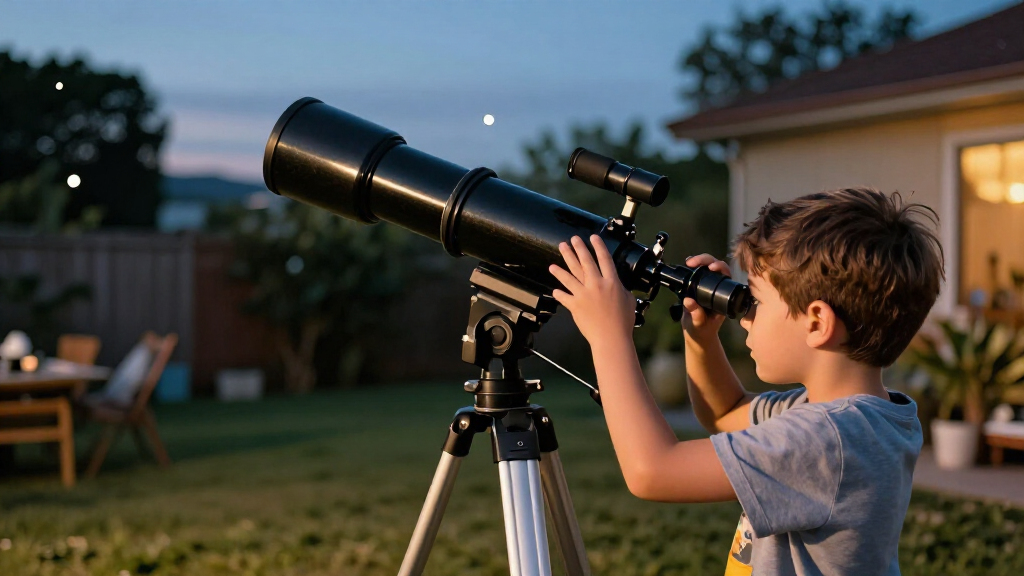
I ranked these telescopes around the needs that shape a beginner’s first nights: how readily the mount can be set up and controlled, how much aperture is available for visual observing, how the telescope helps locate targets, and how practical the complete setup is to store and use. I also weighed the learning burden of each mount. A simple tabletop Dobsonian can be easier to point than an equatorial rig, while a guided model may help someone who struggles to find objects manually.
The ranking favors balanced beginner use over any single headline specification. That puts the Heritage 150 first for its combination of aperture and straightforward operation, with the StarSense Explorer LT 114AZ close behind for its locating aid. Smaller tabletop models make sense when portability and simplicity matter more than aperture; equatorial options rank lower for first-time users because setup and tracking take practice. A telescope’s suitability also depends on whether the buyer has a stable surface, room to store it, and realistic expectations about what visual observing can show.
| reflector telescopes for beginner | Finderscope |
|---|---|
| Sky-Watcher Heritage 150 Table | — |
| Celestron ExploraScope 114AZ M | StarPointer red dot |
| Celestron AstroMaster 130EQ 13 | StarPointer red dot |
| Sky-Watcher Heritage 130 Table | Reflex red-dot |
| Celestron StarSense Explorer L | — |
| Celestron PowerSeeker 127EQ Re | — |
| Dianfan 150EQ 150mm Reflector | Straight-through red dot |
| MEEZAA 150EQ Newtonian Reflect | — |
| National Geographic NT114CF 11 | Reflex red-dot |
| Celestron FirstScope Signature | Not included |
Factors to Consider When Choosing Reflector Telescopes For Beginners
Choosing a first reflector is less about chasing the largest number on a product page and more about matching the telescope to how you will actually observe. I’d decide where it will sit, how you plan to find targets, and how much setup you are willing to learn before comparing aperture or accessories.
Match the Mount to Your Patience and Observing Style
A mount determines how easily you can point the telescope and keep an object in view. Dobsonian mounts move intuitively by hand, making them a natural fit for casual visual observing, while equatorial mounts can follow the sky after they are aligned and learned. New users sometimes assume an equatorial mount is automatically easier because it tracks, but polar alignment adds steps before observing. If you mainly want to scan the Moon and bright objects, simple movement may be more useful than tracking features. Choose an equatorial model when you are willing to learn its setup and value following objects over quick starts.
Treat Aperture as One Part of the Decision
Aperture is the diameter of the telescope’s main mirror, and a larger mirror gathers more light for viewing faint objects. That advantage matters only when the telescope is properly collimated, the sky is reasonably dark, and the mount holds steady. A larger model can also be bulkier and less convenient to carry or store, so it may get used less often if setup is awkward. Beginners can also mistake high advertised magnification for greater detail; magnification depends on the eyepiece and usable observing conditions, not just a large number on a box. Compare aperture alongside stability, handling, and the kinds of targets you plan to view.
Plan for a Table, Tripod, and Storage Before Buying
Tabletop Dobsonians often provide a compact optical tube and easy-to-use base, but “tabletop” means you need a firm, level support at a comfortable observing height. A wobbly surface can make focusing and tracking frustrating, even with a capable telescope. Tripod models avoid that particular dependency, though a tripod still takes space and needs a stable setup. Measure your storage area and think through the walk from storage to observing spot; a telescope that is easy to carry is more likely to be used on spontaneous clear nights. Do not compare a tabletop model with a tripod model as if their included support arrangements are interchangeable.
Choose How You Want to Find Objects
Locating a target is a separate challenge from seeing it, especially under light-polluted skies where fewer stars are visible for orientation. A smartphone-guided system can point beginners toward objects, while a manual finder rewards learning familiar star patterns and sky directions. Guidance does not remove the need to set up the telescope correctly, keep the phone usable, or understand what the telescope can show. If learning the sky is part of the appeal, manual pointing may be satisfying rather than a drawback. If getting lost would stop you from observing, prioritize a locating aid over accessories you may rarely use.
Expect Basic Reflector Maintenance
Reflectors use mirrors, so optical alignment, called collimation, can need checking after transport or over time. A beginner should be comfortable learning the process from the manufacturer’s instructions rather than assuming every telescope will remain perfectly aligned without attention. Avoid touching mirror surfaces, and store the telescope in a dry, protected place to limit dust and damage. A model that is easy to carry may still need a careful check after a bumpy trip. If you want a setup with little hands-on upkeep, factor that preference into the choice instead of focusing only on aperture.
Spend More for a Clear Benefit, Not a Longer Feature List
Paying more can make sense when a feature solves a problem you actually have, such as guided locating, a more capable optical setup, or a mount suited to your tracking goals. More accessories do not automatically improve the view, and extra parts can add setup decisions for someone learning the basics. A larger aperture is most valuable when the telescope remains manageable and your observing conditions let you use it. Before choosing an equatorial package for its tracking promise, consider whether you will practice alignment and learn the mount. For many first-time visual observers, a stable, simple telescope they can set up regularly is a better fit than a more complex package with features they may not use.
Frequently Asked Questions
Is the Heritage 150 a better first telescope than the Heritage 130?
The Heritage 150 is the stronger choice if you want the larger aperture and have a sturdy table or platform ready for observing. The Heritage 130 is a sensible alternative when a smaller setup better suits your storage space or handling needs. Both use a tabletop Dobsonian format, so neither removes the need for a stable support surface. Your observing site and willingness to manage the larger model matter as much as the aperture difference. Pick the 150 for more light-gathering potential, or the 130 when compact simplicity is the higher priority.
Should I choose smartphone guidance or an equatorial mount as a beginner?
These features address different problems: smartphone guidance helps you locate targets, while an equatorial mount is designed to track the sky after alignment. If you are new to identifying stars and want help pointing the telescope, the StarSense Explorer LT 114AZ is the more direct aid. An equatorial model may suit you better if learning alignment and tracking is part of your goal. Neither feature guarantees an easy first session; setup, clear instructions, and a steady location still matter. Decide whether finding objects or following them is the obstacle you most want to reduce.
Can I use a tabletop Dobsonian without buying a telescope table?
You need some kind of firm, level support, but it does not have to be a dedicated astronomy table. A sturdy outdoor table or another stable surface at a comfortable height may work if it does not wobble when you touch the telescope. Check the viewing position before observing so you are not forced into an awkward posture. A soft or uneven surface can make the image jump while focusing and pointing. If you lack a suitable support, compare a tripod-based telescope with the cost and convenience of solving the tabletop setup separately.
Are the 150EQ telescopes the best choice because they have a larger aperture?
Not automatically. The Dianfan 150EQ and MEEZAA 150EQ combine larger aperture with equatorial mounts, which can appeal to buyers who want more light-gathering potential and are ready to learn alignment. For a first telescope, that mount can add a learning step that a manual Dobsonian avoids. A larger mirror also does not compensate for an unstable setup, poor alignment, or an observing site with limited visibility. Choose a 150EQ when its mount features match your goals, not because aperture alone settles the decision.
What should I check before choosing a reflector for a light-polluted neighborhood?
Start by checking which bright targets are practical from your location and whether you can reach a darker observing spot when you want to view fainter objects. Light pollution affects what you can see, so a larger mirror cannot make every deep-sky target stand out from a bright sky. Ease of setup and target finding may matter more for regular sessions than maximum aperture. Smartphone guidance can help with locating objects, but it cannot improve the sky itself. Choose a telescope you can carry and set up often, then set expectations around the targets your local conditions support.
Conclusion
My best overall pick is the Sky-Watcher Heritage 150 for beginners who want a larger tabletop Dobsonian and already have a steady support. For best value in beginner-friendly operation, I’d look at the Heritage 130 when a smaller tabletop setup meets your needs; choose it for manageability rather than assuming it matches the 150’s aperture. The best choice for beginners who need help finding targets is the Celestron StarSense Explorer LT 114AZ. For a more ambitious buyer who specifically wants an equatorial setup and accepts a steeper learning curve, consider the AstroMaster 130EQ or one of the 150EQ models; these are my premium-style picks for mount-led learning, not the simplest first telescopes. If you want the easiest manual visual approach, favor a Dobsonian; if you need a tripod or want to learn tracking, compare the tripod and equatorial options against your space and patience. The right choice is the one whose setup you will use regularly.
Halloween Picks
halloween
As an affiliate, we earn on qualifying purchases.