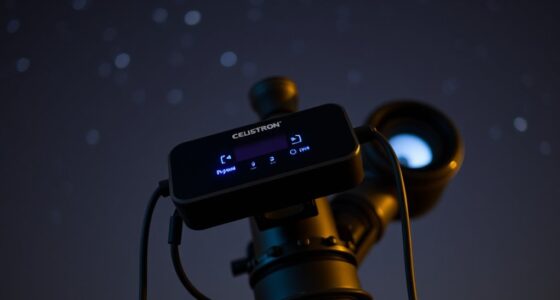
For telescope astrophotography, the right power supply depends on where you image, what your mount requires, and how many devices need power through the night. I’d choose the Celestron PowerTank Lithium Pro as the best overall pick for portable telescope sessions, while the SVBONY SV241 Pro stands out for organizing multiple connections and the Celestron 5 Amp AC Adapter suits an observatory near mains power. The main tradeoff is between portable battery capacity, a simple wall adapter, and centralized power management; connector fit and output requirements matter just as much as the product name. Read on for the full comparison, ranking logic, and advice for matching a supply to your imaging setup.

Prime made for students and young adults
- Fast, free delivery for dorm and study essentials
- Prime Video and Amazon Music included
- Member-only deals
Key Takeaways
- The PowerTank Lithium Pro is the strongest all-around portable choice in this lineup, while the larger 84 Wh PowerTank and PowerTank 17 offer alternatives for buyers prioritizing different battery formats and capacities.
- The SVBONY SV241 Pro has a distinct role as a power management hub; it can appeal to setups with several devices, though a hub adds complexity compared with powering a single telescope directly.
- AC adapters fit fixed locations better than remote imaging sites. The Celestron 5 Amp model offers more output headroom than the 2 Amp option, but neither provides off-grid power.
- Compatibility varies even among 12V adapters. The Celestron, Meade ETX, Talentcell, PwrON, and FlickerStar options differ by intended equipment, output arrangement, or cable, so matching the exact device requirements is a key selection step.
- Compact and lower-cost options involve narrower use cases. The Talentcell pack can suit a modest portable setup, while simple adapters such as the 12V AC models make more sense when mains power is already available.
| Talentcell Rechargeable 12V/5V Lithium-Ion Battery Pack, 6000mAh, with 12.6V Charger |  | Best Compact Dual-Output Pack | Capacity: 6000mAh at 11.1V; 66.6Wh | Outputs: 12V DC and 5V USB | 12V output range: 12.6–9V | VIEW LATEST PRICE | See Our Full Breakdown |
| 12V AC Adapter for Celestron Telescopes |  | Best for Long Reach to an Outlet | Input: AC 100–240V, 50–60Hz | Output: 12V DC, 2A | Wattage: 12W | VIEW LATEST PRICE | See Our Full Breakdown |
| Celestron 2 Amp AC Power Adapter for Computerized Telescopes |  | Best Basic Mains Power | Output voltage: 12V | Output current: 2.5A | Wattage: 18W | VIEW LATEST PRICE | See Our Full Breakdown |
| Celestron 5 Amp AC Power Adapter for Computerized Telescopes |  | Best for High-Draw Celestron Mounts | Output: 12V DC, up to 5A | Wattage: 30W | Connector: 2-pin threaded DC barrel | VIEW LATEST PRICE | See Our Full Breakdown |
| Celestron PowerTank Lithium Pro 12V Telescope Battery Pack |  | Best Extended-Session Portable Battery | Model: 18768 PowerTank Lithium Pro | Battery type: Lithium ion, included | Stated runtime: Up to 17 hours | VIEW LATEST PRICE | See Our Full Breakdown |
| Celestron PowerTank 17 12V Rechargeable Telescope Battery |  | Best for Long Field Sessions | Capacity: 17 Ah (204 Wh) | Battery: 12V sealed lead-acid | 12V output: 1 cigarette-lighter port | VIEW LATEST PRICE | See Our Full Breakdown |
| PwrON AC Adapter for Meade ETX Telescopes, 6.6 ft Cable |  | Best for Meade ETX Owners Near an Outlet | Compatible models: Meade ETX-90, ETX-90 MAK, ETX-105, ETX-125, ETX-90EC | Cable length: 6.6 ft | Connector: Barrel connector | VIEW LATEST PRICE | See Our Full Breakdown |
| SVBONY SV241 Pro Telescope Power Management Hub |  | Best for Multi-Device Imaging Rigs | DC outputs: 5 | USB ports: 4, including Type-C; 5V, 2.5A per port | PWM channels: 2 | VIEW LATEST PRICE | See Our Full Breakdown |
| Celestron PowerTank 12V Rechargeable Telescope Battery Pack, 84 Wh |  | Best for Two 12V Connections | Battery capacity: 7 Ah | Energy capacity: 84 Wh | Battery type: Sealed lead-acid | VIEW LATEST PRICE | See Our Full Breakdown |
| 12V Power Adapter for Celestron Telescopes (Model 18778) |  | Best for Celestron Owners with Mains Power | Compatible models: Celestron NexStar 4SE/5SE/6SE/8SE, 90SLT/127SLT/130SLT, 80LCM/90LCM/114LCM, SkyProdigy, CPC, Advanced VX | Input: AC 100–240V, 50–60Hz | Output: DC 12V, 2A | VIEW LATEST PRICE | See Our Full Breakdown |
| FlickerStar 12V 2A Power Adapter for Celestron Telescopes, 6 ft |  | Best for Home Setups | Input: 110–240V AC | Output: 12V DC, 2A | Wattage: 24W | VIEW LATEST PRICE | See Our Full Breakdown |
| telescope astrophotography power supplie | Warranty | Connector |
|---|---|---|
| Talentcell Rechargeable 12V/5V | — | DC5521, inner positive and outer negative |
| 12V AC Adapter for Celestron T | One year | 2-pin |
| Celestron 2 Amp AC Power Adapt | 2 years | 2-pin barrel connector |
| Celestron 5 Amp AC Power Adapt | 2-year limited warranty | 2-pin threaded DC barrel |
| Celestron PowerTank Lithium Pr | Two-year limited warranty | — |
| Celestron PowerTank 17 12V Rec | 2 years | — |
| PwrON AC Adapter for Meade ETX | 1 year | Barrel connector |
| SVBONY SV241 Pro Telescope Pow | — | DC 5.5 × 2.5 |
| Celestron PowerTank 12V Rechar | — | — |
| 12V Power Adapter for Celestro | 1 year | — |
| FlickerStar 12V 2A Power Adapt | 18 months | Barrel connector |
More Details on Our Top Picks
Talentcell Rechargeable 12V/5V Lithium-Ion Battery Pack, 6000mAh, with 12.6V Charger
Small and flexible, this Talentcell pack is suited to a portable imaging setup that needs 12V for a compatible telescope and 5V USB for an accessory. Its 300g weight and compact size make it easier to carry than the Celestron PowerTank Lithium Pro, though the Celestron offers a stated runtime of up to 17 hours and tripod mounting. The Talentcell’s five indicators help track remaining charge, but its 12V output can fall from 12.6V to 9V as the battery drains. That variation may be a poor fit for equipment requiring steady voltage. Buyers also need to match the DC5521 plug to their gear; a separate cable may be needed. I’d choose it for light, modest-power field kits rather than a mount plus several imaging accessories.
Pros:- Provides both 12V DC and 5V USB outputs.
- Weighs 300g and has compact dimensions for field transport.
- Five LED indicators show the battery level.
- Includes a charger, splitter cable, and overcharge, over-discharge, and short-circuit protection.
Cons:- 12V output varies from 12.6V down to 9V rather than remaining constant.
- DC5521 connector may require a separate cable for the telescope or accessory.
- Capacity is modest for extended sessions with multiple devices.
Best for: Portable imagers powering a compatible 12V telescope and one low-draw USB accessory who want a lightweight battery.
Not ideal for: Astrophotographers running several power-hungry devices or equipment that requires a stable 12V supply.
- Capacity:6000mAh at 11.1V; 66.6Wh
- Outputs:12V DC and 5V USB
- 12V output range:12.6–9V
- Connector:DC5521, inner positive and outer negative
- Weight:300g
- Dimensions:5.1 × 1 × 3 inches
- Protection:Overcharge, over-discharge, and short-circuit protection
- Included accessories:12.6V, 1A charger and DC 1 female to 2 male splitter cable
Our verdict“Choose this compact pack for a light, compatible setup; pick the Celestron PowerTank Lithium Pro when longer stated runtime and tripod mounting matter more.”
12V AC Adapter for Celestron Telescopes
For a compatible Celestron mount near mains power, the 3m cable gives this adapter more room to reach an outlet than the 6 ft cable listed for the FlickerStar 12V 2A adapter. It supplies 12V at 2A and names a broad range of Celestron series, from LCM and NexStar to CPC models. That makes it a practical option for visual observing or a basic powered mount, but the stated current is below the 5A output of the Celestron 5 Amp AC Power Adapter. Imaging rigs with cameras, dew control, or other accessories should account for their combined draw rather than assume this adapter can handle it. The proprietary 2-pin connection also makes model matching essential. It needs a wall outlet, so it offers none of the field freedom of the Celestron PowerTank Lithium Pro.
Pros:- 3m cable provides more reach than the listed 6 ft FlickerStar adapter.
- Lists compatibility across several Celestron telescope series.
- Includes overvoltage, overcurrent, and short-circuit protection.
Cons:- Requires an AC outlet and cannot support remote field sessions by itself.
- 2A output may be inadequate for a mount carrying several imaging accessories.
- Proprietary 2-pin connector requires careful telescope model matching.
Best for: Celestron telescope owners who observe near an outlet and need extra cable reach for a compatible mount.
Not ideal for: Field imagers without mains power or users whose mount model or connector does not match the listed compatibility.
- Input:AC 100–240V, 50–60Hz
- Output:12V DC, 2A
- Wattage:12W
- Cable length:3m (9.8 ft)
- Connector:2-pin
- Compatible series:Celestron LCM, NexStar SLT/SE, SkyProdigy, Advanced, Advanced VX, CPC, CPC Deluxe HD
- Protection:Overvoltage, overcurrent, and short-circuit protection
- Warranty:One year
Our verdict“Pick this adapter for a compatible Celestron scope used within reach of an outlet, and choose a higher-current or battery option for heavier field imaging.”
Celestron 2 Amp AC Power Adapter for Computerized Telescopes
This Celestron adapter is a straightforward way to run a compatible computerized telescope from a wall outlet, avoiding battery changes during an observing session. Its 12V, 2.5A output is a modest step up from the 2A 12V AC Adapter for Celestron Telescopes, but both are aimed at setups with manageable power needs. Celestron specifically recommends a 5A adapter for astroimaging with additional equipment, which makes the 5 Amp AC Power Adapter a better match for a loaded imaging mount. Here, the tradeoff is simplicity: no battery to charge or carry, but no field portability either. The included data lists a 240V input and a North American Type A plug, so buyers should check that input and plug details suit their outlet as well as confirming telescope compatibility.
Pros:- Runs compatible telescopes from an AC outlet for extended sessions.
- Provides 2.5A output, compared with 2A for the other listed 12V Celestron adapter.
- Lists compatibility with multiple Celestron computerized telescope series.
Cons:- Needs access to mains power, limiting remote use.
- Celestron recommends 5A for astroimaging with additional equipment.
- Input is listed as 240V, so buyers should confirm it suits their local supply.
Best for: Celestron computerized telescope owners who observe near a suitable AC outlet with a lightly loaded mount.
Not ideal for: Remote-field astrophotographers or users adding accessories that push power needs beyond this adapter’s output.
- Output voltage:12V
- Output current:2.5A
- Wattage:18W
- Input voltage:240V
- Connector:2-pin barrel connector
- Compatible series:Celestron LCM, NexStar SLT/SE, SkyProdigy, Advanced, Advanced VX, CPC, CPC Deluxe HD
- Power source:Corded electric
- Warranty:2 years
Our verdict“Choose it for outlet-based observing with a compatible, lightly loaded telescope; use the Celestron 5 Amp adapter for imaging gear with greater power demand.”
Celestron 5 Amp AC Power Adapter for Computerized Telescopes
Among these picks, this is the clearest choice for a compatible Celestron mount carrying additional imaging equipment: it supplies 12V at up to 5A, while the Celestron 2 Amp AC Power Adapter is better suited to lighter use. Its threaded barrel connector helps resist a cable pull interrupting power, a useful detail when a long session depends on uninterrupted tracking. The higher output does not make it portable, though; like the other AC adapters, it needs a wall outlet. Compatibility is also narrower than the 2 Amp adapter’s broad series list, with the supplied data naming specific CGEM, CGX, CPC Deluxe HD, and CGE Pro mounts. I’d match the connector and mount model before choosing it, then compare the setup’s total draw against the 5A ceiling.
Pros:- Provides up to 5A at 12V for higher-draw compatible mount setups.
- Threaded barrel connector helps reduce accidental power interruptions.
- Switching design is lighter than transformer-style adapters.
Cons:- Requires an AC outlet and is not suited to remote field sessions on its own.
- Compatibility is limited to the specified Celestron mounts.
- The 5A output is a ceiling; setups exceeding it need another power plan.
Best for: Owners of listed Celestron mounts who image near mains power and need more current for a loaded setup.
Not ideal for: Portable imagers or owners of Celestron models outside the listed compatibility group.
- Output:12V DC, up to 5A
- Wattage:30W
- Connector:2-pin threaded DC barrel
- Compatible mounts:Celestron CGEM, CGEM II, CGX, CGX-L, CPC Deluxe HD, and CGE Pro
- Power source:Corded electric
- Plug:Type A, 2-pin North American
- Enclosure:Plastic
- Warranty:2-year limited warranty
Our verdict“Select this adapter for a listed Celestron mount with imaging accessories near an outlet; choose a portable battery for remote sessions.”
Celestron PowerTank Lithium Pro 12V Telescope Battery Pack
The PowerTank Lithium Pro stands out for field sessions where a wall outlet is unavailable: its stated up to 17 hours of runtime gives it a stronger case for long imaging nights than the smaller Talentcell 6000mAh pack. The tripod leg strap keeps the battery attached to the setup, while dual USB ports and red and white flashlights add useful support for accessories and setup tasks. That convenience comes with a brand-fit tradeoff: the description centers on Celestron telescopes, and compatibility with other mounts may be limited. The supplied data does not specify output current or battery energy in watt-hours, so I would check those figures against the full imaging rig’s draw before relying on the runtime claim. For a compatible Celestron setup, its portability is a better fit than the mains-only adapters in this lineup.
Pros:- Lists up to 17 hours of runtime for extended sessions.
- Tripod leg strap attaches the battery to the telescope setup.
- Dual USB ports and red/white flashlights support accessories and field tasks.
- Includes an AC charger and four international adapter plugs.
Cons:- Compatibility with telescope brands beyond Celestron may be limited.
- Supplied product data does not state output current or watt-hour capacity.
- Unlike the 5A Celestron AC adapter, its suitability for a high-draw imaging rig depends on confirmed battery output.
Best for: Celestron telescope owners planning long remote observing or imaging sessions who value a tripod-mounted battery and USB ports.
Not ideal for: Imagers with non-Celestron mounts or multi-device rigs that need confirmed output-current and watt-hour specifications.
- Model:18768 PowerTank Lithium Pro
- Battery type:Lithium ion, included
- Stated runtime:Up to 17 hours
- USB ports:2
- Lighting:Red and white LED flashlights
- Mounting:Tripod leg strap
- Included charger:100–240V AC charger, 16V DC, 2A
- Warranty:Two-year limited warranty
Our verdict“Choose the PowerTank Lithium Pro for long, portable sessions with a compatible Celestron telescope, after checking that its output meets your complete rig’s needs.”
Celestron PowerTank 17 12V Rechargeable Telescope Battery
The 17 Ah sealed lead-acid battery gives this PowerTank more capacity than the Celestron PowerTank 12, making it a better fit when a computerized mount and accessories need power through a longer observing session. Its 12V cigarette-lighter output and two USB ports let me run telescope gear while keeping a phone or other USB device charged. The removable red light helps preserve night vision during setup, while the white light is handy for packing up. Those extras make it a more self-contained field unit than a wall adapter such as the PwrON Meade ETX adapter, which only suits compatible scopes near an outlet. The tradeoff is its lead-acid battery, which is bulkier to carry than a compact lithium pack, and it has just one 12V output, so multiple telescope devices may need a separate distribution solution.
Pros:- 17 Ah capacity provides more stored energy than the Celestron PowerTank 12
- One 12V output and two USB ports support telescope gear and small personal devices
- Removable red and white lights are useful for night setup and packing
- Built-in circuit breaker and included universal AC adapter
Cons:- Sealed lead-acid battery is heavier and bulkier to transport than a compact lithium pack
- Only one 12V cigarette-lighter output limits simultaneous 12V connections
- Radio, siren, and car-boost features add bulk without helping astrophotography power management
Best for: Observers powering a computerized telescope and USB accessories through extended sessions at locations without convenient outlets
Not ideal for: Travelers prioritizing low weight or imagers who need several independent 12V outputs from one battery
- Capacity:17 Ah (204 Wh)
- Battery:12V sealed lead-acid
- 12V output:1 cigarette-lighter port
- USB ports:2
- Lighting:Removable red LED flashlight and bright white LED
- Included accessories:Cigarette-lighter cable and switchable 110V/220V AC adapter
- Protection:Built-in circuit breaker
- Warranty:2 years
Our verdict“Choose the PowerTank 17 when longer untethered sessions matter more than keeping your field kit light.”
PwrON AC Adapter for Meade ETX Telescopes, 6.6 ft Cable
For an ETX-90, ETX-105, or ETX-125 owner observing where mains power is available, this adapter avoids carrying and recharging a field battery. Its 6.6-foot cable gives a little more placement flexibility than the 5.9-foot cord on the QIHOWHUE Celestron adapter, though the two serve different telescope families and are not interchangeable. Protection against overcurrent, overvoltage, excess heat, and short circuits adds a useful layer for a fixed-power setup. The limitation is the adapter’s narrow role: it powers a listed Meade ETX through a barrel connector, while a battery such as the Celestron PowerTank 17 can support an observing session away from an outlet and also charge USB devices. I’d skip this if the scope model or connector is uncertain, or if field portability is a priority.
Pros:- Designed for several Meade ETX models, including ETX-90, ETX-105, and ETX-125
- 6.6-foot cable offers useful reach from the outlet
- Input accepts 100–240 VAC at 50/60 Hz
- Includes overcurrent, overvoltage, overtemperature, and short-circuit protection
Cons:- Requires access to AC power and does not provide portable energy storage
- Compatibility depends on an exact telescope model and barrel connector match
- Does not provide extra outputs for cameras, computers, or USB accessories
Best for: Meade ETX-90, ETX-105, and ETX-125 owners who observe near an AC outlet and want a dedicated telescope adapter
Not ideal for: Astrophotographers at remote sites without mains power or owners of telescope models outside the listed ETX range
- Compatible models:Meade ETX-90, ETX-90 MAK, ETX-105, ETX-125, ETX-90EC
- Cable length:6.6 ft
- Connector:Barrel connector
- Input:100–240 VAC, 50/60 Hz
- Protection:Overcurrent, overvoltage, overtemperature, and short circuit
- Certifications:CE, FCC
- Warranty:1 year
Our verdict“Buy this adapter for a compatible Meade ETX that will run near mains power; choose a battery for remote sessions.”
SVBONY SV241 Pro Telescope Power Management Hub
The SV241 Pro is the most purpose-built choice here for an imaging rig with several powered accessories: five 12V DC outputs, four USB ports, and two PWM channels bring device connections into one compact hub. Its dew point heating control can manage compatible heaters as conditions change, reducing the need to adjust them manually during a session. Compared with the Celestron PowerTank 17, this unit organizes and controls power rather than storing it, so it still needs a suitable 12V source. It also offers more connection options than either wall adapter in this batch. There are workflow limits: it does not support hot-swapping, has no INDI support, and PWM1 is automatically controlled. I’d choose it for a compatible NINA setup, but not for a system that relies on INDI or frequent live reconnections.
Pros:- Five DC outputs, four USB ports, and two PWM channels consolidate multiple connections
- Automatic dew point and temperature-based heater control
- Voltage, polarity, short-circuit, and overcurrent safeguards
- Aluminum housing and power-off memory suit a field setup
Cons:- Requires an external 12V power source and is not a battery
- No hot-swapping means power must be off when connecting or disconnecting devices
- Does not support INDI, and PWM1 should not be adjusted manually
Best for: Astrophotographers running a NINA-controlled setup with several 12V devices, USB accessories, and dew heaters
Not ideal for: INDI-based imagers, users who need to connect or disconnect equipment while powered, or anyone seeking a standalone battery
- DC outputs:5
- USB ports:4, including Type-C; 5V, 2.5A per port
- PWM channels:2
- Input and output voltage:12V input and 12V output
- Output current:6A; 10A maximum
- Maximum power:120W
- Connector:DC 5.5 × 2.5
- Compatibility:NINA; astronomy cameras, computers, and lens heaters
- Operating temperature:-10°C to 50°C
Our verdict“Choose the SV241 Pro to manage a multi-device NINA imaging rig when its software and connection limits fit your workflow.”
Celestron PowerTank 12V Rechargeable Telescope Battery Pack, 84 Wh
With two 12V cigarette-lighter ports, this PowerTank can connect a mount and another 12V accessory without a separate splitter, a practical advantage over the PowerTank 17’s single 12V port. Its 84 Wh sealed lead-acid battery also supplies portable power for computerized telescopes, while two USB ports and red and white lights cover small supporting tasks. Compared with the 17 Ah PowerTank 17, however, the 7 Ah capacity gives this model less stored energy for a long session with several devices. At 8.5 lb, it is a substantial item to carry despite its smaller capacity. I’d favor it when two 12V connections matter more than extended runtime, but a multi-output hub such as the SVBONY SV241 Pro is a better match for a complex imaging setup—provided you already have a 12V source.
Pros:- Two 12V ports can power a mount and a second 12V device
- Two USB ports support phones and other USB-powered equipment
- Red and white LED flashlights help with nighttime setup and packing
- Includes a circuit breaker and switchable 110V/220V AC adapter
Cons:- 7 Ah capacity is substantially lower than the 17 Ah PowerTank 17
- 8.5 lb weight makes it a burden for a compact field kit
- Sealed lead-acid battery is less convenient to carry than a compact lithium pack
Best for: Celestron telescope owners who need portable power for a mount and one additional 12V device
Not ideal for: Imagers seeking long runtimes for several accessories or travelers who want a lightweight battery
- Battery capacity:7 Ah
- Energy capacity:84 Wh
- Battery type:Sealed lead-acid
- Output voltage:12V DC
- Ports:2 12V cigarette-lighter ports and 2 USB ports
- Dimensions:12 × 9.5 × 5.5 in
- Weight:8.5 lb
- Included accessories:Cigarette-lighter cable and switchable 110V/220V universal AC adapter
Our verdict“Pick the PowerTank 12 when two 12V ports are useful and your gear does not need the PowerTank 17’s larger capacity.”
12V Power Adapter for Celestron Telescopes (Model 18778)
This adapter suits observers who want a straightforward 12V, 2A supply for a listed Celestron telescope while operating near a wall outlet. Its compatibility list spans NexStar SE, SLT, and LCM models as well as SkyProdigy, CPC, and Advanced VX, so it covers more of the Celestron range described here than the PwrON Meade ETX adapter, which is dedicated to ETX scopes. Universal 100–240V input is handy when the local mains supply varies, though the included Type A plug is North American, so other regions need a plug adapter. A 5.9-foot cord helps with outlet placement, but this is still a telescope adapter, not a field battery or a hub for powering a whole imaging train. The plastic case may also be less suited to rough field handling than the SVBONY hub’s aluminum housing.
Pros:- Broad listed compatibility across Celestron NexStar SE, SLT, LCM, and other series
- 100–240V AC input supports mains supplies across regions
- 5.9-foot cord allows some flexibility in placing the telescope near an outlet
- Compact plastic enclosure is easy to carry
Cons:- Requires an AC outlet and cannot provide power at a remote observing site by itself
- Type A plug may require an adapter outside North America
- Plastic housing may be less robust for rough field use than the SVBONY SV241 Pro’s aluminum case
Best for: Celestron NexStar, SLT, LCM, or other listed telescope owners who observe near a North American AC outlet
Not ideal for: Remote-site astrophotographers without mains access, users outside North America without a plug adapter, or rigs needing multiple accessory outputs
- Compatible models:Celestron NexStar 4SE/5SE/6SE/8SE, 90SLT/127SLT/130SLT, 80LCM/90LCM/114LCM, SkyProdigy, CPC, Advanced VX
- Input:AC 100–240V, 50–60Hz
- Output:DC 12V, 2A
- Wattage:24W
- Cord length:5.9 ft (1.8 m)
- Plug type:Type A, North American 2-pin
- Material:Plastic
- Warranty:1 year
Our verdict“Choose this adapter for a listed Celestron scope used near an outlet; opt for a battery when observing away from mains power.”
FlickerStar 12V 2A Power Adapter for Celestron Telescopes, 6 ft
A straightforward mains-powered option, this FlickerStar adapter supplies 12V DC at 2A for the listed Celestron telescope series. Its 6-foot cord gives some room to position a mount near an indoor outlet, while over-voltage, over-current, and short-circuit protection add useful safeguards for a fixed setup. Compared with the Celestron PowerTank Lithium Pro, it avoids battery charging and pack management, but it depends on access to AC power and cannot support a remote observing session on its own. The single 2A output also suits compatible telescope mounts more than a setup with several accessories drawing power. Check the connector and telescope model against the compatibility list before buying; its broad series coverage does not make it universal. This pick is best for observers who want a simple corded supply at a powered observing spot.
Pros:- Six-foot cord offers some flexibility in placing the mount near an outlet.
- Supports a range of listed Celestron telescope series.
- Over-voltage, over-current, and short-circuit protection are included.
- V-0 grade flame-retardant materials are specified.
Cons:- Requires access to an AC outlet, unlike the rechargeable Celestron PowerTank Lithium Pro.
- Provides only a single 12V, 2A output, limiting its usefulness for accessory-heavy imaging setups.
- Compatibility is limited to the listed Celestron series and a matching barrel connector.
Best for: Celestron LCM, NexStar SLT, NexStar SE, SkyProdigy, Advanced, Advanced VX, CPC, or CPC Deluxe HD owners observing near an AC outlet.
Not ideal for: Remote or dark-sky observers without mains access, and astrophotographers who need to power several devices or draw more than 2A.
- Input:110–240V AC
- Output:12V DC, 2A
- Wattage:24W
- Cord length:6 ft
- Connector:Barrel connector
- Protection:Over-voltage, over-current, and short-circuit
- Compatible series:Celestron LCM, NexStar SLT, NexStar SE, SkyProdigy, Advanced, Advanced VX, CPC, and CPC Deluxe HD
- Warranty:18 months
Our verdict“Choose this corded adapter for a compatible Celestron mount used near an outlet; choose a rechargeable power pack for field sessions.”

How We Picked
I ranked these telescope astrophotography power supplies by how well their power source, intended compatibility, output capacity, and connection setup map to real imaging situations. Portability matters for dark-site sessions; output headroom matters when a setup draws more current or includes accessories; and a clear match to the telescope or mount helps reduce the risk of buying an incompatible supply. I also weighed whether each option solves a distinct problem, from basic mains power to portable battery operation and multi-device power management.
The ranking favors the PowerTank Lithium Pro as a versatile portable starting point, then places specialized options according to their best-fit use. The SVBONY hub earns a higher position for users who need centralized connections, while the Celestron 5 Amp adapter leads the mains-powered group for setups that benefit from greater output capacity. Compact battery packs and equipment-specific adapters rank lower because they are more dependent on the buyer’s exact load, location, and connector needs. I treat listed product names and specifications as selection clues, not proof of compatibility: buyers should confirm voltage, current, polarity, and plug dimensions against their equipment manuals.
Factors to Consider When Choosing Telescope Astrophotography Power Supplies
Choosing power for imaging is a system decision: the telescope or mount is only one part of the load, and a long session can expose weaknesses that are easy to miss during a short visual observing outing. These broader checks can help you narrow the choices before comparing individual models.
Calculate the Full Night’s Power Demand
Start with every device that will run during an imaging session: mount, camera, dew control, focuser, and any controller or computer. Add their expected current draw, then estimate how many hours they will operate; peak draw and continuous draw can differ, especially when motors move or heaters cycle. A supply that powers a mount alone may not have enough reserve for the full rig. Leave capacity for cold weather and longer sessions, since battery performance can change with temperature and age. Avoid treating a large capacity number as a guarantee of runtime unless you know the load and the units used. This calculation helps decide whether a compact pack is enough or a larger battery or mains setup is more appropriate.
Match Voltage, Current, Polarity, and Plug
A label saying “12V” is only the beginning of a compatibility check. Confirm the telescope’s required voltage, the supply’s available current, the connector dimensions, and the center-positive or center-negative polarity in the equipment documentation. A plug that fits physically can still have the wrong polarity or electrical rating. Check whether the supply provides regulated output, particularly if your gear is sensitive to voltage variation. If several devices use different connectors, a hub or properly rated distribution system may simplify wiring, but it does not fix mismatched electrical requirements. Treat adapters as compatibility-specific accessories rather than interchangeable 12V parts.
Choose Power Around Your Imaging Location
At a permanent backyard setup, a wall adapter can avoid battery runtime limits and reduce the need to recharge between sessions. Remote sites call for a battery, but portability also means carrying and securing it, planning recharging, and protecting connections from dew. A battery with enough capacity for one clear night may be a poor fit for a multi-night trip without access to charging. Think about where the supply will sit relative to the tripod and how cables will be routed to avoid snags during a mount slew. Long extension leads can introduce voltage drop, so cable length and wire gauge deserve attention as well. Pick the power source that fits your observing routine rather than assuming one format works everywhere.
Plan for Separate Loads and Cable Management
Astrophotography rigs often grow over time, and adding a camera cooler or dew heater can change the power plan substantially. A power hub may keep connections organized and make it easier to route several devices, but its total output limit still applies across the connected loads. Check individual port ratings and the combined maximum before plugging in multiple accessories. Also consider whether a device needs a clean, dedicated supply or shares power safely with other equipment. Labeling cables and leaving slack at moving joints can prevent interruptions during a long sequence. If your current rig is simple, a hub may add cost and setup steps without solving a real problem.
Balance Capacity Against Weight and Recharging
More stored energy can extend a session, but a larger battery takes more room and may be less convenient to carry to a remote site. Compare capacity in watt-hours when possible, since amp-hours alone can be misleading if products use different voltages. Check the included charger, expected recharge time, battery chemistry, and whether the pack can be used while charging. For travel, consider how the battery’s size and type fit your transport plans and applicable carrier rules. A smaller pack can be the better choice for a light mount and short session, while a higher-capacity unit may suit a rig with heaters or multiple accessories. The best balance depends on the complete load and how far you need to carry it.
Frequently Asked Questions
Can I use a 12V adapter just because my telescope also says 12V?
No; matching voltage alone does not confirm compatibility. Compare the adapter’s current capacity with the telescope’s requirements, then verify polarity and plug dimensions in the manual. Some products are made for specific telescope families, and their connectors or electrical details may differ from another 12V supply. If the manual does not specify the plug or polarity clearly, check the manufacturer’s documentation before connecting power. This small check can prevent equipment damage or an unstable mount.
Should I choose a battery or an AC adapter for astrophotography?
Choose based on where you image and how long the rig needs to run. An AC adapter is a practical fit for a fixed setup with dependable mains power, while a battery is necessary at locations without an outlet. Account for all connected equipment, not only the telescope, because cameras, computers, and dew heaters can substantially increase the load. A battery also needs enough capacity for the session and a charging plan afterward. If you observe both at home and remotely, a dual-power strategy may be more useful than expecting one supply to cover both situations.
Is a 2 Amp adapter enough for a computerized telescope?
It may be enough for some telescope configurations, but the label alone cannot answer that for every mount. Compare the adapter’s output with the telescope manufacturer’s stated current requirement, including any peak draw during slewing. Extra accessories powered from the same supply can raise the total demand beyond what the mount needs by itself. The 5 Amp Celestron adapter offers more capacity than the 2 Amp model, but that does not make it compatible with every device. Follow the equipment’s specified voltage and connector requirements as well as its current rating.
Do I need a power management hub for a telescope imaging rig?
A hub is most useful when several devices need power and you want a central place to organize their connections. It can simplify cable routing, but it also adds another device whose total output and per-port limits need checking. A hub will not increase the capacity of the battery or adapter feeding it, so the source still needs to support the combined load. For a mount-only setup, a direct connection may be simpler and involve fewer potential connection points. Consider a hub when it addresses a real wiring or distribution problem in your current rig.
How much battery capacity do I need for a full imaging session?
Estimate the current draw of each device and multiply by its operating hours, using watt-hours where possible to compare supplies consistently. Include equipment that cycles on and off, such as dew control, and allow a reserve for cold nights and unexpected delays. Camera cooling, a computer, and accessories can make a modest telescope load much larger than expected. Battery labels do not translate directly into usable runtime because conversion losses and operating conditions affect the result. If your calculated demand is close to a battery’s stated capacity, choose more headroom or reduce the connected load.
Conclusion
For most buyers seeking a portable, flexible supply, I’d start with the Celestron PowerTank Lithium Pro as the best overall fit in this comparison. The Talentcell pack is the value-minded option for a simpler, lower-demand setup, while the SVBONY SV241 Pro suits imagers who need a central power hub. For a permanent setup with mains access, the Celestron 5 Amp AC Adapter is the premium pick among the listed adapters; beginners should favor the option that matches their telescope’s documented requirements with the fewest extra connections. Choose the PowerTank 17 or 84 Wh PowerTank when your priority is a portable battery format, and select the Meade ETX or Celestron-specific adapters only after verifying an exact equipment match.