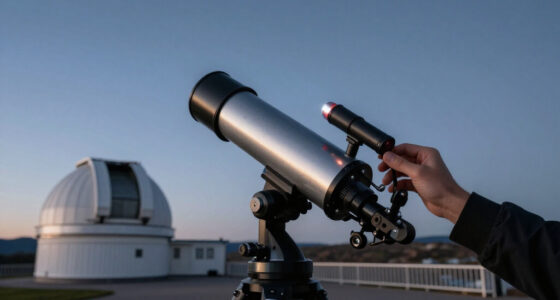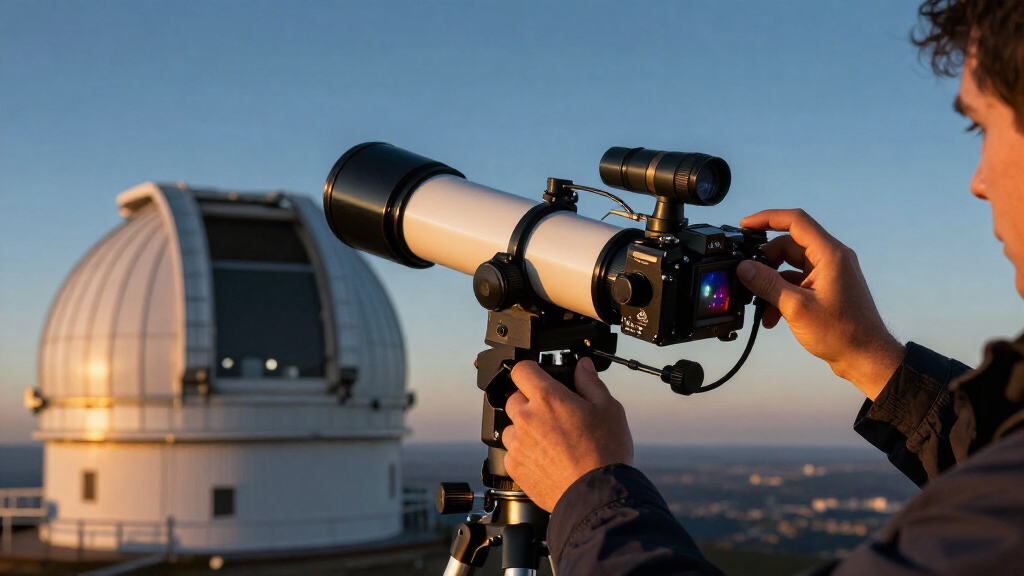
For planetary astrophotography, I’d start with the ZWO ASI662MC as the best overall pick: its IMX662 sensor and USB 3.0 connection suit high speed color capture of bright targets. The SVBONY SV305C Pro is a compelling alternative for buyers who want a similar sensor class, while the SVBONY SV705C offers a larger IMX585 sensor for broader framing. The tradeoffs are sensor size, capture workflow, and whether a camera is truly suited to planetary video rather than general deep sky imaging. Read on for how all 12 options compare and which one fits your setup.

Prime made for students and young adults
- Fast, free delivery for dorm and study essentials
- Prime Video and Amazon Music included
- Member-only deals
Key Takeaways
- The ZWO ASI662MC and SVBONY SV305C Pro stand out for planetary video because both use the IMX662 sensor; your choice comes down to the camera and software workflow that best fits your setup.
- The SVBONY SV705C and SV205 use larger, higher resolution sensors than several compact planetary models, which can help frame the Moon but can demand more from capture bandwidth and storage.
- The SVBONY SV105 and SV305C represent simpler, lower resolution paths for learning capture and processing, though they offer less room for cropping than newer high resolution choices.
- The SC311’s WiFi connection prioritizes convenient remote viewing, while USB 3.0 models are the more direct fit for recording high frame rate planetary video.
- The SV405CC and SV605CC are cooled cameras aimed at broader astrophotography needs; cooling adds complexity that planetary buyers may not need for short video captures.
| SVBONY SV105 1.25-Inch IMX307 CMOS Telescope Camera |  | Best for Beginners | Sensor: 1/2.8-inch IMX307 CMOS color | Maximum resolution: 1920 × 1080 | Maximum frame rate: 30 fps | VIEW LATEST PRICE | See Our Full Breakdown |
| SVBONY SV705C Telescope Camera with IMX585 Sensor and USB 3.0 |  | Best for Versatility | Sensor: Sony IMX585, 1/1.2-inch format | Maximum resolution: 3856 × 2180 | Image area: 11.2 × 6.3 mm | VIEW LATEST PRICE | See Our Full Breakdown |
| FIBONAX 4K 8MP Telescope Camera with 1.25-Inch USB Eyepiece |  | Best for 4K Capture | Sensor: 8 MP | Maximum video resolution: 4K | Mount: 1.25-inch barrel | VIEW LATEST PRICE | See Our Full Breakdown |
| SVBONY SV205 Telescope Camera 1.25″ 7.05MP IMX415 Astrophotography Camera |  | Best for 4K and 1080p Flexibility | Sensor: 7.05 MP IMX415 CMOS, 1/2.8-inch format | Maximum resolution: 4K | Frame rates: Up to 30 fps at 1080p; 15 fps at 4K | VIEW LATEST PRICE | See Our Full Breakdown |
| SVBONY SV305C Pro 2MP Telescope Camera with IMX662 Sensor |  | Best for High-Speed Planetary Imaging | Sensor: IMX662 CMOS | Effective still resolution: 2 MP | Video resolution: 1920 × 1080 | VIEW LATEST PRICE | See Our Full Breakdown |
| ZWO ASI662MC USB 3.0 Color Astronomy Camera |  | Best for Fast Color Planetary Capture | Sensor: Sony IMX662 CMOS | Resolution: 1920 × 1080 (2.1 MP) | Pixel size: 2.9 µm | VIEW LATEST PRICE | See Our Full Breakdown |
| SVBONY SC311 Upgraded WiFi Telescope Camera with IMX662 Sensor |  | Best for Wireless Telescope Sessions | Sensor: IMX662 | Resolution: 2.1 MP | Maximum exposure time: 30 seconds | VIEW LATEST PRICE | See Our Full Breakdown |
| Celestron NexImage 20 Solar System Imager, Lunar and Planetary Camera |  | Best for High-Resolution Solar System Imaging | Sensor: 20 MP AR2020 back-illuminated CMOS | Resolution: 5240 × 3840 | Pixel size: 1.4 microns | VIEW LATEST PRICE | See Our Full Breakdown |
| SVBONY SV405CC Cooled Astrophotography Camera with IMX294 Sensor |  | Best for Deep-Sky Imaging Alongside Planetary Work | Sensor: Back-illuminated 4/3-inch IMX294 color CMOS | Resolution: 4144 × 2822 (11.7 MP) | Pixel size: 4.63 μm | VIEW LATEST PRICE | See Our Full Breakdown |
| SVBONY SC715C Telescope Planetary Camera with IMX715 Sensor | 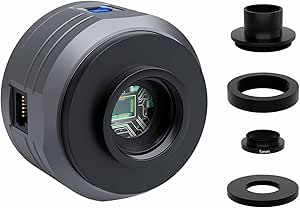 | Best for Compact 4K Planetary Capture | Sensor: Sony IMX715 | Resolution: 4K | Pixel size: 1.45 μm | VIEW LATEST PRICE | See Our Full Breakdown |
| SVBONY SV605CC Cooled Color Astrophotography Camera, 9MP IMX533 |  | Best for Cooled, Wide-Field Imaging | Sensor: IMX533, 1-inch, 9 MP | Resolution: 3008 × 3008 | Pixel size: 3.76 µm | VIEW LATEST PRICE | See Our Full Breakdown |
| SVBONY SV305C 2.1MP Color Astrophotography Camera |  | Best Entry-Level Planetary Pick | Sensor: IMX662 back-illuminated CMOS | Resolution: 2.1 MP | Pixel size: 2.9 µm | VIEW LATEST PRICE | See Our Full Breakdown |
| planetary astrophotography camera | Sensor | Resolution | Pixel size |
|---|---|---|---|
| SVBONY SV105 1.25-Inch IMX307 | 1/2.8-inch IMX307 CMOS color | — | — |
| SVBONY SV705C Telescope Camera | Sony IMX585, 1/1.2-inch format | — | — |
| FIBONAX 4K 8MP Telescope Camer | 8 MP | — | — |
| SVBONY SV205 Telescope Camera | 7.05 MP IMX415 CMOS, 1/2.8-inch format | — | — |
| SVBONY SV305C Pro 2MP Telescop | IMX662 CMOS | — | — |
| ZWO ASI662MC USB 3.0 Color Ast | Sony IMX662 CMOS | 1920 × 1080 (2.1 MP) | 2.9 µm |
| SVBONY SC311 Upgraded WiFi Tel | IMX662 | 2.1 MP | — |
| Celestron NexImage 20 Solar Sy | 20 MP AR2020 back-illuminated CMOS | 5240 × 3840 | 1.4 microns |
| SVBONY SV405CC Cooled Astropho | Back-illuminated 4/3-inch IMX294 color CMOS | 4144 × 2822 (11.7 MP) | 4.63 μm |
| SVBONY SC715C Telescope Planet | Sony IMX715 | 4K | 1.45 μm |
| SVBONY SV605CC Cooled Color As | IMX533, 1-inch, 9 MP | 3008 × 3008 | 3.76 µm |
| SVBONY SV305C 2.1MP Color Astr | IMX662 back-illuminated CMOS | 2.1 MP | 2.9 µm |
More Details on Our Top Picks
SVBONY SV105 1.25-Inch IMX307 CMOS Telescope Camera
For a first planetary camera, the SV105 keeps the setup familiar: its 1.25-inch mount fits many telescope focusers, and its IMX307 color sensor records up to 1080p at 30 fps. That frame rate is adequate for learning lunar and planetary capture, though the SV305C Pro reaches 107 fps and is better suited to collecting many frames of fast-moving targets. The SV105’s USB 2.0 connection and low-light compensation make it a simpler, more modest option for basic imaging, not a speed-focused upgrade. You will still need capture software on a compatible computer, and manual focus takes adjustment at the telescope. I’d choose it for straightforward entry into planetary video; buyers who already want high-speed capture or a newer sensor should compare the SV705C or SV305C Pro.
Pros:- 1.25-inch mount fits many standard telescope focusers
- Captures up to 1920 × 1080 at 30 fps
- M28.5×0.6 thread supports compatible telescope filters
- Supports Windows, Linux, Android, and macOS
Cons:- USB 2.0 is slower than the SV305C Pro’s USB 3.0 interface
- Manual focusing requires adjustment through the telescope
- Capture software is required, and iOS phones and tablets are unsupported
Best for: First-time planetary imagers with a telescope that accepts a 1.25-inch camera and a compatible computer for capture software
Not ideal for: Imagers who prioritize high frame rates, USB 3.0 transfer, or direct connection to an iPhone or iPad
- Sensor:1/2.8-inch IMX307 CMOS color
- Maximum resolution:1920 × 1080
- Maximum frame rate:30 fps
- Mount:1.25-inch fixed mount
- Filter thread:M28.5×0.6
- Connection:USB 2.0
- Focus:Manual
- Supported systems:Windows, Linux, Android, and macOS; not iOS
Our verdict“Choose the SV105 to learn planetary video capture with a standard 1.25-inch setup; choose the SV305C Pro if high-speed imaging is your priority.”
SVBONY SV705C Telescope Camera with IMX585 Sensor and USB 3.0
The SV705C is the broadest-use pick in this group: its back-illuminated IMX585 sensor, 3856 × 2180 resolution, and USB 3.0 interface suit planetary capture, EAA, lucky imaging, and entry-level deep-sky work. That reach sets it apart from the SV105, which is a simpler 1080p camera aimed at lunar and planetary video. The SV705C’s CS mount and included C-CS adapter also give it more lens-mount flexibility than the 1.25-inch camera designs here, though buyers should check their telescope or lens connection before choosing it. Its high stated peak quantum efficiency and dual-gain operation support sensitivity and dynamic range, but do not make it a dedicated long-exposure deep-sky camera. I’d pick it for one camera across several observing styles; planetary specialists may prefer the SV305C Pro’s higher listed frame rate.
Pros:- IMX585 sensor offers 3856 × 2180 maximum resolution
- USB 3.0 interface supports high-speed data transfer
- Dual-gain operation is designed to reduce read noise at high gain while retaining dynamic range
- CS mount with included C-CS adapter supports C-mount and CS-mount lenses
Cons:- Deep-sky capability is described as entry-level
- CS mounting may require an adapter for a telescope setup built around a 1.25-inch barrel
- The SV305C Pro lists a substantially higher maximum planetary frame rate
Best for: Observers who want one camera for planetary imaging, EAA, lucky imaging, and introductory deep-sky experiments
Not ideal for: Planetary specialists whose main priority is the highest listed frame rate, or buyers who need a 1.25-inch barrel mount
- Sensor:Sony IMX585, 1/1.2-inch format
- Maximum resolution:3856 × 2180
- Image area:11.2 × 6.3 mm
- Sensor diagonal:12.85 mm
- Peak quantum efficiency:About 90%
- Full well capacity:38 ke
- Interface:USB 3.0
- Mount and adapter:CS mount; C-CS adapter included
Our verdict“Pick the SV705C if you want a high-resolution camera for several observing styles and can work with its CS mount.”
FIBONAX 4K 8MP Telescope Camera with 1.25-Inch USB Eyepiece
FIBONAX’s defining draw is 4K video in a compact 1.25-inch camera, paired with high-frame-rate 1080p capture. The removable IR-cut filter adds flexibility for lunar and planetary imaging, while UVC viewing support works with compatible computer software. Compared with the SVBONY SV105’s 1080p, 30 fps ceiling, this model offers a higher stated video resolution; the available product data does not specify its maximum frame rate, so I would not assume it outpaces the SV305C Pro for planetary lucky imaging. Manual focus remains telescope-dependent, and the focuser needs enough travel to reach focus. This is a focused choice for buyers who want 4K recording and a standard 1.25-inch barrel, rather than a camera aimed at long-exposure deep-sky work.
Pros:- Supports video capture up to 4K
- 1.25-inch barrel fits many standard telescope focusers
- Removable IR-cut filter is included
- UVC viewing and optional ASCOM support cover compatible software setups
Cons:- Manual telescope focus and sufficient focuser travel are required
- Maximum frame rate is not specified in the provided product data
- Designed primarily for lunar and planetary imaging rather than long-exposure deep-sky photography
Best for: Planetary and lunar imagers seeking 4K video in a compact camera that fits many 1.25-inch focusers
Not ideal for: Deep-sky photographers seeking a long-exposure camera, or buyers who need a specified high frame rate or guaranteed focuser compatibility
- Sensor:8 MP
- Maximum video resolution:4K
- Mount:1.25-inch barrel
- Thread:M28.5×0.6
- Filter:Removable IR-cut filter
- Connection:USB
- Software support:UVC viewing; optional ASCOM support for Windows
- Body material:CNC aluminum
Our verdict“Choose FIBONAX for 4K lunar and planetary video in a 1.25-inch format, after checking your focuser travel and software compatibility.”
SVBONY SV205 Telescope Camera 1.25″ 7.05MP IMX415 Astrophotography Camera
The SV205 gives buyers two defined capture modes: up to 30 fps at 1080p or 15 fps at 4K, using a 7.05 MP IMX415 sensor. That makes the resolution and speed tradeoff clearer than on FIBONAX’s 4K camera, whose provided specifications do not state a frame rate. For planetary work, its 1080p mode is the faster choice; 4K preserves more image detail per frame but runs at a lower rate than the SV305C Pro’s 107 fps at 1080p. The 1.25-inch aluminum adapter suits many telescope setups, and dark light compensation is intended to help with dim scenes. This is a useful flexible recorder, though it lacks the SV705C’s broader stated sensor capabilities and is not compatible with iOS devices.
Pros:- 7.05 MP IMX415 sensor
- Captures up to 30 fps at 1080p or 15 fps at 4K
- 1.25-inch aluminum adapter fits many telescopes
- Dark light compensation is designed to aid low-light image clarity
Cons:- 1080p frame rate is lower than the SV305C Pro’s listed 107 fps
- Not compatible with iPhone or iPad
- Not water resistant and needs protection from moisture
Best for: Telescope owners who want clearly stated 1080p and 4K capture modes for lunar and planetary video
Not ideal for: Planetary imagers who need very high frame rates, iOS users, or buyers prioritizing water resistance
- Sensor:7.05 MP IMX415 CMOS, 1/2.8-inch format
- Maximum resolution:4K
- Frame rates:Up to 30 fps at 1080p; 15 fps at 4K
- Mount:1.25-inch aluminum adapter
- Connection:USB
- Focus:Manual
- Operating systems:Windows, Linux, and Android; macOS requires separate software download
- Item weight:9.6 ounces
Our verdict“Pick the SV205 for a 1.25-inch camera with specified 1080p and 4K modes; choose the SV305C Pro for faster planetary capture.”
SVBONY SV305C Pro 2MP Telescope Camera with IMX662 Sensor
Fast capture is the SV305C Pro’s clearest advantage: it records 1920 × 1080 video at up to 107 fps, giving planetary imagers more frames to select and stack during a session. Its IMX662 sensor, stated 0.7 e- readout noise, HDR support, and 128 MB buffer strengthen that role. Compared with the SV205, which reaches 30 fps at 1080p, the SV305C Pro is the more speed-oriented choice; the SV705C instead offers much higher maximum resolution and broader stated use across EAA and entry-level deep-sky work. USB 3.0 supports fast transfers, while the ST4 port adds guiding connectivity. The tradeoff is a computer-centered setup: it does not support iPad connection, and manual focus and moisture protection remain part of the user’s setup.
Pros:- Captures 1920 × 1080 video at up to 107 fps
- IMX662 sensor with stated 0.7 e- readout noise and HDR support
- 128 MB DDR buffer and USB 3.0 connection support sustained capture and transfer
- ST4 guiding interface supports compatible guiding setups
Cons:- Requires a computer and does not support iPad connection
- Maximum video resolution is 1920 × 1080
- Manual focus and protection from moisture are needed
Best for: Planetary imagers with a computer and USB 3.0 who want high-frame-rate 1080p capture and guiding connectivity
Not ideal for: iPad-based observers, buyers seeking 4K capture, or users without a computer available at the telescope
- Sensor:IMX662 CMOS
- Effective still resolution:2 MP
- Video resolution:1920 × 1080
- Maximum frame rate:107 fps
- Readout noise:0.7 e-
- Buffer:128 MB DDR
- Connection:USB 3.0, 5 Gbps
- Guiding interface:ST4
Our verdict“Choose the SV305C Pro when high-speed 1080p planetary capture matters more than 4K resolution or tablet-based use.”
ZWO ASI662MC USB 3.0 Color Astronomy Camera
The ZWO ASI662MC makes its case with speed: it captures up to 102.6 fps at full HD, giving planetary imagers more frames to work with when selecting sharp moments of seeing. Its 2.9 µm pixels and infrared sensitivity also suit color imaging where red and near-infrared detail matters. Compared with the SVBONY SC715C, this camera offers a much higher listed full-resolution frame rate, while the SC715C trades speed for 4K resolution and smaller pixels. The ASI662MC’s zero amp glow and low read noise support cleaner captures, but its 2.1 MP sensor provides less fine detail than higher-resolution options. It is a dedicated, lensless telescope camera, so buyers need a telescope and capture setup; it is a focused planetary pick rather than an all-in-one imaging device.
Pros:- Captures up to 102.6 fps at full 1920 × 1080 resolution.
- Infrared sensitivity supports red and near-infrared planetary imaging.
- Zero amp glow and low read noise help keep captures clean.
- Compact 1/2.8-inch sensor camera connects over USB 3.0.
Cons:- The 2.1 MP resolution records less fine detail than higher-resolution planetary cameras.
- Requires a telescope and external capture setup; it has no lens.
- Primarily suited to color planetary imaging rather than a broad range of standalone use.
Best for: Planetary imagers who prioritize high frame rates and infrared-sensitive color capture with a telescope and computer.
Not ideal for: Buyers seeking a standalone camera, a built-in lens, or higher-resolution 4K planetary captures.
- Sensor:Sony IMX662 CMOS
- Resolution:1920 × 1080 (2.1 MP)
- Pixel size:2.9 µm
- Sensor size:1/2.8 in
- Maximum frame rate:102.6 fps at full resolution
- Connectivity:USB 3.0
- Special features:Zero amp glow, infrared sensitivity, low read noise
- Weight:15.36 oz
Our verdict“Choose the ASI662MC if high-speed, infrared-sensitive color planetary capture matters more to you than 4K resolution or standalone operation.”
SVBONY SC311 Upgraded WiFi Telescope Camera with IMX662 Sensor
The SVBONY SC311 suits planetary observers who want to control and save captures from a phone instead of building a computer-centered setup. Its built-in WiFi hotspot, battery, and included storage make it more self-contained than the USB-connected ZWO ASI662MC, and its 1.25-inch mount fits many common telescope holders. The IMX662 sensor offers red and near-infrared sensitivity, though the listed 2.1 MP resolution and 30-second maximum exposure point to broader lunar and deep-sky use as well as planets. There are practical limits: photo mode has no live preview, so you must take an exposure to see the result, and fixed focus can constrain some setups. The roughly four-hour battery life also makes it less suitable for extended sessions than a camera powered through a computer.
Pros:- Built-in 2.4 GHz WiFi hotspot supports mobile control and image transfer.
- Includes a 2500 mAh battery and 32 GB TF card, with storage expandable to 256 GB.
- IMX662 sensor provides low-noise imaging with enhanced red and near-infrared sensitivity.
- Standard 1.25-inch mount fits many telescope eyepiece holders.
Cons:- Photo mode lacks live image preview, requiring an exposure before checking the result.
- Fixed focus may limit compatibility with some observing setups.
- Battery runtime is about four hours under continuous use.
Best for: Telescope owners who want mobile control, onboard storage, and planetary, lunar, or occasional deep-sky capture without a laptop.
Not ideal for: Planetary imagers who need continuous live preview, flexible focus, or long sessions without recharging.
- Sensor:IMX662
- Resolution:2.1 MP
- Maximum exposure time:30 seconds
- Battery:2500 mAh; approximately four hours of operation
- Included storage:32 GB TF card; expandable to 256 GB
- WiFi:Built-in 2.4 GHz hotspot
- Telescope interface:Standard 1.25-inch eyepiece mount
- Dimensions:2.95 × 3.4 × 5.9 in
Our verdict“Pick the SC311 if phone-based control and onboard power matter more than live preview or long, uninterrupted sessions.”
Celestron NexImage 20 Solar System Imager, Lunar and Planetary Camera
The Celestron NexImage 20 puts resolution ahead of the high frame rates favored by some planetary cameras: its 20 MP sensor records a 5240 × 3840 image, giving lunar imagers room to capture fine surface detail. Region of Interest cropping can focus capture on a smaller target area and raise frame rates, though the listed maximum of 90 fps depends on that mode rather than representing full-frame speed. Compared with the ZWO ASI662MC, the NexImage 20 has far more pixels but a lower listed maximum frame rate. Its 1.4-micron pixels, USB-C connection, and included iCap software make it a dedicated PC-based option; Windows compatibility for iCap narrows its appeal. It can also guide a mount, but solar capture requires a separate solar filter.
Pros:- 20 MP sensor records high-resolution Solar System images.
- Region of Interest cropping can increase frame rate and reduce file sizes.
- USB-C and a 1.25-inch nosepiece support a direct telescope connection.
- Can also serve as an autoguider when attached to a guidescope.
Cons:- The included iCap software requires a Windows PC.
- The 90 fps maximum is listed without specifying full-frame capture speed.
- Solar imaging requires a separate solar filter.
Best for: Lunar and planetary imagers using a Windows PC who want high-resolution captures and Region of Interest controls.
Not ideal for: Buyers who need a standalone camera, broad operating-system support, or solar imaging without purchasing a separate filter.
- Sensor:20 MP AR2020 back-illuminated CMOS
- Resolution:5240 × 3840
- Pixel size:1.4 microns
- Sensor dimensions:7.3 × 5.4 mm
- Maximum frame rate:90 fps
- Interface:USB-C; USB-A to USB-C cable included
- Nosepiece:1.25-inch
- Capture software:iCap; Windows PC required
- Image formats:JPG, PNG, BMP
Our verdict“Choose the NexImage 20 for high-resolution lunar and planetary capture if you have a Windows PC and can work with Region of Interest framing.”
SVBONY SV405CC Cooled Astrophotography Camera with IMX294 Sensor
The SVBONY SV405CC is the outlier in this planetary roundup: its cooled 11.7 MP sensor and 4/3-inch format are built more for long-exposure deep-sky imaging than fast planetary video. Two-stage TEC cooling, HCG mode, and 14-bit output help manage sensor noise and preserve tonal range during longer captures. That makes it a more versatile choice for someone splitting time between planets and faint deep-sky targets, while the ZWO ASI662MC is the stronger fit for high-speed planetary capture, listing 102.6 fps at full resolution versus the SV405CC’s 19 fps in RAW8. The SV405CC is also heavier and its cooling performance varies with ambient temperature. Choose it for cooled long exposures; skip it if your main goal is freezing planetary seeing at high frame rates.
Pros:- Two-stage TEC cooling reduces sensor temperature by up to 30°C below ambient.
- HCG mode helps lower read noise while retaining dynamic range.
- Back-illuminated 11.7 MP, 4/3-inch sensor supports deep-sky imaging.
- USB 3.0, a 256 MB buffer, and broad operating-system support offer flexible capture options.
Cons:- Full-resolution frame rates are much lower than dedicated planetary options such as the ZWO ASI662MC.
- Cooling capacity varies with ambient temperature.
- At 3.08 pounds, it is relatively heavy for a planetary camera setup.
Best for: Imagers who want one cooled color camera for deep-sky long exposures and occasional planetary captures.
Not ideal for: Planetary specialists who prioritize high frame rates, a light camera body, or a compact telescope setup.
- Sensor:Back-illuminated 4/3-inch IMX294 color CMOS
- Resolution:4144 × 2822 (11.7 MP)
- Pixel size:4.63 μm
- Full well capacity:63 ke−
- ADC:14-bit
- Cooling:Two-stage TEC; up to 30°C below ambient
- Maximum frame rate:19 fps RAW8; 16 fps RAW16 at full resolution
- Interface and buffer:USB 3.0, 5 Gbps; 256 MB DDRIII
- Weight:3.08 pounds
Our verdict“Choose the SV405CC if cooled deep-sky imaging is your priority and planetary work is a secondary use.”
SVBONY SC715C Telescope Planetary Camera with IMX715 Sensor
The SVBONY SC715C brings a compact, 4K-oriented setup to planetary imaging, with 1.45 μm pixels, USB 3.0, and a 512 MB cache for video capture. Its small pixels and higher resolution favor recording fine detail, while the ZWO ASI662MC is the faster option when capturing many frames at full resolution matters more: the SC715C lists 45.5 fps at full resolution versus the ASI662MC’s 102.6 fps. An ST4 autoguider port adds utility for mount tracking, though it does not change the camera’s primary role as a planetary imager. The aluminum body weighs just 147 g, making it easy to carry between setups. Buyers should plan to focus through the telescope, download dedicated capture software, and use a computer; smartphone operation is unsupported.
Pros:- IMX715 sensor offers 4K resolution with 1.45 μm pixels.
- 512 MB DDR3 cache supports video recording.
- Lightweight 147 g aluminum body is easy to transport.
- ST4 port supports autoguiding on compatible equatorial mounts.
Cons:- Full-resolution capture tops out at 45.5 fps, below the ZWO ASI662MC’s listed rate.
- No built-in focus adjustment; focusing depends on the telescope.
- Requires dedicated capture software and does not support smartphones.
Best for: Planetary imagers who want a lightweight 4K camera with small pixels and an ST4 port for compatible mount setups.
Not ideal for: Buyers who need smartphone control, built-in focus adjustment, or the highest listed full-resolution frame rate.
- Sensor:Sony IMX715
- Resolution:4K
- Pixel size:1.45 μm
- Full-resolution frame rate:45.5 fps
- Cache:512 MB DDR3
- Interface:USB 3.0
- Autoguider port:ST4
- Weight:147 g (5.2 oz)
- Dimensions:1.44 × 2.46 × 2.46 in
Our verdict“Pick the SC715C if you want a portable 4K planetary camera with an ST4 port and can accept a lower frame rate than the ZWO ASI662MC.”
SVBONY SV605CC Cooled Color Astrophotography Camera, 9MP IMX533
The SV605CC is the specialist in this pair: its 9 MP, square IMX533 sensor and active cooling suit long exposures and broader astronomy work better than the planetary-focused SV305C. Cooling the sensor up to 30 °C below ambient can reduce thermal noise during extended captures, while the 3.76 µm pixels and stated 80% quantum efficiency support detailed, light-sensitive imaging. Those strengths can help with lunar or planetary sessions too, but this is a larger, heavier setup than a typical compact planetary camera, and its square sensor is more area than many high-speed planetary workflows need. USB 3.0 and Wi-Fi offer flexible connections, though wall-mount design and remote operation make it less convenient to move between scopes. Choose it for cooled versatility; skip it if planetary capture is your only priority.
Pros:- Active cooling lowers sensor temperature by up to 30 °C below ambient to help control thermal noise
- 1-inch, 9 MP square IMX533 sensor captures a broad, detailed image
- USB 3.0 and Wi-Fi provide two data-transfer options
- Stated 80% quantum efficiency supports light capture
Cons:- At 1.6 kg, it is less convenient to move between telescopes than a compact planetary camera
- Wall-mount design and remote control make setup less self-contained
- Cooling and sensor area may be unnecessary for buyers focused only on planetary video
Best for: Astrophotographers who want active cooling and a larger square sensor for both planetary sessions and longer-exposure astronomy
Not ideal for: Planetary-only imagers who prioritize a lightweight, telescope-mounted camera and do not need cooling or a 9 MP sensor
- Sensor:IMX533, 1-inch, 9 MP
- Resolution:3008 × 3008
- Pixel size:3.76 µm
- Quantum efficiency:80%
- Cooling:Double-layer semiconductor refrigeration, up to 30 °C below ambient
- Connectivity:USB 3.0 and Wi-Fi
- Weight:1.6 kg
- Form factor:Compact aluminum enclosure
Our verdict“Choose the SV605CC if you want cooling and a larger sensor for mixed astronomy imaging; choose the SV305C for a more focused planetary setup.”
SVBONY SV305C 2.1MP Color Astrophotography Camera
For planetary and lunar capture, the SV305C makes a more direct fit than the cooled SV605CC: its 2.1 MP IMX662 sensor, high-speed mode, and region-of-interest controls are aimed at recording short bursts of detail rather than managing a larger cooled imaging system. The 128 MB buffer can help preserve frames if USB transfer is interrupted, and 2×2 binning offers a way to trade resolution for sensitivity. Its back-illuminated sensor is described as having low readout noise and improved red and near-infrared sensitivity. The tradeoff is a USB 2.0 interface and entry-level positioning, which limit its appeal for buyers seeking a more versatile, higher-resolution camera. The built-in UV/IR cut filter is also not removable, so filter choices are less flexible.
Pros:- High-speed planetary mode and ROI controls support focused capture of bright targets
- 128 MB image buffer helps retain frames during USB interruptions
- 2×2 binning provides a sensitivity option when full resolution is not needed
- Includes a 1.25-inch telescope interface and CS-C adapter ring
Cons:- USB 2.0 offers less transfer bandwidth than USB 3.0 cameras such as the SV605CC
- Built-in UV/IR cut filter is not removable, limiting filter flexibility
- 2.1 MP resolution is modest for buyers who want a larger field or heavier cropping
Best for: New telescope owners who want a dedicated color camera for planetary and lunar video with ROI controls and a standard 1.25-inch interface
Not ideal for: Experienced imagers who need USB 3.0 throughput, a removable UV/IR filter, or a higher-resolution sensor
- Sensor:IMX662 back-illuminated CMOS
- Resolution:2.1 MP
- Pixel size:2.9 µm
- Full-well capacity:38 ke⁻
- Image buffer:128 MB DDRIII
- Interface:USB 2.0
- Telescope interface:1.25-inch universal astronomical interface
- Filter:Built-in UV/IR cut filter
Our verdict“Pick the SV305C for straightforward planetary and lunar capture with useful beginner controls, provided USB 2.0 and its fixed filter suit your setup.”
How We Picked
I ranked these cameras by how well their stated sensor and connection fit the demands of planetary imaging: recording short, high speed video of bright, small targets so the best frames can be selected and stacked. Sensor generation and resolution matter, but I also weighed connection type, likely capture workflow, ease of setup, and whether a camera’s design suggests a broader deep sky role instead of a focused planetary one. A larger sensor can be useful for lunar framing, yet it does not automatically make a camera better for planets.
The top positions go to models with a clear planetary fit and a USB 3.0 capture path, while cameras with wireless viewing, less detail in the product name about capture performance, or a cooled deep sky design rank lower for this specific use. I treated specialized software support and real frame rate figures cautiously where the supplied product details did not establish them. These rankings compare the listed specifications and intended roles; buyers should confirm compatibility with their telescope, computer, and capture software before choosing.
Factors to Consider When Choosing Planetary Astrophotography Cameras
Camera choice is only one part of planetary imaging. The telescope, tracking, capture settings, and processing workflow affect the result just as much, so I’d match the camera to the way you plan to record and use the footage.
Match the sensor to the target
Planets occupy a small area of the sky, so a compact sensor can be enough if your telescope already gives the magnification you want. The Moon is a different case: a larger sensor makes it easier to capture a wider region without moving the telescope between clips. High resolution can preserve fine lunar detail, but only if your optics, focus, atmospheric conditions, and capture settings can make use of it. A common mistake is buying the highest megapixel count as a shortcut to sharper planets. I’d choose framing needs first, then compare sensor resolution within that role.
Check capture speed and the whole data path
Planetary imagers record video so software can select the sharpest moments from a turbulent view. A fast camera connection helps, but actual frame rate also depends on resolution, exposure, computer performance, and storage speed. Ask whether the camera can deliver the frame rate you need at the image size you intend to capture; a headline USB connection alone does not answer that. High resolution clips can fill drives quickly and strain older computers. If you already own a capture laptop, check its ports and available storage before moving to a larger sensor.
Treat color and monochrome as workflow choices
A one-shot color camera records color information in a single capture, which keeps the process simpler for someone learning to focus, record, and stack. Monochrome imaging can support more control through color filters, but it adds filter changes and separate capture runs. That extra work can be worthwhile for a dedicated setup, though planetary conditions may change between exposures. Buyers sometimes overlook the time needed to combine filter recordings. If quick setup and fewer accessories matter most, a color model is the more practical starting point.
Prioritize software and connection compatibility
A camera that fits the telescope but lacks a comfortable capture workflow can become frustrating quickly. Before buying, verify that its driver and capture software support your operating system and that the included cable reaches your computer without awkward routing. USB cameras generally fit a direct recording workflow; WiFi can make remote viewing convenient, but wireless operation is not automatically the best route for high speed video. Also check whether the software can save formats supported by your stacking tools. This compatibility check can matter more day to day than a small difference in sensor resolution.
Pay for cooling only when your imaging plan needs it
Cooling reduces sensor heat and can help with long exposures, where thermal noise has time to build. Planetary video usually uses short exposures on bright targets, so cooling often adds size, power needs, and setup steps without addressing the main sources of lost detail. Buyers aiming to photograph galaxies or nebulae as well as planets may find a cooled camera more versatile across their projects. The tradeoff is that a general purpose deep sky camera may not be the simplest route to planetary capture. Decide whether long exposure imaging is a real part of your plan before paying for cooling features.
Frequently Asked Questions
Is a higher megapixel camera always better for planets?
No. Planetary detail depends on focus, telescope optics, atmospheric steadiness, exposure, and the number of usable video frames, not just pixel count. Higher resolution can help with lunar coverage or give you more cropping room, but it may also increase file sizes and reduce capture speed at full resolution. For small planets, a well matched sensor and fast capture workflow can be more useful than the largest pixel array. Match resolution to your target and computer.
Should I choose the ZWO ASI662MC or the SVBONY SV305C Pro?
Both are listed with the IMX662 sensor, so the sensor name alone does not settle the choice. Compare the camera’s software support, driver availability, connection details, included accessories, and fit with your existing capture setup. Those factors shape how smoothly you can record and process video. If you are starting fresh, favor the option with the clearest compatibility information for your computer and preferred capture software. Confirm the exact model specifications before ordering.
Can a planetary camera also image the Moon?
Yes, but the sensor size affects how much of the Moon fits in a single frame. A compact planetary camera may capture a detailed close view, while a larger sensor can cover more area and reduce the number of clips needed for a mosaic. The telescope’s focal length also changes the framing, so check the field of view for your actual optical setup. For full disk lunar images, buyers should prioritize framing and stitching workflow alongside planetary capture features.
Do I need a cooled camera for planetary astrophotography?
Usually not for short planetary video clips, where exposures are brief and the target is bright. Cooling is more relevant to long exposure imaging of faint objects, where sensor heat can contribute noise over time. A cooled model can make sense if you also plan to photograph deep sky targets, but it adds power and setup requirements. For a dedicated planetary rig, I would prioritize capture speed, compatibility, and practical sensor framing first.
Is a WiFi camera a good choice for recording planetary video?
WiFi can be convenient for remote viewing and adjusting a camera without a direct cable connection. For high speed planetary recording, however, wireless throughput and connection stability are important questions, and the product’s stated WiFi feature alone does not establish capture performance. A USB 3.0 model is generally the more straightforward choice for a computer based video workflow. Choose WiFi when remote control is central to your setup, and verify recording modes before relying on it for detailed capture.
Conclusion
For most buyers focused on planets, I’d choose the ZWO ASI662MC as best overall, with the SVBONY SV305C Pro as the value minded alternative for a similar IMX662 sensor class. Beginners who want a straightforward entry point can look at the SVBONY SV105, accepting its more modest resolution. For a larger sensor and broader framing, the SVBONY SV705C is the premium leaning pick among the planetary focused options here. Choose the SC311 for wireless convenience, or the cooled SV405CC and SV605CC if deep sky imaging is also part of your plan. Your best match depends on the targets you shoot and the capture workflow your computer can support.