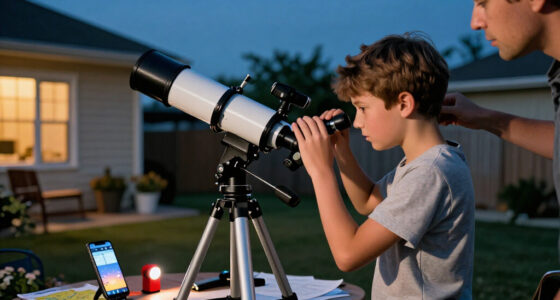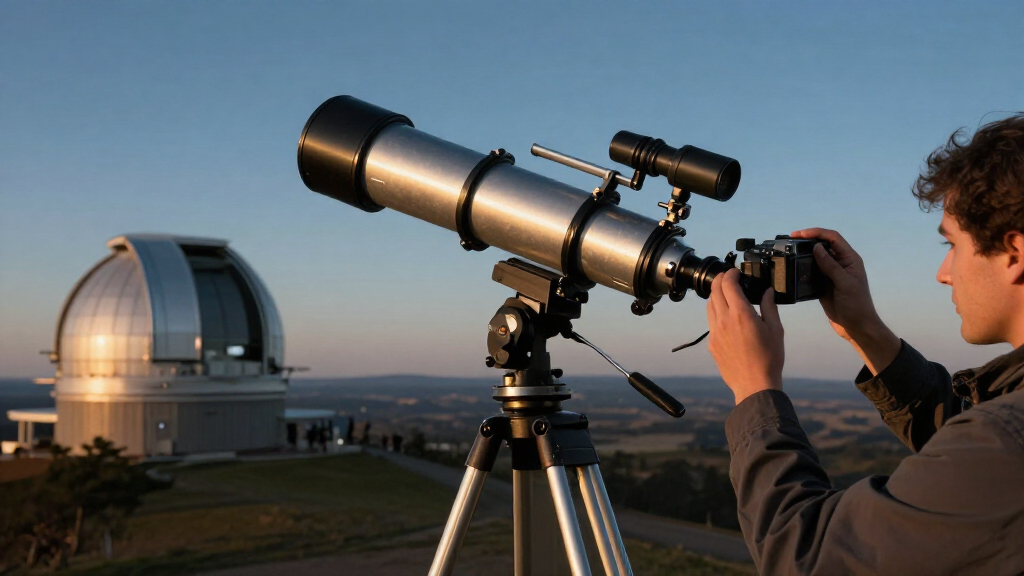
For most buyers seeking astrophotography telescopes, I’d start with the Celestron NexStar 6SE: its computerized tracking and versatile optical design offer a useful bridge between visual observing and imaging. The ZWO Seestar S30 Pro is a simpler all-in-one choice, while the SVBONY SV550 122mm suits experienced imagers who want a dedicated apochromatic refractor. The main tradeoff is between convenient smart imaging and a more flexible setup that needs extra camera, mount, and focusing decisions. Aperture, tracking, portability, and imaging goals all shape which telescope makes sense. Read on for the full breakdown of all 14 options and how I’d match them to different buyers.

Prime made for students and young adults
- Fast, free delivery for dorm and study essentials
- Prime Video and Amazon Music included
- Member-only deals
Key Takeaways
- The NexStar 6SE leads as a hybrid pick: it pairs computerized object finding and tracking with an optical design that can serve visual observing as well as imaging, though serious long-exposure work may call for additional equipment.
- Smart telescopes reduce setup friction, not every limitation: the Seestar S30 Pro, DWARF 3, and DWARF Mini combine imaging hardware and app-led operation, but offer less component-level flexibility than a dedicated optical tube and mount.
- Dedicated refractors target a different stage of the hobby: the SVBONY SV550 122mm and SV503 102mm are optical tubes for buyers prepared to build around a camera, mount, and guiding or focusing needs.
- Aperture alone does not determine the best imaging scope: the 8SE and 150mm tabletop Dobsonian gather more light than compact options, but mount stability, tracking, and the target being photographed matter just as much.
- Entry-level visual scopes are not interchangeable with imaging systems: the MEEZAA 90mm and 150EQ, plus the StarSense 114AZ and 130AZ, make observing more accessible, but their included mounts and accessories may constrain deep-sky photography.
| Celestron NexStar 6SE Computerized Schmidt-Cassegrain Telescope | 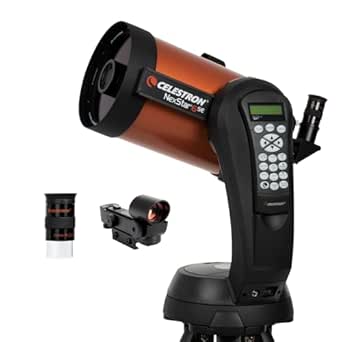 | Best for GoTo Visual Observing | Optical design: Schmidt-Cassegrain | Aperture: 6 inches | Focal length: 1500 mm | VIEW LATEST PRICE | See Our Full Breakdown |
| DWARF 3 Smart Telescope with App-Controlled Astrophotography Camera |  | Best All-in-One Smart Imaging Pick | Model: DWARF 3 | Mount: Altazimuth | Objective lens diameter: 35 mm | VIEW LATEST PRICE | See Our Full Breakdown |
| MEEZAA 90mm Aperture, 800mm Refractor Telescope with Tripod, Phone Adapter, and Carry Bag | 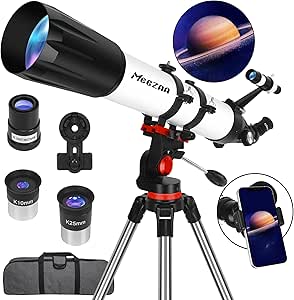 | Best Entry-Level Phone-Adapter Refractor | Optical type: Refractor telescope | Aperture: 90 mm | Focal length: 800 mm | VIEW LATEST PRICE | See Our Full Breakdown |
| Celestron StarSense Explorer DX 130AZ Smartphone-Guided Newtonian Telescope |  | Best for Learning the Night Sky | Optical design: Newtonian reflector | Aperture: 130 mm | Focal length: 650 mm | VIEW LATEST PRICE | See Our Full Breakdown |
| DWARF Mini Smart Telescope |  | Best Compact Travel Imager | Weight: 1.85 lb (840 g) | Objective lens diameter: 30 mm | Focal length: 150 mm | VIEW LATEST PRICE | See Our Full Breakdown |
| Celestron StarSense Explorer LT 114AZ Smartphone-Guided Newtonian Telescope |  | Best for App-Guided Beginners | Optical design: Newtonian reflector | Aperture: 114 mm (4.5 in) | Focal length: 1000 mm | VIEW LATEST PRICE | See Our Full Breakdown |
| Celestron StarSense Explorer 150mm App-Enabled Tabletop Dobsonian Telescope | 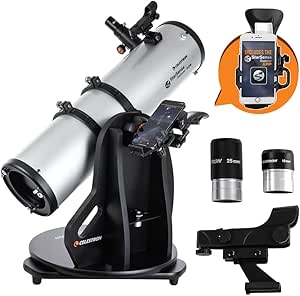 | Best Value for Visual Deep-Sky Viewing | Optical design: Newtonian reflector | Aperture: 150 mm (6 in) | Focal length: 650 mm | VIEW LATEST PRICE | See Our Full Breakdown |
| Celestron NexStar 127SLT Computerized GoTo Maksutov-Cassegrain Telescope |  | Best for GoTo Planetary Observing | Optical design: Maksutov-Cassegrain | Aperture: 127 mm | Focal length: 1500 mm | VIEW LATEST PRICE | See Our Full Breakdown |
| FASHIONARI 80mm Refractor Smart Telescope with 4K Camera and Autofocus |  | Best All-in-One Camera Package | Telescope type: Refractor | Objective aperture: 80 mm | Focal length: 300 mm | VIEW LATEST PRICE | See Our Full Breakdown |
| SVBONY SV550 122mm f/7 Triplet APO Refractor Telescope |  | Best Dedicated Imaging OTA | Aperture: 122 mm | Optical design: FPL-51 triplet apochromat with ED glass | Focal length: 854 mm | VIEW LATEST PRICE | See Our Full Breakdown |
| ZWO Seestar S30 Pro Smart Telescope |  | Best for Easy, App-Controlled Astrophotography | Mount: Alt-azimuth; supports equatorial mode | Focal length: 160 mm | Field of view: 4.6° | VIEW LATEST PRICE | See Our Full Breakdown |
| Celestron NexStar 8SE Computerized Schmidt-Cassegrain Telescope |  | Best for Large-Aperture Visual Observing | Aperture: 8 inches | Optical design: Schmidt-Cassegrain | Mount: Computerized GoTo | VIEW LATEST PRICE | See Our Full Breakdown |
| MEEZAA 150EQ Newtonian Reflector Telescope with Equatorial Mount |  | Best Beginner Kit for Manual Camera Experiments | Telescope type: Newtonian reflector | Aperture: 150 mm | Focal length: 650 mm | VIEW LATEST PRICE | See Our Full Breakdown |
| SVBONY SV503 102mm f/7 ED Refractor Telescope |  | Best for Camera-Ready Refractor Imaging | Aperture: 102 mm | Focal length: 714 mm | Focal ratio: f/7 | VIEW LATEST PRICE | See Our Full Breakdown |
| astrophotography telescope | Focal length | Mount | Aperture | Optical design |
|---|---|---|---|---|
| Celestron NexStar 6SE Computer | 1500 mm | Computerized altitude-azimuth single fork arm | 6 inches | Schmidt-Cassegrain |
| DWARF 3 Smart Telescope with A | — | Altazimuth | — | — |
| MEEZAA 90mm Aperture | 800 mm | Altazimuth | 90 mm | — |
| Celestron StarSense Explorer D | 650 mm | Manual altazimuth with dual-axis slow-motion controls | 130 mm | Newtonian reflector |
| DWARF Mini Smart Telescope | 150 mm | — | — | — |
| Celestron StarSense Explorer L | 1000 mm | Manual altazimuth | 114 mm (4.5 in) | Newtonian reflector |
| Celestron StarSense Explorer 1 | 650 mm | Manual altazimuth tabletop Dobsonian base | 150 mm (6 in) | Newtonian reflector |
| Celestron NexStar 127SLT Compu | 1500 mm | Computerized altitude-azimuth, single fork arm | 127 mm | Maksutov-Cassegrain |
| FASHIONARI 80mm Refractor Smar | 300 mm | Tripod mount | — | — |
| SVBONY SV550 122mm f/7 Triplet | 854 mm | — | 122 mm | FPL-51 triplet apochromat with ED glass |
| ZWO Seestar S30 Pro Smart Tele | 160 mm | Alt-azimuth; supports equatorial mode | — | — |
| Celestron NexStar 8SE Computer | — | Computerized GoTo | 8 inches | Schmidt-Cassegrain |
| MEEZAA 150EQ Newtonian Reflect | 650 mm | German equatorial | 150 mm | — |
| SVBONY SV503 102mm f/7 ED Refr | 714 mm | — | 102 mm | — |
More Details on Our Top Picks
Celestron NexStar 6SE Computerized Schmidt-Cassegrain Telescope
The NexStar 6SE is the strongest choice here for observers who want a telescope to find and track targets, rather than a smart camera that handles imaging through an app. Its 6-inch aperture and 1500 mm focal length suit lunar and planetary views, while the computerized mount can locate objects from a large database and keep them centered. That tracking can help when capturing short exposures, but the altazimuth mount is not an ideal deep-sky imaging platform for long exposures. Compared with the app-guided, manually tracked StarSense Explorer DX 130AZ, the 6SE automates more of the target-following work, but it costs the user portability and requires a separate power source. Choose it for visual observing with occasional imaging experiments, not for a turnkey astrophotography workflow.
Pros:- Computerized GoTo mount locates and tracks targets
- 6-inch aperture supports observations of lunar, planetary, and deep-sky objects
- SkyAlign offers a simplified alignment method
- Compatible with a range of Celestron accessories
Cons:- Altazimuth mount is a limitation for long-exposure deep-sky imaging
- Power source is not included
- Manual focus requires hands-on adjustment
Best for: Observers who prioritize computerized target finding and tracking, with lunar and planetary imaging as a secondary goal
Not ideal for: Astrophotographers focused on long-exposure deep-sky images or buyers who want a complete setup without separately sourcing power
- Optical design:Schmidt-Cassegrain
- Aperture:6 inches
- Focal length:1500 mm
- Mount:Computerized altitude-azimuth single fork arm
- Field of view:1.7 degrees
- GoTo database:40,000+ objects
- Alignment technology:SkyAlign
- Power source:8 AA batteries, 12 V AC adapter, or Celestron PowerTank; not included
Our verdict“Choose the NexStar 6SE if automated locating and tracking matter more to you than a dedicated long-exposure imaging setup.”
DWARF 3 Smart Telescope with App-Controlled Astrophotography Camera
The DWARF 3 is built around app-controlled capture, so it makes more sense for straightforward astrophotography than a traditional visual telescope such as the Celestron NexStar 6SE. Its autofocus, Auto GOTO, and 4K tracking reduce the need to manually locate and follow targets, while app-based processing lets buyers work without a dedicated computer. The dual imaging system also gives it uses beyond the night sky, including wildlife and landscape photography. That convenience comes with a different kind of compromise: its 35 mm objective is much smaller than the apertures of the 6SE or StarSense Explorer DX 130AZ, limiting light gathering. It is also dependent on a compatible phone or computer, and the listed weight conflicts between 3 lb and 2.28 kg. I’d pick it for automation and portability, not maximum optical reach.
Pros:- Autofocus and Auto GOTO simplify image capture
- 4K tracking supports automated following of celestial and moving subjects
- App-based processing avoids the need for a separate computer workflow
- Dual imaging system supports astronomy, wildlife, and landscape use
Cons:- 35 mm objective gathers less light than the 130 mm StarSense Explorer DX 130AZ or 6-inch NexStar 6SE
- Requires a compatible smartphone, laptop, or computer
- Product listing gives conflicting weight figures
Best for: Beginners and casual imagers who want automated target acquisition, tracking, and app-based image processing in a portable system
Not ideal for: Buyers seeking a large-aperture telescope for visual observing or users who do not want to operate equipment through a compatible device
- Model:DWARF 3
- Mount:Altazimuth
- Objective lens diameter:35 mm
- Focus type:Autofocus
- Features:4K tracking, Auto GOTO, EQ mode
- Compatible devices:Smartphone, laptop, personal computer
- Battery:1 lithium-ion battery, included
- Included accessories:Carrying bag, magnetic filters, filter pouch, wipe cloth, USB-C cable
Our verdict“Choose the DWARF 3 if you want app-led automated imaging and accept a smaller objective than conventional telescopes provide.”
MEEZAA 90mm Aperture, 800mm Refractor Telescope with Tripod, Phone Adapter, and Carry Bag
The MEEZAA 90mm refractor is a low-complexity starting point for buyers who want to attach a phone to a conventional telescope, rather than rely on a dedicated smart-imaging system like the DWARF 3. Its 90 mm aperture, coated optics, and included 10 mm and 25 mm eyepieces make it usable for visual observing as well as basic phone captures of bright targets such as the Moon. The phone adapter, adjustable tripod, and carry bag mean the core accessories are supplied, but this is still a manually operated setup: the user must focus, locate targets, and keep them in frame. Compared with the StarSense Explorer DX 130AZ, it has a smaller aperture and lacks smartphone sky guidance, so target finding and dimmer-object viewing are less supported. I’d treat its stated magnification range as an accessory-based range, not a promise of detailed astrophotography.
Pros:- 90 mm aperture offers a useful entry point for visual observing and bright-target phone captures
- Fully multi-coated optics support light transmission
- Includes two eyepieces and a 3× Barlow lens
- Phone adapter, adjustable tripod, and carry bag are included
Cons:- Manual mount and focus make tracking and framing targets the user’s responsibility
- No automated sky guidance or tracking for astrophotography
- Phone captures are best suited to bright targets rather than demanding deep-sky imaging
Best for: First-time observers who want a portable refractor with a phone adapter for basic lunar photography and visual use
Not ideal for: Imagers seeking automated tracking, guided target finding, or strong performance on faint deep-sky subjects
- Optical type:Refractor telescope
- Aperture:90 mm
- Focal length:800 mm
- Focal ratio:f/8.88
- Mount:Altazimuth
- Focus type:Manual
- Eyepieces:10 mm and 25 mm
- Included accessories:3× Barlow lens, phone adapter, carry bag, adjustable tripod, zenith mirror, finder scope, and accessory tray
Our verdict“Choose this MEEZAA refractor for budget-conscious lunar viewing and simple phone experiments, not automated or long-exposure imaging.”
Celestron StarSense Explorer DX 130AZ Smartphone-Guided Newtonian Telescope
The StarSense Explorer DX 130AZ makes target finding its main advantage: a compatible phone and StarSense app guide the user across the sky, while the 130 mm Newtonian aperture gives it more light-gathering capacity than the MEEZAA 90 mm refractor. That combination suits beginners who want to learn where objects are before attempting phone-based captures. Its manual altazimuth mount includes dual-axis slow-motion controls, which help with fine adjustments, but the observer still has to keep targets centered. This is a meaningful difference from the NexStar 6SE, which tracks automatically, and the DWARF 3, which is designed to automate imaging. The DX 130AZ is primarily a visual telescope with smartphone guidance, not a motorized astrophotography rig. Buyers also need a compatible phone; without it, the signature locating feature is unavailable.
Pros:- StarSense app guidance helps beginners locate celestial targets
- 130 mm aperture gathers more light than the MEEZAA 90 mm refractor
- Dual-axis slow-motion controls support finer manual tracking
- Includes two eyepieces, a red dot finderscope, and a full-height tripod
Cons:- Manual mount requires the user to track targets continuously
- StarSense guidance depends on a compatible smartphone
- Not a motorized tracking system for long-exposure astrophotography
Best for: New observers with a compatible smartphone who want guided target finding, a substantial aperture, and a manual learning experience
Not ideal for: Astrophotographers who need automatic tracking or buyers without a compatible Android or iPhone device
- Optical design:Newtonian reflector
- Aperture:130 mm
- Focal length:650 mm
- Mount:Manual altazimuth with dual-axis slow-motion controls
- Eyepieces:10 mm and 25 mm
- Field of view:2 degrees
- Smartphone compatibility:Android 12 and later; iOS 18 and later; iPhone XR and newer
- Warranty:2-year US warranty
Our verdict“Choose the DX 130AZ if learning the sky and viewing a broad range of targets matter more than automated tracking.”
DWARF Mini Smart Telescope
At 1.85 lb, the DWARF Mini is the most travel-focused imaging option in this group. Its smartphone control, interactive sky atlas, and automated tracking make it more self-contained for casual sky imaging than the manual MEEZAA 90 mm refractor, which relies on the user to find and follow objects. The Mini also supports exposures up to 90 seconds, plus light-pollution filtering and cloud processing, features aimed at making app-based capture more approachable. Its 30 mm objective and 150 mm focal length are compact, but they limit light gathering and reach compared with the 130 mm StarSense Explorer DX 130AZ or the 6-inch NexStar 6SE. The listing also notes that manual-and-auto focus may require adjustment, so automation is not entirely hands-off. I’d choose it for portability and convenience, not for large-aperture observing.
Pros:- Lightweight 1.85 lb design is easy to pack
- Interactive sky atlas and app control simplify target selection
- Automated tracking and 360° rotation support flexible framing
- Offers exposures up to 90 seconds with built-in light-pollution filtering and cloud processing
Cons:- 30 mm objective gathers far less light than conventional telescopes in this roundup
- Requires a smartphone for app-based operation
- Manual-and-auto focus may need user adjustment
Best for: Travelers and casual smartphone imagers who want a light, battery-powered device with automated tracking and app-based sky guidance
Not ideal for: Buyers prioritizing visual views through a large aperture or those seeking high-resolution, long-exposure deep-sky imaging
- Weight:1.85 lb (840 g)
- Objective lens diameter:30 mm
- Focal length:150 mm
- Sensor:Sony IMX662, 1/2.8-inch, 2.9 μm pixels
- Field of view:2.45 degrees
- Mount modes:Altazimuth and equatorial
- Maximum single-frame exposure:90 seconds
- Power source:Battery powered
Our verdict“Choose the DWARF Mini for portable, app-driven sky imaging, but pick a larger-aperture telescope if reach and visual detail come first.”
Celestron StarSense Explorer LT 114AZ Smartphone-Guided Newtonian Telescope
I’d choose the StarSense Explorer LT 114AZ for beginners who want help finding targets before investing in a computerized mount. Its smartphone sky recognition points users toward celestial objects, while the 114 mm reflector can show lunar and planetary detail as well as brighter deep-sky targets. Unlike the StarSense Explorer 150mm tabletop Dobsonian, this model uses a tripod and has a longer 1000 mm focal length, a useful fit for tighter views of the Moon and planets. That reach comes with a narrower practical observing style, and the manual altazimuth mount still needs hands-on movement and tracking. It is an observing telescope rather than an astrophotography rig: the included phone dock supports guidance, but the product data does not describe a tracking mount or dedicated imaging camera. Check phone compatibility before buying.
Pros:- StarSense sky recognition helps beginners locate celestial targets
- 114 mm Newtonian aperture supports views of planets and brighter deep-sky objects
- Includes 10 mm and 25 mm eyepieces, tripod, and smartphone dock
- Longer 1000 mm focal length favors tighter views compared with the 150mm tabletop Dobsonian
Cons:- Manual altazimuth mount requires continuous user movement and tracking
- Smartphone guidance depends on supported Android or iOS versions
- No tracking or dedicated astrophotography camera is specified
Best for: New observers with a supported Android or iPhone who want app-assisted target finding and mainly plan to view the Moon, planets, and brighter deep-sky objects.
Not ideal for: Buyers seeking long-exposure astrophotography, automatic object tracking, or a phone-independent setup; the mount is manual and StarSense requires a compatible phone.
- Optical design:Newtonian reflector
- Aperture:114 mm (4.5 in)
- Focal length:1000 mm
- Mount:Manual altazimuth
- Eyepieces:10 mm and 25 mm
- Field of view:2.04 degrees
- Smartphone compatibility:Android 12 and later; iOS 18 and later, including iPhone XR and newer
- Warranty:2-year US warranty
Our verdict“Choose this for app-guided visual astronomy on a tripod, not for automated or long-exposure astrophotography.”
Celestron StarSense Explorer 150mm App-Enabled Tabletop Dobsonian Telescope
The StarSense Explorer 150mm tabletop Dobsonian makes the strongest case here for aperture-focused beginners who want to observe rather than automate photography. Its 150 mm mirror gathers more light than the 114AZ, giving brighter views of suitable deep-sky targets, and the short 650 mm focal length suits wider-field observing. StarSense adds phone-guided navigation without the power needs of the NexStar 127SLT, but neither telescope tracks automatically: the Dobsonian must be nudged by hand as objects move. The tabletop base also changes the setup equation. It is compact to carry, yet needs a stable, appropriately high surface, unlike the LT 114AZ’s tripod. For astrophotography, that manual motion is a real limit; consider this primarily a visual telescope with phone-assisted discovery, not a tracking imaging platform.
Pros:- 150 mm aperture gathers more light than the 114AZ’s 114 mm reflector
- StarSense app guidance helps beginners find targets
- Compact tabletop Dobsonian base is portable
- Includes 10 mm and 25 mm eyepieces plus a red-dot finderscope
Cons:- Manual mount requires nudging and tracking targets by hand
- Tabletop base needs a stable support at a comfortable viewing height
- StarSense guidance requires a compatible smartphone
Best for: Beginners who prioritize a larger aperture and brighter visual views, have a stable table or observing platform, and own a compatible smartphone.
Not ideal for: Astrophotographers needing automatic tracking or observers without a sturdy surface for the tabletop base; its mount is manual and the phone app needs a supported device.
- Optical design:Newtonian reflector
- Aperture:150 mm (6 in)
- Focal length:650 mm
- Mount:Manual altazimuth tabletop Dobsonian base
- Eyepieces:10 mm and 25 mm Kellner
- Finderscope:StarPointer red-dot finderscope
- Smartphone compatibility:Android 12 and later; iOS 18 and later, including iPhone XR and newer
- Warranty:2 years (US)
Our verdict“Pick this over the 114AZ if brighter visual views matter more than a tripod setup, but skip it for tracked astrophotography.”
Celestron NexStar 127SLT Computerized GoTo Maksutov-Cassegrain Telescope
For someone who values finding and keeping targets in view, I’d rank the NexStar 127SLT above the manual StarSense models. Its computerized altazimuth mount can locate and track objects from a database of more than 40,000, reducing the constant nudging required by the StarSense Explorer 150mm tabletop Dobsonian. The tradeoff is a smaller 127 mm aperture than that Dobsonian’s 150 mm, along with a long 1500 mm focal length that favors tighter views of the Moon and planets over broad sky fields. That planetary emphasis can also suit short-exposure imaging, but an altazimuth mount is not a substitute for an equatorial tracking setup for long exposures. The compact Maksutov tube is easier to carry than the SVBONY SV550, while battery dependence and manual focusing add setup steps. I’d treat it as a GoTo visual telescope first.
Pros:- Computerized mount locates and tracks objects from a database of more than 40,000
- 127 mm aperture supports lunar and planetary observing
- Compact Maksutov-Cassegrain design with adjustable steel tripod
- Includes two eyepieces, StarPointer, and astronomy software
Cons:- Battery power is required for computerized operation
- Manual focus lacks the convenience of the FASHIONARI model’s stated autofocus
- Long focal length and altazimuth tracking limit wide-field, long-exposure imaging
Best for: Observers who want computerized target location and tracking for the Moon, planets, and other objects, and accept battery-powered setup.
Not ideal for: Deep-sky imagers seeking long exposures or wide-field framing; the altazimuth mount and 1500 mm focal length are less suited to that use.
- Optical design:Maksutov-Cassegrain
- Aperture:127 mm
- Focal length:1500 mm
- Mount:Computerized altitude-azimuth, single fork arm
- Eyepieces:20 mm and 9 mm
- Object database:More than 40,000 celestial objects
- Power source:Battery powered
- Warranty:2 years
Our verdict“Choose the NexStar 127SLT for convenient GoTo observing and tracking, not as a replacement for an equatorial astrophotography mount.”
FASHIONARI 80mm Refractor Smart Telescope with 4K Camera and Autofocus
The FASHIONARI takes a different route from the conventional optical tubes in this group: it pairs an 80 mm refractor with a specified 4K astrophotography camera, autofocus, app control, and photo and video modes. That integrated approach is simpler on paper than building an imaging setup around the SVBONY SV550, which is a larger optical tube with manual focus and does not list a camera. The tradeoff is aperture: 80 mm gathers less light than the SV550’s 122 mm, so expectations for dim deep-sky targets should stay modest. Its 300 mm focal length points toward wider framing, but the product data does not explain tracking performance, camera controls, or included accessories beyond the camera and controls. I’d verify what arrives in the box and how the mount tracks before treating it as a serious imaging rig.
Pros:- Integrated 4K camera supports photo and video capture
- Autofocus reduces manual focusing work
- App and remote control offer flexible operation
- Short 300 mm focal length is suited to wider framing than the SV550’s 854 mm
Cons:- 80 mm aperture gathers less light than the SV550’s 122 mm
- Tracking capability and mount performance are not specified
- Included accessories are not clearly listed, and stated dimensions are unclear
Best for: Beginners who want an integrated camera, autofocus, and app or remote controls for casual lunar, planetary, and wide-field experiments.
Not ideal for: Buyers planning demanding deep-sky imaging or requiring clear documentation of tracking, supplied accessories, and camera workflow; the available product data leaves those points unspecified.
- Telescope type:Refractor
- Objective aperture:80 mm
- Focal length:300 mm
- Focal ratio:f/8.89
- Focus type:Autofocus
- Camera:4K astrophotography camera
- Mount:Tripod mount
- Warranty:1 year
Our verdict“Consider it for a convenient integrated-camera entry point, but verify tracking and included hardware before relying on it for astrophotography.”
SVBONY SV550 122mm f/7 Triplet APO Refractor Telescope
Among these five, the SVBONY SV550 is the clearest fit for buyers building a dedicated astrophotography system rather than seeking an all-in-one beginner telescope. Its 122 mm FPL-51 triplet APO optics are designed to reduce color fringing, while the 854 mm focal length gives a more magnified field than the FASHIONARI’s 300 mm refractor. A 2.5-inch dual-speed focuser with a 1:10 ratio supports fine manual focus adjustments, and the long dovetail helps with balancing the tube on a compatible mount. That mount is not included in the supplied description, so the equatorial mount listing should not be mistaken for a complete tracking setup. Compared with the NexStar 127SLT, this tube offers imaging-oriented optics but no GoTo electronics or included camera. Its 6.4 kg weight also asks more of the mount and transport plan.
Pros:- 122 mm aperture gathers more light than the FASHIONARI’s 80 mm refractor
- FPL-51 ED triplet design is intended to reduce chromatic aberration
- Dual-speed 2.5-inch focuser supports precise manual focus
- 300 mm dovetail allows tube balancing and adjustment
Cons:- 6.4 kg optical tube adds transport and mount-capacity demands
- Manual focus requires hands-on adjustment
- A tracking mount and camera are not specified as included
Best for: Experienced astrophotographers who already have, or plan to buy, a suitable equatorial tracking mount, camera, and supporting accessories.
Not ideal for: First-time buyers wanting a complete ready-to-image package, automatic focusing, or an especially lightweight travel telescope; this is a substantial manual-focus optical tube.
- Aperture:122 mm
- Optical design:FPL-51 triplet apochromat with ED glass
- Focal length:854 mm
- Focal ratio:f/7
- Focuser:2.5-inch dual-speed, 1:10 gear ratio
- Optical tube weight:6.4 kg (14.18 lb)
- Dovetail length:300 mm
- Warranty:Lifetime warranty for telescope or OTA
Our verdict“Choose the SV550 as an imaging-focused optical tube if you already have the mount and camera needed to complete the setup.”
ZWO Seestar S30 Pro Smart Telescope
The Seestar S30 Pro makes the strongest case for buyers who want imaging to feel more automatic than a traditional telescope setup. Its app can locate and track targets, while dual-camera 4K imaging, AI noise reduction, and automatic mosaic stitching help produce shareable results with less manual processing. At 3.64 lb, it is also easier to take to a dark-sky site than the larger Celestron NexStar 8SE. Light-pollution filters and apochromatic optics support deep-sky imaging from less-than-ideal locations, and EQ mode adds flexibility. The tradeoff is specialization: this is not intended for planetary observation, and it needs to stay stationary during deep-sky captures. Buyers seeking direct, hands-on control over a camera-and-optics rig may prefer the SVBONY SV503.
Pros:- Automatic target finding and tracking reduce setup and aiming work.
- Dual-camera 4K imaging, AI noise reduction, and mosaic stitching support a streamlined capture workflow.
- Light-pollution filters and apochromatic optics are useful for deep-sky imaging.
- Compact 3.64 lb design with anti-dew protection suits travel.
Cons:- Not intended for planetary observation.
- Must remain stationary during deep-sky imaging for stable tracking.
- App-based automation offers less direct control than a dedicated telescope and camera rig.
Best for: Beginners and mobile astrophotographers who want app-guided deep-sky imaging without assembling a separate camera and mount setup.
Not ideal for: Planetary imagers or buyers who want a conventional telescope for hands-on observing and manual camera control.
- Mount:Alt-azimuth; supports equatorial mode
- Focal length:160 mm
- Field of view:4.6°
- Imaging:Dual-camera 4K
- Focus:Autofocus and manual focus
- Control:Smartphone or tablet app
- Power:Battery powered; one battery included
- Weight:3.64 lb
Our verdict“Choose the Seestar S30 Pro for portable, largely automated deep-sky imaging, but skip it if planets are your main targets.”
Celestron NexStar 8SE Computerized Schmidt-Cassegrain Telescope
The NexStar 8SE is the visual-observing choice here: its 8-inch aperture gathers more light than the 150mm MEEZAA 150EQ, making it better suited to seeing detail in the Moon, planets, and brighter deep-sky objects. The computerized GoTo mount and database of more than 40,000 objects make finding targets easier than manually aiming the SVBONY SV503. SkyAlign also gives newcomers a guided route into setup. For astrophotography buyers, though, this is not as turnkey as the Seestar S30 Pro: the supplied information describes a viewing telescope and GoTo system, not an integrated imaging workflow. Its computerized controls take time to learn, and wireless control or hands-free alignment may call for additional accessories. I’d choose it for aperture-led observing, not for the simplest camera-first experience.
Pros:- Eight-inch aperture supports brighter, more detailed views than the smaller-aperture options listed.
- GoTo mount locates and tracks selected celestial targets.
- SkyAlign simplifies alignment using three bright stars or planets.
- Compatible with Celestron accessories and backed by a two-year warranty.
Cons:- Computerized features can take time for beginners to learn.
- Wireless control or hands-free alignment may require additional accessories.
- Less purpose-built for automated astrophotography than the Seestar S30 Pro.
Best for: Visual observers who want substantial aperture and computerized target finding, with occasional imaging as a secondary interest.
Not ideal for: Buyers seeking a compact, integrated astrophotography system or beginners who want app-guided imaging with minimal setup and accessory decisions.
- Aperture:8 inches
- Optical design:Schmidt-Cassegrain
- Mount:Computerized GoTo
- Hand control:NexStar+
- Object database:More than 40,000 celestial objects
- Alignment:SkyAlign
- Warranty:2 years
Our verdict“Pick the NexStar 8SE if visual detail and computerized tracking matter more than a simple, integrated imaging workflow.”
MEEZAA 150EQ Newtonian Reflector Telescope with Equatorial Mount
The MEEZAA 150EQ is the most approachable conventional kit for someone who wants to learn the mechanics of observing and phone-based capture together. Its 150mm aperture, equatorial mount, slow-motion controls, and included phone adapter give beginners a workable starting point without buying every basic accessory separately. Compared with the app-driven Seestar S30 Pro, however, this setup asks the user to find, focus, and track targets by hand; that learning curve can be rewarding, but it makes long-exposure imaging less straightforward. The 650mm focal length and supplied eyepieces suit broad observing targets, while the Barlow and moon filter add flexibility. The tradeoff is that the product data does not specify a warranty, and the manual mount requires ongoing adjustment rather than automated tracking.
Pros:- 150mm aperture gathers useful light for lunar, planetary, and deep-sky observing.
- Includes two eyepieces, a Barlow lens, moon filter, phone adapter, and carry bag.
- Equatorial mount with slow-motion controls gives hands-on tracking practice.
- Adjustable tripod and included bag support flexible setup and storage.
Cons:- Manual focus and tracking require continual user adjustment.
- No warranty information is specified in the supplied product data.
- Included phone adapter does not provide the automated imaging workflow of the Seestar S30 Pro.
Best for: New observers who want an accessory-rich Newtonian for learning manual tracking and trying smartphone or camera capture.
Not ideal for: Astrophotographers who want automated target acquisition, low-effort tracking, or a camera-ready system for extended deep-sky exposures.
- Telescope type:Newtonian reflector
- Aperture:150 mm
- Focal length:650 mm
- Magnification:26× to 130×
- Mount:German equatorial
- Focus:Manual
- Eyepieces:25 mm and 10 mm Kellner
- Included accessories:2× Barlow, red dot finderscope, moon filter, phone adapter, and carry bag
Our verdict“Choose the MEEZAA 150EQ to learn hands-on observing and basic phone capture, not for automated deep-sky imaging.”
SVBONY SV503 102mm f/7 ED Refractor Telescope
The SVBONY SV503 suits astrophotographers who want a dedicated optical tube and precise manual focusing rather than an all-in-one smart telescope. Its S-FPL51 ED glass helps reduce color fringing, while the 1:10 dual-speed focuser makes fine focus adjustments more controlled than the basic manual setup on the MEEZAA 150EQ. A 360° field rotator helps align a camera without twisting the entire telescope, a practical advantage when composing a frame. Compared with the automated Seestar S30 Pro, the SV503 offers a more conventional camera-and-mount path, but it does not include target tracking or a listed tripod. Its 102mm aperture is smaller than the MEEZAA’s 150mm, and the supplied data lists no finderscope, so buyers should plan around mounting and locating targets separately.
Pros:- S-FPL51 ED glass helps limit color fringing in images.
- Fully multi-coated optics support light transmission and contrast.
- Dual-speed 1:10 focuser allows finer manual focus adjustments.
- 360° field rotator makes camera framing easier.
Cons:- Tripod is not listed among the included accessories.
- Finderscope is listed as unavailable, making target acquisition less convenient.
- Manual focus and a 102mm aperture offer less automation and light gathering than the Seestar S30 Pro and NexStar 8SE, respectively.
Best for: Astrophotographers building a camera-and-mount setup who value controlled focusing, reduced color fringing, and camera alignment.
Not ideal for: First-time buyers seeking a complete kit with tripod, finderscope, and automated tracking included.
- Aperture:102 mm
- Focal length:714 mm
- Focal ratio:f/7
- Optical glass:S-FPL51 ED
- Focuser:Manual dual-speed, 1:10
- Focus travel:90 mm
- Field rotator:360°
- Weight:3.95 kg
Our verdict“Choose the SV503 if you already have a suitable mount and want a carefully focused refractor tube for camera-based imaging.”
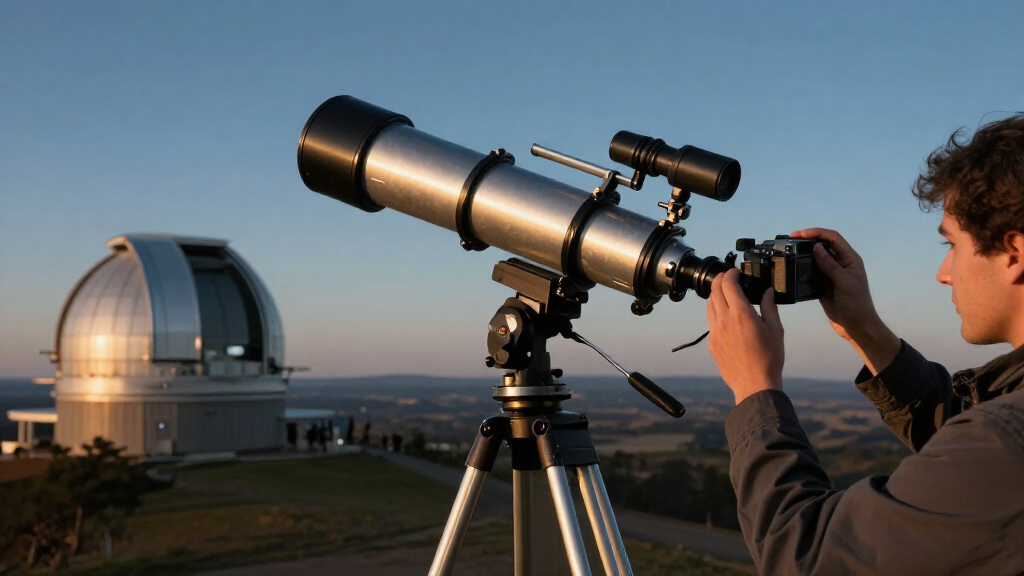
How We Picked
I ranked these astrophotography telescopes by how well their optical design, tracking approach, and included imaging tools match real photo goals—not by aperture alone. I gave more weight to options that make it practical to locate and hold targets, produce a coherent imaging setup, or offer a clear upgrade path. I also considered usability, portability, setup complexity, and whether the equipment is primarily an observing telescope, a dedicated optical tube, or an all-in-one smart imager.
The order reflects those differences. The NexStar 6SE earns the lead for its balance of tracking and versatility, while smart telescopes rank strongly for approachable capture workflows. Dedicated refractors can deliver greater control, but need more supporting gear and experience. Manual or entry-level mounts remain useful for learning and visual astronomy, yet rank lower for sustained deep-sky exposures because tracking and mount stability can limit results.
| astrophotography telescope | Optical design |
|---|---|
| Celestron NexStar 6SE Computer | Schmidt-Cassegrain |
| DWARF 3 Smart Telescope with A | — |
| MEEZAA 90mm Aperture | — |
| Celestron StarSense Explorer D | Newtonian reflector |
| DWARF Mini Smart Telescope | — |
| Celestron StarSense Explorer L | Newtonian reflector |
| Celestron StarSense Explorer 1 | Newtonian reflector |
| Celestron NexStar 127SLT Compu | Maksutov-Cassegrain |
| FASHIONARI 80mm Refractor Smar | — |
| SVBONY SV550 122mm f/7 Triplet | FPL-51 triplet apochromat with ED glass |
| ZWO Seestar S30 Pro Smart Tele | — |
| Celestron NexStar 8SE Computer | Schmidt-Cassegrain |
| MEEZAA 150EQ Newtonian Reflect | — |
| SVBONY SV503 102mm f/7 ED Refr | — |
Factors to Consider When Choosing Astrophotography Telescopes
Before choosing, decide what you want to photograph and how much of the imaging system you want to assemble yourself. A telescope is only one part of the result: tracking, camera compatibility, focus, power, and the sky conditions at your location all affect what you can capture.
Match the Telescope to Your Targets
Wide nebulae and large galaxies often need a shorter focal length and a camera sensor that frames them comfortably; planets and the Moon benefit from higher magnification and different capture techniques. A long-focal-length telescope can make small targets appear larger, but it also magnifies tracking errors and demands accurate alignment. Before buying, check how a target’s apparent size compares with the camera’s field of view, rather than assuming more magnification means better photos. A single instrument may not frame both expansive nebulae and small planetary details well. If your interests span both, decide which target class gets priority or plan for separate optical configurations.
Treat the Mount as Part of the Imaging System
For long-exposure deep-sky images, smooth and accurate tracking often matters more than adding aperture. A mount that works for visual observation may still produce star trails in a camera exposure, especially at longer focal lengths. Check whether the setup tracks automatically, how it is aligned, and whether its payload capacity leaves room for a camera, adapters, and other accessories. Do not judge a mount only by the telescope it carries in a product photo; imaging gear adds weight and can affect balance. Planetary and lunar capture can tolerate shorter exposures, so buyers focused there may have different mount needs.
Choose Between Smart Convenience and Component Flexibility
Smart telescopes combine imaging hardware and software into one workflow, which can reduce the number of compatibility decisions and make automated capture more accessible. That convenience may come with less freedom to change the camera, optics, or mount as your skills develop. A conventional optical tube gives you more choice over sensors and accessories, but you must confirm that the focuser, back focus, adapters, and mount all work together. Check what the package actually includes: some listings describe an optical tube rather than a ready-to-image system. Buyers who enjoy tinkering may value modularity; buyers who want a guided capture process may prefer integration.
Budget for the Full Imaging Chain
The telescope’s stated configuration rarely represents every part of a capable astrophotography setup. Depending on the model and target, you may need a dedicated camera, mounting rings, a field flattener or reducer, power, dew control, and software. These extras can change both the total cost and the amount of setup required, so check compatibility before committing to an optical tube. A focal reducer can widen the field and shorten exposures, but only when it matches the telescope and sensor. I’d compare complete system requirements rather than choosing by the telescope’s headline specifications alone.
Account for Setup, Portability, and Your Observing Site
A scope that stays easy to transport and assemble is more likely to get used, particularly if you travel to darker skies or have limited storage. Heavier equipment may offer more aperture or stability, but it can demand more setup time, careful balancing, and a stronger mount. Smart and compact designs can simplify deployment, though small apertures and fixed components may limit some targets. At home, check for a clear view of the sky, access to power, and room to leave equipment assembled. If you must carry everything outside each session, prioritize a manageable system over specifications you may rarely use.
Set Expectations for Learning and Image Processing
Astrophotography involves more than pointing a telescope and pressing a shutter: alignment, focusing, capture settings, and image processing all affect the final result. Automated tools can reduce some early hurdles, but they do not remove the influence of light pollution, clouds, seeing, or exposure time. Beginners can benefit from a setup that guides target selection and capture, while a modular rig can teach more about how each component shapes an image. Avoid buying an advanced optical tube before checking whether you are ready to add and learn the supporting equipment. Choose a workflow you will enjoy repeating, not just a specification sheet that looks ambitious.
Frequently Asked Questions
Can I use a telescope with a smartphone adapter for deep-sky astrophotography?
A phone adapter can help you photograph the Moon and bright objects, but it is not a substitute for a stable tracking mount and a camera suited to long exposures. Phones are convenient for snapshots and basic experiments, yet small sensors, focus control, and exposure limits can make faint deep-sky targets difficult. Check whether the telescope tracks the sky, not just whether it includes a phone holder. For more ambitious imaging, plan around a compatible dedicated camera or an integrated smart telescope. The adapter is best treated as an entry point, not a complete deep-sky imaging solution.
Is a smart telescope or a traditional telescope better for my first astrophotography setup?
A smart telescope is often a simpler starting point if you want guided capture with fewer separate components to match. A traditional telescope is a better fit if you want to choose the camera, mount, and accessories yourself or learn how those parts work together. Compare the whole workflow, including setup and image processing, rather than assuming one type produces better results for every target. Smart systems can limit upgrades, while modular systems require more research and troubleshooting. Your preferred balance of convenience and control should decide the direction.
Should I prioritize aperture or tracking when buying for deep-sky photos?
For many long-exposure deep-sky images, tracking accuracy and mount stability deserve priority because motion can blur stars even when the telescope gathers ample light. Larger aperture can collect more light and help resolve finer details, but it may also require a stronger mount and make the system less portable. The right balance depends on focal length, camera, target, and how long each exposure needs to be. A modest telescope on a capable tracking setup can be more useful for deep-sky imaging than a larger scope on an unsuitable mount. Check the mount’s imaging suitability before treating aperture as the main comparison.
Can I take both planetary and deep-sky photos with one telescope?
Some telescopes can serve both purposes, but the best configuration for each type of imaging differs. Planets are small and bright, so higher magnification and short video captures are common; deep-sky objects are often faint and need accurate tracking over longer exposures. Focal length, camera sensor size, and mount performance determine how well one setup covers both. A versatile scope can be a sensible compromise, though you may need different cameras or accessories for each target class. If you have a clear priority, choosing around that target usually avoids paying for versatility you will not use.
What else should I buy before attempting long-exposure astrophotography?
Start by confirming that the telescope and mount can track accurately enough for your focal length and intended exposure times. You may also need a compatible imaging camera, adapters, power, a dew-control solution, and software for capture and processing. A field flattener or reducer may be required to improve star shapes across the frame or widen the view, but it must match your optical design. Check whether the product is a complete imaging system or only an optical tube before planning your kit. Add components in stages so each purchase solves a known limitation rather than adding complexity without a clear purpose.
Conclusion
For the best overall balance, I’d choose the Celestron NexStar 6SE, especially if you want computerized tracking and a telescope that also supports visual observing. The best value in convenience is the ZWO Seestar S30 Pro for buyers who want an integrated imaging workflow; beginners should also compare the DWARF 3 and DWARF Mini based on portability and preferred app-led operation. For a best premium, modular direction, the SVBONY SV550 122mm suits experienced imagers ready to pair an apochromatic refractor with a capable mount and camera. If your priority is a larger aperture for visual sessions or lunar and planetary experimentation, compare the NexStar 8SE and Celestron 150mm tabletop Dobsonian while checking tracking requirements. The right choice comes down to whether you value guided simplicity, a flexible imaging platform, or an approachable telescope for learning the night sky.