
For most beginners, I’d start with the Celestron StarSense Explorer LT 114AZ: its smartphone-guided aiming and larger reflector aperture offer a useful balance of hands-on observing and help finding objects. The ZWO Seestar S30 Pro is a stronger fit if you want automated imaging, while the Celestron StarSense Explorer LT 80AZ keeps guided stargazing simpler and more portable. The main tradeoff is between a telescope that helps you look through an eyepiece and a smart imaging system that gathers views on a screen. I also compare entry-level phone-adapter scopes with dedicated smart models, since they differ in how much setup and manual aiming they ask of you. Read on for all 15 picks and a guide to choosing the right one for your observing style.

Prime made for students and young adults
- Fast, free delivery for dorm and study essentials
- Prime Video and Amazon Music included
- Member-only deals
Key Takeaways
- Smart means different things in this lineup: StarSense models use a phone to guide manual aiming, while Seestar and Dwarf models automate more of the imaging process.
- The StarSense Explorer LT 114AZ stands out for guided visual observing: it pairs phone-assisted object finding with a 114mm reflector, but its larger optical tube is less travel-friendly than the LT 80AZ.
- Dedicated smart scopes suit screen-first observers: the Seestar S30 Pro and Dwarf 3 are better matches for automated capture than basic refractors with phone adapters.
- Several budget listings emphasize 4K cameras, screens, or high magnification: those features do not by themselves establish stronger views of faint objects or easier astronomy use.
- Portability and observing style separate the Celestron travel options: the Travel Scope 80 is a compact kit, while the LT 80AZ adds phone-guided sky navigation.
| FASHIONARI Smart Refractor Telescope with 4K Camera and Dual Screens | 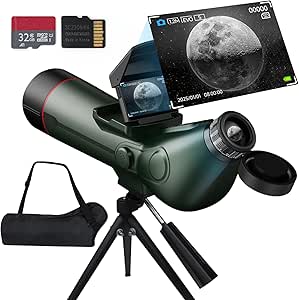 | Best for Built-In Viewing and Recording | Optical design: Refractor | Aperture: 80 mm | Focal length: 300 mm (f/8.89) | VIEW LATEST PRICE | See Our Full Breakdown |
| 70mm Refractor Telescope with Phone Adapter, 15x–150x Magnification |  | Best Value Manual Starter Kit | Brand: Jvcla | Optical design: Refractor | Objective aperture: 70 mm | VIEW LATEST PRICE | See Our Full Breakdown |
| FASHIONARI Smart 280X Digital Refractor Telescope |  | Best for Autofocus and Digital Viewing | Brand: FASHIONARI | Model: SZWYJ-22639 | Optical design: Refractor | VIEW LATEST PRICE | See Our Full Breakdown |
| Gskyer 70mm Aperture Refractor Telescope with Carry Bag, Phone Adapter, and Wireless Remote |  | Best Portable Manual Refractor Kit | Optical design: Refractor | Aperture: 70 mm | Focal length: 400 mm | VIEW LATEST PRICE | See Our Full Breakdown |
| Celestron StarSense Explorer LT 114AZ Newtonian Telescope |  | Best for Finding Celestial Targets | Optical design: Newtonian reflector | Aperture: 114 mm (4.5 inches) | Focal length: 1000 mm | VIEW LATEST PRICE | See Our Full Breakdown |
| ZWO Seestar S30 Pro Smart Telescope |  | Best for Automated Deep-Sky Imaging | Objective lens diameter: 30 mm | Focal length: 160 mm | Field of view: 4.6 degrees | VIEW LATEST PRICE | See Our Full Breakdown |
| FASHIONARI Digital Refractor Telescope with 4K Camera and Dual Screens |  | Best for Day-and-Night Digital Viewing | Objective lens diameter: 80 mm | Focal length: 300 mm | Maximum stated magnification: 350x | VIEW LATEST PRICE | See Our Full Breakdown |
| ToyerBee 70mm Aperture Refractor Telescope for Adults & Kids with Tripod and Phone Adapter |  | Best Traditional Starter Telescope | Optical type: Refractor | Aperture: 70 mm | Focal length: 300 mm | VIEW LATEST PRICE | See Our Full Breakdown |
| JVAXS Smart Telescope with 4K Astrophotography, 3-Inch Flip Screen, App Control, Remote, and 64GB Card |  | Best for Screen-Based Sharing | Objective lens diameter: 78 mm | Focus: Manual | Display: 3-inch flip-out screen | VIEW LATEST PRICE | See Our Full Breakdown |
| DWARFLAB Dwarf Mini Smart Telescope |  | Best Compact Smart Telescope | Weight: 1.85 lb (840 g); product information also lists 1.9 lb | Objective lens diameter: 30 mm | Focal length: 150 mm | VIEW LATEST PRICE | See Our Full Breakdown |
| YOTOMIGUO Smart Telescope with 4K Camera, Dual Screens, and 64GB Memory Card |  | Best for Direct, Screen-Based Viewing | Aperture: 78mm in description; 80mm objective lens in specifications | Focal length: 300mm | Maximum magnification: Up to 350x | VIEW LATEST PRICE | See Our Full Breakdown |
| Celestron Travel Scope 80mm Telescope Kit with Backpack, Smartphone Adapter |  | Best for Travel and Daytime Viewing | Aperture: 80mm | Focal length: 457mm | Mount: Manual altazimuth | VIEW LATEST PRICE | See Our Full Breakdown |
| DWARFLAB Dwarf 3 Smart Telescope |  | Best for Versatile App-Controlled Imaging | Objective lens diameter: 35mm | Mount: Altazimuth | Focus: Autofocus | VIEW LATEST PRICE | See Our Full Breakdown |
| Koolpte AZ80600 Reflector Telescope for Adults and Beginners | 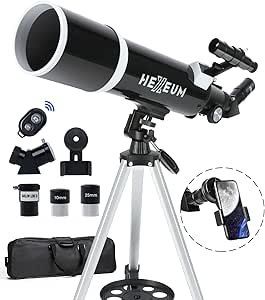 | Best Accessory-Rich Manual Starter | Aperture: 80mm | Focal length: 600mm | Mount: Altazimuth | VIEW LATEST PRICE | See Our Full Breakdown |
| Celestron StarSense Explorer LT 80AZ Smartphone Guided Refractor Telescope |  | Best for Beginner-Friendly Sky Guidance | Objective lens diameter: 80mm | Focal length: 400mm | Mount: Manual altazimuth | VIEW LATEST PRICE | See Our Full Breakdown |
| smart telescopes for beginner | Focal length | Focus | Aperture | Mount |
|---|---|---|---|---|
| FASHIONARI Smart Refractor Tel | 300 mm (f/8.89) | — | 80 mm | — |
| 70mm Refractor Telescope with | 300 mm | — | — | — |
| FASHIONARI Smart 280X Digital | 300 mm | Autofocus | 80 mm | — |
| Gskyer 70mm Aperture Refractor | 400 mm | — | 70 mm | Altazimuth |
| Celestron StarSense Explorer L | 1000 mm | — | 114 mm (4.5 inches) | Manual altazimuth |
| ZWO Seestar S30 Pro Smart Tele | 160 mm | Automatic and manual | — | Alt-azimuth with equatorial mode |
| FASHIONARI Digital Refractor T | 300 mm | Auto focus | — | — |
| ToyerBee 70mm Aperture Refract | 300 mm | Manual | 70 mm | — |
| JVAXS Smart Telescope with 4K | — | Manual | — | — |
| DWARFLAB Dwarf Mini Smart Tele | 150 mm | Manual and automatic | — | Altazimuth and equatorial |
| YOTOMIGUO Smart Telescope with | 300mm | Autofocus | 78mm in description; 80mm objective lens in specifications | — |
| Celestron Travel Scope 80mm Te | 457mm | Manual | 80mm | Manual altazimuth |
| DWARFLAB Dwarf 3 Smart Telesco | — | Autofocus | — | Altazimuth |
| Koolpte AZ80600 Reflector Tele | 600mm | Manual | 80mm | Altazimuth |
| Celestron StarSense Explorer L | 400mm | Manual | — | Manual altazimuth |
More Details on Our Top Picks
FASHIONARI Smart Refractor Telescope with 4K Camera and Dual Screens
The built-in 4K camera and foldable screen make this a more self-contained choice than the Gskyer 70mm Refractor, which relies on a phone adapter for capturing views. Beginners can look through the eyepiece or use the external display, then save photos and videos without attaching a separate device. Its 80 mm aperture is also larger than the Gskyer’s 70 mm, giving it a stronger light-gathering basis for observing brighter celestial targets.
The tradeoff is that this is an electronic viewing setup, not a conventional telescope with a simple eyepiece-only workflow. The stated 350× maximum magnification should not be treated as a promise of crisp detail; usable image quality depends on conditions and optics. I’d choose it for convenient recording, not for buyers focused on manual observing or proven high-magnification performance.
Pros:- Built-in camera records 4K photos and videos without an external phone
- Eyepiece and foldable external display offer two ways to view
- 80 mm aperture is larger than the 70 mm aperture on the Gskyer model
- Supports up to 512 GB of external storage and is rated for up to 6 hours of use
Cons:- The advertised 350× magnification does not establish how much usable detail the view will show
- Electronic camera and display features add complexity compared with a conventional refractor
- The 300 mm focal length may be less suited to close views of small, distant targets than longer-focal-length options
Best for: Beginners who want to view and record through one device, without mounting their own phone, and value a screen-based observing option.
Not ideal for: Buyers who want a straightforward manual telescope, dependable fine detail at very high magnification, or a simple kit with fewer electronic features.
- Optical design:Refractor
- Aperture:80 mm
- Focal length:300 mm (f/8.89)
- Maximum stated magnification:Up to 350×
- Camera:4K photo and video
- Displays:Eyepiece and foldable external screen
- External storage:Up to 512 GB
- Battery:4500 mAh; rated for up to 6 hours
Our verdict“Choose this FASHIONARI if built-in 4K recording and screen viewing matter more than a simple manual setup or confidence in extreme magnification.”
70mm Refractor Telescope with Phone Adapter, 15x–150x Magnification
The Jvcla is the most conventional entry point in this group: it pairs a 70 mm refractor with manual focus, eyepieces, a finder scope, and a phone adapter. Compared with the electronic FASHIONARI models, it asks beginners to aim and focus for themselves, but avoids relying on a built-in camera or display. Its included wireless remote and phone adapter make casual phone photography accessible without adding much to the setup.
The supplied 3× Barlow and 6 mm eyepiece expand the stated magnification range, but higher power can make a target harder to keep steady, especially on a basic tripod. The finder scope shows an inverted image, which may add friction when learning to point the telescope. I’d pick this over the Gskyer 70 mm if the shorter 300 mm focal length and tool-free setup appeal, but not if guided sky-finding is the priority; the Celestron StarSense uses a phone to help locate targets.
Pros:- Includes two eyepieces, a 3× Barlow lens, and an erecting eyepiece
- Phone adapter and wireless remote support simple smartphone photography
- Fully multi-coated optics are specified for viewing the Moon, nature, and scenery
- Tool-free setup and included tripod keep the kit self-contained
Cons:- Manual focus and aiming require more hands-on adjustment than the StarSense Explorer LT 114AZ
- High magnification can make views difficult to keep steady
- The finder scope’s inverted image may be confusing for new users
Best for: First-time observers who want an affordable-feeling, manual refractor kit with included phone photography accessories and are willing to learn aiming and focus.
Not ideal for: Beginners who want app-guided target finding, automatic focus, or stable high-power views without learning to manage the mount.
- Brand:Jvcla
- Optical design:Refractor
- Objective aperture:70 mm
- Focal length:300 mm
- Stated magnification range:15×–150×
- Eyepieces:20 mm and 6 mm
- Additional optics:1.5× erecting eyepiece and 3× Barlow lens
- Included accessories:Tripod, 5×24 finder scope, phone adapter, and wireless remote
Our verdict“Pick the Jvcla as a hands-on first telescope if you want a complete manual kit and do not need app-guided navigation.”
FASHIONARI Smart 280X Digital Refractor Telescope
This FASHIONARI’s main beginner-friendly advantage is its autofocus and dual-screen design: it reduces the manual focusing work required by the Jvcla 70 mm Refractor and offers an alternative to viewing through an eyepiece alone. Its 80 mm aperture and 4K imaging give the digital setup a stronger light-gathering specification than the 70 mm Gskyer, while the starlight-grade sensor is intended for celestial imaging rather than just daytime scenery.
That convenience comes with a practical limitation: the product data says it requires nonstandard batteries, so buyers should check battery availability and replacement needs before choosing it for regular outings. The stated “280X” title also conflicts with the specification listing up to 350×; neither figure alone establishes how much detail will be visible. Unlike the 4K FASHIONARI model with a stated 4500 mAh battery, this listing does not provide battery capacity or runtime, making power planning less clear.
Pros:- Autofocus reduces the need for manual focusing adjustments
- Dual screens provide a digital viewing alternative
- 80 mm aperture is larger than the 70 mm aperture in the Gskyer refractor
- 4K imaging and a starlight-grade sensor are geared toward celestial capture
Cons:- Requires nonstandard batteries, which may be inconvenient to source or replace
- No battery capacity or runtime is specified
- The title’s 280X figure differs from the listed maximum of up to 350×
Best for: Beginners who prefer autofocus and digital screens for observing and capturing celestial images, and who can plan around the specified battery type.
Not ideal for: Buyers who want common, easy-to-replace batteries, a clearly stated battery runtime, or a traditional manual telescope experience.
- Brand:FASHIONARI
- Model:SZWYJ-22639
- Optical design:Refractor
- Aperture:80 mm
- Focal length:300 mm
- Maximum stated magnification:Up to 350×
- Focus:Autofocus
- Imaging and display:4K imaging, starlight-grade sensor, and dual screens
- Power:Requires nonstandard batteries
Our verdict“Choose this model for autofocus and digital celestial imaging if its nonstandard battery requirement is manageable for you.”
Gskyer 70mm Aperture Refractor Telescope with Carry Bag, Phone Adapter, and Wireless Remote
The Gskyer’s strongest case for beginners is its portable, accessory-rich package: an adjustable tripod, carry bag, two eyepieces, phone adapter, and remote are included. Compared with the Jvcla 70 mm, its 400 mm focal length is longer than that model’s 300 mm, while both use a 70 mm aperture and offer phone photography accessories. That makes the Gskyer a natural fit for someone who wants a conventional refractor kit that can be packed and carried rather than a screen-led digital telescope.
It lacks the Celestron StarSense Explorer LT 114AZ’s smartphone-guided navigation, so locating objects still depends on manual aiming. The product details also give less evidence about optical performance than the specifications provided for some alternatives, and they omit dimensions and weight. I’d favor it for a portable, familiar kit, but not for buyers who need guided target finding or detailed portability measurements before choosing.
Pros:- Carry bag and adjustable aluminum tripod support transport and setup
- Includes two replaceable eyepieces and a 3× Barlow lens
- Phone adapter and wireless remote support smartphone photography
- 400 mm focal length is longer than the Jvcla 70 mm refractor’s 300 mm
Cons:- Does not provide the smartphone-guided target finding offered by the Celestron StarSense Explorer LT 114AZ
- Product details do not include performance evidence beyond the listed optics
- Dimensions and weight are not specified, limiting portability comparisons
Best for: Beginners who want a portable manual refractor bundle for Moon viewing and casual phone photos, with a carry bag included.
Not ideal for: New observers who want smartphone-guided navigation, a specified weight for travel planning, or clearer evidence about image performance.
- Optical design:Refractor
- Aperture:70 mm
- Focal length:400 mm
- Focal ratio:f/5.7
- Mount:Altazimuth
- Optics:Fully coated glass lens
- Included optics:Two replaceable eyepieces and 3× Barlow lens
- Included accessories:5×24 finder scope, adjustable aluminum tripod, carry bag, smartphone adapter, and wireless remote
Our verdict“Choose the Gskyer if you want a carry-ready manual refractor bundle, but choose the StarSense model if finding targets is your main hurdle.”
Celestron StarSense Explorer LT 114AZ Newtonian Telescope
The StarSense Explorer LT 114AZ earns its place through smartphone-guided navigation, not automated tracking or built-in astrophotography. Its app analyzes star patterns and gives on-screen directions, which can make the first step—finding a target—less frustrating than with the manually aimed Gskyer or Jvcla refractors. The 114 mm aperture is also substantially larger than their 70 mm apertures, while the 1000 mm focal length and included 10 mm and 25 mm eyepieces make this a different kind of setup from the short-focal-length digital FASHIONARI models.
There are real learning tasks: the manual altazimuth mount needs ongoing adjustment to follow moving objects, and the Newtonian mirror may need occasional collimation. The app also depends on a compatible modern phone. This is the strongest pick here for learning the sky and gathering light, but it is not the hands-off experience of a fully automated smart telescope.
Pros:- StarSense app uses sky recognition and on-screen arrows to guide target finding
- 114 mm aperture is larger than the 70 mm apertures of the Jvcla and Gskyer refractors
- Includes a full-height tripod, two eyepieces, red dot finder, and smartphone dock
- Manual altazimuth mount keeps the telescope setup straightforward
Cons:- Manual mount requires ongoing adjustments to keep objects in view
- StarSense features require a compatible modern smartphone
- Newtonian optics need occasional collimation
Best for: Beginners with a compatible smartphone who want help locating planets, nebulae, and galaxies through a larger-aperture telescope.
Not ideal for: Buyers seeking automatic tracking, built-in 4K imaging, a phone-free setup, or a telescope that never needs mirror alignment.
- Optical design:Newtonian reflector
- Aperture:114 mm (4.5 inches)
- Focal length:1000 mm
- Mount:Manual altazimuth
- Included eyepieces:10 mm and 25 mm
- Finderscope:Red dot reflex finder
- Weight:10.4 lb
- Smartphone compatibility:Android 12+ or iOS 18+; iPhone XR and newer
- Warranty:2-year US warranty
Our verdict“Pick the StarSense Explorer LT 114AZ if locating objects is your biggest beginner challenge and you are comfortable with manual tracking and occasional mirror alignment.”
ZWO Seestar S30 Pro Smart Telescope
The ZWO Seestar S30 Pro suits beginners who want the telescope to handle locating, tracking, and much of the image processing. Its one-tap imaging, app control, and AI-assisted noise reduction reduce the number of manual steps between setting up and saving an image. Built-in light-pollution filters and an equatorial mode give it more astrophotography flexibility than the manual-focus JVAXS Smart Telescope, while the Seestar is much lighter to carry than a full-size conventional setup. Its 30 mm objective and 160 mm focal length favor wide-field deep-sky targets rather than close-up planetary views. The tradeoff is clear: this is a specialized imaging tool, not an all-purpose telescope, and stable deep-sky exposures require a stationary setup. Beginners mainly interested in planets should choose a different design.
Pros:- Automatic GoTo targeting and tracking reduce manual sky navigation.
- One-tap imaging and AI noise reduction simplify image capture and processing.
- Built-in light-pollution filters support imaging from less-than-dark locations.
- Portable 3.6 lb design includes anti-dew protection.
Cons:- Not intended for planetary observation.
- Stable deep-sky imaging requires a stationary setup.
- App-based imaging may not suit buyers who want direct, traditional eyepiece viewing.
Best for: First-time astrophotographers who want app-guided deep-sky imaging, automatic tracking, and a portable setup.
Not ideal for: Beginners focused on viewing planets or wanting a conventional eyepiece telescope, since this model is not intended for planetary observation.
- Objective lens diameter:30 mm
- Focal length:160 mm
- Field of view:4.6 degrees
- Mount:Alt-azimuth with equatorial mode
- Focus:Automatic and manual
- Weight:3.6 lb
- Dimensions:3.1 × 5.5 × 8.3 in
- Control:App control, GoTo, and auto tracking
Our verdict“Choose the Seestar S30 Pro if automated deep-sky imaging matters more to you than planetary views or conventional telescope use.”
FASHIONARI Digital Refractor Telescope with 4K Camera and Dual Screens
Unlike app-first imaging models such as the ZWO Seestar S30 Pro, this FASHIONARI puts a 4K camera and dual screens on the telescope itself. That makes framing and sharing a view less dependent on a phone, and its supplied tripod and auto focus support a straightforward start for beginners. The 80 mm aperture is larger than the 30 mm objectives on the Seestar and Dwarf Mini, while wildlife use gives it a useful daytime role beyond astronomy. A built-in sunshade and up to six hours of stated battery life also suit longer outings. But the advertised 350x magnification does not by itself guarantee clear high-power views, and autofocus may struggle in very low light. Choose it for flexible screen-based observing, not for the Seestar’s automated deep-sky workflow.
Pros:- Dual screens make framing and sharing views easier without a smartphone adapter.
- 80 mm objective lens supports a larger aperture than the 30 mm smart imaging models in this batch.
- Works for wildlife observation as well as astronomy.
- Stated battery life of up to six hours supports extended outings.
Cons:- Autofocus performance may vary in very low-light conditions.
- A TF card is needed for extended recording, and it is not included in the listed package.
- The listed specifications do not describe automated GoTo targeting or tracking.
Best for: Beginners and families who want a self-contained screen for framing wildlife and casual celestial viewing without relying on a phone adapter.
Not ideal for: Buyers prioritizing reliable low-light focus or automated deep-sky tracking, since the listed features do not include the Seestar S30 Pro’s GoTo and tracking workflow.
- Objective lens diameter:80 mm
- Focal length:300 mm
- Maximum stated magnification:350x
- Image resolution:4K
- Battery capacity:4500 mAh
- Stated battery life:Up to 6 hours
- Focus:Auto focus
- Storage support:TF card up to 512 GB
Our verdict“Pick this FASHIONARI if you want built-in screens and daytime versatility, but choose the Seestar S30 Pro for more automated deep-sky imaging.”
ToyerBee 70mm Aperture Refractor Telescope for Adults & Kids with Tripod and Phone Adapter
The ToyerBee 70mm Refractor is the most conventional beginner pick in this group: you point and focus it yourself, then use the included star chart to find targets. Its 70 mm aperture, manual focus, and 15x–150x range make it a better fit for hands-on lunar, basic planetary, and daytime viewing than the app-led DWARFLAB Dwarf Mini, which is built around automated tracking and imaging. A phone adapter and wireless remote let beginners try simple photos without turning the telescope into a dedicated digital system. The tradeoff is that manual searching takes patience, and its 300 mm focal length limits how much planetary detail it can show. The entry-level plastic construction is another reason to handle it carefully. I would choose it for learning the basics, not for automated astrophotography.
Pros:- 70 mm fully multi-coated optics provide a traditional viewing experience for night and daytime use.
- Includes a tripod, phone adapter, wireless remote, star chart, and 3X Barlow lens.
- Tool-free setup and included chart help newcomers start learning the sky.
- At 3.5 lb, it is practical to carry on trips.
Cons:- Manual focus and target finding require more hands-on effort than app-controlled smart telescopes.
- The 300 mm focal length limits high-power planetary detail.
- Plastic construction may feel less durable than more substantial telescope builds.
Best for: Families and first-time observers who want a lightweight, manual telescope kit for the Moon, casual planet viewing, and wildlife.
Not ideal for: Beginners who want automatic target finding, tracking, or a streamlined deep-sky imaging process like the DWARFLAB Dwarf Mini offers.
- Optical type:Refractor
- Aperture:70 mm
- Focal length:300 mm
- Magnification range:15x–150x
- Optical coating:Fully multi-coated
- Focus:Manual
- Weight:3.5 lb
- Included accessories:Tripod, phone adapter, wireless remote, star chart, and 3X Barlow lens
Our verdict“Choose the ToyerBee if you want an affordable-feeling hands-on starter kit rather than an automated smart telescope.”
JVAXS Smart Telescope with 4K Astrophotography, 3-Inch Flip Screen, App Control, Remote, and 64GB Card
The JVAXS Smart Telescope stands out for showing the view on its own 3-inch flip-out screen, a practical advantage when several people want to watch without crowding around a phone. It also records 4K video and 30 MP photos, and the included 64 GB card means beginners can start saving captures without buying storage first. Compared with the FASHIONARI Digital Refractor, JVAXS pairs its screen with app control and a wireless remote, but its manual focus asks the user to make adjustments by hand. The product information also does not specify a mount or tripod, so buyers should not assume the setup includes one. Its listed 78 mm objective is larger than the Seestar S30 Pro’s, though the JVAXS lacks the Seestar’s stated automatic tracking and imaging workflow.
Pros:- Flip-out screen and electronic eyepiece make viewing easier to share.
- Captures 4K video and 30 MP photos.
- App control and wireless remote allow hands-free capture and phone transfers.
- Includes a 64 GB card and supports storage expansion.
Cons:- Manual focus requires the user to adjust the focus ring.
- The product information does not specify a mount or tripod.
- The listed feature set does not include the Seestar S30 Pro’s automatic tracking workflow.
Best for: Beginners who want an onboard display for group viewing, plus 4K video and high-resolution still capture with included storage.
Not ideal for: New observers seeking a clearly specified tripod or mount and automated focusing or target tracking; those features are not listed here.
- Objective lens diameter:78 mm
- Focus:Manual
- Display:3-inch flip-out screen
- Photo resolution:30 MP
- Video resolution:4K
- Included storage:64 GB card
- Maximum supported storage:512 GB
- Remote control range:Up to 85 feet
Our verdict“Choose JVAXS for an onboard screen and included image storage, but look to the Seestar S30 Pro if automated tracking is your priority.”
DWARFLAB Dwarf Mini Smart Telescope
At 1.85 lb, the DWARFLAB Dwarf Mini is the easiest smart telescope here to pack for a trip. It combines a smartphone sky atlas and automated target tracking with equatorial mode and exposures up to 90 seconds, giving beginners a guided route into imaging without carrying a larger system. Its Sony IMX662 sensor and built-in light-pollution filters add to that imaging focus. Compared with the ZWO Seestar S30 Pro, it is smaller and lighter, but its listed field of view is narrower at 2.45 degrees versus the Seestar’s 4.6 degrees. Manual focus is also listed alongside automatic focus, so beginners may still need to make adjustments rather than relying on a fully hands-off setup. This is a strong travel choice for phone users, not for anyone seeking a conventional eyepiece telescope.
Pros:- Compact 1.85 lb body is well suited to travel.
- Built-in sky atlas and automated target tracking guide new users.
- Equatorial mode supports exposures up to 90 seconds.
- Built-in light-pollution filters and cloud image processing support image capture.
Cons:- Requires a smartphone for app control.
- Manual focus is listed alongside automatic focus, which can add setup steps.
- Its 2.45-degree field of view is narrower than the Seestar S30 Pro’s listed 4.6 degrees.
Best for: Smartphone-owning beginners who want a highly portable, app-guided telescope for tracked astrophotography while traveling.
Not ideal for: Buyers who want a wider field of view, no manual focusing, or a telescope that can be used without a smartphone.
- Weight:1.85 lb (840 g); product information also lists 1.9 lb
- Objective lens diameter:30 mm
- Focal length:150 mm
- Field of view:2.45 degrees
- Sensor:Sony IMX662, 1/2.8-inch, 2.9 μm pixels
- Mount:Altazimuth and equatorial
- Maximum single-frame exposure:90 seconds
- Focus:Manual and automatic
Our verdict“Choose the Dwarf Mini if portability and guided imaging matter most, and the Seestar S30 Pro if you prefer a wider field of view.”
YOTOMIGUO Smart Telescope with 4K Camera, Dual Screens, and 64GB Memory Card
The YOTOMIGUO suits beginners who want to frame and capture targets on the telescope itself, without making a phone the only way to view. Its internal display and foldable 3-inch screen offer a more self-contained experience than the phone-guided Celestron StarSense Explorer LT 80AZ, while 4K capture and included 64GB storage make recording straightforward. Its listed aperture is 78mm in one place and 80mm in another, so the exact objective size is unclear. The claimed up to 350x magnification is not a guarantee of useful detail; beginners should weigh aperture and observing conditions more heavily than a large magnification figure. Compared with the app-dependent DWARFLAB Dwarf 3, this model emphasizes onboard screens, but its product information gives less detail about automated sky locating. I’d choose it for screen-first convenience, not for the most transparent or clearly documented optics.
Pros:- Internal and foldable external screens allow direct viewing without using a phone as the display.
- Captures 4K photos and videos.
- Includes a 64GB memory card, with support for external storage up to 512GB.
- Autofocus reduces manual focusing steps for new users.
Cons:- Aperture is inconsistently listed as 78mm and 80mm.
- The advertised 350x maximum magnification may create unrealistic expectations about usable detail.
- The supplied details do not clearly describe automated target finding or tracking.
Best for: Beginners who want to view and record through built-in screens and prefer included storage over relying entirely on a smartphone.
Not ideal for: Buyers who want clearly consistent optical specifications or documented app-based target finding; the aperture is listed as both 78mm and 80mm.
- Aperture:78mm in description; 80mm objective lens in specifications
- Focal length:300mm
- Maximum magnification:Up to 350x
- Camera:4K astrophotography
- Display:Internal screen and foldable 3-inch external screen
- Included storage:64GB memory card
- Maximum external storage:512GB
- Focus:Autofocus
- Dimensions:14 × 5 × 3 inches
Our verdict“Choose the YOTOMIGUO if built-in viewing screens and ready-to-use storage matter more to you than consistent optical specifications or clearly documented sky guidance.”
Celestron Travel Scope 80mm Telescope Kit with Backpack, Smartphone Adapter
The Travel Scope 80 is the clearest fit here for beginners who want a traditional telescope they can take from a campsite to a daytime landscape. At 4.5 pounds, with a padded backpack and tool-free setup, it is more travel-oriented than the full-height Celestron StarSense Explorer LT 80AZ. Its 80mm refractor and included 20mm and 10mm eyepieces cover basic lunar and planetary viewing, while the smartphone adapter offers a way to try casual photography. The tradeoff is that this is not a smart telescope: its manual altazimuth mount does not locate targets or track them for you. Unlike the YOTOMIGUO, it has no built-in camera or display, so capturing images takes more setup and depends on your phone. I’d pick it for portability and simple optical viewing, not automated observing.
Pros:- Lightweight 4.5-pound kit packs into an included padded backpack.
- Tool-free assembly makes it approachable for new observers.
- 80mm fully coated optics suit basic lunar and daytime viewing.
- Includes two eyepieces, a finderscope, star diagonal, smartphone adapter, and astronomy software.
Cons:- Manual altazimuth mount offers no computerized guidance or motorized tracking.
- Phone adapter supports casual capture but does not provide the integrated imaging of the YOTOMIGUO.
- Manual focusing and target alignment leave more work to the beginner.
Best for: Families and first-time observers who want a lightweight telescope for trips, daytime scenery, and basic Moon viewing.
Not ideal for: Beginners seeking app-guided target finding, automatic tracking, or built-in astrophotography; this is a manual telescope with a phone adapter.
- Aperture:80mm
- Focal length:457mm
- Mount:Manual altazimuth
- Focus:Manual
- Finderscope:5×24
- Included eyepieces:20mm and 10mm
- Weight:4.5 pounds
- Included accessories:Backpack, smartphone adapter, and star diagonal
- Warranty:2 years
Our verdict“Choose the Travel Scope 80 if portability and hands-on viewing matter more than smart guidance, tracking, or built-in imaging.”
DWARFLAB Dwarf 3 Smart Telescope
The DWARFLAB Dwarf 3 is the most versatile imaging pick in this group for a beginner who wants one app-controlled device for the night sky and daytime subjects. Its dual imaging system and 4K tracking extend its use beyond astronomy, while Auto GOTO and EQ mode offer more observing automation than the manual Celestron Travel Scope 80. The tradeoff is a 35mm objective lens, substantially smaller than the 80mm optics on the Celestron StarSense Explorer LT 80AZ; that difference can limit light gathering, so this is better approached as a portable imaging tool than a conventional telescope for bright, detailed visual views. Image processing also depends on the dedicated app and cloud computing, which adds a reliance absent from manual scopes. Weight is inconsistent in the supplied details: 3 pounds in the description and 2.28kg in the specifications.
Pros:- Dual imaging system supports both daytime and nighttime subjects.
- 4K tracking and Auto GOTO reduce manual target-following and locating work.
- App-based image processing does not require a separate PC.
- Offers EQ mode as well as altazimuth operation.
Cons:- 35mm objective is much smaller than the 80mm optics on the Celestron StarSense Explorer LT 80AZ.
- Image processing depends on the dedicated app and cloud computing.
- Listed weight conflicts between 3 pounds and 2.28kg.
Best for: Beginners who want a portable, app-controlled camera for both celestial targets and daytime wildlife or landscapes.
Not ideal for: Observers prioritizing larger-aperture visual views or wanting image processing that works independently of an app and cloud services.
- Objective lens diameter:35mm
- Mount:Altazimuth
- Focus:Autofocus
- Imaging:Dual imaging system with 4K tracking
- Modes and guidance:Auto GOTO and EQ mode
- Dimensions:2.56 × 8.74 × 5.59 inches
- Weight:Conflicting listings: 3 pounds and 2.28kg
- Compatible devices:Smartphone, laptop, and personal computer
- Battery:One included lithium-ion battery
Our verdict“Choose the Dwarf 3 if you value automated, multi-purpose imaging and portability more than the light-gathering reach of a larger conventional telescope.”
Koolpte AZ80600 Reflector Telescope for Adults and Beginners
The Koolpte AZ80600 is a traditional starter scope for someone who wants several useful accessories in one package and is comfortable learning to point a telescope manually. Its 80mm aperture and 600mm focal length pair with two eyepieces and a Barlow lens, giving beginners a range of magnifications to try. That does not make the advertised maximum a promise of sharp views: the manual altazimuth mount can be difficult to keep steady on a target, especially at higher power. The included phone adapter and wireless remote make basic phone photography more accessible than on the Celestron Travel Scope 80, but neither provides the automated guidance found on the Celestron StarSense Explorer LT 80AZ. I’d choose Koolpte for an accessory-packed introduction to manual observing, while skipping it if app-led navigation or effortless tracking is the priority.
Pros:- Includes 25mm and 10mm eyepieces plus a 3x Barlow lens.
- Phone adapter and wireless remote support basic smartphone photography.
- Fully multi-coated optics and 80mm aperture provide a conventional entry point for lunar viewing.
- Carrying bag and no-tool setup make transport and assembly simpler.
Cons:- Manual altazimuth mount requires ongoing adjustments to keep objects in view.
- The advertised magnification range does not guarantee useful detail, particularly at the upper end.
- Lacks the app-based target guidance offered by the Celestron StarSense Explorer LT 80AZ.
Best for: Beginners who want an affordable-feeling, accessory-rich manual setup for learning basic aiming and phone-assisted lunar photography.
Not ideal for: New observers who want the telescope to locate targets or track them automatically, or who expect high magnification to deliver consistently detailed views.
- Aperture:80mm
- Focal length:600mm
- Mount:Altazimuth
- Focus:Manual
- Magnification:24x and 60x; up to 180x with included Barlow lens
- Eyepieces:25mm and 10mm
- Finder:5×24
- Included accessories:3x Barlow lens, phone adapter, wireless remote, carrying bag, and aluminum tripod
- Warranty:1 year
Our verdict“Pick the Koolpte if you want a manual telescope with plenty of included accessories, but choose the StarSense Explorer LT 80AZ for guided target finding.”
Celestron StarSense Explorer LT 80AZ Smartphone Guided Refractor Telescope
The StarSense Explorer LT 80AZ is the strongest fit here for a beginner whose main hurdle is finding objects, not capturing them. Its smartphone-guided app analyzes the sky and points users toward suggested targets, making it more approachable for locating stars and planets than the manual Koolpte AZ80600 or Celestron Travel Scope 80. The 80mm refractor keeps this a conventional visual telescope: it has no motorized tracking, so the user still moves the manual altazimuth mount and follows objects as they cross the view. Two eyepieces, a red-dot finder, and a phone dock help newcomers get started, but app compatibility matters; older phones may not meet the stated Android or iOS requirements. At 9.2 pounds with a large listed footprint, it is also less travel-friendly than the backpack-ready Travel Scope. Choose it for guided learning, not compactness or automatic imaging.
Pros:- StarSense app guidance helps beginners locate suggested celestial targets.
- 80mm fully coated refractor provides a larger objective than the DWARFLAB Dwarf 3.
- Includes 25mm and 10mm eyepieces, red-dot finder, tripod, and phone dock.
- Manual operation requires no external power for the telescope.
Cons:- Manual altazimuth mount does not track objects automatically.
- Sky guidance requires a smartphone meeting the stated operating-system requirements.
- At 9.2 pounds and with a large listed footprint, it is less convenient to transport than the Travel Scope 80.
Best for: First-time stargazers with a compatible modern smartphone who want app guidance to locate targets through a conventional 80mm telescope.
Not ideal for: Travel-focused buyers, owners of unsupported older phones, or observers who want motorized tracking and automatic astrophotography.
- Objective lens diameter:80mm
- Focal length:400mm
- Mount:Manual altazimuth
- Focus:Manual
- Eyepieces:25mm and 10mm
- Finderscope:StarPointer red-dot finderscope
- Phone compatibility:Android 12+ or iOS 18+
- Weight:9.2 pounds
- Warranty:2-year US warranty
Our verdict“Choose the StarSense Explorer LT 80AZ if app-guided target finding is your priority and you have a compatible phone; skip it if you need a compact or motorized system.”
How We Picked
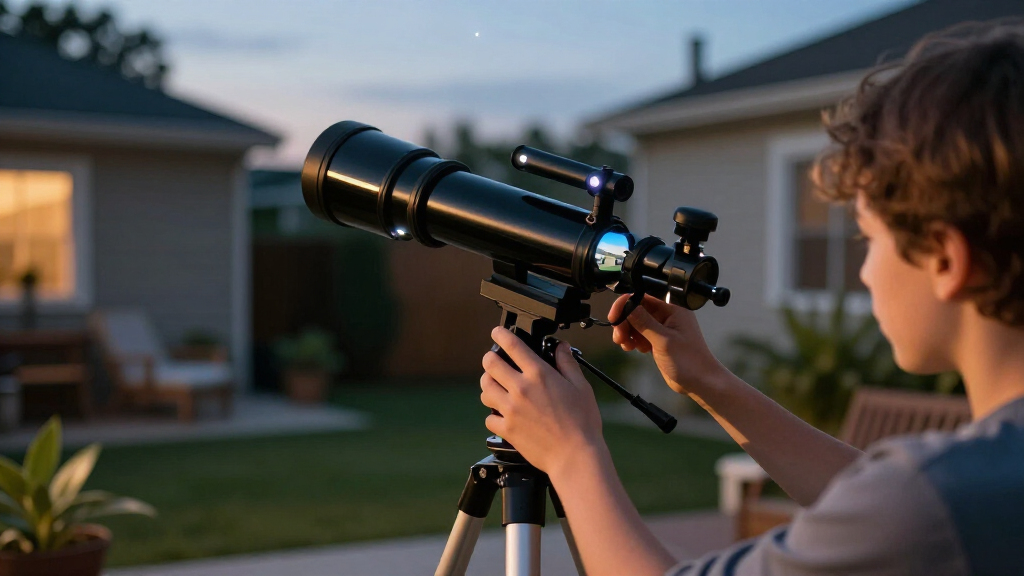
I compared these 15 options by how directly they help a newcomer find and observe celestial objects, not by headline magnification or camera resolution alone. My main criteria were the clarity of the setup and guidance approach, the usefulness of the stated aperture and optical design, whether the product supports visual observing or app-based imaging, and practical details such as portability, included accessories, and storage. I also separated dedicated smart telescopes from conventional scopes that rely on a phone adapter or phone-based guidance; these solve different beginner problems.
The ranking favors products with a clear astronomy workflow and a credible role for a first-time user. The StarSense Explorer LT 114AZ leads for its combination of guided object finding and visual telescope use; dedicated imaging models rank strongly for buyers who want app-controlled captures rather than eyepiece observing. Portable and simpler refractors follow where ease of transport or basic learning matters more than automation. Camera-focused listings without a clearly differentiated guidance or imaging workflow rank lower, since screen size, memory cards, and advertised magnification alone do not explain how well a beginner can locate and view sky objects.
| smart telescopes for beginner | Focus | Mount |
|---|---|---|
| FASHIONARI Smart Refractor Tel | — | — |
| 70mm Refractor Telescope with | — | — |
| FASHIONARI Smart 280X Digital | Autofocus | — |
| Gskyer 70mm Aperture Refractor | — | Altazimuth |
| Celestron StarSense Explorer L | — | Manual altazimuth |
| ZWO Seestar S30 Pro Smart Tele | Automatic and manual | Alt-azimuth with equatorial mode |
| FASHIONARI Digital Refractor T | Auto focus | — |
| ToyerBee 70mm Aperture Refract | Manual | — |
| JVAXS Smart Telescope with 4K | Manual | — |
| DWARFLAB Dwarf Mini Smart Tele | Manual and automatic | Altazimuth and equatorial |
| YOTOMIGUO Smart Telescope with | Autofocus | — |
| Celestron Travel Scope 80mm Te | Manual | Manual altazimuth |
| DWARFLAB Dwarf 3 Smart Telesco | Autofocus | Altazimuth |
| Koolpte AZ80600 Reflector Tele | Manual | Altazimuth |
| Celestron StarSense Explorer L | Manual | Manual altazimuth |
Factors to Consider When Choosing Smart Telescopes For Beginners
Before choosing, decide what you want a telescope to do for you: guide you to objects, capture images automatically, or offer a simple optical view through an eyepiece. That choice matters more than a long feature list. I’d also check what the listed app, mount, and included accessories actually do, since similar-looking products can demand very different levels of setup.
Choose Between Guided Viewing and Automated Imaging
A phone-guided telescope and a smart imaging telescope are not interchangeable. With a StarSense-style system, the phone helps you locate targets while you observe through the eyepiece, so you remain part of the aiming process. Dedicated smart scopes automate more of the target finding and image capture, which can reduce manual steps but makes the phone or tablet central to the experience. Ask whether you want to learn the sky visually or bring home digital images; choosing based only on the word “smart” can lead to the wrong kind of telescope. Also check whether the app’s guidance features work with your device and whether the telescope needs a clear view of the sky for its setup process.
Treat Aperture as More Than a Number
Aperture affects how much light a telescope can collect, but it does not tell the whole story about beginner performance. Optical quality, mount stability, focus, sky darkness, and the target all shape what you can see. Very high magnification claims can sound persuasive, yet magnification without a suitable image and steady support may produce a larger, blurrier view rather than more detail. For a first scope, favor a coherent optical setup and a mount you can point steadily over the biggest number on the box. Reflectors can offer more aperture for their size, while refractors often ask less maintenance; consider where and how you will store the instrument too.
Check What the App Actually Controls
“App control” can mean anything from a star map that tells you where to point to a system that selects a target and runs a capture. Those are very different levels of help. Before buying, look for clear details about whether the app identifies objects, guides manual movement, controls the mount, or manages imaging. A phone adapter is usually a way to photograph through an eyepiece, not a replacement for telescope navigation or an automatic tracking system. If you are buying for a child or a beginner who wants minimal troubleshooting, prioritize a plainly described workflow over a bundle of screens, remotes, and storage cards.
Match Portability to Your Actual Observing Routine
A travel-friendly scope is useful only if it remains practical to set up and use where you observe. Think about the full kit: optical tube, tripod, accessories, phone or tablet, and any case or backpack. A compact instrument may be easier to carry to a darker site, but it may offer a different viewing experience from a larger telescope with more light-gathering capacity. If the telescope will mostly stay at home, a bulky model can be acceptable; if you plan to travel, repeated setup effort may matter more than a few extra accessories. Avoid assuming that a carry bag alone makes a telescope travel-ready—check how securely the optical tube and mount pack together.
Separate Useful Imaging Features From Marketing Numbers
A 4K camera, flip screen, or large memory card can make image capture more convenient, but each is only one part of the imaging chain. Results also depend on the optics, tracking, sensor behavior, software, and the type of target. A camera mounted on a basic refractor may serve casual experiments, while a dedicated smart telescope is built around an app-driven capture workflow. If you mainly want the Moon or bright targets, a simple setup may be enough; faint deep-sky imaging calls for more attention to tracking and processing. Decide which subjects you want to photograph before paying extra for screen or resolution claims.
Budget for Setup, Learning, and Ongoing Use
The purchase is only one part of getting started. You may also need a compatible phone, a stable place to observe, suitable batteries or charging access, and time to learn the app or mount. A manually aimed telescope can teach useful sky skills but may take patience on the first few nights; automation can shorten target acquisition, though it may introduce software setup and connectivity questions. Check whether key accessories are included and whether the product depends on a phone connection or account. For a beginner, a straightforward workflow that you will use often can be a better choice than a feature-rich instrument that stays packed away.
Frequently Asked Questions
Should I choose a smart imaging telescope or a phone-guided telescope?
Choose a phone-guided telescope if you want to look through an eyepiece and have help identifying where to aim. Choose a dedicated smart imaging model if your main goal is to collect digital views through an app with less manual target hunting. The StarSense Explorer models in this roundup suit the first approach, while the Seestar and Dwarf models suit the second. Neither style is automatically easier for every beginner: guidance still involves moving the telescope, while imaging systems can require app, power, and connection setup. Let your preferred way of observing decide the category.
Is a telescope advertised with 280x magnification a better beginner choice?
Not by that figure alone. Magnification depends on the eyepiece and optics, and high power can make the image dimmer and harder to keep steady. A stable mount, usable optics, and simple target finding matter more to a beginner than a large maximum-magnification claim. Compare the telescope’s aperture and design, and ask whether its advertised power is practical for the objects you plan to view. The FASHIONARI 280X listing should be judged by its full optical and usability details, not the magnification number in its name.
Can I use a phone-adapter telescope for astrophotography?
A phone adapter can let you take casual pictures through an eyepiece, especially of bright targets, but that does not make the telescope an automated astrophotography system. The phone must line up with the eyepiece, and movement or an unsteady mount can make images difficult to capture. For app-managed imaging and more automated target capture, a dedicated model such as the Seestar S30 Pro or Dwarf 3 is a more direct fit. If photography is secondary to learning visual observing, an adapter may be a useful extra rather than the deciding feature. Check what phone sizes the holder accepts before buying.
Which type is easier for a child to use with an adult?
For shared visual observing, a phone-guided model can make finding targets less confusing while still letting the child look through an eyepiece. A simple refractor with a stable setup can also work for bright, easy targets, though the adult may need to help with aiming and focus. Dedicated smart scopes reduce some manual searching but shift attention to the app and screen. Consider the child’s patience, the adult’s willingness to help, and whether the goal is learning the sky or viewing saved images. Avoid choosing only by a product’s “adults and kids” label; setup complexity and tripod steadiness matter more.
Do I need to travel to a dark-sky site to use these telescopes?
No, but a darker location can reveal more objects, particularly faint ones. From a town or city, bright targets such as the Moon and planets are often more practical, while light pollution can limit deep-sky views and images. A portable scope such as the Celestron Travel Scope 80 or DWARFLAB Dwarf Mini may be easier to take away from bright surroundings, but portability does not remove the need for a suitable observing spot. Consider how often you can travel before prioritizing compact size. If most sessions will be at home, choose for the targets and setup you can use regularly.
Conclusion
For the strongest all-around beginner fit, I’d choose the Celestron StarSense Explorer LT 114AZ if I wanted guided visual observing and a larger reflector. My best value direction is a straightforward 70mm refractor such as the Gskyer or ToyerBee when the goal is basic, hands-on stargazing rather than automated imaging. For a first telescope that offers direct phone guidance in a simpler refractor format, the StarSense Explorer LT 80AZ is my beginner-focused pick. The best premium-style choice for screen-based automated observing is the ZWO Seestar S30 Pro; the Dwarf 3 is another strong option for a compact smart-imaging setup. For travel, compare the Celestron Travel Scope 80 with the DWARFLAB Dwarf Mini based on whether you want a conventional optical kit or a dedicated smart scope. Pick the workflow you’ll actually use: eyepiece viewing, guided aiming, or app-led image capture.
Halloween Picks
halloween
As an affiliate, we earn on qualifying purchases.