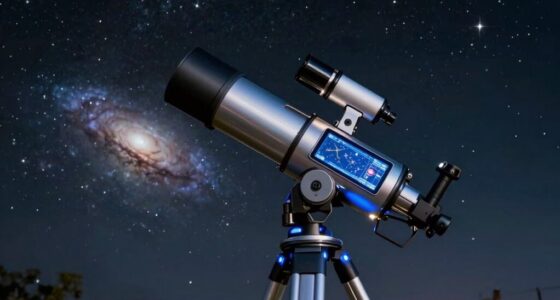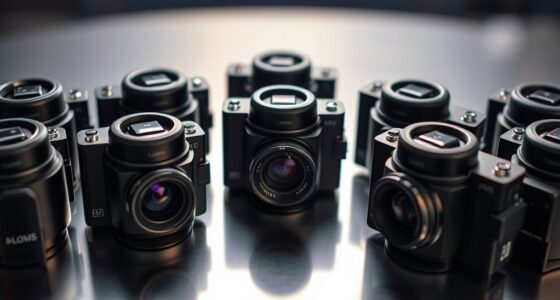

Choosing the right CMOS astro camera in 2026 hinges on your specific imaging goals, budget, and experience level. The SVBONY SV605CC stands out for those seeking high resolution and effective cooling for deep sky shots, while the SVBONY SV305C Pro offers excellent sensitivity for planetary imaging at a more accessible price point. For versatile travel-friendly options, the Kodak AZ425 and AZ653 provide impressive zoom and portability, but lack advanced astrophotography features. Finally, the SVBONY SC571CC caters to advanced deep-sky users demanding high resolution and long exposure capabilities. Each choice involves tradeoffs between complexity, cost, and specialized features, so understanding these differences is key to selecting the best fit.
Key Takeaways
- Cooled cameras like the SVBONY SV605CC are ideal for long-exposure deep sky imaging due to noise reduction.
- High sensitivity sensors like the IMX662 and IMX571 enable detailed planetary and deep sky shots but come at a higher cost.
- Optical zoom cameras such as the Kodak AZ653 excel in versatility and daytime photography but are less suited for astrophotography.
- Complex setups and higher prices are common among high-end deep sky cameras, which require some technical skill.
- Portability and ease of use vary widely, with some models favoring advanced features over simple operation.


| cmos astro camera | Sensor | Resolution |
|---|---|---|
| SVBONY SV605CC Cooled Astropho | IMX533 CMOS | 3008×3008 |
| SVBONY SV305C Pro Telescope Ca | IMX662 | 1920×1080 |
| Kodak Pixpro AZ425 Astro Zoom | — | 20MP |
| Kodak PIXPRO AZ653 Astro Zoom | 20 MP BSI CMOS | — |
| SVBONY SC571CC Cooled Color As | IMX571 CMOS APS-C | 26MP |
More Details on Our Top Picks
SVBONY SV605CC Cooled Astrophotography Camera, 9MP IMX533 USB3.0 CMOS Color Telescope Camera
The SVBONY SV605CC stands out for its high-resolution 9MP sensor and dual-layer refrigeration that cools to 30°C below ambient, making it ideal for capturing faint deep sky objects with minimal noise. Its USB3.0 interface ensures fast data transfer, crucial for long exposures and high frame rate imaging. Compared with the SVBONY SC571CC, it’s more accessible for beginners yet still offers professional-level image quality. However, its setup can be complex, and it may require a compatible telescope and additional accessories for optimal results.
Pros:- High-resolution 9MP sensor with excellent image clarity
- Effective dual-layer cooling reduces noise significantly
- Versatile for deep sky, meteor monitoring, and panoramic imaging
Cons:- Requires compatible and often complex mounting setup
- Setup might be challenging for newcomers
- Limited details on integrated features like autofocus or filters
Best for: Deep sky astrophotographers who want high resolution and effective noise reduction
Not ideal for: Beginners seeking plug-and-play options or planetary imaging
- Sensor:IMX533 CMOS
- Resolution:3008×3008
- Pixel Size:3.76μm
- Cooling:Dual-layer refrigeration to 30°C below ambient
- Interface:USB3.0
- Application:Deep sky, meteor, panoramic
Our verdict“A highly capable deep sky camera for enthusiasts ready to handle a more complex setup.”
SVBONY SV305C Pro Telescope Camera, 2MP USB 3.0 Astrophotography Camera with IMX662 Sensor
The SVBONY SV305C Pro excels at planetary and lunar imaging thanks to its high sensitivity and fast frame rates. Its 2MP IMX662 sensor captures fine planetary detail even in low-light conditions, and its 107FPS capability makes it excellent for capturing fleeting moments or stacking video frames. It’s more straightforward to set up than the deep sky cameras, making it suitable for enthusiasts who want quick results without complex calibration. Compared with the larger, cooled models, it’s less suited for faint deep sky objects but offers a more responsive experience for planetary work.
Pros:- High sensitivity sensor with low noise
- Fast frame rate for planetary video capture
- Supports long exposures and ROI for targeted imaging
Cons:- Cannot connect directly to iPads or mobile devices
- Requires a computer for operation
- Limited to planetary and bright targets
Best for: Planetary and lunar astrophotographers seeking high frame rates and sensitivity
Not ideal for: Deep sky imaging or users needing long exposure capability
- Sensor:IMX662
- Resolution:1920×1080
- Frame Rate:107FPS
- Buffer Memory:128MB DDR
- Interface:USB 3.0
- Compatibility:PC, MacBook
Our verdict“A dedicated planetary camera delivering high detail with fast data transfer, ideal for focused planetary imaging.”
Kodak Pixpro AZ425 Astro Zoom 20MP Digital Camera
The Kodak Pixpro AZ425 offers a 20MP sensor combined with a massive 42x optical zoom, making it a flexible choice for daytime and casual astrophotography. Its optical image stabilization ensures sharp images across various conditions, and the 3-inch LCD makes framing straightforward. Compared with dedicated astro cameras, it’s less suited for long exposures or deep sky imaging but provides impressive zoom capabilities for terrestrial photography and quick star shots. Its bulkier design and basic manual controls limit its appeal for serious astrophotographers.
Pros:- Massive 42x optical zoom for versatile shooting
- Optical stabilization for steady images
- Includes accessories for immediate use
Cons:- Bulky and less portable
- Limited to basic photo features
- Not designed for long exposure astrophotography
Best for: Casual users or travelers wanting versatile zoom in a single device
Not ideal for: Dedicated astrophotographers needing long exposure or deep sky imaging
- Resolution:20MP
- Optical Zoom:42x
- Display:3 inch LCD
- Video:1080p Full HD
- Includes:SD Card, HDMI, tripod
Our verdict“An accessible zoom camera suited for casual daytime and quick night shots, but not for serious astrophotography.”
Kodak PIXPRO AZ653 Astro Zoom Digital Camera, 65x Optical, 20MP, 24mm Wide Angle, 1080p HD Video, WiFi, Black
The Kodak AZ653 extends the zoom to 65x, paired with a 20MP BSI CMOS sensor that captures detailed images across a variety of scenes. Its 24mm wide-angle lens and full HD video capability make it a solid choice for outdoor photography, travel, and casual astrophotography, especially with its wireless sharing feature. While it offers impressive zoom for daytime use, it lacks the manual controls and sensor quality needed for high-quality deep sky images. It’s a good choice for users who want a multi-purpose camera with astrophotography as a secondary feature.
Pros:- Powerful 65x optical zoom
- High-resolution 20MP sensor
- WiFi sharing and full HD video
Cons:- Bulkier and less portable
- Limited manual controls for astrophotography
- Not ideal for deep sky imaging
Best for: Travelers and outdoor enthusiasts seeking zoom versatility with decent image quality
Not ideal for: Dedicated astrophotographers needing long exposures or high sensitivity sensors
- Sensor:20 MP BSI CMOS
- Optical Zoom:65x
- Video:1080p HD
- WiFi:Yes
- Display:3 inch LCD
Our verdict“A versatile camera with impressive zoom, best suited for general outdoor photography with occasional astrophotography use.”
SVBONY SC571CC Cooled Color Astronomy Camera with IMX571 CMOS Sensor
The SVBONY SC571CC is engineered for serious astrophotographers with its 26MP IMX571 APS-C sensor and dual-stage TEC cooling that reduces noise to -35°C below ambient. Its large sensor size and high dynamic range enable capturing intricate deep sky details with long exposures, rivaling more expensive setups. Compared to the SV605CC, it offers higher resolution and better suitability for complex setups, but its weight and complexity mean it’s less portable and requires more technical knowledge. This camera is designed for dedicated astrophotographers aiming for professional-quality deep sky images.
Pros:- High-resolution 26MP sensor captures fine details
- Effective cooling system minimizes noise for long exposures
- Dew prevention feature enhances image consistency
Cons:- Heavy and less portable
- Requires technical expertise for setup
- Higher price point
Best for: Experienced deep sky astrophotographers needing high resolution and low noise
Not ideal for: Beginners or casual users due to setup complexity and cost
- Sensor:IMX571 CMOS APS-C
- Resolution:26MP
- Sensor Size:23.4×15.7mm
- Pixel Size:3.76 µm
- Cooling:Dual-stage TEC to -35°C
- Connectivity:USB 3.0 Type C
Our verdict“A high-end deep sky camera that excels in resolution and noise reduction but demands technical skill and investment.”

How We Picked
Our selection process focused on CMOS cameras that cater specifically to astrophotography needs, emphasizing sensor quality, cooling efficiency, data transfer speed, and overall versatility. We compared models based on resolution, sensor size, suitability for various astrophotography styles, and user interface complexity. Cost was also a factor, balancing advanced features with accessibility for enthusiasts at different levels. Cameras designed explicitly for deep sky, planetary, or general astrophotography were prioritized, with an eye on real-world application and ease of integration with common telescopes and software.
Factors to Consider When Choosing Cmos Astro Camera
When selecting a CMOS astro camera, it’s essential to match the device’s capabilities with your specific imaging goals. Beginners should prioritize ease of use and affordability, while advanced users need high resolution, cooling, and long exposure support. Consider sensor size, cooling effectiveness, connectivity, and software compatibility to ensure your camera integrates smoothly with your telescope and workflow. Balance these factors against your budget and experience level to find the best fit.
Sensor Quality and Resolution
The core of any astro camera is its sensor. Larger sensors like the APS-C IMX571 provide more detail for deep sky imaging, while smaller sensors such as the IMX662 are optimized for planetary detail. Resolution matters, but also consider pixel size; larger pixels gather more light, improving sensitivity and reducing noise during long exposures. Match sensor capabilities with your target objects and expected imaging conditions to choose wisely.
Cooling and Noise Reduction
Cooling technology significantly enhances image quality by reducing thermal noise during long exposures. Dual-stage TEC cooling systems, like those in the SVBONY SC571CC, lower temperature by up to 35°C below ambient, making them ideal for deep sky work. Less advanced cooling, such as fan-based or no cooling, may suffice for planetary or casual imaging but will struggle with faint objects or extended exposures.
Connectivity and Software Compatibility
USB 3.0 interfaces are standard for high-speed data transfer, crucial for handling large image files or video streams. Compatibility with popular astrophotography software (like SharpCap or PHD2) can streamline your workflow. Some cameras support guiding interfaces like ST4, simplifying tracking. Evaluate your computer or tablet setup to ensure compatibility, especially if portability or remote operation is important.
Portability and Ease of Use
Some cameras are designed for fieldwork—compact, lightweight, and simple to connect—while others are more complex and require technical expertise. If you’re starting out or traveling frequently, prioritize models that balance performance with portability. Advanced deep sky cameras often demand more setup time and technical knowledge, so consider your comfort level when choosing.
Frequently Asked Questions
What is a CMOS astro camera?
A CMOS astro camera is a specialized digital imaging device that uses CMOS sensors to capture images of celestial objects. These cameras are favored for their fast data transfer, low power consumption, and increasingly competitive image quality compared to CCD sensors. They are used across a range of astrophotography applications, including deep sky imaging, planetary observation, and wide-field astrophotography.
Why is cooling important in astrophotography cameras?
Cooling reduces thermal noise generated by the sensor during long exposures. This noise can obscure faint details in deep sky images, so models with effective cooling, like TEC systems, enable astrophotographers to capture cleaner, more detailed images. Cooling is especially vital for long-exposure deep sky imaging, where noise can significantly degrade image quality.
Can I use these CMOS cameras with my existing telescope?
Most CMOS astro cameras are designed to be compatible with standard telescope mounts via adapters or T-rings. However, it’s important to verify the camera’s connection type and mounting options, and ensure your telescope’s focus compatibility. Some models, especially those with high resolution or cooling, may require additional accessories or specific setup procedures.
Are CMOS astro cameras suitable for beginners?
Yes, but with caveats. Entry-level models with simple interfaces, minimal setup, and basic features are ideal for beginners. However, advanced models with cooling, high resolution, or specialized software may pose a steep learning curve. Beginners should consider starting with more straightforward, budget-friendly options before progressing to more complex, high-end cameras.
What should I consider when choosing a CMOS astro camera?
Focus on the intended use—deep sky, planetary, or wide-field imaging—and match the sensor size, resolution, and cooling features accordingly. Assess your technical skill level since some cameras require more setup and calibration. Compatibility with your telescope and software, portability, and budget are also critical factors to ensure you select a camera that fits your needs and future growth.
Conclusion
If you are a beginner or casual astronomer, the Kodak AZ425 offers a straightforward, versatile option for daytime and quick night shots. More experienced astrophotographers aiming for high-quality deep sky images should consider the SVBONY SC571CC, with its high resolution and cooling capabilities. For planetary enthusiasts, the SVBONY SV305C Pro provides excellent sensitivity and fast frame rates. Budget-conscious users seeking portability may find the Kodak AZ653 suitable, though it lacks the specialized features of dedicated astrophotography cameras. Carefully weigh your imaging goals and technical comfort to select the best CMOS astro camera for 2026.