
TL;DR

Prime made for students and young adults
- Fast, free delivery for dorm and study essentials
- Prime Video and Amazon Music included
- Member-only deals
Saturn’s rings and moons create mesmerizing scenes, with shadows and clouds adding depth. Cassini’s detailed images reveal a complex system that still sparks curiosity, especially about potential habitability on moons like Enceladus and Titan.
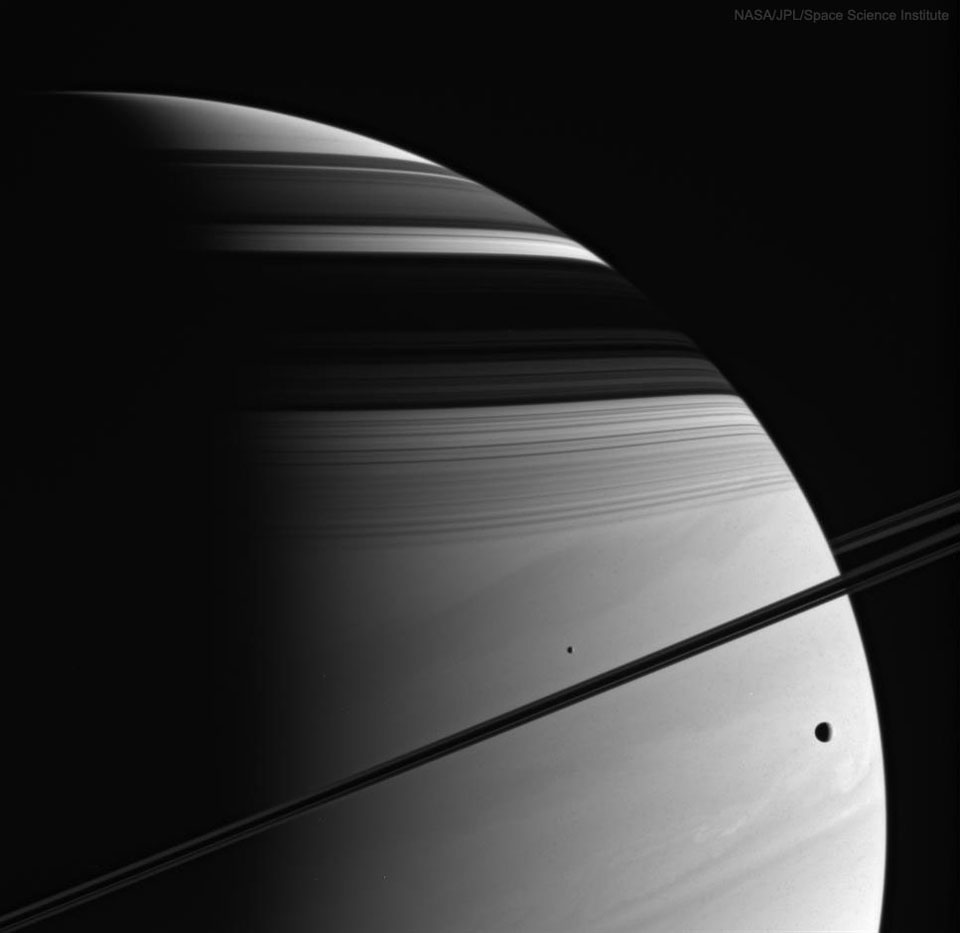
Imagine gazing up at a distant world where shimmering rings encircle a giant, cloud-covered sphere. That world is Saturn, a planet that has fascinated humans for centuries. Thanks to NASA’s Cassini spacecraft, we’ve seen this beauty up close, witnessing moons, shadows, and swirling clouds that tell a story of ancient cosmic forces.
In this article, you’ll learn what makes Saturn’s system so captivating—why its rings are so bright and complex, how its moons hide secrets beneath icy shells, and what shadows and clouds reveal about its turbulent atmosphere. Prepare for a vivid journey through the most stunning sights Saturn has to offer, all based on the incredible images captured by Cassini.
Key Takeaways
- Saturn’s rings are made of countless icy particles, creating a glittering, layered structure that changes with perspective and lighting.
- Moons like Titan and Enceladus are prime candidates in the search for extraterrestrial life, thanks to their thick atmospheres and subsurface oceans.
- Shadows and cloud formations on Saturn reveal a turbulent, active atmosphere with storms that can last for months.
- Cassini’s close flybys during the Grand Finale uncovered the rings’ youth and Saturn’s internal secrets, revolutionizing our understanding.
- Viewing Saturn at opposition or when rings tilt toward Earth provides the best chance to see its stunning features with even modest telescopes.
telescope for planetary observation
As an affiliate, we earn on qualifying purchases.
As an affiliate, we earn on qualifying purchases.
Why Saturn’s Rings Look Like a Cosmic Art Show
Saturn’s rings are a glittering display of icy particles, some as tiny as dust and others as large as a house. Their brightness and structure come from the reflection of sunlight off these frozen fragments, creating a spectacular scene visible even with small telescopes from Earth.
Many images from Cassini show the rings nearly edge-on, revealing the thinness of this cosmic frisbee. The Cassini Division, a dark gap between the A and B rings, is caused by gravitational tugging from nearby moons. The textures—ripples, waves, and tiny gaps—are like a finely woven tapestry, shaped by gravity and collisions.
Understanding the structure of Saturn’s rings is crucial because it offers insights into the history of the planet and its environment. The delicate balance of particles—held in place by gravity, yet constantly colliding—suggests a dynamic system that is both ancient and evolving. Studying these interactions helps scientists unravel how planetary rings form, persist, or dissipate over time, which in turn informs our understanding of other ring systems in the universe.
Pro tip: To capture the best view of Saturn’s rings, use a long focal length telescope (at least 300mm). Early morning or late evening, when Earth’s atmosphere is calmer, will give sharper images.
As an affiliate, we earn on qualifying purchases.
Meet the Moons That Make Saturn a World of Its Own
Saturn’s moons are like a family of icy worlds, each with its own story. Cassini revealed over 80 moons, but Titan and Enceladus stand out for their surprises.
Titan, larger than Mercury, sports a thick nitrogen-rich atmosphere. Its hazy orange sky conceals lakes of liquid methane, making it a prime target in the search for extraterrestrial life. The complex chemistry and stable liquids on Titan suggest it could be a laboratory for prebiotic conditions, which is why scientists are eager to explore it further. Understanding Titan’s environment helps us grasp the potential for life in environments very different from Earth, broadening our perspective on habitability.
Enceladus, a tiny but mighty moon, ejects plumes of water vapor and ice from its south pole. These jets hint at a subsurface ocean, possibly salty and warm enough to harbor microbes. Cassini’s flybys detected organic molecules in these plumes, fueling hopes of finding life. The presence of such a subsurface ocean indicates a potential for habitability, as liquid water is a key ingredient for life. Studying Enceladus also reveals how planetary bodies can sustain oceans beneath icy crusts, an insight that expands our search for life beyond Earth.
Real-world scenario: Enceladus’s water plumes are like cosmic geysers—only instead of hot springs, they’re icy jets erupting into space, revealing hidden oceans beneath. These discoveries motivate future missions aiming to sample these plumes directly, as they could contain clues about life’s existence in environments far from our planet.
As an affiliate, we earn on qualifying purchases.
Shadows and Clouds: The Dynamic Atmosphere of Saturn
Saturn’s atmosphere is a swirling, ever-changing chaos. Cassini images often show shadows cast by the rings onto the planet’s cloud tops, creating surreal, layered visuals. These shadows can stretch hundreds of miles, giving a sense of depth and scale.
Cloud formations shift with the seasons, forming storms and jet streams similar to those on Jupiter or Earth. One example: a massive storm observed in 2010, lasting for months and encircling the planet like a giant cyclone. These phenomena demonstrate that Saturn’s atmosphere is both complex and active, with energy exchanges that rival those of more familiar planets.
Understanding these atmospheric dynamics is essential because they influence the planet’s climate, weather patterns, and even the behavior of its magnetic field. The interplay of clouds, storms, and shadows reveals a system driven by internal heat and solar energy, shaping a turbulent yet structured environment. This complexity offers clues about planetary atmospheres in general, including those of exoplanets orbiting distant stars.
Tip: To see these features from Earth, look for Saturn when it’s high in the sky during opposition, and use a medium to large telescope for the best detail.
As an affiliate, we earn on qualifying purchases.
How Cassini’s Final Orbits Gave Us Close-Up Secrets
Before ending its mission in 2017, Cassini performed daring dives between Saturn and its rings. These ‘Grand Finale’ orbits brought the spacecraft just 1,700 miles above the cloud tops, revealing secrets never seen before.
Scientists used these close passes to measure Saturn’s gravity, revealing the planet’s internal structure. They also analyzed the magnetic field and captured ultra-detailed images of the rings’ composition and edges. These insights allowed researchers to refine models of Saturn’s core and understand how its magnetic environment interacts with its rings and moons. The detailed data from these final orbits provided a more comprehensive picture of Saturn’s interior and its dynamic processes, offering clues about planetary formation and evolution in our solar system.
One stunning discovery: the rings are younger than Saturn itself—perhaps only 100 million years old—meaning they formed after the planet’s birth. This challenges previous assumptions about the age of planetary rings and suggests a more recent event in Saturn’s history that created or replenished them.
Tip: For amateur astronomers, watching Saturn during its opposition or when rings are tilted in your sky offers the best chance to glimpse its majestic structure.
Compare the Giants: Saturn’s Rings & Moons at a Glance
| Feature | Details |
|---|---|
| Size of Main Rings | Up to 175,000 miles across, but only 10 yards thick |
| Most Famous Moons | Titan (size of Mercury), Enceladus (ice plumes) |
| Surface Composition | Primarily ice particles, with some rocky debris |
| Ring Composition | Mostly water ice, with minor rocky material |
| Active Features | Enceladus’s geysers, Titan’s methane lakes |
Frequently Asked Questions
How can I see Saturn’s rings from Earth?
During opposition, when Saturn is closest to Earth, you can see its rings with a good telescope. Use a telescope of at least 4 inches (100mm) for clear detail, and aim for times when Saturn is high in the sky to avoid atmospheric blurring.What makes Enceladus so interesting to scientists?
Enceladus ejects water-ice plumes from its south pole, indicating a subsurface ocean. These plumes contain organic molecules, making it one of the top targets for studying potential habitability beyond Earth.Why are Saturn’s rings so bright and extensive?
The rings are made mostly of water ice reflecting sunlight brilliantly. Their vast size—up to 175,000 miles across—combined with their thinness, makes them appear as a glowing band in the night sky.Did Cassini find any signs of life on Saturn’s moons?
While Cassini detected organic molecules and water-ice plumes, it didn’t find direct signs of life. However, the evidence of subsurface oceans on moons like Enceladus keeps the hope alive for future missions.Will there be more missions to Saturn after Cassini?
No concrete missions are planned yet, but NASA and other agencies continue to study Saturn’s environment and prepare for future explorations that could build on Cassini’s discoveries.Conclusion
Saturn isn’t just a distant dot in the sky; it’s a vibrant, complex world full of icy moons, shimmering rings, and swirling clouds. Each new image from Cassini reminds us that this giant planet still holds mysteries worth exploring.
When you look up tonight, imagine those distant shadows, icy geysers, and glowing rings—each telling a story written over billions of years. Keep your eyes on the sky, because Saturn’s beauty is always waiting to surprise you.
Fall Picks
fall essentials
As an affiliate, we earn on qualifying purchases.