
TL;DR
NASA’s Pathfinder, landing on Mars in 1997, was the first successful rover mission. It demonstrated groundbreaking landing tech and provided key insights into Mars’ surface, inspiring future missions and laying the groundwork for human exploration.
Imagine bouncing onto another world, airbags popping, dust swirling, and a tiny robot rolling out to explore alien rocks. That’s exactly what NASA achieved on July 4, 1997, with the Mars Pathfinder. This small spacecraft wasn’t just a landing device; it was a trailblazer in robotic space exploration. Today, nearly three decades later, its legacy still shapes our pursuit of Mars.
On this anniversary, we celebrate more than just a landing. We reflect on a mission that proved robots could survive, analyze, and send back stunning data from the Red Planet. This story isn’t just about a historic event—it’s about how a tiny rover sparked a giant leap for planetary science and future human dreams.
Pathfinder’s innovative airbag landing system revolutionized Mars entry technology, reducing risks for future missions.
The Sojourner rover proved small robotic explorers could conduct meaningful science on Mars, inspiring more advanced rovers.
Photographing Mars from Earth requires patience, proper gear, and understanding opposition timing—great images are within reach.
Pathfinder’s success established a blueprint for future missions, encouraging international collaboration and technological leaps.
Every new Mars mission builds on Pathfinder’s lessons, bringing us closer to answering whether life ever existed on the Red Planet.
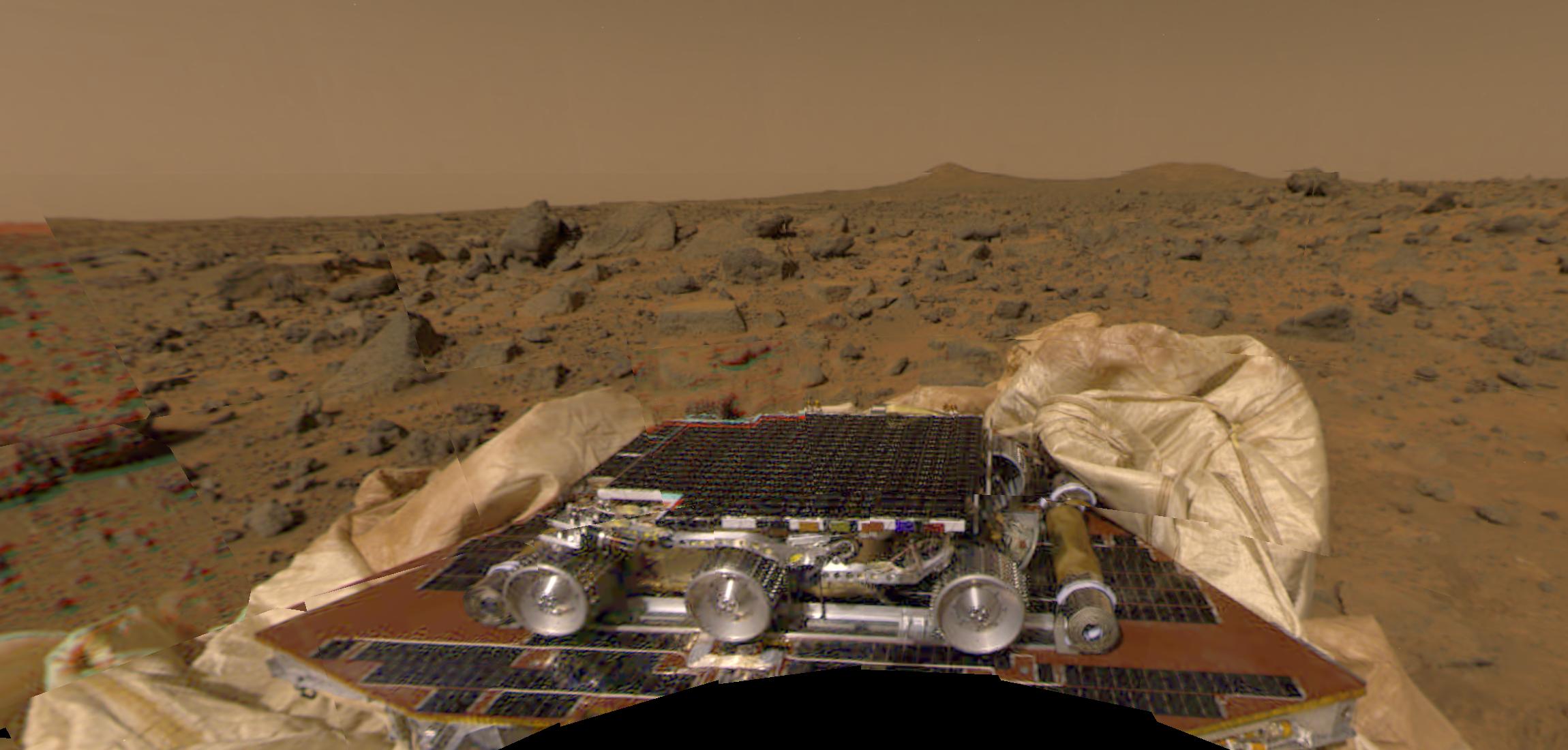
Why Pathfinder’s Landing Was a Game-Changer for Mars Missions
Pathfinder used a daring, innovative landing method: airbags bouncing across the Martian surface before coming to a halt. Imagine a beach ball thrown onto a rocky, dusty field—then bouncing a dozen times. This technique reduced the risk of crash-landing and allowed NASA to explore a previously unreachable terrain.
This approach proved that precision soft landings on Mars were possible without enormous rockets or complex systems. It opened the door for subsequent missions like Curiosity and Perseverance, which rely on similar, but more advanced, landing tech.
For example, Pathfinder’s landing site in Ares Vallis presented a rocky floodplain—ideal for studying sediment layers and volcanic rocks. This terrain revealed clues about Mars’ volcanic past and water history, setting a precedent for future scientific targets.
Understanding the implications, this landing technique showed that engineering tradeoffs—such as the increased complexity of airbags versus the safety of landing—could be balanced to achieve successful landings. It also demonstrated that innovative solutions could mitigate the risks inherent in landing on a planet with unpredictable terrain and thin atmosphere, which are major hurdles for exploration. This success fundamentally shifted how NASA approached landing strategies, prioritizing adaptability and resilience in future designs. The ability to land safely on such challenging terrain meant that future missions could target more scientifically interesting and diverse landing sites, greatly expanding our understanding of Mars’ geology and potential habitability.

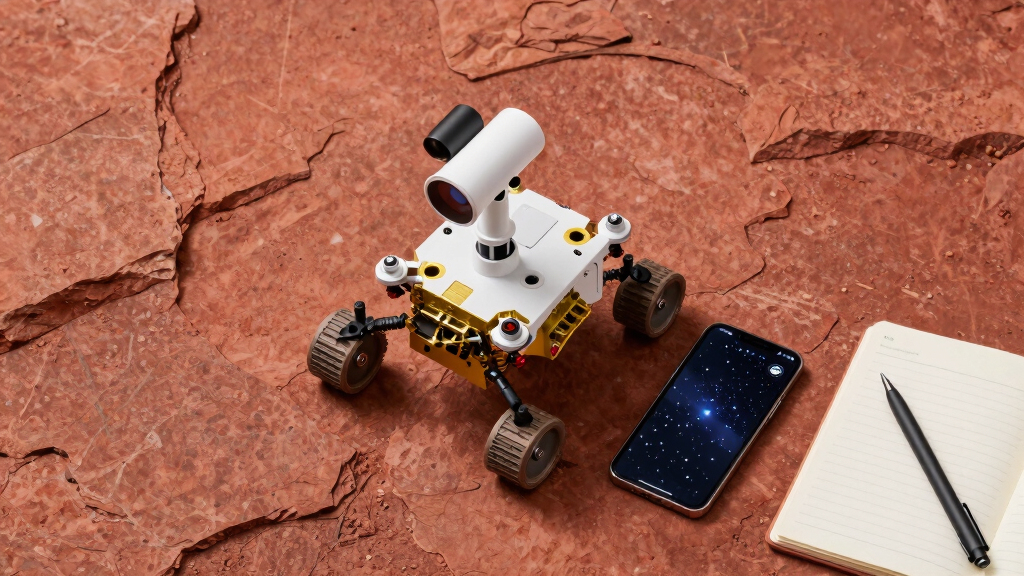
SunFounder GalaxyRVR Mars Rover STEM Kit for Arduino, Compatible with Uno R3, Rocker-Bogie Suspension,Scratch,C,Camera, FPV, for Students, Educators, Engineers
- Mars Rover Compatibility: Compatible with Arduino Uno R3
- Realistic Suspension System: Inspired by NASA's rocker-bogie design
- All-Terrain Capability: Handles rocks, sand, grass, and mud
As an affiliate, we earn on qualifying purchases.
As an affiliate, we earn on qualifying purchases.
How Did the Little Rover Change Our View of Mars?
The six-wheeled Sojourner rover, about the size of a large house cat, was the first robotic explorer to roll across Martian soil. It was equipped with cameras and scientific instruments, analyzing rocks and soil samples. It confirmed Mars had volcanic deposits and sedimentary layers—clues that water once flowed there.
Picture this: Sojourner scooting over a dusty hill, pausing to analyze a jagged rock, then sending back images with colors so vivid they look surreal. Its discoveries transformed Mars from a distant, mysterious planet into a world that might have once hosted life.
Beyond just identifying surface materials, Sojourner’s data provided critical insights into Mars’ geological history. It helped scientists understand the planet’s past climate and water activity, which are essential for assessing habitability. The rover’s success also highlighted the potential of small, cost-effective robotic explorers to perform meaningful scientific work, which has implications for future missions where budget constraints make large, complex rovers less feasible. This shift in perspective—seeing Mars as a place that could have supported life—created new scientific priorities and inspired the design of more sophisticated exploration tools. It demonstrated that even modest robotic missions could unlock profound planetary secrets, ultimately influencing the strategic planning for subsequent exploration efforts.
Furthermore, Sojourner’s success underscored the importance of rapid development and cost-effective engineering in planetary exploration. It proved that smaller, more nimble robotic platforms could deliver valuable scientific data without the need for massive, expensive missions. This realization encouraged NASA and other space agencies to pursue a broader portfolio of robotic explorers, enabling more frequent and diverse scientific investigations. In essence, Sojourner didn’t just analyze Mars; it changed how we think about exploring other planets—making robotic exploration more accessible, adaptable, and scientifically productive.

James Webb Telescope Space Observatory 2021 Universe T-Shirt
- Next-Gen Space Telescope: Succeeding Hubble for clearer images
- Universal Gift Idea: Ideal for men, women, boys, girls
- Perfect for Space Enthusiasts: Great for geeks, astronomers, engineers
As an affiliate, we earn on qualifying purchases.
As an affiliate, we earn on qualifying purchases.
How to Photograph Mars Like a Pro (From Earth)
- Pick the right gear: Use a telescope with at least a 4-inch aperture for clear detail, and a camera capable of high-resolution imaging.
- Choose the best time: Mars is closest to Earth during opposition, which occurs roughly every 26 months. The next one is in late 2028, but even now, Mars is bright and large in the night sky.
- Use stable mounting: A sturdy mount prevents shake. Consider a tracking mount that follows Mars’ movement across the sky.
- Capture multiple images: Take several shots to combine later, reducing noise and sharpening details.
- Process with software: Use stacking and enhancement tools to bring out surface features like polar caps, dark markings, and dust storms.
For example, during a recent opposition, a hobbyist with a 6-inch telescope captured stunning images showing Mars’ dark markings and polar ice caps—reminding us that with patience and the right gear, Mars reveals its secrets from your backyard.

Einstein’s “Voyage to Mars Science Kit for Kids. STEM for Boys & Girls Aged 8 and Above. 12 Exciting Experiments Inside. Detailed Picture Guide Included.
- Explore Mars and Space Science: Discover Mars and planetary phenomena
- Engaging STEM Experiments: Hours of fun with hands-on activities
- Educational Picture Guide: Detailed visual instructions included
As an affiliate, we earn on qualifying purchases.
As an affiliate, we earn on qualifying purchases.
How Does Pathfinder’s Success Shape Future Missions?
Pathfinder laid the foundation for all subsequent Mars robotic explorers. Its success proved that small, lightweight landers could survive entry, descent, and landing on Mars. This success made way for more complex missions with advanced science payloads, like Perseverance’s instruments searching for signs of past life.
Today, future missions are building on that legacy. Sample return plans, autonomous navigation, and AI-driven analysis all trace their roots back to Pathfinder’s pioneering approach. It’s like planting a flag that says, “We can do this,” and then building a city around it.
With each new mission, NASA and international partners aim to expand our knowledge—more samples, longer stays, and maybe even prepping for human footprints. Pathfinder was just the beginning of a much larger story.
Understanding the broader implications, Pathfinder’s success demonstrated that incremental innovation—refining landing and mobility tech—could lead to exponential gains in scientific return. It showed that investing in robust, adaptable systems allows for more ambitious goals, like exploring diverse terrains or conducting complex experiments. This approach has influenced how agencies prioritize mission design, emphasizing resilience, scalability, and scientific versatility as key to unlocking Mars’ secrets. The tradeoffs involved—such as balancing simplicity with capability—highlight the importance of strategic engineering decisions that maximize scientific output while managing risk. Pathfinder’s success proved that carefully designed, resilient systems could overcome the challenges of Mars’ unpredictable environment, setting a new standard for future exploration strategies.
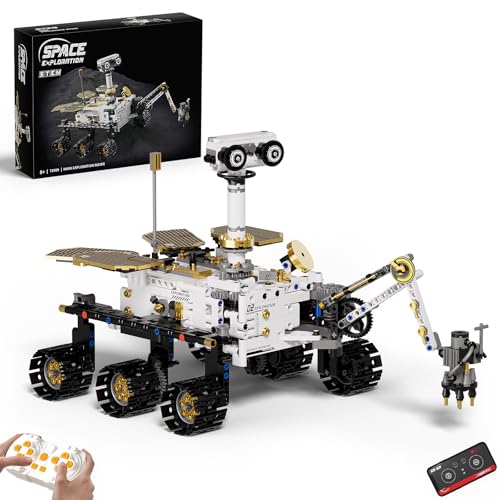
DOLIVE Remote & APP Controlled Mars Rover, STEM Building Set for Boys Ages 8-14, Space Toys for Kids Ages 8-12, Science Gift for Boys & Girls (1007 PCS)
- Remote & App Control: Control with remote and app on four channels
- 360° Rotation Stunts: Perform 360° rotation with remote and app
- Easy Assembly: Lightweight, smooth-edged, clear instructions
As an affiliate, we earn on qualifying purchases.
As an affiliate, we earn on qualifying purchases.
Mars Exploration: The Next Step After Pathfinder
The next phase involves more sophisticated rovers, sample-return missions, and even preparations for human landings. NASA’s upcoming Rosalind Franklin rover, for example, will drill deeper into the Martian crust searching for biosignatures. These missions are like upgrading from a bicycle to a spaceship—more capabilities, more discoveries.
Meanwhile, international collaborations are growing. The European Space Agency’s ExoMars mission, for example, aims to analyze subsurface ice and organic molecules. It’s a global effort to unlock Mars’ ancient secrets and maybe, just maybe, find signs of past life.
All these efforts start from the groundwork laid by Pathfinder—proof that we can land, explore, and learn from another world.
Understanding the broader context, these upcoming missions reflect a strategic shift toward more integrated scientific campaigns that combine in-situ analysis with sample return and eventual human exploration. The lessons from Pathfinder—especially its emphasis on reliable landing tech and mobility—remain central to designing these complex endeavors. Each new mission aims to build upon the proven capabilities of past explorers, seeking to answer fundamental questions about Mars’ habitability, climate history, and potential for supporting future human presence.
Frequently Asked Questions
Why was the Pathfinder mission so important for Mars exploration?
It was the first successful mission to land a rover on Mars, demonstrating new landing tech and proving robots could explore the surface effectively. This opened the door for future, more advanced missions.
What did Sojourner discover on Mars?
Sojourner analyzed rocks and soil, confirming volcanic and sedimentary materials, and provided early clues that Mars once had water, shaping our understanding of the planet’s history.
How has Mars exploration evolved since Pathfinder?
From simple landers to complex rovers like Curiosity and Perseverance, missions now include sophisticated science tools, autonomous navigation, and sample collection, all building on Pathfinder’s pioneering success.
Are humans going to Mars anytime soon?
Human exploration is still in planning stages, but robotic missions like Pathfinder have laid the technological and scientific groundwork needed before humans set foot on the Red Planet.
What’s next for Mars exploration?
Future missions aim to return samples to Earth, search for signs of past life, and prepare for human landings, continuing the trail Pathfinder blazed nearly three decades ago.
Conclusion
Pathfinder’s tiny footprint on Mars changed the game forever. It proved that robotic explorers could survive the journey, analyze the terrain, and send back stunning data. As we look toward future missions and even human footprints, remember that each step builds on this small but mighty pioneer’s legacy.
The Red Planet’s story is still being written, and every new chapter starts with the lessons of Pathfinder—bold, innovative, and full of promise. Keep your eyes on the sky; the next discovery might be just around the corner.