
TL;DR

Prime made for students and young adults
- Fast, free delivery for dorm and study essentials
- Prime Video and Amazon Music included
- Member-only deals
Tonight, the Moon’s eastern edge features the Mare Orientale, a massive impact basin barely visible from Earth. Recent lunar missions have brought new clarity and detail to this ancient scar, showing how our view of the Moon varies worldwide and revealing the ongoing human fascination with our celestial neighbor.
Ever looked up at the Moon and wondered what secrets it holds? Tonight’s Moon offers a stunning view of the Mare Orientale, a giant impact basin on the far side of the Moon that’s rarely visible from Earth. Despite being almost on the edge, its striking rings and ripples tell a story of violent cosmic history.
From your backyard, the Moon may seem familiar, but recent lunar missions and advanced telescopes are peeling back layers of mystery. This article dives into what makes the Mare Orientale so special, how our view varies across the globe, and the latest discoveries that bring this ancient scar into sharper focus.
The Mare Orientale is a massive impact basin over 3 billion years old, visible from lunar orbit and during favorable librations from Earth.
Your location and the Moon’s libration determine whether you can see this feature—timing and equipment matter.
Recent lunar missions have revealed detailed layers and volcanic activity within the basin, rewriting parts of lunar history.
Using a telescope with a long focal length during the right libration phase can bring Mare Orientale into dramatic view.
The Moon’s surface is still revealing secrets; each mission adds a new layer to our understanding of lunar evolution.
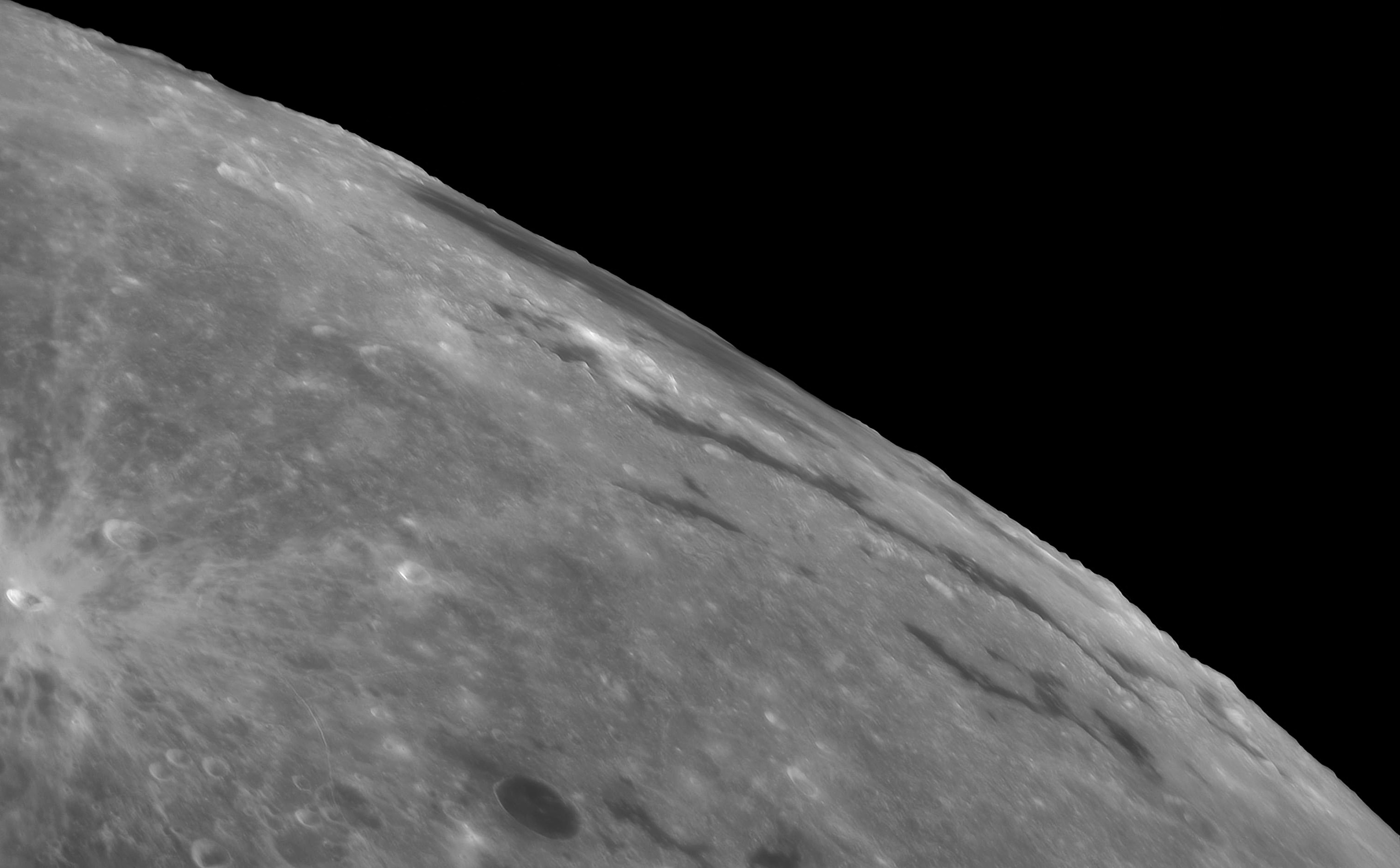
What is the Mare Orientale and why does it matter?
The Mare Orientale, Latin for ‘Eastern Sea’, is a colossal impact basin stretching nearly 1,000 kilometers across. Formed over 3 billion years ago, it’s one of the youngest large lunar basins, and its complex structure provides critical insights into the Moon’s formative years. The concentric rings and ripples in the basin are not just striking visuals—they are the footprints of immense forces that shaped the lunar crust.
Understanding why Mare Orientale matters is a matter of unlocking the Moon’s geological history. Its multi-ring structure indicates a violent impact that caused widespread crustal deformation, which in turn affected volcanic activity and crustal layering. These features serve as a natural archive, helping scientists interpret the sequence of events that sculpted the lunar surface.
Moreover, the basin’s layered deposits and volcanic fills reveal the Moon’s capacity for internal activity long after the impact, challenging previous notions of a static lunar surface. The study of Mare Orientale’s unique features thus opens windows into planetary impact mechanics, crustal responses, and volcanic evolution—lessons that extend to understanding other planetary bodies and their histories.
telescope with long focal length for lunar viewing
As an affiliate, we earn on qualifying purchases.
As an affiliate, we earn on qualifying purchases.
How the Moon’s appearance changes from different parts of the world
Ever noticed how the Moon looks different depending on where you stand? From North America, the Mare Orientale is nearly on the far side, hidden from view most of the time. But during certain librations—tiny wobbles of the Moon—it peeks into view, especially around the edges. These librations are not just quirks; they are windows that momentarily expose features otherwise hidden, offering a fleeting glimpse into lunar regions like Mare Orientale that are otherwise inaccessible from Earth.
In East Asia, the eastern horizon often offers a clearer look at the Moon’s western limb, revealing the dark mare and its bright crater rims. As the Moon orbits and its tilt shifts, your geographic location and the lunar phase determine whether you see a thin crescent or a full glow—each revealing different lunar features. This variability means that our understanding of the Moon’s surface is inherently linked to our vantage point, and the subtle dance of libration is a key factor in what features we can observe at any given time.
These variations matter because they influence both amateur observations and scientific studies. Recognizing how libration and location affect visibility helps astronomers plan observations and interpret lunar data more accurately, understanding that our view is just a snapshot in a constantly shifting lunar landscape.
As an affiliate, we earn on qualifying purchases.
The latest lunar missions reveal new details about Mare Orientale
Recent lunar missions, like NASA’s Artemis program and orbiters from international partners, have sharply increased the resolution and depth of our understanding of Mare Orientale. High-resolution images from lunar orbiters now show detailed concentric rings, ejecta patterns, and even subsurface structures that were previously hidden. These detailed visuals are not just pretty pictures—they are vital clues that help scientists decode the basin’s formation and evolution.
One breakthrough came from advanced radar imaging, which detected layered basaltic lava flows filling parts of the basin. This suggests that volcanic activity persisted long after the initial impact, reshaping the basin’s features and adding complexity to its history. Such discoveries challenge earlier assumptions that impact basins are static scars, revealing instead that they can be dynamic and geologically active over billions of years.
Imagine a spacecraft orbiting at just 100 kilometers above the lunar surface, capturing images so detailed you can distinguish individual boulders and subtle surface textures. This level of detail is now achievable thanks to modern technology, transforming our understanding of lunar geology. These advances allow scientists to analyze internal structures, volcanic deposits, and the timing of various events, painting a richer, more nuanced picture of Mare Orientale’s history.
The implications extend beyond pure curiosity: understanding impact and volcanic processes on the Moon informs planetary science as a whole. The ability to interpret layered deposits and subsurface features helps us grasp the lifecycle of planetary crusts and the long-term effects of impacts and volcanism across celestial bodies.
As an affiliate, we earn on qualifying purchases.
Frequently Asked Questions
When is the best time to see Mare Orientale from Earth?
The best chance is during first or last quarter phases when libration favors the western limb of the Moon. Timing varies each month, so check lunar libration charts for precise windows.Can I see Mare Orientale with binoculars?
It’s very difficult with binoculars because the basin is on the Moon’s far side and only glimpsed during librations. A telescope with at least 4 inches aperture greatly improves your chances.What recent discoveries have changed our understanding of Mare Orientale?
Lunar orbiters have shown basaltic lava flows within the basin, indicating volcanic activity long after the impact. These findings reshape how we view the Moon’s geological history.Why was Mare Orientale called the ‘Eastern Sea’ if it’s on the Moon’s western edge?
The naming predates the 1961 lunar map convention reversal. Historically, the ‘Eastern Sea’ was named from Earth’s perspective, but now it’s understood as on the Moon’s far side.moon viewing binoculars for beginners
As an affiliate, we earn on qualifying purchases.
As an affiliate, we earn on qualifying purchases.
Conclusion
Tonight, the Moon’s western edge holds a story carved by cosmic violence—a story millions of years in the making. With the right gear and timing, you can glimpse Mare Orientale’s circular rings, connecting you directly to the Moon’s violent past.
Every lunar observation is a reminder: our closest neighbor is full of surprises, waiting for us to look up and wonder. So grab your telescope, check the skies, and see what stories the Moon still has to tell.
Halloween Picks
halloween
As an affiliate, we earn on qualifying purchases.