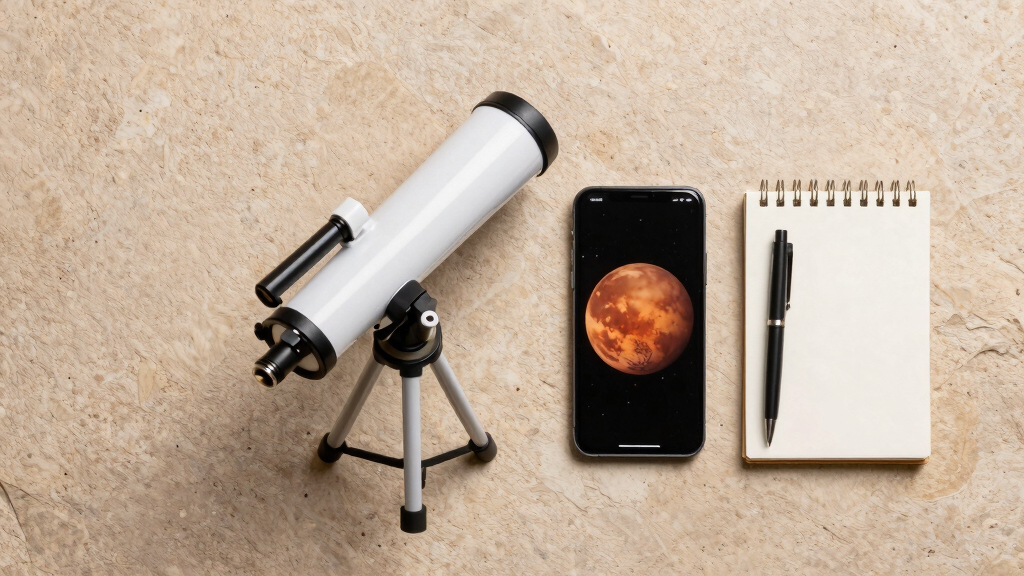

TL;DR

Get school and study supplies delivered free — and shop member deals
- Fast, free delivery on millions of items
- Access to Prime Big Deal Days deals on October 6–7
- Prime Video, Amazon Music and more included
NASA’s Mars Pathfinder, launched in 1997, was the first to deploy a rover on Mars, revolutionizing planetary exploration. Its legacy fuels ongoing missions and future ambitions for human exploration.
Imagine bouncing onto another world like a giant beach ball. That’s exactly what NASA achieved on July 4, 1997, with Mars Pathfinder. This tiny spacecraft didn’t just land— it rolled out history, opening a new chapter in exploring the Red Planet.
Now, nearly 30 years later, we celebrate how this small explorer changed everything. From its innovative landing tech to its pioneering rover, Pathfinder set the stage for the robotic armies that now roam Mars. Today, we’ll uncover what made this mission so groundbreaking—and why its legacy still fuels our dreams of human footprints on Mars.
Mars Pathfinder’s airbag landing system revolutionized how we land on rocky planets, proving safe touchdown is possible even in unpredictable terrain.
The Sojourner rover demonstrated that small, mobile robots could analyze planetary geology remotely—an idea that still drives current Mars missions.
Pathfinder’s success sparked a legacy of increasingly sophisticated rovers, orbiters, and sample-return missions that expand our understanding of Mars.
Future missions will likely combine Pathfinder’s innovative landing tech with new drilling and sample collection systems, pushing toward human exploration.
You can bring a piece of Mars exploration into your own world by capturing landscape photos with specific tips—wide-angle, high contrast, and strategic timing.
How Did Mars Pathfinder Land Safely on a Rocky, Dusty Surface?
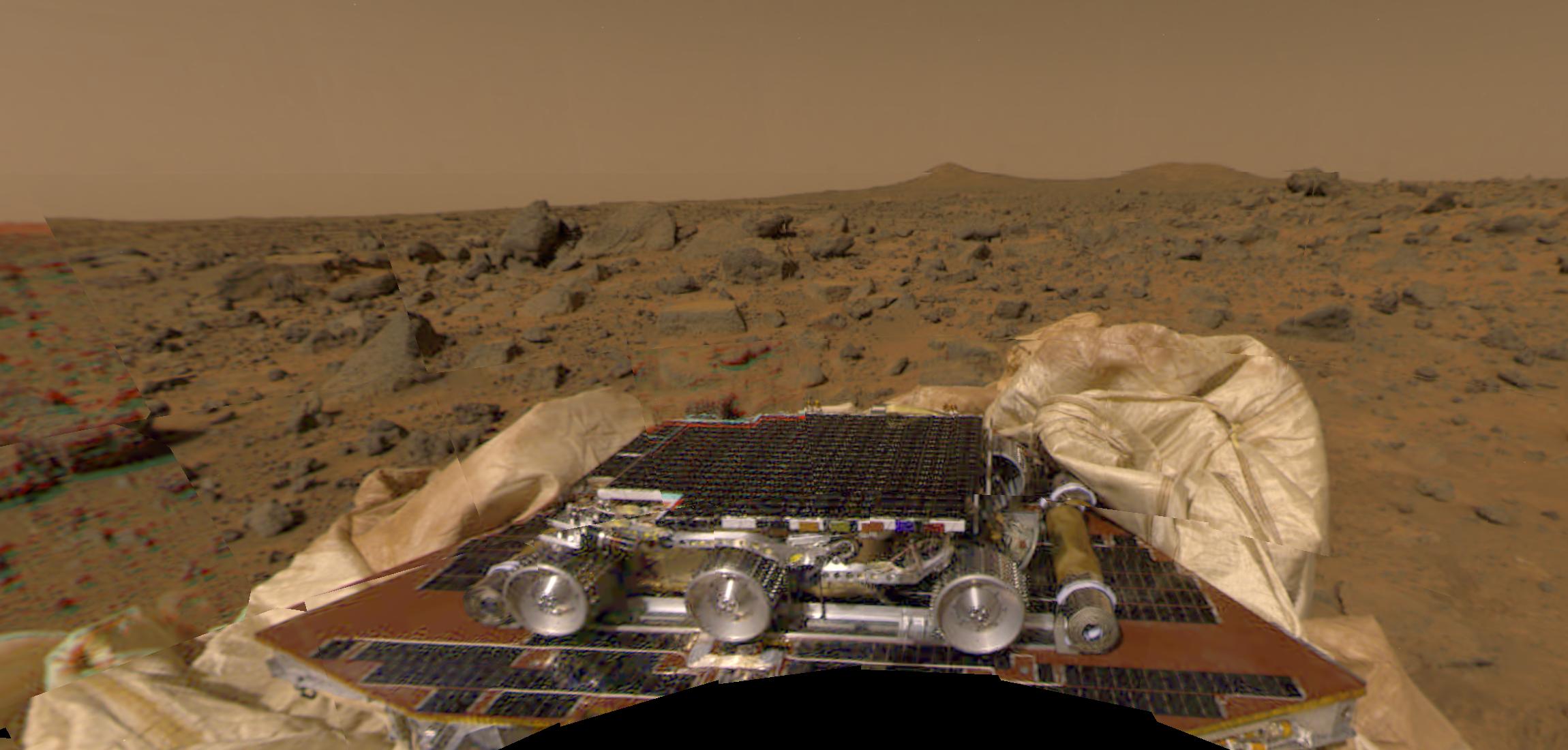
Pathfinder’s landing was a feat of engineering brilliance. It used a sequence of parachutes, airbags, and a gentle bounce to land softly in Ares Vallis, a rocky floodplain. The airbags, inflated like giant cushions, absorbed the impact of multiple bounces, allowing the spacecraft to settle upright.
Imagine a giant, colorful balloon bouncing across a dusty playground, finally coming to rest with a gentle thud. The key to its success? The airbags’ resilience and precise timing—something NASA refined over years of testing. This technique has since become the gold standard for landing on rocky planets.
Pro tip: For capturing similar images today, a wide-angle lens with a fast shutter will help you frame the sprawling, rocky landscape while freezing the dust in motion. The rich, earthy reds and browns of Mars’s surface really pop against the sky’s dusty hue.
Understanding why this landing technique matters is crucial. It demonstrates how engineering solutions must adapt to unpredictable terrains, balancing safety and precision. The tradeoff, however, is that airbags limit the size and weight of the lander, requiring careful design to ensure payload capacity isn’t compromised. This innovation opened new pathways for landing missions on challenging terrains, expanding what’s possible beyond traditional parachute or rocket-based landings.
As an affiliate, we earn on qualifying purchases.
What Made the Sojourner Rover a Game-Changer in Mars Exploration?
Sojourner was tiny—about the size of a large house cat. Yet, it packed enough tech to analyze rocks, take panoramic pictures, and send data back to Earth. Its six wheels, powered by solar panels, rolled over Mars’s rocky terrain, testing mobility in alien conditions.
Think of it as a miniature, robotic geologist that could climb over rocks, examine mineral compositions, and send crisp images back home. Its success proved that rovers could explore planets remotely, a concept that’s now routine in Mars missions.
The significance of Sojourner goes beyond its size. It demonstrated that compact, reliable robotic systems could operate in harsh extraterrestrial environments, which is vital for future exploration. The tradeoff was that its limited power and sensors meant it could only perform basic tasks. However, this modest start showed that smaller, more agile robots could be effective explorers, paving the way for larger, more sophisticated rovers. This shift in approach has profound implications: it reduces mission costs, increases flexibility, and allows for rapid deployment of exploration tools, ultimately accelerating our understanding of Mars’s geology and climate.
For photography enthusiasts: capturing Sojourner in action means using a telephoto lens to zoom in on its rugged wheels and rocky surroundings. The high contrast between the rover’s metallic parts and the dusty landscape makes for compelling images.
fast shutter camera for landscape photography
As an affiliate, we earn on qualifying purchases.
As an affiliate, we earn on qualifying purchases.
Mars Pathfinder’s Legacy: How It Opened the Door for Future Missions
Pathfinder showed that landing on Mars was possible—often in rocky, unpredictable terrain. It proved that small, lightweight, and reliable robots could explore distant worlds. Its success sparked a wave of missions, including Spirit, Opportunity, Curiosity, and Perseverance.
Today’s rovers are smarter, faster, and more capable. Yet, they all owe their roots to that tiny robot that bounced onto Mars 30 years ago. It’s like a giant relay race, passing the baton of discovery from one mission to the next.
The long-term impact is profound. Pathfinder’s demonstration of a safe, effective landing method validated the use of airbags and parachutes in tandem, influencing the design of subsequent missions. Moreover, it proved that compact robotic explorers could gather valuable scientific data, which encouraged investment in smaller, more versatile robotic platforms. This shift has allowed missions to be more resilient and adaptable, enabling scientists to explore diverse Martian environments—from ancient riverbeds to volcanic plains. It also laid the groundwork for future sample-return and human exploration missions, highlighting the importance of incremental technological advancements that build upon proven successes.
From a practical perspective: if you’re photographing Mars today, think about the terrain Pathfinder explored. The rocky floodplains, dusty hills, and distant mountains are still the defining features of the Martian landscape.
Mars landscape photography accessories
As an affiliate, we earn on qualifying purchases.
As an affiliate, we earn on qualifying purchases.
What’s Next for Mars? The Future Inspired by Pathfinder
Pathfinder’s success laid the groundwork for future tech—like the Perseverance rover’s advanced sampling and drilling systems. Now, NASA aims to bring Martian samples back to Earth and prepare for human landings.
Future missions will build on Pathfinder’s legacy, exploring deeper underground, searching for signs of past life, and testing life-support systems. It’s a chain of innovation, where each new step is rooted in Pathfinder’s pioneering spirit.
The implications are significant. As technology advances, we can explore areas previously inaccessible—such as subsurface ice layers or hidden aquifers—potentially revealing signs of past or present life. These missions also push the boundaries of engineering, requiring more sophisticated systems for power, mobility, and scientific analysis. The tradeoffs involve increased complexity and cost, but the scientific payoff could be revolutionary, offering insights into Mars’s habitability and its history. This continuous evolution of technology underscores the importance of building on Pathfinder’s foundational success, ensuring that each new mission is more capable and insightful than the last.
Tip for aspiring space photographers: as missions become more advanced, so do the opportunities for capturing stunning images. Think high-resolution panoramas, close-ups of rocks, or even drone-like aerial views from orbit.
remote planetary exploration robot toy
As an affiliate, we earn on qualifying purchases.
As an affiliate, we earn on qualifying purchases.
How to Take Your Own Martian-Style Photos Today
- Find a rocky, dusty landscape nearby—desert, quarry, or even a gravel pit.
- Use a wide-angle lens to capture the vastness, and a telephoto for details like rocks or textures.
- Look for contrasting colors—red soil, blue sky, or weathered rocks to make your shots pop.
- Time your shots during the golden hour—early morning or late afternoon—for softer light and longer shadows.
- Experiment with low angles to mimic the perspective of a rover exploring rugged terrain.
Frequently Asked Questions
Why was the Mars Pathfinder landing so unique?
It used a pioneering airbag system that allowed a safe, bouncy touchdown in rocky terrain, proving that even challenging landscapes could be explored remotely.What did Sojourner discover during its mission?
Sojourner analyzed rocks and soil, confirming volcanic basalt and laying the foundation for understanding Mars’s geological past, all from a tiny rover on the planet’s surface.How did Pathfinder influence future Mars missions?
It demonstrated that lightweight, reliable robots could land and operate on Mars, inspiring a series of increasingly advanced rovers and shaping the entire approach to planetary exploration.Will humans go to Mars soon?
NASA and other agencies are actively developing the technology and plans for human missions, with a goal of landing astronauts on Mars in the 2030s or later.What can I do to make my Mars-inspired photos stand out?
Use a wide-angle lens for scale, shoot during golden hour for dramatic lighting, and focus on contrasting textures and colors—just like a rover exploring alien terrain.Conclusion
Thirty years after bouncing onto Mars, Pathfinder’s legacy is clear: small robots can make giant leaps in exploration. Its innovations opened the floodgates for the robotic fleet now exploring the Red Planet. Keep your eyes on the skies—every photograph, every rover, pushes us closer to human footsteps on Mars.
Next time you look at a dusty landscape, imagine a tiny rover climbing over rocks, uncovering secrets of a distant world. That’s the spirit of Pathfinder—an enduring symbol of curiosity and discovery.
Halloween Picks
halloween
As an affiliate, we earn on qualifying purchases.