
TL;DR

Prime made for students and young adults
- Fast, free delivery for dorm and study essentials
- Prime Video and Amazon Music included
- Member-only deals
NASA’s latest APOD highlights the striking Mare Orientale on the Moon, known as the Eastern Sea, visible during specific librations. This article explains its significance, how to see it, and recent lunar science breakthroughs.
Imagine gazing up tonight and catching a glimpse of a dark, circular patch on the Moon’s western edge—an ancient, scarred basin called Mare Orientale. It’s a stunning feature, but one that’s almost hidden from view unless the Moon’s tilt aligns just right. That’s what NASA’s latest Astronomy Picture of the Day captures—a rare, breathtaking view of the Western Moon and the Eastern Sea.
Why does this matter? Because this lunar feature isn’t just a pretty picture. It’s a window into the Moon’s violent past, a story written in impact craters and concentric ripples. Plus, understanding where and how to see it can turn a simple night sky into a science lesson in motion. Ready to learn how to spot this lunar marvel and what recent discoveries tell us about our closest neighbor? Let’s dive in.
Libration tonight makes Mare Orientale visible from Earth, revealing a 3-billion-year-old impact basin with concentric ripples.
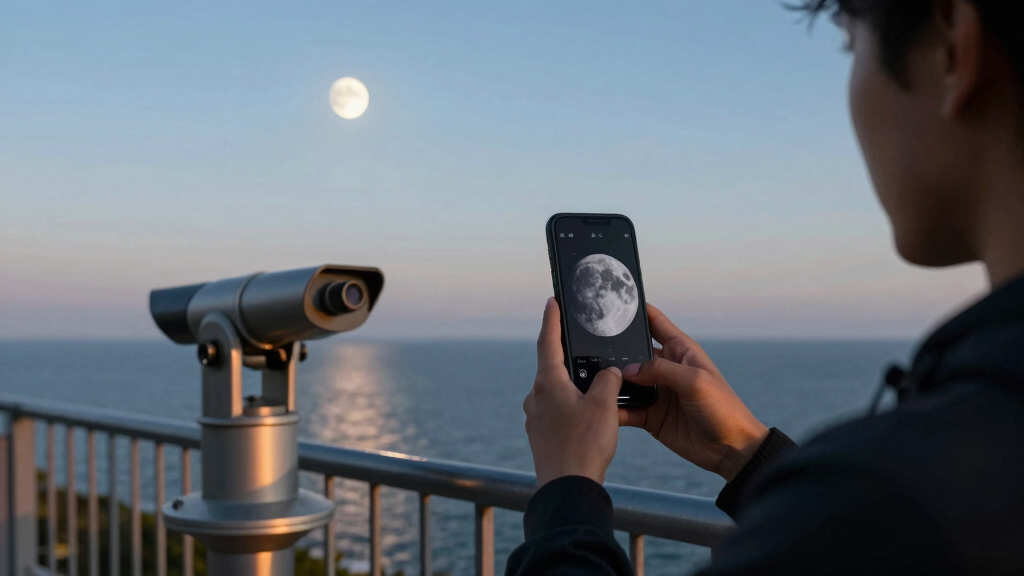
Using simple gear and lunar maps can help you spot the Eastern Sea and other lunar features during prime libration windows.
Understanding lunar map naming conventions clarifies why ‘Eastern Sea’ is on the Moon’s west limb—an old map quirk.
Recent lunar missions have uncovered water ice, thin crusts, and transient phenomena, deepening our understanding of lunar geology.
Practicing lunar observation sharpens your skywatching skills and connects you to the Moon’s ancient, volcanic, and impact-rich history.
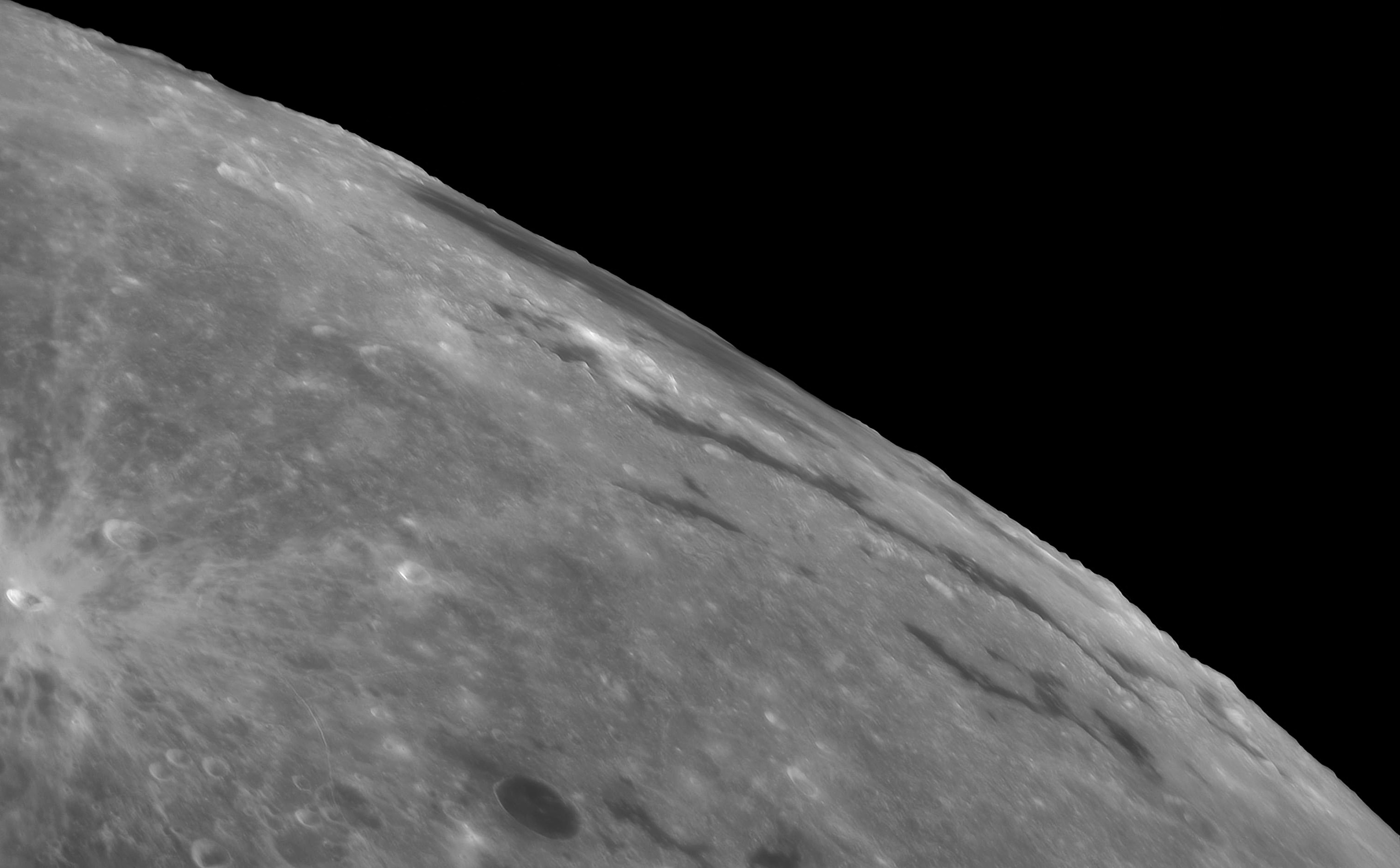
What Makes the Western Moon and Eastern Sea So Special Tonight?
The Western Moon, especially the region near Mare Orientale, appears differently depending on the Moon’s libration—its slight wobble as it orbits Earth. Tonight, a favorable tilt reveals this massive impact basin, nearly 1000 kilometers across, along the Moon’s western limb. This tilt is crucial because it exposes features that are usually hidden from our view, offering us a rare opportunity to glimpse a part of the Moon’s history that’s otherwise concealed. The significance lies in how libration acts as a natural filter, revealing different lunar terrains over time—each viewing deepening our understanding of lunar geology.
Meanwhile, the Eastern Sea—known as Mare Tranquillitatis or the Sea of Serenity—is more prominent in direct views, but the poetic phrase captures how these dark plains stretch across the lunar surface like calm waters. From Earth, the contrast between the bright, cratered highlands and the smooth, dark maria creates a stunning tapestry that changes with each lunar libration. This dynamic interplay highlights the Moon’s complex surface evolution, shaped by impacts, volcanic activity, and tectonic processes over billions of years.
For example, during a specific libration cycle, the Mare Orientale becomes more visible, revealing details that are usually hidden by the Moon’s tilt. This makes tonight’s viewing a unique opportunity—an almost cinematic slice of lunar history that can inform scientists about the Moon’s internal structure and impact history, and inspire amateur astronomers to appreciate the Moon’s layered past.
As an affiliate, we earn on qualifying purchases.
How to Spot Mare Orientale and the Eastern Sea — A Step-by-Step Guide
- Check your lunar calendar: Find the dates of maximum libration for the month—these are your prime viewing nights. Recognizing these windows is important because they maximize the visibility of features like Mare Orientale, which are otherwise obscured.
- Pick the right gear: A modest telescope (50-100mm aperture) or even good binoculars can reveal the basin’s faint circular outline. The tradeoff is that larger telescopes provide more detail, but even small optics can help you appreciate the basin’s shape during optimal libration.
- Find a dark, clear spot: Light pollution dulls lunar details. Look for a place with minimal sky glow and stable air conditions—these factors are critical because atmospheric turbulence can blur details, negating the benefits of your equipment.
- Use moon maps or apps: Tools like SkySafari or Stellarium help locate Mare Orientale’s position on the Moon’s limb. They also help you understand the terrain’s context, so you can anticipate where to look and what to expect, making your observation more effective.
- Observe during the right phase: A waxing or waning gibbous Moon offers the best contrast for lunar features, as shadows cast by the Sun reveal surface details. This contrast enhances the visibility of Mare Orientale’s ring, which might otherwise blend into the lunar background during full moon.
Think of it like a treasure hunt. Tonight’s libration is the window—once you find that sweet spot, Mare Orientale’s dark ring appears like a distant storm on the lunar horizon. The effort to align your tools and timing pays off by revealing a dramatic chapter of lunar history that few get to see firsthand.
As an affiliate, we earn on qualifying purchases.
Why the Name ‘Eastern Sea’ Is a Head-Scratcher — And What It Reveals About Lunar Maps
The name ‘Eastern Sea’ might seem confusing—after all, it’s located on the Moon’s western limb when viewed from Earth. This inconsistency is a result of historical differences in lunar cartography. Before 1961, lunar maps used a different orientation, with east and west reversed from modern conventions. The ‘Eastern Sea’ name persisted because it was established in early lunar nomenclature, reflecting the poetic and mythological approach explorers and astronomers took to make sense of the lunar surface. This naming convention reveals how early lunar maps prioritized visual storytelling over strict geographical accuracy, influencing how we interpret lunar features today.
This quirk emphasizes the importance of understanding the historical context behind lunar nomenclature. Recognizing that ‘East’ and ‘West’ labels on older maps don’t always match modern perspectives helps prevent confusion and deepens appreciation for the history of lunar exploration. It also underscores how scientific naming conventions evolve alongside technological advances—moving from poetic descriptions to precise measurements—yet the poetic names still evoke the Moon’s mythic allure, enriching our cultural connection to lunar exploration.
As an affiliate, we earn on qualifying purchases.
Recent lunar missions have peeled back layers of mystery—thanks to high-resolution cameras and new orbiters. NASA’s Artemis program, in particular, is mapping the Moon in unprecedented detail, revealing water ice deposits in shadowed craters and measuring the crust’s thickness across different regions. These discoveries are crucial because they inform us about the Moon’s potential as a future resource and its geological history, affecting future exploration strategies.
For example, recent data shows that the Mare Orientale basin has a complex structure—layers of basaltic lava filling the impact crater, and a crust that’s thinner near the basin’s edges. These insights are significant because they help scientists understand the timing of volcanic activity and impact events, which in turn shed light on the Moon’s thermal evolution and internal dynamics. Such knowledge influences models of lunar formation and helps us understand the broader history of our solar system.
Moreover, new remote sensing tools have identified transient phenomena—brief, mysterious flashes and unexplained glowings—that keep lunar scientists intrigued. While these are rare, they hint at ongoing geological activity or other processes we’re just beginning to understand, challenging previous assumptions that the Moon is entirely geologically dead. These discoveries underscore the importance of continuous exploration and the potential for future breakthroughs in lunar science.
As an affiliate, we earn on qualifying purchases.
How Seeing the Moon’s Details Can Boost Your Skywatching Skills
Viewing lunar features like Mare Orientale isn’t just about catching a pretty sight—it’s a chance to sharpen your astronomy skills. Focus on the contrast, learn to identify craters and basins, and practice using lunar maps. Over time, you’ll recognize patterns and features that most casual viewers miss, turning each observation into a learning opportunity.
For instance, comparing images over several months reveals how libration shifts the visible landscape, helping you understand the Moon’s rotation and orbital dynamics. This practice trains your eye to pick out subtle differences, deepening your appreciation for lunar geology and surface processes. It also encourages patience and attention to detail—key skills in astronomy that extend beyond lunar observation.
Plus, learning to use simple tools—like smartphone apps or basic telescopes—turns skywatching into an engaging hobby that keeps exposing you to new lunar mysteries. Think of it as a continuous adventure in planetary exploration, right from your backyard, fostering curiosity and scientific thinking that can inspire further exploration.
Frequently Asked Questions
Can I see Mare Orientale with just binoculars?
While binoculars can help, a small telescope or a good pair of binoculars (at least 50mm aperture) improve your chances of seeing Mare Orientale’s faint circular outline, especially during favorable libration. Patience and a dark sky are key.When is the best time to observe lunar features like Mare Orientale?
The best time is during maximum libration, when the Moon tilts just right. Check lunar libration charts for tonight or upcoming days to catch the basin at its most visible. Recognizing these windows is crucial because they maximize the chance of seeing features that are otherwise hidden or faint.Why does the Moon look different during each lunar cycle?
The Moon’s appearance changes because of its orbit around Earth, which causes libration—tiny shifts in viewing angle. This allows us to see different edges and features over time, including Mare Orientale during favorable librations. These variations are not just visual quirks but windows into the Moon’s internal and surface processes.Are there upcoming lunar events that will enhance viewing of Mare Orientale?
Yes. Check lunar calendars for upcoming maximum libration dates—these are your best chances. Full moons tend to wash out surface details, but gibbous phases during libration peaks reveal more surface features, including Mare Orientale, by providing better shadow contrast.What recent discoveries have scientists made about the Moon?
Recent missions have revealed water ice in shadowed craters, detailed crustal structures, and even fleeting glowings—phenomena that suggest ongoing geological activity or residual thermal processes. These findings challenge the idea of a completely geologically dead Moon and open new avenues for scientific exploration and potential resource utilization.Conclusion
Tonight offers a rare peek into the Moon’s hidden history—if you know where and how to look. Mare Orientale’s circular scars tell a story of cosmic violence and volcanic rebirth, waiting to be uncovered through your telescope or binoculars. With a little patience, you can witness a piece of lunar past that’s almost as old as Earth itself.
So, gather your gear, check the libration charts, and turn your evening sky into a window into the Moon’s ancient story. Because sometimes, the most breathtaking sights are hidden just beyond the familiar—waiting for you to find them.
Fall Picks
fall essentials
As an affiliate, we earn on qualifying purchases.