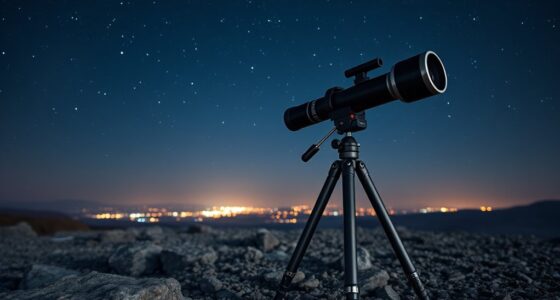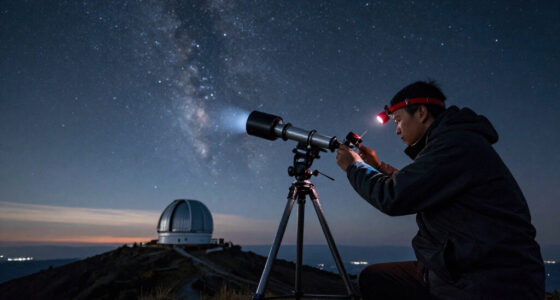
Deep sky telescope eyepieces need to balance a useful field of view, comfortable viewing, and a focal length that suits your telescope and targets. The SVBONY 9mm 66° Ultra Wide Angle is my best overall pick for its wide apparent field in a practical mid-to-high-power format, while the Astromania Goldline 20mm 66° stands out for broader, lower-power views and the Celestron Omni 56mm for telescopes that can use a 2-inch eyepiece. The main tradeoffs are wide fields versus simpler Plössl designs, and individual eyepieces versus kits that bundle filters and a Barlow. Compatibility matters: barrel size, telescope focal ratio, and exit pupil can change what a seemingly suitable eyepiece shows. Read on for the full breakdown and recommendations by observing style.

Prime made for students and young adults
- Fast, free delivery for dorm and study essentials
- Prime Video and Amazon Music included
- Member-only deals
Key Takeaways
- The SVBONY 9mm 66° is the strongest all-round single-eyepiece choice here, pairing a wider apparent field with a focal length that can bring smaller deep sky objects into view at higher magnification.
- The Astromania Goldline 20mm and SVBONY 40mm serve different low-power roles: the 20mm’s 66° apparent field can frame larger targets more expansively, while the 40mm Plössl favors a simpler, narrower view.
- The Celestron Omni 56mm is a format-specific option, not a universal upgrade; its 2-inch barrel requires a compatible focuser and may deliver an excessively large exit pupil in some telescopes.
- Bundled kits trade individual selection for convenience: the Celestron, CelticBird, and Starboosa sets can supply several accessories at once, but buyers should check whether their included focal lengths fill real gaps in their current set.
- Plössl options remain useful for straightforward viewing, but the Alstar and SVBONY Plössls offer narrower apparent fields than the 66° designs and can be less comfortable at short focal lengths for glasses wearers.
| Alstar Plossl Eyepiece Set – 8 mm, 15 mm & 40 mm for 1.25″ Telescopes |  | Best Starter Set for Focal-Length Range | Eyepiece focal lengths: 8 mm, 15 mm, 40 mm | Barrel size: 1.25 inches | Optical design: Plössl | VIEW LATEST PRICE | See Our Full Breakdown |
| SVBONY 9mm 66° Ultra Wide Angle Telescope Eyepiece |  | Best for Wider High-Power Views | Focal length: 9 mm | Apparent field of view: 66° | Barrel size: 1.25 inches | VIEW LATEST PRICE | See Our Full Breakdown |
| Celestron Omni 56mm 2-Inch Telescope Eyepiece |  | Best for Very Low-Power, Wide-Field Scanning | Focal length: 56 mm | Barrel diameter: 2 inches | Optical design: 4-element Plössl | VIEW LATEST PRICE | See Our Full Breakdown |
| Alstar 17mm Plössl Telescope Eyepiece, 1.25-Inch |  | Best Simple Mid-Power Replacement | Eyepiece type: Plössl | Focal length: 17 mm | Barrel size: 1.25 inches | VIEW LATEST PRICE | See Our Full Breakdown |
| Celestron Telescope Eyepiece, Barlow Lens, and Filter Accessory Kit, 1.25-Inch |  | Best Complete Eyepiece and Filter Kit | Eyepieces: 5 Plössl eyepieces: 6 mm, 8 mm, 13 mm, 17 mm, and 32 mm | Eyepiece design: Four-element, fully multicoated | Field of view: 52° | VIEW LATEST PRICE | See Our Full Breakdown |
| CelticBird 1.25-Inch Telescope Eyepiece and Filter Accessory Kit |  | Best Complete Starter Kit | Eyepiece design: Plössl | Eyepiece focal lengths: 40 mm, 20 mm, 12.5 mm, 8 mm, 6 mm | Barlow lens: 2× | VIEW LATEST PRICE | See Our Full Breakdown |
| Starboosa 1.25-Inch Telescope Eyepiece Set with Barlow Lens and Filters |  | Best for High-Magnification Experimenting | Eyepiece focal lengths: 4 mm, 10 mm, 20 mm | Eyepiece barrel size: 1.25 inches (31.7 mm) | Barlow lens: 5× | VIEW LATEST PRICE | See Our Full Breakdown |
| SVBONY 40mm Plössl Telescope Eyepiece, 1.25-Inch, 40° Field of View |  | Best for Low-Power Sweeping | Focal length: 40 mm | Eyepiece design: Plössl, four optical elements | Barrel size: 1.25 inches | VIEW LATEST PRICE | See Our Full Breakdown |
| Astromania Goldline 20mm 66° Ultra Wide Angle Telescope Eyepiece |  | Best Wide-Field Upgrade | Focal length: 20 mm | Apparent field of view: 66° | Eye relief: 18 mm | VIEW LATEST PRICE | See Our Full Breakdown |
| deep sky telescope eyepiece | Apparent field of view | Warranty | Focal length |
|---|---|---|---|
| Alstar Plossl Eyepiece Set | Approximately 50° | 1 year | — |
| SVBONY 9mm 66° Ultra Wide Angl | 66° | 1 year | 9 mm |
| Celestron Omni 56mm 2-Inch Tel | 47° | 2-year US warranty | 56 mm |
| Alstar 17mm Plössl Telescope E | Approximately 50° | — | 17 mm |
| Celestron Telescope Eyepiece | — | 2-year US warranty | — |
| CelticBird 1.25-Inch Telescope | — | — | — |
| Starboosa 1.25-Inch Telescope | — | 1 year | — |
| SVBONY 40mm Plössl Telescope E | 40° | — | 40 mm |
| Astromania Goldline 20mm 66° U | 66° | — | 20 mm |
More Details on Our Top Picks
Alstar Plossl Eyepiece Set – 8 mm, 15 mm & 40 mm for 1.25″ Telescopes
The Alstar three-eyepiece set covers low, medium, and higher magnification without requiring a separate eyepiece purchase for each step. Its 40 mm option can frame larger deep-sky targets at lower power, while 15 mm and 8 mm provide progressively tighter views when conditions and the telescope permit. Compared with the Celestron 56 mm Plössl, the Alstar’s longest focal length gives less extreme low-power viewing but fits a standard 1.25-inch focuser, a practical advantage for many smaller scopes. Fully multi-coated optics and an approximately 50° apparent field are useful across the set, though this is a conventional Plössl-style view rather than the wider framing of the SVBONY 9 mm. Buyers should also accept the limits of a 1.25-inch-only set and the lack of a Barlow or diagonal.
Pros:- Three focal lengths cover low, medium, and higher-power viewing
- Fully multi-coated optics across the set
- Approximately 50° apparent field of view
- Fold-down rubber eyeguards help block stray light
Cons:- 1.25-inch barrels rule out direct use with 2-inch-only focusers
- No Barlow or diagonal is included for expanding the setup
- Plastic dust caps may be fragile
Best for: Owners of 1.25-inch telescopes who want three focal lengths for exploring different deep-sky targets without assembling a set one eyepiece at a time.
Not ideal for: Observers who need a wider-than-standard apparent field, use a 2-inch focuser, or want a Barlow and accessories included.
- Eyepiece focal lengths:8 mm, 15 mm, 40 mm
- Barrel size:1.25 inches
- Optical design:Plössl
- Coating:Fully multi-coated
- Apparent field of view:Approximately 50°
- Eye relief:Long; exact value unspecified
- Eyeguard:Fold-down rubber
- Warranty:1 year
Our verdict“Choose the Alstar set if you want three standard-barrel focal lengths in one package and do not need wide-angle optics or included accessories.”
SVBONY 9mm 66° Ultra Wide Angle Telescope Eyepiece
The SVBONY 9 mm is the focused choice here for observers who want a broader view at relatively high magnification. Its 66° apparent field shows more sky at once than the approximately 50° Alstar 17 mm Plössl, which can make star clusters easier to frame and reduce how often a target drifts out of view in a manual telescope. Fully multi-coated lenses and blackened internal surfaces are intended to limit unwanted reflections. The tradeoff is that 9 mm is not a universal deep-sky focal length: faint, extended objects often benefit more from a lower-power eyepiece, such as the Alstar set’s 40 mm, and the listed 0.5 mm exit pupil may be very small depending on the telescope. This is a specialized complement, not a one-eyepiece solution.
Pros:- 66° apparent field offers wider framing than standard Plössl designs
- Six-element, four-group optical design
- Fully multi-coated lenses
- Blackened edges and internal surfaces help suppress stray light
Cons:- 9 mm focal length is too specialized to serve as a general deep-sky eyepiece
- High magnification can make faint or extended objects harder to observe
- Limited to telescopes and accessories with a 1.25-inch barrel
Best for: Owners of 1.25-inch telescopes who already have a low-power eyepiece and want a wider-field option for smaller clusters, double stars, and higher-power observing.
Not ideal for: Beginners seeking one eyepiece for varied deep-sky targets, or observers whose telescope produces an excessively high magnification with a 9 mm focal length.
- Focal length:9 mm
- Apparent field of view:66°
- Barrel size:1.25 inches
- Lens design:6 elements in 4 groups
- Coating:Fully multi-coated broadband green
- Exit pupil diameter:0.5 mm
- Focus type:Manual
- Warranty:1 year
Our verdict“Pick this SVBONY when wider framing at higher power matters more than having a versatile range of focal lengths.”
Celestron Omni 56mm 2-Inch Telescope Eyepiece
For a telescope built around a 2-inch focuser, the Celestron Omni 56 mm serves a distinct low-power role: its long focal length favors broad framing of large deep-sky targets rather than magnifying small details. The 52 mm eye relief also gives ample room at the eyepiece, while the fold-down eyeguard adds flexibility. Compared with the Alstar 40 mm, this Celestron reaches a lower magnification in the same telescope, but its 2-inch barrel makes it incompatible with 1.25-inch-only focusers and its 47° apparent field is not especially wide for a 2-inch eyepiece. The long focal length suits longer-focal-length telescopes, as the product description notes; on other setups, exit-pupil limits can reduce the benefit. Its size and weight also make it less convenient than the smaller 1.25-inch choices.
Pros:- 56 mm focal length supports very low-power viewing
- 52 mm eye relief provides generous viewing space
- Fully multi-coated four-element Plössl design
- Threaded 2-inch barrel accepts 2-inch filters
Cons:- 2-inch barrel will not fit a 1.25-inch-only focuser
- Long focal length is less suitable for short-focal-length telescopes
- Large, 15-ounce body is less portable than the 1.25-inch eyepieces
Best for: Owners of longer-focal-length telescopes with 2-inch focusers who prioritize low-power framing of large nebulae, clusters, and star fields.
Not ideal for: Users with 1.25-inch-only focusers, compact travel setups, or telescopes where a 56 mm eyepiece creates an excessively large exit pupil.
- Focal length:56 mm
- Barrel diameter:2 inches
- Optical design:4-element Plössl
- Apparent field of view:47°
- Eye relief:52 mm
- Coatings:Fully multi-coated
- Item weight:15 ounces
- Warranty:2-year US warranty
Our verdict“Choose the Omni 56 mm for low-power observing only if your telescope accepts 2-inch eyepieces and can make practical use of its long focal length.”
Alstar 17mm Plössl Telescope Eyepiece, 1.25-Inch
The Alstar 17 mm Plössl makes sense as a straightforward mid-power addition for a 1.25-inch telescope, especially when the supplied eyepieces leave a gap between low and high magnification. Its four-element, fully multicoated design and approximately 50° apparent field follow a familiar Plössl format, prioritizing a simple, standard view over the broader framing of the SVBONY 9 mm. The 17 mm focal length is generally more adaptable for many deep-sky targets than that 9 mm option, though it cannot replace a long-focal-length eyepiece for large objects or a shorter one for tighter views. A fold-down eyeguard and compatibility with 1.25-inch Barlows and filters add practical flexibility. Compared with the Alstar three-piece set, this is a single focal length, so it suits a targeted upgrade rather than a full range.
Pros:- 17 mm focal length fills a useful middle range between low and high power
- Four-element, fully multicoated optical design
- Approximately 50° apparent field of view
- Fold-down eyeguard and compatibility with 1.25-inch Barlows and filters
Cons:- Single focal length offers less range than the Alstar three-eyepiece set
- Standard Plössl field is narrower than the SVBONY 9 mm’s 66° field
- Requires a telescope or accessory with a 1.25-inch holder
Best for: Telescope owners with a 1.25-inch focuser who need a dependable mid-power eyepiece to fill a specific gap in their existing collection.
Not ideal for: New observers who need several focal lengths at once, or buyers looking for a wide-angle view beyond the standard Plössl field.
- Eyepiece type:Plössl
- Focal length:17 mm
- Barrel size:1.25 inches
- Optical design:4 elements
- Apparent field of view:Approximately 50°
- Lens coating:Fully multicoated
- Eyeguard:Fold-down rubber
- Compatible accessories:1.25-inch filters and Barlow lenses
Our verdict“Buy this Alstar when a 17 mm mid-power option is the missing piece in a compatible 1.25-inch setup.”
Celestron Telescope Eyepiece, Barlow Lens, and Filter Accessory Kit, 1.25-Inch
The Celestron accessory kit is the broadest package in this group: five Plössl focal lengths, a 2x Barlow, planetary filters, a Moon filter, and a storage case. That range gives a newcomer more ways to match magnification to targets than either single-eyepiece Alstar option, while the 6 mm through 32 mm selection includes both higher- and lower-power choices. The Barlow creates additional magnification combinations, although pairing it with the shortest eyepiece may exceed what local seeing or a telescope can use well. For deep-sky viewing, the filters and Moon filter are less central than the eyepieces, so this package may include accessories an observer rarely reaches for. Like the Alstar set, it uses only a 1.25-inch focuser format; it is a convenient collection, not a solution for 2-inch equipment.
Pros:- Five focal lengths cover a broad range from 6 mm to 32 mm
- 2x Barlow adds magnification combinations
- Includes six planetary filters and a Moon filter
- Foam-lined metal case protects and organizes the accessories
Cons:- All components require a 1.25-inch focuser or holder
- The shortest eyepiece and Barlow combination may exceed practical magnification
- Included filters add limited value for buyers focused mainly on deep-sky observing
Best for: New owners of 1.25-inch telescopes who want several Plössl focal lengths, a Barlow, filters, and a protective case in one coordinated kit.
Not ideal for: Observers with 2-inch-only equipment, or experienced deep-sky observers who already own eyepieces and would rather select individual wide-angle models.
- Eyepieces:5 Plössl eyepieces: 6 mm, 8 mm, 13 mm, 17 mm, and 32 mm
- Eyepiece design:Four-element, fully multicoated
- Field of view:52°
- Barlow lens:2x, 1.25-inch
- Filters:6 planetary filters and 1 Moon filter
- Compatibility:Telescopes with a 1.25-inch focuser
- Case:Foam-lined metal carrying case with room for additional items
- Warranty:2-year US warranty
Our verdict“Choose this kit to build a varied 1.25-inch eyepiece collection at once, but skip it if you already own suitable focal lengths or need 2-inch accessories.”
CelticBird 1.25-Inch Telescope Eyepiece and Filter Accessory Kit
I’d pick the CelticBird kit for a new deep-sky observer who wants several magnifications in one purchase. Its five Plössl focal lengths, from 40 mm to 6 mm, cover broad, low-power views of star fields as well as higher-power observing when conditions allow. That range is more flexible than the single-focal-length SVBONY 40mm Plössl, while the included 2× Barlow adds intermediate magnifications without another eyepiece.
The tradeoff is that the seven filters are aimed largely at lunar and planetary viewing, so they add less to deep-sky observing than the eyepiece range does. The 1.25-inch fit also rules out telescopes using other focuser sizes unless an adapter is available. I’d treat the DSLR thread as a handy extra, not the main reason to choose this kit.
Pros:- Five focal lengths provide more magnification choices than a single eyepiece such as the SVBONY 40mm Plössl.
- The 2× Barlow can increase the magnification of each eyepiece.
- Moon and color filters add options for lunar and planetary observation.
- Foam-lined metal case protects the accessories and has room for small extras.
Cons:- The 1.25-inch format limits compatibility with telescopes that use other focuser sizes.
- Most included filters are more relevant to the Moon and planets than to faint deep-sky objects.
- The shortest focal lengths and Barlow combination can produce magnification beyond what some telescopes or seeing conditions can use effectively.
Best for: New 1.25-inch telescope owners who want a spread of eyepiece focal lengths and accessories for both deep-sky and lunar observing.
Not ideal for: Observers who already own several eyepieces, use a 2-inch focuser, or want accessories devoted mainly to faint deep-sky targets.
- Eyepiece design:Plössl
- Eyepiece focal lengths:40 mm, 20 mm, 12.5 mm, 8 mm, 6 mm
- Barlow lens:2×
- Compatibility:1.25-inch telescopes
- Filters:Seven: five color filters, one polarizing filter, and one Moon filter
- Camera adapter:T2 thread, M42×0.75, for DSLR cameras with a T-ring
- Case:Foam-lined metal carrying case
- Case dimensions:7.7 × 4.3 inches
Our verdict“Choose this kit if you want a broad 1.25-inch eyepiece set for mixed observing, but skip it if your priority is a single wide-field deep-sky eyepiece.”
Starboosa 1.25-Inch Telescope Eyepiece Set with Barlow Lens and Filters
The Starboosa set suits observers who want to experiment with high magnification on the Moon and planets, and who already know their telescope can make use of it. The 4 mm, 10 mm, and 20 mm eyepieces cover a useful focal-length spread, while the standout 5× Barlow pushes magnification far beyond what the included eyepieces provide alone. Its multi-coated glass and soft eyecups add practical comfort, but they do not change the limits imposed by a telescope’s aperture, optics, and atmospheric conditions.
Compared with the CelticBird kit, this set has fewer eyepieces and a much stronger Barlow, making it less balanced for general deep-sky viewing. The two Moon and two polarizing filters lean toward bright-object observing, too. I’d skip this as a first deep-sky set unless high-power viewing is a specific goal.
Pros:- Three eyepiece focal lengths give more options than a single-eyepiece purchase.
- The 5× Barlow offers substantial magnification changes for suitable telescopes.
- Multi-coated optical glass is specified for the included eyepieces.
- Soft eyecups are designed to make viewing more comfortable.
Cons:- A 5× Barlow can push magnification beyond the useful range of many telescope and sky-condition combinations.
- The set has fewer focal-length choices than the CelticBird kit.
- The supplied Moon and polarizing filters contribute little to observing faint deep-sky objects.
Best for: Owners of compatible reflector or refractor telescopes who want to try high magnification on the Moon and planets and understand their telescope’s limits.
Not ideal for: Beginners seeking a balanced deep-sky eyepiece range, or observers whose telescope cannot deliver sharp views at very high magnification.
- Eyepiece focal lengths:4 mm, 10 mm, 20 mm
- Eyepiece barrel size:1.25 inches (31.7 mm)
- Barlow lens:5×
- Filters:Two Moon filters and two polarizing filters
- Optical glass:Multi-coated
- Compatible telescopes:Reflector and refractor
- Eyecups:Soft
- Warranty:1 year
Our verdict“Choose Starboosa for high-magnification experimentation with a capable telescope, not as a balanced first set for deep-sky viewing.”
SVBONY 40mm Plössl Telescope Eyepiece, 1.25-Inch, 40° Field of View
For broad, low-power views through a 1.25-inch focuser, the SVBONY 40mm Plössl is a straightforward choice. Its long focal length can make extended star fields and large deep-sky targets easier to frame than with a shorter eyepiece, while fully multi-coated optics and a blackened interior are intended to limit unwanted reflections. The fold-down eyeguard is useful for observers who need space for glasses.
The compromise is the 40° apparent field of view: this is a conventional, relatively narrow view rather than the more immersive presentation of the Astromania Goldline 20mm with its 66° field. It also provides only one magnification, so it is not a substitute for a set. I’d check the telescope’s maximum field and exit pupil before choosing a 40 mm eyepiece, since suitability varies with the instrument.
Pros:- The 40 mm focal length supports low-power observing and framing broad targets.
- Fully multi-coated optics and a blackened interior are intended to reduce stray light.
- Fold-down rubber eyeguard can accommodate eyeglass wearers.
- Metal body, filter thread, and included storage case add practical utility.
Cons:- The 40° apparent field is narrower than the Astromania Goldline 20mm’s 66° field.
- A single focal length offers no built-in magnification range.
- Its usefulness depends on the telescope’s focal ratio, field stop, and exit-pupil suitability.
Best for: Deep-sky observers with a 1.25-inch focuser who want a long-focal-length eyepiece for low-power views and broad targets.
Not ideal for: Buyers seeking an expansive apparent field, several magnifications, or an eyepiece that suits every telescope’s field and exit-pupil limits.
- Focal length:40 mm
- Eyepiece design:Plössl, four optical elements
- Barrel size:1.25 inches
- Apparent field of view:40°
- Lens coating:Fully multi-coated
- Filter thread:M28.5 × 0.6
- Eyeguard:Fold-down rubber
- Body and included case:Metal body; plastic storage case
Our verdict“Pick this SVBONY for simple low-power sweeping in a compatible telescope, but choose the Astromania if a wider apparent field matters more.”
Astromania Goldline 20mm 66° Ultra Wide Angle Telescope Eyepiece
The Astromania Goldline 20mm is the more engaging single-eyepiece choice for observers who want to keep a deep-sky target framed while seeing more surrounding star field. Its 66° apparent field is substantially broader than the 40° view of the SVBONY 40mm Plössl, and the 18 mm eye relief with a fold-down eyecup gives more room for comfortable viewing. Five-element, multi-coated optics and blackened lens edges are specified to support contrast.
That wider view comes with a shorter 20 mm focal length, so it will not match the SVBONY’s low-power framing in every telescope. It is also a single eyepiece rather than a kit, and its 1.25-inch barrel limits it to compatible focusers. I’d choose it for a broader mid-power view, not as a replacement for every focal length in an observing set.
Pros:- The 66° apparent field gives a wider view than the SVBONY 40mm Plössl’s 40° field.
- 18 mm eye relief and a fold-down rubber eyecup support comfortable viewing.
- Five-element, multi-coated optics and blackened lens edges are designed to support contrast.
- Filter thread and all-metal construction add compatibility and durability.
Cons:- The 20 mm focal length may not provide the low-power framing of the SVBONY 40mm in a given telescope.
- One eyepiece cannot provide the focal-length range of the CelticBird kit.
- The 1.25-inch barrel is incompatible with focusers of other sizes unless an adapter is used.
Best for: Observers with a 1.25-inch focuser who want a wider apparent field for framing deep-sky targets and more comfortable eye relief.
Not ideal for: Buyers who need the lowest possible power for very broad targets, want multiple focal lengths in one purchase, or use a different focuser size.
- Focal length:20 mm
- Apparent field of view:66°
- Eye relief:18 mm
- Barrel diameter:1.25 inches (31.75 mm)
- Optics:Five-element, multi-coated
- Weight:3.84 oz
- Additional features:Fold-down rubber eyecup, filter thread, blackened lens edges
- Included accessories:Two dust covers
Our verdict“Choose the Astromania for a wider, comfortable mid-power view of deep-sky targets, while keeping a longer eyepiece for the broadest fields.”

How We Picked
I ranked these eyepieces by how well their format and focal length serve deep sky observing, rather than by accessory count alone. I weighed apparent field of view, focal-length usefulness, barrel compatibility, and likely viewing comfort, then considered how easily each option could complement a typical starter or developing eyepiece collection. For deep sky targets, low power can help frame extended objects, while higher power can separate smaller objects from the background; neither is useful if the telescope cannot support the resulting exit pupil or barrel size.
The ordering gives priority to eyepieces with a distinct, broadly useful role and clear specifications, followed by specialized choices and bundled kits whose value depends on what a buyer already owns. The SVBONY 9mm 66° ranks first for its balance of field and focal length; the Astromania 20mm earns a separate role as a wide-field lower-power choice. Kits rank below stand-alone picks because their usefulness depends on included focal lengths, accessory quality, and whether the buyer needs the added filters or Barlow. I treat the 2-inch Omni 56mm as a niche selection because compatibility and exit pupil can limit its usefulness.
Factors to Consider When Choosing Deep Sky Telescope Eyepieces
Before choosing by focal length or field of view, match the eyepiece to the telescope and the objects you observe. These broader checks can prevent common mismatches that a product list alone cannot resolve.
Match Magnification to Your Telescope and Target
Magnification is the telescope’s focal length divided by the eyepiece’s focal length, so the same eyepiece produces different results in different telescopes. Lower magnification generally suits broad nebulae, open clusters, and finding targets; higher magnification can help with compact objects, though atmospheric conditions and aperture set practical limits. A common mistake is to buy a short-focal-length eyepiece assuming more magnification always reveals more detail. Excessive power can dim the view and make objects harder to track, especially in a small telescope. Compare focal lengths against the eyepieces you already own, and buy to fill a genuine gap rather than duplicate a similar magnification.
Check Exit Pupil, Especially With Long Focal Lengths
Exit pupil is the eyepiece focal length divided by the telescope’s focal ratio, and it describes the width of the light beam reaching your eye. A very large exit pupil may waste light if it exceeds your pupil’s diameter, while a very small one can make the image dim and the view less comfortable. This is why a long eyepiece such as a 56mm model can be useful in one telescope but poorly matched to another. Age, observing conditions, and eye placement also affect the usable view. Use the telescope’s focal ratio to check this before choosing a long-focal-length eyepiece for wide-field observing.
Read Apparent Field and True Field as Different Measures
Apparent field describes how wide the view seems through the eyepiece; true field describes how much sky is actually visible. A wider apparent field can make it easier to keep an object in view, particularly with a manual telescope, but it does not automatically provide a larger true field at every magnification. To estimate true field, divide the eyepiece’s apparent field by magnification, or use the field-stop specification when available. Buyers often compare field numbers without accounting for focal length, which can lead to an unfair comparison between eyepieces. Choose wide apparent fields when framing and drift time matter, but do not pay for width that your observing habits or telescope do not need.
Confirm Barrel Size and Focuser Compatibility
Most options in this roundup use a 1.25-inch barrel, while the Celestron Omni 56mm uses a 2-inch format. A 2-inch focuser accepts 2-inch eyepieces, but a 1.25-inch focuser cannot take one without a compatible conversion path; an adapter does not make every telescope suitable for every eyepiece. Check the focuser, diagonal, and any clearance limits before ordering. Larger-format eyepieces can support wider field stops, but they also add bulk and may require balancing a lightweight telescope. Match the barrel first, then judge field and focal length.
Decide Whether a Kit Fills Gaps or Adds Clutter
Accessory kits can be a practical start when a buyer owns few eyepieces, since a Barlow can extend the magnification range and filters may offer specialized effects. Their listed accessory count does not reveal whether each focal length is distinct enough to use or whether the filters suit the targets observed. A Barlow paired with an eyepiece can create redundant magnifications, and filters cannot compensate for a poor match between eyepiece and telescope. Before buying a kit, map its eyepiece-and-Barlow combinations against your current magnifications. A single well-chosen eyepiece may serve a developing collection better than several accessories that see little use.
Choose Eye Relief for Your Viewing Habits
Eye relief is the distance from the eyepiece lens at which the full view remains visible. Shorter focal-length Plössls commonly provide less eye relief, which can make viewing uncomfortable for people who keep glasses on while observing. Wide apparent field alone does not guarantee comfort, since eye placement and the eyepiece’s eye lens also matter. If you observe with glasses for astigmatism, check the manufacturer’s eye-relief specification rather than relying on focal length or field alone. For observers who do not wear glasses at the eyepiece, comfort still matters during long sessions and repeated target changes.
Frequently Asked Questions
Can I use a 2-inch eyepiece in a telescope with a 1.25-inch focuser?
Not directly: a 1.25-inch focuser cannot accept the Celestron Omni 56mm’s 2-inch barrel. An adapter generally allows a 1.25-inch eyepiece in a 2-inch focuser, not the reverse. Even if a telescope has a 2-inch focuser, check the diagonal, clearance, and telescope focal ratio before choosing a long eyepiece. A 56mm focal length can produce an exit pupil that is too large for some setups, wasting part of the available light. Confirm the full optical path and exit pupil before buying.
Is a 66° eyepiece always better for deep sky observing than a Plössl?
No. A wider apparent field can make extended objects easier to frame and give more drift time in a manually tracked telescope, but true field also depends on magnification and field-stop size. A Plössl may be a sensible choice when a straightforward design and a particular focal length fit the telescope and budget. Short-focal-length Plössls can have tight eye relief, while a wide-field model may be larger or less suitable for a buyer prioritizing simplicity. Compare the actual true field, eye relief, and focal length for your setup rather than choosing by the field number alone.
Should I buy an eyepiece kit or one individual eyepiece first?
Choose a kit when you are starting with few accessories and its focal lengths create useful, distinct magnifications in your telescope. Choose one individual eyepiece when you already have a range and can identify a missing role, such as a wider low-power view or a higher-power option. A Barlow can multiply the combinations, but some may overlap closely with magnifications you already own. Filters are also not equally useful for every target or observing site. Write down your current eyepiece focal lengths and calculate the resulting magnifications before deciding.
How do I know whether a 40mm or 56mm eyepiece will work well in my telescope?
Use the telescope’s focal ratio to estimate exit pupil: divide the eyepiece focal length by the focal ratio. The longer 56mm option produces a larger exit pupil than a 40mm eyepiece, so it is more likely to exceed the usable pupil size in a faster telescope. A large exit pupil may also brighten the background sky, which can reduce contrast under light pollution. Check the focuser format as well, since the Omni 56mm is a 2-inch eyepiece while the SVBONY 40mm Plössl is 1.25-inch. These checks can matter more than choosing the longest focal length available.
Which should I prioritize for a manual telescope: wider field or higher magnification?
For locating objects and keeping them in view as the sky drifts, a wider field can be especially helpful, so the Astromania 20mm or SVBONY 9mm may suit that preference better than a narrower-field Plössl at a similar role. Higher magnification can make compact targets easier to inspect, but it narrows the true field and makes tracking more demanding. Your telescope’s focal length determines the magnification each eyepiece delivers, so compare actual results rather than focal lengths in isolation. Many observers benefit from both a low-power finder view and a higher-power option. If choosing only one, start with the magnification range you use most often and the size of the targets you seek.
Conclusion
For a single broadly useful choice, I recommend the SVBONY 9mm 66° as best overall, while the Astromania Goldline 20mm is my best value-oriented pick for observers who want a wider, lower-power view. Beginners with few accessories may prefer the Celestron accessory kit if its included focal lengths and add-ons fit their telescope; compare the bundle against the CelticBird and Starboosa kits before choosing. For a best premium-style, specialized option in this lineup, the Celestron Omni 56mm makes sense only for a compatible 2-inch setup that benefits from its long focal length. Choose the SVBONY 40mm Plössl for a simpler 1.25-inch low-power option, or the Alstar Plössls for straightforward focal-length coverage. The Alstar 17mm suits buyers filling a specific mid-range gap, while the 9mm 66° option is the clearest fit for observers prioritizing a wider view at higher power. Check focal ratio, barrel size, and current magnifications before making the final choice.