
TL;DR
Researchers have uncovered Maya mathematical texts in Guatemala that identify an ancient astronomer. This discovery offers new insights into Mayan scientific achievements and their understanding of astronomy.
Archaeologists and researchers have confirmed that newly uncovered mathematical texts from a Maya site in Guatemala explicitly identify an ancient astronomer, marking a significant breakthrough in understanding Mayan scientific knowledge. This discovery provides direct evidence of the role of astronomy in Mayan society and confirms the presence of specialized scientific figures in ancient Maya civilization.
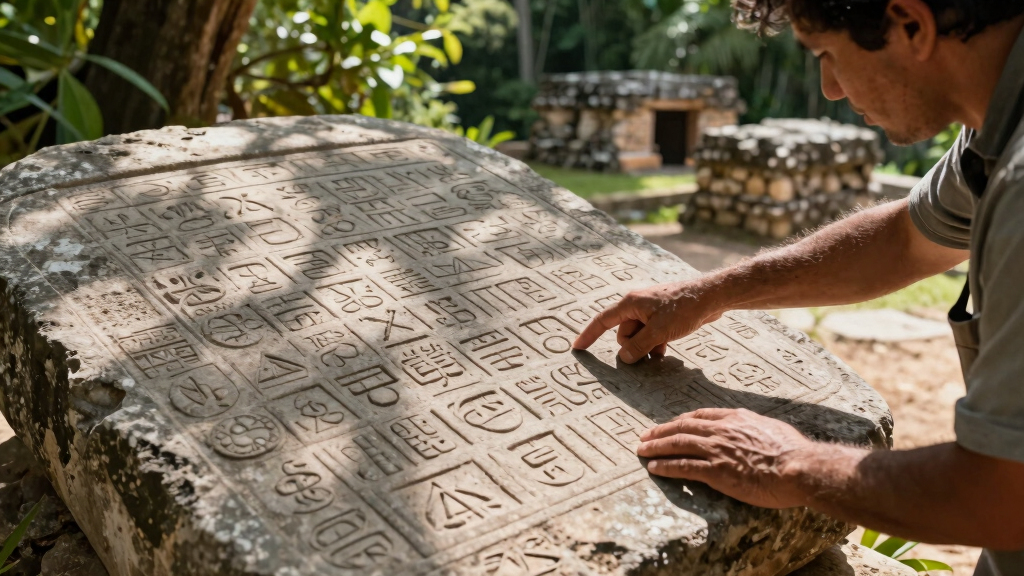
The texts, recovered from an excavation at a site in northern Guatemala, include detailed mathematical notations and inscriptions referencing an individual described as an astronomer or ‘star watcher.’ Experts from the Guatemalan Institute of Archaeology and the University of San Carlos have analyzed the texts and confirmed the identification through linguistic and contextual evidence. The texts date back to roughly 700 CE, during the Classic Maya period.
According to Dr. Maria Lopez, lead researcher on the project, ‘This is the first time we have direct textual evidence linking a specific individual to astronomical activities in the Maya world.’ The texts include calculations related to celestial movements, indicating a sophisticated understanding of astronomy that was likely used for calendrical and ritual purposes.
While prior archaeological finds hinted at Mayan astronomical practices, these texts explicitly name an astronomer, providing a clearer picture of the social roles involved in Maya science. The texts also contain references to mathematical techniques used to predict celestial events, demonstrating advanced mathematical knowledge.
Implications for Understanding Mayan Scientific Knowledge
This discovery is significant because it confirms that individual specialists, such as astronomers, played a recognized role in Maya society. It challenges earlier notions that Mayan science was solely collective or ritualistic, highlighting a level of specialized expertise. Understanding the role of these astronomers can shed light on how the Maya coordinated complex calendrical systems, agricultural cycles, and religious ceremonies, which were all intricately linked to celestial observations.
Furthermore, the identification of a named astronomer suggests that Mayan scientific knowledge was documented and valued, with individuals possibly holding social or political status based on their expertise. This can influence current interpretations of Mayan societal organization and intellectual life.

Mayan Astronomy: The History of the Maya’s Measurements of the Planets and Stars
As an affiliate, we earn on qualifying purchases.
As an affiliate, we earn on qualifying purchases.
Recent Discoveries and the Role of Astronomy in Maya Society
Previous archaeological evidence has shown that the Maya developed highly accurate calendar systems and observed celestial phenomena, often linked to their religious practices. However, direct textual references to individual astronomers have been scarce. The recent discovery of mathematical texts that explicitly mention an astronomer provides a new perspective on how Mayan knowledge was organized and transmitted.
Historically, Mayan inscriptions and codices have included astronomical data, but the identification of a specific person involved in these activities is unprecedented. This aligns with other recent finds that suggest a more complex social structure for scientific roles, including scribes, priests, and specialists.
The texts date to the late Classic period, a time of intense cultural and scientific development in the Maya region, coinciding with the construction of major cities like Tikal and Palenque.
“This is the first time we have direct textual evidence linking a specific individual to astronomical activities in the Maya world.”
— Dr. Maria Lopez
As an affiliate, we earn on qualifying purchases.
Remaining Questions About the Astronomer’s Identity and Role
While the texts identify an individual as an astronomer, their exact identity, social status, and full range of activities remain unclear. It is also uncertain how widespread this role was across Maya society and whether similar texts have yet to be discovered.
Researchers are still analyzing the full content of the texts and seeking additional contextual clues. The dating of the texts is also subject to refinement as more archaeological data becomes available.

Chichen-Itza Maya Calendar Green White Red Stars Astronomy
- Cultural Pride Design: Mayan and Aztec motifs with vibrant colors
- Historical Landmark Illustration: Night scene of Chichen-Itza pyramid
- Travel and Heritage Connection: Celebrates Mexican and Central American roots
As an affiliate, we earn on qualifying purchases.
As an affiliate, we earn on qualifying purchases.
Future Research and Potential Discoveries in Maya Astronomy
Researchers plan to conduct further analysis of the texts to better understand the mathematical techniques and astronomical observations documented. Excavations at similar sites are ongoing, with hopes of uncovering more texts or artifacts related to Maya science.
Additionally, interdisciplinary studies combining archaeology, linguistics, and astronomy aim to reconstruct the social and scientific context of the identified astronomer, potentially revealing new insights into Maya intellectual history.

GobiDex 15 Gemstones Dig Kit, Space Science Kit for Kids Ages 6+
- Space Dig Toy with Tools: Includes hammer, chisel, brush, goggles, magnifier
- Excavate 15 Real Gemstones: Learn about gemstones with full-color guide
- Educational STEM Learning: Promotes geology knowledge and hands-on skills
As an affiliate, we earn on qualifying purchases.
As an affiliate, we earn on qualifying purchases.
Key Questions
What do the texts reveal about Maya astronomy?
The texts include mathematical calculations and references to celestial movements, indicating a sophisticated understanding of astronomy used for calendrical and ritual purposes.
How was the astronomer identified in the texts?
The inscriptions explicitly name an individual as an astronomer or ‘star watcher,’ providing direct textual evidence of a specific person involved in astronomical activities.
Why is this discovery important?
It confirms the existence of specialized scientific roles in Maya society and offers new insights into how they documented and organized their astronomical knowledge.
Are similar texts found elsewhere?
Currently, this is a unique find, but ongoing excavations may uncover more texts or artifacts related to Mayan science and astronomy.
What will researchers do next?
Further analysis of the texts is planned, along with continued excavation and interdisciplinary research to better understand the role and identity of the astronomer.
Source: hn