
TL;DR

Prime made for students and young adults
- Fast, free delivery for dorm and study essentials
- Prime Video and Amazon Music included
- Member-only deals
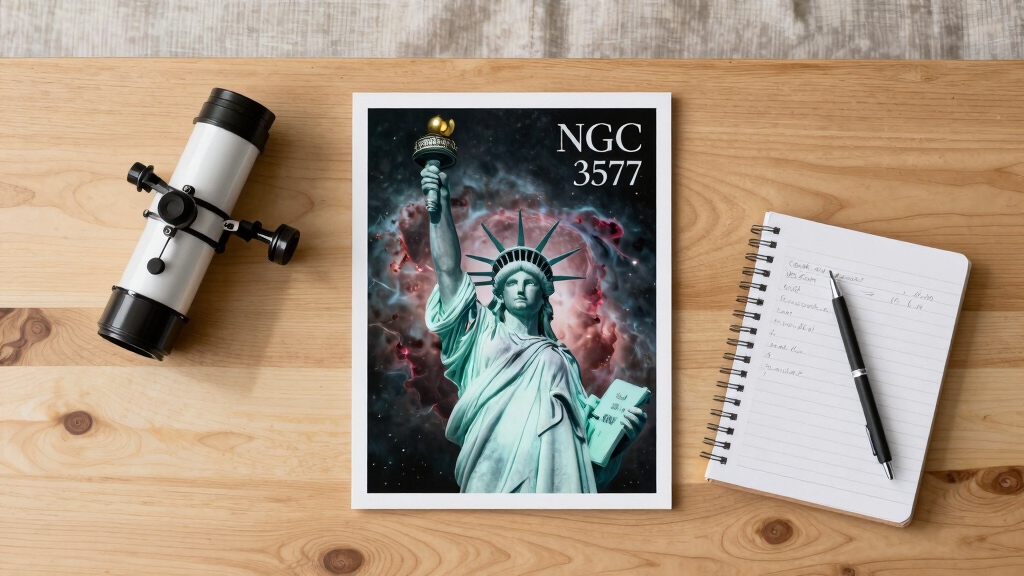
NGC 3576, also known as the Statue of Liberty Nebula, is a luminous star nursery in Carina, showcasing towering gas pillars that resemble the statue’s torch. Recent observations deepen our understanding of star formation and cosmic chemistry.
Imagine a cosmic torch flickering in the dark, its fingers reaching out in fiery tendrils. That’s the Statue of Liberty Nebula, or NGC 3576, glowing brightly in the southern skies. It’s a stellar nursery where new stars are born amid swirling clouds of gas and dust, creating a scene that looks both artistic and scientifically vital.
Tonight, you’ll learn what makes this nebula so visually captivating and why astronomers are excited about recent discoveries. From its iconic shape to the molecules brewing inside, NGC 3576 is a window into the universe’s most dynamic star-making processes.
NGC 3576’s towering gas pillars resemble the torch held high by the Statue of Liberty, driven by stellar winds and radiation.
Its bright glow comes from ionized hydrogen gas energized by young, massive stars, making it a lively star nursery.
Detection of complex molecules like PAHs inside the nebula links it to the chemistry that may have led to life on Earth.
Advanced telescopes, especially infrared ones like JWST, will soon reveal even more about its hidden stars and early planetary systems.
For amateur astronomers, best viewing occurs from December to March in the Southern Hemisphere, with dark skies and wide-field gear.
Why the Statue of Liberty Nebula Looks Like a Cosmic Torch
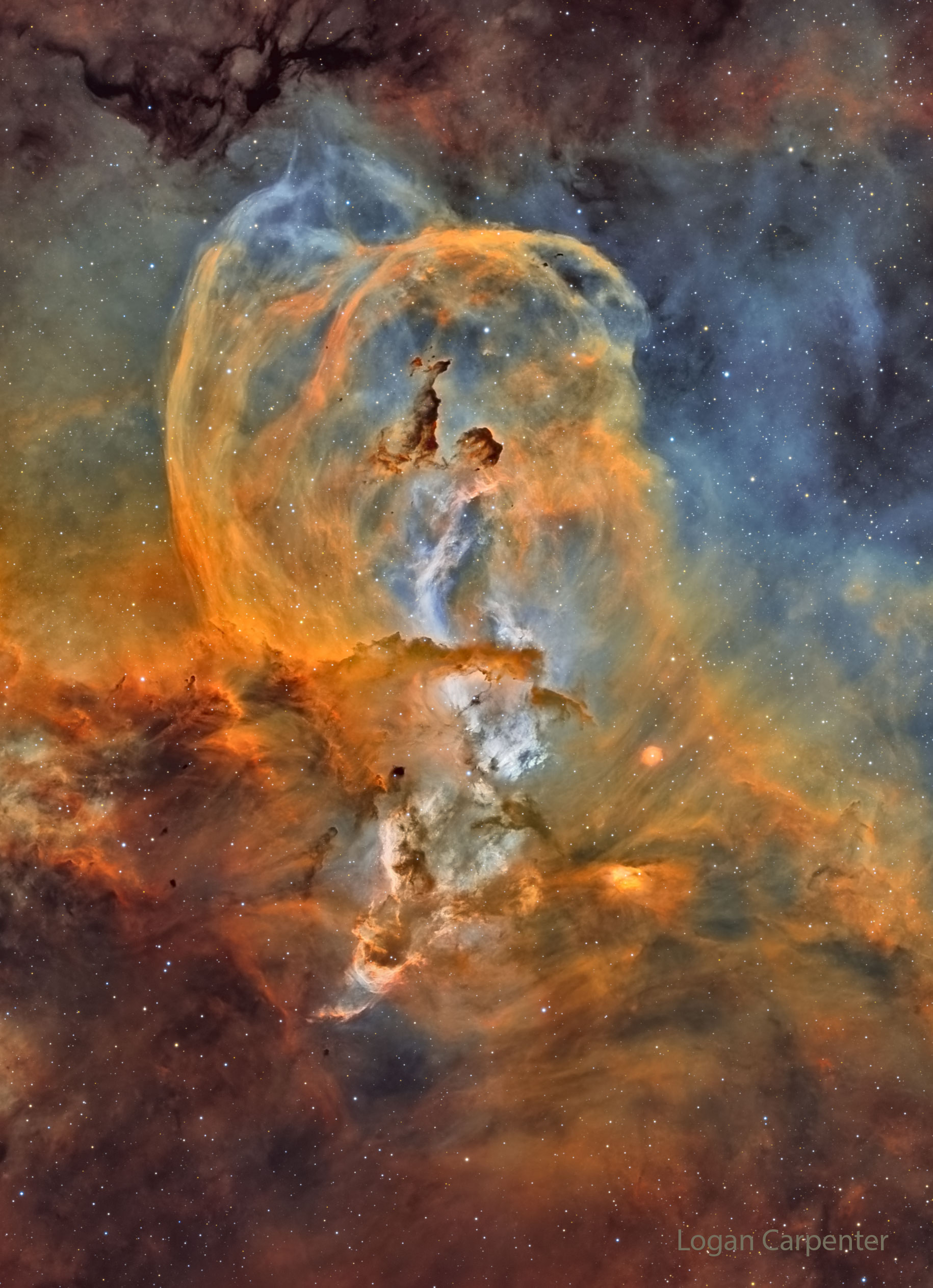
NGC 3576 earned its nickname because of its towering, finger-like structures that resemble the torch held high by the Statue of Liberty. These giant gas pillars stretch across several light-years, sculpted by fierce stellar winds and intense radiation from young, massive stars at their core.
Picture standing under a fiery torch, with bright flames licking upward — that’s what astronomers see when they observe these glowing gas columns. The vivid reds and oranges come from hydrogen gas energized by nearby stars. From a backyard telescope, these features appear as bright, twisted filaments, but with space telescopes, their intricate textures are breathtakingly detailed.
amateur telescope for deep sky viewing
As an affiliate, we earn on qualifying purchases.
As an affiliate, we earn on qualifying purchases.
How NGC 3576 Lights Up and Why It Matters
The nebula shines because of ionized hydrogen gas, which glows when energized by the ultraviolet radiation from its young stars. This process, called ’emission,’ creates a vivid glow that makes NGC 3576 stand out against the dark night sky.
This glowing gas isn’t just beautiful; it’s a signpost of active star formation. The intense radiation and powerful stellar winds carve out cavities and filaments, helping astronomers understand how massive stars influence their birthplace.
For example, the bright knots of light are often clusters of newly formed stars, each emitting enough energy to carve out these cosmic sculptures. Observations show that over 30 massive stars are in various stages of development within NGC 3576, making it a prime site to study stellar birth.
Practical Takeaway: If you want to better understand star formation, consider using multi-wavelength observations—combine optical images with infrared data. This approach reveals both the glowing gas and embedded stars hidden behind dust, giving you a fuller picture of the nebula’s activity.
Action Step: For amateur astronomers, plan your observation during the ideal months (December to March) and use filters like H-alpha to enhance the nebula’s emission features. Collaborate with local astronomy clubs to compare images and deepen your understanding of the star-forming process.
As an affiliate, we earn on qualifying purchases.
The Chemistry Inside: Molecules That Could Have Been on Earth’s Path
Inside NGC 3576, scientists have detected complex molecules called polycyclic aromatic hydrocarbons (PAHs). These molecules are made of carbon rings, and they glow faintly in infrared light, which astronomers can detect with special telescopes.
Think of PAHs as the cosmic cousins of the molecules that might have helped kickstart life on Earth. In star-forming regions, these molecules form in cooling gas clouds, and their presence hints at the chemical richness of the environment where planets could someday emerge.
Studies show that PAHs are abundant in NGC 3576, making it a natural laboratory for understanding how life’s building blocks might be widespread in the universe.
Practical Takeaway: Recognize that regions rich in complex molecules like PAHs are prime targets for future space missions aiming to find prebiotic chemistry. For amateur astronomers, understanding the chemical environment can inform your choice of observation targets—look for nebulae with strong infrared signatures to explore areas where complex molecules thrive.
Action Step: Stay updated with telescope missions and research papers on molecular detections in nebulae. If you use infrared equipment or plan to participate in citizen science projects, focus on objects known for rich molecular content like NGC 3576.
As an affiliate, we earn on qualifying purchases.
What Recent Images and Research Reveal About This Cosmic Torch
Modern telescopes like Hubble and upcoming missions like the James Webb Space Telescope are peeling back layers of dust and gas in NGC 3576. Recent high-resolution images highlight the fine structure of the gas pillars and reveal nascent stars hidden deep within the dust clouds.
For instance, JWST’s infrared capabilities will allow astronomers to see through dust that blocks visible light, uncovering the earliest stages of star and planet formation inside these dense regions. These insights deepen our understanding of how massive stars influence their surroundings and trigger new generations of stars.
Practical Takeaway: Stay informed about upcoming telescope missions and learn how their capabilities can help you interpret astrophysical phenomena. As a researcher or enthusiast, consider participating in citizen science projects that use data from these telescopes to identify star-forming regions and contribute to scientific discovery.
Action Step: Follow updates from space agencies and astronomy organizations, and experiment with image processing software to analyze publicly available data. This hands-on approach can turn you into an active participant in unraveling the mysteries of star formation in nebulae like NGC 3576.
As an affiliate, we earn on qualifying purchases.
Where and When to See the Statue of Liberty Nebula
NGC 3576 is best observed from the Southern Hemisphere or low northern latitudes with a large amateur telescope or astrophotography gear. It’s a faint, sprawling glow, requiring dark skies and steady patience.
The nebula is most visible from December to March, when its position high in the sky makes it easier to capture. To spot it, find the constellation Carina, near the Southern Cross, and point your scope toward its brightest regions.
Imagine capturing a fiery torch in your camera lens — this is what astrophotographers aim for, with long exposures and wide-field optics to bring out its intricate details.
Practical Takeaway: To maximize your chances of observing NGC 3576, plan your sessions during months with minimal moonlight and use detailed star charts to locate Carina. Use appropriate filters to enhance the nebula’s features and consider stacking multiple images to improve clarity.
Action Step: Join local astronomy clubs or online communities to share tips and coordinate observation nights. Practice with your equipment to refine your technique, and keep a log of your observations to track the nebula’s visibility and your imaging progress.
Comparing NGC 3576 to Other Famous Nebulae
| Name | Location | Distance | Shape & Features | Star Formation Activity |
|---|---|---|---|---|
| NGC 3576 (Statue of Liberty) | Carina | 9,000 light-years | Towering gas pillars resembling a torch | Active, 33+ massive stars forming |
| Orion Nebula | Orion constellation | 1,344 light-years | Bright, sprawling cloud with star clusters | Very active, rich in young stars |
| Carina Nebula | Carina | 7,500 light-years | Massive, complex structure with pillars and bubbles | Extremely active, home to Eta Carinae |
Frequently Asked Questions
Can I see the Statue of Liberty Nebula with a small telescope?
While challenging, small telescopes can sometimes reveal its faint glow, especially under dark skies. For detailed views, a larger aperture and long exposures with astrophotography gear are recommended.
When is the best time to photograph NGC 3576?
The ideal months are December through March in the Southern Hemisphere, when the nebula is highest in the sky and skies are darkest. Use wide-field, fast optics for best results.
What makes NGC 3576 different from other nebulae?
Its striking resemblance to a torch or Statue of Liberty, combined with active star formation and complex molecules, sets it apart from nebulae like Orion or Carina in both appearance and scientific interest.
Will future telescopes reveal more about this nebula?
Yes. Instruments like JWST will penetrate dust clouds to uncover nascent stars and planetary systems, offering unprecedented insights into how massive stars influence their birthplaces.
Conclusion
NGC 3576 is more than just a stunning cosmic sculpture — it’s a window into the universe’s most vital process: star birth. Its iconic shape and active environment remind us that even in the vast darkness, creation and life are constantly unfolding.
Next time you gaze up, think of this fiery torch lighting the way for new stars and perhaps even life itself. The universe’s most inspiring stories are written in gas, dust, and light — and NGC 3576 is one of the brightest chapters.
Halloween Picks
halloween
As an affiliate, we earn on qualifying purchases.