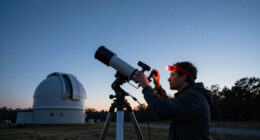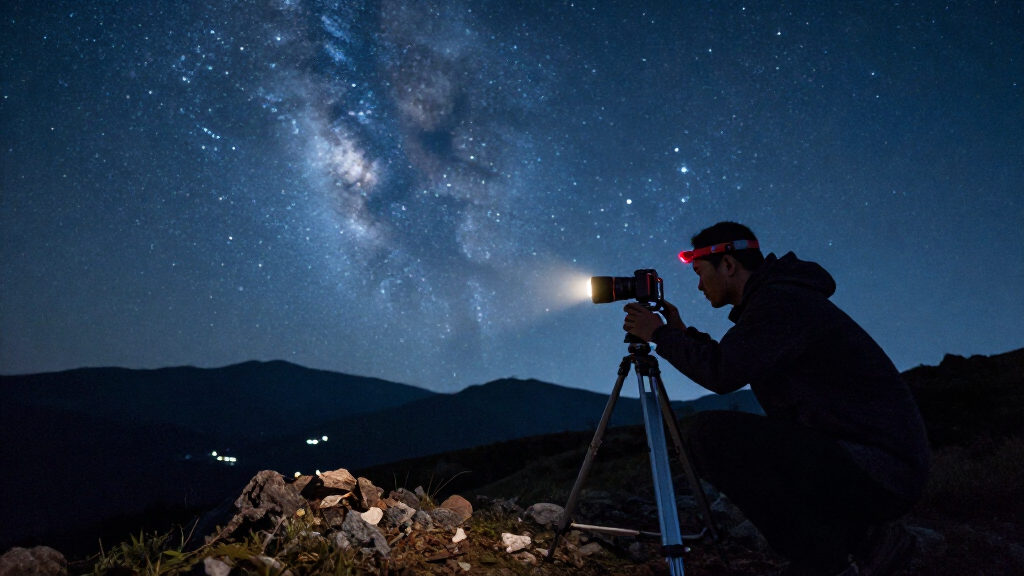
Portable astrophotography trackers range from simple single-axis devices to GoTo mounts that can guide a more ambitious imaging setup. I rank the iOptron SkyGuider Pro Full Package as the best overall balance for camera-based deep-sky photography, while the Sky-Watcher Star Adventurer 2i Pro Pack stands out for flexible manual operation and the Star Adventurer GTi Kit for GoTo control and expansion. The central tradeoff is straightforward: lighter, simpler trackers are easier to carry and set up, while motorized GoTo mounts offer more control at the cost of added gear and setup steps. Payload, polar alignment, tripod stability, and power needs can matter as much as the tracker itself. Read on for the full comparison and a guide to choosing the right tracker for your camera and observing style.

Prime made for students and young adults
- Fast, free delivery for dorm and study essentials
- Prime Video and Amazon Music included
- Member-only deals
Key Takeaways
- The roundup spans two distinct approaches: compact camera trackers prioritize portability and straightforward tracking, while the iEXOS-100-2 and Star Adventurer GTi models add GoTo control for a more involved imaging workflow.
- The iOptron SkyGuider Pro Full Package takes the balanced role because it is positioned for camera-based tracking without requiring buyers to start with a full GoTo system.
- The Star Adventurer 2i Pro Pack and Mini Pro Pack are not interchangeable: the Pro Pack is the more capable all-around camera kit, while the Mini favors a smaller, lighter travel setup.
- The two Star Adventurer GTi listings differ by what is included: the head kit suits buyers who already have a compatible tripod, while the kit with tripod offers a more ready-to-assemble package.
- The TeSeek and OGST options lean toward simpler, narrower setups; buyers should weigh their tracking needs and mounting hardware carefully rather than assuming every compact tracker suits the same camera-and-lens load.
| TeSeek Equatorial Mount Star Tracker with Latitude Adjustment Base |  | Best for Heavy Camera Setups | Material: PETG and carbon fiber shell | Tracking speeds: Sidereal, lunar, and custom | Hemisphere support: Northern and southern | VIEW LATEST PRICE | See Our Full Breakdown |
| TeSeek Equatorial Mount Star Tracker with Ball-Head Gimbal |  | Best Compact Tracker | Material: PETG with carbon fiber | Weight: 360 g | Dimensions: 83 × 72 × 82 mm | VIEW LATEST PRICE | See Our Full Breakdown |
| Explore Scientific iEXOS-100-2 PMC-Eight GoTo Equatorial Mount and Tripod |  | Best for GoTo Control | Mount type: Equatorial mount | Drive: Dual-axis worm gears with belt-driven stepper motors | Control: ExploreStars app | VIEW LATEST PRICE | See Our Full Breakdown |
| iOptron SkyGuider Pro Camera Mount Full Package |  | Best Self-Powered Camera Tracker | Weight: 2.2 lb (1.00 kg) | Maximum payload: 11 lb (4.99 kg) when balanced | Latitude adjustment range: -30° to 65° | VIEW LATEST PRICE | See Our Full Breakdown |
| Sky-Watcher Star Adventurer 2i Pro Pack |  | Best for App-Controlled Versatility | Model: S20512 | Weight: 2.4 lb for tracker; product information also lists 7 lb | Payload capacity: 11 lb | VIEW LATEST PRICE | See Our Full Breakdown |
| Sky-Watcher Star Adventurer GTi GoTo Equatorial Mount Head Kit |  | Best for GoTo Without an Included Tripod | Mount type: Equatorial | Payload capacity: 11 lb | Counterweight: 5 lb | VIEW LATEST PRICE | See Our Full Breakdown |
| OGST Single-Axis Automatic Tracking Equatorial Mount for Astrophotography |  | Best Lightweight Travel Tracker | Tracking: Single-axis automatic | Periodic error: ±10 arcseconds over 10 minutes | Payload capacity: 4 kg | VIEW LATEST PRICE | See Our Full Breakdown |
| Sky-Watcher Star Adventurer Mini Pro Pack (S20582) |  | Best Compact Wide-Field Tracker | Weight: 1.5 lb | Payload capacity: 6.6 lb | Power: Built-in AA battery compartment, up to 24 hours; 5V mini USB input | VIEW LATEST PRICE | See Our Full Breakdown |
| Sky-Watcher Star Adventurer GTi GoTo Equatorial Tracking Mount Kit with Tripod |  | Best Complete GoTo Kit | Mount type: GoTo equatorial tracking mount | Payload capacity: 11 lb | Included counterweight: 5 lb | VIEW LATEST PRICE | See Our Full Breakdown |
| portable astrophotography tracker | Power | Control | Payload capacity |
|---|---|---|---|
| TeSeek Equatorial Mount Star T | USB-C external power; no built-in battery | — | — |
| TeSeek Equatorial Mount Star T | USB Type-C, 5 V 500 mA; USB-PD 9 V supported for camera loads over 2 kg | — | — |
| Explore Scientific iEXOS-100-2 | — | ExploreStars app | — |
| iOptron SkyGuider Pro Camera M | — | — | — |
| Sky-Watcher Star Adventurer 2i | Included lithium metal batteries | Sky-Watcher SAM Console smartphone app | 11 lb |
| Sky-Watcher Star Adventurer GT | Battery or external power | — | 11 lb |
| OGST Single-Axis Automatic Tra | — | Wi-Fi, browser, and app | 4 kg |
| Sky-Watcher Star Adventurer Mi | Built-in AA battery compartment, up to 24 hours; 5V mini USB input | Wi-Fi smartphone control via SynScan app | 6.6 lb |
| Sky-Watcher Star Adventurer GT | — | Built-in Wi-Fi; SynScan Pro app support | 11 lb |
More Details on Our Top Picks
TeSeek Equatorial Mount Star Tracker with Latitude Adjustment Base
The 15 kg load capacity and CNC-machined metal latitude base make this TeSeek a better fit for a substantial camera rig than the lighter TeSeek Ball-Head Gimbal, whose stated capacity is 3 kg without a counterweight. Sidereal, lunar, and custom tracking speeds, plus support for both hemispheres, give it flexibility for different tracking tasks and time-lapse work. Its compact body and USB-C power-bank support suit travel, but there is no built-in battery, so power must be part of the kit. The mount also has a 1/4-inch output screw, meaning buyers need a separate ball head to position a camera. The high capacity is useful only with a stable support and careful balancing; tracking accuracy still depends on polar alignment and setup conditions.
Pros:- 15 kg stated load capacity suits heavier camera setups
- Metal latitude adjustment base provides a sturdy alignment platform
- Sidereal, lunar, and custom tracking speeds support varied tracking and time-lapse needs
- USB-C power-bank operation avoids dependence on an app
Cons:- Requires an external USB-C power source because it has no built-in battery
- A separate ball head is needed to connect and aim the camera
- High load capacity does not remove the need for careful polar alignment and setup
Best for: Astrophotographers using heavier camera and lens combinations who already own a compatible ball head and want a high-capacity tracker with adjustable speeds.
Not ideal for: Travelers seeking a ready-to-shoot, self-powered kit or photographers who want to attach a camera directly without adding a ball head.
- Material:PETG and carbon fiber shell
- Tracking speeds:Sidereal, lunar, and custom
- Hemisphere support:Northern and southern
- Latitude base:CNC-machined anodized metal
- Load capacity:15 kg
- Power:USB-C external power; no built-in battery
- Mounting threads:3/8-inch bottom thread; 1/4-inch output screw
- Dimensions:3.54 × 3.54 × 3.15 in
Our verdict“Choose this TeSeek over the lighter Ball-Head Gimbal when your priority is a higher-capacity camera rig and you can supply a ball head and external power.”
TeSeek Equatorial Mount Star Tracker with Ball-Head Gimbal
At 360 g, this is the most travel-minded option here: it combines the tracker and ball-head gimbal, while the TeSeek Latitude Adjustment Base model requires a separate ball head. That integrated setup reduces packing and connection fuss for lightweight camera kits. It supports stellar, lunar, and custom speeds, works in either hemisphere, and can also serve time-lapse shooting. The tradeoff is its 3 kg capacity without a counterweight, far below the heavier TeSeek model’s stated capacity, so this is for modest camera-and-lens combinations rather than a large rig. It also needs a USB power bank and careful polar alignment. The stated tracking reference times at different focal lengths help set expectations, but do not replace alignment or account for every shooting condition.
Pros:- Lightweight 360 g body is easy to pack for travel
- Included ball-head gimbal simplifies camera mounting compared with the TeSeek Latitude Base model
- Supports stellar, lunar, and custom tracking speeds in both hemispheres
- Can also be used for time-lapse photography
Cons:- 3 kg capacity without a counterweight limits heavier camera and lens combinations
- Requires an external USB power bank
- Tracking results depend on accurate polar alignment and setup conditions
Best for: Travel astrophotographers with a lightweight camera and lens who value a compact tracker with an included gimbal and are comfortable bringing a USB power bank.
Not ideal for: Photographers using heavy long lenses or telescope setups, or anyone who wants a self-powered tracker with no separate battery pack.
- Material:PETG with carbon fiber
- Weight:360 g
- Dimensions:83 × 72 × 82 mm
- Tracking speeds:Stellar, lunar, and custom
- Hemisphere support:Northern and southern
- Maximum load:3 kg without counterweight
- Power:USB Type-C, 5 V 500 mA; USB-PD 9 V supported for camera loads over 2 kg
- Package includes:Equatorial mount and ball-head gimbal
Our verdict“Pick this model for a compact, integrated travel setup with a light camera, but choose the TeSeek Latitude Base for substantially heavier loads.”
Explore Scientific iEXOS-100-2 PMC-Eight GoTo Equatorial Mount and Tripod
Unlike the camera-first iOptron SkyGuider Pro and Sky-Watcher Star Adventurer 2i, the iEXOS-100-2 is a GoTo equatorial mount and tripod built around telescope alignment and celestial-object navigation. Its ExploreStars app, Wi-Fi and Bluetooth connectivity, and eight-CPU PMC-Eight system give users a more guided control path than the simpler tracking-focused TeSeek models. Belt-driven stepper motors and clutched dual-axis worm gears support quiet movement and manual repositioning. The RA-axis sight hole and altitude controls assist with polar alignment, though alignment remains part of setup rather than disappearing behind the app. This is a more involved, telescope-oriented option than the compact camera trackers, and the supplied details do not state a payload capacity or battery arrangement. It also has no focuser, so telescope users must plan that part of their imaging setup separately.
Pros:- ExploreStars app supports alignment and celestial-object navigation
- PMC-Eight system uses eight independent CPUs
- Belt-driven motors are described as quiet
- Clutched dual-axis worm gears allow smooth repositioning and balancing
Cons:- More involved telescope-oriented setup than the compact camera trackers in this roundup
- No focuser is included
- Product details provided here do not specify payload capacity or battery arrangements
Best for: Telescope users who want app-guided GoTo navigation, dual-axis movement, and a tripod-based mount rather than a compact camera-only tracker.
Not ideal for: Photographers prioritizing a lightweight, self-contained camera tracker for wide-field travel shooting, or buyers who need a stated payload limit before choosing a mount.
- Mount type:Equatorial mount
- Drive:Dual-axis worm gears with belt-driven stepper motors
- Control:ExploreStars app
- Connectivity:Wi-Fi and Bluetooth
- Processor system:PMC-Eight with eight independent CPUs
- Alignment features:RA-axis sight hole and altitude controls
- Model number:ES-iEXOS-100-02
- Included mount support:Tripod
Our verdict“Choose the iEXOS-100-2 when GoTo telescope control matters more than the compact camera-first portability of the SkyGuider Pro or Star Adventurer 2i.”
iOptron SkyGuider Pro Camera Mount Full Package
The SkyGuider Pro stands out for its rechargeable battery, which runs for up to 20 hours at 20°C, a clear advantage over both TeSeek trackers that need an external power bank. Its illuminated polar scope and adjustable alt-azimuth base also make alignment part of the package, while the DEC bracket, counterweight and shaft, Vixen dovetail saddle, and carry bag create a more complete camera-tracking kit than the Star Adventurer 2i listing, which may require optional base and telescope accessories. The 11 lb payload limit applies when balanced, so buyers should not treat it as a simple load-and-go rating. At 2.2 lb, it remains portable, but it is heavier than the 360 g TeSeek Ball-Head Gimbal. This is a strong fit for photographers who want included alignment and power hardware, not the lightest possible bag.
Pros:- Rechargeable battery runs for up to 20 hours at 20°C
- Illuminated polar scope and adjustable base support alignment
- Full package includes DEC bracket, counterweight and shaft, dovetail saddle, and carry bag
- Supports a balanced payload up to 11 lb
Cons:- The 11 lb capacity requires the payload to be balanced
- At 2.2 lb, it weighs more than the 360 g TeSeek Ball-Head Gimbal
- Maximum battery runtime is specified at 20°C and may vary with conditions
Best for: Astrophotographers who want a portable, rechargeable camera tracker with included polar-alignment and balancing accessories for a properly balanced rig.
Not ideal for: Minimalist travelers who prioritize the lowest carry weight, or users who cannot balance their camera setup and expect the full stated payload capacity.
- Weight:2.2 lb (1.00 kg)
- Maximum payload:11 lb (4.99 kg) when balanced
- Latitude adjustment range:-30° to 65°
- Tracking speeds:1X, 1/2X, solar, and lunar
- Battery life:Up to 20 hours at 20°C
- Ports:ST-4 auto guiding, HBX, micro USB, and shutter triggering
- Included accessories:DEC bracket, counterweight and shaft, Vixen dovetail saddle, padded carry bag
- Azimuth adjustment:±5°
Our verdict“Choose the SkyGuider Pro if you want a well-equipped, rechargeable camera tracker and can balance your rig; choose the TeSeek gimbal for a lighter carry.”
Sky-Watcher Star Adventurer 2i Pro Pack
The Star Adventurer 2i pairs Wi-Fi smartphone control with tracking for wide-field astrophotography, nightscapes, panoramas, and time-lapse work, making it more flexible for mixed-use shooting than the camera-focused SkyGuider Pro. Its 11 lb payload capacity and ability to be configured for small telescopes give it room to grow beyond a basic camera-and-lens kit. Compared with the TeSeek trackers, it offers app control and included lithium metal batteries, while those models avoid app dependence but require an external power bank. The tradeoff is some uncertainty about what is needed for a complete equatorial setup: the equatorial base and telescope accessories may be optional. Product information also gives conflicting weights, so pack planning is less clear than with the SkyGuider Pro’s stated 2.2 lb mount weight.
Pros:- Wi-Fi smartphone control through the Sky-Watcher SAM Console app
- Supports astrophotography, nightscapes, panoramas, and time-lapse
- 11 lb stated payload capacity
- Can be configured for small telescopes
Cons:- Product information lists conflicting weights
- Equatorial base and telescope accessories may be optional
- Smartphone control adds an app-dependent setup compared with the TeSeek trackers
Best for: Camera users who want smartphone-controlled tracking for nightscapes and time-lapse, with the option to configure the mount for a small telescope.
Not ideal for: Buyers who need a clearly specified complete equatorial kit or a dependable product weight for tight travel limits.
- Model:S20512
- Weight:2.4 lb for tracker; product information also lists 7 lb
- Payload capacity:11 lb
- Connectivity:Wi-Fi
- Control:Sky-Watcher SAM Console smartphone app
- Power:Included lithium metal batteries
- Dimensions:13.9 × 9.6 × 6.3 in
- Uses:Wide-field astrophotography, nightscapes, panoramas, and time-lapse
Our verdict“Choose the Star Adventurer 2i for app-controlled, multi-purpose shooting if you verify the included mounting hardware and can work around the conflicting weight information.”
Sky-Watcher Star Adventurer GTi GoTo Equatorial Mount Head Kit
The Star Adventurer GTi GoTo head kit suits photographers who want automated target finding and tracking but already own a suitable tripod. Its 11 lb payload supports cameras and small telescopes, giving it more room for heavier setups than the Star Adventurer Mini Pro Pack. Built-in Wi-Fi enables smartphone control, while the illuminated polar scope and ports for autoguiding and shutter control support a more involved imaging workflow. The tradeoff is that this kit leaves the tripod and camera to you, so it is less ready to use than the GTi kit that includes a tripod. At 6.9 kg, it is also a substantial carry for a tracker-focused setup. I’d choose it when GoTo capability matters more than keeping the whole rig especially light.
Pros:- GoTo equatorial tracking with an 11 lb payload capacity
- Built-in Wi-Fi allows smartphone control
- Illuminated polar scope supports alignment in low light
- USB, autoguider, and SNAP shutter-control ports support expanded imaging setups
Cons:- Tripod and camera are not included
- The 6.9 kg listed weight makes it relatively heavy to transport
- Its payload limit excludes larger telescope setups
Best for: Astrophotographers who already own a stable tripod and want GoTo tracking for a camera or small telescope.
Not ideal for: Travel photographers seeking the lightest possible kit, or buyers who need a complete tripod setup in one package.
- Mount type:Equatorial
- Payload capacity:11 lb
- Counterweight:5 lb
- Connectivity:Built-in Wi-Fi
- Alignment:Illuminated built-in polar scope
- Ports:USB, autoguider, SNAP shutter control
- Power:Battery or external power
- Included components:Mount head, counterweight bar, 5 lb counterweight
- Item weight:6.9 kg
Our verdict“Choose this head kit if you own a tripod and want GoTo control and a higher payload than the Star Adventurer Mini Pro Pack.”
OGST Single-Axis Automatic Tracking Equatorial Mount for Astrophotography
At 1.4 kg, the OGST is the lightest listed option here, making it a compelling choice when packed weight matters more than automated target finding. It carries up to 4 kg and offers Wi-Fi control through an app or browser, plus three stated polar-alignment methods. That flexibility can help travelers adapt to different setup conditions. Its main compromise is single-axis tracking: unlike the GoTo Sky-Watcher Star Adventurer GTi kits, it is a simpler tracking mount rather than a full GoTo system. The listed periodic error is ±10 arcseconds over 10 minutes, but the product data does not specify additional imaging automation. I’d favor the OGST for a compact travel rig and straightforward tracking, while buyers with heavier equipment or GoTo ambitions should look elsewhere.
Pros:- Light 1.4 kg mount is suited to travel
- Supports equipment up to 4 kg
- Offers optical-scope, smartphone, and star-pointer alignment methods
- Wi-Fi control works through an app or browser
Cons:- Single-axis tracking is less capable than the GoTo systems in the Sky-Watcher GTi models
- Lower payload capacity limits heavier camera and telescope combinations
- The listed included items do not include a tripod or counterweight
Best for: Traveling astrophotographers with up to 4 kg of camera gear who prioritize low mount weight and flexible alignment options.
Not ideal for: Buyers seeking GoTo target selection, higher payload capacity, or a kit with a tripod and counterweight included.
- Tracking:Single-axis automatic
- Periodic error:±10 arcseconds over 10 minutes
- Payload capacity:4 kg
- Product weight:1.4 kg
- Material:ABS and carbon composite
- Dimensions:15 × 12 × 18 cm
- Control:Wi-Fi, browser, and app
- Polar alignment:Optical polar scope, smartphone, and star pointer
Our verdict“Pick the OGST for a lightweight travel setup when single-axis tracking is enough and minimizing mount weight is the priority.”
Sky-Watcher Star Adventurer Mini Pro Pack (S20582)
The Star Adventurer Mini Pro Pack is the compact pick for wide-field camera work, time-lapse, and travelers who want to keep their kit light. At 1.5 lb, it is far easier to pack than either Star Adventurer GTi, though its 6.6 lb payload also leaves less headroom for heavier gear. Wi-Fi smartphone control and the included equatorial base, polar scope, and declination bracket give photographers useful setup tools without requiring a GoTo mount. Compared with the 1.4 kg OGST, this Sky-Watcher is lighter by the listed weight and includes camera-positioning accessories, but it does not offer the OGST’s stated three alignment methods. Its AA battery compartment can run up to 24 hours, with mini USB input as another power option; counterweights are not included.
Pros:- Very light 1.5 lb design is easy to pack
- 6.6 lb payload supports many DSLR and mirrorless setups
- Includes an equatorial base, polar scope, and declination bracket
- Wi-Fi smartphone control and up to 24 hours of AA-battery operation
Cons:- Lower payload capacity than either 11 lb Star Adventurer GTi kit
- Counterweights are not included
- Requires AA batteries or an external 5V mini USB power source
Best for: Wide-field DSLR or mirrorless photographers who want a very light tracker with alignment and camera-positioning accessories included.
Not ideal for: Astrophotographers using heavier equipment, seeking GoTo functions, or wanting counterweights bundled with the tracker.
- Weight:1.5 lb
- Payload capacity:6.6 lb
- Power:Built-in AA battery compartment, up to 24 hours; 5V mini USB input
- Control:Wi-Fi smartphone control via SynScan app
- Gears:Brass and aluminum
- Included accessories:Equatorial base, polar scope, declination bracket
Our verdict“Choose the Mini Pro Pack for light wide-field camera tracking, but step up to a GTi if you need GoTo or more payload capacity.”
Sky-Watcher Star Adventurer GTi GoTo Equatorial Tracking Mount Kit with Tripod
This GTi kit with tripod is the most ready-to-set-up GoTo option in this group: it includes the tripod, pier extension, counterweight bar, and 5 lb counterweight, while retaining the 11 lb payload and Wi-Fi control found in the GTi head kit. The illuminated polar scope and lunar, solar, and sidereal tracking rates give photographers a broader set of targets and operating modes than the Star Adventurer Mini Pro Pack. That completeness comes with a clear portability cost: the listed kit weight is 26 lb, making it a heavier travel choice than the standalone head kit or compact Mini. I’d choose this version when having the core support hardware together matters more than minimizing packed weight. Its payload still keeps it in camera-and-small-telescope territory.
Pros:- Includes tripod, pier extension, counterweight bar, and 5 lb counterweight
- GoTo equatorial tracking supports an 11 lb payload
- Built-in Wi-Fi supports smartphone control through the SynScan Pro app
- Illuminated polar scope and lunar, solar, and sidereal tracking rates
Cons:- Listed kit weight of 26 lb makes it substantially less portable than the Mini Pro Pack
- 11 lb payload limits the setup to cameras and small telescopes
- The included tripod adds bulk compared with the GTi head kit
Best for: Astrophotographers who want a GoTo mount with tripod and counterweight hardware included for camera or small-telescope use.
Not ideal for: Backpackers and frequent flyers who need a lightweight kit, or buyers planning to mount larger telescopes.
- Mount type:GoTo equatorial tracking mount
- Payload capacity:11 lb
- Included counterweight:5 lb
- Control:Built-in Wi-Fi; SynScan Pro app support
- Polar scope:Built-in illuminated polar scope
- Tracking rates:Lunar, solar, and sidereal
- Included equipment:Tripod, pier extension, counterweight bar, and counterweight
- Item weight:26 lb
- Maximum height:44.5 inches
Our verdict“Choose this complete GTi kit if you want GoTo capability and included support hardware, and can accept a 26 lb setup.”
How We Picked
I compared the nine options as portable imaging mounts, not as general-purpose telescope mounts. The main criteria were tracking approach, expected setup complexity, portability, included mounting components, compatibility with camera-based imaging, and room to expand. A tracker that can travel easily but demands extra hardware may suit an experienced photographer better than a more complete kit; conversely, GoTo control may be useful for locating targets but adds setup and power considerations.
The ranking gives priority to practical balance for camera astrophotography: useful tracking capability, a manageable learning curve, and a package that makes sense for the intended user. That places the SkyGuider Pro and Star Adventurer 2i Pro Pack ahead of specialized compact or single-axis choices for most buyers, while the GTi models rank higher for those who value GoTo and lower for travelers seeking the simplest rig. The TeSeek and OGST mounts remain relevant for narrower needs, but their appeal depends more heavily on the buyer’s camera load, tripod, and tolerance for a less expansive feature set.
| portable astrophotography tracker | Power | Control |
|---|---|---|
| TeSeek Equatorial Mount Star T | USB-C external power; no built-in battery | — |
| TeSeek Equatorial Mount Star T | USB Type-C, 5 V 500 mA; USB-PD 9 V supported for camera loads over 2 kg | — |
| Explore Scientific iEXOS-100-2 | — | ExploreStars app |
| iOptron SkyGuider Pro Camera M | — | — |
| Sky-Watcher Star Adventurer 2i | Included lithium metal batteries | Sky-Watcher SAM Console smartphone app |
| Sky-Watcher Star Adventurer GT | Battery or external power | — |
| OGST Single-Axis Automatic Tra | — | Wi-Fi, browser, and app |
| Sky-Watcher Star Adventurer Mi | Built-in AA battery compartment, up to 24 hours; 5V mini USB input | Wi-Fi smartphone control via SynScan app |
| Sky-Watcher Star Adventurer GT | — | Built-in Wi-Fi; SynScan Pro app support |
Factors to Consider When Choosing Portable Astrophotography Trackers
Before choosing a tracker, I would match the mount to the imaging setup and the way it will be used away from home. These broader checks can prevent common mismatches that a product name or a list of included parts may not make obvious.
Match the Tracker to Your Camera and Lens
Start with the complete imaging load, not the camera body alone: include the lens, any bracket, ball head, cables, and other accessories carried by the mount. A long telephoto lens can challenge balance and stability even when its weight appears modest. Check the manufacturer’s payload guidance and leave room for a comfortable margin rather than choosing a tracker right at its stated limit. Also think about focal length, since longer lenses reveal tracking errors more readily than wide-angle compositions. A compact tracker may be a sensible travel choice for a lightweight camera, but the added control of a larger mount can be more useful when your kit grows. Avoid buying based only on the hope of adding heavier gear later; compare that future load with a mount built for expansion now.
Choose Between Simple Tracking and GoTo Control
Single-axis and manually aimed trackers can keep a camera moving with the sky while leaving target selection and framing to you. That simplicity can mean fewer setup steps and less equipment to manage in the dark. GoTo systems add motorized target finding and more control, which can help when you want to frame objects outside familiar star fields or build a more involved imaging routine. The tradeoff is a greater dependence on power, alignment, setup, and learning the mount’s control system. GoTo does not remove the need for accurate polar alignment or a stable tripod. Buy the control features you expect to use, rather than treating a longer feature list as an automatic advantage.
Plan for Polar Alignment and Setup Conditions
Accurate polar alignment is a basic part of tracked astrophotography, and it can take longer than expected when a site is dark, cold, or uneven. A latitude-adjustment base or a suitable alignment aid can make setup more manageable, but it does not replace careful alignment. Before purchasing, check what alignment hardware is included and what must be supplied separately. Practice the process at home so you know how the mount, camera, and tripod fit together before a night under the stars. A fast setup can matter more than extra features when observing time is limited or you often move between locations. New buyers should favor a setup they can repeat reliably over one that looks capable but leaves key alignment steps unclear.
Account for Tripod, Head, and Included Hardware
A tracker is only as steady as the support beneath it, so a flimsy tripod can undermine otherwise capable tracking. Compare packages by listing the actual parts included: mount head, tripod, latitude base, counterweight, camera attachment, and any alignment accessories. The Star Adventurer GTi head kit, for example, is a different buying proposition from the kit that includes a tripod; the bare head can be a better fit if you already own compatible support. A complete package may reduce compatibility guesswork, though it can duplicate equipment you already have. Check attachment standards and the load rating of every support component, not just the tracker. This avoids the common mistake of treating a bundled tripod as automatically suitable for every lens and camera combination.
Balance Portability Against Power and Pack Size
Portability is more than the mount’s weight: consider the tripod, counterweights, cables, batteries, and protective case as one travel system. A smaller tracker may fit into a camera bag, while a GoTo setup may require more room and planning even if its mount head is compact. Check the power source and expected operating arrangement before heading to a remote site, especially if the mount relies on external power or electronic controls. Cold weather can reduce battery performance, so carrying a backup may add weight. For airline travel or hikes, prioritize the complete packed footprint rather than a product’s headline portability. If you mostly drive to observing sites, a somewhat larger system may offer a worthwhile gain in control.
Think About Growth, Maintenance, and the Whole Imaging Workflow
Consider whether the tracker needs to support only wide-field camera images or may later be paired with heavier optics and guiding accessories. Expansion can bring new demands for balancing, alignment, power, and software, so the mount is only one part of the learning curve. A simpler tracker can be a strong entry point if you want to learn exposure, focusing, and sky framing before adding automation. Buyers planning to grow their setup may prefer a mount with control options and a more capable support system, even if it takes longer to learn. Also check how easy it is to secure the camera and adjust the mount in gloves or low light. The best long-term choice is the one whose added capability matches a realistic next step, not every possible upgrade.
Frequently Asked Questions
Can a portable tracker work with a telephoto lens?
It can, but suitability depends on the complete load, balance, focal length, and the mount’s tracking performance. Longer lenses make small alignment and tracking errors easier to see, so a setup that performs acceptably with a wide lens may not deliver the same results with a telephoto. Check the payload guidance for the exact tracker and include brackets and accessories in your calculation. A sturdy tripod and careful balancing are just as important as the mount head. If telephoto imaging is your main plan, favor a system with enough capacity and control rather than buying the smallest option first.
Should I choose a GoTo tracker if I am new to astrophotography?
GoTo can help locate targets, but it does not automatically make imaging easier. You will still need to set up the tripod, align the mount, focus the camera, and manage power and framing. A simpler tracker can be easier to learn if your first goal is wide-field photography and you are comfortable finding bright star fields manually. GoTo makes more sense if target finding is a major obstacle or you expect to build a more involved setup. Choose based on which part of the process you want the mount to simplify.
Is a kit with a tripod worth choosing over a mount-head kit?
A bundled tripod is useful when you do not already own a stable, compatible support system. It can also reduce uncertainty about fitting the mount together, though you should still confirm the tripod’s load capacity for your full camera setup. If you already have a sturdy tripod with the right connection and adequate stability, a head-only kit may avoid duplicate gear. Do not judge the choice by the number of included pieces alone. A suitable tripod matters more than receiving one that is inconvenient or underpowered for your load.
What should I prioritize for travel: a smaller tracker or more tracking features?
For hiking, flights, or quick outings, assess the packed weight and volume of the entire system, including support, batteries, and accessories. A smaller tracker can make it easier to carry the setup, but reduced capacity or simpler controls may limit the lenses and targets you can use comfortably. If you travel by car and work from established sites, GoTo control or a more complete package may be worth carrying. Think about how often you will actually use the extra features, not just whether they are available. A lighter kit that gets taken along can be more useful than a capable setup left at home.
Do I need to buy every accessory included in a tracker package?
No; the right package depends on what you already own and whether the included parts suit your camera. A latitude base, camera head, tripod, or counterweight can be valuable if it fills a real gap in your setup. Before ordering, compare the package contents with your existing hardware and confirm that attachment standards and load limits are compatible. Avoid assuming that an accessory is necessary just because it appears in a bundle. Keep the money and pack space for components that improve stability, alignment, or the specific imaging workflow you plan to use.
Conclusion
For the broadest camera-astrophotography use, I recommend the iOptron SkyGuider Pro Full Package as best overall, with the Star Adventurer 2i Pro Pack as a strong alternative for buyers who want a flexible camera-tracker setup. The best value choice depends on what you already own: the Star Adventurer 2i Pro Pack makes the most sense when its included components match your needs, while a head-only option can be a better buy if you already have a suitable tripod. For a premium, more expandable system, choose the Star Adventurer GTi kit with tripod; pick the head kit instead if you have compatible support. Beginners who want a more contained camera-tracking package should start with the SkyGuider Pro or Star Adventurer 2i Pro Pack, while travelers prioritizing a small setup should look at the Star Adventurer Mini Pro Pack. For a simpler, specialized setup, compare the TeSeek and OGST options against your camera load and required tracking control before committing.
Fall Picks
fall essentials
As an affiliate, we earn on qualifying purchases.