TL;DR

Prime made for students and young adults
- Fast, free delivery for dorm and study essentials
- Prime Video and Amazon Music included
- Member-only deals
NASA APOD’s October 22, 2026 feature is an illustration of WD J1330+6435, a white dwarf surrounded by a disk of gas and rocky material. Some white dwarfs can appear yellow, green, cyan, pink, or purple when trace elements in their atmospheres alter their light, but these faint stars are not visible to the naked eye tonight; photographing the specific scene requires an image or illustration, not a backyard sky shot.
WD J1330+6435 is shown in NASA APOD’s October 22, 2026 feature as an illustration of a white dwarf with a disk of gas and rocky material.
Trace elements accreted onto some white dwarfs can alter their normally white appearance, producing colors such as yellow, green, cyan, pink, or purple.
The APOD explanation says these white dwarfs are too faint to see tonight, so do not expect a naked-eye green star.
Use wide-field gear for a broad night-sky photograph and a tracked long-focal-length telescope for a faint, compact target—after verifying coordinates and visi…
When sharing the image, call it an illustration and credit NASA; do not describe it as a direct telescope photograph.

What NASA APOD shows—and what the illustration means
NASA APOD’s October 22, 2026 feature shows an illustration of WD J1330+6435, a white dwarf surrounded by a disk of gas and rocky material. It is a visual explanation of a stellar system, not a conventional photograph of the exact scene. If you see a bright ring and a crisp star in the artwork, treat those details as a way to picture the idea, not as a report of what a camera resolved.
A white dwarf is the small, faint remnant left behind after a star like the Sun uses up its nuclear fuel. Think of a campfire after the flames have died: the burning phase has ended, but the leftover embers still tell you something about the fire. A white dwarf is not an ember in the literal sense; it is a dense stellar object. The analogy helps with one point: the star is a remnant, and its surroundings can preserve clues to what is happening after its main life stage.
The disk in the illustration gives the scene a second story. Gas and rocky fragments orbit the star, and material can eventually fall onto it. In a small telescope eyepiece, you should not expect to see that neat illustrated disk around this particular object. For instance, an observer might see a dark backyard sky and a handful of ordinary stars, while the APOD image supplies a visual model for activity too faint and small to resolve directly from the ground.
That gap between explanation and direct view is part of astronomy’s appeal. A map of a mountain range can show ridges hidden by clouds; an illustration can help you grasp a star system that your eyes cannot separate into its parts. The image is useful because it gives a shape to the idea, while the text tells you which features are grounded in the science.
astronomy camera for deep sky astrophotography
As an affiliate, we earn on qualifying purchases.
As an affiliate, we earn on qualifying purchases.
Why some white dwarfs can appear green, pink, or purple
Some white dwarfs can look unlike their name because trace elements that fall onto them interact with the star’s atmosphere and shift its normally white color. NASA APOD’s explanation gives a striking palette: yellow, green, cyan, pink, and purple. That does not mean every white dwarf wears a vivid color, or that a green star will stand out like a traffic light in the night sky.
Color carries information because stars emit light across a range of wavelengths, and their temperatures help shape the colors astronomers measure. Blue stars are hotter than red stars in the broad comparison given in the APOD explanation. But color is not a single-purpose thermometer. In the unusual white dwarf cases described here, trace elements in the atmosphere also matter, so a surprising hue can reflect the star’s chemical surroundings as well as its temperature.
Consider a familiar scene: sunlight passing through stained glass leaves a colored patch on a wall. The glass has changed which colors reach your eye. A stellar atmosphere is far more complex than a window, but the comparison helps you see why tiny amounts of material can affect the light we receive. The color is part of the evidence astronomers study, not a decorative label added for drama.
For example, if an artist colors a white dwarf green in an explanatory image, that can represent the reported effect of accreted trace elements. It does not establish that your naked eye would see the star as a green dot from Earth. The object is faint, and the image is an illustration. Keep those two facts together: unusual colors can be scientifically meaningful, while remaining impossible to spot directly in an ordinary night-sky view.
long focal length telescope for faint stars
As an affiliate, we earn on qualifying purchases.
As an affiliate, we earn on qualifying purchases.
Why you probably won’t see this star tonight
You probably cannot see WD J1330+6435 with your eyes, because white dwarfs are faint and NASA APOD’s explanation specifically says the featured kind is too faint to see tonight. “Tonight” here is a useful reminder of the limit, not a claim that the star is absent from space. It exists whether or not a backyard observer can pick it out.
Even a telescope does not automatically turn a faint object into a detailed portrait. Aperture, sky darkness, atmospheric steadiness, the object’s position, and the observer’s experience all affect what appears. A long focal length can help frame a small target, but it also magnifies tracking errors and does not create detail that the instrument cannot gather. A beginner with binoculars under a city’s orange glow may have a better evening looking at brighter stars than searching for this particular white dwarf.
Imagine planning a clear October night from a suburban garden. You set up a tripod, wait for your eyes to adjust, and scan a patch of sky where a chart suggests a faint target might lie. The real view may be a modest point—or nothing your setup can confidently distinguish. That is not a failed observation. It is an honest outcome when the target is faint and the sky has limits.
Use a planetarium app or a current star chart to identify brighter stars and constellations visible from your location and time. The supplied NASA APOD explanation does not give this object’s coordinates, apparent magnitude, distance, or tonight’s visibility window, so those details should not be guessed. If you want to locate WD J1330+6435 specifically, consult a reliable current catalog and observing source before building a plan around it.
As an affiliate, we earn on qualifying purchases.
Choose a camera plan that matches the real target
The right photography plan depends on whether you want the illustration or the sky. WD J1330+6435’s APOD image is an illustration, so no lens can photograph that artwork by aiming at the heavens. To make an image of the actual star, you would need a suitable telescope and a verified target position; the APOD details alone do not supply the coordinates or exposure settings required for a reliable capture.
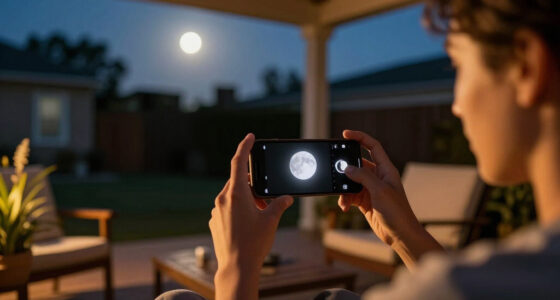
A wide-field setup works well when your goal is the larger night-sky setting: constellations, a bright planet, or a sweep of stars over a familiar landscape. It can make a beautiful record of your evening, even though it will not reveal this tiny, faint white dwarf. A long-focal-length telescope is the more relevant gear class for a small deep-sky target, but it needs a stable mount, accurate tracking, and a dark, transparent sky. More magnification is not a shortcut to more light.
Here is a practical sequence for a night inspired by the APOD:
- Decide what you want to record. For a sky landscape, choose a wide lens; for the specific white dwarf, first verify its coordinates and whether your telescope can reach it.
- Check the conditions. Look for clear, dark skies and avoid setting up when haze, thin cloud, or a bright Moon washes out faint stars.
- Focus carefully. Use a bright star to focus before framing a faint target, then check that tracking keeps stars sharp.
- Keep the claim honest. Label a sky photograph as your own night-sky image; use NASA’s credited APOD illustration when discussing the illustrated disk and colors.
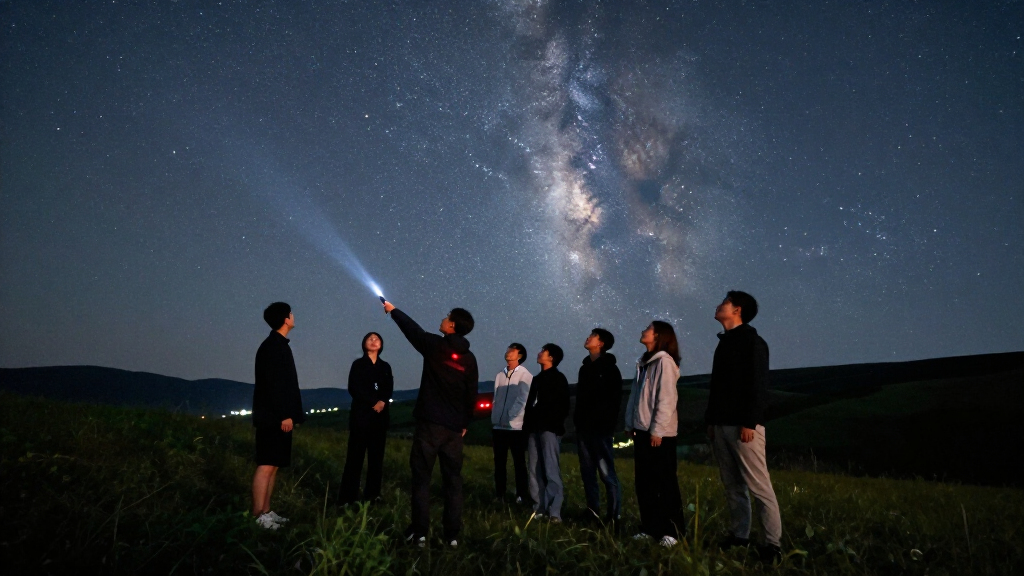
For instance, you could photograph a wide view from a dark-sky park, then place it alongside the APOD illustration in a personal observing journal. Your picture records the sky you actually saw; NASA’s artwork helps explain a system your camera did not resolve. That is a satisfying pairing, with each image doing a different job.
star chart for white dwarf observation
As an affiliate, we earn on qualifying purchases.
As an affiliate, we earn on qualifying purchases.
Read the colors without mistaking art for a telescope view
The colors in a scientific illustration explain a story; they do not automatically reproduce the exact view through an eyepiece. In this APOD feature, the colored white dwarf idea comes from the explanation that trace elements accreted onto some stars can alter their normally white appearance. The illustration also makes the surrounding disk legible to a viewer, even though the supplied description does not claim that a camera resolved it as a bright, sharply edged ring.
That distinction helps you read astronomy images responsibly. A photograph, a processed image, a composite, and an illustration can all be valuable, but they answer different questions. A photograph records light captured by an instrument; processing can bring faint detail into view; a composite may combine data or wavelengths; an illustration can show a model of a scene that remains too small or faint to resolve. NASA APOD identifies this featured image as an illustration, which tells you how to interpret its visual details.
Try a simple comparison when you look at the artwork. Ask: which parts does the explanation describe as physical facts, and which parts help you picture them? Here, the white dwarf, orbiting gas and rocks, and unusual color effects are in the explanation. The drawing’s exact disk thickness, brightness, and color saturation are visual choices; the supplied account does not specify those as measured appearances.
This careful reading is useful beyond astronomy. A vivid image can make a scientific idea memorable, but vividness alone is not measurement. If you share the image with a friend, say “NASA’s illustration shows a white dwarf and disk” rather than “NASA photographed a glowing green star.” One sentence keeps the wonder and gets the evidence right.
Use the APOD credit and missing details as part of the story
NASA credits the featured image to NASA, and the image is public domain according to the supplied APOD details. That credit lets you identify where the illustration came from when you share or discuss it. A good caption can name the date, the object, the image type, and the credit in one clean line: “NASA APOD, October 22, 2026: illustration of WD J1330+6435; image credit NASA.”
Some details readers often want are not included in the account provided here: the star’s distance, coordinates, apparent magnitude, the telescope or software used to create the illustration, and any exposure data. Do not fill those blanks with a guess. A familiar mistake is to assume every NASA image came from a spacecraft camera. In this case the explicit label is illustration, so asking what instrument photographed it misses the key point.
If you want to take the next step, open the original APOD page for October 22, 2026, and check its full image credit and explanation. Then use an astronomical catalog or observing guide for coordinates and visibility information. Those sources answer different questions: APOD tells you what the feature is and how the image is credited; a catalog can help you locate the object; your local forecast tells you whether tonight’s sky is clear.
That small habit makes your observing notes more useful. Imagine returning to a notebook six months later: “Green dwarf, seen with camera” is confusing and likely inaccurate. “APOD illustration; color effects described for some accreting white dwarfs; target not visually observed” is precise. Good astronomy starts with curiosity, and it gets stronger when you record what you actually saw separately from what an image helped you imagine.
Frequently Asked Questions
Is the NASA APOD image from October 22, 2026 a photograph?
No. The supplied APOD details identify it as an illustration of WD J1330+6435, a white dwarf surrounded by a disk of gas and rocky material. Treat its visual details as an explanatory depiction rather than a direct telescope image.
Can I see WD J1330+6435 with my naked eyes?
The APOD explanation says the white dwarfs discussed are too faint to see tonight. You can still enjoy a night of stargazing, but you should not expect to identify this object without suitable equipment and reliable observing information.
Are there really green stars?
Some white dwarfs can appear green, yellow, cyan, pink, or purple when trace elements accreted onto them interact with their atmospheres and shift their normally white color. That scientific description does not mean a bright green star will be visible to your eyes from Earth.
What camera or telescope would I need to photograph this object?
The APOD details here do not provide coordinates, apparent magnitude, or capture settings, so they are not enough to plan a reliable photograph of WD J1330+6435. A long-focal-length telescope with accurate tracking is the relevant gear class for a compact faint target, but first check a current catalog and your equipment’s limits.
What does the disk around the white dwarf contain?
The illustration shows a disk of gas and rocky material orbiting the white dwarf. The supplied explanation says material can be accreted onto some white dwarfs and affect their atmospheric color; it does not provide a measured size or detailed composition for this specific disk.
How should I credit the APOD image?
The image credit is NASA, and the supplied details identify it as public domain. A clear caption can say: “NASA APOD, October 22, 2026; illustration of WD J1330+6435; image credit NASA.”
Conclusion
Remember the difference between a star’s scientific story and the view your eyes can reach. WD J1330+6435’s illustrated disk helps you picture gas and rocky material around a white dwarf, while the color explanation shows how trace elements can change the light from some stellar remnants. The feature does not promise a green point waiting above your roof tonight. Save the NASA APOD illustration for the close-up, then step outside and photograph the sky your camera can actually see. A quiet field of stars may look modest beside the artwork, but it is the real light that traveled across space to meet you.Halloween Picks
halloween
As an affiliate, we earn on qualifying purchases.