For most readers comparing astronomy reference books, I rank The Backyard Astronomer’s Guide as the best overall because it balances practical observing advice, equipment guidance, and lasting reference value. National Geographic Backyard Guide to the Night Sky is my value pick for casual stargazers, while Observer’s Sky Atlas is the stronger choice for locating deep-sky targets. The main tradeoffs are breadth versus specialization, visual appeal versus instructional depth, and portable field use versus large-format readability. Some books teach astronomy in a planned sequence, while others work better for quick lookups or nights beside a telescope. Continue reading for the full breakdown and buyer-specific recommendations.

Prime made for students and young adults
- Fast, free delivery for dorm and study essentials
- Prime Video and Amazon Music included
- Member-only deals
Key Takeaways
- The Backyard Astronomer’s Guide earned the top position because it covers more of the observing process than the narrower atlases, encyclopedias, and visual showcases.
- National Geographic Backyard Guide to the Night Sky offers the strongest value for casual observers who want accessible explanations without paying for a larger reference volume.
- Observer’s Sky Atlas is the specialist pick for deep-sky observing, but its target-focused structure makes it less useful than the top pick for equipment advice or astronomy theory.
- Astronomy: A Self-Teaching Guide is the better study tool, while A Dictionary of Astronomy serves readers who already understand the subject and need fast definitions.
- Night Sky Guide 2026 works best as a dated companion, not a sole reference, because its month-by-month guidance will age faster than the core books in this lineup.
| First Space Encyclopedia: A Reference Guide to Our Galaxy and Beyond |  | Best for Young Readers | Book type: Children’s reference encyclopedia | Intended audience: Young readers | Knowledge level: Introductory | VIEW LATEST PRICE | See Our Full Breakdown |
| The Backyard Astronomer’s Guide |  | Best Practical Observing Guide | Book type: Amateur astronomy guide | Intended audience: Beginner and amateur astronomers | Primary activity: Backyard stargazing | VIEW LATEST PRICE | See Our Full Breakdown |
| Observer’s Sky Atlas: The 500 Best Deep-Sky Objects with Charts and Images |  | Best Deep-Sky Atlas | Book type: Observational sky atlas | Object count: 500 selected objects | Primary subject: Deep-sky objects | VIEW LATEST PRICE | See Our Full Breakdown |
| The Astronomy Handbook: The Ultimate Guide to Observing and Understanding Stars, Planets, Galaxies, and the Universe |  | Best Theory-and-Observation Balance | Book type: Astronomy handbook | Intended audience: Beginners and enthusiasts | Knowledge coverage: Astronomy fundamentals | VIEW LATEST PRICE | See Our Full Breakdown |
| Astronomy: A Self-Teaching Guide, Eighth Edition |  | Best for Structured Self-Study | Book type: Self-teaching astronomy guide | Edition: Eighth edition | Intended audience: Beginners and enthusiasts | VIEW LATEST PRICE | See Our Full Breakdown |
| National Geographic Stargazer’s Atlas: The Ultimate Guide to the Night Sky |  | Best Illustrated Sky Atlas | Reference type: Stargazing atlas | Primary content: Detailed star maps | Subject coverage: Night sky and celestial objects | VIEW LATEST PRICE | See Our Full Breakdown |
| Hubble’s Universe: Greatest Discoveries and Latest Images |  | Best for Hubble Imagery | Reference type: Illustrated astronomy overview | Primary subject: Hubble Space Telescope | Content focus: Major discoveries and space images | VIEW LATEST PRICE | See Our Full Breakdown |
| The Astronomy Encyclopedia |  | Best Broad-Topic Encyclopedia | Reference type: Astronomy encyclopedia | Core coverage: Celestial objects | Additional coverage: Space exploration | VIEW LATEST PRICE | See Our Full Breakdown |
| Cambridge Encyclopedia of Astronomy |  | Best Academic Reference | Reference type: Astronomy encyclopedia | Object coverage: Celestial objects | Phenomena coverage: Astronomical phenomena | VIEW LATEST PRICE | See Our Full Breakdown |
| Night Sky Guide 2026: North America’s Skies Month by Month from The Royal Astronomical Society of Canada |  | Best Annual Observing Planner | Guide year: 2026 | Geographic scope: North America | Organization: The Royal Astronomical Society of Canada | VIEW LATEST PRICE | See Our Full Breakdown |
| 100 Things to See in the Night Sky, Expanded Edition: Your Illustrated Guide to the Planets, Satellites, Constellations, and More | 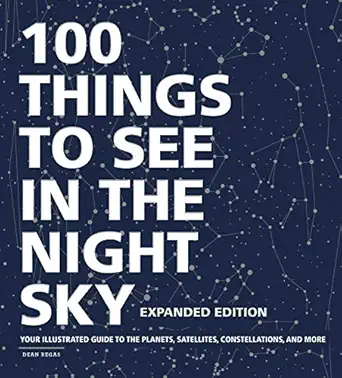 | Best Observation Checklist | ASIN: 1507213816 | Edition: Expanded Edition | Reference format: Illustrated observing guide | VIEW LATEST PRICE | See Our Full Breakdown |
| Stars and Planets: The Most Complete Guide to the Stars, Planets, Galaxies, and Solar System – Updated and Expanded Edition |  | Best All-Purpose Field Reference | ASIN: 0691177880 | Edition: Updated and Expanded Edition | Reference format: General astronomy guide | VIEW LATEST PRICE | See Our Full Breakdown |
| A Dictionary of Astronomy (Oxford Quick Reference) |  | Best Quick-Lookup Companion | ASIN: 0199609055 | Series: Oxford Quick Reference | Reference type: Astronomy dictionary | VIEW LATEST PRICE | See Our Full Breakdown |
| National Geographic Backyard Guide to the Night Sky, 2nd Edition |  | Best Visual Starter Guide | ASIN: 1426220154 | Edition: 2nd Edition | Reference format: Illustrated backyard observing guide | VIEW LATEST PRICE | See Our Full Breakdown |
| astronomy reference book | Intended audience |
|---|---|
| First Space Encyclopedia: A Re | Young readers |
| The Backyard Astronomer’s Guid | Beginner and amateur astronomers |
| Observer’s Sky Atlas: The 500 | Amateur astronomers |
| The Astronomy Handbook: The Ul | Beginners and enthusiasts |
| Astronomy: A Self-Teaching Gui | Beginners and enthusiasts |
| National Geographic Stargazer’ | — |
| Hubble’s Universe: Greatest Di | Astronomy enthusiasts |
| The Astronomy Encyclopedia | Students and astronomy enthusiasts |
| Cambridge Encyclopedia of Astr | Students, educators, and enthusiasts |
| Night Sky Guide 2026: North Am | Amateur astronomers and sky enthusiasts |
| 100 Things to See in the Night | — |
| Stars and Planets: The Most Co | — |
| A Dictionary of Astronomy | — |
| National Geographic Backyard G | — |
More Details on Our Top Picks
First Space Encyclopedia: A Reference Guide to Our Galaxy and Beyond
I place First Space Encyclopedia in the children’s slot because its colorful, approachable presentation makes broad space concepts easier for young readers to absorb. Unlike The Backyard Astronomer’s Guide, which concentrates on equipment and observing methods, this book introduces the galaxy and wider universe without expecting a telescope or prior knowledge. That makes it well suited to browsing, school projects, and shared reading. Its wide subject range also gives children several paths into astronomy rather than limiting them to constellations. The tradeoff is depth: explanations aimed at younger readers will not satisfy teenagers seeking rigorous science. It is also less useful outdoors than Observer’s Sky Atlas because it lacks that book’s object-by-object charts. I rank it as a strong first reference, not a lasting technical manual.
Pros:- Colorful illustrations make unfamiliar space concepts easier for children to grasp
- Broad coverage supports browsing and school research
- Requires no prior astronomy knowledge
- Reference structure accommodates short reading sessions
Cons:- Introductory explanations offer limited value as readers advance
- Broad coverage leaves less room for detailed treatment of individual subjects
- Not designed as a field guide for locating objects
Best for: Children beginning independent reading about space, plus parents seeking an illustrated home reference for school-age learners
Not ideal for: Older teenagers and experienced observers who need technical explanations, equipment guidance, or detailed finding charts
- Book type:Children’s reference encyclopedia
- Intended audience:Young readers
- Knowledge level:Introductory
- Primary subject:Space and astronomy
- Coverage:The galaxy and the wider universe
- Visual content:Color illustrations
- Primary use:Browsing and basic reference
Our verdict“This is my pick for children who need an inviting first astronomy reference rather than an observing manual.”
The Backyard Astronomer’s Guide
The Backyard Astronomer’s Guide earns my practical-observing role by connecting reference material to what readers can do outside. Its guidance on telescopes, equipment choices, and observing methods has clearer real-world value for a new hobbyist than the concept-led lessons in Astronomy: A Self-Teaching Guide. It also covers more of the observing process than Observer’s Sky Atlas, which is better once a reader is ready to locate specific deep-sky targets. I would rank this highest for someone planning an equipment purchase or trying to improve backyard sessions. That breadth brings two compromises: readers seeking a quick object lookup may find a dedicated atlas more direct, while those wanting a course-like science education receive less structure than the self-teaching book provides. Its strength is actionable instruction, backed by broad amateur-level coverage.
Pros:- Connects equipment advice directly to observing outcomes
- Covers both telescope use and practical viewing techniques
- Accessible to beginners without becoming narrowly child-focused
- Broad scope can support hobbyists beyond their first sessions
Cons:- Less efficient than a dedicated atlas for locating individual targets
- Broad coverage may be more material than casual naked-eye stargazers need
- Does not provide the structured study path of a self-teaching textbook
Best for: Beginning and intermediate backyard observers who want help choosing equipment and building practical stargazing skills
Not ideal for: Readers seeking a compact field atlas or a lesson-and-exercise course focused on astronomy theory
- Book type:Amateur astronomy guide
- Intended audience:Beginner and amateur astronomers
- Primary activity:Backyard stargazing
- Equipment coverage:Telescopes and observing gear
- Technique coverage:Celestial observation methods
- Object coverage:Multiple types of celestial objects
- Learning approach:Practical instruction and reference
Our verdict“I recommend this to hobbyists who want one practical guide for equipment decisions and better backyard observing.”
Observer’s Sky Atlas: The 500 Best Deep-Sky Objects with Charts and Images
I assign Observer’s Sky Atlas the specialist role because its selection of 500 deep-sky objects gives active observers a defined target list supported by charts and images. Compared with The Astronomy Handbook, it spends less space explaining the universe and more space helping readers identify what they intend to observe. The Backyard Astronomer’s Guide remains the better starting point for learning telescope setup and technique, but this atlas becomes more useful once those basics are in place. Its focus is also its main limitation: readers interested mainly in planetary science, theory, or broad reference reading will find the coverage narrow. With no digital or interactive tools, field use depends on printed charts rather than searchable guidance. I rank it as the strongest target-finding reference here, especially for observers pursuing deep-sky variety.
Pros:- Covers 500 selected deep-sky objects
- Pairs charts with images for identification
- Curated target list reduces uncertainty about what to observe next
- More field-oriented than broad astronomy handbooks
Cons:- Narrower subject range than a general astronomy reference
- Assumes readers have some knowledge of observing equipment and methods
- No digital search, live sky positioning, or interactive planning tools
Best for: Amateur telescope users who already know basic observing techniques and want a curated list of deep-sky targets
Not ideal for: Theory-focused beginners or planetary observers who need broad instruction rather than a specialized deep-sky atlas
- Book type:Observational sky atlas
- Object count:500 selected objects
- Primary subject:Deep-sky objects
- Navigation aids:Sky charts
- Visual aids:Object images
- Intended audience:Amateur astronomers
- Primary use:Target selection and identification
- Digital features:None stated
Our verdict“This atlas makes the most sense for telescope owners who want printed guidance for building a deep-sky observing list.”
The Astronomy Handbook: The Ultimate Guide to Observing and Understanding Stars, Planets, Galaxies, and the Universe
The Astronomy Handbook occupies the middle ground between a science primer and a field guide. I rank it for readers who want to understand stars, planets, galaxies, and the wider universe while also learning how to observe them. The Backyard Astronomer’s Guide offers more concentrated help with equipment and backyard technique, while Astronomy: A Self-Teaching Guide supplies a more formal route through fundamental concepts. This handbook is the better match when neither pure instruction nor pure observing is enough. Its range makes it adaptable, but it can also feel less focused: dedicated deep-sky observers gain more direct utility from Observer’s Sky Atlas, and disciplined learners may prefer exercises and sequential lessons. The absence of stated edition details also makes its currency harder to judge. I see it as a balanced general reference with practical observing support.
Pros:- Balances astronomy explanations with practical observing guidance
- Covers stars, planets, galaxies, and the wider universe
- Accessible to beginners while retaining value for enthusiasts
- Broader subject mix than a specialized sky atlas
Cons:- Less detailed on equipment than The Backyard Astronomer’s Guide
- Broad format may feel unfocused to readers pursuing one observing specialty
- Available product data does not identify edition-specific updates
Best for: Curious beginners who want one reference combining basic space science with guidance for observing varied celestial objects
Not ideal for: Buyers who want a tightly structured course, detailed equipment advice, or specialized deep-sky charts
- Book type:Astronomy handbook
- Intended audience:Beginners and enthusiasts
- Knowledge coverage:Astronomy fundamentals
- Observing content:Practical viewing guidance
- Celestial subjects:Stars, planets, and galaxies
- Cosmology scope:The wider universe
- Learning approach:Explanation combined with observation
Our verdict“I would choose this for a beginner who wants astronomy knowledge and observing advice in the same general-purpose handbook.”
Astronomy: A Self-Teaching Guide, Eighth Edition
I give Astronomy: A Self-Teaching Guide, Eighth Edition the study-focused role because it is organized around independent learning, not casual browsing or field navigation. Compared with First Space Encyclopedia, it provides an adult-oriented introduction with greater conceptual reach; compared with The Backyard Astronomer’s Guide, it places more weight on understanding astronomy than choosing gear or planning observing sessions. That distinction makes it a sensible bridge for readers who want to learn systematically without enrolling in a class. Coverage of fundamental ideas and newer developments adds useful context, though advanced readers may outgrow its introductory depth. It is also a poorer companion beside a telescope than Observer’s Sky Atlas because lessons cannot replace finding charts. I rank it as the best course-like option in this group, with clarity favored over technical specialization.
Pros:- Designed specifically for independent study
- Clear explanations make fundamental concepts approachable
- Eighth-edition framing signals an established learning format
- Includes both foundational subjects and newer developments
Cons:- Introductory depth may be insufficient for advanced readers
- Less useful during observing sessions than an atlas or field guide
- Available product data does not specify what changed in the eighth edition
Best for: Adult beginners, homeschool learners, and returning students who want an organized astronomy course for independent study
Not ideal for: Experienced astronomy students or active observers who need advanced mathematics, equipment advice, or field charts
- Book type:Self-teaching astronomy guide
- Edition:Eighth edition
- Intended audience:Beginners and enthusiasts
- Study mode:Independent learning
- Core coverage:Fundamental astronomy concepts
- Current-topic coverage:Recent developments in astronomy
- Knowledge level:Introductory to intermediate
- Primary use:Structured home study
Our verdict“This is my choice for readers who want a guided astronomy education they can follow at their own pace.”
National Geographic Stargazer’s Atlas: The Ultimate Guide to the Night Sky
I rank National Geographic Stargazer’s Atlas as the strongest visual atlas in this group because its detailed maps connect celestial-object information with practical sky identification. Unlike Hubble’s Universe, which emphasizes discoveries and space imagery, this book is designed to help readers understand what they can locate overhead. It also serves a wider ability range than Observer’s Sky Atlas, whose focus on 500 deep-sky objects better suits more targeted observing. The polished illustrations make complex sky patterns easier to interpret, while the supporting explanations give beginners room to learn. The tradeoff is limited hand-holding for complete newcomers: readers may need basic astronomy knowledge to extract everything from the maps, and no observing equipment is included.
Pros:- Detailed star maps support practical sky identification
- Balances beginner accessibility with material for experienced observers
- Illustrations clarify relationships between celestial objects
- Combines atlas functions with explanatory reference content
Cons:- Some map content may require prior astronomy knowledge
- Does not include a telescope, planisphere, or other observing equipment
Best for: Visual learners who want a detailed atlas that can support both early stargazing and more advanced sky study
Not ideal for: Complete beginners seeking a step-by-step observing course or buyers expecting bundled stargazing equipment
- Reference type:Stargazing atlas
- Primary content:Detailed star maps
- Subject coverage:Night sky and celestial objects
- Skill level:Beginner through experienced
- Illustrations:Illustrated throughout
- Intended use:Sky identification and astronomy reference
- Equipment included:None
Our verdict“I recommend this to visually oriented stargazers who want a lasting map-based reference rather than an image showcase or introductory lesson book.”
Hubble’s Universe: Greatest Discoveries and Latest Images
Hubble’s Universe earns its place as the image-led choice, pairing striking space photography with explanations of the telescope’s major discoveries. I would choose it over The Astronomy Encyclopedia for an engaging visual tour, especially when the goal is understanding how Hubble changed popular and scientific views of the universe. By contrast, National Geographic Stargazer’s Atlas offers much more help with identifying objects in the night sky. The accessible overview makes this pick inviting for astronomy fans who prefer discovery stories to dense entries, but that accessibility limits its reference depth. It lacks the technical detail needed for advanced study, and its emphasis on telescope imagery provides little support for planning observations. With no clear edition or update information, readers focused on newer missions may also want a more current companion source.
Pros:- Showcases striking imagery produced by the Hubble Space Telescope
- Connects major discoveries with approachable explanations
- More visually engaging than a conventional astronomy encyclopedia
- Well suited to browsing and general astronomy learning
Cons:- Offers less technical depth than study-focused references
- Provides little practical help for night-sky observation
- Edition and update timing are not specified
Best for: Space-image enthusiasts and casual astronomy readers who want Hubble discoveries explained through visual storytelling
Not ideal for: Students needing technical reference material or observers seeking charts for identifying objects from the ground
- Reference type:Illustrated astronomy overview
- Primary subject:Hubble Space Telescope
- Content focus:Major discoveries and space images
- Scientific coverage:Hubble-related breakthroughs
- Technical depth:General overview
- Intended audience:Astronomy enthusiasts
- Edition information:Not specified
Our verdict“I recommend this for readers drawn to Hubble’s images and discoveries, provided they do not need a technical encyclopedia or field guide.”
The Astronomy Encyclopedia
I place The Astronomy Encyclopedia highest for readers who want one volume spanning celestial objects, space exploration, and astronomy’s history. That breadth gives it an advantage over Hubble’s Universe, whose subject is tied to one telescope, and Night Sky Guide 2026, whose usefulness centers on a particular year and region. The illustrated presentation should make topic-hopping easier for students and enthusiasts, while the encyclopedia structure supports quick consultation rather than linear reading. Its weakness is currency: recent space-exploration developments are not covered, and the supplied product information does not identify an edition or publication date. Compared with Cambridge Encyclopedia of Astronomy, this pick has a similarly broad remit but is positioned more clearly around accessible, illustrated coverage. I would treat it as a foundation reference, not the final authority on active missions or new discoveries.
Pros:- Covers celestial objects, space exploration, and astronomy history
- Encyclopedia structure supports quick topic lookup
- Illustrations make broad subject matter more approachable
- Useful for both student research and general reference
Cons:- Does not cover recent space-exploration updates
- Edition and publication details are not identified
- Broad coverage may offer less depth on specialized topics
Best for: Students and general astronomy enthusiasts seeking a single illustrated reference across science, exploration, and history
Not ideal for: Readers researching current missions, recent discoveries, or subjects that require up-to-date scientific data
- Reference type:Astronomy encyclopedia
- Core coverage:Celestial objects
- Additional coverage:Space exploration
- Historical coverage:History of astronomy
- Intended audience:Students and astronomy enthusiasts
- Illustrations:Included
- Edition information:Not specified
- Update status:Recent space-exploration updates not included
Our verdict“I recommend this as a broad foundational reference for students and enthusiasts who can supplement it with newer sources.”
Cambridge Encyclopedia of Astronomy
I assign Cambridge Encyclopedia of Astronomy the academic-reference role because its detailed treatment of celestial objects, astronomical phenomena, and scientific history suits structured study and teaching. Compared with A Dictionary of Astronomy, it promises connected subject coverage rather than short definition-led lookups. The Astronomy Encyclopedia addresses a similar range, but its illustrated, enthusiast-friendly positioning makes it the more approachable general choice; Cambridge makes more sense when depth and classroom relevance carry greater weight. The drawback is uncertainty around currency and presentation. No edition, update schedule, or distinguishing features are provided, so I cannot place it ahead of newer resources for current discoveries. It is also less useful than Night Sky Guide 2026 for deciding what to observe on a given evening. I see this as a study-desk reference, not a field companion.
Pros:- Detailed coverage supports academic study and teaching
- Addresses celestial objects, phenomena, and astronomy history
- Offers more connected explanation than a dictionary-style reference
- Suitable for students, educators, and serious enthusiasts
Cons:- Edition and update status are not specified
- No distinctive field-use or visual features are identified
- Less practical for planning actual observing sessions
Best for: Students, educators, and serious enthusiasts who want detailed background material for study or lesson preparation
Not ideal for: Field observers needing current event dates, seasonal charts, or a clearly updated account of modern missions
- Reference type:Astronomy encyclopedia
- Object coverage:Celestial objects
- Phenomena coverage:Astronomical phenomena
- Historical coverage:History of astronomy
- Detail level:Detailed reference
- Intended audience:Students, educators, and enthusiasts
- Intended use:Study and general reference
- Update information:Not specified
Our verdict“I recommend this for study-focused readers who value depth over portability, current event coverage, or observing guidance.”
Night Sky Guide 2026: North America’s Skies Month by Month from The Royal Astronomical Society of Canada
Night Sky Guide 2026 is my planning pick because it organizes North American constellations, planets, and celestial events month by month. That calendar structure answers a different question from National Geographic Stargazer’s Atlas: the atlas explains where objects are, while this guide helps readers decide what to seek during a particular month. It is also more immediately useful for scheduled observation than The Astronomy Encyclopedia, which favors broad background knowledge. The focused 2026 coverage makes preparation easier for amateur astronomers who do not want to assemble dates from several sources. Its two boundaries are firm, however. Readers outside North America may see different sky conditions or event visibility, and the guide’s practical value falls after 2026. I rank it as a timely companion reference rather than a permanent astronomy library cornerstone.
Pros:- Month-by-month organization simplifies observing plans
- Covers constellations, planets, and scheduled celestial events
- Tailored to North American skies
- Backed by the Royal Astronomical Society of Canada
Cons:- Regional guidance has limited relevance outside North America
- Date-specific content loses practical value after 2026
- Narrower background coverage than a general encyclopedia or atlas
Best for: North American amateur astronomers planning observation sessions around specific months and celestial events in 2026
Not ideal for: Readers outside North America or buyers seeking a reference that will remain current for many years
- Guide year:2026
- Geographic scope:North America
- Organization:The Royal Astronomical Society of Canada
- Organization method:Month by month
- Constellation coverage:Included
- Planet coverage:Included
- Event coverage:Celestial events during 2026
- Intended audience:Amateur astronomers and sky enthusiasts
- Primary use:Observation planning
Our verdict“I recommend this as a 2026 observing companion for North American stargazers, not as their only long-term astronomy reference.”
100 Things to See in the Night Sky, Expanded Edition: Your Illustrated Guide to the Planets, Satellites, Constellations, and More
I rank 100 Things to See in the Night Sky, Expanded Edition as the Best Observation Checklist because its numbered structure turns the sky into manageable goals. Compared with National Geographic Backyard Guide to the Night Sky, this book is more checklist-driven: readers get a finite set of planets, satellites, constellations, and other sights rather than a wider visual introduction. That makes it easier to choose a target for a short session and track progress across seasons. The illustrations and viewing tips also narrow the gap between reading and locating an object. The tradeoff is less depth per topic than Stars and Planets or The Backyard Astronomer’s Guide can offer, and a fixed list cannot replace detailed charts for faint deep-sky hunting. I place it here for beginners who want direction, not readers building an encyclopedic reference.
Pros:- Organizes the night sky into 100 manageable observing goals
- Illustrations make unfamiliar objects easier to recognize
- Viewing tips connect reference material with practical observation
- Covers planets, satellites, constellations, and varied sky phenomena
Cons:- Provides less depth per subject than a large astronomy handbook
- Cannot replace a detailed atlas for locating faint deep-sky objects
- Checklist structure is less useful for quick terminology searches
Best for: New stargazers who want a finite, illustrated observing list with clear targets for short sessions
Not ideal for: Experienced telescope users who need detailed star charts, extensive object data, or advanced observing techniques
- ASIN:1507213816
- Edition:Expanded Edition
- Reference format:Illustrated observing guide
- Entry count:100 night-sky sights
- Coverage:Planets, satellites, constellations, and other celestial sights
- Observation support:Object descriptions and viewing tips
- Visual aids:Illustrations
- Audience:Beginners and astronomy enthusiasts
Our verdict“I recommend this book to beginners who want a motivating observing plan rather than an exhaustive desk reference.”
Stars and Planets: The Most Complete Guide to the Stars, Planets, Galaxies, and Solar System – Updated and Expanded Edition
I rank Stars and Planets as the Best All-Purpose Field Reference because it connects stars, planets, galaxies, and solar-system material in one updated volume. Compared with A Dictionary of Astronomy, it goes beyond definitions by showing how objects and systems relate, so it better supports sustained learning. It is also broader than Observer’s Sky Atlas, which concentrates on charted deep-sky targets. That breadth makes this pick useful when a reader wants one book for identification and background science. Yet breadth brings a denser reading load, and the book is less convenient for a quick observing checklist than 100 Things to See in the Night Sky. It also cannot replace a year-specific guide for dated events. I give it the broad-reference role for readers who value range over speed.
Pros:- Covers both solar-system objects and distant galaxies
- Updated and expanded material gives the book wide reference value
- Connects object identification with supporting astronomy information
- Offers enough range for beginners and more experienced stargazers
Cons:- Broad coverage creates a denser reading experience
- Slower to consult during short observing sessions than a checklist guide
- Does not replace an annual guide for date-specific celestial events
Best for: Stargazers who want one reference spanning object identification, solar-system topics, stars, and galaxies
Not ideal for: Casual observers seeking a short target checklist or readers who only need definitions and rapid lookups
- ASIN:0691177880
- Edition:Updated and Expanded Edition
- Reference format:General astronomy guide
- Primary coverage:Stars, planets, galaxies, and the solar system
- Stellar content:Stars and related objects
- Deep-space content:Galaxies
- Solar-system content:Planets and broader solar-system material
- Audience:Beginners and experienced stargazers
Our verdict“I recommend this as the broadest single-volume choice here for readers who want context as well as identification help.”
A Dictionary of Astronomy (Oxford Quick Reference)
I rank A Dictionary of Astronomy as the Best Quick-Lookup Companion because it answers a different need from narrative guides: finding a term fast. Compared with Stars and Planets, its alphabetical, definition-led approach removes the need to search a chapter when a student meets unfamiliar vocabulary. The Oxford Quick Reference format also fits lesson preparation and reading-side consultation better than a large encyclopedia. That efficiency comes with sharp limits. With no illustrations and little room for extended explanation, it does not teach sky orientation like National Geographic Backyard Guide to the Night Sky or connect ideas as fully as The Astronomy Handbook. I see it as a support book, not a first astronomy book or sole course resource. Buyers who already own an observing guide gain a precise companion; visual learners and readers seeking worked explanations should choose a fuller guide.
Pros:- Makes astronomy terminology quick to locate
- Provides concise explanations suited to study and lesson preparation
- Works well as a companion to observing guides and textbooks
- Portable quick-reference format supports frequent consultation
Cons:- Lacks illustrations and diagrams
- Offers limited space for extended explanations
- Definition-led coverage does not provide an observing pathway
Best for: Astronomy students, educators, and active readers who frequently need concise definitions beside another textbook or observing guide
Not ideal for: Visual learners and first-time stargazers who need diagrams, connected lessons, or practical observing instructions
- ASIN:0199609055
- Series:Oxford Quick Reference
- Reference type:Astronomy dictionary
- Content format:Concise definitions and explanations
- Subject:Astronomical terms and concepts
- Visual content:Text-only; no accompanying illustrations
- Depth:Quick-reference treatment rather than extended lessons
- Audience:Students, educators, and astronomy enthusiasts
Our verdict“I recommend this as a precise companion for terminology lookups, but not as a reader’s only astronomy book.”
National Geographic Backyard Guide to the Night Sky, 2nd Edition
I rank National Geographic Backyard Guide to the Night Sky, 2nd Edition as the Best Visual Starter Guide because its illustrations, diagrams, and observing tips lower the barrier between recognizing a pattern on the page and finding it overhead. Compared with 100 Things to See in the Night Sky, it favors broad orientation across constellations, stars, and celestial events over a fixed achievement list, making it better for readers who want context before targets. It is also more approachable than The Backyard Astronomer’s Guide for casual observers. The compromise is limited advanced content: telescope owners seeking detailed equipment advice or deep-sky charts will outgrow it sooner. Its event material also cannot stand in for the month-by-month specificity of Night Sky Guide 2026. I rank it below denser references for research depth, but ahead of them for visual accessibility and low-friction learning.
Pros:- Illustrations and diagrams support visual identification
- Introduces constellations, stars, and celestial events in approachable language
- Practical tips help beginners start observing from home
- Offers broader orientation than a fixed target checklist
Cons:- Advanced astronomy and telescope guidance are limited
- Does not supply the detailed charts needed for faint deep-sky work
- Cannot replace an annual guide for month-specific events
Best for: Casual backyard observers and visual learners who want help recognizing constellations, stars, and common sky events
Not ideal for: Experienced telescope owners who need equipment guidance, advanced observing methods, or detailed deep-sky charts
- ASIN:1426220154
- Edition:2nd Edition
- Reference format:Illustrated backyard observing guide
- Coverage:Constellations, stars, and celestial events
- Observation support:Stargazing and object-identification tips
- Visual aids:Illustrations and diagrams
- Audience:Beginners and amateur astronomers
- Equipment included:No telescope or observing hardware
Our verdict“I recommend this to visual beginners who want a welcoming backyard reference before moving to a technical handbook or atlas.”
How We Picked
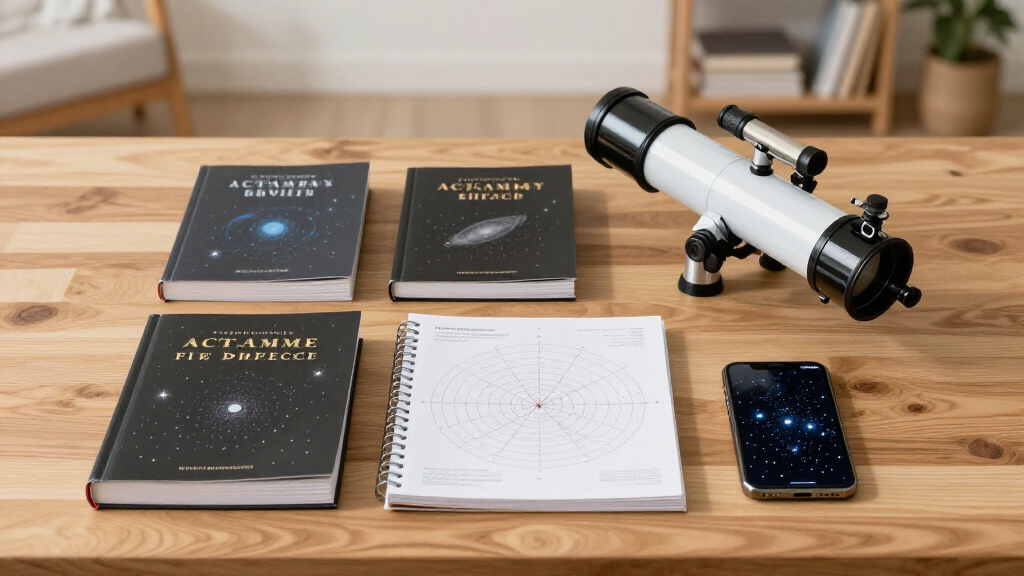
I ranked these books by reference usefulness, observational guidance, clarity, organization, visual support, audience fit, and value. The highest positions went to titles that can answer common questions at home and support practical decisions under the sky. I placed narrower books lower when they handled one task exceptionally well but lacked the range expected from an all-purpose reference. I also weighed whether a reader could find information quickly through charts, indexes, tables, maps, or clearly divided chapters.
Audience fit shaped the category awards as much as breadth. I compared beginner accessibility against the depth needed by students and regular observers, then separated books built for learning from those made for lookup or target planning. Physical format mattered because a large illustrated atlas may be pleasant at a desk yet awkward beside a telescope. I also gave preference to lasting value, while treating the 2026 annual guide as a useful specialist supplement whose time-sensitive material has a shorter working life.
Factors to Consider When Choosing Astronomy Reference Books
I would begin by deciding what job the book needs to perform: teach the subject, identify objects, plan observing sessions, or answer occasional questions. Those purposes overlap, but no single format handles all of them equally well. The right choice depends less on page count than on how and where the book will be read.
Match the Book Type to the Task
Reference books, observing manuals, atlases, and courses solve different problems. An encyclopedia favors quick topic lookup, while a self-teaching book builds ideas in an intentional order and may include exercises. A sky atlas places location and scale ahead of extended explanation, making it more useful beside a telescope than for learning astrophysics. An observing manual connects equipment, conditions, and target selection, but may offer fewer entries on scientific terminology. I would avoid buying the thickest book on the assumption that more pages mean a better fit. Choose the format that matches the question you expect to ask most often.
Check Geographic and Date Coverage
Your latitude changes what you can see, so regional coverage deserves close attention. A North American guide may still explain astronomy well elsewhere, yet its seasonal charts, horizon views, and observing times may not match another location. Annual guides add dates for planetary appearances, eclipses, meteor showers, and month-by-month sky changes. That precision is useful for 2026 planning but creates a shorter shelf life than a general atlas. I would pair a dated guide with a durable reference rather than expect it to remain the main book for years. Southern Hemisphere readers should confirm chart orientation and latitude coverage before buying any title centered on northern skies.
Choose the Right Learning Level
Accessible language is not the same as shallow coverage, and technical detail is not automatically more useful. A child-friendly encyclopedia relies on short entries and strong visuals, while an adult beginner may prefer guided explanations that connect one concept to the next. Students benefit from definitions, diagrams, review questions, and mathematical context, provided the structure supports steady study. Experienced observers may find long introductory chapters less valuable than dense charts and catalog data. I would sample the table of contents and several interior pages when possible, checking whether unfamiliar terms are explained near their first appearance. A book pitched too far above the reader often becomes a shelf ornament rather than a working reference.
Balance Portability Against Visual Detail
Large pages improve maps and astronomical images, but size can work against field use. Fine labels, subtle chart symbols, and image comparisons are easier to read in a desk-sized atlas, especially when several objects share one spread. A compact guide fits in an observing bag and is easier to hold while adjusting binoculars or a telescope. Paper finish matters outdoors because glossy pages may reflect a red flashlight, while small type becomes harder to read in dim conditions. I would treat a heavy visual volume as a home reference unless its binding and page layout clearly support outdoor handling. Many buyers get better results from one readable home book and one compact field guide than from a single compromise volume.
Pay for Longevity, Not Decoration Alone
Higher prices make sense when they buy better charts, stronger organization, or deeper instruction. Premium photography can make a book rewarding to browse, yet dramatic images do not automatically help with object identification or observing plans. Scientific explanations also age at different rates: constellation maps remain useful for years, while mission findings, equipment advice, and annual event tables change sooner. I would check the edition date when the book covers recent discoveries or telescope technology. Used copies can be good purchases for foundational astronomy, dictionaries, and classic atlases, provided missing updates do not affect the intended task. Spend more on the book that will be consulted repeatedly, then use a lower-cost companion for occasional inspiration.
Frequently Asked Questions
Can One Astronomy Reference Book Cover Both Learning and Stargazing?
One book can cover both, but I would expect a compromise in either teaching depth or field usability. The Backyard Astronomer’s Guide comes closest in this lineup because it connects background knowledge with practical observing decisions. A structured course such as Astronomy: A Self-Teaching Guide is stronger for planned learning, while Observer’s Sky Atlas is faster for choosing deep-sky targets. Readers who study indoors and observe regularly may be happier with two complementary books. Start with the book that serves the more frequent activity, then add the specialist volume later.
Is a 2026 Night-Sky Guide Worth Buying If I Already Own an Atlas?
Yes, if you want dates and seasonal planning for 2026. A permanent atlas shows where objects are located, but it cannot provide that year’s changing planetary positions and event schedule with the same convenience. Night Sky Guide 2026 fills that gap for North American readers through month-by-month guidance. Its weakness is limited longevity, so I would not use it as a replacement for a general reference. The pairing makes the most sense for observers who plan sessions around current celestial events.
Should a Beginner Buy an Atlas or an Illustrated Guide First?
I would usually recommend an illustrated beginner guide first. It teaches constellation patterns, basic terminology, and observing habits before asking the reader to interpret dense symbols or faint-object charts. An atlas becomes more valuable once the reader can orient the sky and has binoculars or a telescope capable of showing additional targets. Adults can start with 100 Things to See in the Night Sky or National Geographic Backyard Guide to the Night Sky, while younger readers are better matched with First Space Encyclopedia. Observer’s Sky Atlas is a stronger later purchase for someone ready to pursue deep-sky objects systematically.
Do Southern Hemisphere Readers Need a Different Astronomy Book?
They need a book whose charts and observing guidance match southern latitudes, even though much of the science in a general reference applies worldwide. Northern guides may omit prominent southern constellations or show seasonal views that do not match the reader’s sky. A global encyclopedia remains useful for concepts, object descriptions, and planetary science. Field use is where geographic mismatch becomes most frustrating, particularly near the horizon and when following month-based directions. I would verify hemisphere coverage before choosing an atlas or annual guide and supplement a general book with a regional chart if needed.
Can an App Replace a Printed Astronomy Reference Book?
An app is better for live orientation and changing object positions, but it does not fully replace a well-organized book. Books make it easier to study connected topics, compare charts across a spread, and read without preserving night vision around a bright screen. Apps can also hide useful context behind searches, filters, and short object descriptions. I would use an app for pointing and timing, then rely on a book for explanation, equipment guidance, and planned learning. Buyers who observe only occasionally may need one approachable book plus a free sky app rather than several specialized volumes.
Conclusion
For the broadest mix of practical instruction and long-term reference use, my best overall choice is The Backyard Astronomer’s Guide. Budget-minded and casual readers should choose National Geographic Backyard Guide to the Night Sky for value, while readers wanting a lavish visual reference should pick National Geographic Stargazer’s Atlas as the premium option. For adult beginners, 100 Things to See in the Night Sky provides a manageable observing path, while First Space Encyclopedia is the clearer fit for younger readers. Observer’s Sky Atlas makes the most sense for deep-sky target hunters, and Astronomy: A Self-Teaching Guide is my choice for structured independent study. A Dictionary of Astronomy suits quick technical lookups, Hubble’s Universe favors image-led space enthusiasts, and Night Sky Guide 2026 belongs beside a permanent reference for current North American observing plans.
Fall Picks
fall essentials
As an affiliate, we earn on qualifying purchases.