

TL;DR
Saturn has over 80 moons, but six stand out for their size and features. Recent data from NASA and upcoming missions deepen our understanding of these icy worlds, especially Titan and Enceladus, which may harbor life.
Imagine gazing up at the night sky and spotting a distant planet with a family of moons that look like tiny, icy worlds orbiting in a perfect dance. Saturn’s moon system is the most diverse and intriguing in the Solar System, packed with secrets waiting to be uncovered. Every glance at its giant rings and shimmering moons sparks questions about what’s beneath their icy surfaces and whether life could exist there.
This article takes you through the six biggest moons of Saturn — what makes them special, the latest discoveries, and how future missions could change what we know about these celestial neighbors. If you’ve ever wondered what lies beyond the rings, now’s the time to find out.
Saturn’s moon system is the most diverse in the Solar System, with over 80 moons and six major ones worth studying.
Enceladus’s geysers and Titan’s thick atmosphere make them prime targets in the search for extraterrestrial life.
Recent data from NASA and upcoming missions are set to revolutionize our understanding of these icy worlds.
Future explorations will include drones and spacecraft that can sample subsurface oceans and analyze surface chemistry.
Studying these moons broadens our view of habitability and could redefine what it means to find life beyond Earth.
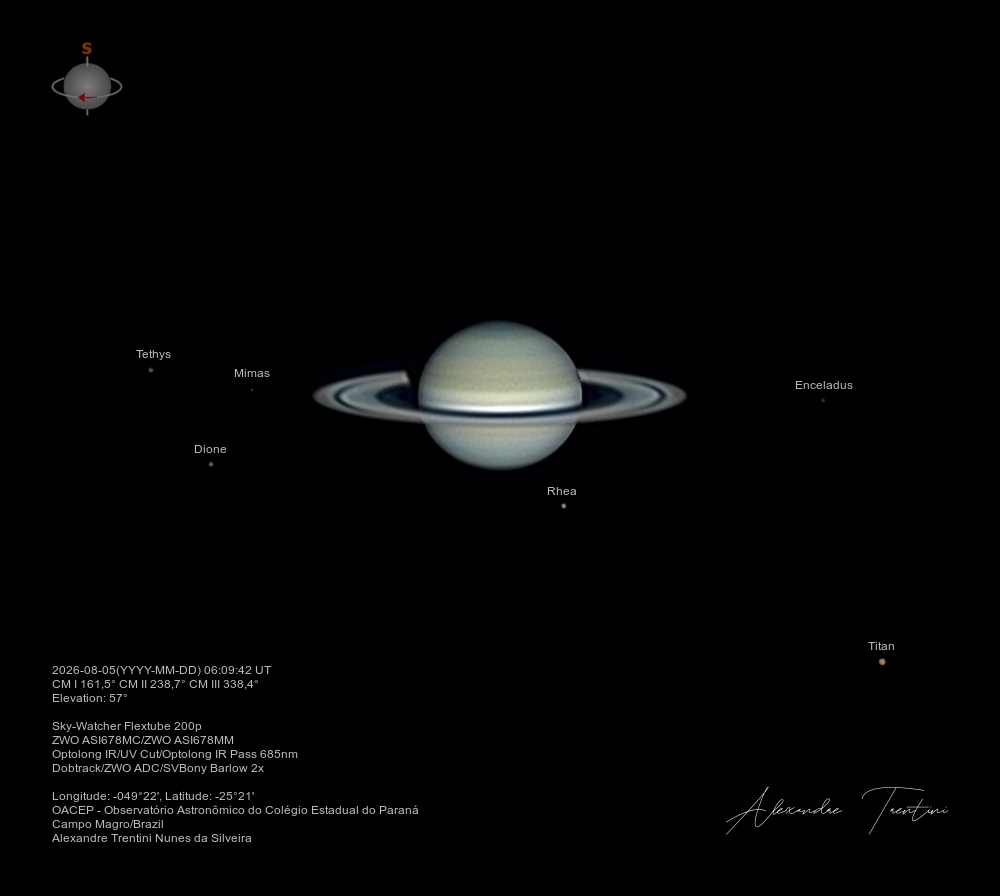
Why Saturn’s Biggest Moons Are Truly Out of This World
Saturn’s six largest moons each tell a story of icy landscapes, hidden oceans, and potential habitability. Titan, the crown jewel, is larger than Mercury, with a thick atmosphere and lakes of methane that look like a surreal, alien shoreline. These features are not just visually striking—they suggest complex chemical processes that could resemble early Earth conditions, making Titan a prime candidate in the search for prebiotic chemistry. Enceladus, tiny but mighty, shoots geysers of water vapor into space, hinting at a subsurface ocean that might be a haven for microbial life. This active geology indicates ongoing processes that could sustain life, much like hydrothermal vents on Earth.
Meanwhile, Rhea, Dione, Tethys, and Iapetus display a range of features—from cratered ice fields to dramatic ridges—that reveal a history of impacts, geological activity, and possibly even internal heating. These moons serve as natural laboratories, helping scientists understand planetary evolution, surface renewal, and the delicate balance between icy crusts and subsurface oceans. Their diverse features challenge us to consider how life might adapt in extreme environments and what conditions are necessary for habitability. Each moon’s unique story enhances our understanding of the dynamic processes shaping icy worlds across the Solar System.

Celestron AstroMaster 70AZ Refractor Telescope for Moon & Planet Viewing
- Ideal for Beginners: Easy to operate for adults and kids
- 70mm Fully Coated Optics: Provides bright, detailed views of celestial objects
- Day & Night Use: Suitable for astronomy and terrestrial viewing
As an affiliate, we earn on qualifying purchases.
As an affiliate, we earn on qualifying purchases.
Meet the Big Six: What Makes Each Moon Special
| Moon | Size & Composition | Highlight Feature |
|---|---|---|
| Titan | 5,150 km, thick nitrogen atmosphere | Liquid methane/ethane lakes, prebiotic chemistry |
| Rhea | 1,527 km, icy surface | Heavily cratered, possible remnants of ring material |
| Iapetus | 1,470 km, icy and rocky | Distinct two-tone coloration and a towering equatorial ridge |
| Dione | 1,123 km, icy | Bright wispy terrains indicating geological activity |
| Tethys | 1,062 km, icy | Massive Ithaca Chasma canyon revealing tectonic processes |
| Enceladus | 504 km, icy | Geysers of water vapor and organics hinting at a subsurface ocean |
Each of these moons embodies a different chapter in the story of icy planetary evolution, showcasing a range of geological features that hint at complex interior processes. Titan’s dense atmosphere and surface liquids suggest a climate system capable of supporting chemical reactions similar to early Earth, raising the possibility of prebiotic chemistry. Enceladus’s active geysers reveal ongoing hydrothermal activity, which could provide the energy and nutrients necessary for microbial life, making it a natural laboratory for astrobiology. Conversely, moons like Rhea and Iapetus, with their heavily cratered surfaces and stark ridges, record a history of impacts and surface renewal that can tell us about the long-term stability of icy worlds. These differences highlight the trade-offs in habitability potential: while some moons offer stable environments, others exhibit active geology that could foster life in hidden niches. Comparing these features helps scientists understand the conditions that might favor life and guides future exploration efforts to target the most promising worlds.

Celestron Cometron 7x50mm Astronomy Binoculars
- Easy-to-Use for Beginners: Ideal for learning astronomy
- 7x Magnification: Provides a wide field of view
- Large 50mm Objectives: Gathers more light for bright images
As an affiliate, we earn on qualifying purchases.
As an affiliate, we earn on qualifying purchases.
The Latest Breakthroughs: What NASA’s Data Tells Us
Even after Cassini ended its mission in 2017, scientists continue to analyze data that deepen our understanding of these moons and challenge previous assumptions. Enceladus’s geysers have revealed that its subsurface ocean contains organic molecules and may be hydrothermally active, much like Earth’s deep-sea vents. This suggests that energy sources and chemical ingredients necessary for life are present in its hidden ocean, making Enceladus one of the most promising locations to search for extraterrestrial life. These findings imply that subsurface oceans are not static reservoirs but dynamic environments where chemical reactions could produce the building blocks of life, expanding the scope of habitability beyond surface conditions.
Meanwhile, NASA’s upcoming Dragonfly drone mission to Titan aims to explore diverse terrains, including lakes and organic-rich landscapes, by flying across them. This mobility allows scientists to investigate multiple environments that could host complex organic chemistry, potentially revealing biosignatures or prebiotic compounds. The James Webb Space Telescope will complement these efforts by analyzing atmospheres and surface compositions with unprecedented sensitivity, possibly detecting chemical markers associated with life. These technological advancements are crucial because they enable us to study environments that are far too extreme or inaccessible for human exploration, providing vital clues about where life might exist beyond Earth and how planetary processes operate in these icy worlds.
Collectively, these discoveries and missions are not just incremental; they challenge our understanding of the universe’s capacity to support life. They push the boundaries of astrobiology, forcing us to reconsider the range of environments where life could exist. The implications extend beyond scientific curiosity—they influence future exploration strategies and our perspective on life’s resilience in the cosmos.
Galaxy Projector Night Light, 13-in-1 Star Projector for Bedroom, White
- Enhanced Brightness and Clarity: Doubles previous brightness with sharp HD stars
- 13 Space Themes: Includes 13 galaxy projection scenarios
- Wide Coverage Area: Projects up to 16.4ft with 135-754 sq ft coverage
As an affiliate, we earn on qualifying purchases.
As an affiliate, we earn on qualifying purchases.
How Future Missions Will Change What We Know
Picture a drone flying over Titan’s methane lakes or a probe drilling into Enceladus’s icy crust. That’s the promise of upcoming missions. NASA’s Dragonfly, launching in the 2030s, will explore Titan’s surface with a rotorcraft drone, hunting for complex organic molecules and assessing habitability. Its ability to fly across diverse terrains will allow scientists to sample different environments, providing insights into the chemical processes that could lead to life.
On the other hand, ESA’s proposed missions aim to land directly on Enceladus or analyze its geysers from orbit, sampling the ocean’s chemistry and possibly detecting biosignatures. These missions could answer critical questions: Is there active chemistry indicative of biological processes? How extensive and dynamic are these subsurface oceans? Can these worlds teach us about the origins of life and the potential for habitability in icy environments? The development of advanced miniaturized laboratories, autonomous drones, and sensitive sensors will be crucial for extracting meaningful data from these distant and extreme environments. These technological innovations will enable us to explore environments that are currently beyond our reach, broadening our understanding of where life could exist and how planetary systems evolve.
The future of icy moon exploration hinges on these technological innovations, which will deepen our understanding of planetary processes and expand the horizons of astrobiology.

National Geographic Mega Space Science and Craft Activity Kit for Kids
- Number of Pieces: Over 100 space-themed pieces
- Foam Rocket Launch: Launch foam rockets into the sky
- Glow-in-the-Dark Stars: Create glowing constellations
As an affiliate, we earn on qualifying purchases.
As an affiliate, we earn on qualifying purchases.
Why These Moons Matter Beyond Science
Saturn’s moons aren’t just distant objects—they’re cosmic neighbors that challenge our ideas of habitability and planetary evolution. Studying them can teach us about the origins of life, the history of our Solar System, and the potential for life on icy exoplanets orbiting distant stars. These moons serve as natural laboratories, offering insights into how water, organic molecules, and energy sources might combine in environments vastly different from Earth’s surface.
Imagine discovering microbial life in Enceladus’s ocean—how would that change everything? Such a discovery would suggest that life is not exclusive to Earth-like planets but can arise in a variety of environments, fundamentally altering our understanding of life’s resilience and distribution. It would imply that the universe might be teeming with life in places we once considered inhospitable. Beyond scientific implications, these moons inspire technological innovation and expand our horizons for future exploration, potentially paving the way for human presence in extraterrestrial environments. Their study pushes the boundaries of human knowledge, fueling our curiosity about the universe’s potential for life and our place within it, making their significance profound and far-reaching beyond pure science.
Frequently Asked Questions
Can I see Saturn’s moons from Earth?
Some of the larger moons, like Titan and Rhea, are visible with large amateur telescopes under good conditions. However, their faint signals often require specialized equipment and clear skies to observe in detail.
What makes Enceladus so exciting for scientists?
Enceladus ejects water vapor and organic molecules through its geysers, revealing a subsurface ocean that could support microbial life. That makes it one of the top places to look for extraterrestrial life in our Solar System.
When will we send humans to explore Saturn’s moons?
Currently, no crewed missions are planned for Saturn’s moons. Future exploration relies on robotic probes, drones, and possibly landers, like NASA’s Dragonfly to Titan, set to launch in the 2030s.
How do scientists study moons so far away?
They use powerful telescopes, spacecraft data (like from Cassini), and remote sensing instruments to analyze surface features, atmospheres, and geysers. These tools help us understand moons that are millions of miles away.
Why should I care about Saturn’s moons?
Because they challenge our ideas of where life might exist and how planets evolve. Studying them could teach us about the origins of life and guide future missions to find life elsewhere in the universe.
Conclusion
Saturn’s moons are more than icy spheres orbiting a distant planet—they’re windows into worlds that could harbor life. Each discovery peels back a layer of mystery, bringing us closer to answering one of humanity’s most profound questions: are we alone?
Next time you gaze at Saturn’s shimmering rings, remember—beneath those icy shells lie worlds that might just change everything. Keep watching the skies, because the story of these moons is far from over.