TL;DR

Prime made for students and young adults
- Fast, free delivery for dorm and study essentials
- Prime Video and Amazon Music included
- Member-only deals
The Corona Australis Molecular Cloud, just 430 light-years away, is a lively star-forming region, home to the eye-catching Chandelier Cluster. Recent observations reveal intricate filaments and newborn stars, offering a front-row seat to stellar birth and evolution.
Imagine a dark sky filled with shimmering, tangled ribbons of gas and dust, glowing softly with the birth of new stars. That’s the Corona Australis Molecular Cloud — a cosmic nursery just waiting for your gaze. Unlike distant galaxies, this region is close enough to observe in detail, revealing the raw beauty of star formation in action.
Tonight, as you look up, think of this: within that cloud, tiny protostars are assembling, their fiery cores igniting amidst the swirling darkness. This article uncovers what makes the Corona Australis region so fascinating, from its vibrant Chandelier Cluster to recent discoveries that shed light on how stars and planets come into being.
The Corona Australis Molecular Cloud is only 430 light-years away, making it one of the closest star-forming regions to Earth.
The Chandelier Cluster is a vibrant nursery of young stars, illuminated by their energetic ultraviolet light.
Infrared telescopes like Spitzer and ALMA have uncovered new protostars, revealing the earliest stages of star birth.
Compared to regions like Orion, Corona Australis offers a more intimate view of star formation, thanks to its proximity.
With simple binoculars or a small telescope, you can spot this star nursery from the Southern Hemisphere during summer months.
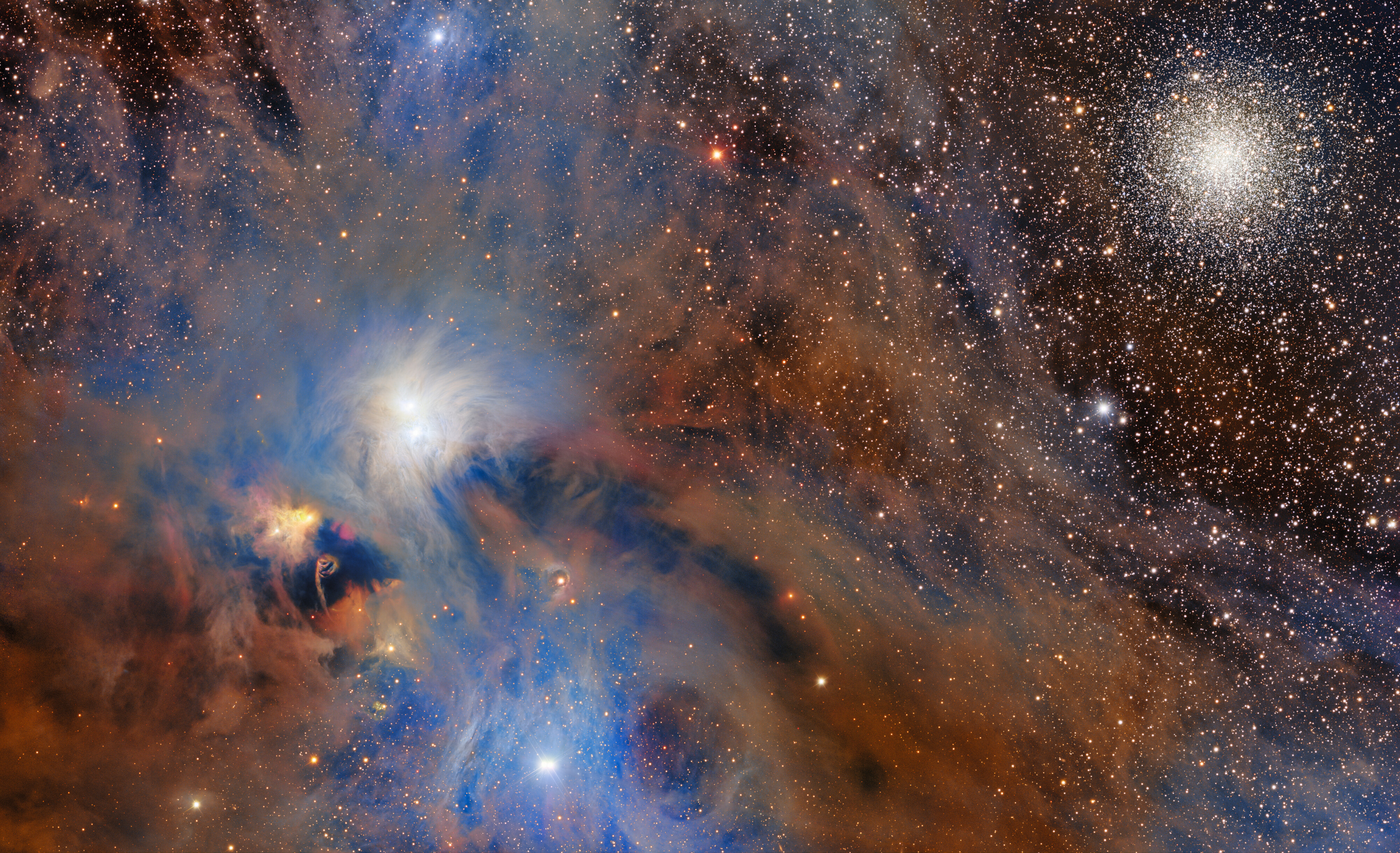
What is the Corona Australis Molecular Cloud — and why does it matter?
The Corona Australis Molecular Cloud is a massive, dark nebula rich in cold gas and dust. Located just 430 light-years away, it’s one of the closest and most active star-forming regions visible from the Southern Hemisphere.
This cloud resembles a dark, tangled web, with bright spots where new stars are emerging. It’s like a cosmic construction site, where gravity pulls gas and dust together to form stars, planets, and even potential new solar systems.
Understanding this cloud is crucial because it offers a rare opportunity to observe the earliest phases of star formation in our cosmic neighborhood. Studying how gas and dust collapse and coalesce into stars reveals the fundamental processes that shaped our own solar system. These insights help astronomers refine models of star and planet formation, including the conditions necessary for habitability and planetary diversity. Moreover, the proximity of Corona Australis allows scientists to detect faint structures and young objects that would be invisible in more distant nurseries, making it an invaluable natural laboratory for astrophysics.
Popular right now

Vitamix Propel Series 750 Professional-Grade Blender, 4 Programs, Black

Dyson Cyclone V10 Origin Cordless Vacuum

Ninja Foodi Air Fryer 10 Qt DualZone 6-in-1 Black DZ302
As an affiliate, we earn on qualifying purchases.
Meet the Chandelier Cluster — the starry chandelier in space
The Chandelier Cluster, officially known as NGC 6729, is a dazzling feature within the Corona Australis cloud. Its name comes from its star arrangement that resembles a chandelier hanging in a grand hall.
This cluster hosts dozens of young, hot stars that illuminate the surrounding nebula, creating a glowing spectacle. These stars are only a few hundred thousand years old — infants in cosmic terms — still surrounded by the gas and dust they formed from.
The cluster’s vibrant glow isn’t just a beautiful spectacle; it also provides crucial clues about star formation. The intense ultraviolet radiation emitted by these young stars influences their environment, triggering further star birth or dispersing surrounding gas and dust. This dynamic interplay determines whether the region continues to form stars or clears out, halting new stellar creation. Understanding these processes helps astronomers grasp how stellar nurseries evolve over time, revealing the delicate balance between star birth and feedback mechanisms that regulate galaxy growth.
How recent tech reveals the secrets of this star nursery
Infrared telescopes like NASA’s Spitzer and ALMA have peeled back the darkness of the Corona Australis region. They reveal intricate filaments of gas and dust, and identify new baby stars hidden in the thickest clouds.
For example, recent surveys found several protostars just a few hundred thousand years old — practically newborns in the universe. These tools help astronomers see through dust that blocks visible light, giving us a clearer view of early star formation stages.
The ability to peer into these dense regions with infrared and radio waves is transformative. It’s akin to turning on a cosmic flashlight in a foggy room, revealing the hidden cradles of star birth that are otherwise obscured. This technological leap allows scientists to track the evolution of protostars, observe the accretion of material onto young stars, and study the complex interplay of gravity, turbulence, and magnetic fields shaping stellar nurseries. Each new discovery refines our understanding of how stars like our Sun originate, and whether similar processes could lead to habitable planets around these newborn stars.
Compare the Corona Australis region to other star nurseries
| Feature | Corona Australis | Orion Nebula | Taurus Molecular Cloud |
|---|---|---|---|
| Distance from Earth | 430 light-years | 1,344 light-years | 450 light-years |
| Visibility | Best from Southern Hemisphere | Visible from both hemispheres | Best from Northern Hemisphere |
| Star formation activity | High, with many young protostars | Very active, with multiple young clusters | Moderate, with ongoing star birth |
| Key features | Filamentary gas clouds, Chandelier Cluster | Bright nebula, multiple star clusters | Dark nebulae, numerous protostars |
What you can see in the night sky — and how to spot it
From the Southern Hemisphere, the Corona Australis region is best viewed during summer months, around December to February. With a small telescope or even binoculars, you can glimpse the faint glow of the Chandelier Cluster.
Look for a faint, irregular patch of light near the constellation Sagittarius. Using a star chart or astronomy app, pinpoint the area where the dark nebula seems to weave through the Milky Way’s rich star fields.
Capture the scene by using a wide-field camera or binoculars with a steady mount — and set exposure times to bring out the subtle glow of the nebula and young stars.
Why studying star formation here helps us understand our origins
The processes happening in Corona Australis mirror the early days of our Solar System. By observing how stars and planets form in nearby nurseries, scientists piece together the story of how our Sun and Earth came to be.
Imagine watching a cosmic baby shower, where gas collapses into a star and debris swirls into planets. This region offers a close-up view of those crucial early moments, helping us answer fundamental questions about our place in the universe.
Studying these star-forming regions also reveals the tradeoffs involved in planetary system development. For instance, intense radiation from young stars can strip away planetary atmospheres or prevent planet formation altogether. Conversely, regions with calmer environments may foster more stable planetary systems. These insights help us understand the delicate conditions necessary for life and how common or rare such environments might be in the galaxy, shedding light on our own cosmic origins and the potential for life elsewhere.
Frequently Asked Questions
When is the best time to observe the Corona Australis region?
The region is best visible from the Southern Hemisphere during the summer months, from December to February, when the constellation is high in the sky at night.
Can I see the Chandelier Cluster with binoculars?
Yes, with a steady pair of binoculars and dark skies, you can make out the faint glow and shape of the cluster, especially if you use a star chart or an app to guide you.
What makes this region different from other star nurseries?
Its proximity — just 430 light-years away — makes it more accessible to detailed observation. Its active star formation and filamentary gas structures provide a vivid and dynamic view of stellar birth in action.
Are there upcoming missions studying this area?
Space telescopes like James Webb and ongoing radio surveys continue to study star formation in Corona Australis, aiming to uncover even more about how stars and planets develop from cold gas clouds.
Could studying this region reveal clues about our Solar System’s origins?
Absolutely. Observing how stars and planets form nearby helps scientists understand the processes that likely led to the formation of our Sun and Earth, offering a glimpse into our ancient history.
Conclusion
Next time you look up at a clear night sky from the Southern Hemisphere, imagine the hidden cosmic workshop unfolding just overhead. The Corona Australis Molecular Cloud and the Chandelier Cluster aren’t just beautiful sights — they’re active, ongoing stories of star creation that connect us to the universe’s most fundamental processes.
By understanding these stellar nurseries, we get closer to understanding how our own Sun and planets formed, making every glimpse a peek into our ancient past. So grab your gear, find the southern sky, and take a moment to marvel at the universe’s bustling nursery right in our backyard.