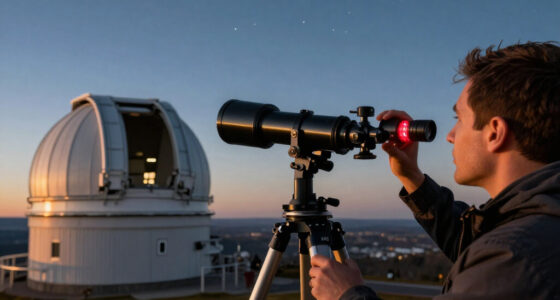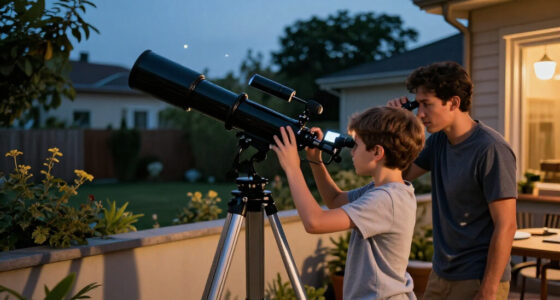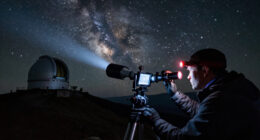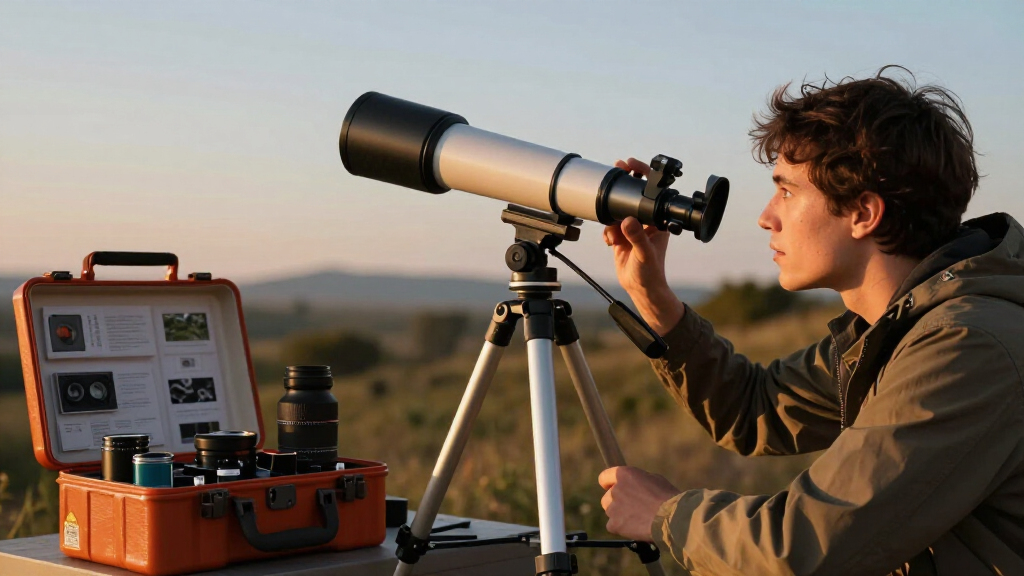

Searching for the best astrophotography educational kits in 2026? The right kit can transform your understanding of the night sky, whether you’re a beginner or an aspiring astronomer. The Sky-Watcher Skymax 180mm stands out as the best overall for its powerful optics and user-friendly setup, while the Thames & Kosmos Space Science Kit offers a fun, hands-on approach for younger learners. However, these kits often involve tradeoffs—some prioritize ease of use over advanced features, and others focus on in-depth learning at a higher cost. Continue reading to see a detailed comparison that helps you find the perfect fit for your curiosity and skill level.

Prime made for students and young adults
- Fast, free delivery for dorm and study essentials
- Prime Video and Amazon Music included
- Member-only deals
Key Takeaways
- Top picks balance educational value with usability, making complex concepts accessible.
- The most versatile kits combine both telescopic and planetary learning components, appealing to a broad audience.
- Price varies widely, with premium options offering advanced features and beginner kits focusing on simplicity.
- Build quality and included accessories significantly impact long-term satisfaction and learning potential.
- Many kits designed for kids prioritize safety and fun, but serious learners should look for more feature-rich options.
| Maksutov-Cassegrain Telescope Mak60, 750mm Focal Length, Portable for Travel and Beginners |  | Best for Travel and Casual Beginners | Optical Design: Maksutov-Cassegrain | Focal Length: 750mm | Objective Lens Diameter: 70mm | VIEW LATEST PRICE | See Our Full Breakdown |
| Thames & Kosmos Microscope Essential STEM Tool with Smartphone Adapter, 60x-600x Magnification, 45 Accessories |  | Best for Microscopic Exploration and STEM Learning | Magnification: 60x to 600x | Eyepiece Lens: 15x | Objective Lenses: 3 | VIEW LATEST PRICE | See Our Full Breakdown |
| SVBONY SV550 122mm Apo Refractor Telescope Kit |  | Best for Astrophotography and Serious Observation | Aperture: 122mm | Focal Ratio: f/7 | Focal Length: 854mm | VIEW LATEST PRICE | See Our Full Breakdown |
| Sky-Watcher Skymax 180mm Maksutov-Cassegrain Telescope |  | Best for High-Contrast Planetary Observation | Aperture: 180mm | Optical Design: Maksutov-Cassegrain | Reflectivity: 94% | VIEW LATEST PRICE | See Our Full Breakdown |
| Astrophotography Camera with 4K HD Electronic Eyepiece and 3-Inch Color Display |  | Best for Real-Time Observation and Digital Framing | Resolution: 4K Ultra HD | Display: 3-inch color display | Compatibility: Universal 22mm-46mm | VIEW LATEST PRICE | See Our Full Breakdown |
| Thames & Kosmos Children’s Refractor Telescope with 100x Magnification |  | Best for Young Beginners and Entry-Level Astronomy | Magnification: 100x | Focal Length: 400 mm | Objective Lens: 40 mm | VIEW LATEST PRICE | See Our Full Breakdown |
| Discovery Galactic Space Science Kit – 61 Experiment STEM Lab for Kids, Astronomy & Chemistry Activity Set, Includes DIY Telescope, Crystals, Moon Rocks, Slime, Educational Toy for Ages 8+ |  | Best for Hands-On Space Learning and STEM Engagement | Number of Experiments: 61 | Age Range: 8+ | Includes: DIY telescope, crystals, moon rocks, slime | VIEW LATEST PRICE | See Our Full Breakdown |
| Celestron Travel Scope 70mm DX Refractor Telescope Kit with Backpack |  | Best for Traveling Beginners and Easy Observation | Aperture: 70mm | Eyepieces: 20mm and 10mm | Accessories: finderscope, star diagonal, smartphone adapter | VIEW LATEST PRICE | See Our Full Breakdown |
| Bresser Junior Children’s Telescope 70/400 with Backpack and Accessories |  | Best for Young Children and Beginner Astronomy | Lens Diameter: 70 mm | Focal Length: 400 mm | Magnification: 20-100x | VIEW LATEST PRICE | See Our Full Breakdown |
More Details on Our Top Picks
Maksutov-Cassegrain Telescope Mak60, 750mm Focal Length, Portable for Travel and Beginners
This Mak60 telescope stands out for its compact design and ease of transport, making it ideal for travelers or those new to astronomy who want a simple way to explore the night sky. Compared to the Skymax 180mm, it sacrifices some aperture size for portability, which means less detail and faint objects might be harder to see. Its optical system reduces aberrations, providing clearer images suited for educational use, though the plastic tube limits durability and it’s less suitable for serious astrophotography. The included phone adapter adds a fun, accessible way for beginners to capture images, but the modest magnification might not satisfy more advanced users seeking detailed planetary views. Overall, this pick makes the most sense for casual stargazers who value portability and ease of use over high-end features.
Pros:- Compact and lightweight for easy portability
- Reduces aberrations for clearer images
- Includes a full-size tripod and phone adapter for astrophotography
- Educational features for understanding light and optics
Cons:- Plastic tube may compromise durability
- Limited to beginner and casual use
- Magnification may be insufficient for detailed planetary observation
Best for: Beginners or travelers who want a lightweight, portable telescope for casual astronomy and educational purposes
Not ideal for: Advanced astronomers or astrophotographers who need higher magnification and more durable build quality
- Optical Design:Maksutov-Cassegrain
- Focal Length:750mm
- Objective Lens Diameter:70mm
- Optical Tube Length:75cm
- Mount:Altazimuth
- Focus Type:Manual
- Eyepiece:20mm (37.5X magnification)
- Finderscope:Yes
- Phone Adapter:Yes
Our verdict“This telescope is best suited for beginners and travelers who want a simple, portable entry point into astronomy without high-end features.”
Thames & Kosmos Microscope Essential STEM Tool with Smartphone Adapter, 60x-600x Magnification, 45 Accessories
This microscope offers a broad magnification range and a wealth of accessories, making it an excellent choice for students eager to explore microscopic worlds. Unlike the SVBONY Apo Refractor Kit, which emphasizes high-quality optics for astrophotography, the Thames & Kosmos setup focuses on versatility and hands-on experimentation with biological samples. Its 45 accessories include slides, vials, and tools that foster engaging STEM activities, while the smartphone adapter simplifies capturing images—perfect for students or educators. On the downside, the LED lighting requires batteries, adding to setup complexity, and the microscope’s basic features may limit more advanced scientific investigation. For those aiming to combine microscopy with easy digital sharing, this kit offers a compelling educational experience.
Pros:- Includes 45 accessories for varied experiments
- Smartphone adapter enables easy capturing of images and videos
- Adjustable magnification from 60x to 600x for detailed viewing
- Suitable for hands-on STEM learning
Cons:- Requires batteries for LED illumination
- Basic advanced features may limit scientific depth
- Setup instructions can be somewhat basic for new users
Best for: Students, teachers, or curious learners seeking a comprehensive, versatile microscope with digital documentation capabilities
Not ideal for: Advanced scientists or those wanting high-end research-grade microscopes, as this model is more educational and entry-level
- Magnification:60x to 600x
- Eyepiece Lens:15x
- Objective Lenses:3
- Accessories:45
- Includes:prepared slides, blank slides, specimen vials, petri dish, test tube, tools
- Lighting:Battery-powered LED
Our verdict“This microscope kit is ideal for students and educators eager to combine microscopy with digital sharing, offering broad magnification and extensive accessories.”
SVBONY SV550 122mm Apo Refractor Telescope Kit
The SVBONY SV550 122mm Apo Refractor Kit excels in delivering sharp, color-free images thanks to its triplet apochromatic lens, making it a top pick for astrophotographers and dedicated sky watchers. Compared with the Sky-Watcher Skymax 180mm, it offers a more portable setup with high-quality optics, though at the cost of weight—over 14 pounds—that demands a sturdy mount. Its included planetary camera and reducer make it suitable for detailed lunar and planetary imaging, but setup complexity can be a barrier for beginners. The lens’s ED glass reduces chromatic aberration, providing clearer images than simpler refractors. This kit makes the most sense for serious hobbyists who want portable, high-quality optics with some astrophotography capability, but it isn’t ideal for those seeking a quick, easy setup or high-end astrophotography without additional equipment.
Pros:- High-quality triplet apochromatic lens reduces chromatic aberration
- Portable with included handle and carrying case
- Suitable for planetary and lunar astrophotography
- Compatible with various finderscopes and mounts
Cons:- Relatively heavy at over 14 lbs, requiring a sturdy mount
- Setup may be complex for beginners
- Limited details on included accessories
Best for: Intermediate to advanced astrophotographers or serious hobbyists seeking portable, high-quality optics for planetary and lunar imaging
Not ideal for: Beginners or casual sky watchers who need a lightweight, easy-to-use setup without the complexity of a premium refractor
- Aperture:122mm
- Focal Ratio:f/7
- Focal Length:854mm
- Weight:6.44kg / 14.18lb
- Lens Type:Triplet apochromatic with ED glass
- Camera:SV305C IMX662 sensor
- Reducer/Flattener:SV209 0.8x
Our verdict“This telescope kit is best suited for experienced amateur astronomers who want portable high-performance optics for planetary photography.”
Sky-Watcher Skymax 180mm Maksutov-Cassegrain Telescope
The Skymax 180mm Maksutov-Cassegrain offers exceptionally sharp and high-contrast views of planets and the Moon, making it a favorite among planetary enthusiasts. Its large aperture gathers plenty of light in a portable package, and the coated optics ensure clear, detailed images. Compared with the Mak60, it provides much higher magnification and better image quality for serious planetary observation, though it is heavier and less portable. The included 28mm eyepiece and 9×50 finderscope make setup straightforward, but the weight can be a concern for extended portable use. This scope is perfect for astronomers focused on planetary detail, but less suitable if deep-sky observation or astrophotography is a priority due to limited field of view and heavier weight.
Pros:- High-contrast, sharp planetary views
- Large 180mm aperture in a portable design
- Includes essential accessories like 2-inch diagonal
- Excellent for planetary and lunar imaging
Cons:- Heavy for extended transport or setup
- Requires proper alignment and setup for best results
- Limited to optical viewing and planetary imaging
Best for: Planetary observers and lunar enthusiasts who value high-contrast, detailed views in a portable form
Not ideal for: Deep-sky astronomers or those seeking astrophotography capabilities without additional equipment, as it emphasizes optical quality over versatility
- Aperture:180mm
- Optical Design:Maksutov-Cassegrain
- Reflectivity:94%
- Eyepiece:28mm 2-inch
- Diagonal:2-inch 90-degree star diagonal
- Finderscope:9×50 straight-through
Our verdict“This scope is best suited for enthusiasts who want high-quality planetary views in a portable package but do not prioritize deep-sky imaging.”
Astrophotography Camera with 4K HD Electronic Eyepiece and 3-Inch Color Display
This electronic eyepiece camera offers a 4K resolution and a 3-inch color display, delivering sharp, real-time images that are perfect for framing celestial objects during astrophotography sessions. Compared with the Maksutov Mak60, which is more about visual observation and beginner-friendly use, this camera emphasizes digital clarity and live viewing, making it ideal for those who want to stream or record their sessions. Its compatibility with various telescopes and microscopes broadens its use, but setup can be complex for newcomers. The support for expandable storage and digital zoom enhances usability, though some users may find the initial configuration challenging. This device is well-suited for hobbyists who want detailed live images with the convenience of digital controls.
Pros:- High-resolution 4K imaging ensures detailed photos
- Large 3-inch color display for easy framing
- Supports expandable storage for long sessions
- Adjustable digital zoom enhances targeting
Cons:- Requires compatible telescopes or microscopes for use
- Setup complexity may challenge beginners
- Potential learning curve for optimal use
Best for: Intermediate to advanced astrophotographers or hobbyists who want high-definition live imaging and flexible viewing options
Not ideal for: Complete beginners or those seeking simple, plug-and-play solutions, as it requires some technical setup and compatible equipment
- Resolution:4K Ultra HD
- Display:3-inch color display
- Compatibility:Universal 22mm-46mm
- Storage:128GB expandable
- Zoom:5-level digital zoom
Our verdict“This camera is ideal for hobbyists wanting real-time, high-definition imaging with flexible digital controls, though it demands some technical familiarity.”
Thames & Kosmos Children’s Refractor Telescope with 100x Magnification
This telescope stands out as a straightforward, user-friendly option for children and absolute beginners, offering a 400mm focal length and 100x magnification that are ideal for observing the Moon and planets. Compared with the Bresser Junior 70/400, it provides a slightly higher magnification, making it better suited for young learners eager to see more detail, though its build quality may not withstand rough handling or extended use. The inclusion of a built-in compass and finderscope simplifies navigation, but manual focus and basic optics limit its appeal for those ready to explore deeper sky objects. Its portability and ease of assembly make it perfect for family outings or backyard stargazing, but it’s less suited for aspiring astronomers seeking advanced features or astrophotography.Pros:- Simple to assemble and portable for outdoor use
- Includes navigation aids like a built-in compass and finderscope
- Suitable for basic lunar and planetary observation
Cons:- Limited to entry-level observations with basic optics
- Manual focus adjustment can be frustrating for young users
- Build quality may not be durable for frequent handling
Best for: Parents or educators seeking a durable, easy-to-use starter telescope for children ages 8+
Not ideal for: Intermediate or advanced users wanting detailed planetary images or astrophotography capabilities
- Magnification:100x
- Focal Length:400 mm
- Objective Lens:40 mm
- Tripod Material:Aluminum
- Included Accessories:Built-in compass, Finderscope, Instruction manual
Our verdict“This pick is best for parents and teachers introducing young children to astronomy with a straightforward, portable telescope.”
Discovery Galactic Space Science Kit – 61 Experiment STEM Lab for Kids, Astronomy & Chemistry Activity Set, Includes DIY Telescope, Crystals, Moon Rocks, Slime, Educational Toy for Ages 8+
This comprehensive science kit makes a compelling choice for kids eager to explore astronomy through many experiments, especially compared to the simpler Thames & Kosmos refractor. It combines 61 activities, including building a DIY telescope, growing crystals, and unearthing moon rocks, fostering active, tactile learning. This kit excels at integrating multiple STEM topics beyond astronomy, making it ideal for home or classroom use, though its extensive variety can be overwhelming for younger children without adult supervision. Messiness is a tradeoff for engagement, but the variety of experiments ensures prolonged educational value. It’s best suited for curious kids and families wanting a multi-faceted space science experience, rather than those seeking a single, dedicated telescope for observation.Pros:- Offers a broad range of 61 experiments across space, chemistry, and archaeology
- Includes a DIY telescope and various fun materials for exploration
- Encourages active learning and curiosity about the universe
Cons:- Requires adult supervision for many experiments
- Some activities can be messy and time-consuming
- Not designed for direct sky viewing or astrophotography
Best for: Parents and educators seeking an all-in-one, interactive space science experience for children 8 and up
Not ideal for: Children who prefer focused, real-time sky observation rather than hands-on experiments
- Number of Experiments:61
- Age Range:8+
- Includes:DIY telescope, crystals, moon rocks, slime
- Materials:Non-toxic, safe for children
Our verdict“This kit is ideal for hands-on learners and families wanting a comprehensive, multi-disciplinary approach to space education.”
Celestron Travel Scope 70mm DX Refractor Telescope Kit with Backpack
This lightweight, travel-ready telescope offers a practical balance between portability and functionality, especially compared with the Bresser Junior. Its 70mm aperture and coated lenses deliver clear views of the Moon and planets, making it ideal for casual stargazing while on the go. The included accessories, such as dual eyepieces and a smartphone adapter, enhance usability without complicating setup. However, its simplicity limits detailed planetary imaging or deep-sky observation, and it lacks motorized tracking, making it less suitable for more serious users. The compact design and backpack make it an excellent choice for travelers or those with limited storage space, but it’s less appropriate for users seeking advanced features or astrophotography.Pros:- Lightweight and easy to carry with included backpack
- Simple to set up and operate without tools
- Includes multiple accessories and smartphone compatibility
Cons:- Limited to beginner-level observations with basic optics
- No motorized or computerized tracking features
- Optical quality may be basic for detailed astrophotography
Best for: Beginner travelers and outdoor enthusiasts wanting a lightweight, portable scope for quick sky views
Not ideal for: Intermediate or advanced astronomers seeking high-resolution images or tracking capabilities
- Aperture:70mm
- Eyepieces:20mm and 10mm
- Accessories:finderscope, star diagonal, smartphone adapter
- Warranty:2 years
Our verdict“This travel scope is perfect for casual, on-the-go stargazing for beginners who value portability over advanced features.”
Bresser Junior Children’s Telescope 70/400 with Backpack and Accessories
Compared to the Celestron Travel Scope, this Bresser Junior model offers similar specs but is tailored specifically for children aged 8 and up, with a focus on educational fun. Its 70/400 optics provide decent planetary views suitable for beginners, while the included accessories, such as multiple eyepieces and a tripod, offer versatility. The backpack and smartphone holder support easy transport and beginner astrophotography. The main tradeoff involves its limited magnification range, which might disappoint more serious sky gazers. Assembly can be tricky for younger users without help, but overall, this telescope delivers a well-rounded, portable introduction for young explorers eager to see the night sky.Pros:- Designed specifically for children, easy to handle
- Includes a variety of accessories for versatile viewing
- Portable with a backpack for transport and storage
Cons:- Magnification range may be limited for advanced observing
- Requires some technical understanding for optimal setup
- Assembly can be challenging for younger users without help
Best for: Parents seeking a beginner-friendly, portable telescope for children 8+ interested in astronomy and astrophotography
Not ideal for: Older or more experienced amateur astronomers wanting high magnification or advanced features
- Lens Diameter:70 mm
- Focal Length:400 mm
- Magnification:20-100x
- Eyepieces:H20, H12, H6
- Additional Accessories:tripod, smartphone holder
Our verdict“This telescope is a reliable, portable option for young beginners ready to explore the night sky with family support.”

How We Picked
I evaluated these astrophotography educational kits based on several key factors. Performance was assessed through optical quality, ease of use, and how well the kit supports educational goals. Usability and setup complexity were also critical, especially for beginners and younger users. Build quality and included accessories influenced long-term value, while overall versatility determined suitability for different learning levels. The ranking reflects a balance between affordability, educational depth, and user experience, ensuring each product offers a clear advantage for its intended audience.Factors to Consider When Choosing Astrophotography Educational Kits
Choosing the right astrophotography educational kit depends on your goals, experience, and age. To make an informed decision, consider the kit’s optical quality, ease of assembly, educational content, and compatibility with other equipment. Balance your budget against the features you need—more advanced kits typically cost more but offer deeper learning opportunities. It’s also wise to think about future growth: a kit that’s too simple may become boring, while one that’s too complex can be frustrating for beginners. Keep in mind that accessories and expandability can enhance long-term value, so look for kits with quality components and educational materials.Optical Quality and Performance
The core of any astrophotography kit is its optical system. Higher-quality lenses and mirrors deliver clearer, brighter images, which are essential for educational purposes. Kits with larger apertures generally provide better detail and allow you to observe more distant celestial objects. However, premium optics often come with increased cost and setup complexity. Consider your skill level and goals: if you aim to explore planets and deep-sky objects, prioritize optical performance over basic models that focus on introductory concepts.
Ease of Use and Setup
Ease of setup is especially important for beginners and younger users. Some kits come pre-assembled or feature intuitive controls, reducing frustration and making it easier to start observing quickly. Conversely, more advanced kits might require precise alignment or calibration, which can be a barrier for novices. Think about your comfort with technical tasks—if setup complexity is a concern, select models known for straightforward assembly and minimal maintenance.
Educational Content and Learning Support
Not all kits include comprehensive educational materials. Look for kits that come with detailed guides, activity sheets, or online resources that explain celestial phenomena clearly. Some products incorporate STEM experiments or interactive components that reinforce learning. These features can significantly enhance the educational value, especially for students or young learners. A well-designed educational package makes complex topics engaging and memorable, which is vital for sustained interest.
Budget and Expandability
Prices for astrophotography kits vary widely, from budget-friendly options to high-end systems. Cheaper kits often sacrifice optical quality or educational depth but can be great for casual use or introductory exploration. More expensive options tend to offer better performance and more features, suitable for serious learners or hobbyists. Also, consider whether the kit can be expanded with additional accessories or upgraded components, which can extend its educational lifespan and usability.
Safety and Suitability for Age
For younger users, safety features and age-appropriate materials are critical. Many children’s kits emphasize durability, simple controls, and safe viewing practices. However, these may lack the precision needed for serious astrophotography. For older students or adult beginners, more sophisticated kits provide a better balance of challenge and education. Always check age recommendations and safety instructions to match the kit with the user’s maturity and experience level.
Frequently Asked Questions
Can I use these kits for serious astrophotography?
While some educational kits offer decent optical quality and basic imaging capabilities, most are designed for learning and beginner exploration rather than professional astrophotography. If your goal is to capture detailed images of deep-sky objects, you’ll likely need a dedicated astrophotography setup with specialized cameras and mounts. However, these kits are excellent stepping stones for understanding the fundamentals and building skills before investing in more advanced equipment.
Are these kits suitable for children?
Many kits in this roundup are designed with children in mind, featuring durable materials, simple controls, and engaging educational content. These are great for sparking interest in astronomy and STEM topics. However, always check the recommended age to ensure safety and appropriateness. For very young children, look for kits emphasizing fun and safety, while older kids can handle more complex, feature-rich options.
What should I prioritize if I want a kit for beginner astrophotography?
For beginners, ease of setup and clear educational resources are most important. Look for kits with simple alignment procedures, lightweight design, and straightforward controls. Optical quality should be sufficient to observe planets and bright objects without overwhelming complexity. Investing in a kit that offers growth potential—such as compatibility with additional accessories—can also make the transition to more advanced astrophotography easier later on.
How important are accessories and expandability?
Accessories and expandability significantly influence the long-term value of an astrophotography kit. Additional eyepieces, filters, or mounts can enhance your learning and observation experience. A kit with a modular design allows you to upgrade components gradually as your skills improve. This flexibility can make an initially simple kit serve as a foundation for more advanced astrophotography, making it a worthwhile consideration for dedicated learners.
Should I choose a kit based on brand reputation or features?
Both factors matter. Reputable brands often provide better build quality, reliable customer support, and more comprehensive educational materials. However, focus on features that match your needs—such as optical performance, ease of use, and educational content—rather than brand alone. Reading reviews and comparing specifications will help you find a kit that balances quality and value for your specific goals and experience level.
Conclusion
The best overall choice for most users is the Sky-Watcher Skymax 180mm, offering powerful optics with user-friendly features suitable for serious beginners and hobbyists. For those seeking excellent value, the Celestron Travel Scope 70mm provides solid performance at an accessible price point. The Thames & Kosmos Space Science Kit shines for young learners or casual explorers, emphasizing fun and foundational understanding. Serious students or hobbyists aiming for advanced imaging should consider investing in more specialized, upgradeable systems. Ultimately, your selection should match your experience, educational goals, and budget—each kit here offers a unique pathway into the fascinating world of astrophotography.