Smart telescopes for astrophotography make it easier to locate celestial targets and capture images, but the right choice depends on whether you value simple automation, hands-on control, portability, or a larger optical system. I rank the Celestron Origin Mark II as the best overall for buyers seeking an automated home observatory, while the Vaonis Vespera Pro 2 stands out for imaging features and the DWARFLAB Dwarf 3 for a compact, travel-friendly setup. App-driven models trade manual flexibility for guided operation, while computerized Celestron telescopes offer a more traditional observing experience that can ask more of the user. Camera-focused devices also differ in how much control they offer over the final image. Read on for the full breakdown, buying advice, and picks by buyer type.

Prime made for students and young adults
- Fast, free delivery for dorm and study essentials
- Prime Video and Amazon Music included
- Member-only deals
Key Takeaways
- The Celestron Origin Mark II leads for an automated home setup: it is the strongest fit for buyers who want an intelligent observatory-style system rather than a compact travel instrument.
- The Vaonis Vespera Pro 2 prioritizes image-making controls: its high-resolution sensor, mosaic capture, signal enhancement, and manual options suit buyers who want more ways to shape their imaging sessions.
- The DWARFLAB Dwarf 3 and Dwarf Mini make portability a priority: their compact designs are easier to take along, though they are not substitutes for larger systems when aperture and detail are the goal.
- The NexStar 6SE and 8SE are different from app-first smart scopes: their computerized mounts and traditional optical tubes appeal to people who want direct observing as well as astrophotography, with more setup and learning involved.
- Some products are not direct substitutes for deep-sky imaging systems: the JVAXS 4K telescope and generic autofocus digital refractor emphasize screen-based or digital viewing, so buyers should check imaging controls and intended targets before choosing them.
| UNISTELLAR Odyssey Smart Telescope, 85 mm, Black |  | Best Overall for Guided Astrophotography | Objective lens diameter: 85 mm | Focal length: 320 mm | Mount: Altazimuth | VIEW LATEST PRICE | See Our Full Breakdown |
| Celestron NexStar 6SE Computerized Schmidt-Cassegrain Telescope | 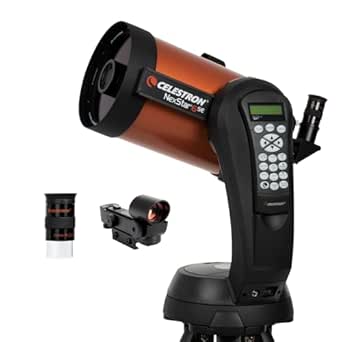 | Best for Traditional Telescope Control | Optical design: Schmidt-Cassegrain | Aperture: 6 inches | Focal length: 1500 mm | VIEW LATEST PRICE | See Our Full Breakdown |
| Digital Telescope, Professional Auto-Focus Digital Refractor Smart Telescope |  | Best for Built-In Screen and Daytime Versatility | Objective lens diameter: 80 mm | Focal length: 300 mm | Focus: Autofocus | VIEW LATEST PRICE | See Our Full Breakdown |
| DWARFLAB Dwarf Mini Smart Telescope |  | Best Compact Travel Pick | Weight: 1.85 lb (840 g) | Objective lens diameter: 30 mm | Focal length: 150 mm | VIEW LATEST PRICE | See Our Full Breakdown |
| Vaonis Vespera Pro 2 Smart Telescope |  | Best Premium for Advanced Imaging Control | Sensor: 12.5 MP IMX676 square sensor | Mosaic resolution: 50 MP | Field of view: 1.6 degrees | VIEW LATEST PRICE | See Our Full Breakdown |
| Celestron Origin Mark II Intelligent Home Observatory |  | Best for Fast, Wide-Field Home Imaging | Optical design: Rowe-Ackermann Schmidt Astrograph (RASA) | Aperture: 152 mm (6 in) | Focal ratio: f/2.2 | VIEW LATEST PRICE | See Our Full Breakdown |
| UNISTELLAR Odyssey PRO Smart Telescope with Nikon Electronic Eyepiece |  | Best for App-Guided Observing with an Eyepiece | Objective lens diameter: 85 mm | Focal length: 320 mm | Mount: Altazimuth | VIEW LATEST PRICE | See Our Full Breakdown |
| DWARFLAB Dwarf 3 Smart Telescope |  | Best Compact Dual-Purpose Pick | Objective lens diameter: 35 mm | Mount: Altazimuth | Focus: Autofocus | VIEW LATEST PRICE | See Our Full Breakdown |
| Celestron NexStar 8SE Computerized Schmidt-Cassegrain Telescope |  | Best for Large-Aperture Viewing with GoTo Tracking | Optical design: Schmidt-Cassegrain | Aperture: 8 inches | Mount: Computerized GoTo single-arm mount | VIEW LATEST PRICE | See Our Full Breakdown |
| ZWO Seestar S30 Pro Smart Telescope, App-Controlled Astrophotography |  | Best for Beginner-Friendly Urban Imaging | Objective lens diameter: 30 mm | Focal length: 160 mm | Field of view: 4.6 degrees | VIEW LATEST PRICE | See Our Full Breakdown |
| JVAXS 4K Digital Astrophotography Telescope with 3-Inch Flip Screen |  | Best for Shared Viewing and Direct Recording | Objective lens diameter: 78 mm | Focus type: Manual | Display: 3-inch flip-out screen | VIEW LATEST PRICE | See Our Full Breakdown |
| smart telescopes for astrophotography | Objective lens diameter | Mount | Focal length | Focus |
|---|---|---|---|---|
| UNISTELLAR Odyssey Smart Teles | 85 mm | Altazimuth | 320 mm | Autofocus |
| Celestron NexStar 6SE Computer | — | Computerized alt-azimuth, single fork arm | 1500 mm | Manual |
| Digital Telescope | 80 mm | — | 300 mm | Autofocus |
| DWARFLAB Dwarf Mini Smart Tele | 30 mm | — | 150 mm | — |
| Vaonis Vespera Pro 2 Smart Tel | — | Automated alt-azimuth | — | — |
| Celestron Origin Mark II Intel | — | — | — | — |
| UNISTELLAR Odyssey PRO Smart T | 85 mm | Altazimuth | 320 mm | Autofocus |
| DWARFLAB Dwarf 3 Smart Telesco | 35 mm | Altazimuth | — | Autofocus |
| Celestron NexStar 8SE Computer | — | Computerized GoTo single-arm mount | — | — |
| ZWO Seestar S30 Pro Smart Tele | 30 mm | Alt-azimuth; supports EQ mode | 160 mm | Autofocus and manual focus |
| JVAXS 4K Digital Astrophotogra | 78 mm | — | — | — |
More Details on Our Top Picks
UNISTELLAR Odyssey Smart Telescope, 85 mm, Black
The Odyssey is my strongest all-around pick for someone who wants astrophotography to feel guided rather than hands-on. Its 85 mm optics, autofocus, target recognition, and tracking work together with live image stacking to build brighter, more detailed views without requiring manual alignment and focusing. Light-pollution reduction also gives city observers a better chance of capturing deep-sky targets. Unlike the Celestron NexStar 6SE, it has no eyepiece and is designed around viewing and capturing through a phone or tablet; that makes its imaging workflow simpler, but less traditional. The 320 mm focal length and 45-arcminute field of view favor smaller targets over broad sky scenes. A supplied tripod and up to five hours of battery use make it field-ready, though cold or extended sessions can shorten runtime.
Pros:- Autofocus, sky recognition, target finding, and tracking reduce setup and monitoring work.
- Live image stacking builds color and detail from successive observations.
- Light-pollution reduction supports deep-sky observing from urban locations.
- Includes a tripod and rechargeable battery rated for up to five hours.
Cons:- Requires a compatible phone or tablet and the UNISTELLAR app.
- No eyepiece; observing and imaging depend on the app display.
- Battery runtime varies with temperature and use, which can constrain long sessions.
Best for: New and intermediate astrophotographers who want automated target finding, stacking, and tracking from a phone or tablet, including observers dealing with city light pollution.
Not ideal for: Observers who want to look through an eyepiece, manually control a conventional telescope, or capture very wide-field sky scenes.
- Objective lens diameter:85 mm
- Focal length:320 mm
- Mount:Altazimuth
- Focus:Autofocus
- Field of view:45 arcminutes
- Telescope weight:8.8 lb
- Battery runtime:Up to 5 hours
- Warranty:2 years
Our verdict“Choose the Odyssey if you want a well-rounded, app-guided route into deep-sky astrophotography and do not need an eyepiece.”
Celestron NexStar 6SE Computerized Schmidt-Cassegrain Telescope
The NexStar 6SE suits buyers who want substantial aperture and computerized target tracking but still prefer a conventional telescope-and-eyepiece setup. Its 6-inch Schmidt-Cassegrain optics and 1500 mm focal length give it a different emphasis from the shorter, app-first UNISTELLAR Odyssey: the Celestron is better suited to lunar and planetary viewing and can support camera-based imaging, while the Odyssey automates more of the capture workflow. SkyAlign and a 40,000-plus-object database help locate targets, but this is not a self-contained smart imaging system; focusing is manual, and the listed power options are not included. The 1.7-degree field of view also limits how much of a large nebula fits at once. Choose it for optical versatility and familiar controls, not for the most automated astrophotography experience.
Pros:- Six-inch aperture gathers light for lunar, planetary, and deep-sky observing.
- GoTo mount locates and tracks targets from a database of more than 40,000 objects.
- SkyAlign offers a guided alignment method using three bright stars or planets.
- Eyepiece-based design and Celestron accessory compatibility support a more traditional, adaptable setup.
Cons:- Manual focusing adds hands-on work compared with autofocus smart telescopes such as the Odyssey.
- Power sources are not included, so observers need to supply a compatible option.
- Its 1.7-degree field of view can frame wide deep-sky targets less easily than shorter-focal-length systems.
Best for: Astronomy hobbyists who want a larger-aperture, eyepiece-based telescope with GoTo tracking and may add a camera to their observing setup.
Not ideal for: Beginners seeking an all-in-one automated imaging workflow, or wide-field imagers who want to capture large nebulae in a single frame.
- Optical design:Schmidt-Cassegrain
- Aperture:6 inches
- Focal length:1500 mm
- Field of view:1.7 degrees
- Mount:Computerized alt-azimuth, single fork arm
- Focus:Manual
- Object database:More than 40,000 celestial objects
- Alignment technology:SkyAlign
Our verdict“Pick the NexStar 6SE if aperture, GoTo tracking, and conventional eyepiece viewing matter more to you than automated image stacking.”
Digital Telescope, Professional Auto-Focus Digital Refractor Smart Telescope
This digital refractor takes a different route from the app-dependent UNISTELLAR Odyssey: it has an integrated camera and dual displays, so you can frame and save images without attaching a phone. The adjustable eyepiece screen, fold-out external display, and glare hood also make it more practical for daytime wildlife viewing than the astronomy-focused options here. Its listed 80 mm objective, 300 mm focal length, and autofocus are a useful foundation for casual lunar imaging, while photo and video modes save directly to expandable TF-card storage. However, the listing’s 4K and 350X claims do not provide enough detail to judge actual astronomical image quality, and it gives no tracking, stacking, or target-finding specifications. Compared with the Dwarf Mini, it is less clearly equipped for long-exposure deep-sky work. I would treat it as a versatile digital spotting scope, not a proven deep-sky imaging platform.
Pros:- Built-in eyepiece and external screens allow framing without a separate phone.
- Autofocus and one-touch photo and video modes simplify casual use.
- TF-card storage is expandable up to 512 GB, according to the product description.
- The glare hood and daytime viewing design add wildlife and outdoor versatility.
Cons:- The listing does not specify automated tracking, image stacking, or target finding.
- Claims of 4K capture and up to 350X magnification are not enough to establish deep-sky image performance.
- It is less clearly suited to long-exposure astrophotography than the Dwarf Mini, which specifies exposures up to 90 seconds.
Best for: Beginners and outdoor observers who want a self-contained screen-and-camera device for casual Moon photography, wildlife viewing, and general daytime use.
Not ideal for: Deep-sky astrophotographers who need documented tracking, stacking, or long-exposure performance, or buyers who want a well-specified astronomy imaging workflow.
- Objective lens diameter:80 mm
- Focal length:300 mm
- Focus:Autofocus
- Advertised magnification:Up to 350X
- Displays:Adjustable eyepiece screen and fold-out external display
- Image capture:Photo and video modes; 4K capture advertised
- Storage:TF card, expandable up to 512 GB
- Battery:4500 mAh; up to 6 hours claimed
Our verdict“Choose this refractor for screen-based, mixed daytime and casual lunar use, but choose a telescope with specified tracking and stacking for deep-sky imaging.”
DWARFLAB Dwarf Mini Smart Telescope
At about 1.85 lb, the Dwarf Mini is the easiest option in this group to carry for spontaneous observing trips. Its 150 mm focal length and 2.45-degree field of view favor broad sky targets over the tighter framing of the UNISTELLAR Odyssey, while app-based target finding keeps setup accessible. For astrophotography, the standout detail is support for exposures up to 90 seconds, alongside Altazimuth and Equatorial modes, built-in light-pollution filters, and cloud processing. Those tools give it a more explicit long-exposure imaging focus than the digital refractor, whose listing does not specify tracking or stacking. The tradeoff is its 30 mm objective: it is a compact travel instrument, not a substitute for larger optics when gathering faint light. It also depends on a smartphone, and the battery information is limited.
Pros:- Very light and compact at about 1.85 lb, making it easy to pack.
- Exposures up to 90 seconds support more deliberate deep-sky capture.
- Altazimuth and Equatorial modes give users different tracking approaches.
- Built-in light-pollution filters and cloud processing aid app-based imaging.
Cons:- The 30 mm objective gathers less light than the 80–85 mm optics of the digital refractor and Odyssey.
- App control requires a smartphone.
- The listing describes a nonstandard battery but does not give a runtime.
Best for: Travel-minded beginners and casual deep-sky imagers who prioritize a lightweight kit, broad framing, and app-guided capture.
Not ideal for: Astrophotographers seeking greater light-gathering capability, detailed battery information, or a screen-free smartphone-independent workflow.
- Weight:1.85 lb (840 g)
- Objective lens diameter:30 mm
- Focal length:150 mm
- Field of view:2.45 degrees
- Sensor:Sony IMX662, 1/2.8-inch, 2.9 μm pixels
- Maximum single-frame exposure:90 seconds
- Mount modes:Altazimuth and Equatorial
- Dimensions:2.39 × 3.95 × 7.23 inches
Our verdict“Choose the Dwarf Mini if portability and specified long exposures matter more to you than aperture and all-night battery certainty.”
Vaonis Vespera Pro 2 Smart Telescope
The Vespera Pro 2 is the most explicitly advanced imaging platform in this group. Its 12.5 MP square sensor, 50 MP mosaic mode, and automatic multi-night capture target users who want to build detailed deep-sky projects, rather than simply point a scope at a target and watch it stack. Manual exposure and gain controls, plus FITS and TIFF export, also make it a stronger fit for post-processing than the more guided UNISTELLAR Odyssey. BalENS signal enhancement and automatic dark calibration are designed to reduce common processing chores, while the hard case and included tripod support field use. That capability comes with a steeper learning curve and a narrower 1.6-degree listed field of view than the Dwarf Mini. Its long sessions also depend on power planning, despite the stated 11-hour battery runtime.
Pros:- 12.5 MP square sensor and 50 MP mosaic mode support detailed imaging of larger targets.
- Automatic multi-night capture can combine observations across multiple sessions.
- Manual exposure and gain controls with FITS and TIFF export suit post-processing workflows.
- BalENS enhancement, automatic dark calibration, hard case, and tripod support a capable field setup.
Cons:- Advanced controls and processing features can be more involved than the Odyssey’s guided workflow.
- The listed 1.6-degree field of view is narrower than the Dwarf Mini’s 2.45-degree view.
- Long multi-night projects require planning around battery use and storage capacity.
Best for: Experienced deep-sky imagers who want multi-night capture, manual camera settings, high-resolution mosaics, and files suited to desktop processing.
Not ideal for: Casual observers seeking the simplest guided setup, buyers who prioritize a broad single-frame field, or anyone who does not plan to use advanced imaging controls.
- Sensor:12.5 MP IMX676 square sensor
- Mosaic resolution:50 MP
- Field of view:1.6 degrees
- Mount:Automated alt-azimuth
- Exposure range:1–30 seconds
- Gain range:0–30 dB
- Battery runtime:Up to 11 hours
- Storage:225 GB
- File export:FITS and TIFF
Our verdict“Pick the Vespera Pro 2 if you want a smart telescope that supports serious, editable deep-sky imaging rather than a mostly automatic observing experience.”
Celestron Origin Mark II Intelligent Home Observatory
The Origin Mark II is the strongest fit here for buyers who want a dedicated home setup for deep-sky imaging. Its 6-inch aperture and f/2.2 RASA optics collect light quickly across a wide field, while the 8.4-megapixel Origin 678C camera records the results for app-based viewing and sharing. That imaging emphasis sets it apart from the UNISTELLAR Odyssey PRO, which pairs a smaller 85 mm optical system with a Nikon electronic eyepiece for a more direct observing experience. The tradeoff is a less grab-and-go design: the Origin is intended for a home observatory rather than a lightweight travel kit, and its companion app requires a phone or tablet. Buyers who want compact daytime and night-sky use may prefer the DWARFLAB Dwarf 3; those prioritizing fast, detailed home astrophotography have a clearer reason to choose the Origin.
Pros:- Fast f/2.2 optics support wide-field imaging with shorter exposure demands.
- The 152 mm aperture gathers light for detailed celestial observations.
- The 8.4-megapixel camera records images for viewing and sharing.
- Companion app supports live viewing on smart TVs.
Cons:- The app experience requires a compatible phone or tablet.
- Its home-observatory orientation is less suited to frequent travel than the Dwarf 3.
- The supplied product data gives limited detail about raw-image workflows.
Best for: Astrophotographers setting up a home observatory who want fast, wide-field imaging and app-based sharing.
Not ideal for: Travelers seeking a small, versatile telescope, or buyers who want to operate without a phone or tablet.
- Optical design:Rowe-Ackermann Schmidt Astrograph (RASA)
- Aperture:152 mm (6 in)
- Focal ratio:f/2.2
- Camera:Origin 678C
- Camera resolution:8.4 megapixels
- Sensor:Sony Starvis 2 CMOS
- Pixel size:2.0 microns
- Aspect ratio:16:9
- Connectivity:Companion app; live viewing on smart TVs; image saving and sharing
Our verdict“Choose the Origin Mark II for fast, wide-field astrophotography from a home setup, not for a lightweight travel telescope.”
UNISTELLAR Odyssey PRO Smart Telescope with Nikon Electronic Eyepiece
The Odyssey PRO makes sense for buyers who want smart tracking and image stacking but still value looking through an eyepiece. Its Nikon electronic eyepiece gives it a different feel from the camera-first Celestron Origin Mark II, while autofocus and automatic tracking reduce the setup and target-following work. The 85 mm optics and 320 mm focal length suit a mix of planetary and deep-sky observing, and light-pollution reduction and live stacking support assisted imaging. The compromise is aperture: the Origin Mark II’s 152 mm system gathers more light, making it the stronger choice for buyers focused on detailed home astrophotography. The Odyssey PRO is also dependent on the UNISTELLAR app and a compatible device, and its stated battery life can vary with use and temperature. I’d pick it for a guided observing experience, not as the lineup’s most imaging-focused option.
Pros:- Autofocus and automatic tracking simplify finding and following targets.
- Nikon electronic eyepiece adds an observing option beyond phone viewing.
- Live image stacking and light-pollution reduction support assisted observing.
- Tripod and rechargeable battery are included.
Cons:- Its 85 mm objective gathers less light than the Origin Mark II’s 152 mm aperture.
- Operation requires the UNISTELLAR app on a compatible Android or iOS device.
- Battery runtime can change with temperature and use.
Best for: Beginners and visual observers who want automatic tracking, app-guided imaging features, and an electronic eyepiece.
Not ideal for: Buyers prioritizing maximum light gathering or long sessions away from a charging source.
- Objective lens diameter:85 mm
- Focal length:320 mm
- Mount:Altazimuth
- Focus:Autofocus
- Eyepiece:Nikon electronic eyepiece
- Field of view:45 arcminutes
- Battery:Rechargeable lithium-ion; up to 5 hours
- Telescope weight:8.8 lb
- App compatibility:Android 10+ or iOS 18+
Our verdict“Choose the Odyssey PRO if you want app-guided tracking with an electronic eyepiece, rather than the larger imaging aperture of the Origin Mark II.”
DWARFLAB Dwarf 3 Smart Telescope
The Dwarf 3 earns its place by making portability and day-to-night versatility its main advantages. At 2.28 kg, it is easier to pack for a trip than the UNISTELLAR Odyssey PRO, and its telephoto and wide-angle lenses extend its use to wildlife and landscape photography. For astrophotography, app-based auto tracking, Auto GOTO, and cloud-powered processing keep operation approachable without a traditional telescope workflow. That convenience comes with a clear tradeoff: the listed 35 mm objective is modest beside the 85 mm Odyssey PRO and the 152 mm Celestron Origin Mark II, and the product information does not provide much detail about optical performance. Image processing also depends on the dedicated app and cloud computing. I’d choose the Dwarf 3 for a portable camera-style tool that can handle more than astronomy, not for buyers chasing the strongest specified light-gathering capability.
Pros:- Portable 2.28 kg design suits travel and outdoor use.
- Telephoto and wide-angle lenses support both daytime and night-sky photography.
- Auto GOTO and 4K tracking simplify target capture.
- Includes a carrying bag and magnetic filters.
Cons:- The 35 mm objective is smaller than the apertures listed for the Odyssey PRO and Origin Mark II.
- Image processing depends on the dedicated app and cloud computing.
- Product data provides limited detail about optical performance.
Best for: Travelers and outdoor photographers who want one compact, app-controlled device for night skies, wildlife, and landscapes.
Not ideal for: Astrophotographers seeking a larger aperture or detailed optical specifications before buying.
- Objective lens diameter:35 mm
- Mount:Altazimuth
- Focus:Autofocus
- Weight:2.28 kg
- Dimensions:2.56 × 8.74 × 5.59 in
- Tracking:4K tracking
- Additional modes:Auto GOTO and EQ mode
- Compatible devices:Smartphone, laptop, and personal computer
- Warranty:2 years
Our verdict“Pick the Dwarf 3 for portable, multipurpose imaging, but choose a larger-aperture model for a more dedicated astrophotography setup.”
Celestron NexStar 8SE Computerized Schmidt-Cassegrain Telescope
The NexStar 8SE is the lineup’s large-aperture, traditional telescope choice: its 8-inch Schmidt-Cassegrain optics are aimed at observing the Moon, planets, and deep-sky targets, while computerized GoTo locates and tracks selected objects. SkyAlign uses three bright stars or planets to help with alignment, and the database of over 40,000 objects gives observers a broad target list. Compared with the app-first Origin Mark II, the 8SE is less of an integrated astrophotography system: the supplied details describe a computerized telescope, not a built-in imaging camera and app capture workflow. That distinction matters if the goal is straightforward automated image capture. Its mount and controls can also take time to learn, and wireless control or hands-free alignment call for optional accessories. I’d favor it for visual observing with room to add accessories, rather than for a turnkey smart-imaging experience.
Pros:- The 8-inch aperture supports lunar, planetary, and deep-sky observation.
- Computerized GoTo locates and tracks selected celestial targets.
- SkyAlign offers a three-object alignment method.
- Compatible with optional Celestron accessories.
Cons:- The listed product data does not specify a built-in astrophotography camera or smart capture workflow.
- Learning computerized setup and operation may take time.
- Wireless control and hands-free alignment require optional accessories.
Best for: Observers who want an 8-inch aperture and computerized target locating, with the option to add compatible accessories.
Not ideal for: Buyers seeking a self-contained smart telescope with a built-in camera and app-based astrophotography workflow.
- Optical design:Schmidt-Cassegrain
- Aperture:8 inches
- Mount:Computerized GoTo single-arm mount
- Object database:Over 40,000 celestial objects
- Alignment technology:SkyAlign
- Coatings:StarBright XLT
- Warranty:2 years
Our verdict“Choose the NexStar 8SE for large-aperture observing and GoTo convenience, not for an all-in-one app-controlled imaging system.”
ZWO Seestar S30 Pro Smart Telescope, App-Controlled Astrophotography
The Seestar S30 Pro is aimed at newcomers who want automated capture rather than manual telescope operation. Auto GOTO and tracking handle target finding, while one-tap modes, AI noise reduction, and automatic mosaic stitching reduce the number of imaging steps a beginner needs to manage. Its apochromatic optics and built-in light-pollution filters are especially relevant for observers working from brighter urban skies. The product information also describes dual-camera imaging, wide-field views, and a 4.6-degree field of view, making it more versatile for sky scenes than the narrower-field UNISTELLAR Odyssey PRO. One limitation is that the supplied specifications list a 30 mm objective, so it is not the choice here for maximum light gathering; the Celestron Origin Mark II has a much larger 152 mm aperture. The S30 Pro is also app-dependent, and its stated imaging modes are not intended for planetary observation.
Pros:- Auto GOTO and tracking reduce the work of finding and following targets.
- Built-in light-pollution filters support imaging from brighter locations.
- AI noise reduction and automatic mosaic stitching simplify image processing.
- Portable 3.6 lb design supports travel and outdoor use.
Cons:- Its listed 30 mm objective is much smaller than the Origin Mark II’s 152 mm aperture.
- Smart capture and processing depend on the companion app.
- The product description says it is not intended for planetary observation.
Best for: First-time astrophotographers in urban areas who want automated deep-sky and wide-field capture in a portable device.
Not ideal for: Planetary imagers or buyers who prioritize a large aperture over automated, portable operation.
- Objective lens diameter:30 mm
- Focal length:160 mm
- Field of view:4.6 degrees
- Mount:Alt-azimuth; supports EQ mode
- Focus:Autofocus and manual focus
- Imaging:Dual-camera imaging; 4K-quality capture described
- Weight:3.6 lb
- Power:Battery powered; one included battery
- Coating:Fully multi-coated
Our verdict“Choose the Seestar S30 Pro for portable, automated urban and wide-field imaging, but skip it if planetary work or maximum light gathering is the priority.”
JVAXS 4K Digital Astrophotography Telescope with 3-Inch Flip Screen
The JVAXS is a better fit for casual lunar and planetary recording than for buyers seeking a fully automated deep-sky imaging setup. Its 3-inch flip-out screen lets a group watch without crowding an eyepiece, while the included remote and app control offer more flexible operation than a basic camera-only telescope. It records 30 MP stills and 4K video, with a 64 GB card included, so you can start saving captures without sourcing storage first. Compared with app-driven options such as the DWARFLAB Dwarf 3, this model puts a built-in viewing screen and manual focus front and center rather than emphasizing automated imaging. That hands-on focus can suit users who want direct control, but it also means adjustments take more effort. The listing gives no magnification or focal length, making it harder to judge framing and reach before buying.
Pros:- Flip-out display supports shared viewing without requiring everyone to use an eyepiece.
- Captures 30 MP photos and 4K video for recording bright celestial targets.
- App control and a wireless remote provide options for operating and sharing captures.
- Includes a 64 GB card and supports storage expansion up to 512 GB.
Cons:- Manual focus requires hands-on adjustment rather than automated focusing.
- No magnification or focal length is specified, limiting buyers’ ability to evaluate image scale and target framing.
- The listed features do not establish the automated tracking and imaging workflow offered by dedicated smart telescope systems.
Best for: Casual astronomy viewers and families who want a built-in screen for shared Moon and planet viewing, plus straightforward photo and video recording.
Not ideal for: Astrophotographers seeking automated tracking or clearly specified magnification and focal length; manual focusing and missing optical details make it a less predictable imaging choice.
- Objective lens diameter:78 mm
- Focus type:Manual
- Display:3-inch flip-out screen
- Photo resolution:30 MP
- Video resolution:4K
- Included storage:64 GB card
- Maximum supported storage:512 GB
- Wireless remote range:Up to 85 feet
- Dimensions:15.9 × 5.19 × 7.62 inches
Our verdict“Choose the JVAXS if a built-in screen and direct lunar or planetary recording matter more than automated astrophotography features and fully specified optics.”

How We Picked
I ranked these models by how well their designs serve astrophotography goals, not by feature count alone. I weighed imaging hardware and control options alongside target acquisition, app usability, setup demands, portability, build and included accessories. A system that guides a new user from setup to a captured image earns a different place from a computerized telescope that offers broader hands-on observing but expects more user input.
The ranking favors clear strengths and a coherent use case. Automated observatory-style systems and imaging-focused smart scopes rank ahead for buyers who want a streamlined capture workflow; compact models earn their place through mobility, while traditional Celestron systems appeal to users who value a conventional telescope experience. I also considered where the product descriptions suggest a narrower role or leave important imaging details unclear. Buyers should verify current software support, included components, and compatibility before purchase, especially for devices marketed as digital or 4K telescopes.
| smart telescopes for astrophotography | Mount | Focus |
|---|---|---|
| UNISTELLAR Odyssey Smart Teles | Altazimuth | Autofocus |
| Celestron NexStar 6SE Computer | Computerized alt-azimuth, single fork arm | Manual |
| Digital Telescope | — | Autofocus |
| DWARFLAB Dwarf Mini Smart Tele | — | — |
| Vaonis Vespera Pro 2 Smart Tel | Automated alt-azimuth | — |
| Celestron Origin Mark II Intel | — | — |
| UNISTELLAR Odyssey PRO Smart T | Altazimuth | Autofocus |
| DWARFLAB Dwarf 3 Smart Telesco | Altazimuth | Autofocus |
| Celestron NexStar 8SE Computer | Computerized GoTo single-arm mount | — |
| ZWO Seestar S30 Pro Smart Tele | Alt-azimuth; supports EQ mode | Autofocus and manual focus |
| JVAXS 4K Digital Astrophotogra | — | — |
Factors to Consider When Choosing Smart Telescopes For Astrophotography
Choosing a smart telescope is less about finding one model with every feature and more about matching its workflow to the images and observing habits you want. I would decide what you plan to photograph, how much setup you are willing to handle, and whether portability or control matters more before comparing specifications.
Match the telescope to your targets
Different targets place different demands on a telescope, so start with the objects you hope to capture rather than a headline resolution figure. Wide-field views of large nebulae and star fields call for a different framing approach than smaller galaxies or planetary targets. A large sensor can record more of a scene, but it does not automatically provide more detail on a small object. Check the field of view, focal length, and supported imaging modes against the targets you care about. A common mistake is buying for impressive sample images without checking whether those objects fit the instrument’s framing. If your interests span several target types, favor a system with flexible framing or a traditional optical setup that leaves room to grow.
Separate automation from creative control
Smart scopes often handle locating, tracking, and image processing through an app, which can reduce the learning curve but may limit how much of the capture process you control. Before choosing, find out whether the software supports manual exposure choices, mosaics, stacking adjustments, and export of original files. These details matter if you expect to process images on a computer rather than rely on the telescope’s finished result. A guided workflow is a genuine advantage for casual sessions, not a flaw, but it can frustrate someone who wants to experiment with capture settings. Traditional computerized telescopes typically offer a different balance: more direct involvement, with additional setup and alignment responsibilities. Pick the level of automation you will enjoy using repeatedly.
Treat sensor resolution as one part of image quality
Sensor megapixels can help with cropping and image dimensions, but they do not tell the whole story about astrophotography performance. Aperture, optical design, tracking stability, exposure options, image processing, and sky conditions all shape what the final image can show. A mosaic mode can create a larger composite view, yet it may take longer to capture and process than a single frame. Likewise, a high-resolution sensor cannot recover detail that the optics or tracking did not record. Compare the full imaging workflow, including how files are saved and whether processing is built in or left to you. This keeps buyers from paying extra for a number that does not match their actual use.
Plan for setup, power, and your observing location
A telescope that is easy to carry may still need a stable surface, clear sky access, sufficient power, and a dependable connection to its app. Think through where you will use it: a balcony, dark-sky trip, backyard, or several locations each create different constraints. Compact scopes reduce packing burden, while larger systems can be more demanding to transport and position. Also check whether the listed tripod, case, power accessories, and mounting parts are included, since product bundles can differ. Do not assume that “smart” means zero setup; alignment, leveling, firmware, and app permissions can still affect a session. A practical setup you can deploy often may deliver more value than a more capable system that rarely leaves storage.
Choose between a dedicated smart scope and a conventional telescope
Dedicated smart telescopes are built around app-guided imaging, while computerized optical telescopes retain a more traditional observing format. The former can make target selection and capture more approachable, but may tie important functions to a particular app and software ecosystem. A conventional system can support visual observing and give the owner a more hands-on role, though imaging may require extra accessories and a steeper learning process. Check what can be upgraded, what cameras or eyepieces are supported, and whether the system can serve your interests beyond its default workflow. The most common mismatch is buying an imaging appliance when you want to look through an eyepiece, or buying an optical tube when you want fully guided capture. Decide which experience matters before comparing the two categories.
Know when paying more changes the experience
A higher-end model makes sense when it adds a capability you will use, such as more imaging control, a larger aperture, a stronger automated workflow, or a more capable sensor system. It is a poor trade if the extra features mainly increase complexity while your priority is occasional, straightforward sessions. Consider the full ownership picture: carrying case, tripod, power needs, software access, storage, and any accessories required for your planned setup. Also check whether the manufacturer’s app and firmware remain supported, since a connected telescope depends on software as well as optics. Compare the cost of the complete working setup rather than the telescope body alone, without assuming that a premium label guarantees better results for every target. Spend more for a specific benefit, not for specifications you cannot use.
Frequently Asked Questions
Can one smart telescope handle both deep-sky imaging and visual observing?
Some models are built primarily for camera-based viewing and image capture, while traditional computerized telescopes are more adaptable to visual observing through an eyepiece. The Celestron NexStar 6SE and 8SE fit the conventional telescope side of this comparison, whereas dedicated smart scopes focus on app-guided imaging. Check whether the product includes an eyepiece or supports one, and whether its app-first design allows direct visual use at all. If observing through an eyepiece is a core goal, do not assume a digital screen is an equivalent experience. Buyers seeking both uses should prioritize optical and accessory flexibility over the simplest capture workflow.
Should I choose a compact smart telescope or a larger computerized telescope?
Choose compactness if you expect to travel, have limited storage, or want a setup you can carry out frequently. A larger computerized telescope may offer a more traditional observing experience and a different optical platform, but it asks more of you during transport, setup, and alignment. Portability does not guarantee better imaging, and aperture alone does not guarantee simpler results. Think about where the instrument will live and how often you will move it before focusing on specifications. If the telescope will mostly stay at home and you want a broader hands-on experience, a larger system may suit you better.
Are megapixels enough to tell which smart telescope will take better astrophotos?
No. Megapixels describe image dimensions, but astrophotography also depends on the optics, sensor behavior, tracking, exposure controls, processing, and the sky conditions during capture. A higher-resolution sensor can be useful for detailed files or cropping, while a mosaic feature can expand the captured view; neither guarantees stronger results for every target. Look for sample images of objects similar to what you want to photograph and check whether the product lets you export files for further processing. Also compare field of view and focal length, since they affect how large a target appears in the frame. Treat resolution as one useful specification, not a final verdict.
What should I check before buying a digital telescope advertised for 4K or autofocus?
Confirm what the “4K” label describes: the display, video output, sensor, or saved image resolution. Check whether the telescope supports long exposures, tracking, stacking, manual capture controls, and exportable image files, since those capabilities matter for astrophotography. Autofocus can simplify daytime or general digital viewing but does not by itself establish how well a system captures faint celestial targets. Review the intended targets and software workflow in the manufacturer’s documentation, especially if the listing provides limited technical detail. If deep-sky imaging is your main goal, compare those capabilities directly with dedicated smart telescopes before buying.
Do I need a dark-sky site to get useful results from these telescopes?
A darker location generally makes faint objects easier to capture, but it is not the only factor that shapes results. Smart processing and guided capture can make urban sessions more approachable, though light pollution still limits contrast and visible detail. Bright targets and the Moon can remain worthwhile choices from a suburban setting, while faint nebulae and galaxies benefit more from darker skies. Check local conditions, weather, and nearby obstructions before investing in a more capable instrument; a clear view and stable setup matter too. If travel is part of your plan, give portability greater weight, as with the Dwarf models, rather than choosing solely for home-based performance.
Conclusion
For the broadest automated home astrophotography setup, I recommend the Celestron Origin Mark II as best overall. Buyers prioritizing imaging controls and mosaic capture should look to the Vaonis Vespera Pro 2 as best premium, while the DWARFLAB Dwarf 3 is my best value-oriented choice for people who want a compact, capable smart-scope format; the Dwarf Mini is the more travel-focused alternative. For beginners, the UNISTELLAR Odyssey is a sensible starting point if guided operation is the priority, while the NexStar 6SE better suits a beginner who wants a conventional telescope and accepts more hands-on setup. Choose the NexStar 8SE for a larger traditional observing platform, and compare the JVAXS and generic digital refractor carefully if your goal is serious deep-sky imaging. The best match is the one whose workflow, portability, and target range fit how you plan to observe.
Fall Picks
fall essentials
As an affiliate, we earn on qualifying purchases.