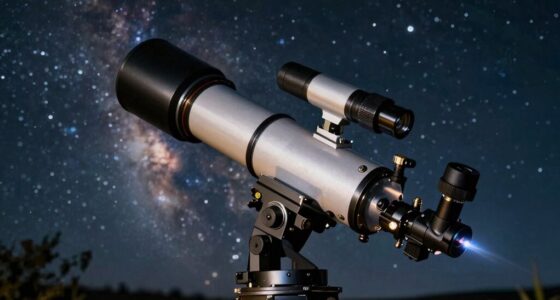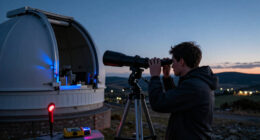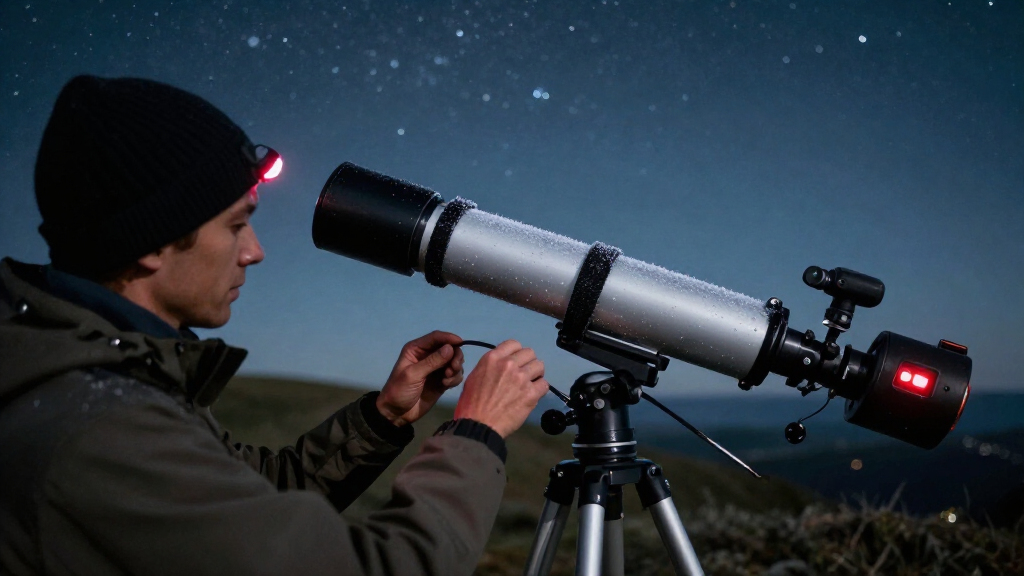

For most observers seeking a versatile telescope dew heater, I’d start with the SVBONY SV192 480 mm: its longer wrap suits a range of larger optical tubes, while USB power keeps setup straightforward. The KIWIFOTOS USB Lens Warmer stands out for its adjustable temperature regulator, and the Celestron Aluminum Dew Heater Ring is the specialist choice for compatible 11-inch Schmidt-Cassegrain, EdgeHD, and RASA telescopes. The main tradeoffs are strip length and fit, USB versus 12V power, and simple heat settings versus more tailored control. A heater that is too short or poorly powered can leave part of an optic exposed, while excess heat can waste battery capacity. Read on for the full comparison and guidance on matching a heater to your telescope.

Prime made for students and young adults
- Fast, free delivery for dorm and study essentials
- Prime Video and Amazon Music included
- Member-only deals
Key Takeaways
- The 480 mm SVBONY SV192 is the most versatile general pick in this group, while the 560 mm version is a better fit when a longer wrap is needed.
- Strip length is a fit decision, not a performance ranking. The 240 mm and 320 mm SVBONY SV172 options suit smaller circumferences than the 400 mm and 480 mm models.
- Power compatibility can matter more than extra heat settings. USB models suit common USB power sources; the R-Sky strip uses 12V RCA, so it fits a different power setup.
- Purpose-built designs serve narrower needs. The Celestron ring is made for specified 11-inch telescope families, while flexible strips work across more kinds of optics if their length fits.
- Adjustable control is the clearest differentiator among the simple USB warmers. KIWIFOTOS offers a temperature regulator, while NEEWER HW-17B and Haida provide three heat settings.
| SVBONY SV172 USB Dew Heater Strip for Telescope and Camera Lenses, 400 mm |  | Best Overall for Mid-Size Lenses | Model: FW9132C | Heating strip length: 400 mm | Band width: 50 mm | VIEW LATEST PRICE | See Our Full Breakdown |
| NEEWER HW-23B USB Lens Heater, 23.6 in (600 mm) |  | Best for Larger Lens Circumferences | Model: HW-23B | Overall length: 23.6 in (600 mm) | Effective heating length: 20 in (500 mm) | VIEW LATEST PRICE | See Our Full Breakdown |
| SVBONY SV172 Dew Heater Lens Warmer, 240 mm |  | Best for Small Optics | Model: FW9132A | Heater length: 240 mm | Maximum external diameter: 76 mm | VIEW LATEST PRICE | See Our Full Breakdown |
| Move Shoot Move 350 mm Lens Dew Heater Strip |  | Best for Cold-Weather Flexibility | Material: Neoprene | Strip size: 350 mm | Maximum diameter: 4.26 in | VIEW LATEST PRICE | See Our Full Breakdown |
| KIWIFOTOS USB Lens Warmer with Adjustable Temperature Regulator |  | Best for Eyepieces and Small Lenses | Model: DHS-1 | Power source: USB | Temperature settings: Low, medium, high | VIEW LATEST PRICE | See Our Full Breakdown |
| SVBONY SV192 480 mm Telescope Dew Heater Strip |  | Best for 12V Versatility | Length: 480 mm | Compatible equipment: Telescope primary mirrors below 152 mm outer diameter or camera lenses | Heat settings: 3 speeds | VIEW LATEST PRICE | See Our Full Breakdown |
| R-Sky Astro Instruments 6-Inch 12V RCA Telescope Dew Heater Strip |  | Best for Cold-Weather Controller Setups | Size: 6 inches | Power: 12V | Connector: RCA | VIEW LATEST PRICE | See Our Full Breakdown |
| SVBONY SV172 320 mm USB Dew Heater Strip for Telescopes and Camera Lenses |  | Best Compact USB Pick | Length: 320 mm | Width: 50 mm | Power: USB, 5V | VIEW LATEST PRICE | See Our Full Breakdown |
| Celestron Aluminum Dew Heater Ring for 11-Inch Schmidt-Cassegrain, EdgeHD, and RASA Telescopes |  | Best Custom-Fit Ring | Material: Aluminum | Compatible telescopes: 11-inch Celestron Schmidt-Cassegrain, EdgeHD, and RASA | Power source: External 12V DC | VIEW LATEST PRICE | See Our Full Breakdown |
| NEEWER HW-17B 16-Inch USB Lens Heater with 3 Temperature Settings | | Best Adjustable Wraparound Fit | Overall length: 16 inches (400 mm) | Effective length: 11.8 inches (300 mm) | Maximum circumference: 10.8 inches (275 mm) | VIEW LATEST PRICE | See Our Full Breakdown |
| Haida USB Lens Dew Heater Strip with 3 Heat Settings |  | Best for Flexible USB Setup | Heating material: Graphene | Temperature settings: Low: 35–45°C; Medium: 45–55°C; High: 55–65°C | Power source: USB | VIEW LATEST PRICE | See Our Full Breakdown |
| SVBONY SV192 560 mm Dew Heater Strip for Telescopes and Camera Lenses |  | Best for Long, Narrow Barrels | Heating length: 560 mm | Maximum lens outer diameter: Under 178 mm | Heat settings: Strong, medium, weak | VIEW LATEST PRICE | See Our Full Breakdown |
More Details on Our Top Picks
SVBONY SV172 USB Dew Heater Strip for Telescope and Camera Lenses, 400 mm
I’d put this 400 mm SVBONY SV172 first for buyers who want a flexible fit across medium-size telescope or camera lenses without moving to a much longer strip. Its three heat settings let you adjust warmth to conditions, while the 50 mm band is intended to stay clear of focusing controls and the optical path. Compared with the 240 mm SVBONY SV172, this version accommodates a larger lens circumference; the NEEWER HW-23B reaches farther still, but its 600 mm total length may be more strip than compact setups need. The tradeoff is the fit limit: the lens outer diameter must stay under 127 mm. I’d also match it with a USB source capable of supplying 1.9–2.0 A, rather than assuming any USB port will do.
Pros:- Three heat levels provide flexibility for changing dew conditions.
- 400 mm length covers a broader range of lens sizes than the 240 mm SVBONY SV172.
- USB input supports use with a suitable power bank or other 5 V source.
- 50 mm band is designed to avoid obstructing focusing or the field of view.
Cons:- Requires a USB power source capable of supplying 1.9–2.0 A.
- Does not fit lenses with an outer diameter of 127 mm or more.
Best for: Telescope and camera owners with lenses under 127 mm in outer diameter who want adjustable heating and USB power for portable setups.
Not ideal for: Owners of larger lenses or anyone without a USB source rated to supply 1.9–2.0 A.
- Model:FW9132C
- Heating strip length:400 mm
- Band width:50 mm
- Compatible lens outer diameter:Under 127 mm
- Power input:5 V USB
- Input current:1.9–2.0 A
- Cable length:1.8 m
- Heat settings:3: strong, medium, weak
Our verdict“Choose this SVBONY for adjustable, portable dew control on mid-size lenses that fit within its 127 mm diameter limit.”
NEEWER HW-23B USB Lens Heater, 23.6 in (600 mm)
The NEEWER HW-23B is the more suitable pick when shorter wraps may not reach around the lens: it has a 600 mm overall length, 500 mm effective heating length, and supports a maximum circumference of 475 mm. Its touch-fastener closure makes positioning and refitting straightforward across telescopes, camera lenses, and binoculars. Compared with the 400 mm SVBONY SV172, it offers more reach and gives stated temperature ranges for each of its three settings, but that extra length is less convenient for compact optics. The 1.5 m USB cable also calls for a nearby power source or careful cable routing. I’d choose it for larger, varied gear rather than for a small lens that a shorter strip can warm with less excess material.
Pros:- 600 mm overall length and 475 mm maximum circumference suit larger optics than the 400 mm SVBONY SV172.
- Three settings have stated temperature ranges.
- Touch fasteners allow quick fitting and repositioning.
- Works with 5 V USB sources across cameras, telescopes, and binoculars.
Cons:- Only 500 mm of the 600 mm strip is listed as effective heating length.
- Requires a separate 5 V USB power source.
- Its longer wrap may be cumbersome on compact lenses.
Best for: Astrophotographers and observers who need one adjustable USB heater for larger lenses, binoculars, or several kinds of optics with a circumference up to 475 mm.
Not ideal for: Owners of compact lenses who want a short, close-fitting strip, or buyers who need a heater with an included power source.
- Model:HW-23B
- Overall length:23.6 in (600 mm)
- Effective heating length:20 in (500 mm)
- Maximum lens circumference:18.7 in (475 mm)
- Maximum lens diameter:150 mm
- Temperature settings:Low: 35–45°C; medium: 45–55°C; high: 55–65°C
- Power:5 V USB
- USB cable length:4.9 ft (1.5 m)
Our verdict“Pick the HW-23B when reach and fit flexibility matter more than keeping the heater compact.”
SVBONY SV172 Dew Heater Lens Warmer, 240 mm
For a short lens or eyepiece, the 240 mm SVBONY SV172 avoids the extra wrap of the longer strips in this group. Its stated fit is for optics under 76 mm external diameter, and the 50 mm-wide band is designed to stay out of the way of focusing. The aluminum heating element and insulated design are intended to distribute warmth evenly, while three settings give more control than a single-output heater. Compared with the 400 mm SVBONY SV172, this version is easier to match to small optics but gives up coverage; the KIWIFOTOS DHS-1 allows diameters under 80 mm, a slightly broader fit on paper. Both still need a suitable 5 V USB source, with this SVBONY specifying 1.9–2.0 A input current.
Pros:- 240 mm length is suited to small optics without excess strip.
- Three heat modes allow adjustment to conditions.
- Insulated construction and an aluminum heating element are designed for even heat distribution.
- 50 mm width is intended to avoid interfering with focusing.
Cons:- Fit is limited to optics under 76 mm external diameter.
- Requires a 5 V USB power source capable of supplying 1.9–2.0 A.
Best for: Observers and astrophotographers warming compact telescope lenses or eyepieces with an external diameter under 76 mm.
Not ideal for: Owners of larger optics, or anyone looking for a longer strip to wrap around a broad lens barrel.
- Model:FW9132A
- Heater length:240 mm
- Maximum external diameter:76 mm
- Band width:50 mm
- Input voltage:5 V
- Input current:1.9–2.0 A
- USB cable length:1.8 m
- Heating modes:Strong, medium, weak
Our verdict“Choose this shorter SVBONY when your optic is under 76 mm and a longer heater would be unnecessary.”
Move Shoot Move 350 mm Lens Dew Heater Strip
The Move Shoot Move 350 mm strip is the standout here for setups that face low temperatures: its neoprene construction is specified to remain flexible down to -25°C. That matters when a stiff wrap is harder to fit snugly around a lens in cold conditions. Three temperature settings and a hook-and-loop closure add practical adjustment, while USB power allows a compatible power bank to serve as the source. Compared with the 240 mm SVBONY SV172, this strip covers a larger diameter range; compared with the NEEWER HW-23B, it is shorter and has a lower stated maximum diameter. Its listed maximum temperature is 167°F, so I’d use the settings with the actual lens and conditions in mind rather than treating maximum heat as the default. A separate USB source is required.
Pros:- Neoprene is specified to remain flexible down to -25°C.
- Three temperature settings provide output choices.
- Hook-and-loop closure makes the strip adjustable around the lens.
- USB power can work with a suitable portable power bank.
Cons:- Requires a separate USB power source.
- Maximum diameter of 4.26 inches is less than the NEEWER HW-23B’s 150 mm limit.
- The product data does not state temperature ranges for the three settings.
Best for: Astrophotographers who set up in freezing conditions and need a flexible heater for lenses up to 4.26 inches in diameter.
Not ideal for: Owners of optics larger than 4.26 inches in diameter or buyers seeking a heater supplied with its own power source.
- Material:Neoprene
- Strip size:350 mm
- Maximum diameter:4.26 in
- USB cable length:60.23 in
- Input current:2.0 A
- Output voltage:5 V
- Maximum temperature:167°F
- Temperature settings:3
- Closure:Hook-and-loop strap
Our verdict“Choose this strip if cold-weather flexibility matters more than maximum lens coverage or a built-in power supply.”
KIWIFOTOS USB Lens Warmer with Adjustable Temperature Regulator
The KIWIFOTOS DHS-1 suits buyers who want a compact USB warmer for camera lenses or telescope eyepieces under 80 mm in diameter. Its regulator sits on a 1.5 m cable and offers low, medium, and high settings, so the user can change heat output without replacing the strip. Compared with the 240 mm SVBONY SV172, KIWIFOTOS allows a slightly larger stated diameter, though its supplied product data does not specify strip length or temperature ranges. That makes fit planning less precise than with the SVBONY, which lists both heater length and current draw. Like the other USB options, this one needs a power bank or another USB source. I’d favor it for small optics and straightforward control, not for a buyer who needs detailed sizing or controller-version certainty.
Pros:- Fits lenses and eyepieces under 80 mm in diameter.
- Low, medium, and high settings provide adjustable heat.
- USB power supports use with a compatible power bank.
- 1.5 m regulator cable gives some flexibility in placing the controller.
Cons:- Not suitable for lenses 80 mm or larger.
- Product data does not list heater length or operating current.
- Controller appearance may vary between versions.
Best for: Telescope users and photographers who need an adjustable USB warmer for eyepieces or lenses under 80 mm in diameter.
Not ideal for: Owners of lenses 80 mm or larger, or buyers who need a specified strip length and detailed power requirements before choosing.
- Model:DHS-1
- Power source:USB
- Temperature settings:Low, medium, high
- Regulator cable length:1.5 m
- Compatible lens diameter:Less than 80 mm (3.15 in)
- Item weight:59 g
- Unit count:1
Our verdict“Pick the DHS-1 for small optics when a three-level controller matters more than detailed strip specifications.”
SVBONY SV192 480 mm Telescope Dew Heater Strip
The SVBONY SV192 480 mm is a flexible choice for observers who want one strip for telescope optics or a camera lens and already have 12V power available. Its three heat settings let you adjust output to conditions, while the layered insulation is intended to limit heat loss rather than send warmth away from the optical surface. Compared with the USB-powered SVBONY SV172 320 mm, this model suits a different power setup and offers a longer strip, but it depends on a 12V source instead of the more widely available 5V USB supply. Fit is the main constraint: the listed telescope compatibility is limited to mirrors below 152 mm outer diameter. I’d choose it for a compact 12V rig, but skip it if your optics exceed that size or you need a plug-and-play USB option.
Pros:- Three heat settings allow adjustment for changing dew conditions.
- 12V connection suits astronomy setups already using 12V power.
- Three-layer insulation is designed to reduce heat loss.
- Can be used with compatible telescope optics or camera lenses.
Cons:- Telescope compatibility is limited to mirrors below 152 mm outer diameter.
- Requires a separate 12V power source rather than USB.
- The 480 mm length may not suit smaller optics that need a shorter wrap.
Best for: Telescope and camera-lens owners with optics under the stated 152 mm limit who already use a 12V field power source.
Not ideal for: Observers relying on USB power banks or using telescope mirrors with an outer diameter of 152 mm or more.
- Length:480 mm
- Compatible equipment:Telescope primary mirrors below 152 mm outer diameter or camera lenses
- Heat settings:3 speeds
- Power input:12V
- Power interface:5.5 x 2.1 mm female
- Dimensions:5.9 x 4.7 x 1.7 inches
- Item weight:5.6 ounces
- Model number:FCAW9151A
Our verdict“Choose this for a 12V-powered setup and compatible optics; pick the SVBONY SV172 320 mm instead if USB power is your priority.”
R-Sky Astro Instruments 6-Inch 12V RCA Telescope Dew Heater Strip
The R-Sky 6-inch strip is aimed at telescope owners who already run a compatible dew heater controller and want a flexible, cold-resistant connection. Its RCA cord is described as remaining pliable in sub-zero conditions, a practical advantage when cables stiffen around a stationary mount. The listed fit spans refractors, Schmidt-Cassegrains, Maksutov-Cassegrains, Newtonians, and RASA telescopes, making it broader by telescope type than the custom-fit Celestron Aluminum Dew Heater Ring. That flexibility comes with a setup requirement: the controller is recommended but sold separately, so this is not the most self-contained choice. Compared with USB wraps such as the NEEWER HW-17B, the R-Sky is more astronomy-system-oriented, but it needs a 12V arrangement and a controller rather than a basic USB source.
Pros:- Compatible with several telescope types, including refractors and compound designs.
- Cold-resistant RCA cord is designed to stay flexible below freezing.
- Uniform heating is intended to limit uneven warming across the strip.
- Includes a 2-year warranty.
Cons:- Dew heater controller is not included.
- Requires a compatible 12V setup and RCA connection.
- A single 6-inch size may not match every optical tube.
Best for: Observers with a compatible 12V dew controller who need a flexible strip for varied telescope designs and cold-weather cable handling.
Not ideal for: New telescope owners without a dew heater controller or anyone seeking a simple USB-powered wrap.
- Size:6 inches
- Power:12V
- Connector:RCA
- Compatibility:Refractor, Schmidt-Cassegrain, Maksutov-Cassegrain, Newtonian, and RASA telescopes
- Cord:Cold-resistant and flexible
- Warranty:2 years
- Included quantity:1
Our verdict“This is a good fit for telescope owners who already have a 12V controller, but the NEEWER HW-17B is easier to power from a USB source.”
SVBONY SV172 320 mm USB Dew Heater Strip for Telescopes and Camera Lenses
The SVBONY SV172 320 mm makes the most sense when a narrow, USB-powered strip matters more than broad coverage. At 50 mm wide, it is designed to leave room for focusing and nearby accessories, while its aluminum film is intended to spread heat evenly. Three settings give you some control over output, and 5V USB power can come from a power bank, charger, or computer. Compared with the longer SVBONY SV192 480 mm, this is the more compact, USB-friendly option, though it does not use the SV192’s 12V connection or layered insulation. Its tradeoff is dependence on an external USB source; it also offers less length for larger optics. I’d favor it for small telescope or camera setups where cable and accessory clearance matter.
Pros:- USB 5V power works with common power banks, chargers, and computers.
- Three heat settings provide flexibility across conditions.
- 50 mm width is designed to reduce interference with focusing and accessories.
- Aluminum film is intended to distribute heat evenly.
Cons:- Needs an external USB power source.
- The 320 mm length may not cover larger optics.
- Does not provide the 12V connection used by the SVBONY SV192 480 mm.
Best for: Observers and photographers who need a narrow heater for smaller optics and want to power it from a USB bank or charger.
Not ideal for: Owners of larger optical surfaces needing more strip length, or users who prefer a dedicated 12V astronomy power connection.
- Length:320 mm
- Width:50 mm
- Power:USB, 5V
- Heat settings:3: strong, medium, weak
- Product dimensions:5.9 x 4.7 x 1.7 inches
- Item weight:6.3 ounces
- Model:FW9132B
- Manufacturer:SVBONY
Our verdict“Pick this compact strip for a USB-powered setup with limited accessory clearance; choose the SVBONY SV192 480 mm for a longer 12V option.”
Celestron Aluminum Dew Heater Ring for 11-Inch Schmidt-Cassegrain, EdgeHD, and RASA Telescopes
For owners of a compatible 11-inch Celestron, this ring offers a more integrated approach than a wraparound strip: it replaces the retaining ring and applies heat directly to the corrector lens. That dedicated fit is the main reason to choose it over a general strip such as the R-Sky 6-inch RCA heater, which is more adaptable across telescope types but does not replace telescope hardware. Aluminum construction keeps the ring lightweight and rigid, while the included clips help manage the power and thermistor jacks. The tradeoff is strict compatibility: it is listed for specific 11-inch Celestron Schmidt-Cassegrain, EdgeHD, and RASA models, not a general-purpose heater. It also needs external 12V DC power. I’d pick it for a matching telescope and skip it if you may change optical tubes or want a flexible wrap.
Pros:- Fits specified 11-inch Celestron telescopes and replaces the retaining ring.
- Applies heat directly to the corrector lens.
- Lightweight aluminum construction provides a rigid fitted design.
- Includes cable management and storage clips, plus a 2-year US warranty.
Cons:- Compatibility is limited to specified 11-inch Celestron models.
- Requires an external 12V DC power source.
- Less adaptable across multiple telescopes than a flexible heater strip.
Best for: Owners of compatible 11-inch Celestron Schmidt-Cassegrain, EdgeHD, or RASA telescopes seeking a fitted corrector-heating solution.
Not ideal for: Observers with other telescope sizes or brands, or those who need a heater that can move between different optical tubes.
- Material:Aluminum
- Compatible telescopes:11-inch Celestron Schmidt-Cassegrain, EdgeHD, and RASA
- Power source:External 12V DC
- Mount compatibility:Various mount types
- Focus type:Manual focus
- Objective lens diameter:28 centimeters
- Warranty:2 years (US)
Our verdict“Choose this ring only if you own a listed 11-inch Celestron model and want a fitted corrector solution rather than a transferable strip.”
NEEWER HW-17B 16-Inch USB Lens Heater with 3 Temperature Settings
The NEEWER HW-17B is the most adaptable wrap in this group for compact optics: touch fasteners let you adjust its fit, and the listed maximum circumference is 10.8 inches. Its 5V USB connection and three temperature ranges make it easy to pair with common USB power, while its light 2.65-ounce weight is suited to a portable camera, telescope, or binocular setup. Compared with the SVBONY SV172 320 mm, the NEEWER provides explicit temperature ranges and adjustable fastening; the SVBONY’s narrower 50 mm profile is better suited to tight accessory clearance. The NEEWER’s effective length is only 11.8 inches despite a 16-inch overall length, so it is not a solution for larger tubes. I’d choose it for small gear and skip it if your optical assembly exceeds its fit limits.
Pros:- Touch-fastener wrap allows an adjustable fit.
- Three settings provide defined low, medium, and high temperature ranges.
- 5V USB power works with common external power sources.
- Lightweight design can be used with camera lenses, telescopes, and binoculars.
Cons:- Maximum circumference is limited to 10.8 inches.
- Requires an external USB power source.
- Effective heating length is 11.8 inches, shorter than the 16-inch overall length.
Best for: Portable astronomy and photography users who want a lightweight, adjustable USB heater for optics up to 10.8 inches around.
Not ideal for: Owners of large optical tubes or anyone who needs a heater with greater circumference coverage or an included power source.
- Overall length:16 inches (400 mm)
- Effective length:11.8 inches (300 mm)
- Maximum circumference:10.8 inches (275 mm)
- Maximum diameter:86 mm
- Weight:2.65 ounces
- Temperature settings:Low: 35–45°C; Medium: 45–55°C; High: 55–65°C
- Power:5V USB
- USB cable length:4.9 ft (1.5 m)
- Model:HW-17B
Our verdict“Pick the NEEWER HW-17B for adjustable heating on compact optics; choose a longer wrap such as the NEEWER HW-23B for larger circumference needs.”
Haida USB Lens Dew Heater Strip with 3 Heat Settings
The Haida suits observers and imagers who want three heat levels without committing to a dedicated 12 V supply. Its USB input can work with a compatible power bank, making it a flexible match for portable sessions; unlike the SVBONY SV192 560 mm, it does not specify a 12 V input. The adjustable strap fits barrels up to 4.3 inches across, and its stated use for both telescope and camera lenses makes it a versatile option for mixed setups. The tradeoff is that you must bring the USB power source, and the diameter limit rules out wider optics. Its temperature ranges are specified, but buyers should check barrel fit and their power-bank arrangement before choosing it over a heater with a stated 12 V connection.
Pros:- Three temperature settings provide options for changing conditions.
- USB power can pair with compatible power banks and other USB sources.
- Adjustable strap fits lens barrels up to 4.3 inches in diameter.
- Designed for both telescope and camera lenses.
Cons:- Requires an external USB power source.
- The 4.3-inch diameter limit excludes larger barrels.
Best for: Portable telescope and camera users who already carry a suitable USB power bank and need a heater for barrels no wider than 4.3 inches.
Not ideal for: Owners of wider optical tubes or observers who want a heater that connects directly to a 12 V astronomy power supply.
- Heating material:Graphene
- Temperature settings:Low: 35–45°C; Medium: 45–55°C; High: 55–65°C
- Power source:USB
- Cable length:1.5 m (4.9 ft)
- Maximum lens barrel diameter:4.3 in
- Attachment:Adjustable touch-fastener strap
- Color:Red
Our verdict“Choose the Haida for a USB-powered, adjustable heater for smaller telescope or camera barrels, but skip it if your setup needs a wider fit or 12 V input.”
SVBONY SV192 560 mm Dew Heater Strip for Telescopes and Camera Lenses
The SVBONY SV192 560 mm is the better fit when you need a long heating strip for a telescope or camera lens with an outer diameter under 178 mm. Its 50 mm width is intended to leave room for focusing and other barrel accessories, a practical distinction from choosing a heater based on length alone. Three heat settings give you a choice of strong, medium, or weak output. Compared with the Haida USB Lens Dew Heater, this model uses a specified 12 V input rather than USB, so it suits a 12 V-powered rig better but is less convenient for someone carrying only a USB power bank. The 120 cm cable and diameter limit also shape where it fits; check both against your scope and power setup before buying.
Pros:- 560 mm heating length suits longer barrels within its fit limit.
- Three settings offer strong, medium, and weak heat choices.
- Narrow 50 mm width is designed to limit interference with focusing and accessories.
- 12 V DC input fits rigs already set up for that power source.
Cons:- Requires a 12 V power source rather than USB.
- The specified fit is limited to outer diameters under 178 mm.
- The 120 cm cable may constrain placement in some setups.
Best for: Telescope and camera users with a lens or tube under 178 mm in outer diameter who want a long, narrow strip and have 12 V power available.
Not ideal for: Observers relying on USB-only power, or owners of barrels 178 mm or wider.
- Heating length:560 mm
- Maximum lens outer diameter:Under 178 mm
- Heat settings:Strong, medium, weak
- Input voltage:12 V
- Power interface:DC 5.5 x 2.1 mm
- Cable length:120 cm
- Strip width:50 mm
- Item weight:5.6 ounces
- Model number:FCAW9151B
Our verdict“Pick the SV192 560 mm for a long, narrow heater on a compatible barrel when you have 12 V power, and choose the Haida instead if USB power is your priority.”
How We Picked
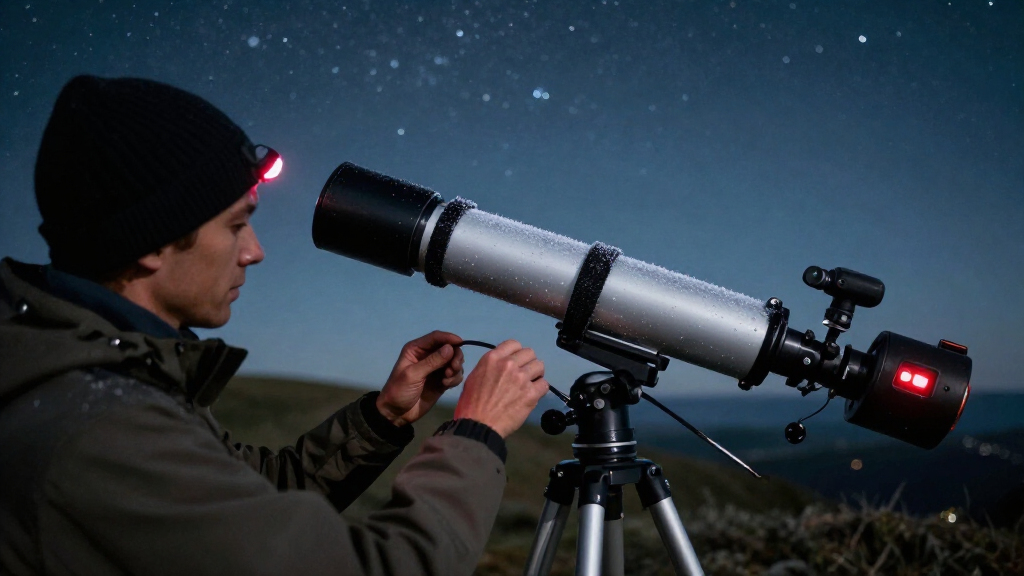
I compared these 12 telescope dew heaters around the decisions that affect actual setup: whether the heater can wrap the intended optical tube, what power source it needs, how heat is adjusted, and how specialized its design is. Strip length matters because a heater must fit the circumference of the surface it is intended to warm; a longer strip is not automatically a better choice if it is awkward to mount or exceeds the target area. I also weighed the practical difference between basic USB strips, USB models with selectable or adjustable heat, a 12V RCA-powered strip, and a telescope-specific aluminum ring.
The ranking favors useful fit flexibility and straightforward power matching for the broadest range of observers, then gives credit to control features and specialized compatibility when those benefits suit a particular buyer. I did not treat listed length alone as proof of heating performance, since the products span different designs and use cases. The result is a lineup of distinct picks: general-purpose options lead, while compact strips, longer wraps, controlled USB warmers, and the 11-inch heater ring are better choices for specific setups.
Factors to Consider When Choosing Telescope Dew Heaters
Choosing among these heaters starts with the telescope and observing routine, not with the longest strip or the most heat settings. I’d work through fit, power, control, placement, and operating conditions before settling on a model.
Measure the surface you plan to warm
Measure the circumference of the telescope section where the heater will sit, rather than relying only on the telescope’s advertised aperture. A correct fit lets the strip sit securely around the target area; a strip that is too short may leave a gap, while excess length can bunch up or make fastening difficult. Decide whether you are warming a lens, a corrector plate housing, or another part of the optical assembly, since those locations can have different dimensions. Keep the heater from obstructing focus controls, mounting hardware, or movement. If your setup changes between instruments, a flexible strip with enough usable length may suit you better than a purpose-specific ring. Check the maker’s stated compatibility before assuming a nominal length guarantees a fit.
Match the heater to your power system
USB and 12V RCA heaters are not interchangeable just because both warm an optical surface. USB can be convenient when your observing kit already includes a suitable power bank or USB supply, but the power source still needs to support the heater’s requirements through a full session. A 12V RCA model may fit more naturally into an astronomy power setup, though it calls for a compatible output and cable arrangement. Before buying, check connector type, cable reach, and whether the heater’s controls need to remain accessible once mounted. Avoid choosing on connector shape alone: confirm the required output and the power source’s capacity. A tidy, compatible setup can matter more at night than a feature you cannot conveniently use.
Choose heat control for your observing habits
Fixed or limited heat settings keep operation simple, while an adjustable regulator gives more room to tune warmth to changing conditions. More control can help reduce unnecessary power draw, but it also adds another setting to manage and does not automatically make a heater more effective. Think about whether you will monitor conditions and adjust output, or prefer a straightforward switch-and-observe routine. When running from a battery, the ability to use only the warmth needed can be useful over long sessions. Do not assume that the highest setting should be used by default; excess heat can consume power without helping your observing goals. Prioritize simple operation if you want fewer controls, and finer adjustment if efficient power use is a priority.
Decide between a flexible strip and a fitted ring
A flexible strip is the adaptable choice for observers who may use the same heater across different lenses or telescope sizes, provided its length and fastening arrangement work. A fitted ring is more specialized: it can offer a purpose-built match for the telescope families it names, but it is a poor choice for instruments outside that compatibility list. Check the exact telescope model and optical configuration before choosing a ring, rather than relying on aperture alone. Also think about storage and setup: a strip can wrap or move between equipment, while a rigid component is tied more closely to its intended instrument. Pay more for a specialized form only when the fit advantage applies to your own telescope. Otherwise, a correctly sized strip offers more flexibility.
Plan for the whole session, not only the first hour
Dew prevention is a power-management task as well as a fit problem. A heater that works at the start of an evening still needs a power source that can support the duration of the session, along with enough cable reach to avoid strain or accidental disconnection. Cold conditions can also make battery planning more demanding, so leave capacity for other accessories rather than assigning the entire supply to one heater. Think about where cables will run when the telescope slews, and secure them so they do not snag. If you observe with several instruments, decide whether one heater will move between them or whether separate sizes would reduce setup changes. A little planning can prevent choosing a model that fits the optics but complicates the rest of the rig.
Frequently Asked Questions
How do I choose between the 240 mm, 320 mm, 400 mm, 480 mm, and 560 mm heater strips?
Start by measuring the circumference of the surface where the strip will sit, then compare that measurement with the usable heater length and fastening method listed by the maker. The shortest options are more suited to compact targets, while the longer models can wrap larger surfaces or allow more placement flexibility. Do not select the 560 mm strip simply because it is the longest; extra material can make mounting awkward on a small tube. Also check whether the heater is intended for a lens or telescope tube, since fit and placement depend on the specific optic. If the same heater will serve multiple instruments, choose a length that fits the largest intended target without becoming cumbersome on the others.
Can I power a USB dew heater from the same battery as my mount or camera?
That depends on the battery’s available outputs, capacity, and the combined demand from every connected device. Check the heater’s power requirements and the battery specifications rather than assuming any USB port will supply enough power. Sharing a source can simplify the rig, but a heater drawing power through a long session may reduce what remains for a mount, camera, or other accessories. Leave a reserve or use a separate source if losing power to another device would interrupt observing. Confirm connector compatibility and cable routing before the session, especially if the telescope moves across a wide range of positions.
Is a heater with three settings better than one with an adjustable regulator?
Neither control style is automatically better; the right one depends on how much adjustment you want during an observing session. Three settings, such as those offered by the NEEWER HW-17B and Haida, give clear, easy-to-select steps. The KIWIFOTOS regulator is aimed at buyers who want more tailored adjustment, which can help when trying to balance warmth and battery use. A simpler control may be preferable if you do not want to monitor or fine-tune output. Compare how the controls are described and positioned, and do not assume that more settings mean stronger heating.
Should I choose the Celestron heater ring or a flexible strip for an 11-inch telescope?
The Celestron aluminum ring is the more specialized option for compatible 11-inch Schmidt-Cassegrain, EdgeHD, and RASA telescopes, so verify the exact model and configuration before buying. A flexible strip may suit you better if you use multiple instruments, want to move the heater between optics, or need a different mounting location. The ring’s stated telescope fit is its main distinction, not a reason to assume it will work with every 11-inch instrument. Compare installation requirements and power needs as well as compatibility. If your telescope is outside the named families, select a strip whose dimensions and mounting approach match the target surface instead.
Will a longer heater strip prevent dew better than a shorter one?
Length alone does not establish how well a heater prevents dew. The strip needs to fit the intended surface and pair with suitable power and heat control; an oversized strip can be harder to mount without adding a useful benefit. A short strip may be entirely appropriate for a compact lens, while a longer one can be necessary for a larger circumference or broader placement options. Match length to the measurement and the maker’s fit guidance, then consider power availability and how you will control heat. For a multi-instrument setup, choose for the largest target you expect to use, while checking that the strip remains manageable on smaller optics.
Conclusion
For the broadest mix of telescope and camera-lens setups, I’d choose the SVBONY SV192 480 mm as the best overall option. The SVBONY SV172 320 mm is my best-value-style pick for buyers whose measured fit suits a shorter strip, while the Celestron Aluminum Dew Heater Ring is the premium specialist choice for compatible 11-inch Schmidt-Cassegrain, EdgeHD, and RASA telescopes. Beginners who want a simple USB heater can start with a correctly sized SVBONY SV172 strip; those who want more control should look at the KIWIFOTOS adjustable regulator or the three-setting NEEWER HW-17B and Haida. For compact optics, compare the 240 mm SVBONY and 350 mm Move Shoot Move; for a longer wrap, consider the 560 mm SVBONY. Choose the R-Sky 12V RCA strip when it matches your power system. The best fit is the one that suits your measured optic, power source, and observing routine—not simply the longest strip.