Telescope astrophotography cameras range from simple USB eyepieces to cooled sensors and all-in-one smart telescopes. My best overall pick is the SVBONY SC571CC, whose cooled APS-C sensor gives dedicated deep-sky imaging a stronger foundation than the compact planetary cameras here. For a simpler, self-contained setup, the DWARFLAB Dwarf 3 stands out, while the SVBONY SC715C is a focused choice for planetary targets. The main tradeoffs are sensor size and cooling versus ease of setup, portability, and the need for a separate telescope and computer. Read on for the full breakdown and help matching a camera to your imaging goals.

Prime made for students and young adults
- Fast, free delivery for dorm and study essentials
- Prime Video and Amazon Music included
- Member-only deals
Key Takeaways
- The SC571CC is the clearest deep-sky specialist: its cooled APS-C sensor is in a different class of use from small planetary cameras, but it calls for a more involved telescope-and-computer setup.
- Smart telescopes trade flexibility for convenience: the Dwarf 3, Dwarf Mini, and Seestar S30 Pro bundle imaging hardware and app control, reducing setup work while giving buyers less freedom to swap camera components.
- Planetary cameras are not interchangeable with broad-field deep-sky picks: the SC715C, SV305C, and NexImage 20 suit high-frame-rate Solar System imaging better than large-sensor deep-sky work.
- USB eyepiece cameras favor easy viewing over advanced capture: the FIBONAX, SV205, and wireless-screen models offer accessible live-view formats, but their compact designs are not equivalent to cooled dedicated astro cameras.
- Product labels can obscure meaningful differences: advertised 4K resolution or autofocus on a bundled digital telescope does not by itself establish low-light performance; sensor design, control options, and intended target matter more.
| FIBONAX Nova200 1080p USB Telescope Camera, 1.25-Inch Electronic Eyepiece |  | Best for Simple Planetary Video | Sensor: 2MP CMOS | Video resolution: 1920 × 1080 | Maximum frame rate: 30 fps | VIEW LATEST PRICE | See Our Full Breakdown |
| FIBONAX 4K 8MP USB Telescope Camera, 1.25-Inch Electronic Eyepiece |  | Best for Higher-Resolution Planetary Capture | Sensor: 8MP | Video: Up to 4K; high-frame-rate 1080p | Telescope connection: Standard 1.25-inch barrel | VIEW LATEST PRICE | See Our Full Breakdown |
| DWARFLAB Dwarf Mini Smart Telescope |  | Best Compact All-in-One Setup | Sensor: Sony IMX662, 1/2.8-inch | Objective lens diameter: 30 mm | Focal length: 150 mm | VIEW LATEST PRICE | See Our Full Breakdown |
| SVBONY SV305C 2.1MP Color Astrophotography Camera |  | Best for Flexible Planetary Capture | Sensor: Sony IMX662 back-illuminated CMOS | Resolution: 2.1 MP | Pixel size: 2.9 µm | VIEW LATEST PRICE | See Our Full Breakdown |
| FASHIONARI 80mm Auto-Focus Digital Refractor Telescope with 4K Camera |  | Best for Beginners Who Want a Complete Kit | Telescope type: Refractor | Aperture: 80 mm | Focal length: 300 mm | VIEW LATEST PRICE | See Our Full Breakdown |
| WiFi Telescope Camera Eyepiece with 64GB Storage and 1.5-Inch Screen |  | Best for Shared Viewing | Video resolution: 1920 × 1080 (1080p) | Photo resolution: 2MP | Screen: 1.5-inch IPS | VIEW LATEST PRICE | See Our Full Breakdown |
| SVBONY SC715C IMX715 Color Planetary Telescope Camera | 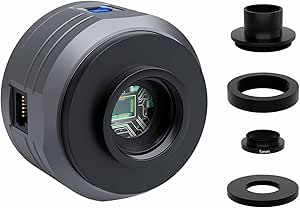 | Best for High-Frame-Rate Planetary Capture | Sensor: IMX715 color | Pixel size: 1.45 μm | Cache: 512 MB DDR3 | VIEW LATEST PRICE | See Our Full Breakdown |
| Celestron NexImage 20 Solar System Imager Camera |  | Best for High-Resolution Solar System Imaging | Sensor: 20 MP BSI CMOS | Resolution: 5240 × 3840 | Pixel size: 1.4 microns | VIEW LATEST PRICE | See Our Full Breakdown |
| Auto-Focus Digital Refractor Telescope with 4K Camera and Dual Screens |  | Best All-in-One for Casual Viewing and Recording | Telescope type: Digital refractor | Objective lens diameter: 80 mm | Focal length: 300 mm | VIEW LATEST PRICE | See Our Full Breakdown |
| SVBONY SC571CC Cooled Color Astronomy Camera with IMX571 APS-C Sensor |  | Best for Deep-Sky Imaging | Sensor: IMX571 APS-C BSI CMOS | Resolution: 26MP | Sensor area: 23.4 × 15.7 mm | VIEW LATEST PRICE | See Our Full Breakdown |
| DWARFLAB Dwarf 3 Smart Telescope |  | Best for Travel and Multi-Subject Imaging | Objective lens diameter: 35 mm | Mount: Altazimuth | Focus: Autofocus | VIEW LATEST PRICE | See Our Full Breakdown |
| ZWO Seestar S30 Pro Smart Telescope with App-Controlled Astrophotography |  | Best for Beginner Deep-Sky Imaging | Focal length: 160 mm | Field of view: 4.6 degrees | Mount: Alt-azimuth with equatorial mode support | VIEW LATEST PRICE | See Our Full Breakdown |
| Telonixium 4K Wireless Telescope Eyepiece Camera with 2.8-Inch Screen | 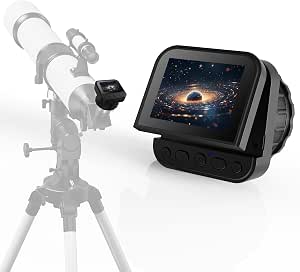 | Best for Standalone Viewing and Recording | Sensor: 8MP CMOS | Video resolution: 4K | Maximum image resolution: 64MP | VIEW LATEST PRICE | See Our Full Breakdown |
| SVBONY SV205 7.05MP Telescope Camera with 1.25-Inch Adapter |  | Best for Computer-Based Lunar and Planetary Capture | Sensor: 7.05MP IMX415 color CMOS | Sensor size: 1/2.8 inch | Pixel size: 1.45 × 1.45 µm | VIEW LATEST PRICE | See Our Full Breakdown |
| SVBONY SC311 Upgraded WiFi Telescope Camera with IMX662 Sensor |  | Best for Wireless, Low-Noise Imaging | Sensor: Sony IMX662 | Resolution: 2.1MP | Maximum exposure: Up to 30 seconds | VIEW LATEST PRICE | See Our Full Breakdown |
| telescope astrophotography camera | Sensor |
|---|---|
| FIBONAX Nova200 1080p USB Tele | 2MP CMOS |
| FIBONAX 4K 8MP USB Telescope C | 8MP |
| DWARFLAB Dwarf Mini Smart Tele | Sony IMX662, 1/2.8-inch |
| SVBONY SV305C 2.1MP Color Astr | Sony IMX662 back-illuminated CMOS |
| FASHIONARI 80mm Auto-Focus Dig | — |
| WiFi Telescope Camera Eyepiece | — |
| SVBONY SC715C IMX715 Color Pla | IMX715 color |
| Celestron NexImage 20 Solar Sy | 20 MP BSI CMOS |
| Auto-Focus Digital Refractor T | — |
| SVBONY SC571CC Cooled Color As | IMX571 APS-C BSI CMOS |
| DWARFLAB Dwarf 3 Smart Telesco | — |
| ZWO Seestar S30 Pro Smart Tele | — |
| Telonixium 4K Wireless Telesco | 8MP CMOS |
| SVBONY SV205 7.05MP Telescope | 7.05MP IMX415 color CMOS |
| SVBONY SC311 Upgraded WiFi Tel | Sony IMX662 |
More Details on Our Top Picks
FIBONAX Nova200 1080p USB Telescope Camera, 1.25-Inch Electronic Eyepiece
The Nova200 is the straightforward pick here for recording the Moon and bright planets through a telescope you already own. Its UVC plug-and-play USB connection works with compatible Windows, macOS, and Linux computers, so basic live viewing does not depend on a dedicated astronomy camera workflow. The included removable UV/IR cut filter is useful for keeping unwanted wavelengths from affecting color capture, and the 1.25-inch barrel fits many standard focusers. Compared with the FIBONAX 4K 8MP, the Nova200 gives up resolution and high-frame-rate options, but its simpler 1080p target may suit buyers who want uncomplicated video capture. It is not a deep-sky camera: the 2MP sensor and bright-object focus make it a better match for short planetary sessions than faint nebulae or galaxies.
Pros:- Records 1920 × 1080 video at up to 30 fps
- UVC connection supports compatible Windows, macOS, and Linux computers
- Removable UV/IR cut filter is included
- Lightweight aluminum body uses a standard 1.25-inch format
Cons:- Lower resolution than the FIBONAX 4K 8MP camera
- Designed mainly for the Moon, planets, and bright terrestrial subjects
- ASCOM support is optional and limited to compatible Windows software
Best for: Telescope owners who want an uncomplicated USB camera for lunar and bright-planet video on a compatible computer.
Not ideal for: Deep-sky imagers or buyers seeking detailed 4K planetary capture; its 2MP resolution and bright-object focus are limiting.
- Sensor:2MP CMOS
- Video resolution:1920 × 1080
- Maximum frame rate:30 fps
- Telescope mount:1.25 inches
- Field of view:2.3 degrees
- Connection and power:USB
- Filter:Removable UV/IR cut filter
- Weight and body:110 g; CNC aluminum
Our verdict“Choose the Nova200 for accessible 1080p lunar and planetary video, but pick the FIBONAX 4K 8MP if added capture resolution is your priority.”
FIBONAX 4K 8MP USB Telescope Camera, 1.25-Inch Electronic Eyepiece
Among the two FIBONAX eyepiece cameras here, this 8MP model is the stronger choice when capturing fine lunar and planetary detail matters more than keeping the setup basic. It supports up to 4K video and high-frame-rate 1080p, giving you options to favor image detail or faster capture. The standard 1.25-inch barrel and UVC support make it a practical fit for many existing telescope-and-computer setups, while the removable IR cut filter adds flexibility. Compared with the Nova200, it offers substantially more stated resolution, but both require manual focusing and are aimed mainly at bright targets. It also needs enough focuser travel to reach focus, so I would check telescope compatibility before buying. For long-exposure nebula and galaxy work, a purpose-built deep-sky camera is a better match.
Pros:- 8MP sensor supports video capture up to 4K
- High-frame-rate 1080p mode offers a faster-capture option
- UVC viewing works with compatible computers
- Removable IR cut filter and compact aluminum housing are included
Cons:- Manual focusing takes adjustment through the telescope
- Some telescope focusers may not have enough travel to reach focus
- Primarily intended for lunar and planetary imaging, not long-exposure deep-sky work
Best for: Planetary and lunar imagers with a compatible 1.25-inch telescope focuser who want 4K capture and can focus manually.
Not ideal for: Deep-sky photographers or telescope owners with limited focuser travel who need an easy, confirmed path to focus.
- Sensor:8MP
- Video:Up to 4K; high-frame-rate 1080p
- Telescope connection:Standard 1.25-inch barrel
- Filter thread:M28.5 × 0.6
- Focus:Manual
- Software support:UVC; optional ASCOM support for compatible Windows applications
- Filter:Removable UV/IR cut filter
- Power:Corded USB
Our verdict“Pick this over the Nova200 when you want higher-resolution bright-object video and have confirmed your telescope can reach focus.”
DWARFLAB Dwarf Mini Smart Telescope
The Dwarf Mini takes a different route from the FIBONAX and SVBONY cameras: it is a complete, app-controlled telescope rather than a camera for an existing optical tube. At about 1.85 lb, it is the travel-friendly choice for someone who wants automated targeting and tracking without assembling a separate camera, telescope, and mount. Its smartphone app provides a sky map, while equatorial mode and single-frame exposures up to 90 seconds give it more deep-sky reach than the bright-target-focused FIBONAX Nova200. The tradeoff is a small 30 mm objective, and the phone is part of the control setup rather than an optional extra. Battery runtime is not specified, so extended sessions may be harder to plan. Choose it for portability and guided operation, not maximum aperture or an upgrade path for a telescope you already own.
Pros:- Compact 840 g design is suited to travel
- Smartphone app includes sky maps and automated targeting
- Offers altazimuth and equatorial modes
- Supports exposures up to 90 seconds and includes a light-pollution filter
Cons:- Requires a smartphone for app-based control
- 30 mm objective limits light gathering compared with larger telescope systems
- Battery runtime is not specified
Best for: Traveling beginners who want a lightweight, app-controlled telescope for automated targeting and casual astrophotography.
Not ideal for: Owners seeking a camera to attach to an existing telescope, or imagers who prioritize larger aperture and clearly stated battery runtime.
- Sensor:Sony IMX662, 1/2.8-inch
- Objective lens diameter:30 mm
- Focal length:150 mm
- Field of view:2.45 degrees
- Mount modes:Altazimuth and equatorial
- Maximum single-frame exposure:90 seconds
- Weight:840 g (1.85 lb)
- Control and power:Smartphone app; battery powered
Our verdict“Choose the Dwarf Mini for a portable, guided all-in-one experience rather than a camera upgrade for a telescope you already own.”
SVBONY SV305C 2.1MP Color Astrophotography Camera
The SVBONY SV305C is the more adjustable planetary camera in this group, with capture controls aimed at shaping how you record rather than simply plugging in for video. Its ROI and 2×2 binning functions let you trade image area for capture speed or sensitivity, while a 128 MB buffer helps reduce frame loss if USB transfer is interrupted. The back-illuminated IMX662 sensor and low-noise design also suit lunar, planetary, and electronic assisted astronomy sessions. Compared with the FIBONAX Nova200, it offers more capture adjustments and a built-in buffer, but it has the same general bright-target emphasis and only 2.1MP resolution. Its UV/IR cut filter is built in rather than removable, which limits filter flexibility. This makes the most sense for buyers willing to configure a dedicated astronomy camera workflow.
Pros:- Back-illuminated Sony IMX662 sensor is designed for astronomy imaging
- ROI and 2×2 binning provide capture and sensitivity adjustments
- 128 MB image buffer helps limit frame loss during USB interruptions
- Supports planetary high-speed and long-exposure modes
Cons:- Built-in UV/IR cut filter is not removable
- 2.1MP resolution is modest beside the FIBONAX 4K 8MP camera
- Designed as an astronomy camera rather than a general-purpose camera
Best for: Planetary, lunar, and EAA users who want ROI, binning, and buffer features for adjusting capture to their setup.
Not ideal for: Photographers who need a removable UV/IR filter, a general-purpose camera, or a high-resolution deep-sky imaging sensor.
- Sensor:Sony IMX662 back-illuminated CMOS
- Resolution:2.1 MP
- Pixel size:2.9 µm
- Full well capacity:38 ke−
- Image buffer:128 MB DDRIII
- Interface and telescope connection:USB 2.0; 1.25-inch astronomical interface
- Capture functions:ROI, 2×2 binning, planetary high-speed mode, long-exposure mode
- Filter:Built-in UV/IR cut filter
Our verdict“Choose the SV305C over a simple USB eyepiece camera if configurable planetary capture and a frame buffer matter more than removable filtering or high pixel count.”
FASHIONARI 80mm Auto-Focus Digital Refractor Telescope with 4K Camera
The FASHIONARI 80mm digital refractor is the all-in-one option for a beginner who does not already own a telescope or camera. Its 80 mm aperture, 300 mm focal length, autofocus, app control, and integrated 4K camera combine viewing and recording in one kit. That is a simpler starting point than pairing a separate camera such as the SVBONY SV305C with a telescope, though the SV305C gives existing telescope owners more dedicated capture controls. This product’s appeal depends on the convenience of its integrated design, not on the headline magnification figure: a stated 350× does not by itself establish usable image detail. The supplied data also flags unusually small dimension measurements, so I would verify the physical specifications before buying. It is less suitable for experienced imagers wanting camera interchangeability or a specialized deep-sky setup.
Pros:- 80 mm aperture and 300 mm focal length are specified
- Integrated 4K camera supports photo and video capture
- Autofocus reduces manual focusing work
- App and remote control support use with phones, tablets, and computers
Cons:- Unusually small listed dimensions may be inaccurate and merit verification
- The 350× maximum magnification claim does not establish usable image detail
- Integrated design offers less camera flexibility than the SVBONY SV305C and a separate telescope
Best for: Newcomers who want a refractor, camera, autofocus, and app or remote control together rather than selecting separate components.
Not ideal for: Experienced astrophotographers seeking a replaceable camera, advanced capture controls, or verified dimensions and imaging performance.
- Telescope type:Refractor
- Aperture:80 mm
- Focal length:300 mm
- Focal ratio:f/8.89
- Focus:Autofocus
- Camera:4K astrophotography camera
- Mount:Tripod mount
- Controls and compatible devices:App and remote control; computer, tablet, and smartphone
Our verdict“Choose this as a convenient starter kit if you want an integrated telescope and camera, but verify its dimensions and do not buy on the magnification claim alone.”
WiFi Telescope Camera Eyepiece with 64GB Storage and 1.5-Inch Screen
I’d choose this eyepiece when showing a telescope view to more than one person matters as much as saving images. Its built-in 1.5-inch screen provides a direct preview, while WiFi lets two connected devices view remotely within 49 feet. That makes it more self-contained than the SVBONY SC715C, which needs a computer and capture software. The tradeoff is imaging ambition: this model records 1080p video and takes 2MP photos, far below the SC715C’s planetary-camera approach and the SC571CC’s cooled deep-sky capability. Its 28–50 mm opening requirement also limits what it can attach to. I’d treat it as a convenient observing and recording accessory, not a dedicated camera for detailed astrophotography.
Pros:- Built-in screen allows direct viewing without a computer.
- WiFi supports remote viewing on up to two devices within 49 feet.
- Includes a 64GB TF card and supports expansion up to 256GB.
- Rechargeable battery is rated for up to three hours of recording.
Cons:- 2MP still images and 1080p video offer less detail than dedicated planetary cameras.
- Up to three hours of battery runtime may not cover extended sessions.
- Requires an optical device with a compatible 28–50 mm opening.
Best for: Observers who want a simple screen-based view and occasional recordings shared to nearby phones or tablets.
Not ideal for: Astrophotographers pursuing fine planetary detail or deep-sky exposures, and anyone whose optical device lacks a compatible 28–50 mm opening.
- Video resolution:1920 × 1080 (1080p)
- Photo resolution:2MP
- Screen:1.5-inch IPS
- Compatibility:Optical devices with 28–50 mm openings
- Connectivity:WiFi; up to two connected devices within 49 feet
- Storage:64GB TF card included; supports up to 256GB
- Battery:1000mAh rechargeable lithium-ion; up to three hours of recording
- Focus and mount:Manual focus; altazimuth mount
Our verdict“Choose this for convenient shared viewing and basic recording, not for high-detail astrophotography.”
SVBONY SC715C IMX715 Color Planetary Telescope Camera
The SC715C is aimed at planetary imagers who want a dedicated color camera rather than a screen-equipped eyepiece. Its IMX715 sensor, 1.45 μm pixels and USB 3.0 transfer rate of up to 45.5 fps at full resolution suit recording fast-moving targets such as Jupiter, where capturing many frames gives more material for selecting and processing sharp images. The Celestron NexImage 20 offers a higher stated still-image resolution and a 90 fps maximum, but the SC715C’s compact 5.2-ounce body and ST4 autoguider interface add practical appeal to a telescope-based setup. The tradeoff is a computer-dependent workflow: it is not for smartphone capture, and it needs a telescope focuser plus compatible software. I’d pick it over a simple WiFi eyepiece for planetary video, but not for plug-and-play viewing.
Pros:- IMX715 color sensor and 1.45 μm pixels are suited to capturing planetary detail.
- USB 3.0 supports up to 45.5 fps at full resolution.
- Lightweight aluminum-alloy body weighs 5.2 ounces.
- ST4 autoguider interface adds compatibility with guiding setups.
Cons:- Cannot connect directly to smartphones.
- Requires a telescope focuser and dedicated capture software.
- The listed specifications do not give a sensor resolution or exposure range.
Best for: Telescope owners with a computer and focuser who want a compact color camera for planetary video and stacking workflows.
Not ideal for: Smartphone-only observers, or beginners who want a self-contained screen and minimal software setup.
- Sensor:IMX715 color
- Pixel size:1.45 μm
- Cache:512 MB DDR3
- Interface:USB 3.0
- Maximum frame rate:Up to 45.5 fps at full resolution
- Autoguider interface:ST4
- Software compatibility:Mac computers; SharpCap, AstroDMX Capture and NINA
- Dimensions and weight:1.44 × 2.46 × 2.46 inches; 5.2 ounces (147 g)
Our verdict“Pick the SC715C for computer-based planetary video capture if you already have a compatible telescope and focuser.”
Celestron NexImage 20 Solar System Imager Camera
I’d rank the NexImage 20 for observers who want a high-resolution camera for the Moon and planets and are comfortable processing captures on a Windows PC. Its 20MP sensor and Region of Interest cropping let users focus capture on a smaller part of the sensor, which can reduce file sizes and support faster acquisition. The listed maximum of 90 frames per second gives it a different capture profile from the SVBONY SC715C, whose stated full-resolution rate is 45.5 fps. The NexImage also supports autoguiding, adding a second use beyond Solar System imaging. It is less appealing if you need broad operating-system flexibility: the provided compatibility is Windows PC, and solar viewing requires a separate filter. Unlike the cooled SC571CC, it is not positioned for deep-sky long exposures.
Pros:- 20MP BSI CMOS sensor records high-resolution Solar System images.
- Region of Interest cropping can reduce capture area and file size.
- Maximum frame rate is listed at 90 fps.
- Can also be used for autoguiding.
Cons:- Solar imaging requires a separate solar filter.
- Listed computer compatibility is limited to Windows PC.
- Manual exposure control and capture software call for a hands-on workflow.
Best for: Windows PC users with a compatible telescope who want detailed lunar and planetary captures, with autoguiding as an extra use.
Not ideal for: Mac-based imagers, buyers seeking a cooled deep-sky camera, or solar observers who do not have a suitable solar filter.
- Sensor:20 MP BSI CMOS
- Resolution:5240 × 3840
- Pixel size:1.4 microns
- Sensor dimensions:7.3 × 5.4 mm
- Connectivity:USB-C; USB-A to USB-C cable included
- Maximum frame rate:90 frames per second
- Mount compatibility:1.25-inch telescope eyepiece holder or C-thread adapter
- Software and computer compatibility:iCap; Windows PC
- Maximum shutter speed:30 seconds
Our verdict“Choose the NexImage 20 for high-resolution lunar and planetary capture on a Windows PC, provided its software and filter requirements fit your setup.”
Auto-Focus Digital Refractor Telescope with 4K Camera and Dual Screens
This is a different kind of pick from the SC715C or NexImage 20: instead of a camera that attaches to an existing telescope, it combines an 80 mm refractor, autofocus and a 4K camera in one unit. Dual screens and an included adjustable tripod make it approachable for casual viewing and recording without a phone adapter, while the 4500mAh battery is rated for up to six hours. That convenience comes with less evidence of specialist imaging control than the dedicated USB cameras offer; the listing does not specify sensor size, frame rate or exposure controls. Its stated 350× maximum magnification also should not be mistaken for a measure of image detail. I’d favor it for straightforward daytime or night-sky use, but the missing imaging details and unusual dimension information make it a less grounded choice for serious astrophotography.
Pros:- Integrated 80 mm refractor and camera avoid the need for a separate phone adapter.
- Autofocus and dual screens simplify viewing and capture.
- Battery is rated for up to six hours of use.
- Supports TF cards up to 512GB.
Cons:- Sensor size, frame rate and exposure controls are not specified.
- The listed 350× maximum magnification does not establish astrophotographic detail or performance.
- Unusually small or inconsistent listed dimensions make the physical setup harder to evaluate.
Best for: Casual observers who want a standalone refractor with built-in 4K capture, dual screens and autofocus rather than a computer-based camera setup.
Not ideal for: Astrophotographers who need specified sensor, frame-rate and exposure performance, or telescope owners seeking a dedicated camera upgrade.
- Telescope type:Digital refractor
- Objective lens diameter:80 mm
- Focal length:300 mm
- Maximum magnification:350×
- Focus:Autofocus
- Camera resolution:4K
- Display:Dual screens
- Storage support:TF card up to 512GB
- Battery:4500mAh; up to six hours of use
Our verdict“Choose this for an all-in-one viewing and recording setup, but favor a dedicated astronomy camera when image-control specifications matter.”
SVBONY SC571CC Cooled Color Astronomy Camera with IMX571 APS-C Sensor
For deep-sky work, the SC571CC stands apart from the planetary cameras in this group. Its 26MP APS-C sensor, 16-bit capture and stated dynamic range of up to 14 stops target faint nebulae and galaxies, while dual-stage TEC cooling rated up to 35°C below ambient helps control sensor heat during long exposures. The software-controlled front-window heater also addresses dew, a practical concern during extended sessions. Compared with the NexImage 20, which is built around Solar System capture and high frame rates, this camera prioritizes low-noise deep-sky data rather than rapid planetary video. That specialization is its main tradeoff: it requires a telescope imaging workflow and is not a general-purpose camera. Its weight and cooling hardware also call for a setup that can support and power a dedicated astronomy camera.
Pros:- 26MP APS-C sensor provides a broad capture area for deep-sky framing.
- 16-bit ADC and up to 14 stops of dynamic range support detailed tonal capture.
- Dual-stage TEC cooling is rated for up to 35°C below ambient.
- Software-controlled front-window heater helps manage dew and condensation.
Cons:- Specialized for telescope astrophotography rather than general-purpose imaging.
- Cooling hardware and a 1.31-pound body require a suitable telescope setup.
- The provided specifications do not state power requirements or included capture software.
Best for: Experienced telescope imagers building a deep-sky setup who want a cooled color APS-C camera for long-exposure targets.
Not ideal for: Beginners seeking a self-contained camera, planetary imagers focused on high-speed video, or buyers who need a general-purpose imaging device.
- Sensor:IMX571 APS-C BSI CMOS
- Resolution:26MP
- Sensor area:23.4 × 15.7 mm
- Pixel size:3.76 µm
- Cooling:Dual-stage TEC; up to 35°C below ambient
- ADC and dynamic range:16-bit; up to 14 stops
- Connection and buffer:USB 3.0 Type-C; 512 MB DDR3
- Front-window heater:Software-controlled
- Dimensions and weight:3.74 × 3.15 × 3.15 inches; 1.31 pounds
Our verdict“Choose the SC571CC for a dedicated cooled deep-sky imaging rig, not for casual observing or planetary video.”
DWARFLAB Dwarf 3 Smart Telescope
The DWARFLAB Dwarf 3 makes the most sense for buyers who want an all-in-one imaging instrument they can take beyond astronomy. Its 35 mm objective, dual imaging system, autofocus, and app-based Auto GOTO favor convenience and portability over the flexibility of a dedicated telescope camera. Compared with the SVBONY SV205, which connects to a telescope and computer for hands-on lunar or planetary capture, the Dwarf 3 is a self-contained smart system aimed at easier tracking and broader subjects, including wildlife and landscapes. Its 4K tracking and cloud-powered processing can reduce setup work, but dependence on a phone or computer—and potentially app or internet access—adds friction. The compact package and included bag suit travel; buyers seeking fine control over a separate optical tube should choose a dedicated camera instead.
Pros:- Portable 2.28 kg design with a carrying bag for field use
- Dual imaging system supports astronomy, wildlife, and landscape subjects
- Autofocus, Auto GOTO, and 4K tracking simplify capture
- Includes magnetic filters and other useful accessories
Cons:- Requires a compatible smartphone, laptop, or computer for control
- Cloud-powered processing may depend on app and internet availability
- A 35 mm objective prioritizes portability over the reach of larger telescope-camera setups
Best for: Travelers who want one app-controlled system for casual deep-sky, landscape, and wildlife imaging without assembling a separate telescope camera setup.
Not ideal for: Planetary imagers and buyers who want a camera to attach to an existing telescope with direct computer-based capture and more hands-on control.
- Objective lens diameter:35 mm
- Mount:Altazimuth
- Focus:Autofocus
- Tracking and targeting:4K tracking; Auto GOTO
- Imaging modes:AZ and EQ modes
- Weight:2.28 kg
- Compatible devices:Smartphone, laptop, and personal computer
- Included accessories:Carrying bag, magnetic filters, filter pouch, wipe cloth, and USB-C cable
Our verdict“Choose the Dwarf 3 if portability and multi-subject smart imaging matter more than pairing a dedicated camera with your existing telescope.”
ZWO Seestar S30 Pro Smart Telescope with App-Controlled Astrophotography
For a beginner who wants automated deep-sky sessions rather than a camera to configure, the Seestar S30 Pro is the more focused smart-telescope pick here. Its automatic GoTo and tracking, autofocus, plan mode, and AI processing reduce the steps between choosing a target and collecting images. Automatic mosaic stitching and one-tap Milky Way imaging add approachable routes into wider-field capture. Compared with the DWARFLAB Dwarf 3, the Seestar is more explicitly built around deep-sky observing, while the Dwarf 3 highlights broader use for wildlife and landscapes. The Seestar also offers EQ mode, but its alt-azimuth setup and need to remain stationary during imaging limit where it works well. It is not designed for planetary viewing, so buyers whose main goal is detailed Moon or planet capture should look at a dedicated camera such as the SVBONY SV205.
Pros:- Automatic GoTo targeting and tracking reduce beginner setup demands
- AI processing and light-pollution filters assist with image capture
- Automatic mosaic stitching supports wider target compositions
- Portable 3.64 lb design with autofocus and EQ-mode support
Cons:- Designed for deep-sky imaging rather than planetary observation
- Must remain stationary during deep-sky imaging for stable tracking
- App-controlled operation requires a compatible smartphone or tablet
Best for: First-time deep-sky imagers who want app-based target finding, automatic tracking, and image processing in a portable integrated system.
Not ideal for: Planetary observers, people who need to move the instrument during a session, or buyers seeking a camera for an existing telescope.
- Focal length:160 mm
- Field of view:4.6 degrees
- Mount:Alt-azimuth with equatorial mode support
- Focus:Autofocus and manual focus
- Tracking and targeting:Automatic tracking and GoTo targeting
- Imaging features:AI processing, one-tap Milky Way imaging, and automatic mosaic stitching
- Weight:3.64 lb
- Compatible devices:Smartphones and tablets
Our verdict“Pick the Seestar S30 Pro for guided, app-controlled deep-sky imaging, but skip it if planetary detail is your priority.”
Telonixium 4K Wireless Telescope Eyepiece Camera with 2.8-Inch Screen
The Telonixium SV-EP03 suits telescope owners who want to record through a compatible eyepiece and check framing on a screen, rather than operate a dedicated astronomy camera from a computer. Its 2.8-inch rotatable display provides local viewing, while Wi-Fi adds remote control and the app supports timed shots and time-lapse. The stated 4K video and up-to-64MP image capture offer flexible recording options, but those headline resolutions do not by themselves establish astrophotography performance. Compared with the SVBONY SV205, the Telonixium is more self-contained and wireless; the SV205 instead offers a computer-connected USB 3.0 workflow with stated frame rates for lunar and planetary capture. Manual focus means adjustments remain the user’s job, and remote viewing is limited to 32 feet. Its 23–60 mm eyepiece compatibility also makes telescope fit a key check before buying.
Pros:- Rotatable 2.8-inch screen allows local framing and viewing
- Supports 4K video and image capture up to 64MP
- Works with eyepieces from 23 to 60 mm
- App supports time-lapse and timed shooting
Cons:- Manual focus requires the user to adjust focus
- Wi-Fi remote-viewing range is limited to 32 ft
- Eyepiece compatibility must be checked against the telescope before purchase
Best for: Telescope owners with a compatible 23–60 mm eyepiece who want an onboard screen, wireless viewing, and simple recording without a computer-first setup.
Not ideal for: Buyers who need automated focus, long-range wireless monitoring, or a camera specified for a particular planetary imaging workflow.
- Sensor:8MP CMOS
- Video resolution:4K
- Maximum image resolution:64MP
- Display:2.8-inch rotatable IPS screen
- Eyepiece compatibility:23–60 mm
- Focus:Manual
- Wireless range:Up to 32 ft
- Storage support:microSD cards up to 512GB
Our verdict“Choose the Telonixium for an eyepiece-mounted camera with its own screen, provided your telescope fits and manual focus suits your workflow.”
SVBONY SV205 7.05MP Telescope Camera with 1.25-Inch Adapter
The SVBONY SV205 is the clearest fit for buyers who want a camera that plugs into a telescope and streams to a computer for lunar, planetary, or terrestrial recording. Its USB 3.0 connection and stated frame rates make capture choices easy to understand: up to 30 FPS at 1080p in MJPG, or higher-resolution 3264 × 2160 YUV at 15 FPS. That tradeoff matters when choosing between smoother video for motion and more pixels per frame. Unlike the self-contained Seestar S30 Pro, the SV205 is not an automated smart telescope; it depends on a compatible 1.25-inch setup and a computer running supported capture software. It also lacks the SV311’s wireless, battery-powered workflow. The IMX415 color sensor is a practical entry point for solar-system imaging, though its small sensor and computer requirement make it less convenient for casual, untethered sessions.
Pros:- 7.05MP IMX415 color sensor for lunar and planetary capture
- USB 3.0 supports live viewing and computer recording
- Offers a choice between 1080p at up to 30 FPS and higher-resolution capture at 15 FPS
- Works with Windows, Linux, and macOS using Astroamx Capture
Cons:- Requires a 1.25-inch telescope interface or compatible adapter
- Not compatible with iOS devices
- 3264 × 2160 YUV capture is limited to 15 FPS
Best for: Computer-owning telescope users who want direct USB capture for the Moon, planets, or terrestrial subjects through a 1.25-inch interface.
Not ideal for: People seeking wireless phone control, an integrated smart telescope, or high-frame-rate capture at the camera’s maximum listed resolution.
- Sensor:7.05MP IMX415 color CMOS
- Sensor size:1/2.8 inch
- Pixel size:1.45 × 1.45 µm
- Interface:1.25-inch telescope eyepiece adapter
- Connectivity:USB 3.0
- Video modes:1920 × 1080 at up to 30 FPS (MJPG); 3264 × 2160 at 15 FPS (YUV)
- Supported operating systems:Windows, Linux, and macOS with Astroamx Capture
- Weight:9.6 ounces
Our verdict“Choose the SV205 if you want a straightforward computer-connected camera for lunar and planetary capture and can work within its 1.25-inch and software requirements.”
SVBONY SC311 Upgraded WiFi Telescope Camera with IMX662 Sensor
The SVBONY SC311 stands apart from the SV205 by trading USB-to-computer capture for 2.4 GHz Wi-Fi control from a phone or tablet. Its Sony IMX662 sensor is described as low-noise, with enhanced red and near-infrared sensitivity, and the camera supports exposures up to 30 seconds plus RAW/FITS saving. That combination makes it the more appealing of those two for wireless observing and experimentation beyond quick lunar clips, although the listed 2.1MP resolution is modest compared with the SV205’s 7.05MP. It also connects to a standard 1.25-inch telescope interface and includes a 32GB card. The fixed-focus design limits user adjustment, and the app’s photo mode does not preview an image before capture. Buyers should also note that this upgraded model uses a different app from the older SC311.
Pros:- Sony IMX662 sensor is designed for low-noise imaging and red/NIR sensitivity
- Wireless app control supports photo and video capture
- Supports exposures up to 30 seconds and RAW/FITS formats
- Includes a 32GB TF card and supports expansion up to 256GB
Cons:- 2.1MP resolution is lower than the SVBONY SV205’s 7.05MP
- Photo mode does not provide an image preview before capture
- Fixed focus limits adjustment, and the upgraded model requires a different app from the older SC311
Best for: Telescope owners who want wireless phone-or-tablet control, longer exposures, and RAW/FITS capture through a 1.25-inch interface.
Not ideal for: Users who need high-resolution stills, adjustable focus, immediate photo previews, or a workflow compatible with the older SC311 app.
- Sensor:Sony IMX662
- Resolution:2.1MP
- Maximum exposure:Up to 30 seconds
- Wireless connectivity:2.4 GHz Wi-Fi
- Battery capacity:2500 mAh
- Battery life:Approximately 4 hours
- Telescope interface:1.25 inch
- Supported formats:RAW/FITS
- Storage:32GB TF card included; expandable up to 256GB
Our verdict“Pick the SC311 for wireless, low-noise capture and RAW/FITS support, but choose the SV205 if higher listed resolution or computer-connected video matters more.”
How We Picked
I ranked these telescope astrophotography cameras by how well each product serves a clear imaging job: deep-sky capture, planetary imaging, basic live viewing, or convenient all-in-one operation. I weighed sensor format and stated imaging features against usability, connection method, build purpose, and how much extra equipment or setup a buyer needs. A camera with a specialist sensor can rank highly for its intended target without being the easiest choice for a first night out.
The ordering favors imaging capability and purpose-fit over headline resolution alone. Dedicated cooled and planetary cameras are judged by different needs, while smart telescopes are assessed as self-contained systems rather than as interchangeable camera modules. Eyepiece-style and wireless-screen models have a place for simple viewing, but rank below dedicated imaging options for buyers seeking control and room to develop. I also account for tradeoffs: an advanced sensor can mean more setup, and an easy-to-use package can restrict upgrades or target flexibility.
Factors to Consider When Choosing Telescope Astrophotography Cameras
Before choosing among these options, decide what you want to photograph and how much of the imaging chain you want to manage. Target, sensor, and workflow matter more than a single resolution claim; a camera suited to bright planets may frustrate a buyer focused on faint nebulae.
Match the camera to your targets
Bright planets and the Moon reward fast capture and short exposures, while faint galaxies and nebulae need long, carefully combined exposures and a sensor suited to collecting weak light. A planetary camera can produce useful detail on Jupiter yet remain a poor fit for wide, faint deep-sky targets. Before buying, list the objects you expect to image most often rather than choosing by a general label such as “astronomy camera.” Beginners who want both target types may need to accept compromises or plan for separate equipment later. A smart telescope can simplify broad entry-level observing, but it is not the same as a camera designed to attach to an existing telescope. Target first, camera second is the simplest way to avoid a mismatched purchase.
Read sensor specifications as a system, not a score
Megapixels and 4K labels describe output dimensions, not how well a camera records faint detail. Sensor size affects field of view with a given telescope, while pixel size and sensitivity shape how image scale and exposure behave. Cooling can reduce thermal noise during long exposures, but it adds complexity and matters less for short planetary video. Check whether the product gives meaningful sensor details and capture controls instead of relying on resolution claims alone. A larger sensor may frame more sky, yet it can also demand more from the telescope’s optics and mount. Sensor fit and capture method are more useful buying signals than a headline pixel count.
Choose between a camera module and an all-in-one telescope
A standalone camera gives you more freedom to pair it with a telescope, filter set, mount, and capture software you choose. That flexibility can support future upgrades, but it also means you must check compatibility and handle more setup. Smart telescopes combine optics, camera, tracking, and app-based controls, which can make the first session less involved. Their convenience comes with limits: you generally cannot replace individual components as freely as with a modular rig. Eyepiece cameras with built-in screens sit between those approaches, offering direct viewing but often fewer advanced imaging controls. Pick modularity for expansion and an integrated system for a shorter path to imaging.
Check connections, software, and storage before buying
Confirm that the camera works with your operating system, capture app, and telescope connection before treating a USB or Wi-Fi label as sufficient. Some cameras rely on a computer for capture and processing; others record to internal storage or use a phone app. Each workflow changes where you manage files and how much control you have during a session. Wireless operation can reduce cable clutter, though it may add dependence on battery life, network stability, or an app. Built-in screens are handy for quick viewing, but they do not automatically replace the larger display and tools used for careful processing. Check the complete workflow, including file transfer and software support, not just the connection type.
Budget for the supporting equipment and learning curve
The camera is only one part of an astrophotography setup: telescope tracking, a stable mount, adapters, power, and image-processing software can all affect results. A cooled deep-sky camera may be a poor first purchase if the mount cannot track accurately for longer exposures. Conversely, a basic eyepiece camera can be a sensible way to learn live capture without building a complex rig, provided expectations stay modest. Smart telescopes bundle more of the system, which can reduce compatibility work but limits component-level upgrades. Leave room in your plan for the parts your selected workflow requires. Total setup complexity can matter as much as the camera’s own capabilities.
Treat autofocus and resolution claims with care
Autofocus can make a bundled refractor more approachable, but focus performance does not tell you how well its sensor handles dim objects or how stable its tracking is. Likewise, 4K output can look sharp in a specification while still lacking the sensor characteristics and exposure control needed for demanding night-sky work. Ask what the camera records, how it exposes, and whether the system supports the capture process your targets require. For simple live viewing, a screen or wireless preview may be more useful than advanced controls. For serious image capture, control over focus, exposure, and files usually matters more. Judge features by the job they solve, not by how prominent they are in a product name.
Frequently Asked Questions
Can I use one camera for both planets and deep-sky objects?
One camera can cover multiple targets, but the best setup for planets differs from the one for faint deep-sky objects. Planetary imaging usually favors fast video capture and a narrow field, while deep-sky work benefits from longer exposures, tracking, and often a larger or cooled sensor. The SC715C and similar planetary options are more purpose-built for Solar System imaging; the SC571CC is the stronger match for dedicated deep-sky work. If you want broad flexibility, check the camera’s capture controls and telescope compatibility rather than assuming a high pixel count covers both jobs equally. A versatile camera still involves compromises.
Do I need a cooled camera for astrophotography?
No: cooling is most useful for long-exposure deep-sky imaging, where reducing sensor heat can help control noise. It is less central for short planetary videos or casual live viewing, where exposure times are much shorter. A cooled model such as the SC571CC also brings a more involved setup and does not compensate for a mount that tracks poorly. If your main interests are the Moon and planets, a non-cooled planetary camera may be a more appropriate match. Choose cooling for the exposure style, not as a general mark of quality.
Should I buy a smart telescope or a separate camera for my existing telescope?
A smart telescope is appealing if you want one integrated system with app-based operation and fewer component-matching decisions. A separate camera makes more sense if you already own a suitable telescope and want freedom to select or upgrade the camera, mount, and software independently. The Dwarf models and Seestar S30 Pro favor convenience, while dedicated SVBONY cameras are intended for a more modular workflow. Compare what the bundled system lets you control with the flexibility you would lose by not using your current equipment. Convenience and upgrade freedom are the key tradeoff.
Is a 4K telescope camera a better choice than a lower-resolution astronomy camera?
Not necessarily. A 4K label describes image dimensions, but it does not establish sensitivity, noise behavior, exposure control, tracking, or suitability for faint targets. A lower-resolution camera with a sensor and capture method tailored to planetary or deep-sky work can be a better fit than a general-purpose 4K eyepiece camera. Check whether you can record the formats and exposures your intended targets need, and whether the camera works with your telescope and software. Resolution alone is not a reliable performance comparison.
What should I check before connecting a camera to my telescope?
Verify the barrel or adapter size, focus travel, back-focus needs, and whether the camera’s weight is suitable for your focuser. Then confirm operating-system and software support, along with how the camera receives power and saves files. A physically compatible camera can still be difficult to use if the software or capture workflow does not fit your setup. For wireless and screen-based eyepieces, check app requirements and storage transfer as well. Mechanical fit and software support both need to work before a camera is a practical match.
Conclusion
For a dedicated deep-sky rig, I’d choose the SVBONY SC571CC as the best overall and best premium option in this lineup, especially for buyers prepared to manage a cooled camera workflow. The SVBONY SV305C is my best value direction for a more accessible dedicated planetary-camera path, while the DWARFLAB Dwarf 3 is the best beginner choice for someone who prefers an integrated, app-led telescope over assembling separate components. For Solar System imaging, the SC715C is the focused pick; for simple live viewing, an eyepiece camera with a screen may better suit casual use. Choose the Dwarf Mini or Seestar S30 Pro if bundled convenience matters more than component upgrades, and skip the 4K label as a deciding factor unless the camera’s sensor and capture workflow also match your targets.
Halloween Picks

Vexalify 11-Inch Halloween Pumpkin Fog Machine with 12-Color Lights

Panefright Halloween Window Projector – Scary Projector for Spooky Decor

Kalolary 11 ft Halloween Inflatable Archway Ghost House Tunnel
As an affiliate, we earn on qualifying purchases.