TL;DR

Prime made for students and young adults
- Fast, free delivery for dorm and study essentials
- Prime Video and Amazon Music included
- Member-only deals
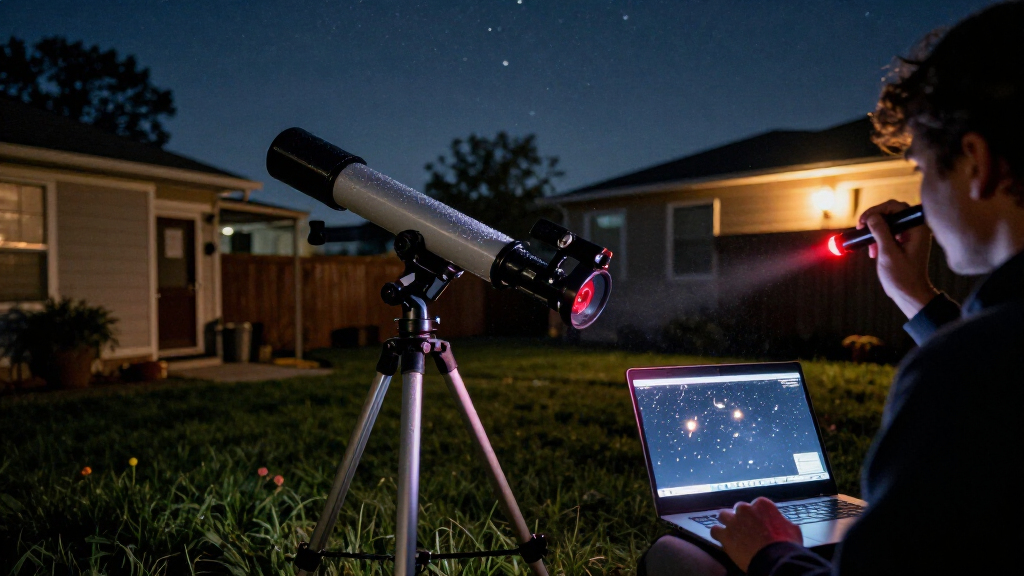
A user has set up Claude Code to process nightly 4K night-sky footage, flag possible meteors and send selected detections by text. The user reports that, after retraining on detections they approved, star false alarms fell from about 50% to 7% while the system continued to detect about 90% of meteors.
A user has built a nightly meteor-detection workflow with Claude Code that reviews 4K footage of the sky, filters likely false alarms and texts selected detections. The user says retraining the system on detections they personally approved reduced star-related false alarms from about 50% to 7%, while it continued to catch about 90% of meteors.
The project was described by an account named Terrible_Award_2124 in the ClaudeAI subreddit, as reported by XDA Developers. The workflow runs as footage arrives at night, examines each candidate detection and lets the user accept or reject it. The report says Claude Code used those approved detections to build a dataset and retrain the system after it repeatedly mistook stars for moving objects.
The reported performance figures come from the project user, not an independently documented evaluation. The user said the updated system was tested on nights it had not trained on: star false alarms dropped to around 7%, and it still caught about 90% of meteors. The account does not specify the number of test nights, the total number of meteors, or how those rates were calculated.
The workflow is described as removing unwanted detections and sending the user details of the better candidates each morning. On cloudy nights, the user said, it sends no results. In a video accompanying the post, the system logged 17 meteors, six planes and many birds. Those counts show the kinds of objects it flagged in that example, but do not establish how accurately it classified every detection.
FIELD NOTES · AI & ASTRONOMY
Someone Set Up Claude Code To Scan The Night Sky For Meteors And Log Them
A nightly workflow screens 4K sky footage, learns from a person’s review, and texts selected detections by morning. The reported accuracy gains are promising, with important limits still unknown.
01 / THE WORKFLOW
From Sky Footage to a Shortlist
Instead of watching every frame, the user reviews candidates the system has already screened and receives selected results by text.
CAPTURE
Record overnight
An OpenSkyCam setup supplies sky footage for the workflow to examine as it arrives.
SCREEN
Flag candidates
The system looks for possible meteors and can also flag stars, planes, birds, or other objects.
REVIEW
Text the useful finds
The user accepts or rejects detections. The workflow removes unwanted results and sends selected candidates.
Night-sky footage is recorded.
Possible moving objects are flagged.
Human feedback marks useful examples.
Approved detections inform retraining.
02 / REPORTED PERFORMANCE
Fewer Star Alerts, Meteors Still Detected
The project user says the system was checked on nights it had not trained on. The report does not provide the sample size or calculation method.
Figures are the user’s reported estimates. The source does not establish whether the 7% figure applies only to star-related false alarms or how many nights, detections, or confirmed meteors were evaluated.
03 / WHAT THE EXAMPLE SHOWS
A Candidate Log, Not a Benchmark
In a video accompanying the post, the system logged several kinds of objects alongside meteors.
METEORS
17 logged
A count from one example video. The report does not confirm that each classification was correct.
AIRCRAFT
6 planes
Planes appeared among detections, illustrating that the candidate list included other moving objects.
OTHER
Many birds
The sample also included birds. Counts alone do not show classification accuracy.
04 / EVIDENCE CHECK
What Remains Unclear
The available account describes one user’s project and leaves key details out of the evaluation.
SAMPLE SIZE
No number of test nights, total detections, or confirmed meteors is given.
METRIC DEFINITION
The report does not explain how the false-alarm and meteor-detection rates were calculated.
REPEATABILITY
No independent benchmark, expanded evaluation, or replication is described.
SETUP DETAILS
Camera specifications, model architecture, hardware, and connection steps are not specified.
TRACEABILITY / THE LEARNING LOOP
Human Feedback Becomes Training Data
The user says the system repeatedly mistook stars for moving objects, then used approved detections to improve later classification.
The workflow reportedly sends selected detections by text; cloudy nights may return no results.
KEY QUESTIONS
What to Know Before Trying It
The report points interested readers to OpenSkyCam as a place to start.
What does the workflow do?
It reviews nightly 4K sky footage, flags possible meteors, filters detections, and texts selected results, according to the project description.
How accurate does the user say it is?
Star false alarms reportedly fell from about 50% to 7%, while the system continued to catch about 90% of meteors. These figures are not independently verified.
How did it improve?
The user reviewed candidates, and approved detections were used to build a dataset for retraining.
Can others expect the same results?
The report does not provide enough configuration or evaluation detail to guarantee the same setup or performance for other users.
Automating Hours of Sky Review
For people who record the night sky, finding meteors can require reviewing long stretches of footage for brief flashes. This project applies automated screening to that repetitive task, leaving a person to review a shorter list rather than search every frame manually. Its practical appeal is not simply that AI can identify objects, but that the workflow is set up to run overnight and return selected results in the morning.
The reported reduction in star false alarms also points to the value of human feedback: the user’s approvals became training examples for improving later detections. If similar results hold across more nights and different conditions, the approach could make low-cost sky monitoring easier for hobbyists. The available report, however, describes one user’s project and does not establish broad accuracy or reliability.
Popular right now

Roborock Robot Vacuum and Mop with LiDAR Navigation and 10,000 Pa Suction

Dyson Ball Animal Total Clean Upright Vacuum

Ninja Luxe Café Premier 3-in-1 Espresso Machine, Drip Coffee & Cold Brew
As an affiliate, we earn on qualifying purchases.
From Sky Footage to Text Alerts
The project combines Claude Code with an OpenSkyCam setup, which the XDA Developers report points readers to for those interested in trying the workflow. The stated process is cyclical: capture sky footage, review candidate objects, accept or reject detections, and use approved examples to improve future classification. The system then sends selected results by text rather than requiring the user to watch the footage as it is recorded.
The account’s description emphasizes a particular failure mode: stars being classified as flying objects. Retraining on accepted detections reportedly reduced that type of false alarm on nights not included in training. The post also says the setup recognized planes and birds in a sample video, illustrating that a candidate list can include other moving or bright objects alongside meteors. The details provided do not explain the camera specifications, model architecture, or technical steps used to connect the components.
“When the model kept calling stars flying objects, it built a dataset from the detections I had approved and retrained it.”
— Terrible_Award_2124, the project user, as quoted in the ClaudeAI subreddit post
Performance Data Still Limited
The accuracy figures are reported by the project user; the account does not include a public benchmark, independent verification or enough detail to reproduce the calculation. It is unclear how many nights, detections or confirmed meteors were included in the evaluation, and whether the reported 7% false-alarm figure applies only to stars or to all non-meteor detections.
The report also does not specify how the system confirms that a candidate is a meteor, how it handles changing weather or camera conditions, or what hardware and software configuration is required. The 17-meteor example is a logged count from a video, not evidence on its own that all 17 classifications were correct. Results may depend on the camera, location, footage quality and the user’s review of training examples.
More Nights Could Test Reliability
The workflow reportedly continues to run each night footage arrives, with the user reviewing detections and the system sending selected results by text. Continued use could show whether the reported reduction in false alarms holds across more nights and different sky conditions. No formal evaluation, expanded dataset or independent replication is described in the report.
People interested in the setup can visit OpenSkyCam, which the report identifies as a place to start, and connect the project to an agent of their choice. The available details do not establish that every part of this particular workflow is ready to install as a complete package, or that other users should expect the same detection rates.
Source: XDA Developers
Key Questions
What does the Claude Code meteor project do?
It reviews nightly 4K sky footage, flags possible meteors, filters detections and sends selected results to the user by text, according to the project description.
How accurate does the user say it is?
The user reports that on nights not used for training, star false alarms fell from about 50% to 7% and the system still caught about 90% of meteors. Those figures have not been independently verified in the report.
How did the system improve its detections?
The user says they accepted or rejected candidate detections. Claude Code then used the approved detections to build a dataset and retrain after it was mistaking stars for moving objects.
Can other people try the setup?
The XDA Developers report points readers to OpenSkyCam and says they can connect it to an agent of their choice. The report does not provide enough detail to guarantee the same configuration or results for other users.
Source: XDA Developers