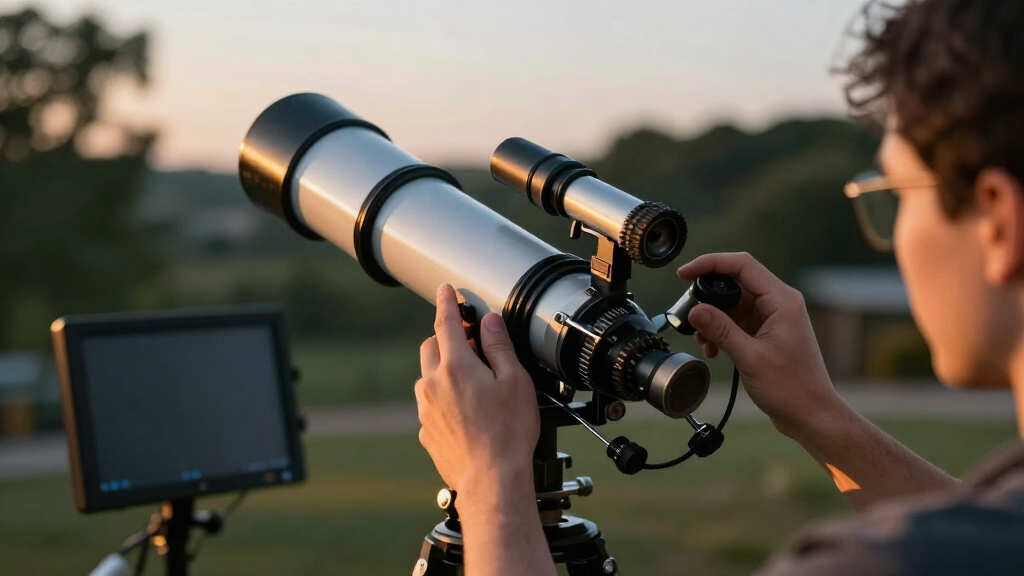

A motorized telescope focuser lets you adjust focus remotely and make finer changes than many manual knobs, especially useful for astrophotography and remote observing. I’d put the Celestron Focus Motor first for owners of compatible Schmidt-Cassegrain and EdgeHD telescopes because its telescope-specific fit gives it a clearer role than the more generic options. The Astromania AccuFocus models offer a straightforward electronic-focuser route, while the Tangxi and Asixxsix options add temperature sensing for setups where focus shifts as the night cools. The main tradeoffs are telescope compatibility, control and installation requirements, and whether added features justify a more involved setup. Read on for the full breakdown and guidance on matching a focuser to your mount, imaging routine, and telescope.

Prime made for students and young adults
- Fast, free delivery for dorm and study essentials
- Prime Video and Amazon Music included
- Member-only deals
Key Takeaways
- Telescope compatibility separates the clearest specialist pick: Celestron’s Focus Motor is aimed at Schmidt-Cassegrain and EdgeHD owners, while the other options need closer checking against the focuser and mounting arrangement.
- Temperature sensing is a targeted feature, not a universal advantage: Tangxi and Asixxsix may suit users tracking focus shifts as temperatures change, but buyers should verify how the sensor is used with their control setup.
- Astromania’s AccuFocus entries are the simpler electronic-focuser alternatives: They make more sense for buyers seeking a conventional motorized focusing approach than for users who need a telescope-specific system.
- Product naming alone does not settle fit: Several listings describe generic automatic or electric focusers, so measurements, mounting hardware, and controller compatibility deserve attention before choosing.
- The right choice depends more on your observing system than on the word “motorized”: Telescope design, remote-control needs, and willingness to install or configure hardware distinguish these nine options.
| Tangxi Automatic Telescope Focuser with Temperature Sensor |  | Best Overall for Flexible Setups | Material: Aluminum alloy | Torsion: 1.5 N·m | Payload: 5 kg | VIEW LATEST PRICE | See Our Full Breakdown |
| CCYLEZ Automatic Electric Telescope Focuser |  | Best for a Straightforward Upgrade | Brand: CCYLEZ | Focus type: Finderscope | Control: Automatic and manual | VIEW LATEST PRICE | See Our Full Breakdown |
| Akozon Astronomical Telescope Electric Focuser | | Best for a Hardware-Ready Kit | Material: Aluminum alloy | Focus type: Auto focus | Torsion: 1.5 N·m | VIEW LATEST PRICE | See Our Full Breakdown |
| Asixxsix Motorized Telescope Focuser with Temperature Sensor |  | Best for One-Click Software Autofocus | Material: Aluminum alloy | Torsion: 1.5 N·m | Payload: 5 kg | VIEW LATEST PRICE | See Our Full Breakdown |
| Celestron Focus Motor for Schmidt-Cassegrain and EdgeHD Telescopes | 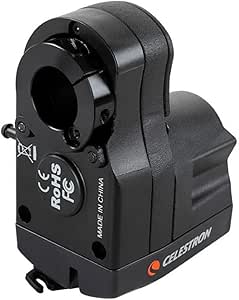 | Best for Compatible Celestron Optical Tubes | Compatible telescopes: SCTs from 6 to 14 inches produced since 2006, all EdgeHD optical tubes, 8-inch and 36cm RASA, and 7-inch Maksutov-Cassegrain | 11-inch RASA compatibility: Requires Focuser Retrofit Kit for RASA 11 | Focusing control: Computer or compatible Celestron mount hand controller | VIEW LATEST PRICE | See Our Full Breakdown |
| Astromania AccuFocus Electronic Telescope Focuser for Astronomy Telescopes |  | Best for Simple Single-Speed Setups | Brand: Astromania | Model number: SKU_AM_TFAE5 | Focus control: Electronic push-button hand controller with adjustable speed | VIEW LATEST PRICE | See Our Full Breakdown |
| Astromania AccuFocus Electronic Telescope Focuser |  | Best for a Hardware-Ready Install | Brand: Astromania | Model: AccuFocus | Focus type: Electronic | VIEW LATEST PRICE | See Our Full Breakdown |
| Automatic and Manual Motorized Telescope Focuser | | Best for Software-Assisted Focusing | Control: Automatic and manual | Temperature sensor: Built in | Interface: 3.5 mm | VIEW LATEST PRICE | See Our Full Breakdown |
| Alstar AccuFocus Electronic Telescope Focuser |  | Best for Two Common Focuser Styles | Focus type: Motorized | Controller: Push-button handheld controller with adjustable speed | Power source: 9V battery not included | VIEW LATEST PRICE | See Our Full Breakdown |
| motorized telescope focuser | Item weight |
|---|---|
| Tangxi Automatic Telescope Foc | 1.25 lb |
| CCYLEZ Automatic Electric Tele | — |
| Akozon Astronomical Telescope | 568 g |
| Asixxsix Motorized Telescope F | 1.25 lb |
| Celestron Focus Motor for Schm | — |
| Astromania AccuFocus Electroni | 12.28 ounces |
| Astromania AccuFocus Electroni | 12.28 ounces |
| Automatic and Manual Motorized | 1.25 pounds |
| Alstar AccuFocus Electronic Te | — |
More Details on Our Top Picks
Tangxi Automatic Telescope Focuser with Temperature Sensor
The Tangxi is my pick for a flexible setup because it combines software-controlled focusing with a hand controller, so I can automate a session without giving up direct adjustment. Its built-in temperature sensor can support focus compensation as conditions shift, though that benefit depends on compatible software rather than working on its own. The listed 1.5 N·m torsion and 5 kg payload give buyers concrete capacity figures to compare against their focuser and imaging train. Compared with the Celestron Focus Motor, Tangxi is described for broader telescope compatibility, while Celestron offers more clearly specified support for its own optical tubes and indexed positioning. The tradeoff is less certainty about exact model and software compatibility; I would confirm those details before buying. It also comes with several mounting parts and tools, but setup may take some manual reading.
Pros:- Offers both software-controlled automatic focusing and manual hand-controller operation
- Built-in temperature sensor can support software-based focus compensation
- Lists a 5 kg payload and 1.5 N·m torsion rating
- Includes mounting plates, couplers, cable, screws, and installation tools
Cons:- Temperature compensation depends on compatible software
- Specific telescope and software compatibility is not enumerated
- Setup may require consulting the instruction manual
Best for: Astrophotographers with a non-Celestron telescope who want both software-based focusing and hand-controller adjustment, and can verify compatibility with their setup.
Not ideal for: Buyers who want a focuser with a clearly enumerated telescope compatibility list or who need temperature compensation without compatible software.
- Material:Aluminum alloy
- Torsion:1.5 N·m
- Payload:5 kg
- Item weight:1.25 lb
- Control modes:Automatic and manual
- Temperature sensor:Built-in
- Connectivity:USB Type-C data cable
- Package dimensions:6.69 × 6.3 × 2.76 in
Our verdict“Choose Tangxi if you want a broadly adaptable motorized focuser with manual backup and are prepared to check software and telescope compatibility.”
CCYLEZ Automatic Electric Telescope Focuser
CCYLEZ suits buyers who want the basic combination of automatic and manual control without a long feature list to sort through. Its temperature sensor can help compatible software respond to changing conditions, and the product is described as plug-and-play; still, I would treat that as a simpler setup claim, not proof that every telescope or software package will connect without checking. Compared with the Tangxi Automatic Telescope Focuser, CCYLEZ makes a similar broad-compatibility pitch but provides fewer concrete mechanical details, such as a stated payload or torsion rating. Its 90-day warranty is also a shorter stated coverage period than the Celestron Focus Motor’s two-year US warranty. That makes CCYLEZ a more basic choice: appealing if your system is confirmed compatible, but less reassuring for buyers who want detailed capacity data or longer listed coverage.
Pros:- Supports automatic and manual focus control
- Temperature sensor can support software adjustments as conditions change
- Described as plug-and-play for setup
- Designed to work with various third-party software and focusing systems
Cons:- Specific telescope and software compatibility needs confirmation
- No payload or torsion rating is provided in the supplied specifications
- Listed warranty is 90 days
Best for: Telescope owners who have confirmed compatibility and want a motorized focuser with both software automation and manual adjustment.
Not ideal for: Buyers who need published payload or torque figures, a specific model-by-model compatibility list, or longer stated warranty coverage.
- Brand:CCYLEZ
- Focus type:Finderscope
- Control:Automatic and manual
- Temperature sensor:Yes
- Compatibility:Supports various third-party software and focusing systems
- Material:Aluminum alloy
- Dimensions:6.69 × 6.3 × 2.76 in
- Warranty:90 days
Our verdict“Pick CCYLEZ for a simple automatic-and-manual focuser when your telescope and software compatibility are already verified.”
Akozon Astronomical Telescope Electric Focuser
Akozon stands out for buyers who want more than the focuser itself: the package lists two connecting plates, four flexible couplers, a hand controller, tools, and an instruction manual. That can reduce the need to source basic mounting pieces separately, though it does not guarantee a match for every telescope. Like the Tangxi and Asixxsix models, it lists 1.5 N·m torsion and a 5 kg payload, making its stated mechanical capacity easier to compare than CCYLEZ’s. It also offers temperature sensing and software-based automatic focusing, with manual adjustment available from the hand controller. The tradeoff is that automatic operation still relies on compatible software and drivers, and telescope fit must be checked. Compared with the more clearly specified Celestron Focus Motor, Akozon offers a broader-sounding setup but less model-specific compatibility guidance.
Pros:- Includes mounting plates, four flexible couplers, a hand controller, tools, and instructions
- Provides automatic software control and manual focusing
- Lists a 5 kg payload and 1.5 N·m torsion rating
- Temperature sensor can support focus adaptation to changing conditions
Cons:- Automatic focusing requires compatible software and drivers
- Specific telescope compatibility must be checked
- The supplied product data does not identify supported software by name
Best for: Hands-on telescope owners who want a motorized focuser package with mounting hardware, flexible couplers, tools, and manual control included.
Not ideal for: Buyers seeking a confirmed fit for a specific telescope model or a focuser that can autofocus without compatible software and drivers.
- Material:Aluminum alloy
- Focus type:Auto focus
- Torsion:1.5 N·m
- Payload:5 kg
- Compatible devices:Camera
- Item weight:568 g
- Item dimensions:6.69 × 6.29 × 2.75 in (D × W × H)
- Included items:Electric focuser, 2 standard connecting plates, handle, 4 flexible couplers, screws, washers, thermocouple, Type-C data cable, 4 hex wrenches, instruction manual
Our verdict“Choose Akozon if a well-stocked accessory kit matters and you can confirm that its hardware and software will match your telescope.”
Asixxsix Motorized Telescope Focuser with Temperature Sensor
Asixxsix is the clearest fit for a buyer who prioritizes a simple control path: its description specifically calls out one-click software autofocus alongside a hand controller for manual changes. That gives it a more direct automation pitch than the Akozon, whose description stresses compatible software without highlighting one-click operation. Like the Tangxi, it lists a 5 kg payload, 1.5 N·m torsion, and temperature sensing, while its included plates, couplers, cable, and tools provide a useful installation kit. Those details help with setup planning, but they do not resolve fit by themselves. Asixxsix does not name supported telescope models or software, so its broad compatibility language needs verification. Temperature-based adjustment also depends on software support, and the instructions may be needed to work through installation.
Pros:- Description specifically identifies one-click software autofocus
- Includes a hand controller for manual focusing
- Lists a 5 kg payload and 1.5 N·m torsion rating
- Includes connecting plates, flexible couplers, sensor, cable, screws, and tools
Cons:- Specific telescope models and compatible software are not listed
- Temperature compensation depends on software support
- Setup details may require consulting the instruction manual
Best for: Astrophotographers whose compatible control software supports the focuser and who want quick autofocus access with a manual hand-controller fallback.
Not ideal for: Buyers who need a published list of supported telescope models or software, or who prefer a setup with compatibility spelled out in detail.
- Material:Aluminum alloy
- Torsion:1.5 N·m
- Payload:5 kg
- Item weight:1.25 lb
- Controls:Software autofocus and included hand controller
- Temperature sensor:Thermocouple included
- Connectivity:Type-C data cable
- Package dimensions:6.69 × 6.3 × 2.76 in
Our verdict“Choose Asixxsix if one-click autofocus is your priority and you have confirmed support for your telescope and software.”
Celestron Focus Motor for Schmidt-Cassegrain and EdgeHD Telescopes
The Celestron Focus Motor earns a distinct place here through its specific compatibility list and more detailed positioning features. It supports many Celestron SCTs, all EdgeHD optical tubes, certain RASA models, and the 7-inch Maksutov-Cassegrain, with computer or compatible mount hand-controller operation. Indexed positioning and backlash compensation give imaging-focused users more control than the broad-feature descriptions for Tangxi or CCYLEZ. The tradeoff is a narrower fit: this is not the flexible, broadly described option for a telescope from another manufacturer, and some Celestron models have exceptions. An 11-inch RASA needs a retrofit kit, while 5-inch SCTs and pre-2006 SCTs are excluded. Direct computer use also requires a user-supplied USB A-to-B cable. I would choose it for a confirmed compatible Celestron tube, not as a general-purpose motor focuser.
Pros:- Lists compatible Celestron telescope families and model-size limits
- Supports multiple focus speeds, indexed positioning, and backlash compensation
- Can be controlled by computer or a compatible Celestron mount hand controller
- Offers power through a compatible mount, computer USB, or external 12V DC source
Cons:- Compatibility is limited to specified Celestron optical tubes
- 11-inch RASA requires a separate Focuser Retrofit Kit
- Direct computer connection requires a user-supplied USB A-to-B cable
Best for: Owners of a listed Celestron SCT, EdgeHD, RASA, or 7-inch Maksutov-Cassegrain who want computer or mount-controller focusing with indexed positioning.
Not ideal for: Owners of non-Celestron telescopes, 5-inch SCTs, SCTs produced before 2006, or anyone using an 11-inch RASA without the required retrofit kit.
- Compatible telescopes:SCTs from 6 to 14 inches produced since 2006, all EdgeHD optical tubes, 8-inch and 36cm RASA, and 7-inch Maksutov-Cassegrain
- 11-inch RASA compatibility:Requires Focuser Retrofit Kit for RASA 11
- Focusing control:Computer or compatible Celestron mount hand controller
- Focusing features:Multiple speed rates, indexed focuser position, and backlash compensation
- Power options:Celestron computerized mount via AUX cable, computer USB, or external 12V DC source
- USB cable:User-supplied USB A-to-B cable required for direct computer connection
- Warranty:2-year US warranty
Our verdict“Choose the Celestron Focus Motor when your optical tube is on its compatibility list and you value indexed control over broad telescope fit.”
Astromania AccuFocus Electronic Telescope Focuser for Astronomy Telescopes
AccuFocus is a straightforward choice for owners of compatible single-speed refractors and reflectors who want to reduce vibration while focusing. Its hand controller offers coarse-to-fine speed adjustment, so you can move quickly into focus and slow down for the final tweak without touching the telescope tube. Compared with the software-oriented Automatic and Manual Motorized Telescope Focuser, this model keeps operation simple and does not list computer control or a temperature sensor. That simplicity comes with a narrower fit: it is not compatible with APO two-speed focusers, and manual focusing requires loosening the set screws. The included 9V battery and easy DC motor installation make it a practical pick for supported 60–127 mm scopes, but buyers should check their focuser design before ordering.
Pros:- Push-button control reduces hand-induced vibration during focusing
- Adjustable speed supports both coarse positioning and fine focus
- Includes a 9V battery for power
- Designed for compatible single-speed refractors and reflectors from 60–127 mm
Cons:- Does not fit APO two-speed focusing telescopes
- Set screws must be loosened before making manual focus adjustments
Best for: Owners of 60–127 mm single-speed Celestron, Skywatcher, Meade, or Orion refractors and reflectors who want handheld motor control without relying on focusing software.
Not ideal for: Owners of APO two-speed focusers or anyone who frequently switches between motorized and manual focusing and wants to avoid loosening set screws.
- Brand:Astromania
- Model number:SKU_AM_TFAE5
- Focus control:Electronic push-button hand controller with adjustable speed
- Power source:9V battery included
- Compatibility:Single-speed refractors and reflectors, 60–127 mm
- Compatible brands:Celestron, Skywatcher, Meade, and Orion
- Item weight:12.28 ounces
Our verdict“Choose this AccuFocus if your telescope is a supported single-speed model and you want a simple handheld motor rather than software-based control.”
Astromania AccuFocus Electronic Telescope Focuser
This Astromania AccuFocus suits buyers who want the mounting parts spelled out: the package includes a bracket, hardware, and coil cable alongside the handheld controller. Like the Astromania SKU_AM_TFAE5, it uses adjustable-speed motor control to limit vibration and is intended for compatible single-speed scopes in the 60–127 mm range. The supplied installation pieces make it easier to start with the required fittings on hand, but they do not widen telescope compatibility. It still excludes APO two-speed focusers, and a 9V battery is required. Compared with the Alstar AccuFocus, which lists brackets for both Crayford and rack-and-pinion styles, this listing gives less detail about bracket types. I’d pick it when included mounting hardware matters more than software automation or broad focuser-style coverage.
Pros:- Includes bracket, mounting hardware, and coil cable
- Hand controller offers adjustable speeds from coarse to fine
- Motorized operation helps avoid vibration from touching the telescope
- Fits compatible single-speed refractors and reflectors in the 60–127 mm range
Cons:- Does not support APO two-speed focusers
- Requires a 9V battery, which is not listed as included
Best for: Owners of compatible single-speed Celestron, Skywatcher, Meade, or Orion telescopes who want a handheld focuser kit with mounting hardware and cable included.
Not ideal for: Owners of APO two-speed telescopes, buyers seeking computer-controlled autofocus, or anyone who needs explicit confirmation of a particular bracket style.
- Brand:Astromania
- Model:AccuFocus
- Focus type:Electronic
- Control:Push-button controller with adjustable speed
- Power source:9V battery
- Telescope compatibility:Single-speed refractors and reflectors, 60–127 mm
- Compatible devices:Celestron, Skywatcher, Meade, and Orion
- Included components:Bracket, hardware, and coil cable
- Item weight:12.28 ounces
Our verdict“Choose this version when the included mounting kit is a priority and your telescope uses a compatible single-speed focuser.”
Automatic and Manual Motorized Telescope Focuser
The defining difference here is the choice between manual hand-controller operation and automatic focusing through compatible software. That flexibility makes this focuser a better fit for imaging workflows than either Astromania AccuFocus model, which centers on handheld speed control. A built-in temperature sensor can feed supported software for focus adjustments as conditions change, while the 3.5 mm interface provides a connection point for compatible focuser systems. Those capabilities depend on the rest of the setup: the product data does not name supported software or telescope models, so buyers need to verify both before purchase. Its 1.25-pound weight is also more substantial than the listed Astromania units. I’d favor it for a software-ready rig, not for someone seeking the simplest battery-powered retrofit.
Pros:- Offers both automatic software control and manual hand-controller operation
- Built-in temperature sensor can support focus adjustments through compatible software
- Uses a standard 3.5 mm interface
- Includes a hand controller
Cons:- Compatibility depends on the telescope focuser system and software support
- At 1.25 pounds, it weighs more than the listed Astromania AccuFocus units
Best for: Astrophotographers with a compatible focuser and software setup who want both computer-assisted focusing and a manual hand controller.
Not ideal for: Visual observers seeking a clearly specified, simple retrofit for a named telescope brand, or buyers unable to confirm software and focuser compatibility.
- Control:Automatic and manual
- Temperature sensor:Built in
- Interface:3.5 mm
- Package dimensions:6.69 × 6.3 × 2.76 inches
- Item weight:1.25 pounds
- Model number:XUMIUZIY8whinsk6rg
- Compatibility:Depends on telescope focuser system and software support
Our verdict“Pick this model for a compatible imaging setup that can make use of software autofocus and temperature data, rather than for a plug-in-and-go visual rig.”
Alstar AccuFocus Electronic Telescope Focuser
Alstar AccuFocus stands out for its stated support of both Crayford and rack-and-pinion focusers, with brackets and installation hardware included. That detail gives it a clearer fit for buyers comparing focuser mechanisms than the Astromania AccuFocus listings, which describe broad telescope compatibility but provide less bracket-style detail. Its handheld controller offers adjustable speed for coarse movement and finer focus, helping reduce vibration without requiring a computer. The tradeoff is a firm compatibility boundary: it is intended for single-speed refractors and reflectors with 60–127 mm apertures and excludes Maka, Dobsonian, and APO two-speed focusers. The 9V battery is not included, so it is less ready to use out of the box than the SKU_AM_TFAE5 AccuFocus, which lists its battery as included.
Pros:- Includes brackets for Crayford and rack-and-pinion focusers
- Adjustable-speed handheld control supports coarse and fine focusing
- Motorized operation reduces hand-induced vibration
- Installation hardware, coil cables, and hex keys are included
Cons:- 9V battery is not included
- Does not support Maka, Dobsonian, or APO two-speed focusers
- Compatibility is limited to single-speed refractors and reflectors with 60–127 mm apertures
Best for: Owners of compatible 60–127 mm single-speed refractors or reflectors with a Crayford or rack-and-pinion focuser who want the relevant brackets and installation tools in one kit.
Not ideal for: Dobsonian owners, users of Maka or APO two-speed focusers, and buyers who want a battery included or need software autofocus.
- Focus type:Motorized
- Controller:Push-button handheld controller with adjustable speed
- Power source:9V battery not included
- Telescope compatibility:Single-speed refractors and reflectors with 60–127 mm apertures
- Compatible devices:Celestron, Sky-Watcher, Meade, and Orion
- Supported focuser styles:Crayford and rack-and-pinion
- Incompatible focusers:Maka, Dobsonian, and APO two-speed focusers
- Included components:Brackets, hardware, coil cables, and hex keys
Our verdict“Choose Alstar if your compatible single-speed focuser is Crayford or rack-and-pinion and you want its mounting hardware included, but plan to supply the 9V battery.”
How We Picked
I compared these nine products by the factors that determine whether a motorized focuser will work well in a real setup: telescope compatibility, mounting and installation demands, control options, focusing features, and likely usability. I gave the strongest position to a product with a clearly defined telescope family, then weighed the more general electronic focusers by how well their stated features fit common visual and imaging needs. Temperature sensing counted as a useful distinction, but not a substitute for confirming that the motor and its controller suit the telescope.
The ranking reflects how clearly each option serves a buyer, not an assumption that similar product names mean identical hardware. The listings include several generic automatic or electric focusers and two AccuFocus entries, so a buyer should compare the exact model, included parts, and supported focuser before ordering. I placed products with more specific use cases ahead of less clearly differentiated alternatives; where the available product details do not establish a decisive advantage, I treat fit verification as the main reason to choose or skip them.
Factors to Consider When Choosing Motorized Telescope Focuser
Before choosing a motorized focuser, start with the telescope and the way you plan to use it. A feature that helps during remote imaging may add little for occasional visual observing, while an attractive controller is no help if the motor cannot mount to your focuser. These checks can prevent the most common mismatch: buying a motor based on its name rather than its fit and control requirements.
Match the Motor to the Telescope and Focuser
Check the telescope model, focuser type, shaft or knob dimensions, and mounting method before comparing convenience features. A focuser designed for a specific telescope family may be easier to match than a broadly described “automatic” unit, but only if your exact model is supported. Do not assume that two telescopes with the same optical design share the same focuser hardware. Ask whether the package includes the bracket, coupler, and fasteners your setup needs. A small mismatch can turn a simple installation into a separate parts search. If the listing does not specify fit, confirm it with the seller or manufacturer before buying.
Choose Controls That Fit Your Observing Routine
Decide where you want to adjust focus: at the telescope, from a computer, or through an imaging-control system. A motor alone does not guarantee computer control, automation, or compatibility with your preferred software. Check what controller is included, what connections it uses, and whether any additional hardware or configuration is required. For visual observing, a simple control method may be easier to live with than a more elaborate system. For imaging, remote adjustment can reduce trips to the telescope and help limit vibration during focusing. Base the choice on the control path you will actually use, not on a general claim of electronic operation.
Decide Whether Temperature Compensation Matters
Telescope focus can shift as the optical tube and surrounding air cool, which makes temperature monitoring useful during long imaging sessions. A sensor can report changing conditions, but its presence alone does not show that a focuser will automatically correct focus. Confirm whether temperature readings are simply displayed or can feed an automated refocusing process in your control setup. The value also depends on your observing conditions: a short session in stable temperatures may not benefit as much as a long night with falling temperatures. Check sensor placement and cable routing so the added hardware does not interfere with movement. Pay for this feature when it supports a workflow you plan to use.
Account for Installation, Power, and Cable Routing
Motorized focusers add hardware around a part of the telescope that may already be crowded by cameras, adapters, and other accessories. Look at the motor’s mounting position and whether it could obstruct a camera, diagonal, or nearby control. Find out how the unit is powered and whether its cable length and connectors suit your mount and computer location. A compact installation can be more useful than extra features if your telescope has limited clearance. Also check whether installation requires removing existing parts or adjusting the original focuser. Planning these details first helps avoid a motor that fits on paper but complicates the setup.
Match Precision Features to Your Actual Use
Fine, repeatable adjustments matter most when you are trying to hold sharp focus for imaging or make changes from a remote position. For visual use, a motor may still make focusing easier, but elaborate automation may not improve the view enough to justify added setup. Think about whether you need only motorized movement or also features such as temperature monitoring and computer control. Check how the controls handle slow adjustments, direction changes, and repeatability rather than relying on the word “precision.” If you are new to motorized focusing, a clearly supported, simpler arrangement can be easier to maintain. Experienced imagers may accept more setup work when it supports a specific automated routine.
Compare the Exact Package, Not Just the Product Name
Similar model names can refer to different packages, accessories, or compatibility claims, especially among generic electric focusers and AccuFocus listings. Verify the precise model designation and inspect what is included: motor, controller, bracket, cables, and any needed adapters. Check whether the listed telescope examples cover your exact focuser rather than a related model. A listing with fewer details may still suit your setup, but it shifts more compatibility work onto you. Keep a record of the seller’s fit confirmation and the product’s setup instructions before ordering. This is a practical way to compare options when headline features appear nearly identical.
Frequently Asked Questions
Will a motorized focuser work with any telescope?
No. Compatibility depends on the telescope’s focuser design, available mounting points, and the motor’s bracket or coupling, not simply the telescope’s aperture or optical type. The Celestron Focus Motor is specifically presented for Schmidt-Cassegrain and EdgeHD telescopes, while generic electric-focuser listings need closer model-by-model checking. Compare your telescope’s exact model and focuser hardware with the manufacturer’s supported list. If the listing does not name your setup, get fit confirmation before ordering.
Does a temperature sensor automatically keep a telescope in focus?
Not by itself. A sensor can provide temperature information, but automatic refocusing depends on the focuser’s controls, compatible software, and how the system is configured. Tangxi and Asixxsix advertise temperature sensing, which may help users monitor conditions, but buyers should confirm what the sensor actually does in their intended setup. For long imaging sessions, check whether your software can use temperature readings or whether you will need to trigger focus checks yourself. If you only observe visually for short periods, the sensor may not be a deciding feature.
Can I use a motorized focuser for visual observing as well as astrophotography?
Yes, provided the motor and controls suit your telescope and the way you observe. Remote, fine adjustments can help when focusing at high magnification or when you want to avoid touching the telescope, even without a camera. Astrophotographers may place greater value on repeatable movement and computer control, while visual observers may prefer a simpler setup. Check that the controls are convenient at the eyepiece or observing position. A motorized unit is less appealing if its installation or control routine makes ordinary focusing cumbersome.
Should I choose a telescope-specific motor or a generic electric focuser?
A telescope-specific motor is a sensible starting point when it explicitly supports your telescope, since the fit and installation path may be clearer. A generic unit can be a better match if it supports your existing focuser and offers the control features you need. The Celestron option has a defined Schmidt-Cassegrain and EdgeHD audience, whereas generic listings require more careful checking of dimensions and included hardware. Compare support for your exact telescope before weighing feature lists. A generic focuser is not automatically less capable, but uncertain fit can add work and extra parts.
What should I verify before ordering an AccuFocus model?
Check the exact AccuFocus model name, compatible focuser type, mounting hardware, controller, and cables included in that particular package. Two listings with similar names may not share the same accessories or compatibility details, so do not assume one product page describes both. Confirm whether your telescope’s focuser needs an adapter and whether the motor can clear nearby imaging equipment. If you plan computer control, check the connection and software requirements rather than assuming electronic movement includes automation. These checks help determine whether an AccuFocus unit is a straightforward fit or a project requiring additional components.
Conclusion
For the clearest telescope-specific recommendation, I’d choose the Celestron Focus Motor if I owned a compatible Schmidt-Cassegrain or EdgeHD telescope; it is the best overall for that defined group, not a universal fit. The Astromania AccuFocus options are the more straightforward candidates for buyers seeking a conventional electronic focuser, though the exact package and compatibility still need checking. For a best value choice, compare the included hardware and control requirements of the generic options rather than relying on a product name or feature count. Beginners should favor the product with the clearest confirmed fit and simplest installation, while experienced imagers may prefer Tangxi or Asixxsix if temperature sensing fits their workflow. I would reserve a premium choice for a setup where reliable compatibility and useful automation matter more than minimizing configuration; whatever your priority, verify the exact telescope match before deciding.
Halloween Picks

27FT Giant Inflatable Pumpkin Lighted Outdoor Halloween Decor

Pumpkin Halloween Fog Machine with 12-Color LEDs, Bluetooth Speaker, and Remote

DomKom 6 ft Halloween Inflatable Ghosts Roasting Marshmallows
As an affiliate, we earn on qualifying purchases.