TL;DR

Prime made for students and young adults
- Fast, free delivery for dorm and study essentials
- Prime Video and Amazon Music included
- Member-only deals
NASA’s Astronomy Picture of the Day (APOD) posts a new cosmic image every day. This guide explains how to interpret APOD’s science, colors, and descriptions, and offers practical tips for observing the night sky yourself—so you can turn tonight’s sky story into your own adventure.
This guide will help you decode NASA’s Astronomy Picture of the Day (APOD) for October 28, 2026, and turn it into your own sky story. You’ll learn how to interpret the colors, understand the science, and even get outside to see some of these wonders with your own eyes. No PhD required—just curiosity and a willingness to look up.
APOD has posted a new cosmic image every day since 1995, making it one of NASA’s longest-running outreach programs. On October 28, 2026, it continues that tradition with a fresh image and a new story to tell. But what exactly are you looking at when you open that image? And how can you make sense of the science behind it?
Whether you’re a seasoned stargazer or a complete beginner, this guide will give you the tools to appreciate any APOD—and the confidence to explore the night sky yourself.
APOD is a daily NASA publication that has been running since 1995, offering accessible science and stunning imagery.
Colors in APOD images often represent invisible wavelengths like infrared or X-ray, not what the human eye would see.
Read the APOD description twice: once for facts, once for the story—it enriches your understanding.
You can observe many APOD subjects with binoculars or a small telescope, but check visibility and light pollution first.
Use APOD as a springboard for deeper learning—try citizen science projects or share the image to spark conversations.

What Is NASA’s Astronomy Picture of the Day (and Why Should You Care)?
NASA’s Astronomy Picture of the Day is a daily publication that showcases a different image or video of the universe, accompanied by a short explanation written by an astronomer. Since June 16, 1995, APOD has been published every single day without fail—that’s over 11,000 images and counting. It’s one of the longest-running and most beloved public outreach programs in NASA’s history.
Each day, the APOD team selects an image that is either visually stunning, scientifically significant, or both. One day it might show the Orion Nebula in breathtaking detail; the next, a time-lapse of a comet streaking across the sky. The variety is part of the magic. You never know what you’ll see, but you know it will make you think.
Why should you care? Because APOD makes cutting-edge astronomy accessible to everyone. You don’t need a telescope or a degree to appreciate the beauty of the universe. The accompanying text explains the science in plain language, so you can learn something new every day. And on October 28, 2026, that date is listed as the current APOD—a fresh story waiting to be told.
If you’ve ever felt overwhelmed by the vastness of space, APOD breaks it down into digestible, daily doses. It’s like a cosmic postcard from NASA, delivered straight to your screen.
Popular right now

KitchenAid Artisan 5-Quart Tilt-Head Stand Mixer, Almond Cream

Samsung 42-Inch Class OLED S90F 4K Smart TV (2025)

Dyson V8 Cordless Vacuum
As an affiliate, we earn on qualifying purchases.
How to Decode the Colors in an APOD Image (They’re Not Always ‘Real’)
When you look at an APOD image, the colors might seem surreal—a nebula glowing in electric blue, a galaxy painted in fiery red. Here’s the truth: many of these colors are not what your eyes would see. Astronomers use false-color techniques to represent light that is invisible to humans, such as infrared, ultraviolet, or X-rays. This allows them to highlight features that would otherwise be hidden.
To understand what you’re seeing, check the description. It will often specify which wavelengths were used. For example, the iconic Pillars of Creation image combines visible and infrared light to reveal stars forming inside dense dust clouds. The result is a stunning blend of colors that tells a deeper story than any single wavelength could.
Here’s a quick comparison to help you decode what you see:
| Wavelength | What It Reveals | Typical Color Mapping |
|---|---|---|
| Visible light | What the human eye would see | Natural colors |
| Infrared | Heat, dust, and hidden stars | Red or orange |
| Ultraviolet | Hot, young stars and energetic regions | Blue or violet |
| X-ray | Black holes, supernovae, and high-energy events | Purple or green |
So when you see a rainbow of colors in an APOD, remember: it’s a scientific tool, not just an artistic choice. The colors are carefully chosen to convey information. That’s why the description is your best friend—it tells you exactly what you’re looking at and why it looks that way.
Next time you see a vivid APOD, ask yourself: “What invisible light is this showing me?” The answer will transform your appreciation of the image.
What the APOD Description Tells You (and What It Doesn’t)
The text below an APOD image is more than just a caption—it’s a mini science lesson. Written by professional astronomers, it explains the object’s nature, distance, size, and significance. For instance, if the image shows a galaxy, you’ll learn its type (spiral, elliptical, irregular), its distance in light-years, and what it reveals about galaxy evolution. If it’s a nebula, you’ll discover whether it’s a star-forming region or the remnant of a supernova.
But the description also has limits. It won’t tell you everything, and some details remain uncertain. Astronomy is a field of constant discovery, and APOD often highlights objects that are still being studied. The description might mention competing theories or open questions. That’s part of the excitement—you’re seeing the cutting edge of human knowledge.
Here’s a practical tip: read the description twice. The first time, focus on the facts—what, where, how far. The second time, look for the story—why this object matters and what it reveals about the universe. This two-pass approach helps you absorb both the science and the wonder.
For example, an APOD might feature the Andromeda Galaxy, our nearest large galactic neighbor, located about 2.5 million light-years away. The description would note that it’s on a collision course with the Milky Way, but that won’t happen for billions of years. That single fact turns a pretty picture into a cosmic drama.
So don’t skim the text. It’s the key to unlocking the full meaning of the image.
How to See Tonight’s Sky Story with Your Own Eyes
One of the best ways to connect with an APOD is to go outside and find the object yourself. But not every APOD subject is visible from Earth—some are too faint, too distant, or only visible in specific wavelengths. However, many are within reach of amateur equipment. Here’s a step-by-step plan to turn tonight’s sky story into a real-life observation:
- Check the weather and moon phase. Clear skies are essential, and a bright moon can wash out faint objects. Aim for a night with little or no moonlight.
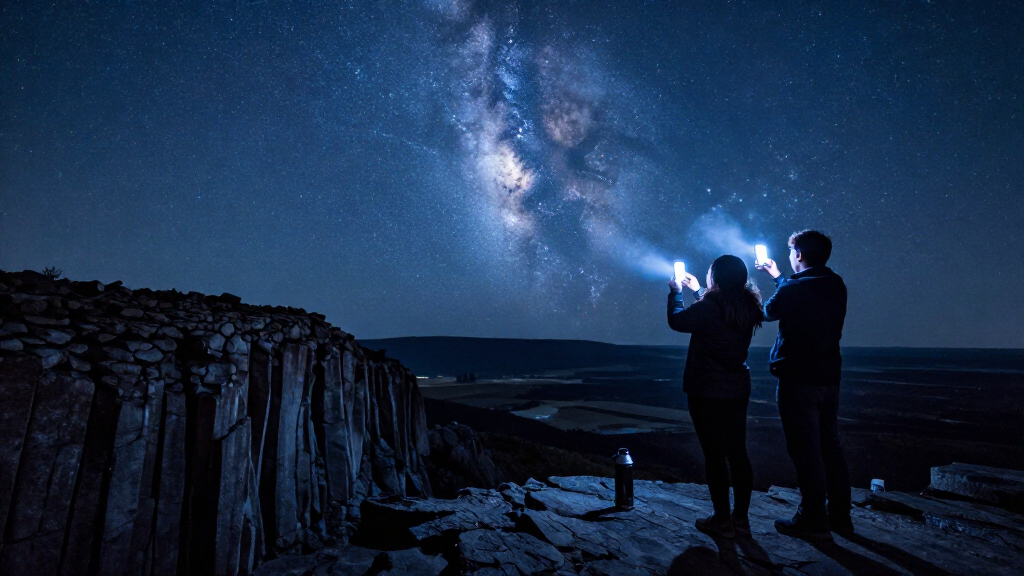
- Find a dark location. Light pollution from cities hides the stars. Drive to a rural area or a designated dark-sky park if you can.
- Let your eyes adapt. It takes about 20 minutes for your eyes to fully adjust to the dark. Avoid looking at your phone—even a quick glance ruins your night vision.
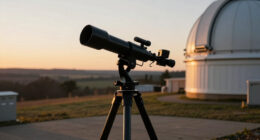
- Use binoculars or a telescope. For wide-field views like the Milky Way, 10×50 binoculars are perfect. For planets or the Moon, a small telescope with a 4-inch aperture works wonders.
- Use a star chart or app. Apps like Stellarium or SkySafari can show you exactly where to look. Point your device at the sky, and it’ll identify stars, planets, and deep-sky objects.
When it comes to gear, think about what you want to see. A wide-field setup (binoculars or a short-focal-length telescope) is great for large objects like nebulae and galaxies. A long-focal-length telescope gives you high magnification for planets and the Moon. There’s no one-size-fits-all—it depends on your interests.
Here’s a real-world example: if the APOD features the Orion Nebula, you can spot it with binoculars from a moderately dark site. It looks like a fuzzy patch of light, but through a telescope, you’ll see its glowing gas and young stars. That’s the same nebula that Hubble photographed in stunning detail—and you’re seeing it with your own eyes.
Why a Daily Picture of the Universe Still Matters
In an age of information overload, why does a daily astronomy picture matter? Because it grounds us. It reminds us that we’re part of something vast and beautiful. APOD has inspired countless people to pursue careers in science, art, and education. It’s used in classrooms to spark curiosity, in planetariums to illustrate talks, and by amateur astronomers to plan their next observation.
Consider the impact: a teacher might show an APOD image of a supernova remnant to explain the life cycle of stars. A student might see a picture of a distant galaxy and decide to study astrophysics. APOD makes these connections possible by presenting complex ideas in an accessible format.
Moreover, APOD is a record of our changing understanding. The same object photographed years apart can look dramatically different as new technology and techniques emerge. For example, the Crab Nebula has been imaged in visible light, X-rays, and radio waves, each revealing different aspects of the exploded star. APOD captures these evolving views, showing how science progresses.
But it’s not just about education—it’s about wonder. When you look at an APOD, you’re seeing light that may have traveled millions of years to reach us. That light carries information about the universe’s history, and you’re witnessing it in real time. That’s a profound experience, and APOD delivers it every single day.
So the next time you see an APOD, take a moment to appreciate not just the image, but the decades of human effort that made it possible—from the engineers who built the telescopes to the scientists who interpret the data.
Turn Tonight’s APOD into Your Own Sky Story
You’ve read the description, decoded the colors, and maybe even spotted the object yourself. Now what? Use APOD as a springboard for deeper exploration. The image is just the beginning—there’s a whole universe of knowledge waiting to be discovered.
Start by looking up the object’s location in the sky using a planetarium app. If it’s visible from your latitude and season, plan a viewing session. If it’s not, don’t be discouraged—many APOD subjects are too faint for amateur equipment. Instead, use the image as a conversation starter. Share it with friends, discuss the science, or write your own reflection.
Here’s a scenario: the APOD for October 28, 2026, might feature a comet that’s currently visible in the evening sky. You could check online for its current position and magnitude, then grab your binoculars and head outside. Finding a comet is a thrilling experience—it’s a once-in-a-lifetime event for many.
Alternatively, if the APOD shows a distant galaxy, you might not be able to see it yourself, but you can learn about its classification, its distance, and what it tells us about the early universe. You could even join a citizen science project like Galaxy Zoo to help classify galaxies from real telescope data.
The key is to let APOD spark your curiosity. Don’t just passively view the image—engage with it. Ask questions, seek answers, and share your discoveries. That’s how a daily picture becomes a personal sky story.
Frequently Asked Questions
Can I see the object in tonight’s APOD with my naked eye?
It depends on the object. Some APOD subjects, like the Moon, planets, and bright stars, are easily visible without any equipment. Others, like distant galaxies or nebulae, require binoculars or a telescope. Check the APOD description for its apparent magnitude and visibility—it often includes observing tips.
Are the colors in APOD images real?
Not always. Many APOD images use false-color techniques to represent light in wavelengths beyond human vision, such as infrared or X-rays. The colors are chosen to highlight specific features. The description will usually indicate if the image uses false color and what the colors represent.
How often is APOD updated?
APOD is updated every single day, including weekends and holidays. Since its start in 1995, it has never missed a day. You can check the official NASA APOD website or subscribe to receive the daily image via email or RSS feed.
What equipment do I need to see deep-sky objects?
For bright objects like the Orion Nebula or Andromeda Galaxy, a pair of 10×50 binoculars is enough from a dark site. For fainter objects, a telescope with at least a 4-inch (100mm) aperture is recommended. Remember that dark skies are more important than equipment—even a small telescope can show wonders from a rural location.
How can I find out what’s visible in the sky tonight?
Use a planetarium app like Stellarium, SkySafari, or Sky Map. These apps show you a real-time map of the sky based on your location and time. You can also check websites like EarthSky or Time and Date for nightly highlights, including planetary conjunctions, meteor showers, and ISS passes.
Conclusion
Tonight’s sky story is more than a pretty picture—it’s an invitation. Whether you’re a seasoned astronomer or a curious beginner, APOD gives you a daily window into the universe. It reminds you that the cosmos is not just something to read about; it’s something to experience.
So go outside, look up, and let the stars tell you their story. And tomorrow, check APOD again—because there’s always a new chapter waiting.