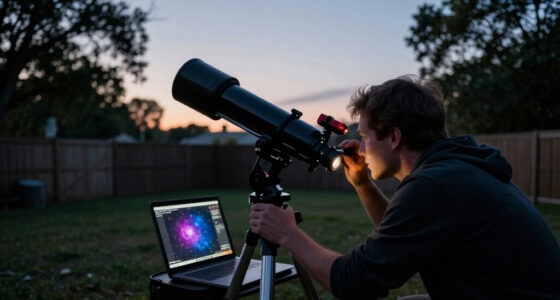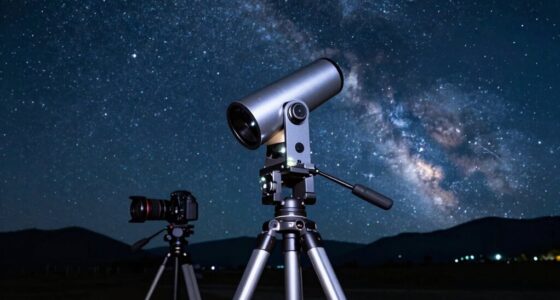
Narrowband astrophotography filters isolate emission lines from nebulae, helping cameras record useful signal under skies affected by light pollution or moonlight. My best overall pick is the SVBONY SV227 2-Inch 5nm SHO Set, which offers separate H-alpha, OIII, and SII filters for flexible three-channel imaging. For simpler dual-band capture, the Optolong L-eXtreme and SVBONY SV220 7nm H-alpha/OIII are standout options with different bandwidth and format tradeoffs. The main choice is between a one-filter dual-band workflow and a multi-filter SHO setup, followed by matching filter size and spectral passbands to your camera and targets. Read on for the full comparison and guidance on choosing the right filter for your imaging setup.

Prime made for students and young adults
- Fast, free delivery for dorm and study essentials
- Prime Video and Amazon Music included
- Member-only deals
Key Takeaways
- The SVBONY SV227 2-Inch 5nm SHO Set earns the lead for channel flexibility: separate H-alpha, OIII, and SII filters support more control over SHO processing than a dual-band filter.
- Dual-band filters simplify capture by collecting H-alpha and OIII together, but they do not replace a separate SII filter when you want a full SHO palette.
- Filter size changes compatibility, not the target in the sky: the 1.25-inch and 2-inch versions in this lineup need to match the camera train and any reducer or filter drawer.
- Seven-nanometer options trade selectivity for broader transmission compared with the 5nm SHO set; the narrower choice can help separate emission signal, while the broader choice can be less demanding of tracking and system alignment.
- Specialized filters suit specific targets: the Astromania O-III is a single-line option, while the SV240 multi-narrowband models and Askar Colour Magic Super D1 serve different multi-line or dual-band workflows.
| SVBONY SV240 2-Inch Multi-Narrowband Telescope Filter |  | Best for Urban-Sky Color Imaging | Filter size: 2 inches | Thread size: 5.1 centimeters | Target wavelengths: H-alpha, OIII, H-beta | VIEW LATEST PRICE | See Our Full Breakdown |
| SVBONY SV227 1.25-Inch SII, H-Alpha, and OIII Narrowband Filter Set |  | Best Compact SHO Starter Set | Included filters: SII, H-alpha, and OIII | Filter size: 1.25 inches (31.75 mm) | Peak transmission: 90% | VIEW LATEST PRICE | See Our Full Breakdown |
| SVBONY SV227 2-Inch 5nm SHO Narrowband Telescope Filter Set |  | Best for Precision Monochrome SHO Imaging | Filter types: SII, H-alpha, OIII | Bandwidth: 5 nm | Filter size: 2 inches | VIEW LATEST PRICE | See Our Full Breakdown |
| SVBONY SV220 2-Inch SII/OIII 7nm Dual-Band Nebula Filter |  | Best for SII-and-OIII Targeting | Filter type: SII/OIII dual-band narrowband | Bandwidth: 7 nm | Filter size: 2 inches | VIEW LATEST PRICE | See Our Full Breakdown |
| SVBONY SV220 2-Inch 7nm Dual-Band Nebula Filter |  | Best Dual-Band Pick for Color Cameras | Filter size: 2 inches | Thread size: M48 × 0.75 | Bandwidth: 7 nm | VIEW LATEST PRICE | See Our Full Breakdown |
| Astromania 1.25-Inch O-III Telescope Filter |  | Best for O-III Visual Observing | Filter type: O-III narrowband | Eyepiece size: 1.25 inches | Thread size: 31.75 mm | VIEW LATEST PRICE | See Our Full Breakdown |
| SVBONY SV220 7nm SII & OIII Dual-Band Telescope Filter, 1.25-Inch |  | Best for Compact SII/OIII One-Shot-Color Imaging | Model: SV220 | Filter bands: SII and OIII | Bandwidth: 7 nm | VIEW LATEST PRICE | See Our Full Breakdown |
| Optolong L-eNhance 2-Inch Dual Narrowband Light Pollution Filter |  | Best for Broad Emission-Line Coverage | Filter size: 2 inches (48 mm) | Thread size: M48 x 0.75 mm | Compatible devices: DSLR, color CMOS, and CCD cameras | VIEW LATEST PRICE | See Our Full Breakdown |
| Optolong L-eXtreme 7nm Dual Narrowband Filter, 2-Inch |  | Best for Focused H-Alpha/O-III Imaging | Filter bandwidth: 7 nm | Passbands: H-Alpha and O-III | Filter size: 2 inches (48 mm) | VIEW LATEST PRICE | See Our Full Breakdown |
| SVBONY SV220 7nm Dual-Band H-Alpha OIII Telescope Filter |  | Best Compact H-Alpha/OIII Pick | Model: SV220 | Filter type: 7 nm dual-band H-Alpha/OIII narrowband | Thread size: 31.75 mm | VIEW LATEST PRICE | See Our Full Breakdown |
| Askar Colour Magic Super D1 Duo Narrowband OIII and Ha Filter, 2-Inch |  | Best for OIII and Ha Imaging | Filter bands: OIII and Ha | FWHM: OIII: 6.5 nm ± 0.5 nm; Ha: 8.5 nm ± 0.5 nm | Center wavelengths: 500.7 nm and 656.6 nm | VIEW LATEST PRICE | See Our Full Breakdown |
| SVBONY SV240 1.25-Inch Multi-Narrowband Telescope Filter |  | Best for Compact One-Shot Color Setups | Filter bands: Ha, OIII, and H-beta | Filter size: 1.25 inches | Thread size: 28.5 mm | VIEW LATEST PRICE | See Our Full Breakdown |
| narrowband astrophotography filter | Coating | Filter size | Thread size | Warranty |
|---|---|---|---|---|
| SVBONY SV240 2-Inch Multi-Narr | Multi-coated | 2 inches | 5.1 centimeters | 1 year |
| SVBONY SV227 1.25-Inch SII | Multi-coated, ion-assisted deposition | 1.25 inches (31.75 mm) | — | 1 year |
| SVBONY SV227 2-Inch 5nm SHO Na | Multi-coated | 2 inches | 48 mm | 1 year |
| SVBONY SV220 2-Inch SII/OIII 7 | Multi-coated | 2 inches | 48 mm | 1 year |
| SVBONY SV220 2-Inch 7nm Dual-B | — | 2 inches | M48 × 0.75 | 1 year |
| Astromania 1.25-Inch O-III Tel | Multi-coating, including anti-reflection coating | — | 31.75 mm | — |
| SVBONY SV220 7nm SII & OIII Du | Multi-coated | — | 28.5 mm | 1 year |
| Optolong L-eNhance 2-Inch Dual | Multiple anti-reflective coatings | 2 inches (48 mm) | M48 x 0.75 mm | — |
| Optolong L-eXtreme 7nm Dual Na | Multi Coating | 2 inches (48 mm) | — | — |
| SVBONY SV220 7nm Dual-Band H-A | Multi-coated | 1.25 inches | 31.75 mm | 1 year |
| Askar Colour Magic Super D1 Du | Multi-coated | 2 inches | 48 mm | 1 year |
| SVBONY SV240 1.25-Inch Multi-N | Multi-coated | 1.25 inches | 28.5 mm | 1 year |
More Details on Our Top Picks
SVBONY SV240 2-Inch Multi-Narrowband Telescope Filter
The SV240 combines H-alpha, OIII, and H-beta coverage in one 2-inch filter, making it a flexible choice for color-camera users who want to record several nebula emission lines without swapping among separate filters. Its stated greater-than-90% core transmission and OD4 cutoff are aimed at preserving signal while suppressing unwanted light, with use described for skies as bright as Bortle 8. Compared with the SV227 2-Inch 5nm SHO set, the SV240 is simpler to operate but does not provide three separate channels for independently processing SII, H-alpha, and OIII. The tradeoff is also its near-infrared behavior: the product data warns of possible halos in that region. I’d choose it for convenient multi-line capture, not as a substitute for a dedicated monochrome SHO workflow.
Pros:- Covers H-alpha, OIII, and H-beta with one filter
- More than 90% stated transmittance in core wavelengths
- Designed to reduce light pollution in urban skies up to Bortle 8
- 2-inch size supports compatible astrophotography systems
Cons:- Does not give monochrome imagers separate SII, H-alpha, and OIII filters like the SV227 SHO set
- Near-infrared use may produce halos
- Not water resistant
Best for: Color-camera astrophotographers imaging emission nebulae from light-polluted locations who want one filter covering H-alpha, OIII, and H-beta.
Not ideal for: Monochrome imagers seeking separate SII, H-alpha, and OIII channels, or anyone whose setup needs water-resistant equipment or clean near-infrared performance.
- Filter size:2 inches
- Thread size:5.1 centimeters
- Target wavelengths:H-alpha, OIII, H-beta
- Core wavelength transmittance:>90%
- Cut-off depth:≥OD4
- Coating:Multi-coated
- Enclosure material:Optical glass
- Warranty:1 year
Our verdict“Choose the SV240 if you want convenient multi-line nebula imaging with a color camera under bright skies, but look to a separate SHO set for channel-by-channel control.”
SVBONY SV227 1.25-Inch SII, H-Alpha, and OIII Narrowband Filter Set
This three-filter SII, H-alpha, and OIII set gives monochrome-camera users the separate channels needed to build SHO images, while its 1.25-inch format suits smaller filter wheels and compact imaging trains. The stated 90% peak transmission and OD5 cutoff support a contrast-focused approach to emission nebulae, and the multi-coated, ion-assisted optical glass is described as scratch-resistant. Compared with the SV227 2-Inch 5nm SHO set, this version takes up less space but does not list a 5nm bandwidth, so buyers should not assume the same specified passband. Its main limitation is fit: it is designed for monochrome cameras, and the 1.25-inch size can constrain compatibility with larger optical trains. I’d pick it when compactness matters more than a stated narrow bandwidth.
Pros:- Includes separate SII, H-alpha, and OIII filters for SHO imaging
- Compact 1.25-inch format fits smaller imaging trains
- 90% stated peak transmission with OD5 cutoff
- Multi-coated glass with ion-assisted deposition
Cons:- Designed for monochrome cameras rather than one-shot color imaging
- Does not specify a bandwidth, unlike the SV227 2-Inch 5nm set
- Not water resistant
Best for: Monochrome-camera users building a compact 1.25-inch filter-wheel setup for separate SII, H-alpha, and OIII nebula exposures.
Not ideal for: Color-camera imagers, owners of 2-inch filter systems, or buyers who specifically need a documented 5nm bandwidth.
- Included filters:SII, H-alpha, and OIII
- Filter size:1.25 inches (31.75 mm)
- Peak transmission:90%
- Cut-off depth:OD5
- Wavelength range:700–1100 nm
- Material:Optical glass
- Coating:Multi-coated, ion-assisted deposition
- Warranty:1 year
Our verdict“Choose this set for compact monochrome SHO imaging when 1.25-inch filters suit your camera train and a stated 5nm passband is not a requirement.”
SVBONY SV227 2-Inch 5nm SHO Narrowband Telescope Filter Set
For monochrome imagers who want defined passbands for each SHO channel, this set pairs SII, H-alpha, and OIII filters with a specified 5nm bandwidth. That narrower stated band gives this kit a more explicitly channel-focused role than the SV227 1.25-inch set, which lists 90% peak transmission but no bandwidth. Individually tested filters and 2-inch sizing suit a larger imaging train with a filter drawer or compatible camera system. The payoff is control over separate emission-line exposures; the cost is extra handling and processing compared with a single dual-band filter such as the SV220 2-Inch 7nm Dual-Band. This set is also aimed at monochrome cameras, not straightforward one-shot color capture. I’d choose it for a deliberate SHO workflow, while skipping it if simplicity is the priority.
Pros:- Three separate filters cover SII, H-alpha, and OIII
- Specified 5nm bandwidth for each narrowband channel
- Individually tested filters
- 2-inch format fits compatible filter drawers and camera systems
Cons:- Requires separate channel capture and processing, unlike the SV220 dual-band filter
- Designed for monochrome cameras rather than simple color-camera use
- Not water resistant
Best for: Monochrome astrophotographers with a 2-inch imaging train who want separate, specified 5nm SII, H-alpha, and OIII channels for SHO processing.
Not ideal for: One-shot color camera users, beginners seeking a single-filter workflow, or anyone whose equipment only accepts 1.25-inch filters.
- Filter types:SII, H-alpha, OIII
- Bandwidth:5 nm
- Filter size:2 inches
- Thread size:48 mm
- Coating:Multi-coated
- Compatible devices:Telescopes, telescope eyepieces, filter drawers, electronic cameras, SVBONY devices
- Included items:SII filter, H-alpha filter, OIII filter, plastic box
- Warranty:1 year
Our verdict“Choose this set for a 2-inch monochrome rig and hands-on SHO control; choose a dual-band filter instead if you want fewer capture steps.”
SVBONY SV220 2-Inch SII/OIII 7nm Dual-Band Nebula Filter
Unlike the H-alpha/OIII-oriented SVBONY SV220 2-Inch 7nm Dual-Band Nebula Filter, this model pairs SII and OIII at a stated 7nm bandwidth. That makes its role more specialized: it can add those two emission channels to a color-camera capture plan, or suit imagers targeting nebulae and remnants where those lines are useful. The OD5 cutoff is intended to suppress out-of-band light, and the listing describes use under moonlit conditions. Its fit guidance is unusually important, though: it is recommended for optical systems faster than f/4, so buyers should check their focal ratio before ordering. It also covers only SII and OIII, not H-alpha, and is less of a general-purpose first narrowband filter than the standard SV220. I’d select it for the specific pair of lines, not as an all-round dual-band choice.
Pros:- Combines SII and OIII in one 7nm dual-band filter
- OD5 cutoff is specified for out-of-band light rejection
- Designed to reduce sky glow, including under moonlit conditions
- 2-inch size and 48mm thread suit compatible camera and telescope setups
Cons:- Recommended for systems faster than f/4, limiting compatibility
- Does not include H-alpha, unlike the other SV220 dual-band model
- Not water resistant
Best for: Astrophotographers with systems faster than f/4 who specifically want SII and OIII dual-band capture of emission nebulae, planetary nebulae, or supernova remnants.
Not ideal for: Users seeking H-alpha/OIII coverage, owners of f/4-or-slower systems, or buyers who want a more general-purpose first dual-band filter.
- Filter type:SII/OIII dual-band narrowband
- Bandwidth:7 nm
- Filter size:2 inches
- Thread size:48 mm
- Cut-off depth:OD5
- Recommended optical systems:Faster than f/4
- Coating:Multi-coated
- Warranty:1 year
Our verdict“Choose the SV220 SII/OIII version when those two lines match your target and your optics are faster than f/4; otherwise, the H-alpha/OIII SV220 is the more versatile pairing.”
SVBONY SV220 2-Inch 7nm Dual-Band Nebula Filter
This SV220 targets the common OIII and H-alpha lines, making it the more straightforward dual-band option for color CMOS, CCD, and digital-camera users. Its stated 7nm bandwidth and greater-than-94% transmission are intended to pass useful nebula signal while suppressing skyglow; the waterproof optical glass is another practical distinction from several filters here that are not water resistant. Compared with the SV220 SII/OIII 7nm, this version includes H-alpha instead of SII, a more general pairing for many color-camera nebula sessions. The restrictions are substantial: it is not intended for visual astronomy or solar imaging, is listed as unsuitable for smart telescopes, and should not be used with focal ratios of f/4 or less. The listing also gives conflicting weights, so I would not rely on a precise mass estimate.
Pros:- Transmits OIII and H-alpha in one dual-band filter
- 7nm bandwidth and over 94% stated transmission
- Designed to block artificial light and skyglow for deep-sky imaging
- Waterproof optical glass and a 2-inch M48 × 0.75 format
Cons:- Not suitable for smart telescopes or systems with focal ratios of f/4 or less
- Not intended for visual astronomy or solar imaging
- Product data gives conflicting weights
Best for: Color CMOS, CCD, or digital-camera astrophotographers using compatible optics faster than f/4 who want a single filter for OIII and H-alpha nebula imaging.
Not ideal for: Smart-telescope owners, users of systems at f/4 or slower, visual observers, or anyone seeking solar imaging or separate SII capture.
- Filter size:2 inches
- Thread size:M48 × 0.75
- Bandwidth:7 nm
- Supported emission lines:OIII (500.7 nm) and H-alpha (656.3 nm)
- Transmission:Over 94%
- Material:Anodized aluminum frame and waterproof optical glass
- Compatible devices:Color CMOS, CCD, and digital cameras
- Warranty:1 year
Our verdict“Choose this SV220 for color-camera OIII and H-alpha imaging on compatible optics, but skip it if you use a smart telescope or a system at f/4 or slower.”
Astromania 1.25-Inch O-III Telescope Filter
I’d choose the Astromania when the goal is to isolate oxygen emission from planetary or gaseous nebulae, rather than capture a broad range of nebula colors. Its 496–501 nm passband targets the O-III lines and blocks most other visible wavelengths, which can make suitable nebulae stand out more against the sky. That narrow focus also makes it less versatile than the Optolong L-eNhance, which covers H-Alpha, H-Beta, and O-III for color-camera imaging. The 1.25-inch format fits standard eyepieces, and the multi-coating includes anti-reflection treatment to help limit glare. I would not expect it to brighten an object or erase light pollution: it changes contrast, and it is useful only on targets with relevant O-III emission.
Pros:- Narrow 496–501 nm transmission targets O-III emission lines.
- Fits standard 1.25-inch eyepieces.
- Multi-coating includes anti-reflection treatment to help reduce glare and ghosting.
- Can improve nebula-to-sky contrast in both light-polluted and dark skies.
Cons:- Useful mainly on targets that emit strongly in O-III.
- Does not brighten nebulae or eliminate light pollution.
- Captures a narrower slice of nebular emission than the Optolong L-eNhance.
Best for: Visual observers with 1.25-inch eyepieces who regularly view planetary or gaseous nebulae and want a dedicated O-III filter.
Not ideal for: Imagers seeking multi-line color data, or observers who want one filter for galaxies, stars, and other broad-spectrum targets.
- Filter type:O-III narrowband
- Eyepiece size:1.25 inches
- Thread size:31.75 mm
- Transmission range:496–501 nm
- Transmission:95%
- Coating:Multi-coating, including anti-reflection coating
- Weight:8.53 g
- Items included:1 filter
Our verdict“Choose this filter for focused O-III nebula observing through a 1.25-inch eyepiece, not for flexible color imaging.”
SVBONY SV220 7nm SII & OIII Dual-Band Telescope Filter, 1.25-Inch
The SVBONY SV220 takes a less common route than the H-Alpha/O-III filters in this group: its paired 7 nm SII and OIII bands are aimed at imaging emission nebulae, planetary nebulae, and supernova remnants with a one-shot-color camera. That makes it a distinct choice for someone who wants sulfur and oxygen data in one filter, rather than the H-Alpha/O-III pairing of the Optolong L-eXtreme. Its 1.25-inch format suits a compact imaging train, while the stated OD5 cutoff and multi-coating are intended to suppress unwanted light. The tradeoff is specialization: it is designed primarily for one-shot-color astrophotography, not broad visual use, and it is not water resistant. I’d check camera and mount compatibility before choosing it, especially against larger-format options.
Pros:- Pairs 7 nm SII and OIII bands in one filter.
- Designed to reduce light-pollution and moonlight interference during imaging.
- Supports one-shot-color capture without combining separate filter exposures.
- Compact 1.25-inch format includes a plastic storage box.
Cons:- Primarily intended for one-shot-color astrophotography rather than visual observing.
- SII/OIII pairing differs from the H-Alpha/O-III coverage offered by the Optolong L-eXtreme.
- Not water resistant.
Best for: One-shot-color astrophotographers using a compatible 1.25-inch setup who specifically want SII and OIII emission bands in a single filter.
Not ideal for: Visual observers or imagers who want H-Alpha/O-III coverage, a water-resistant filter, or a filter for a larger setup.
- Model:SV220
- Filter bands:SII and OIII
- Bandwidth:7 nm
- Size:1.25 inches
- Thread size:28.5 mm
- Coating:Multi-coated
- Cut-off depth:OD5
- Items included:1 filter and 1 plastic box
- Warranty:1 year
Our verdict“Pick the SV220 SII/OIII if your compatible one-shot-color setup calls for those specific bands in a compact filter.”
Optolong L-eNhance 2-Inch Dual Narrowband Light Pollution Filter
I’d favor the L-eNhance when a color-camera imager wants more emission-line coverage than a two-band H-Alpha/O-III filter provides. It isolates H-Alpha, H-Beta, and O-III, giving a compatible DSLR, color CMOS, or CCD camera access to several nebular signals in one filter. That broader selection separates it from the Optolong L-eXtreme, which concentrates on H-Alpha and O-III with 7 nm bands. The L-eNhance also specifies more than 99% blocking of light-pollution lines, a useful aim for bright skies, though this does not remove all background light or make every target suitable. Its 2-inch, M48-threaded format calls for a matching imaging train, and the filter is not water resistant. I’d skip it if your setup only accepts 1.25-inch filters.
Pros:- Isolates H-Alpha, H-Beta, and O-III emission lines.
- Specified to block more than 99% of light-pollution lines.
- Compatible with DSLR, color CMOS, and CCD cameras.
- Up to 90% maximum transmission is specified.
Cons:- Requires a compatible 2-inch, M48-threaded filter setup.
- Not water resistant.
- Broader line coverage differs from the narrower H-Alpha/O-III approach of the Optolong L-eXtreme.
Best for: Astrophotographers with a compatible 2-inch DSLR, color CMOS, or CCD setup who want H-Alpha, H-Beta, and O-III coverage for nebula imaging.
Not ideal for: Owners of 1.25-inch-only setups or photographers focused on galaxies and other targets without strong emission lines.
- Filter size:2 inches (48 mm)
- Thread size:M48 x 0.75 mm
- Compatible devices:DSLR, color CMOS, and CCD cameras
- Substrate:B270
- Thickness:1.85 mm
- Maximum transmission:Up to 90%
- Blocking range:300–1000 nm
- Light-pollution line blocking:>99%
- Coating:Multiple anti-reflective coatings
Our verdict“Choose the L-eNhance if your 2-inch color-camera rig benefits from capturing H-Beta alongside H-Alpha and O-III.”
Optolong L-eXtreme 7nm Dual Narrowband Filter, 2-Inch
The L-eXtreme is the more focused 2-inch choice for one-shot-color imaging when the target is an emission nebula and the desired signals are H-Alpha and O-III. Its 7 nm dual passbands are intended to reduce unwanted sky background, including under light-polluted or moonlit conditions. Compared with the Optolong L-eNhance, it leaves out H-Beta, trading that extra line for a more narrowly defined two-band approach. That focus can suit nebula sessions, but it does not turn the filter into a general deep-sky solution: galaxies and reflection nebulae are poor matches for this narrowband strategy. The 2-inch format is designed for compatible DSLR, CCD, and CMOS setups. I’d also account for its lack of water resistance when storing and handling it outdoors.
Pros:- Combines 7 nm H-Alpha and O-III passbands.
- Designed to reduce unwanted sky background in light-polluted or moonlit conditions.
- Compatible with DSLR, CCD, and CMOS cameras.
- Offers a more focused two-band approach than the three-line Optolong L-eNhance.
Cons:- Primarily suited to emission nebulae, not galaxies or reflection nebulae.
- Does not include the H-Beta line covered by the Optolong L-eNhance.
- Not water resistant.
Best for: One-shot-color astrophotographers with a compatible 2-inch camera setup who mainly photograph emission nebulae in bright or moonlit skies.
Not ideal for: Imagers seeking H-Beta coverage, general-purpose deep-sky use, or a water-resistant filter.
- Filter bandwidth:7 nm
- Passbands:H-Alpha and O-III
- Filter size:2 inches (48 mm)
- Compatible devices:DSLR, CCD, and CMOS cameras
- Coating:Multi Coating
- Water resistance:Not water resistant
- Items included:1 filter
Our verdict“Choose the L-eXtreme for focused H-Alpha/O-III nebula imaging with a compatible 2-inch camera train.”
SVBONY SV220 7nm Dual-Band H-Alpha OIII Telescope Filter
This SVBONY SV220 is the compact H-Alpha/O-III option for a 1.25-inch imaging setup, with a stated 7 nm dual-band design for nebula observation and photography. It aims to improve contrast against moonlight and artificial sky glow, which can make the background easier to manage during capture and post-processing. Unlike the Optolong L-eXtreme, which is a 2-inch filter, this model fits a smaller filter train; the tradeoff is compatibility, since the listed devices are SVBONY electronic and astronomical cameras. The filter is multi-coated glass and can suit one-shot-color deep-sky imaging, but its narrowband purpose limits its value for general photography. It also does not make nebulae brighter: it suppresses competing background light so suitable emission targets stand out more clearly.
Pros:- Combines 7 nm H-Alpha and O-III bands.
- Designed to reduce interference from moonlight and artificial light pollution.
- Compact 1.25-inch format suits smaller filter trains.
- May simplify post-processing by improving nebula-to-background contrast.
Cons:- Listed compatibility is limited to SVBONY electronic and astronomical cameras.
- Designed for nebula work rather than general-purpose photography.
- Improves contrast rather than increasing the nebula’s brightness.
Best for: Owners of compatible SVBONY cameras using a 1.25-inch setup who want H-Alpha/O-III contrast for nebula imaging or observation.
Not ideal for: Photographers with 2-inch-only filter trains, non-compatible cameras, or a need for a general-purpose filter beyond nebula targets.
- Model:SV220
- Filter type:7 nm dual-band H-Alpha/OIII narrowband
- Thread size:31.75 mm
- Filter size:1.25 inches
- Coating:Multi-coated
- Material:Glass
- Weight:0.04 kg
- Compatible devices:SVBONY electronic and astronomical cameras
- Warranty:1 year
Our verdict“Choose this SV220 if you have a compatible SVBONY camera and need a compact H-Alpha/O-III filter for nebula work.”
Askar Colour Magic Super D1 Duo Narrowband OIII and Ha Filter, 2-Inch
The Askar Colour Magic Super D1 Duo is a focused choice for nebula imaging with a two-inch optical train: it isolates OIII at 6.5 nm and H-alpha at 8.5 nm in one filter, helping a color camera record both emission regions while limiting unwanted background light. Its 85% peak transmittance is a useful specification for retaining signal, though it does not by itself indicate how the filter performs across a full imaging setup. Compared with the SVBONY SV240 2-Inch Multi-Narrowband Telescope Filter, the Askar is the more narrowly specified Ha/OIII option, while the SV240 also includes H-beta and near-infrared transmission. That makes the SV240 more versatile for supported workflows, but the Askar’s simpler band selection suits buyers who want to concentrate on Ha and OIII. Its 48 mm thread fits compatible two-inch accessories; it is not water resistant, and the supplied data gives no broader compatibility guidance.
Pros:- Combines OIII and Ha bands in one filter
- Specified bandwidths of 6.5 nm for OIII and 8.5 nm for Ha
- 85% peak transmittance is specified
- Two-inch format with a 48 mm thread
Cons:- Does not include H-beta or near-infrared passbands
- Not water resistant
- Requires a compatible two-inch, 48 mm-threaded optical setup
Best for: Astrophotographers with a compatible two-inch setup who primarily image emission nebulae through Ha and OIII bands.
Not ideal for: Imagers seeking H-beta or near-infrared transmission, or buyers whose cameras and accessories accept only 1.25-inch filters.
- Filter bands:OIII and Ha
- FWHM:OIII: 6.5 nm ± 0.5 nm; Ha: 8.5 nm ± 0.5 nm
- Center wavelengths:500.7 nm and 656.6 nm
- Peak transmittance:85%
- Filter size:2 inches
- Thread size:48 mm
- Coating:Multi-coated
- Warranty:1 year
Our verdict“Choose the Askar if your two-inch imaging setup is centered on Ha and OIII, but pick a broader-band option such as the SVBONY SV240 if you need H-beta or near-infrared transmission.”
SVBONY SV240 1.25-Inch Multi-Narrowband Telescope Filter
The SVBONY SV240 1.25-Inch stands out for combining Ha, OIII, and H-beta transmission in a compact filter intended for both deep-sky imaging and visual observation. For a one-shot color camera, carrying several emission bands in one filter can simplify the optical train; its near-infrared passband adds another imaging possibility when the camera and other equipment support it. The tradeoff is that the supplied specifications do not give bandwidths or transmission figures, so buyers have less information for comparing band selectivity than they do with the Askar Colour Magic Super D1 Duo, which lists separate Ha and OIII FWHM values. This SV240 uses a 1.25-inch format with a 28.5 mm thread, rather than the Askar’s two-inch size. It is a practical fit for compatible smaller setups, but it is not water resistant, and the infrared feature is only useful with compatible imaging gear.
Pros:- Transmits Ha, OIII, and H-beta emission lines
- Designed to support one-shot color camera imaging
- Near-infrared passband adds a use case for compatible equipment
- 1.25-inch size and 28.5 mm thread suit compatible compact setups
Cons:- The supplied specifications do not state FWHM or peak transmittance
- Near-infrared imaging requires compatible equipment
- Not water resistant
Best for: One-shot color camera users with a compatible 1.25-inch optical train who want Ha, OIII, and H-beta transmission through one filter.
Not ideal for: Astrophotographers who need published bandwidth specifications for careful filter comparisons, use two-inch-only accessories, or lack equipment compatible with near-infrared imaging.
- Filter bands:Ha, OIII, and H-beta
- Filter size:1.25 inches
- Thread size:28.5 mm
- Coating:Multi-coated
- Compatible devices:Cameras (various models)
- Water resistance:Not water resistant
- Included items:1 filter, 1 plastic storage box
- Warranty:1 year
Our verdict“Choose this SVBONY if you need a compact Ha/OIII/H-beta filter for a compatible one-shot color setup; choose the Askar instead if stated Ha and OIII bandwidths are a priority.”
How We Picked
I compared these filters around the decisions that change an astrophotography workflow: which emission lines each filter passes, whether it is single-, dual-, or multi-band, its stated bandwidth, and its physical size. I also considered whether a product is sold as an individual filter or as a coordinated set, since that affects how readily it supports a single-channel, dual-band, or SHO imaging plan. A filter’s listed passbands and format matter more here than general claims about image quality: they determine what data a camera can collect and whether the filter fits the optical train.
The order favors useful capability and fit across common nebula-imaging needs, not brand name or an assumed universal winner. The 2-inch SHO set ranks first for its three-channel flexibility; dual-band picks follow for buyers who value a simpler capture routine, while single-line and narrower-use options rank lower because they serve more specific setups. I treat similarly named variants separately when their band coverage or size differs, and I do not assume that a narrower bandwidth is automatically better for every camera, telescope, or sky condition.
| narrowband astrophotography filter | Coating | Compatible devices |
|---|---|---|
| SVBONY SV240 2-Inch Multi-Narr | Multi-coated | — |
| SVBONY SV227 1.25-Inch SII | Multi-coated, ion-assisted deposition | — |
| SVBONY SV227 2-Inch 5nm SHO Na | Multi-coated | Telescopes, telescope eyepieces, filter drawers, electronic cameras, SVBONY devices |
| SVBONY SV220 2-Inch SII/OIII 7 | Multi-coated | — |
| SVBONY SV220 2-Inch 7nm Dual-B | — | Color CMOS, CCD, and digital cameras |
| Astromania 1.25-Inch O-III Tel | Multi-coating, including anti-reflection coating | — |
| SVBONY SV220 7nm SII & OIII Du | Multi-coated | — |
| Optolong L-eNhance 2-Inch Dual | Multiple anti-reflective coatings | DSLR, color CMOS, and CCD cameras |
| Optolong L-eXtreme 7nm Dual Na | Multi Coating | DSLR, CCD, and CMOS cameras |
| SVBONY SV220 7nm Dual-Band H-A | Multi-coated | SVBONY electronic and astronomical cameras |
| Askar Colour Magic Super D1 Du | Multi-coated | — |
| SVBONY SV240 1.25-Inch Multi-N | Multi-coated | Cameras (various models) |
Factors to Consider When Choosing Narrowband Astrophotography Filters
Before choosing from these models, I would settle the imaging workflow first. Passbands, camera compatibility, and the number of capture channels can matter more than a filter’s headline label. These points help avoid buying a capable filter that does not fit your setup or capture goals.
Choose Between Dual-Band Capture and Separate SHO Filters
A dual-band filter records two emission lines in one exposure, which can reduce the number of capture sessions and make a simple one-shot-color workflow more practical. A separate SHO set divides H-alpha, SII, and OIII into distinct channels, giving you more control over color mapping and signal balance in processing. That flexibility comes with added capture time, more files to manage, and greater sensitivity to changing conditions between sessions. A common mistake is buying a dual-band model while expecting it to provide a complete three-channel SHO dataset. Choose dual-band for a streamlined nebula workflow; choose separate filters when channel-level control is part of the goal.
Match Bandwidth to Your Imaging System
Bandwidth describes how much of the spectrum around an emission line the filter passes, but a narrower number alone does not guarantee a better result. Narrow passbands can reject more nearby unwanted light, while demanding a well-matched optical system and careful focus, tracking, and exposure planning. Broader passbands may be more forgiving, but can admit more background signal depending on the target and conditions. Check the filter’s specified wavelengths and bandwidth alongside your camera’s sensor response and telescope setup. Avoid choosing solely by the smallest nanometer figure; the usable signal and the whole imaging chain matter too.
Verify Filter Size Along the Entire Optical Train
A 1.25-inch filter may be convenient in a compact setup, but the label does not tell you whether it will clear the camera sensor or avoid vignetting in your configuration. A 2-inch filter can offer a more suitable fit for some larger optical paths, yet it may call for a different drawer, wheel, adapter, or mounting arrangement. Check thread standards, available back focus, and the clear aperture of every component between telescope and camera. Do not assume a filter will fit because the camera accepts that nominal size. Confirming the complete imaging train before buying can prevent both mechanical mismatch and uneven corner illumination.
Base the Passbands on Your Targets and Camera
Emission nebulae vary in how strongly they show H-alpha, OIII, and SII, so the best filter depends partly on what you plan to photograph. A dual H-alpha/OIII option suits targets with useful signal in those lines, while an OIII-only filter focuses on one part of the spectrum and cannot supply the other channels by itself. Sensor response also affects how much recorded signal you get from each band, especially when comparing color and monochrome capture workflows. Look up the actual passbands rather than relying on broad labels such as “nebula filter.” If your target list is varied, a flexible multi-channel approach can be more useful than optimizing for one emission line.
Decide Whether a Specialized Filter Solves a Real Need
Multi-narrowband and single-line filters can fill specific roles, but extra band coverage is only useful when it matches your camera and processing plan. A dedicated OIII filter may make sense when you want to isolate that channel or build a set over time; it is less practical if you expect one filter to produce a complete color image. Multi-band designs can streamline capture, though their exact passbands and intended use should be checked rather than inferred from the product name. Paying more for a specialized format is sensible when it removes a real workflow limitation, not simply because the specification sounds advanced. Start from the images and data you want to create, then choose the simplest filter setup that can collect them.
Frequently Asked Questions
Should I buy a dual-band filter or a full SHO set first?
I would choose a dual-band filter if you want a simpler way to record H-alpha and OIII together, especially if you are building a compact capture workflow. A full SHO set makes more sense when you want separate H-alpha, SII, and OIII data for channel mixing and have time to capture each filter. The SHO approach adds acquisition and processing work, and it does not automatically produce better images if the target or camera gives weak signal in one channel. Decide based on whether workflow simplicity or independent channel control matters more to you. The SV227 2-inch set and the dual-band options in this roundup represent those different priorities.
Can a 1.25-inch filter work with my 2-inch imaging train?
It can work only if your adapters or filter holder accept that format and the smaller clear aperture does not create unwanted vignetting with your camera and optics. The fit depends on the full train, including sensor size, focal ratio, reducer, drawer, and spacing—not just the telescope’s focuser. A 1.25-inch filter may be a convenient match for some compact systems, while a 2-inch filter can be more appropriate for larger optical paths. Check the filter’s mounting thread and clear aperture against your equipment documentation before ordering. If you are unsure, compare the optical path specifications rather than relying on the nominal filter diameter alone.
Is a 5nm filter always better than a 7nm filter?
No. A 5nm passband is more selective on paper, but the benefit depends on your imaging system, target, and ability to capture usable signal in the selected band. A 7nm option passes a broader range around its target line and may fit a less demanding workflow, while a narrower filter can call for more careful setup and exposure planning. Bandwidth is only one part of performance; passband placement, sensor response, optical speed, and sky conditions also matter. Compare the specified bands and the needs of your target instead of treating the lower number as an automatic upgrade.
Can I use an OIII-only filter as my only narrowband filter?
You can use an OIII-only filter to capture OIII signal, but it will not record H-alpha or SII as a substitute for a multi-band filter or set. That can suit a targeted project or a setup where you are adding channels over time. It is less convenient if you want a single filter to gather multiple nebula lines in one imaging session. Check whether your intended targets emit strongly in OIII and whether your camera can record that signal effectively. For broader channel coverage, compare it with the dual-band and SHO options in this roundup.
What should I check before replacing one dual-band filter with another?
Compare the exact emission lines and bandwidths first; two filters described as dual-band may not collect the same pair of lines. Then check size, thread compatibility, clear aperture, and whether the new filter suits your camera and optical speed. Consider how the replacement changes your existing processing workflow, since different channel emphasis can affect color balance and the usefulness of older capture settings. Do not assume that a familiar product family name guarantees identical passbands across sizes or variants. The SV220 models in this lineup illustrate why the full model name and listed band coverage matter.
Conclusion
For the broadest channel control in this lineup, I recommend the SVBONY SV227 2-Inch 5nm SHO Set as best overall. Buyers seeking a value-oriented route should compare the SVBONY SV220 7nm dual-band options against their camera size and required passbands; the lineup does not establish one universal value winner for every setup. For a best premium-style dual-band pick, the Optolong L-eXtreme is a focused choice for buyers who specifically want its 7nm H-alpha/OIII approach, while the Askar Super D1 is worth comparing when its stated OIII and H-alpha coverage suits the plan. Beginners who want fewer capture channels can start with a compatible dual-band filter rather than a full SHO set. For specific needs, choose the Astromania O-III for single-line capture, or a matching SV240 multi-narrowband model if its passbands and format suit your camera. My final check would be physical fit and exact spectral coverage: those details determine whether the filter supports the images you actually want to make.
Halloween Picks

Vexalify 11-Inch Halloween Pumpkin Fog Machine with 12-Color Lights

Pumpkin Halloween Fog Machine with 12-Color LED Lights, Bluetooth Speaker, and Remote

Haunted Hill Farm 4.6‑Ft Head‑Spinning Beatrix Halloween Animatronic Prop
As an affiliate, we earn on qualifying purchases.