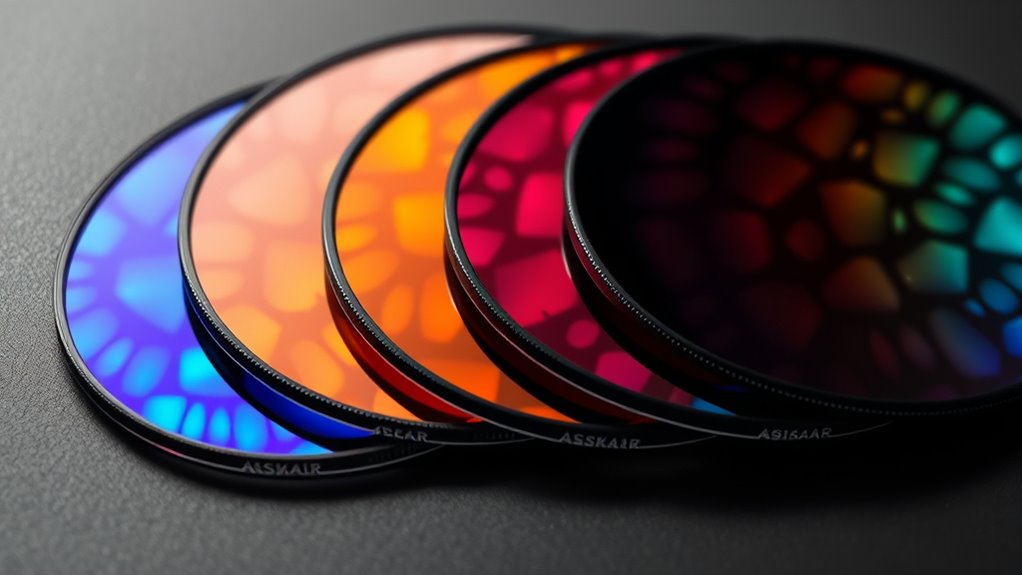

For astrophotographers seeking to capture stunning deep-sky images, selecting the right duo band filter is essential. The Askar Colour Magic C2 Duo-Band Filter S-II O-III stands out for its high transmittance and contrast enhancement, making it ideal for light-polluted skies. Meanwhile, the Askar Colour Magic Ultra E1 excels in deep-sky imaging with ultra-narrow bandwidths that cut through light pollution effectively. If I had to pick the top two right now, these would be my favorites for their clarity and specificity, but they come with distinct tradeoffs—cost, compatibility, and specialized use versus versatility.

Prime made for students and young adults
- Fast, free delivery for dorm and study essentials
- Prime Video and Amazon Music included
- Member-only deals
Key Takeaways
- The best filters deliver high transmittance to ensure bright, clear images.
- Narrowband filters excel at reducing light pollution but can limit versatility for general photography.
- Compatibility with your telescope and camera setup is crucial for optimal performance.
- Tradeoffs include higher costs for ultra-narrow bandwidth filters and limited use cases.
- Ease of use varies widely; some filters are better suited for experienced astrophotographers.


More Details on Our Top Picks
Askar Colour Magic C2 Duo-Band Filter S-II O-III, 2 Inch Narrowband Nebula Filter for Astrophotography
This model stands out for its balanced performance, offering high transmittance over 90% at key emission lines, which enhances contrast without overly complicating operation. It is particularly effective at reducing light pollution, making it suitable for urban astrophotographers. Compared to ultra-narrow filters, it provides a broader wavelength range, improving its versatility but sacrificing some of the extreme contrast that ultra-narrow filters deliver. Its main tradeoff is the need for compatible equipment and its relatively higher price for casual users, but for those looking for a reliable, all-around performer, this is a strong choice.
Pros:- High transmittance over 90% ensures bright, detailed images
- Effective at reducing light pollution
- Easy to operate with compatible telescopes and cameras
Cons:- Requires compatible telescope or camera setup
- Limited versatility outside specific emission lines
- Higher cost compared to more basic filters
Best for: Intermediate to advanced astrophotographers who need a reliable, versatile filter for various sky conditions
Not ideal for: Beginners or casual users with limited budgets who prefer ultra-narrow filters for deep-sky imaging
- Filter Type:Duo-band (SII+OIII)
- Wavelengths:500.7nm and 672nm
- Size:2 Inch
- Transmittance:Over 90%
- Application:Astrophotography, astronomical observation
Our verdict“A highly versatile duo-band filter that balances contrast enhancement with ease of use, suitable for most astrophotographers willing to invest in quality.”
Askar Colour Magic C 2″ Duo-Band Filter C1+C2 Package Set, Hα+OIII,S-II O-III
This set combines two filters—C1 and C2—each with transmittance above 90%, designed to maximize contrast and detail in nebulae. The dual filters excel at reducing light pollution and background clutter, making them excellent for astrophotographers working in urban or light-polluted environments. Their primary advantage over single-band filters is the ability to capture multiple emission lines, but this also means increased complexity in setup and potentially higher costs. Compared with ultra-narrow options, these filters offer broader bandwidths, providing more flexibility but slightly less contrast for the most detailed deep-sky work.
Pros:- High transmittance improves image clarity
- Effective at reducing light pollution
- Allows capturing multiple emission lines for richer images
Cons:- More complex setup process
- Higher price point for a package set
- Requires compatible equipment and knowledge of filter management
Best for: Advanced astrophotographers focused on high-contrast nebula imaging under various light conditions
Not ideal for: Casual observers or those new to astrophotography who prefer simple, single-filter setups
Our verdict“A powerful, dual-filter set for serious astrophotographers aiming for high-contrast, detailed nebula images, especially in light-polluted areas.”
Askar Colour Magic Super D1 Duo Narrowband Filter (OIII & Ha), 2 Inch
This filter enhances contrast and reduces light pollution by focusing on specific emission lines, with FWHM bandwidths of 6.5nm for OIII and 8.5nm for Ha. Its peak transmittance of 85% ensures bright, sharp images, making it suitable for capturing faint deep-sky objects. It works best with compatible telescopes and is ideal for dedicated narrowband astrophotography. Compared with broader filters, it delivers more precise emission line filtering but may need more careful handling and setup, especially for beginners. Its narrower bandwidth makes it less versatile for general use but excellent for high-contrast imaging of nebulae.
Pros:- Significantly enhances contrast for deep-sky objects
- Reduces light pollution effectively
- High transmittance ensures sharp images
Cons:- Requires compatible equipment
- Limited use outside narrowband imaging
- Narrow bandwidth demands precise setup
Best for: Experienced astrophotographers seeking high-contrast, detailed deep-sky images
Not ideal for: Beginners or casual users who want a more straightforward or versatile filter
- FWHM OIII:6.5nm ±0.5nm
- FWHM Ha:8.5nm ±0.5nm
- CWL:500.7nm
- Peak transmittance:85%
Our verdict“A top choice for advanced astrophotographers prioritizing high contrast and detail in nebula imaging.”
Askar Colour Magic Ultra E1 Duo-Band Filter (Ha+OIII), 2 Inch
This ultra-narrowband filter features a bandwidth of just 3nm, making it highly effective at isolating emission lines like Hα and OIII. Its design is geared toward deep-sky astrophotography under light-polluted skies, enabling the capture of faint nebulae, supernova remnants, and planetary nebulae with remarkable contrast. The high transmittance of over 85% supports bright, detailed images, but the narrow bandwidth means setup must be precise, and it is less adaptable for general or wide-field imaging. This filter is best suited for dedicated astrophotographers aiming for ultra-high contrast and deep-sky detail.
Pros:- Exceptional at reducing light pollution
- Narrow bandwidth enhances contrast dramatically
- Suitable for capturing faint deep-sky objects
Cons:- Limited versatility outside narrowband imaging
- Requires precise setup and compatible equipment
- Potentially expensive for casual users
Best for: Professional or serious amateurs focused on deep-sky astrophotography in challenging conditions
Not ideal for: Beginners or those seeking a multi-purpose filter for casual use
- Bandwidth:3nm
- Center Wavelengths:500.7nm, 656.6nm
- Size:2 inch
- Transmittance:Over 85%
Our verdict“An excellent ultra-narrowband filter for astrophotographers dedicated to high-contrast deep-sky imaging in light-polluted environments.”
Askar Colour Magic Super D2 Duo Narrowband Filter (OIII & SII), 2 Inch
This filter emphasizes contrast by transmitting specific emission lines—OIII and SII—with high peak transmittance of 85%. It is designed for astrophotographers who want to improve detail and contrast across various deep-sky objects. Its dual-band capability allows capturing multiple lines, making it versatile for different nebulae. However, like other narrowband filters, it demands compatible gear and careful handling. Compared with ultra-narrow options, it offers slightly more flexibility at the cost of some contrast detail, making it a good middle ground for dedicated astrophotographers who need both quality and adaptability.
Pros:- Enhances contrast and detail in nebulae
- Reduces light pollution effectively
- High peak transmittance ensures bright images
Cons:- Requires compatible equipment setup
- Limited use outside narrowband spectrum
- Potentially costly for entry-level users
Best for: Astrophotographers seeking a balance between contrast and versatility for deep-sky imaging
Not ideal for: Beginners or casual observers who prefer simple, all-in-one solutions
- FWHM OIII:6.5nm ±0.5nm
- FWHM SII:8.5nm ±0.5nm
- CWL:500.7nm
- Peak transmittance:85%
Our verdict“A capable, dual-band filter suitable for experienced astrophotographers targeting diverse deep-sky objects with high contrast.”

How We Picked
Our selection process focused on filters that offer outstanding performance in reducing light pollution and enhancing contrast for astrophotography. We evaluated the optical specifications, such as bandwidth and transmittance, along with user feedback and compatibility considerations. Emphasis was placed on versatility—filters that perform well across various conditions—and ease of operation for both amateur and advanced astronomers. Cost and value were also considered to recommend options suitable for different budgets.
Factors to Consider When Choosing Askar Duo Band Filter
Choosing the right Askar duo band filter hinges on understanding your specific astrophotography goals and equipment compatibility. Filters vary in bandwidth, transmittance, and purpose—some excel at reducing light pollution, others at capturing faint deep-sky objects with high contrast. To make an informed decision, consider how much detail you want to capture, your budget, and the types of objects you aim to photograph. Compatibility with your telescope and camera is critical to ensure the filter performs as intended without unnecessary frustration.
Understanding Bandwidth and Transmittance
Bandwidth determines how narrowly a filter isolates specific emission lines. Ultra-narrow filters (around 3nm or less) excel at reducing light pollution and revealing faint details, but require precise setup and compatible gear. Broader duo-band filters (around 6-8nm) offer more flexibility and are easier to use, but may not provide the same level of contrast for very faint objects. High transmittance, generally over 85%, ensures bright, clear images, making it a key feature to prioritize.
Compatibility and Intended Use
Most filters are designed for 2-inch eyepieces or camera adapters. Confirm your equipment matches the filter size and connection type. Narrowband filters are ideal for deep-sky objects like nebulae, especially in light-polluted areas. If you’re primarily interested in planetary or wide-field views, broader filters might suit you better. Consider your experience level—beginners often benefit from simpler, broader options, while seasoned astrophotographers can leverage ultra-narrowband filters for more detailed imaging.
Cost and Value
Premium ultra-narrowband filters tend to be more expensive but offer unmatched contrast for specific objects. Dual-band filters strike a balance, providing versatility and good performance at a mid-range price. Entry-level filters may be more affordable but might not deliver the same level of detail or light pollution reduction. Weigh your budget against your goal of image quality and the types of objects you wish to capture.
Frequently Asked Questions
What is the main benefit of using a duo band filter?
The primary advantage of a duo band filter is its ability to selectively transmit specific emission lines, such as OIII and SII, which enhances contrast and detail in astrophotography. This selective filtering reduces light pollution and skyglow, making faint objects like nebulae stand out more clearly against the background, especially in urban environments.
Are ultra-narrowband filters better than broader duo band filters?
Ultra-narrowband filters provide higher contrast and are better at isolating faint emission lines, making them ideal for deep-sky astrophotography under light-polluted skies. However, they require precise equipment and are less versatile for general use. Broader duo band filters are more adaptable and easier to use, offering a good compromise for users who want decent contrast without the complexity of ultra-narrow options.
Can I use these filters for planetary imaging?
Generally, duo band and narrowband filters are designed for deep-sky objects like nebulae rather than planetary imaging. For planets, traditional broadband or specialized planetary filters are more effective because they allow more light and detail for the high-contrast features on planetary surfaces. If planetary imaging is your main focus, these duo band filters may not be the best choice.
How important is filter size when choosing a duo band filter?
Filter size is critical because it must match your telescope’s eyepiece or camera adapter. Most astrophotography filters come in standard 2-inch sizes, which fit a wide range of equipment. Using the correct size ensures optimal light transmission and compatibility. An incompatible filter size can lead to vignetting or the need for adapters, which might affect image quality or ease of use.
Are duo band filters worth the investment for beginners?
For beginners, simpler and more affordable filters may be more practical, especially when starting out. However, if a beginner is committed to astrophotography and wants to improve contrast and detail in their images, investing in a good duo band filter can be worthwhile. It provides a solid foundation for capturing high-quality deep-sky images, though it does come with a steeper learning curve and higher cost.
Conclusion
For those just starting out or on a budget, broad duo band filters like the Askar Colour Magic C2 offer a good balance of performance and affordability. Advanced astrophotographers prioritizing maximum detail and contrast should consider ultra-narrowband options like the Ultra E1 or Super D1 for deep-sky imaging. Urban dwellers or those frequently shooting in light-polluted conditions will benefit most from filters with high transmittance and effective light pollution reduction. Ultimately, your choice depends on your equipment, target objects, and level of experience—select wisely to get the most out of your astrophotography pursuits.
Fall Picks
fall essentials
As an affiliate, we earn on qualifying purchases.