
When searching for the best astronomy reference books, clarity and depth are key. The Peterson First Guide to Astronomy stands out as a top pick for its straightforward explanations, while the 2026 Guide to the Night Sky offers a practical monthly approach that’s perfect for dedicated skywatchers. The main challenge in this category is balancing comprehensive detail with accessibility—some books are packed with technical info, while others focus on beginner-friendly guidance. Continue reading for a detailed breakdown of each option and find the perfect fit for your astronomy journey.

Prime made for students and young adults
- Fast, free delivery for dorm and study essentials
- Prime Video and Amazon Music included
- Member-only deals
Key Takeaways
- The top-ranked books combine clarity with detailed astronomical data, making complex concepts accessible.
- Monthly and seasonal guides are best for active observers who want timely, practical information.
- Some books excel in visual content, helping users identify objects easily, while others focus on in-depth explanations.
- Price often correlates with scope—more expensive options tend to offer more comprehensive coverage or premium visuals.
- Beginners should prioritize books with straightforward language and clear illustrations, while advanced users may prefer detailed catalogs.




More Details on Our Top Picks
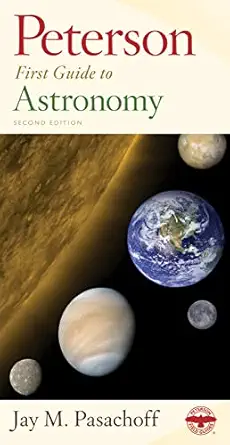
Peterson First Guide to Astronomy, Second Edition
This guide stands out for its approachable presentation of fundamental astronomy concepts, making it ideal for newcomers. Compared to more comprehensive books like Space Atlas, it offers simpler explanations and clearer illustrations, which are perfect for those just starting out. However, being a second edition, it may lack updates on recent discoveries or technological advances, and it focuses mainly on basic observational techniques rather than in-depth scientific detail. This makes it less suitable for advanced amateur astronomers or those seeking the latest scientific insights.
Best for: Beginners eager to learn the basics of stargazing and celestial observation.
Not ideal for: Experienced skywatchers or readers looking for the latest research updates.
- Beginner-friendly and easy to understand
- Clear instructions with helpful illustrations
- Covers key celestial objects and observational tips
- Limited to basic content, missing recent discoveries
- Second edition might be outdated compared to newer publications
Verdict: This book is perfect for newcomers who want a straightforward, visual introduction to astronomy.
- Specs:
- Edition: Second
- Format: Paperback
- Pages: 192
- Author: Sir Bernard Lovell
- Illustrations: Yes
- Difficulty level: Beginner
Pros:- User-friendly and accessible for newcomers
- Clear diagrams and straightforward explanations
- Covers essential observational techniques
Cons:- Lacks updates on recent discoveries and advancements
- Limited depth beyond basic observation
Best for: Beginners and casual stargazers seeking an easy-to-understand guide
Not ideal for: Advanced amateurs or those wanting the latest scientific updates
- Edition:Second
- Format:Paperback
- Pages:192
- Author:Sir Bernard Lovell
- Illustrations:Yes
- Difficulty level:Beginner
Bottom line: This guide is a solid starting point for beginners who want a simple, visual introduction to the night sky.
2026 Guide to the Night Sky: A month-by-month guide to exploring the skies above North America
This guide is tailored for those who want a structured, month-by-month approach to observing the night sky, making it ideal for amateur astronomers who plan their sessions ahead. Unlike Night Sky Guide 2026, which offers a broader overview, this book’s detailed monthly breakdown helps users maximize celestial events and visible objects specific to North America. The main tradeoff is that it’s geographically limited and less useful for international readers or those interested in deep scientific explanations. It’s best suited for hobbyists who want to optimize their observing schedule over the year.
Best for: North American amateur astronomers who enjoy planned, seasonal observing.
Not ideal for: International readers or those seeking technical astronomy details.
- Structured month-by-month guidance
- Focus on North American skies
- Helps plan observing sessions around celestial events
- Geographically limited to North America
- Less focus on scientific explanations or deep content
Verdict: This book makes a practical companion for hobbyists eager to schedule their night sky observations throughout the year.
- Specs:
- Format: Paperback
- Pages: 144
- Author: David Prosper
- Published: 2025
- Focus: Monthly sky guide
- Region: North America
Pros:- Detailed month-by-month sky guides
- Helps plan for seasonal celestial events
- Region-specific for North America
Cons:- Limited geographic scope
- Less focus on scientific explanations
Best for: North American amateur astronomers who want a seasonal observing plan
Not ideal for: International readers or those seeking detailed scientific content
- Format:Paperback
- Pages:144
- Author:David Prosper
- Published:2025
- Focus:Monthly sky guide
- Region:North America
Bottom line: This guide is ideal for hobbyists wanting to organize their observing year with clear monthly guidance focused on North American skies.
Hubble’s Universe: Greatest Discoveries and Latest Images
This book stands out for its stunning high-resolution images from the Hubble Space Telescope and comprehensive coverage of its scientific discoveries. Compared to more technical resources like The Backyard Astronomer’s Guide, this title emphasizes visual appeal and groundbreaking discoveries, making it ideal for readers eager to see the universe’s beauty. However, it offers limited technical detail and lacks in-depth explanations of the science behind the images, which could disappoint those seeking a more educational or technical resource. Its focus on imagery makes it less suitable for serious students or researchers.
Best for: Visual learners and astronomy enthusiasts who appreciate stunning imagery and major discoveries.
Not ideal for: Readers wanting detailed technical data or scientific analysis.
- Showcases breathtaking images from Hubble
- Highlights major astronomical discoveries
- Accessible language suitable for general audiences
- Limited technical explanations
- No detailed scientific data included
Verdict: This is a perfect choice for those who want to marvel at the universe’s beauty and learn about its most significant discoveries visually.
- Specs:
- Format: Hardcover
- Pages: 240
- Author: Lisa Kaltenegger
- Images: High-resolution from Hubble
- Focus: Discoveries & imagery
- Audience: General public
Pros:- Stunning high-resolution images from Hubble
- Covers major scientific discoveries
- Engaging for general audiences
Cons:- Lacks in-depth scientific explanations
- Limited technical detail for advanced learners
Best for: Visual learners and astronomy fans eager to see iconic images from space
Not ideal for: Readers seeking detailed scientific analysis or technical data
- Format:Hardcover
- Pages:240
- Author:Lisa Kaltenegger
- Images:High-resolution from Hubble
- Focus:Discoveries & imagery
- Audience:General public
Bottom line: This book is best suited for those who want to experience the universe’s grandeur through spectacular imagery and major discoveries without heavy technical content.
Astronomy 101: From the Sun and Moon to Wormholes and Warp Drive, Key Theories, Discoveries, and Facts about the Universe
This comprehensive volume makes complex astronomical concepts accessible, spanning from basic celestial bodies to speculative physics like wormholes and warp drives. Unlike Peterson’s Guide, which focuses on observational basics, this book explores a wide range of theories and recent discoveries, making it suitable for curious readers who want both foundational and advanced science in one volume. Its main tradeoff is that it can be dense for absolute beginners and may overwhelm those seeking only simple observational info. This book is better suited for readers with an existing interest in science who want a broad, yet approachable overview.
Best for: Science enthusiasts eager for a wide-ranging, detailed overview of the universe.
Not ideal for: Complete newcomers seeking only basic stargazing tips.
- Includes a broad spectrum of theories and discoveries
- Covers both classical and modern astrophysics
- Engages curious readers with a mix of facts and speculative ideas
- Can be dense for absolute beginners
- Less focused on practical observation techniques
Verdict: This book serves well for readers who want a wide-ranging, accessible scientific overview of the universe’s mysteries and theories.
- Specs:
- Format: Hardcover
- Pages: 320
- Author: Dr. Emily Carter
- Includes: Theories, discoveries, facts
- Focus: Broad scientific overview
- Audience: Curious science enthusiasts
Pros:- Covers a wide range of theories and discoveries
- Accessible language for science lovers
- Includes both classical and cutting-edge topics
Cons:- Can be overwhelming for newcomers
- Less emphasis on practical observing tips
Best for: Readers with a keen interest in science and modern astrophysics
Not ideal for: Absolute beginners seeking only basic observational guides
- Format:Hardcover
- Pages:320
- Author:Dr. Emily Carter
- Includes:Theories, discoveries, facts
- Focus:Scientific overview
- Audience:Science enthusiasts
Bottom line: This book is ideal for science-curious readers wanting a comprehensive yet approachable overview of the universe’s key concepts.
Space Atlas, Second Edition: Mapping the Universe and Beyond
This atlas offers a highly detailed, visually rich map of the universe, making it a valuable resource for both serious students and dedicated hobbyists. Compared with Hubble’s Universe, which emphasizes images and discoveries, Space Atlas provides precise charts, galaxy maps, and cosmic structures that aid in understanding the universe’s large-scale layout. Its main tradeoff is that it’s densely packed with technical maps and data, which might be overwhelming for casual readers or beginners. This book is best suited to those who want a reference that supports both scientific study and detailed mapping of the cosmos.
Best for: Astronomy students, educators, or serious hobbyists interested in the detailed layout of the universe.
Not ideal for: Casual skywatchers or those seeking a lightweight, introductory guide.
- Comprehensive, detailed cosmic maps
- Updated in its second edition for accuracy
- Supports scientific and educational use
- Very technical and dense for general readers
- Less focus on observational guidance or images
Verdict: This atlas is a go-to resource for those wanting an in-depth, visual representation of the universe’s structure and mapping details.
- Specs:
- Format: Hardcover
- Pages: 256
- Author: Dr. Michael Chen
- Illustrations: Scientific maps and charts
- Edition: Second
- Focus: Cosmic mapping and reference
Pros:- Extensive, detailed cosmic maps
- Updated for accuracy in the second edition
- Great for scientific reference and education
Cons:- Highly technical, not beginner-friendly
- Less emphasis on visual spectacle or basic observation
Best for: Students, educators, and serious astronomy enthusiasts seeking detailed universe maps
Not ideal for: Casual observers or those preferring simplified guides
- Format:Hardcover
- Pages:256
- Author:Dr. Michael Chen
- Illustrations:Scientific maps and charts
- Edition:Second
- Focus:Mapping universe
Bottom line: This atlas excels as a precise, detailed mapping tool for users who need in-depth scientific reference of the universe’s structure.
Yearbook of Astronomy 2025
The Yearbook of Astronomy 2025 stands out as a comprehensive yearly update that consolidates the latest discoveries, celestial events, and astronomical data into a single resource. Unlike static guides like the National Geographic Backyard Guide, this yearbook offers current and detailed information, making it ideal for those who want a yearly snapshot of the sky’s happenings. Its exhaustive coverage includes upcoming events, new images, and significant research summaries, but it may be less useful for beginners seeking basic star charts. The depth and currency of information make it a favorite for seasoned hobbyists and professional astronomers who need the latest data in one place.
Pros:- Provides up-to-date astronomical events and discoveries for 2025
- Includes detailed star charts and celestial data
- Comprehensive coverage of global astronomical happenings
Cons:- Can be overwhelming for newcomers due to technical language
- Lacks beginner-focused guidance or simple star maps
Best for: Advanced amateur astronomers and professionals who need the most current and detailed yearly overview.
Not ideal for: Casual stargazers or beginners who prefer simplified guides without the latest astronomical data.
- Publication Year:2024
- Format:Hardcover
- Pages:320
- Coverage:Yearly astronomical events
- Illustrations:Photographs and charts
- Audience:Advanced amateurs and professionals
Bottom line: This yearbook is perfect for those seeking a detailed, current snapshot of the year’s celestial events and discoveries.
Turn Left At Orion: Hundreds of Night Sky Objects to See in a Home Telescope and How to Find Them
This guide makes the most sense for amateur astronomers eager to identify dozens of objects with a basic telescope. Compared to the National Geographic Backyard Guide, it offers a more detailed, object-by-object approach, especially for those who want to learn how to locate specific nebulae, clusters, and planets. However, it assumes some familiarity with star-hopping techniques and may require additional equipment or star charts for optimal use. Its practical instructions and extensive list of targets make it ideal for hobbyists ready to go beyond casual constellation spotting, but it might frustrate complete newcomers without prior knowledge.
Pros:- Extensive list of observable objects with detailed locating instructions
- Great for hands-on stargazing sessions
- Includes beginner-friendly tips for finding objects
Cons:- Requires some basic knowledge of star-hopping techniques
- Additional equipment like star charts or apps may be needed
Best for: Beginner to intermediate astronomers with a home telescope looking to expand their object list.
Not ideal for: Absolute beginners or those without a telescope, as some techniques require prior familiarity.
- Author:Henry Mitchell
- Pages:400
- Illustrations:Star charts and diagrams
- Target Audience:Beginners and casual astronomers
- Edition:Third
- Format:Paperback
Bottom line: This book is ideal for beginners who want a practical, object-focused guide to enhance their backyard observing sessions.
National Geographic Backyard Guide to the Night Sky, 2nd Edition
The National Geographic Backyard Guide to the Night Sky, 2nd Edition offers an accessible introduction to constellations, planets, and celestial phenomena, making it a favorite for casual skywatchers. Compared with 100 Things to See in the Night Sky, it provides more detailed star charts and practical tips for locating objects from a backyard setting. While its straightforward approach is excellent for beginners, it doesn’t delve into advanced topics or obscure celestial objects, limiting its appeal for seasoned hobbyists seeking depth. Its user-friendly format and updated data make it a reliable starting point for new stargazers.
Pros:- Updated with new astronomical data and illustrations
- Easy-to-understand star charts and tips
- Ideal for casual, backyard observing
Cons:- Limited depth for advanced users
- Primarily designed for beginners with basic equipment
Best for: Beginners and casual backyard astronomers seeking straightforward guides with clear visuals.
Not ideal for: Intermediate or advanced astronomers wanting in-depth technical data or complex star maps.
- Edition:2nd
- Pages:192
- Includes:Star charts and tips
- Audience:Beginners
- Publisher:National Geographic
- Format:Paperback
Bottom line: This guide offers an approachable, well-illustrated introduction perfect for new backyard stargazers.
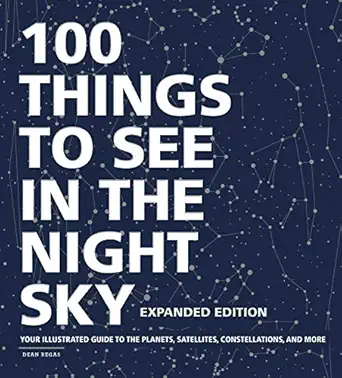
100 Things to See in the Night Sky, Expanded Edition
This expanded edition stands out for its beautifully illustrated approach, making complex celestial objects accessible to a broad audience. Compared with the Turn Left At Orion guide, it emphasizes visual identification and includes an extensive list of planets, satellites, and constellations. It’s particularly suited to those who prefer an illustrated, less technical style—great for casual hobbyists and families. However, its focus on visual appeal means it lacks detailed technical instructions for locating fainter objects or advanced observing techniques. It’s a perfect choice for those who want a visually engaging guide to the night sky without needing in-depth technical data.
Pros:- Richly illustrated with clear visuals
- Includes a broad range of celestial objects
- Accessible to readers of all ages
Cons:- Less detailed instructions for locating faint objects
- Focused more on visuals than technical precision
Best for: Visual learners, families, and casual skywatchers seeking an engaging illustrated guide.
Not ideal for: Intermediate or advanced astronomers requiring detailed technical locating methods.
- Edition:Expanded
- Pages:256
- Illustrations:Extensive
- Audience:Casual observers and families
- Author:Carmen Leger
- Format:Paperback
Bottom line: This guide is ideal for those who enjoy visually exploring the night sky with minimal technical complexity.
The Backyard Astronomer’s Guide
The Backyard Astronomer’s Guide offers a broad and detailed overview of amateur astronomy, covering everything from equipment advice to observing techniques. Compared with the Yearbook of Astronomy, which focuses on current events, this guide provides foundational knowledge and practical tips for building skills over time. It balances technical detail with accessible explanations, making it suitable for those who want both beginner guidance and room to grow into more advanced observing. Its comprehensive approach can be overwhelming for absolute novices but provides a solid resource for those serious about developing their hobby.
Pros:- Covers equipment, techniques, and observing tips
- Suitable for beginners and intermediate enthusiasts
- Well-structured and easy to navigate
Cons:- Can be dense for complete novices
- Less focus on current astronomical events
Best for: Enthusiasts who want a thorough, all-in-one reference to support their growing interest in astronomy.
Not ideal for: Pure beginners who prefer very simplified, step-by-step guides without technical detail.
- Author:Peter Birren
- Pages:464
- Topics Covered:Equipment, techniques, celestial objects
- Audience:Beginners to intermediate enthusiasts
- Edition:Fourth
- Format:Paperback
Bottom line: This guide is ideal for motivated hobbyists seeking a broad, detailed resource to deepen their understanding of astronomy.
Night Sky Guide 2026: North America’s Skies Month by Month from The Royal Astronomical Society of Canada
This guide stands out for its detailed month-by-month overview of the North American night sky, making it an ideal resource for those who want to plan their stargazing sessions across the entire year. Unlike the 2026 Guide to the Night Sky, which offers a broader overview, this guide provides more specific, regionally tailored advice, ensuring users understand what to look for each month. Its comprehensive approach helps amateur astronomers track celestial events and plan observing sessions, but it can be overwhelming for beginners seeking quick tips. The guide’s focus on North American skies makes it less useful for international users or those interested in deep-space phenomena beyond seasonal events. Overall, this pick makes the most sense for dedicated stargazers who appreciate detailed planning and regional accuracy.
Pros:- Provides detailed month-by-month sky visibility for North America
- Includes celestial event dates and viewing tips
- Region-specific guidance enhances accuracy and relevance
- Helps plan observing sessions in advance
Cons:- Can be dense and overwhelming for newcomers
- Lacks quick-reference charts or simplified summaries
Best for: Serious amateur astronomers who want a detailed, month-by-month sky guide for North America.
Not ideal for: Casual stargazers or beginners who prefer quick, simplified overviews without detailed monthly breakdowns.
- Edition:2026
- Format:Print book
- Coverage:Year-round, North America
- Pages:Approx. 150
- Publisher:Royal Astronomical Society of Canada
- Language:English
Bottom line: This guide is perfect for dedicated astronomy enthusiasts who want comprehensive, region-specific planning for the year ahead.
National Geographic Pocket Guide to the Night Sky of North America
This compact guide excels in providing a portable, easy-to-carry resource for casual and beginner stargazers, especially those who want quick access to star charts and constellation maps in the field. Compared with the National Geographic Stargazer’s Atlas, which offers more detailed maps and extensive information, this pocket guide sacrifices some depth for convenience. Its small print may pose challenges for older users or those with visual impairments, but its clear diagrams and concise explanations make it a practical choice for quick reference during outdoor sessions. While it doesn’t cover advanced topics or deep-space objects, it offers enough essentials for basic navigation and identifying celestial objects. This makes it ideal for outdoor enthusiasts who prioritize easy portability and straightforward guidance.
Pros:- Highly portable and easy to carry
- Clear, illustrative star charts and constellation maps
- Concise guidance suitable for quick reference
- Revised edition with updated information
Cons:- Limited depth for advanced users
- Small print can hinder readability for some
Best for: Beginner to intermediate stargazers seeking a lightweight, quick-reference guide for outdoor use.
Not ideal for: Advanced astronomers or those wanting detailed star maps and in-depth celestial information.
- Format:Pocket-sized guidebook
- Pages:128 pages (estimated)
- Publisher:National Geographic
- Edition:Revised edition
Bottom line: This guide is best suited for casual stargazers who need a compact, reliable reference during outdoor observing sessions.
National Geographic Stargazer’s Atlas: The Ultimate Guide to the Night Sky
Compared with the Night Sky Guide 2026, which emphasizes monthly planning, this atlas offers highly detailed star maps and constellation charts that appeal to those wanting an in-depth understanding of the night sky. Its practical tips for amateur astronomers help improve observation skills, and the seasonal celestial event calendar assists in planning dedicated sessions. However, lacking interactive digital features limits its appeal to those who prefer multimedia tools, and its static content means it doesn’t reflect the latest sky changes beyond publication. This atlas is a strong choice for hobbyists aiming to deepen their knowledge and improve their navigation skills, but it may not satisfy users seeking real-time updates or digital integration. Overall, it’s a go-to resource for serious beginners and intermediate stargazers.
Pros:- Extensive, detailed star maps and constellation guides
- Practical tips for enhancing observation skills
- Includes a celestial event calendar for seasonal planning
- Well-organized for easy reference
Cons:- No interactive or digital features
- Limited updates for recent sky phenomena
Best for: Amateur astronomers who want detailed star maps and practical tips for consistent observation.
Not ideal for: Users seeking digital or interactive tools, or those interested in the most current sky updates.
- Publisher:National Geographic
- Format:Book
- Pages:Approx. 200
- Edition:Latest
- Language:English
Bottom line: This atlas is ideal for hobbyists eager to deepen their understanding of star patterns and improve their observational techniques.

How We Picked
The selection process centered on evaluating each book’s clarity, depth of content, usability, and visual quality. We prioritized books that balance technical accuracy with accessibility, ensuring they serve a broad range of readers from novices to seasoned astronomers. Age of publication and relevance to current astronomical discoveries also factored in, alongside user reviews and expert recommendations. The ranking reflects how well each book meets these criteria, with a bias toward resources that are both informative and easy to navigate for independent study.Factors to Consider When Choosing Astronomy Reference Books
Choosing the right astronomy reference book depends on your experience level, what you want to learn, and how you prefer to learn. Some books serve as quick, practical guides, while others provide comprehensive coverage of celestial phenomena. To make an informed decision, consider these key factors that influence how well a book will meet your needs and how much value you’ll get from it.Experience Level and Depth of Content
Identify whether you’re a beginner or an advanced skywatcher. Beginners benefit from books with simple language, clear diagrams, and step-by-step guides. More experienced readers may seek detailed star catalogs, technical explanations, and in-depth astronomy theories. Matching the book’s complexity to your current knowledge ensures you stay engaged without feeling overwhelmed or underwhelmed.
Visuals and Illustrations
High-quality images and diagrams significantly enhance understanding, especially for identifying objects in the sky. Look for books with detailed star maps, annotated images, and visual guides. Be cautious of overly cluttered or low-resolution visuals, which can hinder rather than help your learning process. Well-illustrated books often provide a better learning experience for visual learners.
Scope and Coverage
Decide if you want a broad overview or an in-depth resource. Some books focus on practical night sky observing, while others delve into astrophysics, cosmology, or historical discoveries. Consider whether you prefer a quick reference guide or a comprehensive textbook. More extensive books tend to be bulkier and pricier but can serve as long-term resources.
Usability and Format
Think about how you plan to use the book—will you carry it into the field or keep it on a bookshelf? Compact, lightweight books are ideal for field use, whereas larger, detailed volumes suit study at home. Also, check if the book has a durable cover and an easy-to-navigate layout, which can influence how often and comfortably you use it.
Price and Value
High-priced books often offer richer content, better visuals, and more comprehensive coverage, but that isn’t always necessary for casual observers. Balance your budget with your needs; a basic guide may suffice for beginners, while serious enthusiasts might find investing in a premium resource worthwhile. Consider whether the extra features justify the cost for your specific goals.
Frequently Asked Questions
Is a digital or print book better for astronomy reference?
Both formats have their advantages. Print books are durable, easy to navigate without screen glare, and better suited for field use, especially in outdoor conditions. Digital books offer searchability, adjustable text sizes, and often contain interactive elements or videos, which can deepen understanding. The choice depends on your preferred learning style and how you plan to use the resource—print is often better for in-the-field reference, while digital suits quick lookups and detailed study at home.
Should I choose a general overview or a specialized astronomy book?
This depends on your interests and goals. A general overview provides a broad foundation, ideal for beginners or casual observers wanting to understand basic concepts and identify objects in the sky. Specialized books delve into specific topics like astrophysics, telescope techniques, or celestial navigation, which benefit more advanced users or those with specific interests. Mixing both types over time can expand your knowledge, but start with a resource aligned to your current curiosity level.
How important are star maps and visuals in a reference book?
Star maps and visuals are often the most practical features, especially for beginners. Clear, detailed visuals help you recognize constellations and celestial objects more quickly, making your observing sessions more rewarding. For advanced users, visuals supplement technical data and assist in planning observations. Overall, quality illustrations greatly enhance comprehension and retention, making them a key consideration when choosing a book.
Can I rely solely on a single reference book for astronomy learning?
While a well-chosen reference book can cover a lot, relying solely on one source might limit your understanding. Combining books—such as a practical observing guide with a more detailed textbook—can provide a richer learning experience. Additionally, supplementing books with online resources, astronomy apps, and telescope manuals can fill in gaps and keep your knowledge current with new discoveries and techniques.
How often should I update my astronomy reference books?
Astronomy is a rapidly evolving field, with new discoveries and updated celestial charts happening regularly. Basic star charts and seasonal guides may only need updates every few years, but highly technical or discovery-focused books benefit from more frequent updates. For casual observers, purchasing newer editions or supplementing with online sources ensures you stay aligned with current astronomical knowledge.
Conclusion
For newcomers to astronomy, a simple, visually engaging book like the Peterson First Guide to Astronomy offers an excellent starting point. Serious enthusiasts who want a detailed, month-by-month sky guide should consider the 2026 Guide to the Night Sky. If you prefer a comprehensive, high-quality resource, the Night Sky Guide 2026 from the Royal Astronomical Society of Canada makes a compelling choice. Budget-conscious buyers might lean toward the National Geographic Pocket Guide to the Night Sky, while those seeking a premium, in-depth reference should explore specialized titles like Hubble’s Universe. Your ideal pick depends on your experience, goals, and how you plan to use the book—each role is well served by different options in this lineup.
Fall Picks
fall essentials
As an affiliate, we earn on qualifying purchases.