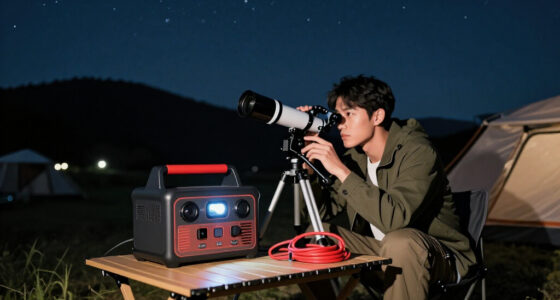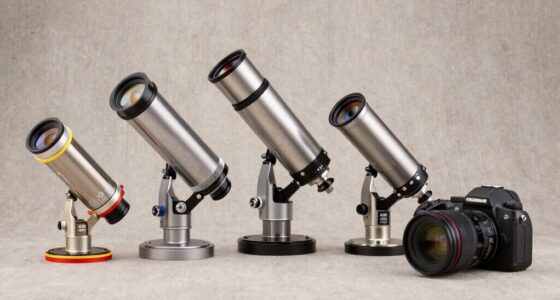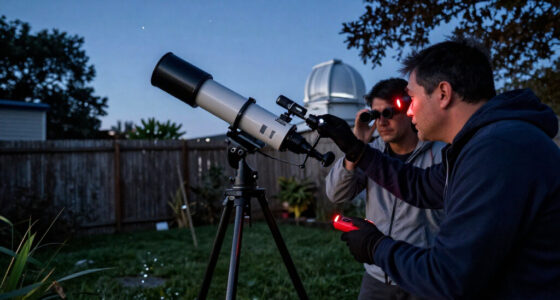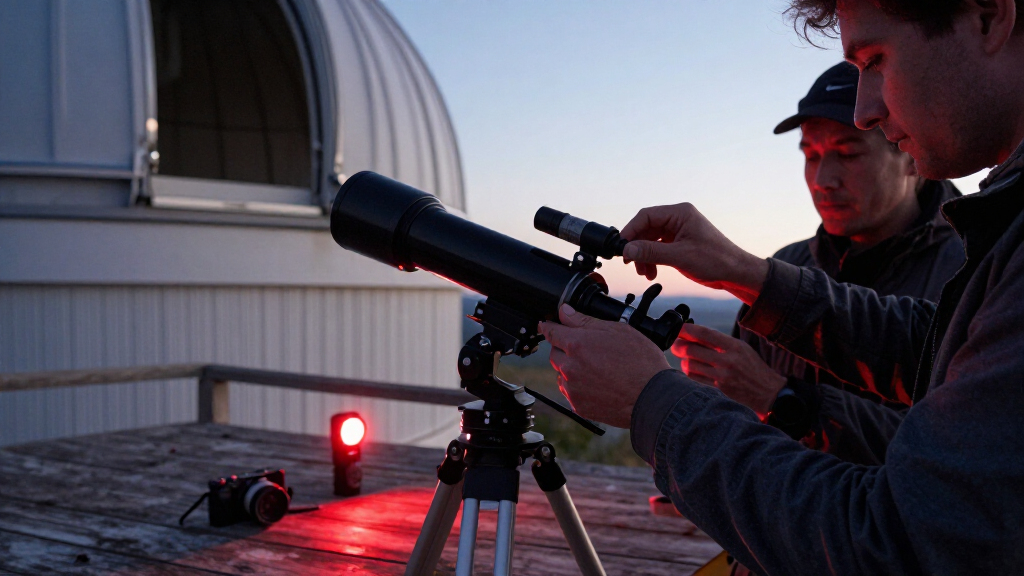

If you’re exploring astrophotography, choosing the right telescope camera adapter is essential for connecting your camera to your telescope effectively. The best overall pick, the Celestron Universal 1.25″ T-Adapter, offers compatibility and reliable performance. For those using Canon EOS cameras, the Astromania T2 T Ring and T Adapter delivers excellent precision. Meanwhile, the Astromania Extendable Camera Adapter stands out for its versatility with adjustable length. These options highlight key tradeoffs: affordability versus versatility, fixed versus extendable design, and compatibility across camera brands. Keep reading for a detailed breakdown of each product to help you find the perfect fit for your astrophotography setup.

Prime made for students and young adults
- Fast, free delivery for dorm and study essentials
- Prime Video and Amazon Music included
- Member-only deals
Key Takeaways
- The top adapters combine durability with precise fitment, reducing vignetting and image distortion.
- Extendable models provide flexibility but can introduce stability issues if not well-designed.
- Compatibility with both DSLR and mirrorless cameras varies; verify your camera model before purchasing.
- Quality build materials like metal tend to last longer and resist wear better than plastic alternatives.
- Price often correlates with features such as adjustable length, build quality, and brand reputation.
| Astromania Camera Adapter, Variable Extension Projection Adapter 1.25″ |  | Best Overall for Flexibility and Ease of Use | Inner Diameter: 1.25 inches | Objective Lens Diameter: 38 millimeters | Optical Tube Length: 1.25 inches | VIEW LATEST PRICE | See Our Full Breakdown |
| SVBONY T2 T Ring Adapter, Metal 1.25 inch Telescope Accessory |  | Best for Canon EOS Users Seeking Direct Connection | Compatibility: Canon EOS, Rebel SLR/DSLR | Material: Aluminum | Diameter: 1.25 inches | VIEW LATEST PRICE | See Our Full Breakdown |
| Astromania T2 T Ring and T Adapter for Canon EOS Cameras |  | Best Universal T-Ring Set for Canon EOS | Compatibility: Canon EOS SLR/DSLR | Mount: T2 / M42x0.75 | Material: Aluminum | VIEW LATEST PRICE | See Our Full Breakdown |
| Astromania Telescope Photo Adapter, 1.25-inch Fixed Telescope Camera Adapter |  | Best for Versatile, Basic Astrophotography | Material: Black-anodized aluminum | Compatibility: 1.25-inch telescope focusers | Use: Prime-focus and eyepiece projection | VIEW LATEST PRICE | See Our Full Breakdown |
| SVBONY T2 T Ring Camera, 1.25” T Ring Telescope, Compatible with Canon EOS |  | Best for Manual Focus Canon EOS Photographers | Compatibility: Canon EOS EF mount | Material: Metal | Diameter: 1.25 inches | VIEW LATEST PRICE | See Our Full Breakdown |
| Telescope Camera Adapter for Nikon DSLR, Prime Focus Imaging |  | Best Overall for Versatility and Compatibility | Compatibility: Nikon SLR/DSLR cameras (excluding mirrorless) | Extension Tube Length: 4.9 inches | Weight: 10.5 ounces | VIEW LATEST PRICE | See Our Full Breakdown |
| Celestron SCT T-Adapter for Schmidt-Cassegrain Telescope Astrophotography |  | Best for Rigorous Long-Exposure Astrophotography | Mount: Equatorial Mount | Focus Type: Manual Focus | Compatible Devices: Camera | VIEW LATEST PRICE | See Our Full Breakdown |
| SVBONY Telescope Photo Adapters, 1.25” T Adapter and T2 T Ring Adapter |  | Best Budget-Friendly Metal Adapter Set | Material: Metal | Compatibility: Nikon SLR DSLR, standard telescopes and microscopes | Diameter: 1.25 inches | VIEW LATEST PRICE | See Our Full Breakdown |
| Astromania 2 Inch T2 Focal Telescope Camera Adapter for SLR/DSLR Cameras |  | Best for Fast, Minimal-Extension Imaging | Compatibility: Universal 2 Inch focusers | Material: Anodized aluminum | Thread Type: M48x0.75, M42 T-mount | VIEW LATEST PRICE | See Our Full Breakdown |
| Celticbird 1.25″ Telescope Camera T-Adapter with Camera Adapter for Canon EOS |  | Best for Canon EOS Users on a Budget | Mount: T-Mount | Focus Type: Manual | Optical Tube Length: 1.25 inches | VIEW LATEST PRICE | See Our Full Breakdown |
| Astromania Extendable Camera Adapter with T Adapter for Telescopes |  | Best for Versatile Adjustability and Compatibility | Material: Black anodized aluminum | Compatibility: Reflector and refractor telescopes with 1.25-inch eyepiece holders | Threaded for: Standard 1.25 inch filters | VIEW LATEST PRICE | See Our Full Breakdown |
| Celestron Universal 1.25″ T-Adapter for DSLR Cameras |  | Best for Simplicity and Compatibility with DSLR Cameras | Compatibility: DSLR or SLR cameras, telescopes with 1.25″ focuser or eyepiece adapter | Focal Length: 1.25 inches | Focus Type: Manual | VIEW LATEST PRICE | See Our Full Breakdown |
| Alstar Telescope Photo Adapter Extendable Camera Adapter for DSLR Cameras |  | Best for Precise Focus and Stability in Deep-Sky Imaging | Mount: Equatorial Mount | Focus Type: Manual | Finderscope: Reflex | VIEW LATEST PRICE | See Our Full Breakdown |
| telescope camera adapter | Compatibility | Material | Weight |
|---|---|---|---|
| Astromania Camera Adapter | — | Anodized aluminum | — |
| SVBONY T2 T Ring Adapter | Canon EOS, Rebel SLR/DSLR | Aluminum | 5.28 ounces |
| Astromania T2 T Ring and T Ada | Canon EOS SLR/DSLR | Aluminum | 1.76 ounces |
| Astromania Telescope Photo Ada | 1.25-inch telescope focusers | Black-anodized aluminum | — |
| SVBONY T2 T Ring Camera | Canon EOS EF mount | Metal | — |
| Telescope Camera Adapter for N | Nikon SLR/DSLR cameras (excluding mirrorless) | — | 10.5 ounces |
| Celestron SCT T-Adapter for Sc | — | — | 0.08 kg |
| SVBONY Telescope Photo Adapter | Nikon SLR DSLR, standard telescopes and microscopes | Metal | 2.39 ounces |
| Astromania 2 Inch T2 Focal Tel | Universal 2 Inch focusers | Anodized aluminum | 1.4 ounces |
| Celticbird 1.25" Telescope Cam | — | — | — |
| Astromania Extendable Camera A | Reflector and refractor telescopes with 1.25-inch eyepiece holders | Black anodized aluminum | — |
| Celestron Universal 1.25" T-Ad | DSLR or SLR cameras, telescopes with 1.25" focuser or eyepiece adapter | — | 9.07 g |
| Alstar Telescope Photo Adapter | — | — | — |
More Details on Our Top Picks
Astromania Camera Adapter, Variable Extension Projection Adapter 1.25″
This adapter stands out for its variable extension feature, allowing precise focal length adjustments, which makes it highly versatile for both planetary and lunar imaging. Compared to the Astromania Telescope Photo Adapter, which offers fixed focal lengths, this model provides more control over image magnification, though it sacrifices some simplicity. Its sturdy anodized aluminum build ensures durability during prolonged sessions, while the 34mm scale facilitates accurate focus tuning. The main tradeoff is its limited to 1.25″ connections, making it incompatible with larger focusers, and it lacks any automated focusing features, requiring manual operation. Overall, this makes a solid choice for those starting in astrophotography who want adjustable focal length options without complex electronics.
Pros:- Easy to operate, ideal for beginners
- Precise focal length adjustment with built-in scale
- Sturdy anodized aluminum construction for durability
- Compatible with various high-magnification eyepieces
Cons:- Limited to 1.25″ telescope connections
- No motorized or automated focusing features
- Manual focus adjustment needed
Best for: Beginners or hobbyists seeking an adaptable, easy-to-use adapter for planetary and lunar photography.
Not ideal for: Advanced astrophotographers requiring motorized focus or larger diameter connections for more complex setups.
- Inner Diameter:1.25 inches
- Objective Lens Diameter:38 millimeters
- Optical Tube Length:1.25 inches
- Material:Anodized aluminum
- Dimensions:5.1″D x 2.4″W x 2.4″H
- Warranty:2 years
Our verdict“Best suited for newcomers wanting flexible focal length control in a durable, straightforward adapter.”
SVBONY T2 T Ring Adapter, Metal 1.25 inch Telescope Accessory
The SVBONY T2 T Ring Adapter offers a robust metal design that provides a direct, stable connection for Canon EOS and Rebel DSLR cameras, making prime focus astrophotography straightforward. Unlike the Astromania T2 T Ring and Adapter for Canon EOS Cameras, which comes as a set, this is a single, dedicated adapter that emphasizes durability and ease of attachment. Its 68mm extension helps achieve optimal focus distances, but it doesn’t include any electronic contacts, so autofocus and auto exposure are not supported. This is a clear advantage for those who prefer manual control, yet it limits convenience for users expecting automatic features. It’s ideal for experienced astrophotographers who prioritize stability and long-term durability over automation.
Pros:- Durable metal construction for long-term use
- Stable, direct connection to telescope for clear imaging
- Extended cylinder length aids focus adjustment
- Compatible with various 1.25-inch eyepieces and microscopes
Cons:- Does not fit EOS-M or mirrorless models
- Requires manual focusing, lacking autofocus support
- Setup may be complex for beginners
Best for: Canon EOS users who want a reliable, manually focused adapter for dedicated astrophotography setups.
Not ideal for: Photographers who rely on autofocus or auto exposure, or those using non-Canon or mirrorless models needing electronic communication.
- Compatibility:Canon EOS, Rebel SLR/DSLR
- Material:Aluminum
- Diameter:1.25 inches
- Extended Cylinder Length:68mm
- Thread Interface:T-thread
- Weight:5.28 ounces
Our verdict“Ideal for Canon EOS users who value durability and manual control over automated features.”
Astromania T2 T Ring and T Adapter for Canon EOS Cameras
This metal T-ring and adapter set offers a simple, durable solution for connecting Canon EOS SLR and DSLR cameras to telescopes. It stands out for its universal compatibility with T2 / M42x0.75 focusers, making it a versatile choice compared to single adapters like the SVBONY T2 T Ring Adapter. Its ultra-high transmission coating ensures minimal light loss during imaging, though it lacks electronic contacts, so autofocus and auto exposure are not supported. The manual focus requirement can be a drawback for those seeking quick adjustments, but it benefits users who prefer precise, tactile control. This set works well for those who want a reliable, straightforward connection without extra features.
Pros:- All-metal construction for durability
- Universal compatibility with Canon EOS models
- Easy installation with included hex wrench
- Ultra-high transmission coating reduces light loss
Cons:- No autofocus or auto exposure support
- Manual focus can be slower for quick adjustments
- Limited to 1.25-inch telescope accessories
Best for: Astrophotographers using Canon EOS cameras seeking a durable, versatile, manual-focus adapter.
Not ideal for: Users who need auto-focus or auto-exposure capabilities or are using mirrorless or EOS-M cameras.
- Compatibility:Canon EOS SLR/DSLR
- Mount:T2 / M42x0.75
- Material:Aluminum
- Weight:1.76 ounces
- Dimensions:2.64″D x 2.64″W x 0.84″H
Our verdict“Best suited for Canon EOS users wanting a reliable, manual-focus adapter with broad compatibility.”
Astromania Telescope Photo Adapter, 1.25-inch Fixed Telescope Camera Adapter
The Astromania Fixed Telescope Camera Adapter is a straightforward, durable solution for attaching DSLR or SLR cameras to a wide range of telescopes. Its black-anodized aluminum body offers resilience, while the universal 1.25-inch fitting makes it compatible with many telescope models, including reflectors and refractors. Compared to adjustable adapters like the Astromania Camera Adapter, Variable Extension, this model is less flexible but simplifies setup, making it ideal for users who prefer a straightforward, no-fuss approach. It supports prime focus and eyepiece projection, but users should be comfortable with manual focusing and astrophotography setup, as it lacks electronics or motorized features. Overall, it provides reliable, entry-level compatibility for general astrophotography needs.
Pros:- Robust aluminum construction
- Compatible with various telescope types
- Supports multiple astrophotography methods
- Simple, straightforward setup
Cons:- Limited to 1.25-inch accessories
- No electronic or motorized features
- Requires manual focusing
Best for: Beginner or casual astrophotographers seeking a simple, durable, and versatile attachment method.
Not ideal for: Advanced users requiring variable focal lengths or automated focusing features.
- Material:Black-anodized aluminum
- Compatibility:1.25-inch telescope focusers
- Use:Prime-focus and eyepiece projection
- Threaded for:1.25-inch filters
- Eyepiece Inside Diameter:up to 38mm
- Item Weight:0.11 kg
Our verdict“Ideal for beginners or casual users needing a reliable, easy-to-use adapter for basic astrophotography.”
SVBONY T2 T Ring Camera, 1.25” T Ring Telescope, Compatible with Canon EOS
The SVBONY T2 T Ring Camera offers a durable, well-made connection specifically designed for Canon EOS EF mount cameras. Its manual focus mechanism allows for precise control during astrophotography, making it a good choice over simpler adapters like the Astromania T2 T Ring and Adapter for those who prefer tactile feedback. The adapter’s 1.25-inch diameter ensures compatibility with standard telescope accessories, but its lack of electronic contacts limits autofocus and auto exposure, similar to the other manual options. The metal build guarantees longevity, but users should be prepared for manual adjustments and potential extension tube needs for optimal focus. This adapter is well-suited for dedicated, manual-focused astrophotography with Canon EOS cameras.
Pros:- Durable metal construction
- Manual focusing for precise adjustments
- Easy to connect to standard telescope accessories
- Reliable, long-lasting build quality
Cons:- No electronic contacts for autofocus/auto exposure
- May need extension tubes for perfect focus
- Limited to Canon EF mount cameras
Best for: Canon EOS astrophotographers who prioritize manual focusing and durability over electronic automation.
Not ideal for: Photographers requiring autofocus or using mirrorless or non-EF mount cameras that depend on electronic communication.
- Compatibility:Canon EOS EF mount
- Material:Metal
- Diameter:1.25 inches
- Focusing:Manual
- Dimensions:7.02″D x 5.85″W x 1.36″H
- Color:Black
Our verdict“Best for dedicated Canon EOS users who prefer manual focus and a sturdy, reliable connection.”
Telescope Camera Adapter for Nikon DSLR, Prime Focus Imaging
This adapter shines for astrophotographers using Nikon DSLR cameras who want flexible imaging options. Its extendable design supports both prime focus and eyepiece projection, making it more adaptable than the simpler SVBONY T2 T Ring Adapter, which is limited to basic prime focus. The adjustable extension tube enables fine-tuning for detailed celestial imaging, but since it’s designed solely for Nikon DSLRs, mirrorless users will need to look elsewhere. Manual focus can be a challenge for some, yet the straightforward T2-Ring connection simplifies setup for experienced users. Compared to dedicated, fixed-length adapters like the Astromania 2 Inch T2 Focal Adapter, this model offers greater flexibility at the expense of slightly more complexity in setup.
Pros:- Compatible with a wide range of Nikon DSLR models
- Supports multiple imaging methods including prime focus and eyepiece projection
- Adjustable extension tube for precise focusing and detailed images
Cons:- Not suitable for mirrorless cameras, limiting versatility
- Requires manual focus adjustment, which can be tricky for beginners
Best for: Nikon DSLR owners seeking a multi-purpose, adjustable astrophotography adapter
Not ideal for: Mirrorless camera users or those preferring plug-and-play simplicity without manual focus
- Compatibility:Nikon SLR/DSLR cameras (excluding mirrorless)
- Extension Tube Length:4.9 inches
- Weight:10.5 ounces
- Eyepiece Accommodation:Up to 38mm
- Mount Type:1.25″ Telescope Eyepiece
- Focus Type:Manual
Our verdict“This adapter is ideal for dedicated Nikon DSLR astrophotographers who value flexibility and detailed control.”
Celestron SCT T-Adapter for Schmidt-Cassegrain Telescope Astrophotography
This T-Adapter is a solid choice for users who want to convert their Schmidt-Cassegrain telescopes into long-exposure astrophotography rigs. Its sturdy metal construction ensures durability, making it a favorite over lightweight adapters like the SVBONY Telescope Photo Adapters, which may feel less robust. The 10-year warranty offers peace of mind for serious astrophotographers. However, since it lacks an integrated focus mechanism, users must focus manually using their telescope’s focus controls, which can be time-consuming. The need for separate T-Rings for different camera brands adds extra setup steps, unlike the more universal SVBONY adapter that offers broader compatibility. This adapter is best for those committed to long exposures and manual focusing control.
Pros:- Allows direct, stable attachment for prime focus imaging
- Heavy-duty metal build resists wear and ensures longevity
- Long warranty period adds reliability
Cons:- Lacks built-in focus mechanism, requiring manual focus adjustment
- Requires separate T-Rings for different camera brands, adding to setup complexity
Best for: Experienced astrophotographers using Schmidt-Cassegrain telescopes with DSLR cameras
Not ideal for: Beginners or casual users seeking quick, auto-focus solutions
- Mount:Equatorial Mount
- Focus Type:Manual Focus
- Compatible Devices:Camera
- Weight:0.08 kg
- Warranty:10 years
Our verdict“This adapter is best suited for dedicated astrophotographers needing a durable, long-exposure capable connection.”
SVBONY Telescope Photo Adapters, 1.25” T Adapter and T2 T Ring Adapter
This metal adapter set provides a reliable, durable connection for Nikon DSLR cameras, making it a strong contender against pricier options like the Astromania T2 T Ring. Its all-metal build ensures longevity and stability during astrophotography. However, it’s not as user-friendly for beginners, since setup and compatibility knowledge are required, especially compared to more straightforward adapters. This set’s universal 1.25-inch diameter makes it compatible with most telescopes and microscopes, but it doesn’t include instructions, so novices might find it challenging to get started. It’s a sensible choice for experienced users who prefer building a custom setup with durable, long-lasting components.
Pros:- All-metal construction for durability and stability
- Universal compatibility with 1.25” telescopes and microscopes
- Affordable for a quality metal adapter set
Cons:- Requires familiarity with camera and telescope setup
- No included instructions, which can hinder beginners
Best for: Intermediate to advanced users familiar with telescope-camera connections
Not ideal for: Beginners without prior experience or those seeking plug-and-play solutions
- Material:Metal
- Compatibility:Nikon SLR DSLR, standard telescopes and microscopes
- Diameter:1.25 inches
- Weight:2.39 ounces
Our verdict“This adapter set suits experienced astrophotographers who need a durable, universal, and affordable connection.”
Astromania 2 Inch T2 Focal Telescope Camera Adapter for SLR/DSLR Cameras
This adapter offers a quick and straightforward way to attach SLR or DSLR cameras to telescopes with 2-inch focusers. Its minimal optical extension of just 3mm means less light loss and easier focus, making it ideal for capturing fleeting astronomical events. Compared to the extendable Nikon adapter, this model’s simplicity benefits users who prefer quick setup over adjustable zoom. However, the lack of included T-ring adapters means extra purchases are necessary for specific cameras, and the limited optical extension might affect focus precision on some setups. It’s best for those who want rapid attachment and minimal optical complexity, especially with larger telescopes equipped with 2-inch focusers.
Pros:- Compatible with a wide range of telescopes and cameras
- Durable anodized aluminum construction
- Quick release for fast setup and breakdown
Cons:- Does not include T-ring adapters for cameras
- Limited optical extension may compromise focus on some setups
Best for: Astrophotographers needing rapid, minimal-extension camera attachment with 2-inch focusers
Not ideal for: Users requiring adjustable extension or those with specific camera models needing included T-rings
- Compatibility:Universal 2 Inch focusers
- Material:Anodized aluminum
- Thread Type:M48x0.75, M42 T-mount
- Optical Extension:3mm
- Weight:1.4 ounces
Our verdict“This adapter is well-suited for users who prioritize speed and minimal optical extension in their astrophotography setup.”
Celticbird 1.25″ Telescope Camera T-Adapter with Camera Adapter for Canon EOS
This T-Adapter offers a reliable link for Canon EOS DSLR owners aiming for astrophotography with standard 1.25-inch telescopes. Its durable anodized aluminum build ensures long-term use, matching the quality of more expensive adapters like the Astromania Variable Extension but at a lower cost. The manual focus may be less convenient than auto-focus solutions, especially for quick captures. Its compatibility is broad across Canon EOS models, but users needing more advanced features or automatic focusing will find this adapter limited. Compared with more complex setups, this simple, sturdy adapter provides dependable performance for those willing to focus manually.
Pros:- Compatible with a wide range of Canon EOS cameras
- Solid anodized aluminum construction for durability
- Easy to attach to standard 1.25-inch telescopes
Cons:- Manual focus may be less convenient for some users
- Limited to 1.25-inch telescope eyepieces and connections
Best for: Canon EOS DSLR owners seeking a straightforward, reliable connection for astrophotography
Not ideal for: Users who want automatic focus or more advanced features
- Mount:T-Mount
- Focus Type:Manual
- Optical Tube Length:1.25 inches
- Objective Lens Diameter:32 millimeters
- Item Dimensions:4″D x 4″W x 3″H
- Aperture Diameter:1.25 inches
Our verdict“This adapter is perfect for Canon EOS users who prioritize durability and straightforward manual imaging.”
Astromania Extendable Camera Adapter with T Adapter for Telescopes
This extendable adapter stands out for its adjustable magnification, making it a flexible choice for astrophotographers seeking detailed images of celestial objects. Compared with the Celestron Universal 1.25″ T-Adapter, it offers more customization through its extension capabilities, although it introduces complexity that might challenge newcomers. Made from durable, lightweight anodized aluminum, it provides a sturdy connection, but users must purchase a separate T2 ring and camera bayonet for full operation. Its compatibility with both reflector and refractor telescopes broadens its utility, yet the setup process can be intricate for those unfamiliar with telescope accessories. This pick makes the most sense for experienced astrophotographers who value adjustability over simplicity.
Pros:- Adjustable magnification for diverse astrophotography needs
- Compatible with a wide range of telescopes and eyepieces
- Durable, lightweight aluminum construction
Cons:- Requires additional T2 ring and camera bayonet for full use
- Setup can be complex for beginners unfamiliar with astrophotography equipment
Best for: Advanced amateur astronomers who want customizable magnification options and broad telescope compatibility
Not ideal for: Beginners seeking a straightforward, plug-and-play adapter without extra accessories or setup complexity
- Material:Black anodized aluminum
- Compatibility:Reflector and refractor telescopes with 1.25-inch eyepiece holders
- Threaded for:Standard 1.25 inch filters
- Eyepiece Compatibility:Up to 38 mm outside diameter
- Includes:Projection and focal adapters, T2 thread
Our verdict“This adapter is best suited for experienced users who prioritize flexibility and compatibility over ease of use.”
Celestron Universal 1.25″ T-Adapter for DSLR Cameras
Compared with the Alstar Extendable Camera Adapter, this T-Adapter offers a straightforward, universal solution for connecting DSLR cameras to telescopes with 1.25-inch focusers. Its simple design ensures quick attachment and secure locking, making it ideal for those new to astrophotography. While it lacks the adjustable focus or magnification features of the Astromania Extendable Adapter, it excels in providing a reliable, no-fuss connection that fits most telescopes and cameras with T-threads. However, some telescopes may have limited focus travel, possibly preventing perfect focus at prime focus, and a separate T-ring is necessary for camera attachment. It’s best suited for users who want an easy, universal adapter without extra features.
Pros:- Simple and fast to attach with most telescopes
- Universal compatibility with DSLR and SLR cameras
- Comes with a two-year warranty for peace of mind
Cons:- Limited focus travel may hinder prime focus images on some telescopes
- Requires a separate T-ring for camera connection
Best for: Beginners or casual astrophotographers using DSLR cameras with common telescopes
Not ideal for: Advanced users needing adjustable magnification or specialized configurations
- Compatibility:DSLR or SLR cameras, telescopes with 1.25″ focuser or eyepiece adapter
- Focal Length:1.25 inches
- Focus Type:Manual
- Weight:9.07 g
- Warranty:2 years
Our verdict“This adapter is perfect for beginners seeking an easy, reliable way to connect DSLR cameras to their telescopes.”
Alstar Telescope Photo Adapter Extendable Camera Adapter for DSLR Cameras
Compared to the Celestron Universal T-Adapter, the Alstar Extendable Camera Adapter offers superior adjustability and stability, making it well-suited for high-quality astrophotography, especially of planets and deep-sky objects. Its precise, manual focus adjustment and secure locking mechanism help achieve sharp images during long exposures, an advantage over simpler adapters. Made from durable anodized aluminum with anti-slip features, it ensures stability, but its manual focus can be challenging for beginners to master. It’s limited to telescopes with 2-inch eyepiece holders, which narrows its compatibility but offers better optical performance for those with compatible gear. This choice makes sense for experienced astrophotographers who prioritize focus precision and stability over setup simplicity.
Pros:- Precise manual focus adjustment for sharp images
- Universal compatibility with 2-inch eyepiece holders and T2 threading
- Durable, lightweight anodized aluminum with anti-slip features
- Secure locking mechanism for stability during long exposures
Cons:- Manual focus may be difficult for beginners to perfect
- Limited to telescopes with 2-inch eyepiece holders, reducing versatility
Best for: Experienced astrophotographers aiming for high-precision control during imaging sessions
Not ideal for: Beginners or casual users who prefer automatic or easier focusing methods
- Mount:Equatorial Mount
- Focus Type:Manual
- Finderscope:Reflex
- Compatible Devices:Camera
- Coating:Uncoated
- Optical Tube Length:11.2 centimeters
Our verdict“This adapter is best for experienced astrophotographers who need precise focus control and stable imaging conditions.”

How We Picked
The adapters were selected based on their build quality, compatibility with a range of cameras and telescopes, ease of use, and overall value. We prioritized products that offer reliable connections and minimal image degradation, which are crucial for astrophotography. Our ranking also considers user feedback on durability, ease of mounting, and versatility, ensuring that both beginners and experienced astronomers find suitable options. By comparing these factors, we aimed to highlight adapters that balance performance and cost, helping buyers make informed decisions based on their specific needs and budgets.| telescope camera adapter | Material |
|---|---|
| Astromania Camera Adapter | Anodized aluminum |
| SVBONY T2 T Ring Adapter | Aluminum |
| Astromania T2 T Ring and T Ada | Aluminum |
| Astromania Telescope Photo Ada | Black-anodized aluminum |
| SVBONY T2 T Ring Camera | Metal |
| Telescope Camera Adapter for N | — |
| Celestron SCT T-Adapter for Sc | — |
| SVBONY Telescope Photo Adapter | Metal |
| Astromania 2 Inch T2 Focal Tel | Anodized aluminum |
| Celticbird 1.25" Telescope Cam | — |
| Astromania Extendable Camera A | Black anodized aluminum |
| Celestron Universal 1.25" T-Ad | — |
| Alstar Telescope Photo Adapter | — |
Factors to Consider When Choosing Telescope Camera Adapters
Choosing the right telescope camera adapter involves considering several key factors that impact performance and usability. Beyond basic compatibility, understanding design features, construction materials, and ease of attachment can significantly influence your astrophotography experience. A well-chosen adapter ensures clear images, stable mounting, and long-term durability, making your investment worthwhile. Let’s explore the main considerations to keep in mind when selecting an adapter for your telescope setup.Compatibility with Camera and Telescope Types
Ensuring the adapter fits both your camera and telescope is vital. Some adapters are designed specifically for DSLR or mirrorless cameras, while others support a broader range of models. Many adapters use standard T-ring interfaces, but verify your camera’s mount before buying. Compatibility gaps can lead to mounting issues or vignetting, which affects image quality. Choosing an adapter that matches your equipment minimizes frustration and maximizes imaging potential.
Build Quality and Material
Durability is paramount since astrophotography often involves long sessions outdoors. Metal adapters, especially those made from aluminum or brass, tend to last longer and resist wear better than plastic counterparts. They also provide a more stable connection, reducing vibrations that can blur images. While metal options might be pricier, they offer better value over time, especially if you plan frequent or extended use.
Adjustability and Length
Some adapters feature adjustable lengths, which can be advantageous for achieving optimal focus or framing. However, extendable models sometimes compromise stability or introduce flex, which can distort images. For most users, a fixed-length adapter offers simplicity and reliability, while those with more advanced setups might prefer adjustable options for fine-tuning. Consider how much flexibility you need versus the stability required for sharp images.
Ease of Use and Mounting
Adapters should allow quick, secure attachment to both the telescope and camera without requiring special tools or complex procedures. Look for features like thumb screws, smooth threads, and clear markings. A cumbersome adapter can lead to misalignment or accidental detachment during imaging, so ease of handling is a key consideration. Reading user reviews can reveal real-world insights into how straightforward the setup process truly is.
Price and Value
Higher-priced adapters often offer superior materials, better fit, and more features, but they aren’t always necessary for casual use. Conversely, budget options may save money upfront but could lack durability or precision. Consider your level of experience, frequency of use, and quality expectations when balancing cost and value. Investing in a slightly more expensive, well-made adapter can pay off with improved image quality and longer lifespan.
Frequently Asked Questions
Can I use a standard DSLR camera with any telescope camera adapter?
Most DSLR cameras use a T-ring compatible with a standard T-adapter, but not all adapters fit every camera model. Check your camera’s mount type and verify that the adapter supports it. Some adapters are specifically designed for certain brands or models, so compatibility is not universal. Ensuring the right fit prevents mounting issues and maintains image quality, making it worth double-checking before purchase.
Is an adjustable or fixed-length adapter better for astrophotography?
Both have their merits. Fixed-length adapters tend to be more stable, reducing vibrations that can blur images—an important factor for long exposures. Adjustable adapters offer flexibility in fine-tuning focus and framing, which can be advantageous for complex setups. However, they may introduce slight flex if not well-made. Your choice depends on your specific needs—stability for consistent results or versatility for varied setups.
What materials should I prioritize in a telescope camera adapter?
Metal adapters, such as those made from aluminum or brass, generally provide greater durability, stability, and resistance to wear. Plastic adapters are lighter and typically less expensive but can degrade over time or crack under stress. For serious astrophotography, investing in a metal adapter often delivers better long-term performance and image stability, especially if you plan frequent use or extended sessions outdoors.
Are extendable adapters worth it for astrophotography?
Extendable adapters offer the benefit of adjusting the distance between the camera and telescope, helping achieve proper focus or framing. However, they can sometimes introduce flex or instability if not designed well, which impacts image sharpness. For most beginners or casual users, fixed adapters are sufficient and more reliable. Advanced users or those with complex setups may find the extra flexibility of extendable models beneficial despite potential tradeoffs.
How important is brand reputation when selecting a telescope camera adapter?
Brand reputation often correlates with product quality, durability, and compatibility. Established brands tend to use better materials and more precise manufacturing processes, reducing the risk of fit issues or image distortions. While lesser-known brands may offer lower prices, they sometimes compromise on build quality or consistency. Investing in reputable brands can save time and frustration, especially for critical astrophotography applications where image quality matters most.
Conclusion
For general astrophotography enthusiasts, the Celestron Universal 1.25″ T-Adapter offers a reliable, versatile solution that works well across many setups. Beginners seeking affordability and ease of use might prefer the Astromania Fixed Camera Adapter for its simplicity. For those with specific camera brands like Canon or Nikon, dedicated T-ring adapters such as the Astromania T2 T Ring provide optimal fit and performance. Advanced users or professionals aiming for maximum stability and customization should consider premium options like metal, extendable adapters. Ultimately, matching the adapter to your camera type, stability needs, and budget will ensure the best results in your astrophotography journey.