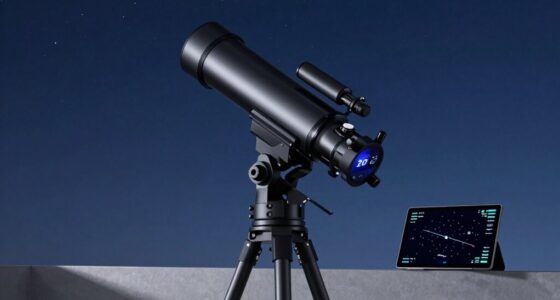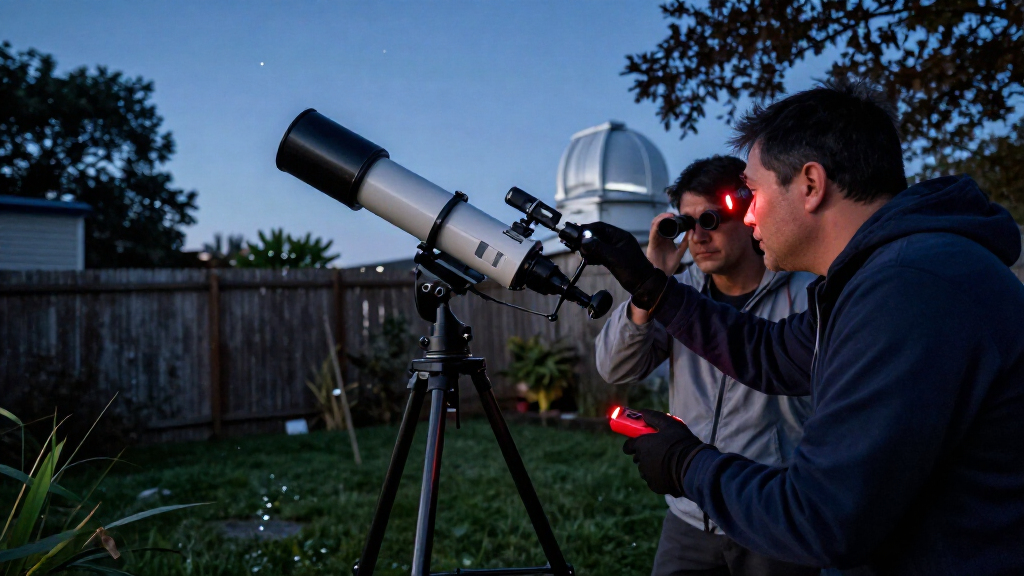

Among these computerized telescope mounts, I rank the Celestron Advanced VX as the best overall for buyers who want a full-size equatorial GoTo platform, while the Sky-Watcher AZ-GTi stands out for portable visual observing and the Star Adventurer GTi for compact GoTo astrophotography. The key tradeoff is between portability and payload: small trackers are easier to carry, while larger equatorial mounts can support heavier imaging setups but take more effort to transport and align. Tracking style matters too, since a single-axis tracker, an alt-azimuth GoTo mount, and a German equatorial mount serve different observing goals. I compare all nine by capability, setup demands, flexibility, and the equipment each can sensibly support. Read on for the full breakdown and a buying guide to help match a mount to your telescope and observing plans.

Prime made for students and young adults
- Fast, free delivery for dorm and study essentials
- Prime Video and Amazon Music included
- Member-only deals
Key Takeaways
- The Advanced VX is the most balanced full-size pick: it offers GoTo equatorial operation and a stated 30 lb payload, while the CGX and CGEM II target larger, more demanding setups.
- The CGX is the heavy-duty choice: its stated 55 lb payload gives it more headroom than the Advanced VX, at the cost of a bulkier mount suited to less portable use.
- The AZ-GTi prioritizes convenient visual observing: its compact alt-azimuth design is easier to carry and set up than the German equatorial mounts, but it is a different fit for long-exposure imaging.
- The Star Adventurer models fill distinct tracker roles: the 2i Pro Pack provides single-axis tracking, while the GTi adds GoTo equatorial operation; the head kit and tripod-and-pier kit differ in what is included.
- GoTo is not the same as imaging readiness: the OGST single-axis mount and iEXOS-100-2 offer different approaches to tracking, so buyers should match tracking axes, payload, and control workflow to their camera and telescope.
| Sky-Watcher Star Adventurer 2i Pro Pack (S20512) |  | Best for Wide-Field Travel Imaging | Mount type: Motorized tracking platform | Payload capacity: 11 lb | Tracking platform weight: 2.4 lb | VIEW LATEST PRICE | See Our Full Breakdown |
| Celestron Advanced VX Computerized German Equatorial Mount, 30 lb Payload |  | Best for Mid-Weight Telescope Setups | Mount type: German equatorial | Payload capacity: 30 lb | Total kit weight: 47 lb | VIEW LATEST PRICE | See Our Full Breakdown |
| Explore Scientific iEXOS-100-2 PMC-Eight GoTo Equatorial Mount and Tripod |  | Best App-Controlled Entry Equatorial Mount | Mount type: Equatorial mount | Control system: Explore Scientific PMC-Eight with eight independent CPUs | Drive: Clutched dual-axis worm gears with belt-driven stepper motors | VIEW LATEST PRICE | See Our Full Breakdown |
| Sky-Watcher AZ-GTi Portable Computerized GoTo Alt-Azimuth Mount |  | Best Complete Portable GoTo Kit | Mount type: Computerized GoTo alt-azimuth | Payload capacity: 11 lb | Weight: 8.6 lb | VIEW LATEST PRICE | See Our Full Breakdown |
| OGST Single-Axis Automatic Tracking Equatorial Mount for Astrophotography |  | Best Lightweight Single-Axis Tracker | Mounting type: Equatorial | Tracking axes: Single-axis | Payload capacity: 4 kg | VIEW LATEST PRICE | See Our Full Breakdown |
| Celestron CGX Computerized German Equatorial Mount and Tripod, 55 lb Payload |  | Best for Heavy Imaging Rigs | Mount type: German equatorial | Payload capacity: 55 lb | Tripod legs: 2-inch stainless steel | VIEW LATEST PRICE | See Our Full Breakdown |
| Celestron CGEM II Computerized Equatorial Mount and Tripod |  | Best for Midweight Telescope Setups | Mount type: Computerized equatorial | Payload capacity: 40 lb | Tripod: 2-inch steel, 2-section | VIEW LATEST PRICE | See Our Full Breakdown |
| Sky-Watcher Star Adventurer GTi GoTo Equatorial Mount Head Kit |  | Best Compact GoTo Mount | Mount type: Equatorial | Payload capacity: 11 lb | Item weight: 6.9 kg | VIEW LATEST PRICE | See Our Full Breakdown |
| Sky-Watcher Star Adventurer GTi GoTo EQ Mount Kit with Tripod and Pier Extension |  | Best Complete Portable Kit | Mount type: GoTo equatorial tracking mount | Maximum payload capacity: 11 lb | Item weight: 26 lb | VIEW LATEST PRICE | See Our Full Breakdown |
| computerized telescope mount | Mount type | Payload capacity | Connectivity |
|---|---|---|---|
| Sky-Watcher Star Adventurer 2i | Motorized tracking platform | 11 lb | Wi-Fi |
| Celestron Advanced VX Computer | German equatorial | 30 lb | — |
| Explore Scientific iEXOS-100-2 | Equatorial mount | — | Wi-Fi and Bluetooth |
| Sky-Watcher AZ-GTi Portable Co | Computerized GoTo alt-azimuth | 11 lb | Built-in Wi-Fi |
| OGST Single-Axis Automatic Tra | — | 4 kg | — |
| Celestron CGX Computerized Ger | German equatorial | 55 lb | — |
| Celestron CGEM II Computerized | Computerized equatorial | 40 lb | — |
| Sky-Watcher Star Adventurer GT | Equatorial | 11 lb | Built-in Wi-Fi |
| Sky-Watcher Star Adventurer GT | GoTo equatorial tracking mount | — | Built-in Wi-Fi; USB and autoguider ports |
More Details on Our Top Picks
Sky-Watcher Star Adventurer 2i Pro Pack (S20512)
The Star Adventurer 2i is a compact tracking platform for photographers who want longer exposures of the night sky without carrying a full telescope mount. Its 11 lb payload capacity can accommodate a camera setup and, with optional accessories, some small telescopes. Compared with the AZ-GTi, it is more focused on equatorial tracking for wide-field imaging; the AZ-GTi offers GoTo aiming and an included tripod for visual observing and general-purpose use. The 2i’s Wi-Fi smartphone control also supports time-lapse and panorama workflows. Its limitations shape the kit: the equatorial base, declination bracket, counterweight, and tripod are not included, so buyers need to assemble a compatible setup. I’d choose it for a light camera rig, not as a ready-to-use telescope mount.
Pros:- Portable tracking platform weighs 2.4 lb
- Wi-Fi control through the SAM Console app
- Supports long-exposure night-sky photography and time-lapse
- Can support small telescopes with optional accessories
Cons:- Tripod is required and not included
- Equatorial base, declination bracket, and counterweight are optional accessories
- Tracking platform alone is not a complete telescope GoTo mount
Best for: Travel astrophotographers using a camera and lens who already own a compatible tripod and want portable equatorial tracking.
Not ideal for: Telescope buyers seeking a complete GoTo mount, since key equatorial accessories and a tripod are separate requirements.
- Mount type:Motorized tracking platform
- Payload capacity:11 lb
- Tracking platform weight:2.4 lb
- Connectivity:Wi-Fi
- Battery:Lithium metal battery required; included
- Model:S20512
Our verdict“Choose the Star Adventurer 2i for portable wide-field camera tracking if you are prepared to supply the tripod and equatorial accessories.”
Celestron Advanced VX Computerized German Equatorial Mount, 30 lb Payload
The Advanced VX suits buyers who want a full computerized equatorial mount for a substantial telescope, with a 30 lb payload capacity and a stainless steel tripod included. Its NexStar+ hand control offers a database of over 40,000 objects, multiple alignment procedures, and sidereal, solar, and lunar tracking. That makes it a more complete visual astronomy setup than the Explore Scientific iEXOS-100-2, whose tablet app control and lighter-duty positioning favor a different kind of portable setup. Compared with the larger Celestron CGX in this roundup, the VX carries a lower payload and is easier to match to mid-weight equipment. The tradeoff is portability: the assembled kit weighs 47 lb, and it needs a DC power supply. Buyers should also confirm their telescope’s dovetail format before ordering.
Pros:- Supports telescope setups up to 30 lb
- NexStar+ hand control includes over 40,000 objects
- Tracks at sidereal, solar, and lunar rates
- Includes a stainless steel tripod with 2-inch legs
Cons:- Total kit weight of 47 lb makes frequent transport difficult
- Requires a DC power supply
- Buyers must check compatibility with CG-5, CGE-style, or Vixen dovetails
Best for: Observers with a mid-weight telescope who want a computerized German equatorial mount, a sturdy included tripod, and broad object database access.
Not ideal for: Travel-first astronomers or anyone seeking a self-contained battery-powered setup; the 47 lb kit and DC power requirement add logistical burden.
- Mount type:German equatorial
- Payload capacity:30 lb
- Total kit weight:47 lb
- Tripod legs:2 in diameter, stainless steel
- Latitude adjustment:7–77 degrees
- Hand control:NexStar+
- Object database:Over 40,000 objects
- Tracking rates:Sidereal, solar, and lunar
- Power:DC power supply
Our verdict“Pick the Advanced VX for a capable mid-weight telescope setup when its substantial kit weight and external power needs fit your observing routine.”
Explore Scientific iEXOS-100-2 PMC-Eight GoTo Equatorial Mount and Tripod
The iEXOS-100-2 gives tablet users app-based GoTo control through ExploreStars, with support for Apple, Android, and Windows devices. Its eight-CPU PMC-Eight system and quiet belt-driven stepper motors distinguish it from the Celestron Advanced VX, which uses a dedicated NexStar+ hand control and supports a heavier 30 lb telescope setup. This Explore Scientific mount is a better fit for buyers who value app interaction and quieter operation over the VX’s higher stated capacity. Clutched axes make manual repositioning and balancing more straightforward, while the polar alignment sight hole helps with setup. There are practical limits: the controls depend on a compatible tablet, and no focuser is included. The supplied data also gives no payload figure, so I would verify mount and telescope compatibility before choosing it for heavier equipment.
Pros:- ExploreStars app supports Apple, Android, and Windows tablets
- Eight independent CPUs in the PMC-Eight control system
- Quiet belt-driven stepper motors
- Clutched axes and a polar alignment sight hole aid setup
Cons:- A compatible tablet is needed for app-based GoTo control
- No focuser is included
- Provided product data does not state a payload capacity
Best for: Tablet-owning beginners and intermediate observers who want app-based GoTo control for a compatible, lighter telescope setup.
Not ideal for: Buyers who prefer a dedicated hand controller or need a clearly specified higher payload capacity for heavier telescope gear.
- Mount type:Equatorial mount
- Control system:Explore Scientific PMC-Eight with eight independent CPUs
- Drive:Clutched dual-axis worm gears with belt-driven stepper motors
- App:ExploreStars
- Compatible devices:Apple, Android, or Windows tablets
- Connectivity:Wi-Fi and Bluetooth
- Focuser:Not included
- Model number:ES-iEXOS-100-02
Our verdict“Choose the iEXOS-100-2 if tablet-based control and quiet operation matter more to you than a dedicated hand control or a stated high payload.”
Sky-Watcher AZ-GTi Portable Computerized GoTo Alt-Azimuth Mount
The AZ-GTi is the most ready-to-set-up portable GoTo choice here: the package includes an adjustable tripod and pier extension, and its mount handles telescopes or DSLR cameras up to 11 lb. Built-in Wi-Fi connects to the SynScan Pro app on iOS and Android. Compared with the Star Adventurer 2i, the AZ-GTi provides computerized aiming and a tripod, making it more convenient for visual observing; the 2i is more purpose-built for equatorial wide-field photography. The AZ-GTi also supports tracking, panoramas, and time-lapse, with dual encoders that allow manual slewing while retaining tracking. Its alt-azimuth design and modest capacity limit its fit for heavier telescopes and long-exposure deep-sky imaging. A DSLR shutter release cable is optional, too, so camera control may require another purchase.
Pros:- Includes adjustable tripod and pier extension
- Built-in Wi-Fi supports SynScan Pro app control
- Dual encoders support tracking during manual slewing
- Supports tracking, panoramas, and time-lapse photography
Cons:- 11 lb payload capacity limits telescope and camera combinations
- Alt-azimuth tracking is less suited to long-exposure deep-sky imaging
- DSLR shutter release cable is optional
Best for: Traveling beginners and camera users who want an included tripod, app-controlled GoTo aiming, and a lightweight setup for visual observing or time-lapse.
Not ideal for: Astrophotographers planning long-exposure deep-sky work with heavier gear, or telescope owners whose equipment exceeds the 11 lb limit.
- Mount type:Computerized GoTo alt-azimuth
- Payload capacity:11 lb
- Weight:8.6 lb
- Connectivity:Built-in Wi-Fi
- Control:SynScan Pro app for iOS and Android
- Tripod height:28–53 in
- Power options:AA batteries or 12V external power
- Model:S21110
Our verdict“Choose the AZ-GTi for a portable, included-tripod GoTo setup for visual observing and camera projects with lightweight equipment.”
OGST Single-Axis Automatic Tracking Equatorial Mount for Astrophotography
At 1.4 kg, the OGST is the lightest stated mount in this group and targets camera-based astrophotography rather than broad GoTo telescope use. It supports up to 4 kg and offers Wi-Fi control through a browser or app, plus three polar alignment approaches. The manufacturer states periodic error of ±10 arcseconds over 10 minutes, a useful detail for buyers weighing tracking performance. Unlike the Sky-Watcher Star Adventurer 2i, the OGST’s supplied data does not describe an 11 lb capacity or an included battery; compared with the AZ-GTi, it tracks on a single equatorial axis and does not provide the same stated GoTo feature set. The low weight favors field use, but single-axis tracking narrows its role, and the package contents list a polar pointer rather than a tripod.
Pros:- Lightweight 1.4 kg mount for field use
- Supports up to 4 kg of equipment
- Wi-Fi control through browser or app
- Three polar alignment options
Cons:- Single-axis tracking limits its use compared with GoTo mounts such as the AZ-GTi
- Tripod is not listed among package contents
- Supplied data does not specify a battery or power source
Best for: Mobile astrophotographers who prioritize low carry weight and want a compact tracker with browser or app control and multiple alignment methods.
Not ideal for: Observers seeking a complete telescope GoTo mount, a tripod in the package, or two-axis tracking for broader use.
- Mounting type:Equatorial
- Tracking axes:Single-axis
- Payload capacity:4 kg
- Product weight:1.4 kg
- Periodic error:Manufacturer states ±10 arcseconds over 10 minutes
- Control:Wi-Fi, browser, and app
- Polar alignment:Optical polar scope, smartphone-based, and star-pointer assisted
- Dimensions:15 × 12 × 18 cm
Our verdict“Pick the OGST if your priority is a light single-axis tracker for astrophotography and you can supply the rest of the field setup.”
Celestron CGX Computerized German Equatorial Mount and Tripod, 55 lb Payload
The Celestron CGX is the strongest fit here for a substantial telescope and imaging setup: its 55 lb payload capacity exceeds the CGEM II’s 40 lb limit, leaving more room for a heavier optical tube and accessories. Its belt-drive tracking, internal cabling, and NexStar+ controller with a 40,000-object database suit guided observing and remote imaging. The mount can also track 20° past the meridian, giving an imaging session more room before a repositioning interruption. That capacity comes with a serious portability cost: at 108 lb, this is a large, heavy system to transport and set up. Compared with the Star Adventurer GTi kits, it is built for far larger equipment, but those compact mounts are much easier to move. I’d choose the CGX for a permanent or semi-permanent setup, not frequent travel.
Pros:- 55 lb payload capacity suits substantially heavier equipment than the CGEM II
- Belt-drive tracking supports guided observing and imaging
- Internal cabling supports remote operation
- NexStar+ controller provides access to a 40,000-object database
Cons:- 108 lb item weight makes transport and setup difficult
- Requires a DC power supply
- Large capacity may be unnecessary for lightweight camera or small-telescope setups
Best for: Astrophotographers with a heavier telescope and imaging accessories who can leave the mount set up or have help moving it
Not ideal for: Traveling observers or anyone who needs a lightweight mount they can carry and set up alone
- Mount type:German equatorial
- Payload capacity:55 lb
- Tripod legs:2-inch stainless steel
- Drive system:Belt-drive
- Controller:NexStar+ computer hand controller
- Object database:40,000 objects
- Item weight:108 lb
- Meridian tracking:Up to 20° past the meridian
Our verdict“Choose the CGX for a heavy imaging rig and a mostly fixed observing location; skip it if portability is a priority.”
Celestron CGEM II Computerized Equatorial Mount and Tripod
The Celestron CGEM II occupies the middle ground between the 55 lb CGX and the compact Star Adventurer GTi: its 40 lb payload capacity supports a capable visual or imaging setup without requiring the CGX’s much heavier mount. All-Star polar alignment and periodic error correction offer useful precision tools, while the NexStar+ controller’s database of over 40,000 objects makes computer-guided finding practical. Sidereal, solar, and lunar tracking rates also suit different observing targets. The listed package has a significant catch: its 17 lb weight is missing, so buyers should account for that before expecting a complete, ready-to-balance setup. It is still far heavier than the GTi kits, but considerably lighter than the CGX. I’d consider it for a fixed observing spot and moderate equipment, after confirming what counterweight is included.
Pros:- 40 lb payload capacity fits midweight telescope equipment
- All-Star polar alignment helps with setup alignment
- Periodic error correction supports more precise tracking
- NexStar+ controller includes a database of over 40,000 objects
Cons:- Product note says the 17 lb weight is missing
- At 40 lb for the mount plus a 20 lb tripod, it is not a lightweight travel option
- Payload capacity is below the CGX for heavier equipment
Best for: Visual observers and astrophotographers with midweight equipment who want alignment and tracking corrections in a conventional equatorial mount
Not ideal for: Buyers who need a confirmed complete counterweight setup or a compact mount for regular travel
- Mount type:Computerized equatorial
- Payload capacity:40 lb
- Tripod:2-inch steel, 2-section
- Tripod weight:20 lb
- Mount weight:40 lb
- Controller:NexStar+ hand controller
- Tracking rates:Sidereal, solar, lunar
- Slewing speed:5 degrees per second
- Package note:17 lb weight missing
Our verdict“The CGEM II suits a midweight setup that stays near home, provided you resolve the missing 17 lb weight before buying.”
Sky-Watcher Star Adventurer GTi GoTo Equatorial Mount Head Kit
The Star Adventurer GTi head kit brings GoTo control to a portable, 11 lb payload equatorial platform for DSLR and mirrorless cameras, small astrographs, and small telescopes. Built-in Wi-Fi enables smartphone control, and the illuminated polar scope helps with alignment in the field. That makes it a more capable travel option than the Star Adventurer 2i Pro Pack, while the CGEM II and CGX handle much heavier telescope setups. The tradeoff is that this listing is only the mount head kit: the tripod and pier extension are not included, so buyers need compatible support equipment before they can use it as a complete setup. Its 6.9 kg weight is also worth factoring into a travel kit. I’d pick it for camera-focused imaging when portability matters more than carrying a larger optical tube.
Pros:- GoTo equatorial tracking in a compact mount
- Built-in Wi-Fi supports smartphone control
- Illuminated polar scope aids alignment
- Supports lunar, solar, and sidereal tracking
Cons:- Tripod and pier extension are not included
- 11 lb payload capacity limits telescope and accessory choices
- Camera is not included
Best for: Traveling astrophotographers using a DSLR, mirrorless camera, small astrograph, or lightweight telescope who already have a suitable tripod
Not ideal for: Buyers needing a complete mount-and-tripod package or planning to use a heavier telescope rig
- Mount type:Equatorial
- Payload capacity:11 lb
- Item weight:6.9 kg
- Dimensions:12 × 7 × 16 in
- Power source:Battery or external power
- Connectivity:Built-in Wi-Fi
- Alignment:Built-in illuminated polar scope
- Included accessories:Counterweight bar and 5 lb counterweight
Our verdict“Choose this head kit for portable camera-based imaging if you already own a tripod and can keep your equipment within its 11 lb limit.”
Sky-Watcher Star Adventurer GTi GoTo EQ Mount Kit with Tripod and Pier Extension
This Star Adventurer GTi kit adds the tripod and pier extension missing from the GTi head kit, making it the more ready-to-assemble choice for buyers starting without compatible support equipment. Its 11 lb payload capacity, illuminated polar scope, and Wi-Fi smartphone control make it useful for camera-based astrophotography and small telescopes. USB and autoguider ports add options for connecting accessories. Compared with the head-only GTi, this package saves buyers from sourcing a tripod and pier separately; compared with the CGEM II, it gives up substantial payload capacity in return for a much more portable setup. The tradeoff is that the 26 lb kit is not featherweight, and its payload ceiling rules out heavier telescope rigs. I’d choose this bundle for a mobile imaging setup that needs its support gear included.
Pros:- Includes tripod, pier extension, counterweight bar, and 5 lb counterweight
- Built-in Wi-Fi supports smartphone control
- Illuminated polar scope assists polar alignment
- USB and autoguider ports support connected accessories
Cons:- 26 lb kit weight can limit portability
- 11 lb payload capacity restricts equipment size
- Tripod’s 1.5-inch leg diameter is part of a compact kit rather than a heavy-duty setup
Best for: Astrophotographers who want a portable GoTo mount kit with tripod and pier extension for a camera or small telescope
Not ideal for: Owners of heavier telescopes or travelers seeking the lightest possible camera tracking setup
- Mount type:GoTo equatorial tracking mount
- Maximum payload capacity:11 lb
- Item weight:26 lb
- Maximum height:44.5 in
- Leg diameter:1.5 in
- Connectivity:Built-in Wi-Fi; USB and autoguider ports
- Included components:Tripod, pier extension, counterweight bar, 5 lb counterweight
- Warranty:Two-year limited warranty
Our verdict“Pick this kit for a portable, complete GoTo setup for a camera or small telescope, but choose the CGEM II or CGX for heavier equipment.”
How We Picked
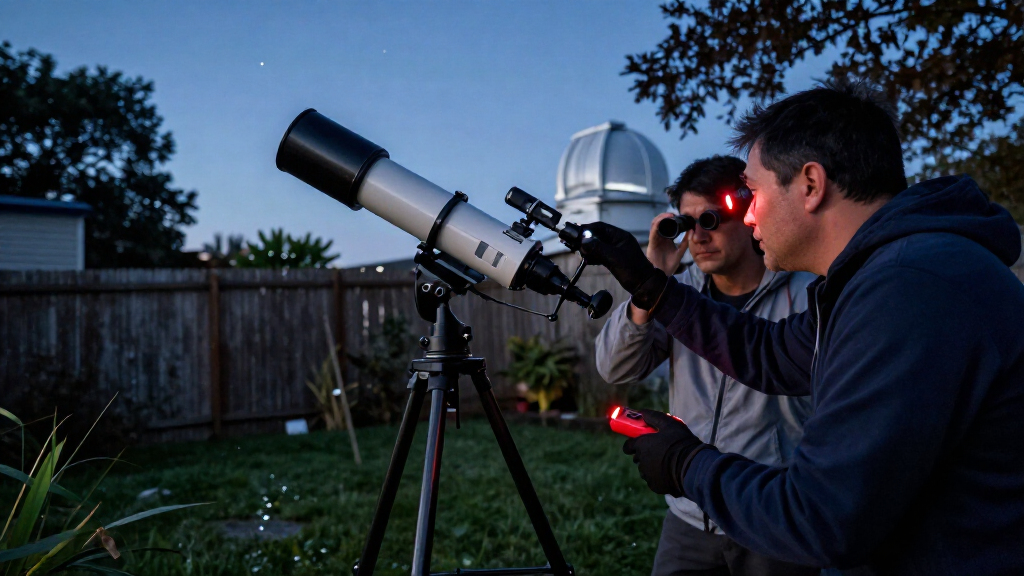
I ranked these mounts by how well their design fits common buyer goals: visual GoTo observing, portable tracking, and telescope-based astrophotography. I weighed the stated payload where available, mount style, included hardware, portability, and the extra setup or alignment work each design implies. Payload figures are not a promise of ideal imaging performance; a camera, telescope, accessories, balance, and wind all affect practical results.
The Advanced VX takes the top spot as a versatile full-size equatorial option, while the CGX ranks higher for buyers who need more stated capacity and can accept a larger setup. Compact products rank strongly for the specific jobs they serve, rather than being treated as substitutes for heavier mounts: the AZ-GTi favors portable visual use, and the Star Adventurer GTi adds GoTo to a compact equatorial format. Single-axis trackers rank lower for buyers seeking broad computerized control, but can make sense for simpler tracking needs. The exact included tripod and pier hardware also matters, so the two GTi packages are treated as separate buying options.
| computerized telescope mount | Connectivity |
|---|---|
| Sky-Watcher Star Adventurer 2i | Wi-Fi |
| Celestron Advanced VX Computer | — |
| Explore Scientific iEXOS-100-2 | Wi-Fi and Bluetooth |
| Sky-Watcher AZ-GTi Portable Co | Built-in Wi-Fi |
| OGST Single-Axis Automatic Tra | — |
| Celestron CGX Computerized Ger | — |
| Celestron CGEM II Computerized | — |
| Sky-Watcher Star Adventurer GT | Built-in Wi-Fi |
| Sky-Watcher Star Adventurer GT | Built-in Wi-Fi; USB and autoguider ports |
Factors to Consider When Choosing Computerized Telescope Mounts
Before choosing a mount, I would start with the telescope and the kind of observing you plan to do. A mount that is easy to carry may be a poor match for a long telescope or a heavy imaging train, while a large equatorial system can be excessive for quick visual sessions. These factors help translate a product listing into a setup you can use comfortably.
Match Mount Style to Your Observing Goal
Alt-azimuth mounts move up-down and left-right, which makes them intuitive for visual observing and quick target changes. Equatorial mounts are aligned with the sky’s rotation, a useful arrangement for long-exposure imaging because they can track across the sky with one primary axis. A single-axis tracker simplifies that job but gives you fewer controls and less flexibility than a full GoTo equatorial mount. Buyers sometimes choose by the word “computerized” alone and miss this distinction. Decide whether you mainly want to find and view objects, track a camera lens, or image through a telescope. That choice narrows the field more reliably than a feature checklist.
Treat Payload as a Practical Limit
Payload ratings describe a maximum load, not a guarantee that every setup at that weight will track well for imaging. A long tube creates more leverage than a compact instrument of the same weight, and cameras, guide equipment, and adapters add load quickly. For visual use, a setup near the stated limit may be workable but can feel less steady when focusing or in a breeze. For astrophotography, leave meaningful headroom so the mount is not working at its limit. Check whether the manufacturer’s figure refers to total payload and account for every item that moves with the mount. A lighter telescope on a suitable mount often produces a more manageable system than stretching the rating.
Budget Time and Skill for Alignment
GoTo performance depends on setup: the mount must be placed securely, balanced where required, and aligned well enough to locate objects. Equatorial mounts add polar alignment, which can take practice and may need to be repeated when the setup moves. A compact mount is not automatically simpler if its control app, connection, or alignment process is unfamiliar. Beginners should look at the full first-night workflow, including power, controller or phone use, and setup instructions. For short visual sessions, a simpler mount may get used more often than a capable system that takes longer to prepare. Check what alignment aids and controls are included before buying.
Compare Complete Kits, Not Just Mount Heads
A mount head alone may still require a compatible tripod, counterweight, counterweight shaft, pier extension, or power supply. Those pieces affect both the real carrying load and the amount of setup needed at the observing site. The two Star Adventurer GTi packages in this roundup illustrate why package contents deserve a close read: one is a head kit, while the other includes a tripod and pier extension. Buyers can accidentally duplicate hardware they already own or overlook a part needed to get started. Confirm thread and attachment compatibility with your existing tripod and telescope. A complete kit can simplify a first setup, while a head-only package can suit someone building around equipment they already have.
Plan for Portability and Stability Together
Portability depends on the combined weight and packed shape of the mount, tripod, counterweights, and accessories, not only the mount head. Smaller systems are convenient for travel and quick sessions, but their compact legs or limited payload can restrict telescope choice. Heavier mounts can support larger instruments, though they may call for a vehicle, more storage, and a longer setup routine. Stability also depends on firm ground, balanced loading, tripod height, and wind exposure. If you observe away from home, think through the entire walk from storage to observing spot. A setup you can carry and assemble reliably is often more useful than capacity you rarely need.
Separate Tracking Needs from Computer Control
GoTo describes the mount’s ability to locate objects through a control system; tracking describes how it follows them after acquisition. Those features often come together, but they are not interchangeable. A single-axis tracker can keep a camera pointed at the sky without offering the same object database or two-axis movement as a GoTo mount. Conversely, a GoTo system still needs correct alignment and a suitable tracking setup for imaging. Before paying for automation, decide whether you need automated object finding, longer tracking, remote control, or all three. This prevents spending on controls that do not address the main limitation in your current setup.
Frequently Asked Questions
Can I use an alt-azimuth GoTo mount for astrophotography?
It can work for lunar, planetary, and other short-exposure imaging, where the demands on tracking differ from long-exposure deep-sky work. During long exposures, an alt-azimuth mount’s movement across the sky can cause field rotation, even when the target stays centered. A wedge or specialized setup may address some limitations, but adds complexity and does not make every alt-azimuth mount equivalent to an equatorial system. If deep-sky imaging is your main goal, start by comparing equatorial mounts and the payload of your complete imaging rig. If visual observing is primary and imaging is occasional, an alt-azimuth GoTo mount may still suit your needs.
Is a mount with a higher payload rating always the better choice?
No. A larger rating can provide room for a heavier telescope and accessories, but it often comes with more weight, bulk, and setup effort. The instrument’s length and balance also affect how steady the system feels, so weight alone does not tell the whole story. For imaging, operating with headroom is a sensible goal; buying far more capacity than you need can make transport harder without improving your results. Compare your fully equipped telescope against the mount’s stated limit, then decide how much portability matters. The CGX’s stated 55 lb capacity is relevant to heavier setups, while a compact tracker may be a better fit for a camera lens.
Should I choose the Star Adventurer 2i or the Star Adventurer GTi?
Choose based on how much control you need and what you plan to mount. The 2i Pro Pack is a single-axis tracker, which suits buyers who want a compact tracking approach for camera-based imaging. The GTi adds GoTo equatorial operation, making it a better match for people who want computerized target finding in a portable format. That extra capability also means more setup and alignment choices to learn. Check the GTi package contents carefully: the head kit and the kit with tripod and pier extension are different purchases. Neither should be selected by name alone; confirm compatibility with your camera, telescope, and existing support gear.
What should I buy if I am new to computerized mounts?
Start with the setup you can carry, power, align, and use without turning every session into a project. For visual observing, an intuitive alt-azimuth GoTo design can be easier to approach than a German equatorial mount that requires polar alignment. If you want to learn deep-sky imaging, plan for the added work of balancing, polar alignment, and matching the mount to the full imaging load. Read the control and alignment requirements before choosing, and check whether the needed tripod and power components are included. A beginner’s best fit depends on the first use they care about most, not on the largest feature list.
Can I move my telescope between computerized mounts?
Often, but compatibility depends on the telescope’s mounting plate, weight, length, and required counterweights. A tube that attaches to one mount may need a different dovetail or adapter for another, and its load can exceed a smaller mount’s practical capacity. Computer control also varies: switching mounts may mean learning a new controller, app, alignment process, or connection method. Before changing systems, list the telescope, finder, camera, and accessories as one complete load and check every attachment point. If you plan to share a telescope between mounts, favor compatible hardware and setups with enough capacity for the full configuration.
Conclusion
I recommend the Celestron Advanced VX as the best overall choice for buyers seeking a versatile full-size equatorial GoTo mount, while the Explore Scientific iEXOS-100-2 is the value-minded alternative for those who want computerized equatorial tracking in a lighter class. Beginners focused on visual observing should look first at the Sky-Watcher AZ-GTi for its portable alt-azimuth approach. For a premium, higher-capacity setup, the Celestron CGX is the pick for buyers whose telescope and accessories call for its stated 55 lb capacity and who can handle a larger system. For compact imaging, choose the Star Adventurer GTi; for simpler single-axis tracking, consider the Star Adventurer 2i Pro Pack or OGST. Match the package contents, mount style, and payload to your actual observing plan before making the final call.
Halloween Picks

Star Wars Yoda and R2-D2 Inflatable Halloween Decor, 6 ft with LEDs, Indoor/Outdoor

Fun Costumes 5.5ft Mary the Unhappily Ever After Bride Animatronic Halloween Decoration

DomKom 6-Foot Halloween Inflatable Ghosts Roasting Marshmallows
As an affiliate, we earn on qualifying purchases.