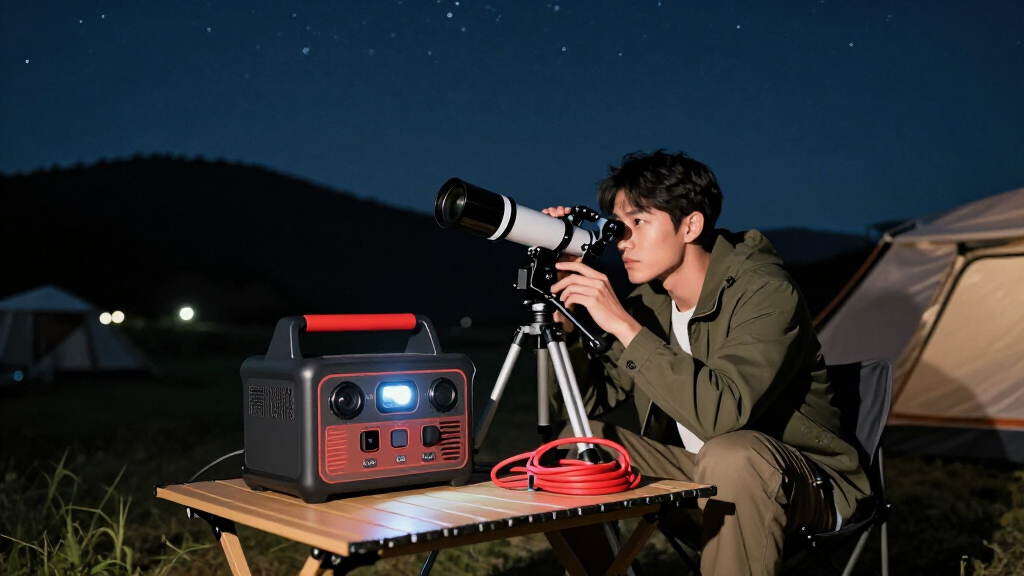

Choosing the right portable telescope power station determines whether your night sky session lasts an hour or the entire evening. The Jackery Explorer 1000 v2 stands out as the best overall choice for serious astronomers due to its massive 1000Wh capacity and robust pure sine wave output, ensuring stable power for sensitive tracking mounts and dew heaters. For those prioritizing portability without sacrificing too much runtime, the BLAVOR Power Bank Station offers a unique IP67 waterproof design and high-capacity USB-C output that doubles as a camping lantern. The primary tradeoff you face is weight versus endurance; larger units provide all-night autonomy but add significant bulk to your tripod, while smaller packs demand frequent charging or careful power management. Continue reading to understand which model fits your specific optical setup and observing location.

Prime made for students and young adults
- Fast, free delivery for dorm and study essentials
- Prime Video and Amazon Music included
- Member-only deals
Complete the kit


Key Takeaways
- Pure sine wave inverters are non-negotiable for sensitive telescope mounts and electronics, whereas modified sine wave units risk damaging tracking motors.
- Weight is the hidden killer in portable astronomy; units under 10 lbs are manageable for handheld use, while 20+ lb units require a dedicated cart or secondary tripod.
- USB-C Power Delivery (PD) has become the standard for modern astrophotography cameras, reducing the need for bulky DC-to-USB adapters in the field.
- LiFePO4 battery chemistry is emerging as the preferred choice for longevity, offering 3x-4x the cycle life of standard Lithium-Ion packs despite a slightly higher upfront cost.
- Dew heaters draw constant power, often consuming 20-50W; calculating total load (mount + camera + heater + laptop) reveals that many small 100Wh units fail within two hours.
| EF ECOFLOW TRAIL 200 DC Portable Power Station, 192Wh |  | Best Compact USB-C Power Pick | Capacity: 192Wh | Maximum total DC output: 220W | USB-C ports: 1 × 100W; 1 × PD3.1 140W | VIEW LATEST PRICE | See Our Full Breakdown |
| Core 300W Portable Power Station, 192Wh |  | Best for AC-Powered Beginners | Capacity: 192Wh | AC output: 300W pure sine wave; 600W surge | AC outlets: 2 | VIEW LATEST PRICE | See Our Full Breakdown |
| BLAVOR Power Bank Station, 236.8Wh/64,000 mAh Portable Power Station |  | Best for Weather-Exposed USB Gear | Energy capacity: 236.8Wh | Listed output wattage: 165W | USB-C: 2 ports; up to 100W each as described | VIEW LATEST PRICE | See Our Full Breakdown |
| Celestron PowerTank 12V Rechargeable Telescope Battery Pack, 84 Wh |  | Best Telescope-Specific 12V Pick | Energy capacity: 84Wh | Battery capacity: 7Ah | Battery type: Sealed lead-acid | VIEW LATEST PRICE | See Our Full Breakdown |
| EnginStar 300W Portable Power Station, 296Wh Lithium Battery |  | Best Capacity-to-Weight Balance | Battery capacity: 296Wh | Maximum output: 300W | AC outlets: 2 × 110V pure sine wave | VIEW LATEST PRICE | See Our Full Breakdown |
| HOWEASY Portable Power Station, 120W (240W Peak), 88Wh |  | Best Ultra-Compact Option | Battery Capacity: 88Wh | Running Output: 120W | Peak Output: 240W | VIEW LATEST PRICE | See Our Full Breakdown |
| Jackery Explorer 1000 v2 Portable Power Station |  | Best Premium Heavy-Duty Unit | Battery Capacity: 1,070Wh | AC Output: 1,500W | Surge Peak: 3,000W | VIEW LATEST PRICE | See Our Full Breakdown |
| DARAN 288Wh Portable Power Station, 600W (1200W Surge), LiFePO4 Battery |  | Best Mid-Range Balance | Battery Capacity: 288Wh | Running Output: 600W | Surge Output: 1200W | VIEW LATEST PRICE | See Our Full Breakdown |
| Anker SOLIX C300 Portable Power Station, 288Wh |  | Best Compact High-Capacity | Battery Capacity: 288Wh | Running Output: 300W | Surge Output: 600W | VIEW LATEST PRICE | See Our Full Breakdown |
| Daran Portable Power Station, 89.6Wh LiFePO4 Battery, 100W |  | Best Entry-Level Portable | Battery Capacity: 89.6Wh | Maximum Output: 100W | Battery Type: LiFePO4 | VIEW LATEST PRICE | See Our Full Breakdown |
| Westinghouse iGen400s Portable Power Station |  | Best for Ultra-Lightweight Portability | Capacity: 183Wh | Peak Output: 400W | Running Output: 200W | VIEW LATEST PRICE | See Our Full Breakdown |
| MARBERO M823 Portable Power Station |  | Best Compact All-Rounder | Capacity: 237Wh | Running Output: 300W | Peak Output: 375W | VIEW LATEST PRICE | See Our Full Breakdown |
| EBL EB300 330W Portable Power Station |  | Best for Wireless Convenience | Capacity: 288.6Wh | Running Output: 330W | Peak Output: 600W | VIEW LATEST PRICE | See Our Full Breakdown |
| DARAN Portable Power Station (288Wh LiFePO4) |  | Best for Long-Term Durability | Capacity: 288Wh | Battery Chemistry: LiFePO4 | Running Output: 350W | VIEW LATEST PRICE | See Our Full Breakdown |
| Jackery Explorer 300 Portable Power Station |  | Best for High-Performance USB-C | Capacity: 292Wh | Battery Chemistry: LiFePO4 | Running Output: 300W | VIEW LATEST PRICE | See Our Full Breakdown |
| portable telescope power station | Weight | Running Output |
|---|---|---|
| EF ECOFLOW TRAIL 200 DC Portab | — | — |
| Core 300W Portable Power Stati | 8.8 lb | — |
| BLAVOR Power Bank Station | — | — |
| Celestron PowerTank 12V Rechar | 8.5 lb | — |
| EnginStar 300W Portable Power | 6.5 lb | — |
| HOWEASY Portable Power Station | 2.3 pounds | 120W |
| Jackery Explorer 1000 v2 Porta | 23.8 lbs | — |
| DARAN 288Wh Portable Power Sta | 8.86 lbs | 600W |
| Anker SOLIX C300 Portable Powe | 4.13 kg | 300W |
| Daran Portable Power Station | 2.54 lb | — |
| Westinghouse iGen400s Portable | 5 lbs | 200W |
| MARBERO M823 Portable Power St | 4.6 lbs | 300W |
| EBL EB300 330W Portable Power | 7.94 lbs | 330W |
| DARAN Portable Power Station | 8.2 lbs | 350W |
| Jackery Explorer 300 Portable | 7.1 lbs | 300W |
More Details on Our Top Picks
EF ECOFLOW TRAIL 200 DC Portable Power Station, 192Wh
The EF ECOFLOW TRAIL 200 DC suits telescope setups that rely on USB-powered accessories, phones, and small devices rather than a conventional AC adapter. Its 192Wh capacity and four USB ports let me keep several low-draw items connected, while the 140W USB-C PD port offers more headroom for compatible equipment than the BLAVOR Power Bank Station’s listed 100W USB-C ports. The compact 4.88 × 6.56 × 3.72-inch body is easier to pack alongside a telescope than the larger EnginStar 300W station. The tradeoff is decisive: there is no AC outlet, so a telescope mount or accessory that needs AC cannot plug in directly. A charging cable is also not included, and the listed 220W ceiling is total DC output, not a promise of extra runtime.
Pros:- Compact dimensions suit crowded observing kits and travel bags.
- Four USB ports allow several small devices to draw power at once.
- USB-C PD3.1 port supports output up to 140W for compatible equipment.
- LiFePO4 battery chemistry and built-in protection features.
Cons:- No AC outlet for telescope equipment that requires household-style power.
- Charging cable is not included.
- At 192Wh, capacity may be restrictive for longer sessions or multiple higher-draw devices.
Best for: Traveling observers whose mounts, phones, and USB-powered accessories can all run from DC or USB-C, and who prioritize a small packable station.
Not ideal for: Telescope owners with AC-powered equipment or anyone wanting one station for mixed AC and DC gear; this model has no AC outlet.
- Capacity:192Wh
- Maximum total DC output:220W
- USB-C ports:1 × 100W; 1 × PD3.1 140W
- USB-A ports:2 × 12W
- Battery chemistry:LiFePO4
- Dimensions:4.88 × 6.56 × 3.72 in
- AC outlet:Not included
- Warranty:6 years
Our verdict“Choose the TRAIL 200 DC for a compact, USB-focused observing kit, but skip it if your telescope needs AC power.”
Core 300W Portable Power Station, 192Wh
The Core 300W is a straightforward entry point for observers who need two AC outlets for a telescope mount and another low-wattage accessory. Its 300W pure sine wave output and 600W surge rating add flexibility the USB-only EF ECOFLOW TRAIL 200 DC lacks, while six total outlets make it easier to keep a phone and small gear connected together. The stated UPS switch time of 10ms or less may also suit a backup role for compatible equipment. Capacity remains only 192Wh, though, so multiple devices can use up the reserve quickly. Compared with the EnginStar 300W, the Core offers a stated 4000+ cycle LiFePO4 battery and UPS function, but it weighs more at 8.8 pounds. Solar panels and a car charger are not included.
Pros:- Two 120V AC outlets support compatible telescope mounts and accessories.
- Pure sine wave output with a stated 600W surge rating.
- LiFePO4 battery rated for 4000+ cycles.
- UPS function has a stated switch time of 10ms or less.
Cons:- 192Wh capacity can limit runtime when powering several devices.
- 300W output is not suited to high-wattage equipment.
- Solar panel and car charger are not included.
Best for: New telescope owners with a low-wattage AC mount who want a simple station that can also serve as short-term backup for small electronics.
Not ideal for: Observers planning long sessions with several power-hungry devices, or buyers who need solar and car charging hardware included.
- Capacity:192Wh
- AC output:300W pure sine wave; 600W surge
- AC outlets:2
- USB-C:1 × 65W PD
- Battery chemistry:LiFePO4
- Battery cycle life:4000+ cycles
- Weight:8.8 lb
- Recharge methods:AC, car charger, or compatible solar panel
- UPS switch time:≤10ms
Our verdict“Pick the Core for a beginner-friendly mix of AC and USB outputs, provided its modest capacity fits your observing session.”
BLAVOR Power Bank Station, 236.8Wh/64,000 mAh Portable Power Station
The BLAVOR stands out for observers who want a waterproof USB power bank with built-in campsite lighting, rather than a station built around AC telescope equipment. Its 236.8Wh capacity exceeds the 192Wh EF ECOFLOW TRAIL 200 DC and Core 300W, and its IP67 rating applies with the silicone cover closed. Two USB-C ports, two USB-A ports, and a wireless charging pad make it handy for phones, cameras, and other compatible devices; the 360-degree lantern can also reduce the separate gear to pack. But its listed 165W output and lack of AC outlets limit telescope compatibility. The advertised solar charging depends on a separately sold panel and suitable conditions. Compared with the Celestron PowerTank, BLAVOR is more flexible for modern USB devices but does not provide the dedicated 12V telescope-style ports.
Pros:- IP67 waterproof rating when the silicone cover is closed.
- 236.8Wh capacity is greater than the 192Wh options in this batch.
- Two USB-C ports, two USB-A ports, and a 15W wireless charging pad.
- Built-in 360-degree lantern provides campsite lighting.
Cons:- No AC outlets or stated 12V cigarette-lighter output for direct telescope connection.
- Solar panel is sold separately.
- 165W listed output restricts use with higher-draw equipment.
Best for: Observers at damp or dusty campsites who mainly need power for USB accessories, phones, and a small lighting setup.
Not ideal for: Telescope owners whose mount uses a 12V cigarette-lighter connection or AC adapter, since this model’s listed outputs are USB and wireless charging.
- Energy capacity:236.8Wh
- Listed output wattage:165W
- USB-C:2 ports; up to 100W each as described
- USB-A:2 ports
- Wireless charging:15W
- Water resistance:IP67 with silicone cover closed
- Lantern runtime:Up to 59 hours on low mode
- Solar charging:Compatible 100W panel sold separately
Our verdict“Choose BLAVOR for weather-resistant USB charging and campsite light, not as a direct power source for AC- or 12V-dependent mounts.”
Celestron PowerTank 12V Rechargeable Telescope Battery Pack, 84 Wh
The Celestron PowerTank earns its place by addressing a telescope-specific need: two 12V cigarette-lighter ports for compatible computerized mounts and astronomy gear. It also includes connecting cables, a switchable AC adapter, red and white lights, and a circuit breaker, making it a more purpose-built field companion than the general USB stations here. Compared with the EnginStar 300W, it offers less capacity and no listed AC outlets, but its 12V connections and included telescope-oriented accessories may be a cleaner fit for compatible mounts. The main compromise is its 84Wh sealed lead-acid battery, which weighs 8.5 pounds despite the modest capacity. Runtime and recharge time are not provided, so I would not choose it for a long session without checking the needs of the specific equipment.
Pros:- Two 12V cigarette-lighter ports suit compatible telescope equipment.
- Includes an AC adapter and cables for car-battery connection.
- Red and white LED flashlights support observing and general camp use.
- Built-in circuit breaker adds a layer of output protection.
Cons:- Sealed lead-acid battery weighs 8.5 pounds for an 84Wh capacity.
- Runtime and recharge time are not stated in the supplied product information.
- No AC outlets are listed for equipment that needs household-style power.
Best for: Owners of compatible computerized telescopes who need direct 12V connections, basic USB charging, and red light for observing.
Not ideal for: Travelers seeking high capacity in a light package, or anyone who needs a stated runtime, fast recharging, or AC outlets.
- Energy capacity:84Wh
- Battery capacity:7Ah
- Battery type:Sealed lead-acid
- Output voltage:12V DC
- Ports:2 × 12V cigarette-lighter; 2 × USB
- Weight:8.5 lb
- Dimensions:12 × 9.5 × 5.5 in
- Included accessories:Cigarette lighter cable, switchable AC adapter, positive and negative terminals
Our verdict“Pick the Celestron PowerTank when your compatible mount needs 12V connections, but favor a larger lithium station for capacity and lighter carry.”
EnginStar 300W Portable Power Station, 296Wh Lithium Battery
With 296Wh in a 6.5-pound body, the EnginStar gives observers more stated energy than the 192Wh Core 300W while remaining lighter than that station’s 8.8 pounds. Its two pure sine wave AC outlets can serve compatible low-wattage telescope gear, and the mix of USB, 12V, and 24V outputs helps accommodate a varied field kit. That versatility makes it a stronger all-purpose fit than the Celestron PowerTank for buyers who need both AC and DC connections, though the Celestron provides dedicated 12V telescope ports and included astronomy-oriented accessories. The EnginStar’s 300W maximum output rules out higher-draw equipment, and its stated 1000-cycle life is less than the Core’s 4000+ rating. Solar charging is supported, but the panel is sold separately.
Pros:- 296Wh capacity gives more reserve than the 192Wh Core and EF ECOFLOW models.
- 6.5-pound weight is lighter than the Core 300W and Celestron PowerTank.
- Two pure sine wave AC outlets plus 12V and 24V DC outputs.
- Supports AC, solar, and car charging.
Cons:- 300W maximum output limits compatibility with higher-draw equipment.
- Solar panel is sold separately.
- Stated rechargeable cycle life is 1000 cycles, below the Core 300W’s 4000+ rating.
Best for: Mobile observers who want a relatively light station with more capacity than 192Wh models and need a mix of AC and DC outputs.
Not ideal for: Owners of high-wattage gear or buyers prioritizing a longer stated cycle life, a supplied solar panel, or a telescope-specific accessory bundle.
- Battery capacity:296Wh
- Maximum output:300W
- AC outlets:2 × 110V pure sine wave
- Other outputs:3 × USB, 1 × 12V car port, 1 × 12V DC, 1 × 24V DC
- Weight:6.5 lb
- Dimensions:9 × 5.5 × 7.5 in
- AC recharge time:7 hours
- Recharge options:AC adapter, 12–25V solar panel, or car charger
- Rechargeable cycle life:1000 cycles
Our verdict“Choose the EnginStar for a useful capacity-and-portability balance across AC and DC telescope gear, as long as your load stays below 300W.”
HOWEASY Portable Power Station, 120W (240W Peak), 88Wh
This unit stands out for its exceptional portability, weighing just 2.3 pounds. For astronomers prioritizing minimal gear weight, it fits easily into a backpack alongside a small refractor. Compared to the Daran 89.6Wh, it offers slightly less capacity but similar dimensions, making it a viable alternative if you prefer its specific port layout. However, its 120W running output is a hard limit; it cannot power high-draw devices like large dew heaters or heated eyepieces alongside a mount. The eight ports are generous for this size, allowing simultaneous charging of a mount, tablet, and camera. Yet, the 88Wh capacity means runtime is limited to short sessions unless you bring spare batteries. This is a niche tool for those who refuse to carry anything heavier than a small laptop.
Pros:- Extremely lightweight at 2.3 pounds
- Eight output ports offer flexible connectivity
- Three recharging options including solar
- Built-in LED light with SOS mode
Cons:- Low 88Wh capacity limits runtime
- 120W output cannot handle high-draw accessories
- Solar panel not included
Best for: Astronomers hiking to dark-sky sites who need a featherweight backup for short observing sessions.
Not ideal for: Users with motorized mounts or dew heaters, as the 120W limit and low capacity will fail quickly.
- Battery Capacity:88Wh
- Running Output:120W
- Peak Output:240W
- Weight:2.3 pounds
- Output Ports:8
- Recharging Methods:AC outlet, solar panel, car socket
- Battery Cycle Life:More than 1,500 cycles
- Dimensions:6.6 x 3 x 4 inches
Our verdict“Choose this if you prioritize weight savings above all else and have minimal power needs.”
Jackery Explorer 1000 v2 Portable Power Station
For those needing serious power reserves, this unit is in a different league than the HOWEASY 120W. With a 1,070Wh LFP battery and 1,500W continuous output, it can run demanding setups like large Dobsonian mounts, multiple dew heaters, and laptops simultaneously for hours. The LFP chemistry offers superior longevity, rated for over 4,000 cycles, which justifies the premium investment for frequent users. However, this power comes at a cost: it weighs 23.8 pounds, making it impractical for hiking. It is best suited for driveway astronomy or campsite setups where weight is irrelevant. The app integration allows for detailed monitoring, a feature absent in simpler competitors. If you need to run a telescope for an entire night without anxiety about battery death, this is the definitive choice.
Pros:- Massive 1,070Wh capacity for all-night sessions
- 1,500W output handles high-draw devices easily
- LFP battery lasts over 4,000 charge cycles
- Fast 1-hour emergency charge option
Cons:- Heavy at 23.8 pounds
- Solar panels are proprietary and sold separately
- High cost of entry compared to smaller units
Best for: Backyard astronomers and campers who need high wattage and long runtime for complex setups.
Not ideal for: Hikers or travelers who need a portable unit, as 23.8 pounds is too heavy for transport.
- Battery Capacity:1,070Wh
- AC Output:1,500W
- Surge Peak:3,000W
- Battery Type:LFP
- Weight:23.8 lbs
- Ports:3 AC, 2 USB-C, 1 USB-A, 1 DC car port
- Charge Time:1 hour (emergency mode)
- Battery Lifespan:4,000+ cycles
Our verdict“This is the ultimate power source for stationary setups requiring maximum reliability and capacity.”
DARAN 288Wh Portable Power Station, 600W (1200W Surge), LiFePO4 Battery
This model strikes a practical balance between capacity and portability. With 288Wh and 600W output, it powers most standard telescope mounts and dew heaters comfortably, unlike the Anker C300 which maxes out at 300W. The LiFePO4 battery ensures durability, while the 8.86-pound weight remains manageable for car-based observing trips. It supports six devices simultaneously, making it ideal for astronomers who charge phones, cameras, and mounts at once. However, it lacks the high-end surge capacity of the Jackery 1000, so it may struggle with devices that have high startup currents. The 2-hour AC charge to 80% is convenient, but you must supply your own solar panel. It is a solid workhorse for users who outgrow basic power banks but aren’t ready for heavy industrial units.
Pros:- 600W output supports most standard astronomy gear
- Durable LiFePO4 battery chemistry
- Lightweight enough for easy transport
- Six ports for simultaneous device charging
Cons:- Solar panel and cables not included
- Lower surge capacity than premium models
- 1-year warranty is shorter than competitors
Best for: Car-camp astronomers who need more power than a basic bank but less than a large generator.
Not ideal for: Users needing to power high-wattage heating elements, as the 600W limit may be insufficient.
- Battery Capacity:288Wh
- Running Output:600W
- Surge Output:1200W
- Battery Type:LiFePO4
- Weight:8.86 lbs
- Ports:2 AC outlets, 1 car socket, 1 USB-C, 2 USB-A
- AC Charging Time:2 hours to 80%
- Warranty:1 year
Our verdict“A reliable middle-ground option for astronomers who need consistent power without excessive bulk.”
Anker SOLIX C300 Portable Power Station, 288Wh
The Anker SOLIX C300 impresses with its high energy density, packing 288Wh into a compact, suitcase-style form factor. Unlike the DARAN 288Wh, which prioritizes AC wattage, the Anker focuses on USB-C efficiency, offering two 140W ports ideal for charging modern laptops and cameras quickly. Its 300W AC output is sufficient for mounts and dew heaters but may limit high-draw accessories. The 5-year warranty and 3,000-cycle rating provide peace of mind for long-term use. At 4.13 kg, it is heavier than ultra-portable options but lighter than the Daran. The quiet 25 dB operation is a significant advantage during silent observing sessions. This is the best choice for tech-heavy astronomers who rely on USB-C devices more than AC plugs.
Pros:- High-capacity 288Wh in a compact design
- Powerful 140W USB-C ports for fast charging
- Extremely quiet operation at 25 dB
- 5-year warranty and 3,000-cycle battery life
Cons:- 300W AC output is lower than competitors
- Shoulder strap and solar panel sold separately
- Compatibility limited to specific Anker solar panels
Best for: Tech-focused astronomers who use USB-C laptops and need quiet, reliable power.
Not ideal for: Users who primarily use AC-powered devices, as the 300W AC limit is restrictive.
- Battery Capacity:288Wh
- Running Output:300W
- Surge Output:600W
- Battery Type:LiFePO4
- Weight:4.13 kg
- USB-C Ports:3 (two at 140W)
- Noise Level:25 dB
- Warranty:5 years
Our verdict“Ideal for users who prioritize USB-C charging speed and quiet operation over high AC wattage.”
Daran Portable Power Station, 89.6Wh LiFePO4 Battery, 100W
This unit is the lightest option in the roundup at just 2.54 pounds, making it an excellent starter for beginners. While its 100W output is lower than the HOWEASY 120W, it offers a more robust LiFePO4 battery with over 3,500 cycles, ensuring longer lifespan. It includes seven ports, including two AC outlets, which is surprisingly versatile for its size. However, the 89.6Wh capacity means it will not last through a full night of heavy usage. It is perfect for powering a simple mount and a smartphone for a few hours. The built-in flashlight adds utility in the field. If you are new to astronomy and want to test power needs without a large investment, this provides a safe, durable entry point.
Pros:- Very lightweight at 2.54 pounds
- Durable LiFePO4 battery with 3,500+ cycles
- Seven ports including two AC outlets
- Built-in emergency flashlight
Cons:- Low 100W output limits device compatibility
- Small 89.6Wh capacity for long sessions
- Solar panel and cables not included
Best for: Beginners with simple setups who need a durable, lightweight starter power source.
Not ideal for: Users with multiple high-draw devices, as the 100W limit will trip frequently.
- Battery Capacity:89.6Wh
- Maximum Output:100W
- Battery Type:LiFePO4
- Weight:2.54 lb
- Output Ports:7
- Battery Life:3500+ cycles
- Safety Protections:12
- Dimensions:6.5 × 3.3 × 4 in
Our verdict“A durable, lightweight choice for beginners starting with basic telescope accessories.”
Westinghouse iGen400s Portable Power Station
This unit stands out primarily for its exceptional weight-to-capacity ratio. At just 5 lbs, it is significantly lighter than the Jackery Explorer 300 and the DARAN 288Wh, making it ideal for stargazers who hike to remote dark-sky sites. The inclusion of a 100W USB-C port is a critical advantage for powering high-performance laptops or advanced telescope mounts that draw more power than standard USB ports allow. However, this portability comes with a tradeoff: the 183Wh capacity is the lowest in this group, limiting runtime for longer observing sessions compared to the MARBERO or EBL models. It also lacks an included AC adapter, which adds friction to the initial setup. This pick makes the most sense for those who prioritize every ounce saved in their backpack over maximum runtime.
Pros:- Lightest unit in the roundup at only 5 lbs
- 100W USB-C PD port supports high-power devices
- Fast 2-hour recharge time from a wall outlet
- Integrated flashlight and emergency strobe
Cons:- AC power adapter is not included
- Lower 183Wh capacity limits runtime for long sessions
Best for: Solo stargazers and hikers who prioritize minimal weight and need fast charging for laptops or modern mounts.
Not ideal for: Users needing all-night autonomy or those who want a ready-to-use kit out of the box, as the AC adapter is missing.
- Capacity:183Wh
- Peak Output:400W
- Running Output:200W
- Weight:5 lbs
- Key Ports:2 AC, 3 USB-C (one 100W), 2 USB-A, 1 DC
- Recharge Time:80% in 2 hours (with 100W adapter)
- Battery Type:Lithium-ion
Our verdict“Choose this if you are hiking to your observing site and need the lightest possible option with fast laptop charging.”
MARBERO M823 Portable Power Station
The MARBERO M823 offers a versatile middle ground between the ultra-light Westinghouse and heavier units like the EBL. With 237Wh capacity, it provides noticeably more runtime than the Westinghouse while remaining compact at 4.6 lbs. This balance makes it suitable for powering both a telescope mount and a laptop or tablet without the bulk of the 8-lb competitors. Unlike the EBL EB300, which includes wireless charging, the MARBERO focuses on wired reliability with multiple USB-A and USB-C ports. The 300W running output is sufficient for most automated mounts but may struggle with high-draw accessories like heavy-duty heaters. It recharges reasonably fast via wall or car, though solar charging is not included. This model is better suited to casual observers who want a reliable, portable hub without overpaying for capacity they won’t use.
Pros:- Good balance of weight (4.6 lbs) and capacity (237Wh)
- Versatile port selection including USB-C PD
- Multiple recharging methods: wall, car, solar
- Built-in safety protections for overload and short-circuit
Cons:- Solar panel is not included
- 300W output may limit high-draw accessories
Best for: Casual astronomers who need a balanced mix of portability and enough power for a mount plus a tablet.
Not ideal for: Users requiring wireless charging or those who need to run high-wattage accessories like large dew heaters continuously.
- Capacity:237Wh
- Running Output:300W
- Peak Output:375W
- Weight:4.6 lbs
- Ports:2 AC, 2 USB-A QC3.0, 2 USB-A, 1 USB-C, 1 DC
- Recharge Time:6 hours (wall)
- Battery Type:Lithium-ion
Our verdict“This is the sensible choice for general use, offering enough power for most setups without unnecessary bulk.”
EBL EB300 330W Portable Power Station
What distinguishes the EBL EB300 in this lineup is the inclusion of 5W wireless charging, a feature absent in the MARBERO and Jackery models. This allows you to top off a phone or small controller without hunting for a cable in the dark, a genuine convenience during night observations. The 288.6Wh capacity and 330W running output provide a solid buffer for longer sessions, outperforming the Westinghouse in raw endurance. However, this convenience adds weight; at 7.94 lbs, it is significantly heavier than the MARBERO and Westinghouse, making it less ideal for long hikes. The 600W peak output handles startup surges from motorized mounts better than the lower-wattage options. If you value the ease of wireless charging and don’t mind carrying extra weight, this unit delivers practical utility that cable-only competitors lack.
Pros:- Integrated 5W wireless charging pad
- Higher 330W running output handles surges well
- Versatile recharging via wall, car, and solar
- Foldable handle improves carry comfort
Cons:- Heavier at 7.94 lbs compared to lighter rivals
- Solar recharge time can be slow (5-9 hours)
Best for: Observers who want the convenience of wireless charging for phones and controllers and don’t mind extra weight.
Not ideal for: Backpackers or hikers who need to minimize gear weight for long treks to dark-sky locations.
- Capacity:288.6Wh
- Running Output:330W
- Peak Output:600W
- Weight:7.94 lbs
- Wireless Charging:5W
- Ports:1 AC, USB-C, USB-A, 2 DC, 1 Car Port
- Solar Input:60–120W
Our verdict“Pick this if you want the convenience of wireless charging and sufficient power for extended sessions, accepting the weight penalty.”
DARAN Portable Power Station (288Wh LiFePO4)
This DARAN model differentiates itself with a LiFePO4 battery chemistry, which typically offers a longer lifespan and better thermal stability than the standard lithium-ion cells found in the MARBERO and EBL units. For users who plan to own their gear for many years, this durability factor is a significant advantage. The 288Wh capacity matches the EBL, providing ample runtime, while the 350W running output offers a slight bump over the Jackery and MARBERO. However, it is the heaviest option here at 8.2 lbs, making it less portable than the Westinghouse or MARBERO. The 600W surge rating ensures compatibility with demanding equipment, but the lack of included solar cables adds to the hidden cost. This pick makes the most sense for buyers who prioritize long-term battery health over immediate portability or wireless features.
Pros:- LiFePO4 battery chemistry for longer lifespan
- 350W running output handles most astronomy gear
- Robust 600W surge capability for motor starts
- LCD display provides clear status monitoring
Cons:- Heaviest in the group at 8.2 lbs
- Solar panels and car cables sold separately
Best for: Buyers who want a long-lasting LiFePO4 battery and are willing to carry more weight for better longevity.
Not ideal for: Those who need a lightweight setup or want all necessary charging cables included in the box.
- Capacity:288Wh
- Battery Chemistry:LiFePO4
- Running Output:350W
- Surge Power:600W
- Weight:8.2 lbs
- Ports:2 AC, 1 USB-C (60W), 2 USB-A, 1 DC I/O
- Warranty:1 year
Our verdict“Choose this for its LiFePO4 longevity and solid power delivery, provided you can tolerate its heavier build.”
Jackery Explorer 300 Portable Power Station
The Jackery Explorer 300 remains a strong contender due to its 100W USB-C PD port, matching the Westinghouse’s capability to charge laptops and high-end devices rapidly. Unlike the Westinghouse, however, it uses a LiFePO4 battery, offering superior cycle life compared to the lithium-ion cells in the MARBERO and EBL. The 292Wh capacity provides the highest energy storage in this specific batch, ensuring longer observation nights. At 7.1 lbs, it strikes a reasonable balance, though it is heavier than the Westinghouse and MARBERO. The 300W running output is standard, but the 600W peak handles surges effectively. While Jackery’s ecosystem is robust, the lack of wireless charging (found in the EBL) and the separate solar panel requirement are drawbacks. This model is better suited to tech-heavy setups where fast, high-wattage USB-C charging and battery longevity are paramount.
Pros:- 100W USB-C PD port for fast laptop charging
- LiFePO4 battery rated for 4,000+ cycles
- Highest capacity in this batch at 292Wh
- Compact form factor for its capacity
Cons:- Solar panel is not included
- No wireless charging option
Best for: Users with high-power USB-C devices who prioritize battery longevity and brand ecosystem compatibility.
Not ideal for: Those seeking wireless charging or the absolute lightest option for hiking, as it is heavier than the Westinghouse.
- Capacity:292Wh
- Battery Chemistry:LiFePO4
- Running Output:300W
- Peak Output:600W
- Weight:7.1 lbs
- USB-C Output:100W PD
- Charge Cycles:Over 4,000 to 70%
Our verdict“Select this if you need maximum capacity and fast USB-C charging with the durability of LiFePO4 chemistry.”

How We Picked
I evaluated these power stations based on three specific metrics relevant to amateur astronomy: output stability, capacity-to-weight ratio, and interface versatility. First, I filtered out any unit lacking a pure sine wave inverter, as modified sine waves can cause jitter in GoTo mount motors and interfere with sensitive astrophotography electronics. Second, I analyzed the Wh-to-pound ratio, because carrying a 30-lb battery up a hill is a significant deterrent to frequent observing sessions. Finally, I examined the port configuration, prioritizing units with multiple USB-C PD ports and dedicated DC outputs, which reduce the need for third-party adapters that often fail in cold, dewy conditions.
The ranking logic favors balance over raw power. While the Jackery Explorer 1000 v2 offers the most runtime, it loses points on portability for casual users. Conversely, tiny 84Wh packs like the Celestron PowerTank score high on portability but fail for setups requiring dew heaters or laptops. The final order reflects a hierarchy where reliability and ease of use in dark, cold environments outweigh sheer capacity.
Factors to Consider When Choosing Portable Telescope Power Stations
Selecting a power station for astronomy is different from camping or tailgating. The equipment is sensitive, the environment is cold, and the sessions are long. Here are the critical factors to weigh before buying.
Inverter Type: Why Pure Sine Wave Matters
Many inexpensive power stations use modified sine wave inverters to save costs. For astronomy, this is a critical mistake. GoTo mounts and tracking motors rely on precise electrical signals; a modified sine wave can cause motor jitter, leading to star trails in your photos or mount errors. Furthermore, sensitive electronics like cooled CCD cameras or laptops can suffer from long-term damage or erratic behavior when fed dirty power. Always verify the spec sheet lists pure sine wave output. If a unit does not explicitly state this, assume it is modified sine and avoid it for telescope use. The slight price premium for pure sine wave technology is an insurance policy for your optical gear.
Capacity Calculations: The Dew Heater Reality
Beginners often underestimate power consumption by focusing only on the mount. In reality, dew heaters are the silent energy consumers. A typical dew heater draws 20-50 watts continuously to prevent moisture buildup on optics. If your mount draws 10W and you run a laptop at 60W, adding a 30W dew heater pushes your total draw to 100W. A 100Wh battery will theoretically last one hour, but real-world efficiency losses mean you might get only 45 minutes. To survive a four-hour observing session, you need a minimum of 400-500Wh of capacity. Always calculate your total wattage load and multiply by the desired hours, then add a 20% buffer for efficiency loss and battery aging.
Portability vs. Capacity: The Weight Tradeoff
There is a direct correlation between capacity and weight. A 1000Wh unit often weighs over 20 pounds, which is manageable for a car campsite but exhausting for a hike to a dark sky site. I recommend defining your primary observing location. If you observe from your backyard or a paved park, weight is less critical, and capacity should be prioritized. If you hike to remote locations, aim for units under 15 pounds. Compromising here is difficult; you cannot have high capacity and low weight simultaneously with current lithium-ion technology. Consider splitting the load by using a smaller battery for the mount and a separate power bank for the camera if weight is a strict constraint.
Port Diversity and Adapter Fatigue
Astronomy setups require multiple connections: power for the mount, the dew heater, the camera, and sometimes a control laptop. A power station with only two USB ports and one AC outlet will force you to use power strips, which add clutter and points of failure. Look for units with multiple DC barrel jacks and USB-C PD ports. Modern astrophotography cameras often support USB-C power, eliminating the need for bulky DC-to-USB converters. Additionally, ensure the DC ports provide sufficient amperage; some cheap units limit DC output to 1A, which is insufficient for high-drain mounts. Check the amperage rating per port, not just the total wattage.
Cold Weather Performance and Battery Chemistry
Astronomy happens at night, and nights are cold. Lithium-ion batteries lose significant capacity in temperatures below freezing. A battery rated for 100Wh at room temperature might deliver only 70Wh at 32°F (0°C). LiFePO4 (Lithium Iron Phosphate) batteries handle cold temperatures better than standard Li-ion and offer vastly superior cycle life. If you observe in winter or high-altitude locations, LiFePO4 is the superior choice despite the higher weight. If you are in mild climates, standard Li-ion is acceptable. Always keep the battery inside your jacket or a sleeping bag until needed to maintain internal temperature.
Frequently Asked Questions
Can I use a car battery instead of a portable power station?
Yes, but it introduces significant logistical friction. Car batteries require an inverter and heavy cables, and you risk draining the car battery to a point where the vehicle won’t start. Portable power stations are designed for deep discharge and have built-in protection circuits. They also eliminate the need to park within cable range of your telescope, allowing you to set up in tighter, darker spots away from the parking area. For frequent observers, the convenience and safety of a dedicated power station outweigh the higher upfront cost.
Do I need a pure sine wave inverter for a basic EQ mount?
It is highly recommended even for basic mounts. While a simple DC motor might run on modified sine wave power, it often runs hotter and with less precision. This jitter can translate into tracking errors, making long-exposure photography impossible. Additionally, if you ever add a dew heater or a control box, these sensitive electronics can malfunction or be damaged by dirty power. The cost difference between modified and pure sine wave units has narrowed, making pure sine wave the only logical choice for any astronomical application.
How does altitude affect battery performance?
Altitude primarily affects performance through temperature. High-altitude sites are colder, which reduces lithium-ion battery efficiency and capacity. Furthermore, lower air pressure can slightly impact the cooling efficiency of active fans inside the power station, though this is rarely a critical issue for short sessions. The main concern is cold-induced voltage sag, where the battery shuts off prematurely to protect itself. Using a LiFePO4 battery or keeping the unit insulated against your body or in a dry bag mitigates this risk effectively.
Can I charge my telescope battery from a solar panel during the day?
Yes, but only if you plan to observe the same night or have a very high-capacity bank. Most portable power stations accept DC input for solar charging, but the charging rate is limited by the panel size and weather conditions. A 100W solar panel might take 4-6 hours to fill a 500Wh station in good sun. For daytime setup followed by nighttime observing, this is viable. For multi-day trips, you need a large solar array. Always use MPPT charge controllers built into the station or externally to maximize efficiency.
Is it safe to leave the power station running all night?
Yes, provided the unit is well-ventilated and not covered by snow or dew. Most modern power stations have overheat protection and short-circuit protection. However, placing the unit on wet ground or covering it with a jacket to keep it warm can trap heat and trigger safety shut-offs. I recommend placing the station on a dry, elevated surface like a small table or a piece of plywood. If you are concerned about noise from cooling fans, choose a unit with a passive cooling design or a fan that only activates under high load.
Conclusion
The Jackery Explorer 1000 v2 remains the best overall choice for astronomers who demand reliable, all-night power for complex setups involving laptops, cooled cameras, and multiple dew heaters. Its pure sine wave output and robust build quality justify its weight and price. For best value, the EF ECOFLOW TRAIL 200 DC offers an excellent balance of capacity and portability, making it ideal for casual observers with lighter mounts. If you prioritize portability above all else, the Celestron PowerTank is the most specialized option, designed specifically for telescopes, though it lacks the versatility of general-purpose stations. For beginners looking to enter the hobby without a massive investment, the HOWEASY Portable Power Station provides sufficient juice for a few hours of visual observing, serving as a low-risk entry point into powered astronomy.